

We use cookies to ensure our website works properly and to personalise your experience. Cookies policy
Pharmaceutical Science, S.C.S.M.S.S. Institute of Pharmacy and Research, Maregaon- 445303, Maharashtra, India.
The present study was undertaken to formulate and evaluate an herbal tonic containing Dolichandrone falcata, a medicinal plant known for its antioxidant, anti-inflammatory, and Antidiabetic properties. Fresh leaves of Dolichandrone falcata were collected, shade-dried, powdered, and extracted using the aqueous decoction method. Jaggery was incorporated as a natural sweetening and nutritive excipient. Three formulations (F1, F2, and F3) were prepared with varying concentrations of plant material and evaluated for their phytochemical, organoleptic, and physicochemical characteristics.Phytochemical screening revealed the presence of carbohydrates, reducing sugars, and alkaloids in the formulated herbal tonic. Thin Layer Chromatography (TLC) analysis confirmed the presence of active Phytoconstituents with an Rf value of 0.54. Organoleptic evaluation included assessment of color, odor, taste, and texture, while physicochemical parameters such as pH and viscosity were determined. The pH values of the formulations ranged from 5.42 to 6.01, and viscosity ranged from 2.05 to 3.056 cP.Among the three formulations, F3 exhibited the most desirable characteristics, including pleasant odor, acceptable taste, suitable pH (5.56), and optimum viscosity (2.30 cP), indicating better stability and consumer acceptability. The study concludes that Dolichandrone falcata can be successfully formulated into an herbal tonic with promising phytochemical properties and acceptable quality parameters. Further pharmacological and stability studies are recommended to validate its therapeutic efficacy and long-term safety.
Traditional herbal medicines are naturally occurring plant-based compounds that have undergone little or without industrial processing and used in local or regional healing practices. Traditional herbal remedies are making a lot of noise in the global health conversation. Severe acute respiratory syndrome (SARS) in China was largely prevented and treated by Traditional Chinese herbal medicine [1]. Herbal drinks are made from the natural ingredients of different parts of plants, such as leaves, stems, roots, fruits, buds and flowers [2]. In some countries like China, India, Sri Lanka, Indonesia, Malaysia etc. Traditional medicines are commonly used by the elderly and ancestors who use herbal drinks as a treatment. These drinks are an important part of the gastronomic culture of many countries (China, India, Sri Lanka, Indonesia, Malaysia, etc.) where widely used traditional medicines are found [3]. The World Health Organization (WHO) defines traditional medicine as the sum of the philosophies and practices based on the beliefs, theories, and experiences indigenous to different cultures [4].
Unlike synthetic drugs, herbal tonics are obtained from natural resources like roots, leaves, bark, flowers, and fruits and are extensively used in traditional medical systems such as Ayurveda, Unani, and traditional Chinese medicine. Herbal tonics are liquid preparations of medicinal plants or plant extracts used to promote general health, vigor and well-being. Herbal tonics are widely used in traditional medical systems such as Ayurveda, Unani and traditional Chinese medicine. Herbal tonics, unlike manufactured pharmaceuticals, are made from natural ingredients like roots, leaves, bark, flowers and fruits. Herbal drinks have two different types of characteristics i.e. physical and chemical characteristics. The measurable physical characteristics of drinks are: colour, turbidity, temperature, taste, odour and solid content; their chemical characteristics are their mineral content [5]. Herbal tonics are generally designed to enhance the health of vital organs, help digestion, boost immunity and bring the body into balance. The bioactive compounds such as alkaloids, flavonoids, tannins, glycosides and phenolic compounds are responsible for their medicinal effects. Herbal tonics are natural formulas from the medicinal plants that help to maintain vitality and health and bring back the natural balance of the body.
Herbal tonics work holistically on the body and support a wide variety of physiological systems including immune system, digestive system and nervous system, whereas synthetic medications work on specific targets. Tonics and other herbal remedies are popular because they are thought to be safe and useful in improving general health. The medicinal activity of these preparations is due to bioactive components including flavonoids, alkaloids, glycosides and phenolic compounds [6]. Herbal tonics, which are high in phytochemicals, offer a range of pharmacological benefits, including hepatoprotective, immunomodulatory, anti-inflammatory, anti-pyretic, and cardio protective qualities.
According to research, the plant extract can improve liver and cardiovascular health, lower oxidative stress, and regulate immunological response. The hepatoprotective effect was associated with improved detoxification pathways, whereas the anti-inflammatory impact was linked to the suppression of pro-inflammatory cytokines. Additionally, it has been discovered that herbal tonics enhance metabolic activity and provide comprehensive advantages for general health [7].
1.1 Sources of Herbs:
Plant products have been used since ages for the treatment of various diseases. The traditional Indian systems of medicine (Ayurveda, Siddha and Unani systems) have utilized plants and other natural substances.
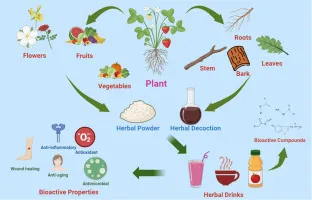
Fig 1: Sources of Herbs
1. 2. Pharmacological Overview of Dolichandrone Falcata
1.2.1. Botanical Information
Dolichandrone falcata seem is a medicinal tree belonging to the Bignoniaceae family. It has been used in traditional Indian medicine for many years because of its therapeutic value. Different parts of the plant, including the leaves, bark, roots, flowers, and fruits are utilized in herbal preparation to treat a variety of health conditions.
1. 2.1.2 Common Names
The plant is known by different names in various regions of India. In Marathi, it is commonly called Medshingi or Bhersing. It is known as Hawar in Hindi, Kadatathi in Tamil, Godmurki in Kannada, and Mesasrnga in Sanskrit [39].
1. 2.1.3 Taxonomical Classification
Synonyms: Markhamia Falcata, Bignonia Falcata, and Bignonia Spathacea
Common Name: Meshsa-Sringi, Medshingi
Kingdom: Plantae Lamiales is the order.
Division: Tracheophytes
Class: Magnoliopsida
Order: Lamiales
Family: Bignoniaceae
Genus: Dolichandrone
Species: Dolichandrone falcata Seem [14].
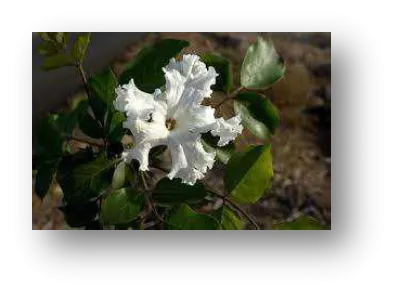
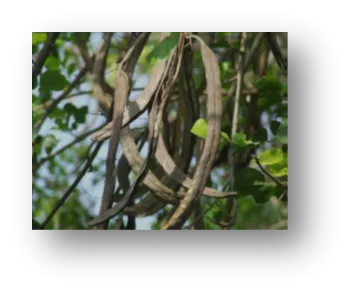
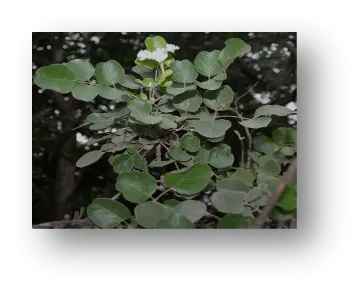
Fig 2: Photograph of flowers, fruits and Leaves of Dolichandrone falcata
1.2.1.4 Distribution
Dolichandrone falcata is naturally distributed in several parts of India, particularly in Maharashtra, Karnataka, Rajasthan, Bihar, and the Deccan Plateau. It grows well in dry deciduous forests and tropical climate conditions [40].
1.2.1.5 Morphological Description
Dolichandrone falcata is a medium-sized deciduous tree that generally reaches a height of 6-15 meters. It develops a dense canopy with compound green leaves. The plant bears attractive, fragrant white flowers that usually bloom during the evening and fall the following morning. Its fruits are long, curved capsules containing winged seeds that aid in natural dispersal. The bark is greyish-brown and possesses significant medical potential.
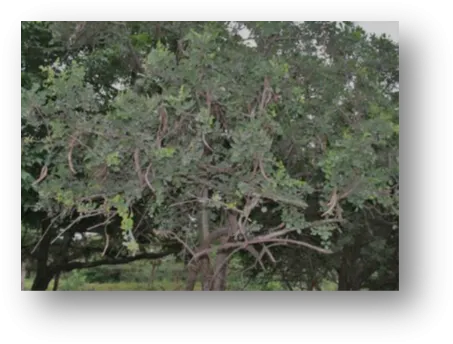
Fig 3: Photograph of Whole plant of Dolichandrone falcata
1. 2.6 Phytochemical Constituents
Various phytochemical investigations have shown that Dolichandrone falcata contains several biologically active compounds such as alkaloids, flavonoids tannins, phenolic compounds, glycosides, terpenoids and saponins. These constituents are responsible for many of the plants therapeutic properties and contribute to its antioxidant and antidiabetic potential [14].
1.2.7 Pharmacological Activities
Significant studies indicate that Dolichandrone falcata exhibit’s a wide range of pharmacological activities. The plant possesses antioxidant, antidiabetic, anti-inflammatory, antimicrobial, analgesic, hepatoprotective, and wound- healing properties. Traditionally different part plants of the plant have also been used in the management of liver disorders, skin diseases, rheumatism, edema, menstrual disorders and certain infectious condition.
Due to the presence of multiple bioactive phytochemicals, Dolichandrone falcata is considered a promising medicinal plant for the development of herbal formulation intended to improve overall health and support the management of chronic disease such as diabetes mellitus.
Fig 4: General preparation method for herbal drinks
2. AIM & OBJECTIVES
Aim
Formulation and Evaluation of Herbal Tonic Containing Dolichandrone Falcata
Objectives
This project's primary goal is to develop and evaluate a herbal tonic formulation based on Dolichandrone falcata, with special attention to the product's efficacy, stability, and safety. The specific objectives of the consideration are as follows:
1. To improve general health by creating a herbal tonic using components from medicinal plants.
2. To develop a herbal remedy that is safe and useful for regular use.
3. To determine how well the herbal tonic maintains overall health and aids in the body's metabolism.
4. To evaluate the therapeutic qualities of the herbal tonic, such as its anti-inflammatory, antidiabetic, or antioxidant qualities.
5. To increase the nutritional and medicinal benefits of the formulation by adding herbal ingredients.
6. To replace synthetic drugs with natural plant components.
7. To examine the physicochemical properties of the prepared herbal tonic (pH, viscosity, taste, stability, etc.)
8. Convenience and ease of use: The tonic is made into a beverage that is simple to drink and incorporate into everyday activities. Providing flexibility (e.g., can be consumed alone or combined with juice or water).
9. Cultural and Traditional Significance: Maintaining traditional and traditional medical expertise. Respecting herbal customs while using current scientific findings.
10. Cost-effective: While store-bought tonics might be pricey, making your own at home is ultimately less expensive. Many servings of tonic can be made from a small number of dried herbs or plants, saving a substantial amount of money. Avoiding unneeded chemicals or additions.
By accomplishing these goals, the initiative hopes to promote natural healthcare solutions by producing a herbal tonic made from Dolichandrone falcata that is safe, efficacious, and supported by science.
3. PLAN OF WORK
The present research work was carried out through the following systematic steps:
1. Literature Survey
2. Selection and collection healthy of Plant Material
3. Authentication of collected plant sample
4. Cleaning, shade drying and pulverization of the plant material
5. Preparation and Extraction of Dolichandrone Falcata
6. Analysis of extracted material chemical constituents
7. Selection of suitable herbal excipients for the formulation
8. Preparation of different batches of herbal tonic
9. Evaluation Test for Herbal Tonic
10. Comparison of formulation batches to determine the optimized formulation
4. MATERIAL AND METHOD:
4 .1 Collection of plant Material:
In March, fresh Dolichandrone falcata leaves were gathered from Sonegaon in the Yavatmal District of Maharashtra, India. After that, the plant's leaves were cleaned under running water and allowed to dry for two to three weeks in the shade. After that, the dried leaves were ground into either a fine or coarse powder and kept in the container.
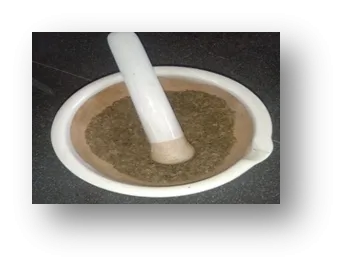
4.2 Dolichandrone falcata Preparation and Extraction:
The leaves of Dolichandrone falcata were gathered and shade-dried. 200 milliliters of water were used to extract around 10 grams of the powdered plant material, which was then decocted for about an hour and thirty minutes. After being concentrated and filtered through Whatman No. 1 filter paper, the extract was put into a 250 ml beaker [45].
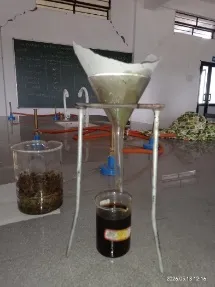
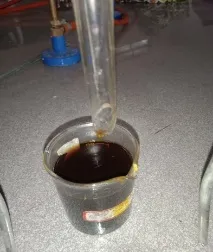
4.3 Selection of herbal excipients:
- Jaggery is frequently included in herbal tonic compositions as an excipient.
4.3.1 Meaning and structure:
Concentrating sugarcane juice or palm sap without separating molasses and crystals yields jaggery, a natural, unprocessed sweetener. It is frequently utilized in traditional medicine and food, and its colour ranges from golden yellow to dark brown [47].
• Jaggery's composition
The primary ingredient in jaggery is:
• The component
Calculated Percentage
65–85 percent sucrose
Fructose and Glucose: 10%–15%
Water content: 5–10%
Minerals (phosphorus, magnesium, potassium, calcium, iron): 0.5–1%
Small levels of proteins and vitamins
4.3.2 Jaggery's Use as an Excipient in Herbal Tonics
- Sweetening agent: Enhances palatability and masks the bitter taste of herbal substances.
- Flavour enhancer: Gives the tonic a pleasing taste and scent.
- Nutritional supplement: Contains minerals such as potassium, calcium, and iron.
- Preservative action: A high sugar content somewhat inhibits the growth of microorganisms. - Energy source: Because it contains carbohydrates, it provides fast energy.
- The herbal tonic's binding and thickening properties aid in preserving its consistency and viscosity.
4.3.3 Therapeutic and pharmacological advantages of jaggery:
- Antioxidant activity: Includes phenolic chemicals that aid in lowering oxidative damage.
- Hematinic effect: High in iron, it helps prevent anemia and raise hemoglobin levels.
- Digestive stimulant: Enhances digestion by stimulating digestive enzymes.
- Detoxifying action: Assists in removing toxins from the body and cleaning the liver.
- Immunomodulatory effect: Antioxidants and minerals bolster the immune system.
- Mild laxative: Encourages bowel movements and relieves constipation.
4.4 Formulation of Herbal Tonic:
4.4.1 Ingredient and Composition:
Table 2: Ingredients and composition (for 200ml)
|
Ingredient |
Function |
Quantity (for 200 ml) |
|
Dolichanrone falcata powder |
Active herbal compound |
10-20 g |
|
Jaggery |
Sweetener, preservative |
2-3 g |
|
Purified Water |
Solvent, base |
Up to 200 ml |
4.5 Method of preparation:
1. Herbal Powder Preparation
Gather and dry the Dolichandrone falcata bits that are needed. With a mortar and pestle, grind the dried material into a coarse powder.
2. Ingredient Weighing
Weigh 2–3 g of jaggery and 10–20 g of D. falcata powder precisely.
3. Decoction Preparation
In a clean beaker or flask, combine the weighed herbal powder with around 150 mL of cleaned water.
4. The Heating Method
To extract the active ingredients from the plant material, slowly heat the mixture for one to two hours while stirring constantly.
5. Screening
To get rid of insoluble particles, cool the mixture a little and filter it through Whatman filter paper or muslin cloth.
6. Sweeteners are incorporated
Stir constantly to dissolve the jaggery after adding it to the filtrate.
7. Homogenization and Mixing
Stir constantly as you mix all the solutions.
Use a homogenizer to improve dispersion.
8. Volume Modification
Using purified water, add 200 mL to the final volume.
9. Filtering and bottling
To eliminate any particles that haven't dissolved, filter the tonic.
To avoid light deterioration, transfer the prepared herbal tonic into a clean, amber-colored bottle.
10. Stability and Storage:
Keep at a cold temperature (less than 25°C).
It could be necessary to modify the pH (around pH 4-6 for stability).
Depending on microbiological stability, the shelf life is three to six months [30].
4.6. Different Bathes of Herbal Tonic
Table 3: Different Bathes of Herbal Tonic
|
Ingredients |
F1 |
F2 |
F3 |
|
D. falcata powder |
10 g |
15 g |
20 g |
|
Jaggery |
2 g |
2.5 g |
3 g |
|
Purified Water |
Up to 200 ml |
Up to 200 ml |
Up to 200 ml |
The prepared formulation were evaluated to determine the most acceptable batch based on organoleptic and physicochemical characteristics.
5. PHYTOCHEMICAL ANALYSIS [29]
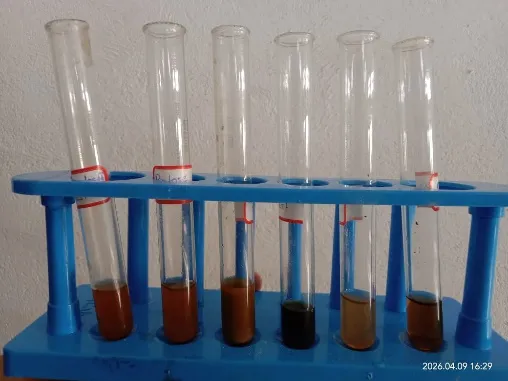
Fig 5: Phytochemical Analysis
1. Test for Carbohydrate:
Table 4: Test for Carbohydrates
|
Test |
Observation |
Inference |
|
1 Molish Test: Mix the sample extract with a ml of H2SO4 and a few drops of alpha naphthol.
|
The violet ring represents
|
Carbohydrate present
|
|
2 Fehling's Test:
|
Brick red coloring denotes
|
Presence of reducing sugar. |
|
3. Benedict's Test:
|
A red precipitate appears
|
Absence of monosaccharide’s |
2. Test for Sugar
Table 5: Test for Sugar
|
Test |
Observation |
Inference |
|
1. Pentose Sugar Test: Test solution is mixed with 2 drops of HCl and crystals of phloroglucinol. . |
Red color was absent |
Absence of pentose sugar
|
3. Test for Alkaloids:
Table 6: Test for Alkaloids
|
Test |
Observation |
Inference |
|
1 Dragendorff test: Incorporate a few drops of the reagent into test solution. |
The ppt turns orange or brown. |
Alkaloids' presence
|
|
2. Mayer's test: Add Mayer’s reagent and 2-3 ml of test solution. |
It provides ppt
|
Alkaloids' presence
|
5.1. Detection of Compound:
Thin Layer Chromatography (TLC) was carried out to identify active compounds, the main component found in D. falcata, by contrasting the sample's Rf value and spot characteristics with those of the standard D. falcata reference compound.
Sample Solution Preparation
The test solution was made by dissolving about 1 mL of D. falcata extract in 5 mL of methanol. A tiny amount of pure extract was dissolved with methanol to create the standard D. falcata solution.
TLC Plate Activation
To eliminate moisture and increase adsorption capacity, the silica gel TLC plate was activated by placing it in a hot air oven at 105°C for 30 minutes. Before being used, the activated plate was allowed to cool to room temperature.
Mobile Phase Preparation
Methanol and chloroform were combined in a 9:1 ratio to create the mobile phase. The TLC chamber was filled with the solvent system, sealed, and given 15 to 20 minutes to saturate with filter paper lining.
Sample Spotting
Clean capillary tubes were used to carefully apply tiny amounts of the standard D. falcata solution and sample solution to the TLC plate at a distance of about 1 cm from the plate's lower edge. To prevent overlapping during development, sufficient distance was kept between the dots.
TLC Plate Development
The spotted TLC plate was positioned vertically within the mobile phase-filled, saturated TLC chamber. The dots were carefully maintained above the solvent level. The plate was left to grow until the solvent front moved away from the origin by around 8 to 10 cm. Following development, the plate was carefully removed, and a pencil was used to indicate the solvent front right away. Room temperature was used to dry the plate [46].
Identification of Spots
In order to see the spots, the produced TLC plate was examined under UV light at 254 nm. Dragendorff's reagent was sprayed for additional detection, and orange-brown specks were then visualized.
Calculation of Rf Value [20].
The following formula was used to determine the Rf value:

Table 7: Observation of Thin Layer Chromatography
|
Sample spot |
Colour of spot |
Distance travelled by spot (cm) |
Distance travelled by solvent (cm) |
Rf value |
|
A |
Brownish orange |
3.1 cm |
5.7 m |
0.54 |
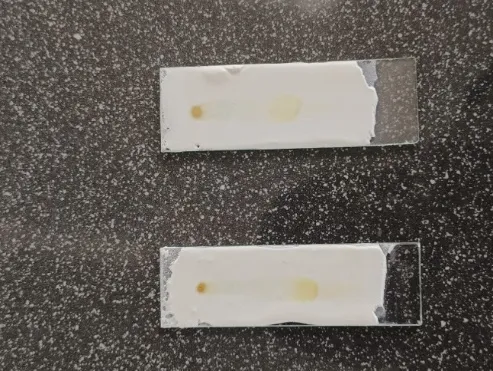
Fig 6: Thin Layer Chromatography Plate
6. EVALUATION TEST FOR HERBAL TONIC:
6.1 Organoleptic Evaluation: Appearance (Color, Odor, Taste):
Color Examination: 5 ml of the final tonic were put into watch glasses and exposed to white tube light against a white background. It was noticed by the unaided eye for its hue.
An herbal tonic's color should match the natural ingredients utilized in its preparation. It shows that active chemicals, oxidation, contamination, or incorrect storage are present. Over time, color changes may indicate chemical reactions or deterioration.
Odor Analysis:
Each person sniffed two milliliters of the finished tonic. To counteract the impact of the prior scent, a two-minute gap was maintained between the two scents.
Taste Analysis:
A small amount of the last tonic was ingested, and its flavour was assessed using the tongue's taste buds.
Texture: Evaluate any specific substance, viscosity, and smoothness.
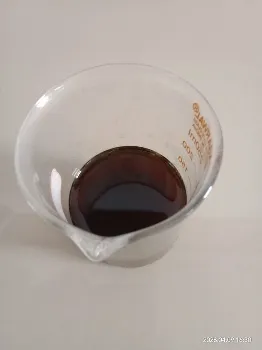
Fig 7: Herbal Tonic
6.2 Physicochemical Analysis:
pH determination:
10 ml of the finished tonic, precisely measured, was added to a 100 ml volumetric flask, and the volume was increased to 100 ml with pure water. For roughly ten minutes, the mixture was sonicated. The instrument will be calibrated using a standard buffer solution at pH 4, 7, and 9 before being used. A digital pH meter was used to determine the pH [31].
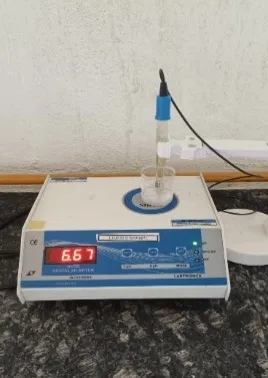
Fig 8: pH Determination
Viscosity Determination:
Ostwald's U-tube Viscometer was used to measure each formulation's viscosity [32].
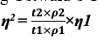
Where
η2:-Viscosity of sample
η1:-Viscosity of water
ρ2:-Density of sample
ρ1:-Density of water
t2:-Time required to flow sample
t1:-Time required to flow water [34]

Fig 9: Viscometer
Clarity test: Clarity test equipment is used to measure it. This test is designed to ensure that the above-developed formulation is clear, clean, and free of solid particles [33].
7. RESULT AND DISCUSSION
7.1 Chemical test for Carbohydrates
Table 8: Chemical test for Carbohydrates
|
Sr. No. |
Test |
Observation |
Result |
|
1. |
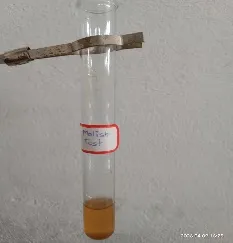
Molish Test: Mix sample extract with 1 ml of H2SO4 & a few drops of alpha naphthol.
|
Violet ring represents |
Carbohydrates present.
|
|
2. |
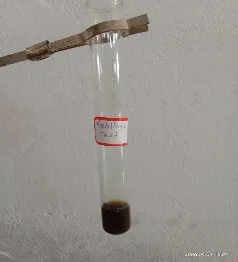
Fehling Test: Fehling A is a 1:1 combination of Fehling B and A solution. |
Brick red color indicates |
Presence of reducing Sugar.
|
|
3. |
Benedict’s Test: Benedict's reagent is added to mixture and heated in water bath.
|
Red precipitate show |
Monosaccharide’s absence

|
7.2 Chemical test for Sugar
Table 9: Chemical test for Sugar
|
Sr. To. |
Test |
Observation |
Inference |
|
1. |
Test for Pentose Sugar:
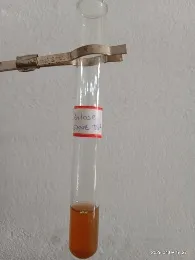
2 drops of HCl & phloroglucinol crystals are added to test solution.
|
Red color is absent |
Pentose Sugar absent
|
7.3 Chemical test for Alkaloids
Table 10: Chemical test for Alkaloids
|
Sr. No. |
Test |
Observation |
Inference |
|
1. |
Dragendorff’s test: Add few drops of Dragendorff’s reagent in test solution.
|
Orange or Brown ppt is formed |
Presence of alkaloids 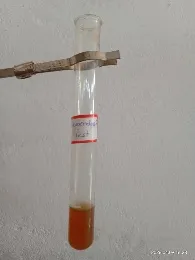
|
|
2. |
Mayer’s test: Add 2-3 ml test solution along with Mayer’s reagent
|
It form ppt |
Alkaloid is present 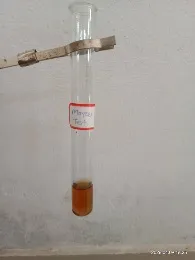
|
Table 11: Result and Discussion
|
Sr. No.
|
PARAMETER |
F1 |
F2 |
F3 |
|
|
ORGANOLEPTIC EVALUATION
|
|
|
|
|
|
|
GOOD |
NOT GOOD |
GOOD |
|
|
|
AROMATIC |
UNPLEASANT |
SWEET SMELLING
|
|
|
|
BETTER |
BETTER |
SLIGHTLY SWEET
|
|
|
|
BROWN |
BROWN |
BROWN |
|
|
|
SMOOTH |
SMOOTH |
SMOOTH |
|
2.
|
pH DETERMINATION
|
5.42 |
6.01 |
5.56 |
|
3.
|
VISCOSITY
|
2.05cp |
3.056cp |
2.30cp |
8. Discussion
- The organoleptic and physicochemical properties of the herbal tonic made with D. falcata powder were assessed. While monosaccharides were lacking, the carbohydrate tests verified the existence of carbs and reducing sugars. Alkaloid assays utilizing Mayer's and Dragendorff's reagents revealed that the formulation included alkaloidal components.
- Inadequate jaggery and a low active ingredient (D. falcata 10 g) caused Batch 1 (F1) to fail, resulting in weak preservation and a poor therapeutic effect.
- Batch 2 (F2) was deemed unsatisfactory by customers due to its bad taste, high viscosity, and offensive odor.
- Because Batch 3 (F3) contained balanced ingredients, adequate active content (15 g), steady pH (5.56), and appropriate viscosity, it was deemed effective and acceptable by consumers.
Authentication
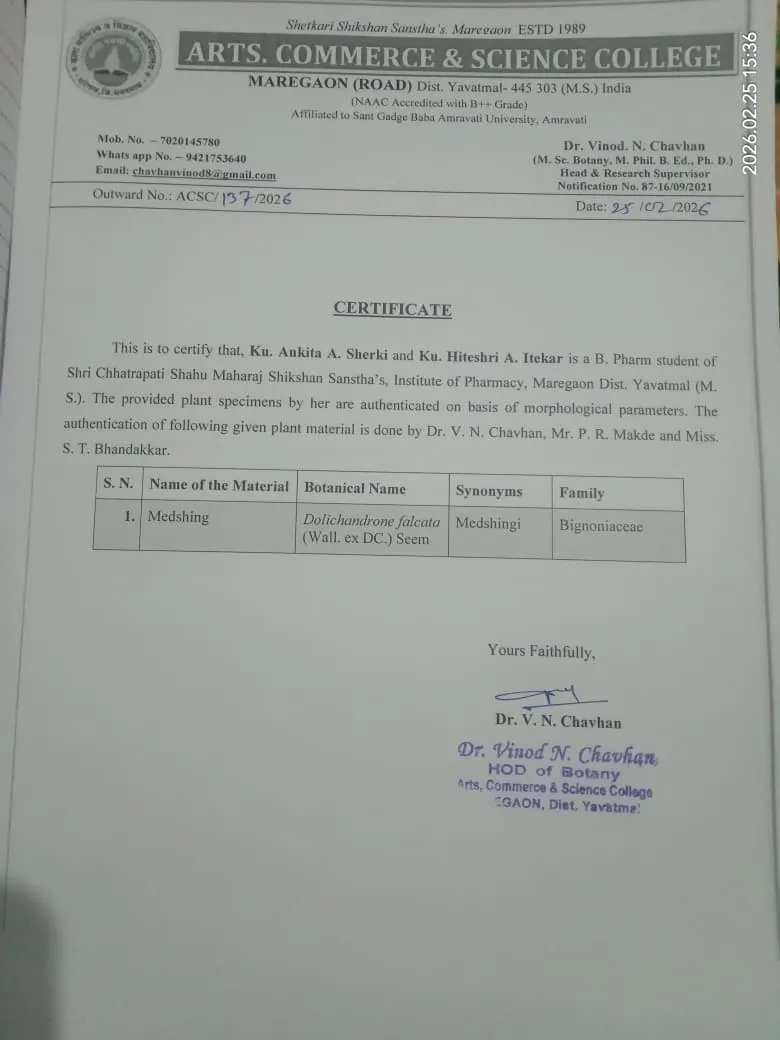
CONCLUSION
The phytochemical screening verified that the herbal tonic compositions contained alkaloids, carbohydrates, and reducing sugars. Dragendorff and Mayer's studies verified the existence of alkaloids, whereas Molish and Fehling's assays revealed positive results for reducing sugars and carbs. The formulations contained neither pentose sugars nor monosaccharides.
Three batches (F1, F2, and F3) of herbal tonic including D. falcata powder and jaggery were effectively prepared and assessed in this study. Alkaloids, reducing sugars, and carbohydrates were found in the formulations, according to phytochemical analyses. Brown color, smooth texture, appropriate pH, and viscosity were among the acceptable physicochemical and organoleptic characteristics displayed by every batch. F3 outperformed all other formulations in terms of flavour, odor, stability, and general acceptance. As a result, F3 was deemed the best formulation and could be helpful for additional stability and pharmacological research.
FUTURE SCOPE
The herbal tonic's antidiabetic and antioxidant properties can be confirmed by additional pharmacological research.
-Clinical trials can be conducted to assess its effectiveness and safety in people.
-Shelf life can be ascertained using stability studies.
-Dolichandrone Falcata’s bioactive components can be separated and described utilizing sophisticated analytical methods.
-A commercial herbal health supplement might be created from the optimized formulation.
REFERENCES



Ankita Sherki, Hiteshri Itekar, Gaurav Meshram, Nilesh Chachda, Formulation And Evaluation of Herbal Tonic Containing Dolichandrone Falcata, Int. J. of Pharm. Sci., 2026, Vol 4, Issue 7, 4099-4114, https://doi.org/10.5281/zenodo.21470807
 10.5281/zenodo.21470807