

We use cookies to ensure our website works properly and to personalise your experience. Cookies policy
Department of Pharmaceutics, P. Wadhwani College of Pharmacy, Yavatmal, Maharashtra, India.
The present study aimed to formulate and evaluate high-density sustained release tablets of Pentoxifylline for prolonged gastric retention and controlled drug delivery. Pentoxifylline is widely used in the treatment of peripheral vascular disorders but requires frequent administration because of its short biological half-life. High-density matrix tablets were formulated using hydrophobic polymers and evaluated for pre-compression, post-compression and in-vitro drug release characteristics. Physical characterization, solubility studies, UV spectrophotometric analysis and FTIR compatibility studies were performed prior to formulation development. Ten formulations (F1–F10) were prepared and evaluated. All formulations exhibited acceptable flow properties and tablet characteristics. The optimized formulation F2 demonstrated excellent hardness (6.5 ± 0.1 kg/cm²), friability (0.48 ± 0.02%), drug content (99.2 ± 0.3%) and sustained drug release (93.34 ± 1.1%) over 24 hours. Drug release kinetics revealed that formulation F2 followed the Higuchi model (R² = 0.990), indicating diffusion-controlled release. Comparison with a marketed formulation showed superior dissolution performance of the optimized batch. The developed high-density sustained release tablets successfully prolonged drug release and may improve therapeutic efficacy and patient compliance.
Oral drug delivery remains the most preferred route of drug administration due to its convenience, patient compliance, cost-effectiveness, and ease of manufacturing. However, conventional oral dosage forms often fail to maintain therapeutic drug concentrations for prolonged periods, resulting in frequent dosing and fluctuations in plasma drug levels. Sustained release drug delivery systems have been developed to overcome these limitations by releasing the drug at a predetermined rate over an extended period, thereby improving therapeutic efficacy, minimizing side effects, and enhancing patient compliance.1,2
Among various controlled release approaches, gastroretentive drug delivery systems (GRDDS) have gained considerable attention due to their ability to prolong gastric residence time and improve drug bioavailability. Gastroretentive systems are particularly beneficial for drugs that are absorbed primarily in the upper gastrointestinal tract, exhibit a narrow absorption window, or require prolonged gastric retention for optimal therapeutic activity. Various approaches have been explored to achieve gastroretention, including floating systems, bioadhesive systems, expandable systems, raft-forming systems, and high-density systems.3,4
High-density gastroretentive systems are designed to possess a density significantly greater than that of gastric fluids (approximately 1.004 g/cm³). Due to their increased density, these dosage forms remain in the lower part of the stomach and resist gastric emptying for extended periods. This prolonged gastric retention facilitates controlled drug release and improved absorption. High-density systems offer several advantages, including simplicity of formulation, enhanced gastric residence time, reduced frequency of administration, and improved patient compliance. Furthermore, these systems minimize fluctuations in plasma drug concentration and contribute to maintaining a consistent therapeutic response.5,6
Pentoxifylline is a synthetic methylxanthine derivative widely used in the management of peripheral vascular diseases, intermittent claudication, cerebrovascular insufficiency, diabetic vascular complications, and other circulatory disorders. The drug acts by improving blood flow through reduction of blood viscosity and enhancement of erythrocyte flexibility. Pentoxifylline also exhibits anti-inflammatory and hemorheological properties, making it useful in the treatment of various vascular disorders. Despite its therapeutic advantages, Pentoxifylline possesses certain limitations that affect its clinical performance. The drug has a relatively short biological half-life of approximately 2–3 hours and requires multiple daily administrations to maintain therapeutic plasma concentrations. Frequent dosing often results in poor patient compliance and variable therapeutic outcomes.7,8
The development of a sustained release formulation of Pentoxifylline can overcome these drawbacks by providing controlled drug release over an extended period. Such a formulation can reduce dosing frequency, improve patient adherence to therapy, and maintain consistent plasma drug levels. Incorporation of Pentoxifylline into a gastroretentive high-density matrix system further enhances its therapeutic effectiveness by prolonging gastric residence time and facilitating sustained drug release.9
Hydrophobic polymers have been extensively employed in sustained release matrix tablets because of their ability to regulate drug diffusion and erosion mechanisms. These polymers form a rigid matrix structure that controls the penetration of dissolution medium and consequently modulates drug release. The selection and optimization of suitable hydrophobic polymers play a crucial role in achieving the desired release profile and maintaining the integrity of the dosage form throughout the release period. Matrix tablet technology is widely accepted due to its simplicity, cost-effectiveness, ease of manufacturing, and reproducibility.10,11
In the present investigation, high-density sustained release tablets of Pentoxifylline were formulated using hydrophobic polymers and suitable excipients. The developed formulations were evaluated for their physicochemical characteristics, pre-compression and post-compression properties, drug content uniformity, and in-vitro drug release behavior. Drug release kinetics were also investigated to determine the mechanism governing drug release from the matrix system. Furthermore, the optimized formulation was compared with a marketed sustained release product to assess its performance and suitability as an alternative gastroretentive drug delivery system.
The objective of the present study was to formulate and evaluate high-density sustained release tablets of Pentoxifylline capable of providing prolonged gastric retention and controlled drug release for up to 24 hours. The developed formulation was expected to improve therapeutic efficacy, reduce dosing frequency, enhance patient compliance, and offer a promising approach for the management of vascular disorders requiring long-term treatment.
MATERIALS AND METHODS
2.1 Materials
Pentoxifylline, Acrypol 971, HPMC, Isopropyl Alcohol, Cross Carmellose Sodium, Purified Talc, Magnesium Stearate, Acrypol 912. Hydrophobic polymers, diluents, lubricants and other pharmaceutical excipients were used in formulation development.
2.2 Preformulation Studies
• Physical characterization and Solubility study
• Determination of λmax
• Calibration curve
• FTIR compatibility study
Table 1: Physical Characteristics and Solubility Study of Pentoxifylline
|
Parameter |
Observation |
|
Colour |
White |
|
Odour |
Odourless |
|
Taste |
Bitter |
|
Melting point |
102°C - 107°C |
|
Water |
Highly Soluble |
|
Chloroform |
Freely soluble |
|
Ethanol |
Sparingly soluble |
Figure 1: Calibration Curve of Pentoxifylline
|
Concentration(ug/ml) |
Absorbance(nm) |
|
2 |
0.145 |
|
4 |
0.255 |
|
6 |
0.374 |
|
8 |
0.482 |
|
10 |
0.594 |
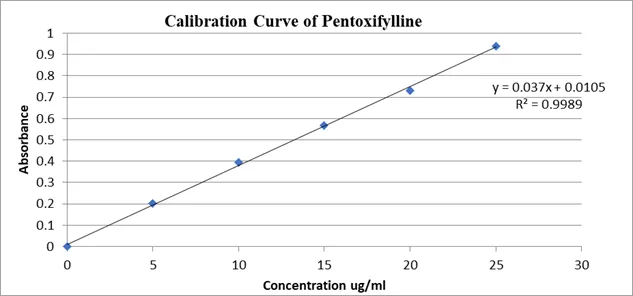
Figure 1: Calibration Curve of Pentoxifylline


Figure 3: FTIR Spectrum of Drug-Excipient Mixture
2.3 Preparation of High-Density Sustained Release Tablets
Ten formulations (F1–F10) were prepared by wet granulation technique. All ingredients were weighed accurately, blended uniformly and compressed into tablets.
Table 2: Composition of Formulations F1–F10
|
Sr. No. |
F1 (Mg) |
F2 (Mg) |
F3 (Mg) |
F4 (Mg) |
F5 (Mg) |
F6 (Mg) |
F7 (Mg) |
F8 (Mg) |
F9 (Mg) |
F10 (Mg) |
|
Pentoxifylline |
400 |
400 |
400 |
400 |
400 |
400 |
400 |
400 |
400 |
400 |
|
Acrypol 971 |
160 |
93 |
143 |
_ |
70 |
_ |
80 |
60 |
50 |
70 |
|
Eudragit |
_ |
_ |
_ |
100 |
_ |
143 |
_ |
80 |
100 |
90 |
|
HPMC |
_ |
55 |
50 |
_ |
55 |
45 |
65 |
60 |
70 |
50 |
|
Isopropyl Alcohol |
100 |
191.5 |
100 |
150 |
100 |
90 |
150 |
145 |
191.5 |
90 |
|
Cross Carmellose Sodium |
_ |
3.25 |
3.25 |
3.25 |
3.25 |
3.25 |
3.25 |
3.25 |
3.25 |
3.25 |
|
Purified Talc |
10 |
8.75 |
8.75 |
10 |
15 |
5.5 |
8.75 |
6 |
10 |
8.75 |
|
Magnesium Stearate |
10 |
10 |
10 |
8 |
10 |
10 |
5 |
6 |
10 |
10 |
|
Acrypol 912 |
_ |
50 |
_ |
_ |
|
_ |
50 |
_ |
30 |
60 |
|
Coating |
|
|
|
|
||||||
|
Ultracoat White |
16 |
_ |
_ |
10 |
_ |
16 |
_ |
_ |
16 |
12 |
|
Methylene Dichloride |
112.5 |
_ |
_ |
96 |
_ |
112.5 |
_ |
_ |
112.5 |
100 |
|
Isopropyl Alcohol |
150 |
_ |
_ |
85 |
_ |
91.5 |
_ |
_ |
150 |
110 |
2.4 Evaluation of Tablets :
• Precompression evaluation
• Appearance test
• Hardness
• Thickness
• Diameter
• Friability
• Weight variation
• Drug conten
• In-vitro dissolution study
• Release kinetic analysis
3.1 Precompression Evaluation
Table 3: Precompression Parameters of Powder Blend
|
Formulation |
Bulk Density (g/cm³) |
Tapped Density (g/cm³) |
Hausner Ratio |
Carr’s Index (%) |
Angle of Repose (°) |
|
F1 |
0.48 ± 0.02 |
0.58 ± 0.02 |
1.21 ± 0.02 |
17.24 ± 0.60 |
31.5 ± 0.6 |
|
F2 (Optimized) |
0.52 ± 0.01 |
0.60 ± 0.01 |
1.15 ± 0.01 |
13.33 ± 0.50 |
27.2 ± 0.5 |
|
F3 |
0.50 ± 0.02 |
0.59 ± 0.02 |
1.18 ± 0.02 |
15.25 ± 0.55 |
29.0 ± 0.5 |
|
F4 |
0.47 ± 0.02 |
0.58 ± 0.02 |
1.23 ± 0.02 |
18.96 ± 0.65 |
32.8 ± 0.7 |
|
F5 |
0.49 ± 0.01 |
0.61 ± 0.02 |
1.24 ± 0.02 |
19.67 ± 0.70 |
33.5 ± 0.6 |
|
F6 |
0.46 ± 0.02 |
0.59 ± 0.02 |
1.28 ± 0.02 |
22.03 ± 0.75 |
35.2 ± 0.5 |
|
F7 |
0.51 ± 0.01 |
0.60 ± 0.01 |
1.17 ± 0.01 |
15.00 ± 0.50 |
28.4 ± 0.4 |
|
F8 |
0.48 ± 0.01 |
0.59 ± 0.01 |
1.23 ± 0.02 |
18.64 ± 0.60 |
32.0 ± 0.6 |
|
F9 |
0.47 ± 0.02 |
0.60 ± 0.02 |
1.28 ± 0.02 |
21.67 ± 0.70 |
34.6 ± 0.5 |
|
F10 |
0.50 ± 0.01 |
0.61 ± 0.02 |
1.22 ± 0.02 |
18.03 ± 0.60 |
31.2 ± 0.5 |
Interpretations:
All formulations exhibited acceptable flow properties. The optimized formulation F2 showed the best flowability with Hausner ratio 1.15 ± 0.01 and Carr’s index 13.33 ± 0.50%.
3.2 Post-compression Evaluation
Table 4: Post-compression Evaluation of F1–F10
|
Sr. No. |
Formulation Code |
Hardness (kg/cm²) |
Diameter (mm) |
Thickness (mm) |
Friability (%) |
Weight Variation (mg) |
% Drug Content |
|
1 |
F1 |
5.2 ± 0.2 |
12.1 ± 0.1 |
5.4 ± 0.1 |
0.72 ± 0.03 |
618 ± 6 |
97.8 ± 0.5 |
|
2 |
F2 (Optimized) |
6.5 ± 0.1 |
12.0 ± 0.1 |
5.5 ± 0.1 |
0.48 ± 0.02 |
620 ± 4 |
99.2 ± 0.3 |
|
3 |
F3 |
5.8 ± 0.2 |
12.0 ± 0.1 |
5.4 ± 0.1 |
0.60 ± 0.03 |
619 ± 5 |
98.6 ± 0.4 |
|
4 |
F4 |
6.8 ± 0.2 |
12.2 ± 0.1 |
5.6 ± 0.1 |
0.55 ± 0.02 |
622 ± 6 |
98.1 ± 0.5 |
|
5 |
F5 |
6.2 ± 0.3 |
12.1 ± 0.1 |
5.5 ± 0.1 |
0.68 ± 0.04 |
621 ± 7 |
97.5 ± 0.6 |
|
6 |
F6 |
7.2 ± 0.2 |
12.2 ± 0.1 |
5.7 ± 0.1 |
0.52 ± 0.03 |
623 ± 5 |
98.9 ± 0.4 |
|
7 |
F7 |
6.0 ± 0.2 |
12.0 ± 0.1 |
5.5 ± 0.1 |
0.58 ± 0.03 |
620 ± 5 |
98.3 ± 0.5 |
|
8 |
F8 |
5.6 ± 0.2 |
12.1 ± 0.1 |
5.4 ± 0.1 |
0.66 ± 0.04 |
619 ± 6 |
97.9 ± 0.5 |
|
9 |
F9 |
7.0 ± 0.2 |
12.2 ± 0.1 |
5.6 ± 0.1 |
0.50 ± 0.02 |
622 ± 5 |
99.0 ± 0.3 |
|
10 |
F10 |
6.3 ± 0.2 |
12.1 ± 0.1 |
5.5 ± 0.1 |
0.57 ± 0.03 |
621 ± 4 |
98.7 ± 0.4 |
All formulations exhibited satisfactory mechanical strength with hardness values ranging from 5.2 ± 0.2 to 7.2 ± 0.2 kg/cm². Friability values remained below 1%, indicating adequate resistance to abrasion during handling. Drug content was found within pharmacopeial limits (97.5–99.2%), demonstrating uniform distribution of Pentoxifylline throughout the matrix tablets.
👉 F2 stands out with:
Optimal hardness (not too high, not too low), Lowest friability ,highest drug content uniformity
3.3 In-vitro Drug Release Study
Table 5: In-vitro Drug Release Profile of F1–F10
|
Time (hrs) |
F1 (%) |
F2 (%) |
F3 (%) |
F4 (%) |
F5 (%) |
F6 (%) |
F7 (%) |
F8 (%) |
F9 (%) |
F10 (%) |
|
0 |
0 |
0 |
0 |
0 |
0 |
0 |
0 |
0 |
0 |
0 |
|
2 |
10.79 ± 0.6 |
27.21 ± 0.5 |
14.33 ± 0.7 |
8.43 ± 0.6 |
18.80 ± 0.8 |
9.25 ± 0.6 |
13.60 ± 0.7 |
0.95 ± 0.5 |
12.42 ± 0.6 |
10.25 ± 0.6 |
|
4 |
14.62 ± 0.7 |
39.97 ± 0.6 |
25.65 ± 0.8 |
13.45 ± 0.7 |
24.62 ± 0.9 |
22.96 ± 0.8 |
23.50 ± 0.8 |
19.50 ± 0.7 |
19.37 ± 0.7 |
17.58 ± 0.7 |
|
6 |
26.52 ± 0.8 |
47.20 ± 0.7 |
34.77 ± 0.9 |
17.38 ± 0.8 |
36.52 ± 1.0 |
32.37 ± 0.9 |
30.16 ± 0.9 |
28.58 ± 0.8 |
26.25 ± 0.8 |
23.33 ± 0.8 |
|
8 |
28.50 ± 0.9 |
58.77 ± 0.8 |
42.44 ± 1.0 |
20.61 ± 0.9 |
48.50 ± 1.1 |
34.90 ± 1.0 |
41.04 ± 1.0 |
39.55 ± 0.9 |
32.18 ± 0.9 |
27.80 ± 0.9 |
|
10 |
34.50 ± 1.0 |
69.20 ± 0.9 |
44.47 ± 1.1 |
26.35 ± 1.0 |
53.98 ± 1.2 |
39.53 ± 1.0 |
47.07 ± 1.1 |
45.74 ± 1.0 |
35.80 ± 1.0 |
33.46 ± 1.0 |
|
12 |
36.67 ± 1.1 |
77.86 ± 1.0 |
51.58 ± 1.2 |
34.01 ± 1.1 |
68.07 ± 1.3 |
43.10 ± 1.1 |
55.69 ± 1.2 |
45.97 ± 1.1 |
42.50 ± 1.1 |
39.07 ± 1.1 |
|
24 |
53.46 ± 1.3 |
93.34 ± 1.1 |
68.80 ± 1.4 |
42.67 ± 1.2 |
82.44 ± 1.5 |
59.63 ± 1.3 |
70.34 ± 1.4 |
65.68 ± 1.3 |
51.66 ± 1.2 |
50.46 ± 1.2 |
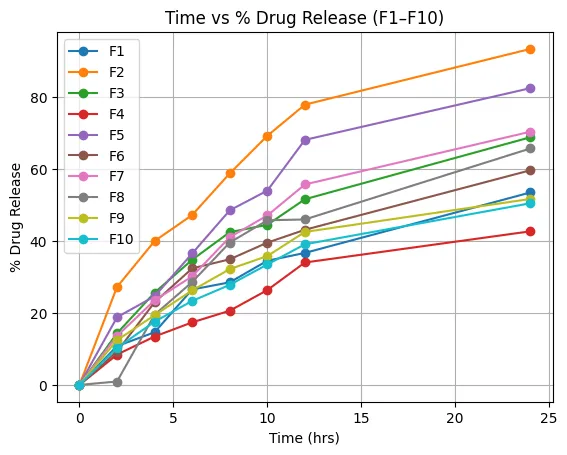
Figure 4: % Drug release Profile of Formulations F1–F10
3.4 Sedimentation Behavior Study :

Figure 5: High-Density Tablet at Initial Stage in aqueous medium

Figure 6: High-Density Tablet after 8 h in aqueous medium
The tablet remained at the bottom of the dissolution vessel confirming high-density characteristics.
3.5 Drug Release Kinetics
Table 6: Drug Release Kinetic Analysis
|
Formulation Code |
First order plot (R2) |
Zero order plot (R2) |
Higuchi plots (R2) |
Hixon- Crowel cube root plot (R2) |
Korsmeyerpeppas Plots
|
Best fit model |
|
|
N |
R2 |
||||||
|
F1 |
0.907 |
0.907 |
0.946 |
0.949 |
0.756 |
0.842 |
Hixon- Crowel |
|
F2 |
0.404 |
0.824 |
0.990 |
0.966 |
0.566 |
0.730 |
Higuchi plots |
|
F3 |
0.465 |
0.872 |
0.976 |
0.944 |
0.727 |
0.801 |
Higuchi plots |
|
F4 |
0.555 |
0.906 |
0.971 |
0.931 |
0.684 |
0.867 |
Higuchi plots |
|
F5 |
0.474 |
0.873 |
0.959 |
0.951 |
0.691 |
0.798 |
Higuchi plots |
|
F6 |
0.490 |
0.863 |
0.950 |
0.923 |
0.899 |
0.839 |
Higuchi plots |
|
F7 |
0.493 |
0.882 |
0.959 |
0.944 |
0.774 |
0.826 |
Higuchi plots |
|
F8 |
0.526 |
0.858 |
0.847 |
0.923 |
2.356 |
0.853 |
Korsmeyerpeppas Plots |
|
F9 |
0.471 |
0.847 |
0.983 |
0.893 |
0.673 |
0.806 |
Higuchi plots |
|
F10 |
0.509 |
0.889 |
0.975 |
0.930 |
0.726 |
0.830 |
Higuchi plots |

Figure 7 : Higuchi Plot of Optimized Batch F2
Interpretation:
3.6 Comparison with Marketed Formulation
Table 7: Comparison of Optimized Batch and Marketed Product
|
Sr. No. |
Time (In Hrs) |
% Drug Release |
|
1. |
0 |
0 |
|
2. |
2 |
13.06 |
|
3. |
4 |
21.58 |
|
4. |
6 |
32.28 |
|
5. |
8 |
49.50 |
|
6. |
10 |
58.91 |
|
7. |
12 |
65.64 |
|
8. |
24 |
84.45 |

Figure 8 : F2 vs Marketed Product Dissolution Profile
Interpretation:
F2 exhibited a higher cumulative drug release than the marketed formulation at all sampling intervals. At 24 h, F2 released 93.34%, whereas the marketed product released 84.45%. The optimized formulation exhibited superior release characteristics compared with the marketed product.
CONCLUSION
The present study successfully formulated and evaluated sustained-release tablets of Pentoxifylline using suitable polymers and excipients through the wet granulation method. The prepared powder blends exhibited satisfactory pre-compression characteristics, indicating good flowability and compressibility for tablet manufacturing. All formulated tablets complied with pharmacopoeial requirements for post-compression parameters such as hardness, friability, weight variation, thickness, and drug content uniformity, demonstrating acceptable mechanical strength and formulation consistency.
In vitro dissolution studies confirmed the sustained-release behavior of the developed formulations, providing prolonged drug release over an extended period. Among the prepared batches, the optimized formulation showed a controlled and predictable release profile with desirable physicochemical properties. Drug release kinetic analysis indicated that the formulation predominantly followed the Higuchi model, suggesting diffusion-controlled drug release from the matrix system. The developed tablets also demonstrated characteristics of a high-density drug delivery system, which may contribute to prolonged gastric residence and enhanced therapeutic performance.
Overall, the optimized Pentoxifylline sustained-release tablet offers a promising alternative to conventional dosage forms by reducing dosing frequency, improving patient compliance, and maintaining therapeutic drug levels for an extended duration. Further stability studies and in vivo investigations are recommended to establish its long-term efficacy, safety, and commercial applicability.
ACKNOWLEDGEMENT
The authors are thankful to Brix Biopharma Pvt. Ltd. Karad, for providing necessary facilities to carry out the research work.
CONFLICT OF INTEREST
The authors declare no conflict of interest.
REFERENCES

Aasawari Rajgure, Akshada Fursule, Rutika Bawankule, Shilpa Gawande, Mahesh Rao, Formulation And Evaluation of High-Density Sustained Release Tablets of Pentoxifylline Using Hydrophobic Polymer Matrix System, Int. J. of Pharm. Sci., 2026, Vol 4, Issue 6, 6431-6441, https://doi.org/10.5281/zenodo.20845172
 10.5281/zenodo.20845172