

We use cookies to ensure our website works properly and to personalise your experience. Cookies policy
1 D.S.T.S. Mandal's College of Pharmacy, Solapur, Maharashtra, India 413004
2 Dr. Shivajirao Kadam College of Pharmacy, Kasabe Digraj, Sangali, Maharashtra, India, 416301
Lornoxicam is a Biopharmaceutics Classification System (BCS) Class II non-steroidal anti-inflammatory drug widely prescribed for rheumatoid arthritis and osteoarthritis, but its clinical utility is limited by poor aqueous solubility and a short elimination half-life that necessitates frequent dosing. The present study aimed to formulate and evaluate a sustained-release granule-based capsule of lornoxicam to improve solubility, prolong drug release, and enhance patient compliance. Granules were prepared by wet granulation using hydroxypropyl methylcellulose (HPMC K100) as the release-retarding polymer and ethyl cellulose as a barrier against burst release, with the formulation optimized through a 3² full factorial design (independent variables: HPMC K100 and ethyl cellulose concentration). Nine batches (F1–F9) were evaluated for micromeritic properties, percentage yield, drug content, and in vitro drug release over 12 hours. Batch F5 was identified as optimal, releasing 93.27% of the drug over 12 hours without an initial burst effect, and showing the best fit to the Higuchi kinetic model (R² = 0.9842), consistent with a diffusion-controlled release mechanism. Analysis of variance (ANOVA) confirmed that polymer concentration significantly influenced (p < 0.05) drug content and cumulative drug release. Fourier-transform infrared (FTIR) spectroscopy and differential scanning calorimetry (DSC) showed no significant drug–excipient interactions. The optimized F5 granules were encapsulated into size #2 hard gelatin capsules, which met pharmacopeial limits for weight variation, disintegration, and in vitro release, and remained stable over one month of accelerated storage (40 ± 2 °C / 75 ± 5% RH). These findings indicate that a granule-filled sustained-release capsule is a feasible strategy for improving the solubility, release profile, and dosing convenience of lornoxicam.
Oral administration remains the most preferred route of drug delivery owing to its convenience, ease of self-administration, and high patient acceptance. Sustained-release (SR) dosage forms are designed to release a drug gradually over an extended period, maintaining steady therapeutic blood levels while reducing dosing frequency, fluctuation-related side effects, and the risk of both toxicity and sub-therapeutic dosing associated with conventional immediate-release formulations. A range of alternative delivery strategies, including orally disintegrating platforms and transdermal systems, have similarly been explored to improve dosing convenience and patient compliance [1,2,7,10,15].
Lornoxicam is an oxicam-class non-steroidal anti-inflammatory drug (NSAID) possessing analgesic, anti-inflammatory, and antipyretic activity through inhibition of cyclooxygenase (COX-1 and COX-2) enzymes and consequent suppression of prostaglandin synthesis. It is widely used in the management of rheumatoid arthritis, osteoarthritis, and other musculoskeletal disorders. Despite its potency, lornoxicam belongs to BCS Class II, characterized by high permeability but poor aqueous solubility, which restricts its dissolution rate and oral bioavailability. Its comparatively short plasma half-life further necessitates multiple daily doses, which can compromise patient adherence, particularly in chronic conditions such as rheumatoid arthritis where morning symptom flares driven by circadian elevations in inflammatory cytokines (e.g., TNF-α, IL-1, IL-6) require reliable drug coverage [4-6,9,19].
A sustained-release granule-based capsule formulation offers a rational approach to address both limitations simultaneously: wet granulation with hydrophilic and hydrophobic polymers can improve wetting and control drug release, while encapsulation preserves dosing accuracy and manufacturability. HPMC K100, a hydrophilic swellable polymer, and ethyl cellulose, a water-insoluble barrier-forming polymer, were selected in combination to retard initial burst release and sustain drug delivery across the gastrointestinal transit. A 3² factorial design was applied to systematically optimize polymer ratios and identify the formulation offering the most desirable release profile, consistent with established granulation optimization approaches [3,20,21,25- 28].
The objectives of this study were to:
MATERIALS AND METHODS
Materials
Lornoxicam was procured as a gift sample from Solanki Enterprises, Pune. Hydroxypropyl methylcellulose (HPMC K100), polyvinylpyrrolidone (PVP K-30), ethyl cellulose, Aerosil 200, cetyl alcohol, and isopropyl alcohol were procured from Research Labs Fine Chem Industries, Mumbai. All other reagents used were of analytical grade.
Preformulation studies
The drug was characterized for organoleptic properties (color, odor, taste) and micromeritic properties (bulk density, tapped density, Carr's index, Hausner ratio, angle of repose, and moisture content) using standard pharmacopeial procedures. Solubility of lornoxicam was determined in distilled water, ethanol, dimethyl sulfoxide (DMSO), and phosphate buffer (pH 6.8) by the shake-flask method: an excess of drug (500 mg) was equilibrated in 50 mL of each medium at 37 ± 0.5 °C for 10 hours in a shaking water bath, filtered through Whatman grade 41 paper, and analyzed spectrophotometrically. Melting point was determined by the capillary method using a Thiele tube apparatus. Absorption maxima (λmax) and calibration curves were established in each medium using a UV-visible spectrophotometer over the 200–400 nm range. Drug–excipient compatibility was assessed by FTIR spectroscopy (4000–450 cm?¹) and thermal behavior by differential scanning calorimetry (10 °C/min, 40–300 °C, nitrogen atmosphere), following characterization approaches used for other pharmaceutical and biomaterial systems [11,12,16].
Experimental design
A 3² full factorial design was employed to optimize the granule formulation, with HPMC K100 concentration (X1) and ethyl cellulose concentration (X2) as independent variables, each evaluated at three levels (−1, 0, +1), generating nine formulation batches (F1–F9). Cumulative drug release and drug content were selected as the dependent responses. Design-Expert® software (version 13) was used for statistical analysis (ANOVA) of the quadratic model, along with contour, 3D surfaces, predicted-versus-actual, and perturbation plots.
Table 1: Composition of lornoxicam granule batches (F1–F9) prepared as per the 3² factorial design.
|
Ingredient (mg/unit) |
F1 |
F2 |
F3 |
F4 |
F5 |
F6 |
F7 |
F8 |
F9 |
|
Lornoxicam |
16 |
16 |
16 |
16 |
16 |
16 |
16 |
16 |
16 |
|
HPMC K100 |
15 |
15 |
15 |
20 |
20 |
20 |
25 |
25 |
25 |
|
PVP K-30 |
2 |
2 |
2 |
2 |
2 |
2 |
2 |
2 |
2 |
|
Ethyl cellulose |
45 |
50 |
55 |
45 |
50 |
55 |
45 |
50 |
55 |
|
Isopropyl alcohol |
q.s. |
q.s. |
q.s. |
q.s. |
q.s. |
q.s. |
q.s. |
q.s. |
q.s. |
|
Aerosil 200 |
2 |
2 |
2 |
2 |
2 |
2 |
2 |
2 |
2 |
|
Cetyl alcohol |
1 |
1 |
1 |
1 |
1 |
1 |
1 |
1 |
1 |
Preparation of granules
Granules were prepared by wet granulation. All ingredients were sieved (mesh 60) and blended in geometric dilution for 10 minutes. Isopropyl alcohol was added incrementally as the granulating fluid, and the resulting wet mass was passed through mesh 12 to form granules. Granules were dried at room temperature for 24 hours, coated with molten cetyl alcohol/beeswax to further retard release, and passed through mesh 22 for uniformity. The finished granules were stored in airtight containers at room temperature[14].
Evaluation of granules
Granules were evaluated for angle of repose (fixed-funnel method), bulk and tapped density, Carr's index, Hausner ratio, percentage yield, and drug content (by UV spectrophotometry at 376 nm following the regression equation of a validated calibration curve). In vitro drug release was performed using a USP basket apparatus: 0.1N HCl (pH 1.2, 250 mL, 37 °C, 50 rpm) was used for the initial 2-hour gastric phase, after which the medium was replaced with phosphate buffer (pH 6.8, 900 mL) to simulate the intestinal environment for up to 12 hours, with samples withdrawn hourly and analyzed at 376 nm. Release data were fitted to zero-order, first-order, Higuchi, Hixson–Crowell, and Korsmeyer–Peppas kinetic models to identify the best-fit release mechanism, based on the highest regression coefficient (R²) [10].
Evaluation of the optimized batch and capsule formulation
The optimized granule batch was further evaluated for solubility (shake-flask method, four media), FTIR, and DSC, and subjected to a one-month accelerated stability study (40 ± 2 °C / 75 ± 5% RH per ICH guidelines), with sampling at 0, 15, and 30 days. The optimized granules were manually filled into size #2 hard gelatin capsules. The resulting capsules were evaluated for shape and size, weight variation (Indian Pharmacopoeia limits, ±10% for average fill weight ≤ 300 mg), disintegration time (0.1N HCl, 37 ± 2 °C), in vitro drug release (dialysis-bag method, molecular weight cut-off 12,000–14,000 Da, over 12 hours), and one-month accelerated stability under the same conditions as the granules [13,21].
RESULTS AND DISCUSSION
Preformulation characterization
Lornoxicam appeared as a yellow, odorless, bitter crystalline powder, consistent with standard descriptions. The drug exhibited a bulk density of 0.3125 g/mL, tapped density of 0.476 g/mL, Carr's index of 34.4%, Hausner ratio of 1.31, and angle of repose of 37.27°, indicating fair but improvable flow properties typical of a cohesive, poorly compressible powder. Moisture content was low (0.249%), favoring physicochemical stability. The melting point was found in the range of 225–230 °C, consistent with literature values for lornoxicam.
Solubility studies showed that lornoxicam was most soluble in DMSO (25.1 µg/mL), followed by distilled water (15.84 µg/mL), phosphate buffer pH 6.8 (4.8 µg/mL), and ethanol (1.58 µg/mL), confirming its poor aqueous solubility, especially at intestinal pH, consistent with earlier reports on lornoxicam solubility enhancement. Calibration curves in each medium showed strong linearity (R² = 0.9337–0.9995). FTIR and DSC studies showed no major shifts in characteristic drug peaks or thermal transitions in the presence of HPMC K100, ethyl cellulose, or PVP K-30, indicating the absence of significant drug–excipient interactions and confirming compatibility of the selected formulation components [9,19].
Granule evaluation and factorial optimization
All nine batches (F1–F9) showed acceptable percentage yield (95.01–99.9%) and drug content (87.35–97.76%). Micromeritic evaluation of the granules showed angle of repose values of 26.5°–30.2°, Carr's index of 14.52–16.67%, and Hausner ratio of 1.17–1.20 across batches, indicating good to excellent flow properties suitable for capsule filling.
Table 2: Percentage cumulative drug release (% CDR) of granule batches F1–F9 over 12 hours.
|
Time (h) |
F1 |
F2 |
F3 |
F4 |
F5 |
F6 |
F7 |
F8 |
F9 |
|
0 |
0 |
0 |
0 |
0 |
0 |
0 |
0 |
0 |
0 |
|
2 |
28.40 |
30.30 |
28.03 |
24.62 |
27.77 |
31.25 |
32.19 |
25.83 |
27.32 |
|
4 |
53.03 |
46.21 |
49.62 |
44.82 |
47.82 |
53.18 |
48.83 |
46.94 |
53.84 |
|
6 |
67.42 |
63.25 |
60.60 |
57.44 |
59.50 |
63.44 |
59.65 |
62.09 |
62.63 |
|
8 |
79.35 |
75.18 |
72.34 |
69.91 |
69.12 |
72.28 |
69.12 |
73.99 |
73.05 |
|
10 |
85.41 |
84.28 |
81.43 |
80.80 |
81.75 |
81.12 |
76.29 |
82.38 |
84.28 |
|
12 |
89.77 |
92.04 |
87.87 |
90.27 |
93.27 |
92.17 |
84.41 |
89.15 |
90.09 |
All batches demonstrated a progressive, sustained increase in cumulative drug release over 12 hours, with F2, F5, and F6 achieving more than 90% release by 12 hours. Batch F5 (intermediate levels of HPMC K100 and ethyl cellulose) showed the highest cumulative release (93.27%) with no initial burst effect and was therefore selected as the optimized batch based on the combination of its release profile, drug content, and flow properties.
Kinetic modeling of the F5 release data showed the best fit to the Higuchi model (R² = 0.9842), followed by the Hixson–Crowell (R² = 0.9803), first-order (R² = 0.9612), and zero-order (R² = 0.961) models, while the Korsmeyer–Peppas model showed a comparatively poor fit (R² = 0.7155). The strong fit to the Higuchi model indicates that drug release from the granule matrix is primarily governed by a diffusion-controlled mechanism, consistent with the intended design of a hydrophilic swellable polymer (HPMC K100) combined with a hydrophobic rate-retarding barrier (ethyl cellulose).
ANOVA of the quadratic response-surface models for both cumulative drug release and drug content confirmed that polymer concentration had a statistically significant effect (p < 0.05) on both responses, with non-significant lack-of-fit, supporting the reliability of the factorial design in predicting formulation behavior across the design space.
Evaluation of capsules containing optimized granules
The optimized F5 granules were filled into size #2 hard gelatin capsules (length ~17.6 mm, external diameter ~6.39 mm). Weight variation testing on 20 capsules showed individual weights ranging from 184–194 mg (mean 187.1 mg), well within the ±10% pharmacopeial limit for capsules of average fill weight ≤ 300 mg, confirming uniform fill weight and consistent manufacturing. The disintegration time of the capsules was found to be 20 minutes, within acceptable limits.
In vitro drug release from the capsules, assessed by the dialysis-bag method over 12 hours, showed minimal early release (5.17% at 1 hour, 12.38% at 3 hours), a marked increase between hours 4 and 7 (30.65% to 85.49%), and a plateau approaching 95.82% cumulative release by 12 hours. This profile confirms sustained, diffusion-controlled release from the capsule formulation with minimal burst effect across the simulated gastric-to-intestinal transit, consistent with the release behavior of the optimized F5 granules [6].
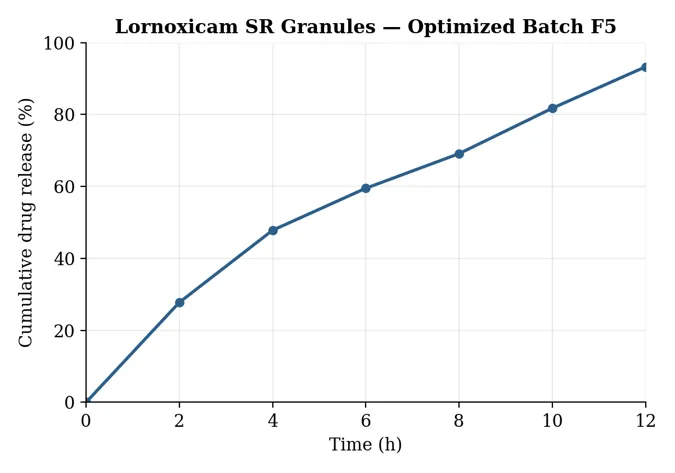
Figure 1: In vitro cumulative drug release profile (%CDR) of the optimized lornoxicam granule batch (F5) over 12 hours.
Accelerated stability study
Under accelerated storage conditions (40 ± 2 °C / 75 ± 5% RH) for one month, the capsule formulation retained a comparable release profile at 15 and 30 days (cumulative release of approximately 93.9–95.8% at 12 hours across all time points), with only minor fluctuations attributable to matrix relaxation or minor physicochemical aging effects. These results indicate good physical and functional stability of the granule-loaded capsule formulation over the accelerated storage period.
CONCLUSION
Sustained-release granules of lornoxicam were successfully developed by wet granulation, optimized using a 3² factorial design with HPMC K100 and ethyl cellulose as the key formulation variables. The optimized batch (F5) demonstrated favorable flow properties, high drug content, and a sustained, diffusion-controlled release profile over 12 hours best described by the Higuchi model, with polymer concentration shown by ANOVA to significantly influence drug release and drug content. Encapsulation of the optimized granules into hard gelatin capsules yielded a dosage form meeting pharmacopeial requirements for weight variation and disintegration, with a release profile that remained stable under accelerated storage conditions for one month, comparing favorably with previously reported lornoxicam extended-release, bilayer, and fast-disintegrating tablet formulations. These findings support the granule-in-capsule approach as a viable strategy for improving the solubility and sustaining the release of lornoxicam, with potential to reduce dosing frequency and improve patient compliance in the management of rheumatoid arthritis and related inflammatory and chronic conditions. Further in vivo pharmacokinetic and clinical studies are warranted to confirm the bioavailability and therapeutic advantages of this formulation [8,17,18,22-24].
ACKNOWLEDGEMENT
The authors thank D.S.T.S. Mandal’s College of Pharmacy, Solapur, for providing the infrastructure and facilities necessary to carry out this research.
CONFLICT OF INTEREST
The authors declare no conflict of interest.
REFERENCES


Siddhant Sonavale, Sunil Mathpathi, Dinesh Pawar, Suhas Awati, Formulation and Evaluation of Lornoxicam Sustained-Release Granules Encapsulated in Hard Gelatin Capsules Using a 3² Factorial Design, Int. J. of Pharm. Sci., 2026, Vol 4, Issue 8, 3332-3339. https://doi.org/10.5281/zenodo.22045544
 10.5281/zenodo.22045544