

We use cookies to ensure our website works properly and to personalise your experience. Cookies policy
1,2,4 Paramedical Institute, Jawaharlal Nehru Cancer Hospital and Research Centre, Bhopal
3 Department of Microbiology, Govt. M.V.M., Bhopal
Swertia chirata is an important medicinal herb belonging to the family Gentianaceae. The plant has been widely utilized intraditional systems of medicine because of its diverse therapeutic properties. It is commonly referred to as "Chirata" and has been extensively used in Ayurvedic medicine for treatment of fever, liver disorders, diabetes, gastrointestinal diseases, skin conditions, and inflammatory disorders. In the present study leaves of Swertia chirata identified and collected from herbal garden of Jawaharlal Nehru Cancer Hospital and Research Centre, Bhopal. The plant leaves dried and powered mechanically. The weight of powder taken and used for extract preparation. The dried powdered weighed and soaked overnight in solvent (methanol and water) and filtered using muslin cloth after 24 hours. The extract was allowed to dry in oven and used for evaluation of antimicrobial activity. The percentage yield was calculated and was found to be 33.1 %. The qualitative phytochemical analysis performed and showed presence of anthraquinones, quinones, tannins, terpenoids, flavonoids, phlobatannins and reducing sugars. The extracts showed antimicrobial activity maximum against B. cereus and against three gram positive and two gram negative bacterial strains. The thin layer chromatography results gave presence of Swerchirin, phenolic acid. The plant can be used as a therapeutic agent for other pathogenic strains. Further in vitro studies can be done to determine its therapeutic properties.
Swertia chirata (Roxb.) H. Karst. is a medicinal herb belonging to the Gentianaceae family and has been used in traditional medicine systems for fever, liver disorders, diabetes and skin diseases 1. The plant has been widely utilized in traditional systems of medicine because of its diverse therapeutic properties. It is commonly referred to as "Chirata" and has been extensively used in Ayurvedic medicine for treatment of fever, liver disorders, diabetes, gastrointestinal diseases, skin conditions, and inflammatory disorders 2. The plant grows naturally in India and due to its medicinal importance and high commercial demand, Swertia chirata has become one of the most valuable medicinal plant species in South Asia 2. The medicinal properties of Swertia chirata are attributed to the presence of various phytochemical constituents including seco-iridoid glycosides, xanthones, flavonoids, terpenoids, and alkaloids. Among these compounds, amarogentin is considered one of the bitterest naturally occurring substances and is regarded as a significant bioactive constituent of the plant. Other important compounds include swertiamarin, mangiferin, swerchirin, and amaroswerin 2. Several pharmacological studies have demonstrated that Swertia chirata possesses antimicrobial, antidiabetic, anti-inflammatory, hepatoprotective, antioxidant, antimalarial, anticancer, and immunomodulatory activities 2.
Swertia chirata has been an integral component of traditional healing systems such as Ayurveda, Siddha, and Unani medicine. In Ayurveda, it is commonly classified under “Tikta Rasayana” drugs due to its intensely bitter taste and detoxifying properties. Traditionally, the whole plant is used either in crude form, decoctions, or powder preparations. It is widely prescribed for treating Intermittent fever and malaria-like symptoms, liver dysfunction and jaundice, loss of appetite and digestive disorders, skin diseases such as eczema and itching, diabetes mellitus (as a hypoglycemic agent), intestinal worm infections. The bitter principle of the plant is believed to stimulate digestive secretions and improve hepatic function. Ethnomedicinal practitioners often combine Swertia chirata with other herbs to enhance therapeutic efficacy 3.
Antimicrobial resistance and side effects of medicine is an alarming issue. The increasing demand for plant-based medicines and the search for novel antimicrobial compounds have encouraged researchers to investigate the phytochemical profile and biological properties of Swertia chirata. Evaluation of crude extracts using chromatographic methods such as TLC can facilitate identification and characterization of active constituents responsible for antimicrobial activity 1, 4. Environmental factors including temperature, soil composition, rainfall, and altitude significantly influence the phytochemical composition of medicinal plants. Variations in these factors may alter concentrations of bioactive compounds present in Swertia chirata. Consequently, geographical location can affect medicinal quality and therapeutic efficacy. Crude extracts from medicinal plants have demonstrated antimicrobial properties against bacteria and fungi through mechanisms including membrane disruption, inhibition of nucleic acid synthesis, interfere with metabolic pathways, protein synthesis inhibition and inhibition of cellular enzymes. Enzyme inhibition methods commonly used for antimicrobial testing include disc diffusion method and agar well diffusion method. The phytochemicals responsible for antimicrobial activity includes alkaloids interfere with DNA replication and protein synthesis in microorganisms. Flavonoids disrupt microbial membranes and inhibit nucleic acid synthesis. Phenolic compounds cause protein denaturation and membrane disruption. Tannins bind to microbial enzymes and proteins, inhibiting their function. Terpenoids interact with membrane lipids, increasing permeability and causing cell death 5. Overall, these compounds act either individually or synergistically, contributing to the antimicrobial potential of medicinal plants.
MATERIALS AND METHODS
In the present study antimicrobial activity and phytochemical analysis of Swertia chirata leaves were determined. The preliminary phytoconstituents determined by thin layer chromatography.
Plant collection and extract preparation
The plant leaves were collected from herbal garden of Jawaharlal Nehru Cancer hospital & Research Centre, Bhopal. The plant part collected, washed, shade dried at room temperature (30° C), powdered and stored in zip lock bags till further use. The extract preparation was done by soaking 22 g powder in 200 mL solvent (100 mL methanol and 100 mL distilled water) for 24 hours. After 24 h, the sample was filtered using muslin cloth and the solvent was dried in oven at 40 ºC. After complete drying, sample was scratched using sterile scalpel and kept in sterile containers, labelled, as well as stored at 4° C until used. The methanolic extract was prepared and further analyzed for antimicrobial activity.
Determination of Extraction Yield of Plant Extract (% yield)
The weight of dried plant part was calculated and its extract prepared and its percentage yield of the extract was calculated. The yield (% w/w) from all dried extract was calculated by the formula given below.
Yield (%) = W2 – W1
W0 x 100
Where, W2 is the weight of the extract and the container, W1 weight of the container alone and W0 the weight of the plant powder 6.
Phytochemical Analysis (Qualitative) of Plant Extract
The phytochemical analysis was carried out to determine the active ingredient of leaves of Swertia chirata extracts, fraction of methanolic extract and fractionation residue of the plant was used for the detection of the presence of alkaloids, flavonoids, saponins, tannins and glycosides. Qualitative estimation of phytochemical analysis has been estimated on the basis of color formation 7 - 11.
Anthraquinones (Borntrager’s test)
The crude extract was weighed 0.5 g and boiled with 10% hydrochloric acid (HCl) for few minutes in a water bath, filtered and cooled. To the filtrate equal volume of chloroform (CHCl3) and few drops of 10% ammonia was added and allowed to heat. The presence of anthraquinones were indicated by appearance of pink rose colour.
Test for Quinones (Sodium Hydroxide (NaOH) Test)
Add 1 ml NaOH (10% in alcohol) 1 ml of plant extract. The development of a red, blue-green, or reddish-blue color indicates the presence of quinones.
Test for Glycosides
Filter plant material and add chloroform 3 mL mix and shake. Chloroform layer separated and to it 10 % Ammonia added. Appearance of pink colour for positive result.
Test for Cardiac Glycosides (Keller-Kiliani Test)
Mix the chloroform extract with glacial acetic acid containing 2% (FeCl3). Add concentrated H2SO4 to form a layer. A brown ring at the interface and a bluish-green turning layer indicate cardiac glycosides.
Steroids (Salkowski Test)
The crude extract was dissolved in methanol and to it 5 drops of concentrated Sulfuric acid (H2SO4) was added. The formation of red colour indicated the presence of steroids.
Tannins (Ferric Chloride Test)
The crude extract was weighed to 0.5 g and dissolved in 10 ml of distilled water. The solution was filtered and to it ferric chloride was added, the presence of tannin was indicted by blue black precipitate.
Terpenoids (Salkowski Test)
The extract was weighed 0.2 g and mixed with 2 ml of chloroform and 3 ml of concentrated hydrochloric acid (HCl) carefully to form a layer. A reddish brown coloration of the interface formed indicated positive results for the presence of terpenoids.
Flavonoids
The crude extract was heated with 10 ml of ethyl acetate over a steam bath for 3 min, filtered and mixed with 1 mL dilute ammonia solution to 4 mL filtrate. The formation of yellow colour indicates the presence of flavonoids.
Reducing Sugar
The crude extract was weighed 0.5 g in test tube and dissolved in 1 ml of distilled water and to it 2 to 8 drops of Fehling solution was added and boiled for few minutes. The brick red precipitate is formed indicated the presence of reducing sugar.
Phlobatannins
The extract of plant sample was boiled with 1% aqueous hydrochloric acid (HCl) to observe the deposition of red precipitate for the presence of phlobatannins.
Antimicrobial Activity
The antibacterial activity of S. chirata leaves methanolic extract was screened. The activity was observed in different bacterial strains by agar well diffusion and disc diffusion method. The extracts were weighed at the concentration of 5 mg/mL, 10 mg/mL, 15 mg/mL and 20 mg/mL and dissolved in methanol for antibacterial analysis. The bacterial strains used for the study are given below.
Bacterial Strains
The bacterial strains were isolated in hospital from clinical samples, cultured and identified by biochemical tests. The identified strains were further used to determine antimicrobial activity of S. chirata methanolic extract used in the present study. The strains used were three gram positive bacteria Staphylococci aureus, Streptococcus pyogenes and Bacillus cereus, whereas two gram negative strains Pseudomonas aeruginosa and Escherichia coli.
Disc Diffusion Method
The crude plant extract was dissolved in methanol and prepared at various concentrations. Antibiotic discs, the filter paper discs of 4 mm were prepared and plant extracts of different concentrations were loaded onto it. The discs were air dried and placed onto culture plates using sterile forecep. The Mueller Hinton plates were pre-inoculated with bacterial strains. After disc placement, plates were incubated at 37° C for 24 h. After 24 hour of incubation, zone of inhibition was evaluated around the disc. The extract which inhibited bacterial growth forms a zone around the disc. The experiment was performed three times and mean value was taken. Standard drug used is Ampicillin at the concentration of 150 mg/mL. The solvents used to prepare extracts were used as negative control include methanol and water as negative control.
Well Diffusion Method
The anti-bacterial activity of different plant species was evaluated by agar well diffusion method using Mueller Hinton medium for the assay. The microorganism was activated by inoculating a loopful of the strain in the nutrient broth (20 ml) and incubated at 37° C. Then 0.2 ml of inoculums was inoculated into the molten agar media petri plate and with the help of L-shaped rod the bacterial culture was spread on culture plates. For agar well diffusion method, a well was made in the seeded plates of bacteria with the help of a well cutter (0.6 cm). The plant extract was introduced into the well and the plates were incubated at 37º C for 24 h. The growth of bacteria inhibited by extract was evaluated by calculating zone of inhibition around the well. The solvents were also used as negative controls which include methanol and distilled water. Standard drug used was Ampicillin at the concentration of 150 mg/mL 12.
Thin Layer Chromatography
Thin layer chromatography is a type of chromatography used to identify the components in crude extracts. Silica gel powder taken and dissolved in distilled water mixed using mortar and pestle. The prepared gel poured on clean slides and slides kept for drying an activation for one hour at 110º C. Ten (10 μL) of 5% solution of the extract in 95% methanol was spotted on the plate and 10 µL was loaded to the plate. The plate was allowed to dry and develop in a mixture of chloroform and methanol (47:3 by volume) until the solvent front had ascended to 10 cm. The slides were then removed, dried in oven and the height of the solvent was marked using a pencil. The slides were developed using iodine crystals It was allowed to dry and the retention factors of the color spots were determined. The Retention factor (Rf) values for each spot was calculated. The Rf is defined as the distance traveled by the compound divided by the distance traveled by the solvent.
Rf value = distance travelled by compound
distance travelled by solvent
Statistical analysis
All experiments were performed in triplicate and results are expressed as mean ± standard deviation (SD). The mean, standard deviation and percentage reduction values were calculated in MS excel.
RESULTS AND DISCUSSION
Swertia chirata leaves extract was prepared and took 2 days for drying. The weight of leaves before drying was 60 gm and after drying 46 gm. The dried leaves powdered and stored in dry containers till use at room temperature. The percentage yield after extract preparation was obtained 33.1 %. Percentage yield depends on varying degree of solubility of plant phytochemicals in the solvent and solvent selected for extraction varies from polar to non – polar. Methanol is the best solvent use for extraction to get better percentage yield. In one of the study done on plant grown in Nepal. The stem, root and leaves of the plant were dried, made powder and mixed at the ratio of 1 : 1 : 1 and then extracted using methanol solvent by cold and warm method. The percentage yield from the plant was highest in warm methanol with 3.73%, followed by cold methanol with 2.28%. The plant had been reported for number of phytochemicals with antimicrobial activity 13.
Similarly, seven species of Swertia namely Swertia chirata (SCH), Swertia angustifolia (SAN), Swertia paniculata (SPA), Swertia racemosa (SRA), Swertia ciliata (SCI), Swertia nervosa (SNE) and Swertia dilatata (SDI) collected from different places of Nepal during the month of August – October. The extract was prepared in 100 % methanol gave varying percentage yield in SCH (10.48 %), SAN (9.16 %), SPA (9.42 %), SRA (12.17 %), SNE (9.38 %), SCI (8.2 %) and SDI (7.98 %) 14. Therefore, methanol is best solvent selected with good percentage yield in the present study.
Phytochemical Analysis
The preliminary qualitative tests in crude extracts of Swertia chirata showed presence of quinones, anthraquinones, flavonoids, phlobatannins, glycosides, steroids, tannins, terpenoids and reducing sugar. The cardiac glycosides were not found and absent in leaves of plant used in the study. Swertia chirata is one of the popular medicinal plant native to temperate Himalaya found at an altitude of 1200-1300m, from Bhutan to Kashmir and in the Khasi hills at 1200-1500m. The main chemical ingredients of plant are Swertiamarin, Amarogentin, Swechirin, Mangiferin, Sweroside, Gentianine, Amaroswerin, Oleanolic acid, Swertanoone, Ursolic acid. Phytochemical analysis gave presence of alkaloids, flavonoids, steroids, glycosides, triterpenoids, saponins, xanthones and ascorbic acid in different samples collected. The plant known as a bitter tonic in traditional system of medicine for the treatment of fever, loss of appetite, digestive disorders, diabetes, skin and various other diseases 3. In one of the study S. chirata root methanolic extract reported presence of phlobatannins, tannins, saponins and terpenoids and these may be responsible for its antioxidant activity. Flavonoid and tannin may be responsible for antimicrobial and antioxidant activity, among the extracts ethanol and methanol showed higher antioxidant activity as reported, n-hexane, acetone and chloroform showed moderate activity followed by butanol and water showing the lowest activity 15.
Antimicrobial Activity
The bacterial strains were isolated from clinical samples and identified by biochemical tests (Table 1). The identified strains were used to determine antimicrobial activity.
The maximum antimicrobial activity in crude extract was observed against B. cereus by both disc and well diffusion method. The extract gave potent antibacterial activity against all the bacterial strains used in the study. Negligible or no antimicrobial activity was observed at 5 mg/mL against most of the strains used. The results in zone of inhibition by disc diffusion method in extract are given below in Table 2 and 3. The negative controls methanol and distilled water gave no zone of inhibition against all the bacterial strains used in the study. The standard drug used for the study was Ampicillin 150 mg/mL. The concentration of extract 20 mg/mL gave best results against all bacterial strains used in the study. The disc diffusion method gave better results than well diffusion method.
The antimicrobial activity of S. chirata was assessed by number of researchers due to its medicinal properties. The ethanol extract of the root of S. chirata plant was found effective with maximum zone of inhibition against S. typhi A (10–12 mm at 5000 μg/mL). E. coli, B. subtilis, P. vulgaris, B. meghaterium, S. aureus also showed significant zone of inhibition. P. aeruginosa and S. typhi B was resistant at higher concentrations. On the other hand, ethanol extract of stem of S. chirata gave moderate activity against E. coli and B. subtilis.
Table 1: Biochemical tests for bacterial strains identification
|
Biochemical Tests |
Bacterial strains |
||||
|
Staphylococcus aureus |
Streptococcus pyogenes |
Bacillus cereus |
Escherichia coli |
Pseudomonas aeruginosa |
|
|
Catalase |
positive |
negative |
positive |
positive |
positive |
|
Coagulase |
positive |
negative |
negative |
negative |
negative |
|
Citrate utilization test |
positive |
negative |
positive |
negative |
positive |
|
The Triple Sugar Iron (TSI) Test |
Yellow slant and butt due to acid production |
negative |
negative |
Yellow slant and butt due to acid production with gas |
negative |
|
Hemolysis Test
|
Beta hemolysis |
Beta hemolysis |
Beta hemolysis |
No hemolysis (gamma hemolysis) |
Beta hemolysis |
|
Urease Test |
positive |
negative |
negative |
negative |
negative |
|
Methyl Red Test |
positive |
negative |
negative |
positive |
negative |
|
Voges – Proskauer Test |
positive |
negative |
positive |
negative |
negative |
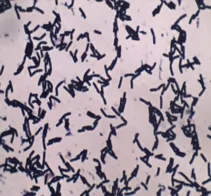
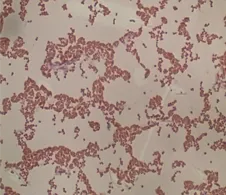
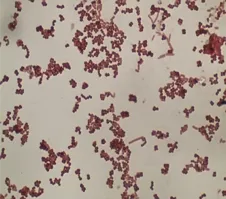
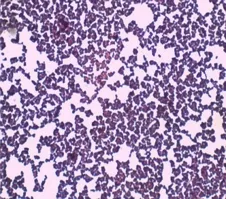
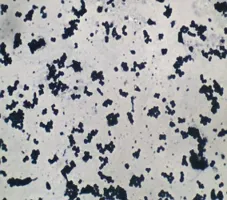
Figure 1: Pictures of slides after Gram’s staining. The slides were observed at 100 x oil immersion.
As well as B. meghaterium, P. aeruginosa, S. typhi A, S. typhi B and P. vulgaris, was found resistant at all concentration. Methanol extract of stem of S. chirata gave higher antibacterial activity against P. vulgaris and S. typhi A, it showed moderate activity against E. coli, B. meghaterium, S. aureus, P. aeruginosa, S. typhi B with a zone of inhibition from 8 to 13 mm (2000–5000 μg/mL) 16.
Methanolic leaf extracts of Swertia chirata and Sweria cordata, as well as root extracts were found to have potent antibacterial, antioxidant and antidiabetic activities. Swertia chirata showed better activities than Swertia cordata although both species have immense use in traditional Indian medicine 17. In another study S. chirata extract was compared with 30 µg concentration of standard drug, Kanamycin. The zone of inhibition 10 mm and 8 mm obtained against Staphylococcus aureus and Escherichia coli respectively 18. The antimicrobial activity due to presence of phytochemicals alkaloids, coumarin, glycosides, steroids, quinones, flavonoid and terpenoids in Swertia chirata 13. In another study antimicrobial activity of acetone extract of S. chirata observed against Klebsiella pneumonia, Haemophilus influenza, Acinetobacter baumanii and Morganella morganii, while ethanol extract also showed activity and also against Haemophilus influenza. The activity may be due to presence of flavonoids, tannins, β-carotene and lycopene, and alkaloids 19. Thus presence of phytoconstituents are responsible for antimicrobial activity of S. chirata.
Table 2: Antimicrobial activity by Disc Diffusion method. The diameter of zone of inhibition (mm) measured. The readings were taken in triplicate, mean and standard deviation were calculated.
|
Bacterial strains |
Zone of Inhibition (mm) ± SE |
|||
|
Dose concentrations (mg/mL) |
||||
|
5 |
10 |
15 |
20 |
|
|
Gram positive bacteria |
||||
|
Streptococcus pyogenes |
8 ± 0.44 |
12 ± 0.62 |
15 ± 0.46 |
17 ± 0.18 |
|
Staphylococcus aureus |
8 ± 0.39 |
11 ± 0.51 |
16 ± 0.32 |
18 ± 0.06 |
|
Bacillus cereus |
10 ± 0.5 |
15 ± 0.31 |
17 ± 0.05 |
20 ± 0.11 |
|
Gram negative bacteria |
||||
|
Escherichia coli |
NZ |
12 ± 0.34 |
13 ± 0.44 |
15 ± 0.53 |
|
Pseudomonas aeruginosa |
7 ± 0.63 |
11 ± 0.22 |
14 ± 0.71 |
16 ± 0.98 |
Table 3: Antimicrobial activity by Disc Diffusion method. The diameter of zone of inhibition (mm) measured. The readings were taken in triplicate, mean and standard deviation were calculated.
|
Bacterial strains |
Zone of Inhibition (mm) ± SE |
|||
|
Dose concentrations (mg/mL) |
||||
|
5 |
10 |
15 |
20 |
|
|
Gram positive bacteria |
||||
|
Streptococcus pyogenes |
NZ |
9 ± 0.53 |
14 ± 0.11 |
16 ± 0.87 |
|
Staphylococcus aureus |
NZ |
9 ± 0.56 |
12 ± 0.44 |
14 ± 0.65 |
|
Bacillus cereus |
11 ± 0.03 |
14 ± 0.11 |
16 ± 0.71 |
19 ± 0.76 |
|
Gram negative bacteria |
||||
|
Escherichia coli |
NZ |
10 ± 0.01 |
14 ± 0.44 |
16 ± 0.34 |
|
Pseudomonas aeruginosa |
NZ |
8 ± 0.50 |
10 ± 0.61 |
12.5 ± 0.99 |
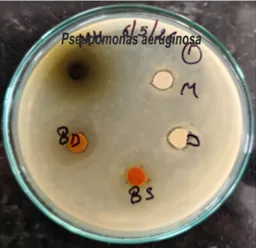
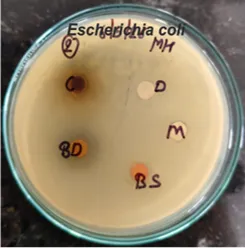
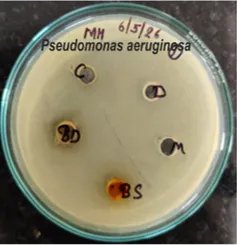
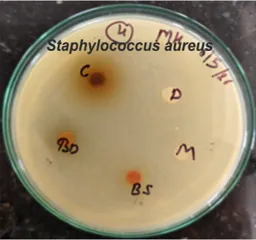
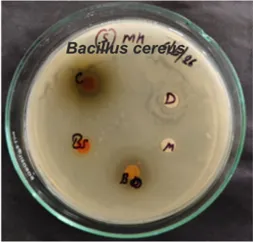
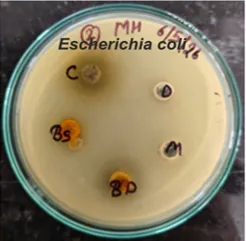
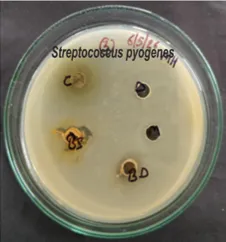
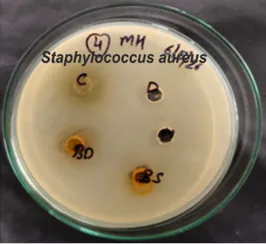
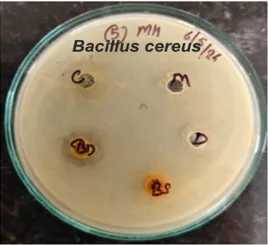
Figure 2: Antimicrobial activity of methanolic extract of Swertia chirata against bacterial strains by Disc diffusion and Well diffusion method. The plants extract used was C- Swertia chirata, D – Distilled water and M – Methanol.
Thin Layer Chromatography
The thin layer chromatography results gave Rf value of 0.41 and on the basis of value the compound may be phenolic acid. The complete separation was not achieved due to the presence of large number of compounds present in the crude extracts. Thin Layer Chromatography is widely used for the preliminary screening of phytochemicals in medicinal plants. It separates compounds based on polarity differences between stationary and mobile phases 20. TLC is used for phytochemical profiling, quality control, and detection of adulteration. Advanced techniques such as HPTLC and TLC-bioautography allow correlation of chemical profiles with biological activity 21. In Swertia chirata studies done previosly, TLC has been used to identify seco-iridoid glycosides and flavonoids 3.
CONCLUSION
The present study showed that leaf extract of Swertia chirata demonstrated antibacterial activity against gram positive and gram negative bacterial strains used in the present study. The results of thin layer chromatography showed presence of compounds Swerchirin, phenolic acid. This compound and other secondary metabolites determined by phytochemical analysis responsible for its antibacterial activity. The plant can be used as a therapeutic agent for other pathogenic strains. Further in vitro studies can be done to determine its therapeutic properties.
REFERENCES


Sakshi Mishra, Mohammad Nehal, Jagrati Rawat, Shazia Mansoor, Antimicrobial Activity of Crude Extract of Swertia chirata and TLC Analysis, Int. J. of Pharm. Sci., 2026, Vol 4, Issue 9, 4189-4198. https://doi.org/10.5281/zenodo.23059459
 10.5281/zenodo.23059459