

We use cookies to ensure our website works properly and to personalise your experience. Cookies policy
St. Joseph College of Pharmacy, Dharmagiri Campus, Naipunnya Road, Cherthala, Kerala, 682524, India.
Osteoarthritis is a progressive joint disorder associated with pain, functional limitation, cartilage degeneration, synovial changes and remodeling of other joint tissues. Topical non-steroidal anti-inflammatory drugs are established options for symptomatic management of osteoarthritis, but conventional topical systems can be limited by drug solubility, skin-barrier resistance, short residence time and variable local deposition. Nano Pickering emulgels are an emerging hybrid platform in which nanoscale or finely dispersed solid particles stabilize an oil–water interface and the resulting emulsion is incorporated into a gel network. This architecture may combine the interfacial stability of Pickering systems with the residence, rheological and application advantages of semisolid gels. Biopolymers such as chitosan and polysaccharide-based complexes are attractive particulate stabilizers because their surface charge, wettability and intermolecular interactions can be tailored for interfacial adsorption. Recent experimental studies have demonstrated enhanced skin retention of hydrophobic actives from chitosan-containing Pickering emulsions and sustained transdermal delivery from biopolymer-based Pickering emulsion gels. Parallel research on ketoprofen nanocarriers has shown that advanced topical systems can improve localized delivery and has strengthened the rationale for investigating alternative emulgel architectures. This review examines the scientific basis of nano Pickering emulgels, biopolymer-mediated stabilization, formulation and optimization variables, transdermal delivery mechanisms, evaluation strategies and their emerging relevance to osteoarthritis. Particular attention is given to chitosan, pectin and related polysaccharide systems and to ketoprofen as a representative topical anti-inflammatory drug. Current evidence, limitations, research gaps and future translational priorities are critically discussed.
Osteoarthritis (OA) is a chronic disorder of the whole joint rather than an isolated disease of articular cartilage. Structural changes may involve cartilage, subchondral bone, synovium, ligaments and periarticular tissues, while mechanical loading, cellular stress and inflammatory mediators interact to produce pain and progressive functional impairment. The current pharmacological approach is largely symptomatic, and topical NSAIDs occupy an important place in the management of peripheral OA, particularly knee OA. Contemporary guidance recommends topical NSAIDs for knee OA and considers them for OA affecting other joints, while systemic NSAIDs require attention to gastrointestinal, renal, hepatic and cardiovascular risks.¹
The clinical rationale for topical therapy is therefore not simply convenience. A formulation applied close to the affected joint can provide drug exposure at the skin and underlying tissues while reducing dependence on systemic administration. Meta-analytic evidence indicates that topical NSAIDs can provide clinically useful symptomatic benefit in knee OA, with topical ketoprofen among the most extensively studied agents.²,³ Nevertheless, topical delivery remains constrained by the barrier function of the stratum corneum, limited aqueous solubility of many anti-inflammatory drugs, formulation instability and the need to balance local retention against excessive systemic permeation.
Ketoprofen is a representative hydrophobic NSAID for advanced topical formulation research. A recent scoping review of ketoprofen nanocarrier systems emphasized that physicochemical properties and skin permeation behavior remain central formulation challenges.⁴ More recent experimental work has moved toward nanovesicular systems incorporated into multifunctional gels; for example, ketoprofen-loaded transethosomes were optimized and incorporated into hyaluronic acid/poloxamer gel, followed by preclinical evaluation in an OA model.⁵ Such studies demonstrate the broader direction of the field: the delivery platform is increasingly being designed as an integrated system in which nanoscale structure, gel properties and biological performance are considered together.
Pickering emulsions provide another route toward this integrated design. Unlike conventional emulsions that rely predominantly on molecular surfactants, Pickering emulsions are stabilized by solid particles adsorbed at the oil–water interface. Their high adsorption energy can create persistent interfacial barriers against droplet coalescence.⁶ When the Pickering emulsion is incorporated into a polymeric gel, the resulting Pickering emulgel combines interfacial particle stabilization with the semisolid characteristics required for topical application. Recent literature has begun to explore this architecture for skin delivery, including systems based on polysaccharide nanogels and chitosan-containing particle complexes.⁷–⁹
The present review therefore focuses specifically on nano Pickering emulgels rather than treating Pickering emulsions and ordinary emulgels as interchangeable concepts. The objective is to connect the underlying colloidal science with pharmaceutical formulation, transdermal delivery and the specific requirements of localized OA therapy. The review also identifies where current evidence is strong, where evidence is indirect, and where experimental work is still required before nano Pickering emulgels can be considered clinically validated OA delivery systems.
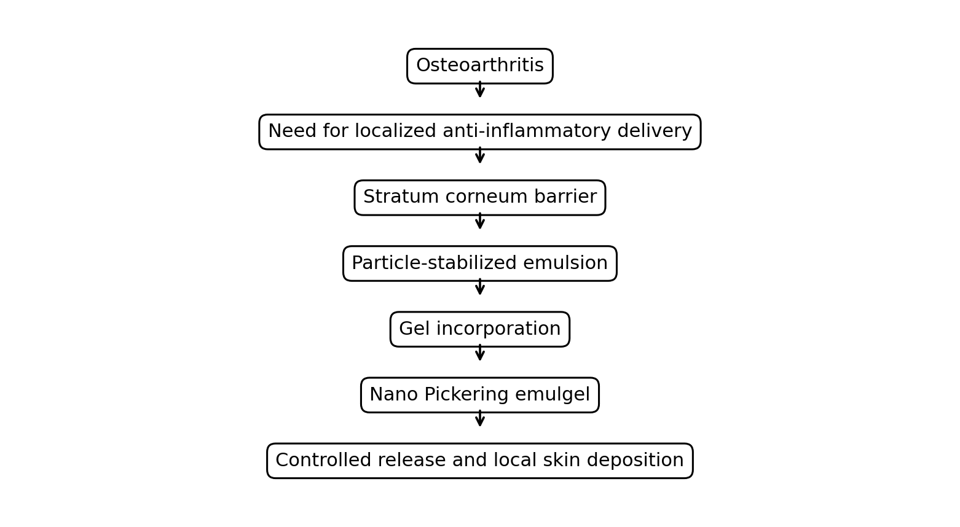
Figure 1. Conceptual pathway linking osteoarthritis, transdermal delivery barriers and nano Pickering emulgel development.
2. OSTEOARTHRITIS AND THE RATIONALE FOR LOCALIZED TRANSDERMAL DELIVERY
2.1 Pathophysiological basis of osteoarthritis
OA is characterized by an interaction between mechanical, biochemical and inflammatory processes. Chondrocytes respond to altered mechanical and inflammatory environments by changing extracellular-matrix turnover. Matrix-degrading enzymes, inflammatory cytokines and mediators of oxidative stress contribute to loss of cartilage homeostasis. Synovial tissues and subchondral bone also participate in the disease process, meaning that pain cannot be attributed solely to cartilage loss.
2.2 Pharmacological management and topical NSAIDs
Topical NSAIDs are particularly relevant to pharmaceutical scientists because their therapeutic objective is local symptomatic control with less reliance on systemic exposure. Clinical evidence supports topical NSAIDs as effective options for knee OA, although the magnitude of benefit and tolerability can depend on the specific formulation and carrier.²,³ Consensus recommendations published in 2023 likewise place topical NSAIDs within the therapeutic approach to OA pain.¹⁰
2.3 Ketoprofen and the need for advanced topical systems
Ketoprofen has been investigated in conventional gels, patches, vesicular systems and other nanocarrier platforms. The rationale for continued formulation research is not that topical ketoprofen lacks clinical evidence, but that its delivery can potentially be refined through better control of solubilization, skin residence, release and tissue deposition.⁴,⁵ An advanced formulation should therefore be evaluated against relevant quality attributes rather than judged only by particle size or drug-release rate.
TABLE 1. CLINICAL AND FORMULATION RATIONALE FOR TOPICAL DELIVERY IN OSTEOARTHRITIS
|
Issue |
Conventional/systemic concern |
Role of advanced topical formulation |
|
Systemic exposure |
Systemic NSAID exposure may contribute to gastrointestinal, renal or cardiovascular concerns |
Aim for localized delivery while avoiding unnecessary systemic exposure |
|
Skin barrier |
Stratum corneum limits diffusion of many molecules |
Optimize partitioning, release and skin contact |
|
Poor aqueous solubility |
Can restrict drug loading in aqueous gels |
Use an oil phase and interfacial carrier architecture |
|
Short residence time |
Conventional liquids may be removed rapidly |
Gel network can increase residence and improve handling |
|
Release control |
Rapid release may limit duration of local exposure |
Interfacial particles and gel matrix can modulate release |
|
Formulation stability |
Droplet coalescence and drug crystallization can occur |
Particle-stabilized interfaces may improve physical stability |
3. EMULGELS AS TOPICAL DELIVERY PLATFORMS
An emulgel is a hybrid dosage form in which an emulsion is incorporated into a gelled continuous phase. The architecture can accommodate lipophilic compounds within the oil phase while the aqueous gel phase provides a convenient semisolid vehicle. Reviews of emulgels describe their spreadability, rheological behavior, ease of application and suitability for hydrophobic drugs as major formulation advantages.¹¹,¹²
The gel phase is not an inert thickener. Polymer concentration, crosslinking, hydration and network structure influence viscosity, yield stress, thixotropy, spreadability, drug diffusion and residence time. For transdermal systems, these properties should be optimized together with droplet size and interfacial characteristics because the gel can alter the microstructure of the dispersed phase and therefore change drug release.
3.1 Conventional emulgels versus nano Pickering emulgels
Conventional emulgels commonly rely on surfactant-stabilized emulsions. In a Pickering emulgel, solid particles adsorb at the oil–water interface and the stabilized emulsion is subsequently structured within a gel network. The distinction is therefore mechanistic: the key interfacial stabilizer is a particulate layer rather than a conventional molecular surfactant layer.
TABLE 2. COMPARISON OF CONVENTIONAL EMULSION, NANOEMULSION, PICKERING EMULSION AND NANO PICKERING EMULGEL
|
System |
Primary stabilizing principle |
Characteristic structure |
Potential topical value |
|
Conventional emulsion |
Molecular surfactant(s) |
Oil/water droplets |
Established, flexible topical vehicle |
|
Nanoemulsion |
Surfactant/co-surfactant system |
Nanoscale droplets |
High interfacial area and dispersion |
|
Pickering emulsion |
Solid particles adsorbed at interface |
Particle-coated droplets |
Persistent interfacial stabilization |
|
Nano Pickering emulsion |
Nanoscale/finely dispersed particles |
Small droplets with particle interface |
Large interfacial area with particle stabilization |
|
Conventional emulgel |
Emulsion plus gel network |
Droplets embedded in gel |
Residence and application advantages |
|
Nano Pickering emulgel |
Particle-stabilized emulsion plus gel network |
Interfacial particles within a semisolid matrix |
Combined stability, residence and release control |
4. NANO PICKERING EMULGELS: COLLOIDAL BASIS AND PHARMACEUTICAL SIGNIFICANCE
4.1 Pickering stabilization
Pickering stabilization occurs when solid particles with suitable surface wettability adsorb at the interface between two immiscible phases. Particle adsorption is strongly influenced by contact angle, particle size, surface chemistry and concentration. Particles that are sufficiently wetted by both phases can form an interfacial barrier that resists droplet coalescence. General reviews have emphasized that the type and wettability of the solid stabilizer are central determinants of emulsion type, droplet size and stability.⁶,¹³
For pharmaceutical applications, the value of this architecture extends beyond physical stability. The particle layer can influence drug partitioning, interfacial diffusion and the residual film left on the skin. A 2024 human-skin study comparing Pickering systems with classical excipients found that particle-stabilized formulations produced distinct residual films and rheological/textural behavior, showing that the interface can influence the actual product deposited on skin.⁸
4.2 Why nano-scale structure matters
Reducing the size of the dispersed droplets or stabilizing particles can increase interfacial area, alter sedimentation and creaming behavior, and modify release kinetics. However, 'smaller' should not be treated as an independent indicator of therapeutic superiority. The desired size range depends on the intended delivery mechanism, the gel matrix, the drug and the biological endpoint. A formulation with a very small particle size but poor stability or inappropriate skin retention may be less useful than a larger but reproducible and well-controlled system.
4.3 From Pickering emulsion to Pickering emulgel
Gel incorporation adds a second structural level. Recent work with Bletilla striata polysaccharide nanogels demonstrated that embedding a Pickering emulsion in a polysaccharide gel could increase skin retention relative to the corresponding Pickering emulsion and produce sustained release behavior.⁷ A 2025 chitosan/γ-polyglutamic acid Pickering emulsion gel similarly demonstrated high encapsulation efficiency, storage stability and sustained transdermal release for crocetin.⁹ These studies are not OA studies, but they provide direct experimental evidence that a particle-stabilized emulsion can be converted into a functionally different semisolid delivery platform.
5. BIOPOLYMER-BASED PARTICLE STABILIZERS
Biopolymers are attractive for Pickering systems because their chemical functionality can support particle formation, electrostatic interactions and interfacial adsorption. Polysaccharide-based particles can also be engineered through ionic gelation, polyelectrolyte complexation, self-assembly and hybridization with proteins or other polymers. A review of polysaccharide-based micro/nanoparticle stabilizers highlights the breadth of this material class for Pickering systems and delivery applications.¹⁴
5.1 Chitosan
Chitosan is a cationic polysaccharide whose amino groups contribute to pH-responsive charge and electrostatic interactions. Chitosan-based Pickering systems have been studied using self-assembled particles and composite particles with proteins, polysaccharides, fatty acids, polyphenols and inorganic materials.¹⁵ For skin delivery, chitosan nanoparticles prepared by ionic gelation have also been investigated as penetration-enhancing carriers, with particle characteristics influenced by polymer and crosslinker conditions.¹⁶
A particularly relevant experimental study used chitosan/gum Arabic nanoparticles to stabilize Pickering emulsions containing trans-resveratrol. Ex-vivo Franz-cell experiments showed higher cutaneous retention from the Pickering formulations than from an ethanolic control, while confocal microscopy indicated deeper skin deposition of the fluorescent probe.¹⁷ This provides direct evidence for the proposition that a biopolymer-stabilized Pickering interface can modify topical drug disposition.
5.2 Pectin
Pectin is an anionic polysaccharide with carboxyl-containing structural features that permit interaction with cationic polymers. Its gel-forming and polyelectrolyte properties make it useful for composite biomaterials. Experimental studies of pectin–chitosan polyelectrolyte nanoparticles have demonstrated that the ratio of the oppositely charged polymers can markedly affect particle size and surface charge, supporting the broader principle that dual-polysaccharide systems can be compositionally tuned.¹⁸
5.3 Chitosan–pectin as a dual-biopolymer strategy
Combining chitosan and pectin provides a scientifically rational route to a dual-biopolymer particulate system because the polymers carry complementary charges under suitable conditions. Electrostatic complexation can generate particles whose size, surface charge and mechanical characteristics depend on polymer ratio, concentration, ionic strength and pH. Importantly, evidence for chitosan–pectin nanoparticle formation should not automatically be interpreted as evidence that the resulting particles are effective Pickering stabilizers. Interfacial performance must be demonstrated experimentally.
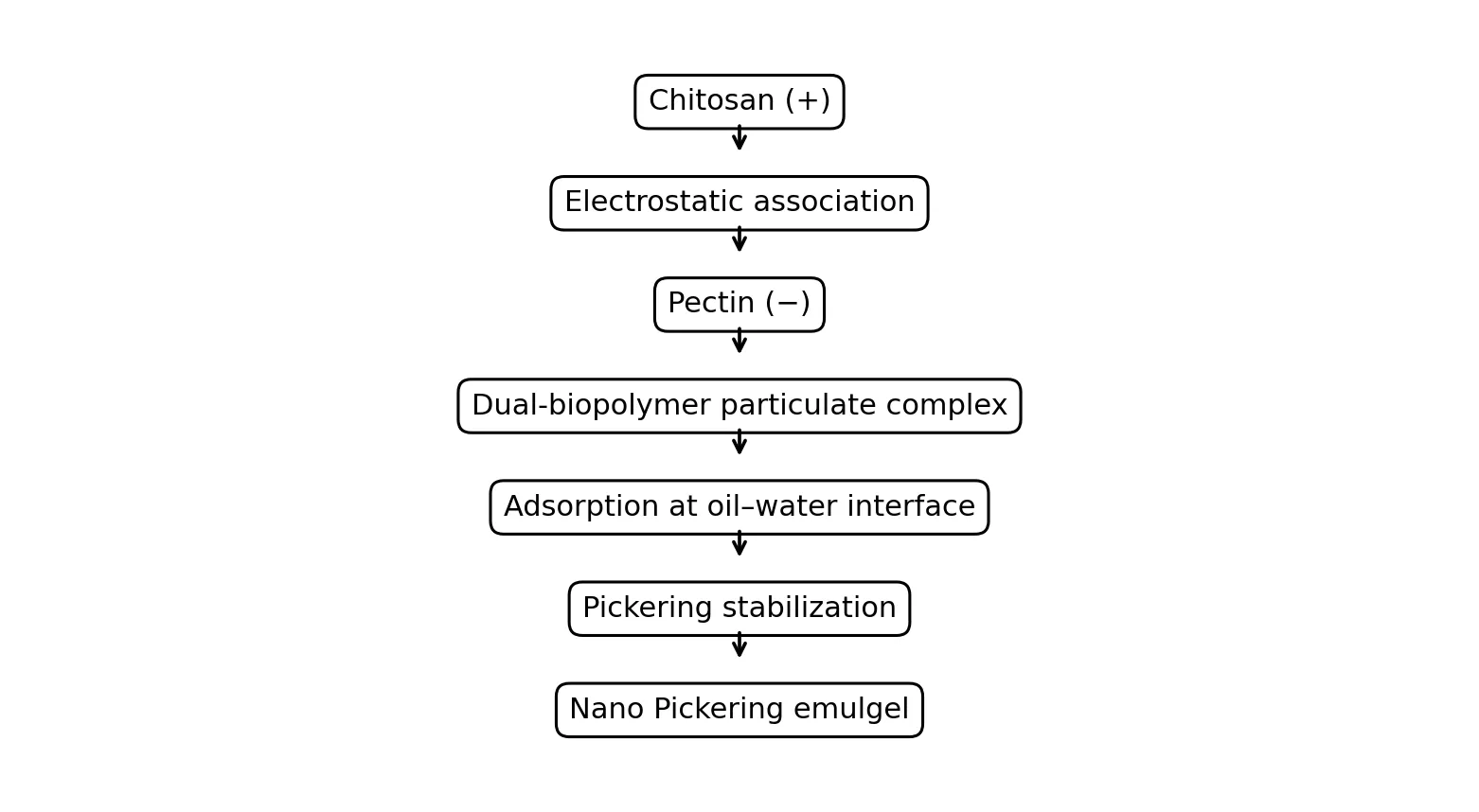
Figure 2. Conceptual mechanism for formation of a dual-biopolymer chitosan–pectin particulate stabilizer and its incorporation into a Pickering emulgel.
TABLE 3. BIOPOLYMER ATTRIBUTES RELEVANT TO NANO PICKERING EMULGELS
|
Biopolymer/material |
Relevant property |
Potential role |
Key limitation |
|
Chitosan |
Cationic charge; film-forming; ionic gelation |
Particle formation, interfacial adsorption, skin interaction |
Solubility and charge are pH-dependent |
|
Pectin |
Anionic charge; gel-forming polysaccharide |
Polyelectrolyte complexation; gel structuring |
Behavior depends on degree of esterification and ionic environment |
|
Gum Arabic |
Hydrophilic polysaccharide/protein-containing material |
Composite particle formation and stabilization |
Composition varies with source |
|
Bletilla striata polysaccharide |
Natural polysaccharide; gel-forming behavior |
Gel matrix for Pickering emulsion nanogels |
OA-specific evidence is absent |
|
γ-Polyglutamic acid |
Anionic biopolymer |
Complexation with chitosan; particle engineering |
Limited topical pharmaceutical evidence |
6. FORMULATION AND PROCESSING APPROACHES
The development of a nano Pickering emulgel can be considered as a sequence of linked formulation decisions rather than a single emulsification step. The first stage is generation of a stable particulate stabilizer. The second is formation of an oil-in-water or water-in-oil Pickering emulsion. The third is incorporation of the emulsion into a gel matrix. Each stage introduces critical quality attributes that can affect the next stage.
6.1 Particle formation
Biopolymer particles may be produced through ionic gelation, polyelectrolyte complexation or related bottom-up approaches. Chitosan–TPP ionic gelation is widely used because anionic phosphate groups can interact with protonated amino groups. Polymer molecular weight, degree of deacetylation, concentration, crosslinker concentration and mixing conditions influence particle characteristics.¹⁶
6.2 Pickering emulsion formation
Once particles are generated, their ability to stabilize an oil–water interface depends on wettability, surface chemistry, concentration and the energy supplied during homogenization. High-shear homogenization and sonication can reduce droplet size, but excessive energy can introduce heating, air incorporation or structural disruption. Therefore, processing parameters should be defined as critical process parameters and optimized against particle size, PDI, phase stability and rheology.
6.3 Gel incorporation
The gel matrix should provide sufficient viscosity and structural recovery for topical application without preventing drug release. Carbomers, cellulose derivatives, poloxamers, natural polysaccharides and hybrid matrices can be considered according to the target product profile. Recent Pickering nanogel research demonstrates that the ratio between the Pickering emulsion and the polysaccharide gel matrix can affect pH, rheology, hardness, elasticity and transdermal release.⁷
6.4 Quality-by-Design considerations
A Quality-by-Design framework is well suited to nano Pickering emulgels because several variables interact. Critical material attributes can include polymer ratio, particle concentration, oil fraction and drug loading, while critical process parameters can include homogenization energy and processing time. Critical quality attributes may include droplet/particle size, PDI, zeta potential, encapsulation efficiency, viscosity, spreadability, release profile and stability. The recent ketoprofen transethosome study illustrates how experimental design can be applied to advanced topical nanocarriers for OA.⁵
TABLE 4. KEY FORMULATION VARIABLES AND EXPECTED EFFECTS
|
Variable |
Potential effect on formulation |
Suggested quality attribute |
|
Chitosan concentration |
Changes particle formation and charge |
Particle size, zeta potential |
|
Pectin concentration/ ratio |
Changes complexation and network formation |
Particle size, PDI, viscosity |
|
Particle concentration |
Changes interfacial coverage |
Droplet size, phase stability |
|
Oil fraction |
Changes droplet packing and rheology |
Droplet size, viscosity |
|
Drug loading |
Changes saturation and release |
Drug content, EE, release |
|
Homogenization energy |
Changes droplet size and distribution |
Size, PDI, microscopy |
|
Sonication exposure |
May reduce size but may increase heat/air incorporation |
Size, temperature, PDI |
|
Gel-polymer concentration |
Changes network strength and release |
Viscosity, spreadability, release |
|
pH |
Changes polymer ionization and compatibility |
pH, stability, zeta potential |
|
Storage temperature |
Affects physical and chemical stability |
Size, PDI, phase separation, drug content |
7. TRANSDERMAL DELIVERY MECHANISMS
The stratum corneum is the principal barrier to passive transdermal transport. For a topical OA formulation, the desired outcome may not be maximal systemic permeation; rather, sufficient deposition in the skin and underlying tissues may be more relevant. Therefore, evaluation should distinguish between permeation into the receptor phase and retention within skin layers.
7.1 Role of the oil phase
The oil phase can solubilize lipophilic molecules and influence drug partitioning between the formulation and skin. Oil selection should therefore be considered together with drug solubility, interfacial structure and skin compatibility.
7.2 Role of particulate interface
The interfacial particle layer can slow release, change droplet integrity and influence the composition of the film left on the skin. The chitosan/gum Arabic resveratrol study showed that particle-stabilized emulsions could increase cutaneous retention while limiting permeation relative to a control solution.¹⁷ This is especially relevant to OA because local skin/tissue deposition may be more useful than indiscriminate systemic transport.
7.3 Role of rheology and microstructure
Rheology affects spreadability, residence and structural recovery after shear. A 2024 experimental study of stimuli-responsive Pickering emulsions for transdermal delivery showed that stabilizing microgel size and interactions influenced rheology and release behavior, emphasizing the link between microstructure and delivery performance.¹⁹
7.4 Skin deposition versus permeation
For localized therapy, a formulation should be evaluated for cumulative permeation as well as drug retained in the stratum corneum, epidermis and dermis where appropriate. Franz diffusion-cell studies, tape stripping, skin extraction and microscopy can provide complementary information. A high receptor-phase flux should not automatically be interpreted as a desirable outcome for an OA topical formulation.
8. EXPERIMENTAL EVIDENCE FROM BIOPOLYMER-BASED PICKERING SYSTEMS
The literature contains a growing number of experimental studies relevant to topical Pickering delivery, but the evidence is heterogeneous. Some studies directly evaluate skin retention, others focus on emulsion stability or rheology, and only a small subset combines a Pickering architecture with a gel matrix and transdermal testing. This distinction is important when interpreting the translational relevance to OA.
TABLE 5. REPRESENTATIVE EXPERIMENTAL STUDIES RELEVANT TO TOPICAL NANO PICKERING EMULGELS
|
Study/system |
Active/model |
Major experimental observation |
Relevance to OA platform |
|
Chitosan/ gum Arabic nanoparticles stabilizing Pickering emulsion |
Trans-resveratrol |
Higher skin retention and deeper deposition than control; improved photostability |
Direct evidence that biopolymer Pickering systems can modify topical disposition |
|
Biodegradable PLGA nanoparticle-stabilized Pickering emulsion |
Calcitriol + cyclosporine A/tacrolimus |
Stable topical co-encapsulation and acceptable keratinocyte viability |
Supports multifunctional topical PE design |
|
Bletilla striata polysaccharide-based Pickering nanogel |
Atractylodes essential oil |
Nanogel improved skin retention and sustained release compared with PE |
Direct evidence for emulsion-to-nanogel transition |
|
Chitosan/γ-PGA Pickering emulsion gel |
Crocetin |
High encapsulation, sustained transdermal release and storage stability |
Strong evidence for dual-biopolymer transdermal PE gel concept |
|
Stimuli-responsive Pickering emulsion |
Model transdermal system |
Rheology/microstructure affected release and responsiveness |
Supports structure–performance optimization |
|
Ketoprofen transethosome/ HA-poloxamer gel |
Ketoprofen |
Nanovesicular gel optimized by DoE and evaluated in OA model |
Shows feasibility of advanced ketoprofen gel systems, while using a different carrier architecture |
The chitosan/gum Arabic system is particularly informative because it used ex-vivo porcine skin and directly quantified retention.¹⁷ The Bletilla polysaccharide nanogel study is relevant at the emulgel level because it demonstrated that incorporation of a Pickering emulsion into a natural polysaccharide gel changed release and skin retention.⁷ The 2025 chitosan/γ-PGA study provides another close analogue, using electrostatically formed biopolymer nanoparticles to stabilize a crocetin-loaded Pickering emulsion gel with high encapsulation efficiency and sustained transdermal release.⁹
Importantly, these studies do not prove that a chitosan–pectin–ketoprofen nano Pickering emulgel will be effective in OA. They establish a formulation rationale that can be tested experimentally. This distinction should be maintained throughout the review to avoid overstating the evidence.
9. KETOPROFEN AS A MODEL DRUG FOR ADVANCED PICKERING EMULGEL DEVELOPMENT
Ketoprofen is useful as a representative drug in this review because it combines established topical OA relevance with formulation challenges associated with lipophilicity and skin delivery. Topical ketoprofen has been evaluated clinically, and systematic evidence identifies ketoprofen among the more extensively studied topical NSAIDs for knee OA.²
Recent formulation research illustrates the continuing evolution of ketoprofen delivery. Mammella and colleagues developed ketoprofen-loaded transethosomes, optimized them using experimental design and incorporated the optimized vesicles into a hyaluronic acid/poloxamer 407 gel. The formulation was subsequently evaluated in a monosodium iodoacetate-induced rat OA model, where imaging, histopathology and inflammatory markers supported its preclinical activity.⁵
The significance for nano Pickering emulgels is conceptual rather than evidentiary: a Pickering emulgel would replace the transethosomal carrier with a particle-stabilized oil–water architecture. Its scientific value should therefore be assessed through comparative studies against a conventional ketoprofen gel and, where appropriate, another nanocarrier system. Outcomes should include drug loading, release, skin retention, permeation, dermal safety and OA-relevant pharmacodynamic endpoints.
TABLE 6. SUGGESTED CRITICAL QUALITY ATTRIBUTES FOR A KETOPROFEN NANO PICKERING EMULGEL
|
Quality attribute |
Why it matters |
Interpretation |
|
Particle/droplet size |
Controls interfacial area and dispersion |
Should be reproducible rather than merely minimized |
|
PDI |
Indicates size distribution |
Lower/controlled PDI generally indicates greater uniformity |
|
Zeta potential |
Reflects surface electrostatic characteristics |
Interpret together with steric stabilization and formulation composition |
|
Entrapment efficiency |
Measures drug incorporated into the carrier |
Higher values can indicate efficient loading but must be balanced with release |
|
Drug content |
Confirms dose uniformity |
Should meet predefined formulation specifications |
|
Rheology |
Determines spreading, residence and structural recovery |
Should support application without excessively restricting release |
|
In-vitro release |
Defines release kinetics |
Useful for comparing formulations |
|
Ex-vivo permeation |
Measures skin transport |
Should be interpreted together with skin retention |
|
Skin retention |
Indicates local deposition |
Particularly relevant for localized topical therapy |
|
Dermal safety |
Assesses irritation/compatibility |
Essential before translational progression |
|
Stability |
Assesses product integrity during storage |
Monitor size, PDI, phase separation and drug content |
10. EVALUATION OF NANO PICKERING EMULGELS
10.1 Physical and physicochemical evaluation
Appearance, homogeneity, pH, viscosity, spreadability and drug content provide initial information about product quality. pH should be compatible with the intended skin application, while rheology should be assessed under shear conditions relevant to spreading.
10.2 Particle and droplet characterization
Dynamic light scattering can be used for nanoscale particles where the sample is appropriate for the technique, while optical or electron microscopy can provide complementary morphological information. PDI should be interpreted alongside the measurement method and sample dilution. Zeta potential can help characterize surface charge but should not be treated as the sole indicator of stability.
10.3 Structural and chemical characterization
FTIR can help identify major chemical interactions, while DSC and XRD can assess thermal behavior and changes in drug crystallinity. These techniques are most informative when interpreted comparatively among the pure drug, individual excipients and optimized formulation.
10.4 Drug release and permeation
In-vitro release studies can be performed using an appropriate membrane and receptor medium, followed by kinetic modelling where justified. Ex-vivo permeation studies using validated skin models can determine cumulative permeation and skin retention. The study design should distinguish formulation-controlled release from membrane-limited diffusion.
10.5 Safety and stability
Dermal irritation and cytocompatibility should be considered before animal or clinical translation. Stability studies should monitor the formulation over time for changes in particle size, PDI, zeta potential, rheology, phase separation, drug content and degradation products where relevant.
11. COMPARISON WITH OTHER ADVANCED TOPICAL NANOCARRIERS
Nano Pickering emulgels should be considered alongside other topical nanocarriers rather than presented as an inherently superior technology. Liposomes, transfersomes, ethosomes, transethosomes, SLNs, NLCs, polymeric nanoparticles and nanoemulgels have each been investigated for skin delivery. Their performance depends on drug properties, formulation composition, target tissue and intended route.
TABLE 7. COMPARATIVE PERSPECTIVE ON ADVANCED TOPICAL SYSTEMS
|
System |
Main structural feature |
Potential advantage |
Typical limitation |
|
Nanoemulgel |
Nanoscale droplets in gel |
High dispersion and semisolid residence |
Surfactant/co-surfactant dependence may complicate formulation |
|
Liposome |
Phospholipid bilayer vesicle |
Can accommodate hydrophilic and lipophilic cargo |
Physical/chemical stability concerns |
|
Transfersome/ transethosome |
Highly deformable vesicle |
Enhanced skin transport potential |
Complex composition and optimization |
|
SLN/NLC |
Solid/semi-solid lipid matrix |
Lipid-compatible drug loading and controlled release |
Lipid crystallization and loading constraints |
|
Polymeric nanoparticle gel |
Polymer matrix particle in gel |
Controlled release and surface engineering |
Polymer selection and particle manufacturing complexity |
|
Nano Pickering emulgel |
Particle-stabilized emulsion in gel |
Interfacial stabilization plus semisolid residence |
Limited OA-specific and clinical evidence |
12. CURRENT CHALLENGES AND RESEARCH GAPS
12.1 Limited osteoarthritis-specific Pickering evidence
Most topical Pickering evidence has been generated using cosmetic actives, antioxidants, essential oils or dermatological models. Direct evidence involving OA drugs and OA-specific biological outcomes remains limited. Therefore, claims about OA efficacy should be framed as prospective rather than established.
12.2 Need for direct comparative studies
A convincing formulation study should compare the nano Pickering emulgel with an appropriate conventional gel, the corresponding Pickering emulsion and, when scientifically justified, another advanced carrier. Such comparisons can determine whether any improvement is attributable to particle stabilization, the gel matrix, nanoscale structure or the combination.
12.3 Scale-up and reproducibility
Laboratory-scale sonication and high-shear processing may produce properties that are difficult to reproduce during scale-up. Robust control of mixing energy, temperature, air incorporation and raw-material variability will be required.
12.4 Long-term stability
Although Pickering interfaces can be physically robust, the complete emulgel remains a multicomponent system. Changes in polymer hydration, particle aggregation, droplet size, drug crystallization or gel structure can alter performance during storage.
12.5 Skin safety and patient acceptability
Biopolymer-based systems still require rigorous dermal safety evaluation. Particle type, surface charge, residual solvents, preservatives and oil composition can all influence tolerability. In addition, sensory characteristics such as greasiness, tackiness and residual film may affect real-world acceptability.
12.6 Translation from physicochemical metrics to therapeutic benefit
Particle size, PDI and entrapment efficiency are important formulation attributes, but they are surrogate measurements. Future work should establish quantitative relationships between critical quality attributes, skin deposition, local tissue exposure and OA-relevant outcomes.
13. FUTURE PERSPECTIVES
Future development of nano Pickering emulgels should focus on rational material selection and mechanistic understanding. Dual-biopolymer systems are particularly interesting because electrostatic complexation can generate particles with adjustable charge and interfacial behavior. Chitosan–pectin systems offer a plausible example, but their performance as Pickering stabilizers must be established experimentally rather than inferred from nanoparticle formation alone.
The next generation of studies should integrate Quality-by-Design principles with advanced characterization. Microstructural imaging, interfacial rheology, particle-size analysis, release modelling and ex-vivo skin deposition can be combined to establish structure–performance relationships. Stimuli-responsive systems may also allow release to be altered by temperature or other local triggers, although the clinical value of such responsiveness in OA remains to be demonstrated.
For ketoprofen, an important research pathway is to compare a biopolymer-based nano Pickering emulgel with an established topical gel and with a validated nanocarrier system. The most informative endpoint would not be a single physicochemical parameter but a sequence linking formulation attributes to skin retention, local tissue exposure, pharmacodynamic response and safety. Such a framework would help determine whether the Pickering architecture offers a meaningful advantage over existing topical technologies.
Translational development will also require reproducible raw materials, scalable manufacturing, robust stability data, appropriate dermal toxicology and eventually controlled clinical studies. Current reviews emphasize that Pickering systems remain largely investigational in pharmaceutical topical products, reinforcing the need for careful progression from laboratory proof-of-concept to clinically relevant evidence.¹³,²⁰
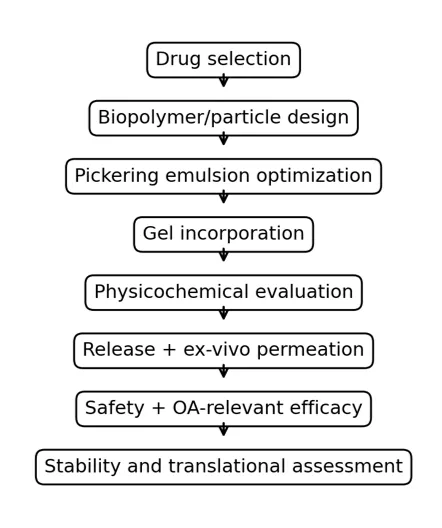
Figure 3. Proposed development pathway for a biopolymer-based nano Pickering emulgel intended for localized OA drug delivery.
14. CONCLUSION
Nano Pickering emulgels represent an emerging formulation architecture that combines particle-stabilized emulsion interfaces with the application and residence characteristics of a gel. The platform is particularly attractive for topical delivery because it can accommodate lipophilic compounds within an oil phase while using solid particles to stabilize the interface and a gel network to control product rheology. Experimental evidence with chitosan-containing Pickering emulsions, polysaccharide nanogels and chitosan/γ-polyglutamic acid Pickering emulsion gels demonstrates that biopolymer-based systems can influence skin retention, release and formulation stability.⁷,⁹,¹⁷
For OA, the technology is scientifically relevant because topical NSAIDs already have an established role in symptomatic management and ketoprofen remains a well-studied topical agent.²,³ Advanced ketoprofen nanocarrier research further demonstrates the potential of combining nanoscale carriers with gel matrices and OA-relevant evaluation.⁵ However, current evidence does not establish nano Pickering emulgels as a clinically validated OA treatment. Their value should therefore be described as an emerging formulation opportunity requiring systematic comparative, safety, stability and efficacy studies.
A dual-biopolymer system based on chitosan and pectin is a rational research direction because the polymers provide complementary electrostatic functionality and can form particulate complexes. The next stage of research should establish reproducible particle formation, Pickering stabilization, gel compatibility, controlled release, skin deposition, dermal safety and OA-relevant pharmacodynamic performance. If these relationships can be demonstrated consistently, nano Pickering emulgels may become a useful platform for localized delivery of anti-inflammatory drugs in osteoarthritis.
ETHICAL STATEMENT
Not applicable. This is a narrative review and reports no new experiments involving humans or animals.
CONFLICT OF INTEREST
The authors declare no conflict of interest.
REFERENCES






Gopikrishna S. Pai, Preethi Cherian, Krishna Priya E. K., Fasna Nargees N. H., Nimmi Thankam Biju, Athira Balachandran, Nano Pickering Emulgels for Osteoarthritis: Biopolymer-Based Formulation Approaches, Transdermal Delivery and Emerging Therapeutic Perspectives, Int. J. of Pharm. Sci., 2026, Vol 4, Issue 9, 4235-4250. https://doi.org/10.5281/zenodo.23061253
 10.5281/zenodo.23061253