

We use cookies to ensure our website works properly and to personalise your experience. Cookies policy
Shambhunath Institute of Pharmacy, Jhalwa Prayagraj
In the present study, the drug, Mebeverine Hydrochloride, was loaded onto nanosponges using double emulsification (W?/O/W?) solvent evaporation method and formulated and evaluated for sustained drug release. The polymeric matrix used was ethyl cellulose and the stabilizer used was polyvinyl alcohol. The prepared nanosponges were characterized for particle size, polydispersity index (PDI), zeta potential,entrapment efficiency, surface morphology, and in vitro drug release behavior. UV spectrophotometric analysis validated the drug content as satisfactory and FTIR study showed that the drug did not interact significantly with the formulation components. The discrete, spherical, porous nanosponges were confirmed by SEM images. The optimized formulation had a particle size ranges from 303 to 354nm and PDI was <0.3, zeta potential of ?35.9mV. The EE% ranges from 64.2% to 74.6%. The release profile of the drug in vitro exhibited sustained release properties with a release duration of up to 8 hours. Based on these results, nanosponges loaded with Mebeverine Hydrochloride are found to be a potential carrier system for developing of controlled drug delivery and therapeutic activity.
Nanosponges are very small, mesh-like structures which are capable of binding a broad spectrum of molecules such as drug molecules. They are spherical in colloidal structure, and enhance the solubilization capacity of water soluble and lipid soluble medicines.[1] They extend the release of drugs and increase the bioavailability of medicines. The amphiphile nature of nanosponges makes it possible to carry hydrophobic and hydrophilic therapeutic agents at the same time: the inside of the nanosponges has hydrophobic chambers, while their outside has hydrophilic branching.[2] They can be compared to a three-dimensional network as they consist of long-chain polyesters in the solution as well as crosslinkers linking other components of the polymer. Recently, it was found that by reacting cyclodextrins with suitable crosslinking agents, nanosponges (a type of nanostructured material) with hyper-cross-connected cyclodextrins can be generated.[3] Depending on the crosslinker used, nanosponges can be made neutral, acidic, and swellable. The final product is hollow spheres, which have spaces with medication molecules in them.[4] The ratio of cross-linking to cyclodextrin can be adjusted during the production to obtain a tailored release profile and to load the drug to the maximum extent. Nano porosity of the drug molecules can load the molecules within a nanosponge and the nanosponge can be used to interact with other drug molecules without loading, hence it can be used as effective drug loading nanosponge.[1]
Irritable bowel syndrome (IBS) is a common gastrointestinal tract disorder of 10–20% of the population worldwide. The initial symptoms of IBS are reported by about half of all patients before the age of 35, which has a detrimental impact on their ability to do their jobs.[5] The main clinical features of IBS include abdominal pain with stool passage and changes in bowel movements or stool consistency. Though the pathophysiology of IBS is not fully understood, all of these factors are thought to play a role in the pathogenesis of IBS.[6]
Mebeverine is an antispasmodic drug that is prescribed for intestinal smooth muscle spasms and intestinal functional abnormalities, which lead to abdominal discomfort during IBS. It is able to regulate and relax the intestinal muscles. Even before the Rome I criteria for diagnosing IBS were published in 1992, studies evaluating Mebeverine's efficacy in treating IBS stretch back to the 1960s. The last systematic review and meta-analysis on the efficacy of Mebeverine in the treatment of IBS dates more than 10 years back. This study aimed to systematically review the data currently available to assess the efficacy and safety of Mebeverine in patients diagnosed using IBS diagnostic criteria (Rome I–IV and other than Rome) with bowel symptoms including abdominal discomfort/pain, distention, abnormal bowel habits, bloating, constipation and diarrhoea.[7]
MATERIALS
Mebeverine HCl was obtained from Digital Vision, H.P. as a gift sample. Ethyl Cellulose, Polyvinyl Alcohol, Ethyl Acetate and 0.1N HCl was procured from college lab.
METHOD
Preparation of Mebeverine Hydrochloride Nanosponges:
Mebeverine Hydrochloride nanosponges were prepared by the double emulsification (W₁/O/W₂) method. Initially, 100 mg of ethyl cellulose was accurately weighed and dissolved in 10 mL of ethyl acetate to obtain a clear organic phase. Separately, Mebeverine Hydrochloride was dissolved in 1 mL of distilled water to prepare the internal aqueous phase (W₁). The drug solution was then added slowly to the organic phase and immediately homogenized using a high-speed homogenizer to form a primary water-in-oil (W₁/O) emulsion. For the external aqueous phase (W₂), a 2% polyvinyl alcohol (PVA) solution was prepared by dissolving PVA in distilled water under continuous stirring at 60°C until a clear solution was obtained, followed by cooling to room temperature. The primary emulsion was slowly added to the PVA solution under continuous stirring, and the mixture was maintained in an ice bath to prevent overheating. Subsequently, probe sonication was carried out for 15 minutes in pulse mode (30 seconds on and 30 seconds off) to obtain a stable W₁/O/W₂ emulsion. The emulsion was further homogenized at 12,000 rpm for 15 minutes to achieve the desired particle size. Solvent evaporation was then performed by stirring the emulsion on a magnetic stirrer for 4–6 hours at room temperature to remove the organic solvent. The resulting nanosponge dispersion was centrifuged at 15,000 rpm for 15 minutes, and the supernatant was discarded. The collected pellets were washed two to three times with distilled water to remove residual stabilizer and unentrapped drug. Finally, the washed pellets were freeze-dried for 2 hours, and the dried nanosponges were collected and stored in a cool and dry place until further use.[8]
UV Spectroscopy of Mebeverine Hydrochloride:
Mebeverine Hydrochloride exhibits a characteristic maximum absorption value of UV spectrophotometric analysis (λmax) in a suitable solvent at around 263 nm. A simple, accurate and reliable UV method can be applied following Beer-Lambert's Law over a valid concentration range.[9]Top of Form
Characterization of Drug Loaded Nanospoge:
Scanning Electron Microscopy (SEM): Nanosponges can be scanned in a microscopical study using electron microscopes. The difference in the crystallization state of starting materials and the product, as seen in electron microscopy, is an example of the formation of inclusion complexes.[10]
Entrapment Efficacy (EE%): A UV spectrophotometer can be used to quantify the amount of drug trapped in the nanosponges, which allows the entrapment efficiency of the nanosponges to be determined. The following formula can be used to determine the amount of medication trapped in nanosponges.[11]
EE%=Total drug-Free drugTotal drug×100

Particle size and PDI: Dynamic light scattering (DLS) can be used to measure the particle size. This can be used to calculate the polydispersity index and the mean diameter.[2]
Zeta potential: Zeta potential is used to measure surface charge. An extra electrode in the particle size apparatus can be used to measure it.[2]
Fourier-transform infrared spectroscopy (FTIR): FTIR spectroscopic analysis was done to check the compatibility of drugs and the polymers used and the physical mixture of the drugs and the polymer. FTIR spectrophotometer was used to obtain the spectra.[12]
In vitro drug release: The drug release pattern of the nanosponge is being investigated. The drug complexed dispersion in the donor compartment of the Franz diffusion cell is an aqueous nanosponge dispersion and the receptor compartment is filled with Phosphate buffer for research. The two compartments are separated by a dialysis membrane. Periodically, the receptor buffer was completely removed and replaced with unsaturated buffer. Analytical approach is used to determine the amount of drug left, and drug release.[13]Bottom of Form
RESULT AND DISCUSSION
UV spectroscopy
λmax of Mebeverine HCl was obtained 263nm under UV spectroscopy which is shown below:
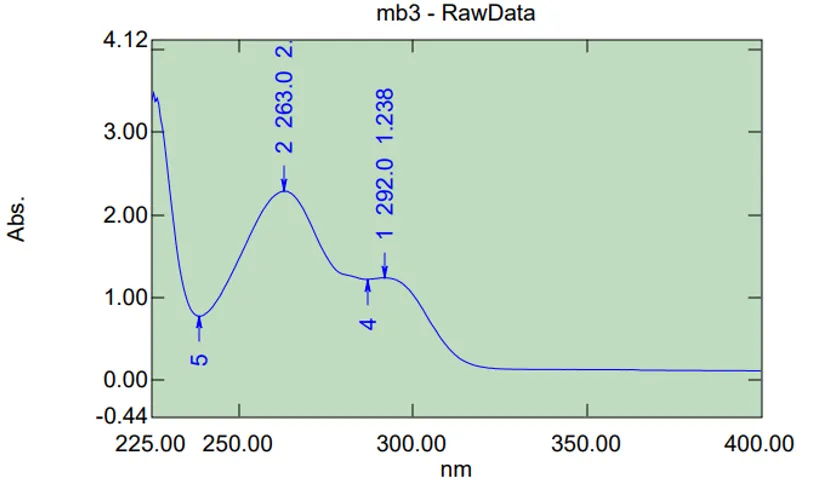
Figure: UV Spectroscopy Image of Mebeverine HCl
Calibration Curve of Mebeverine HCl
The absorbance data points were subjected to a linear regression analysis, which provided a straight line to help predict the drug quantity using a linear equation. The result was a regression value of 0.998.
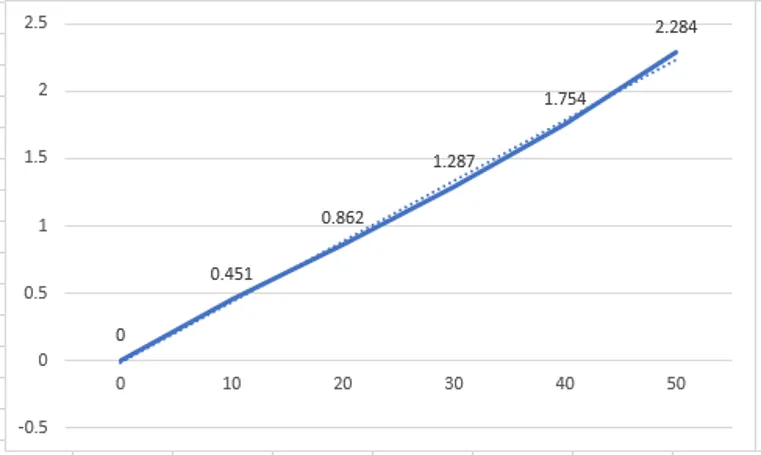
Figure: Calibration Curve of Mebeverine HCl
Table: Statistical data for calibration curve
|
Sr. No. |
Parameters |
Values |
|
1. |
λmax |
263nm |
|
2. |
Slope |
0.0450 |
|
3. |
R 2 |
0.998 |
Surface Morphology:
Using scanning electron microscope surface morphology of the Mebeverine HCl nanosponge formulation was assessed. Using double-sided sticky tape, the sample was immediately placed onto the SEM sample holder, and scanning electron microscopy pictures were captured at 11mm x 3000 SE magnifications at an acceleration voltage of 15 kV. The nanosphere's SEM picture is displayed in below figure.
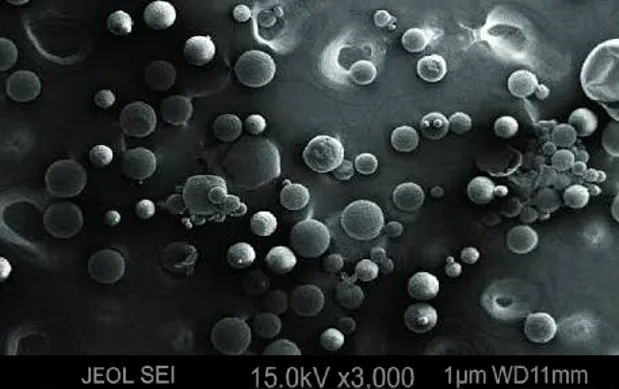
Figure: SEM of Mebeverine HCL Nanosponges
Percentage Yield:
The reported percentage yield was obtained 78 % which shows that the nanosponge contains a good amount of medicament.
Percentage Drug Entrapment Efficacy:
The nanosponges had entrapment efficacy between 64.2 to 74.6. The highest drug entrapment efficacy was 74.6.
F2 selected as optimized batch.
Particle size:
The Dynamic light scattering (DLS) method was used to analyse the mean particle size of nanosponges. These nanosponges minimum average diameter were reported to 303 nm & maximum average diameter to 354 nm.
Particle Size Analysis (DLS)
Table: Data of particle size of different batches
|
Batch |
Trial 1 (nm) |
Trial 2 (nm) |
Trial 3 (nm) |
Mean ± SD |
|
F1 |
309 |
318 |
321 |
316 ± 6.24 |
|
F2 |
345 |
351 |
354 |
350 ± 4.58 |
|
F3 |
303 |
310 |
320 |
311 ± 8.54 |
PDI
Table: Data of Polydispersity Index
|
Batch |
PDI |
|
F1 |
0.28 |
|
F2 |
0.27 |
|
F3 |
0.24 |
Particle size increased with increase in polymer concentration. PDI <0.3 confirms uniform distribution.
Zeta Potential
The majority of the nanosphere particles in the formulation had this charge, as seen by the plot's peak at -35.9 mV, indicating a strong affinity between the particles.
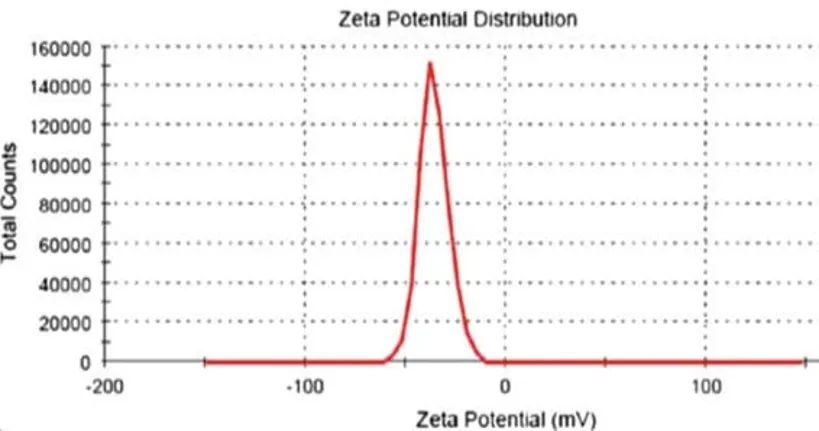
Figure: Zeta potential of Mebeverine HCl nanosponge
FTIR study
According to FTIR spectroscopy analysis, showed that the presence of characteristics functional group in the sample and there is no significant chances in characteristics peak of Mebeverine HCl, indicates the chemical stability and absence of drug-polymer interaction.The characteristics peak of Mebeverine HCl -OH/ -NH, aromatic, C-N are present. Peak 3458.09 cm-1 shows the presence of O-H & N-H stretching, 1634.45 cm-1 shows the aromatic C=C / N-H blending, 1384.35 cm-1 indicates C-N stretching/ CH3 blending & 525.82 cm-1 shows the aromatic ring deformation, these peaks confirms the compatibility of Mebeverine HCl with PVA and Eudragit RS-100 and Mebeverine HCl is stable in nanosponge with these polymers.
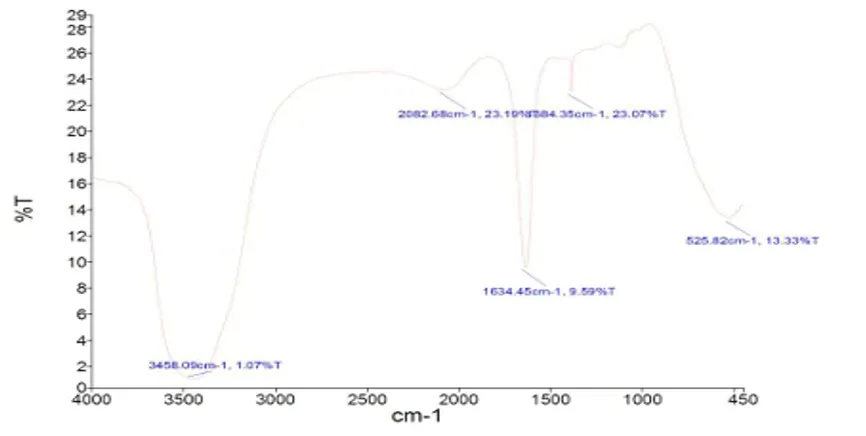
Figure: FTIR of Mebeverine HCl loaded nanosponge
In-vitro Drug release:
In an in-vitro dissolution test, Mebeverine HCl loaded nanosphere released the medication for upto 08 hrs. The drug release increased in proportion to time, indicating that the medication will remain in body for a longer period of time and release continuously over time.
Medium: pH 6.8 Phosphate Buffer
Speed: 100 rpm
Temp: 37±0.5°C
Dissolution Data
Table: Statistical data of dissolution study
|
Time (Hrs) |
F1 (%) |
F2(%) |
F3(%) |
|
1 |
29 |
16 |
26 |
|
2 |
37 |
29 |
41 |
|
4 |
49 |
51 |
52 |
|
6 |
62 |
69 |
69 |
|
8 |
75 |
82 |
76 |
Table: Statistical table of F2 for % drug release
|
Time |
% Drug Release |
|
0 |
0 |
|
1 |
16 |
|
2 |
29 |
|
4 |
51 |
|
6 |
69 |
|
8 |
82 |
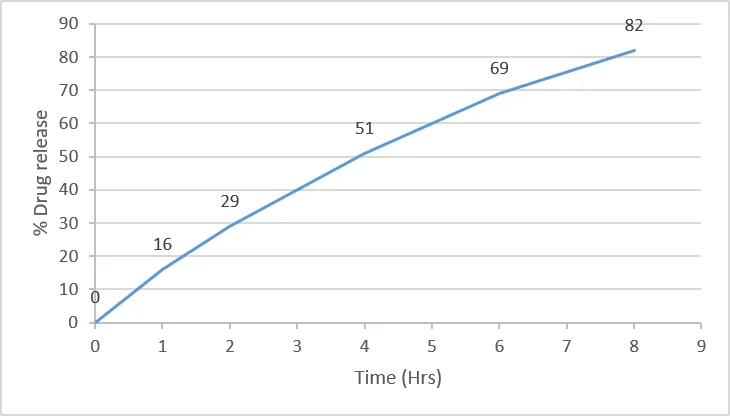
Figure: Graph of F2 drug release
CONCLUSION
The present study successfully formulated Mebeverine Hydrochloride-loaded nanosponges using the double emulsification solvent evaporation method. The optimized formulation exhibited suitable particle size, high entrapment efficiency, good stability, and sustained drug release for up to 8 hours. These findings indicate that nanosponges are a promising carrier system for controlled delivery of Mebeverine Hydrochloride, with the potential to improve therapeutic efficacy and patient compliance.
REFERENCES


Sandeep Pandey, Sagar Bansal, Mohammad Sarfraz, Anurag Dwivedi, Formulation and Evaluation of Mebeverine Hydrochloride-Loaded Nanosponges for Sutained Drug Release, Int. J. of Pharm. Sci., 2026, Vol 4, Issue 7, 4344-4351. https://doi.org/10.5281/zenodo.21483691
 10.5281/zenodo.21483691