

We use cookies to ensure our website works properly and to personalise your experience. Cookies policy
Siddhant college of pharmacy pune.
Mental stress and cognitive fatigue have quietly become two of the most widespread yet underaddressed health concerns of the twenty-first century. They cross all demographic boundaries — affecting school students sitting for board examinations, postgraduate researchers facing publication deadlines, working professionals navigating demanding careers, and elderly individuals coping with age-related cognitive decline. What makes this situation particularly complex is the absence of a simple, safe, and sustainable therapeutic solution. Pharmaceutical anxiolytics and cognitive enhancers do exist, but they carry significant burdens: dependency risks, adverse effect profiles, and the general reluctance of individuals to seek prescription-based treatment for what is frequently perceived as an ordinary life challenge.Against this backdrop, plant-based therapeutic interventions especially those rooted in ancient, well-validated traditional medicine systems offer a compelling and scientifically credible alternative. This project set out to develop a Moringa-based polyherbal tea powder formulation that integrates the individual pharmacological strengths of eight carefully selected botanicals into a unified, synergistic product designed for daily use in stress management and cognitive health support The primary ingredient, Moringa oleifera leaf powder (37%), was selected for its exceptional nutritional density, anti-inflammatory activity, neuroprotective properties, and documented anxiolytic effects. It was combined with Withania somnifera root powder (15%) for HPA axis regulation and memory enhancement; Bacopa monnieri whole-plant powder (10%) for cholinergic stimulation and nootropic activity; Ocimum sanctum leaf powder (10%) for its anti-stress, immunomodulatory, and MAO-inhibitory properties; Zingiber officinale rhizome powder (10%) as a neuroprotectant and bioavailability enhancer for co-administered polyphenols; Mentha piperita leaf powder (5%) for cognitive alertness through olfactory limbic activation; Citrus limon dried peel powder (5%) for anxiolytic hesperidin and aromatic citrus contribution; and Glycyrrhiza glabra root powder (8%) for 11-beta- HSD modulation and natural palatability enhancement.The formulation was prepared by standardised geometric dilution blending and subjected to comprehensive evaluation: organoleptic characterisation, physicochemical parameter testing (bulk density, tapped density, Carr's Index, Hausner Ratio, angle of repose, moisture content, loss on drying, infusion pH, total ash, and acid-insoluble ash), qualitative phytochemical screening for nine classes of secondary metabolites, sensory evaluation by 25 healthy volunteers using a validated 9-point hedonic scale, and a 30-day short-term accelerated stability study at 40°C ± 2°C / 75% ± 5% RH (ICH Q1A(R2)) with observations at Day 0, Day 15, and Day 30.
1.1 Background and Rationale
Anyone who has sat down to study before an important examination and found their mind stubbornly refusing to retain what their eyes are reading has experienced, in the most personal way possible, what sustained stress does to the human brain. The experience is not merely psychological — it is the direct biological consequence of a well-characterised neurological cascade. When the brain perceives a threat, whether physical, emotional, or academic, the hypothalamus releases corticotropin-releasing hormone (CRH), which signals the anterior pituitary to secrete adrenocorticotropic hormone (ACTH). ACTH then acts on the adrenal cortex to trigger cortisol release — the body's primary stress hormone.
In small doses, cortisol is genuinely useful. It sharpens attention, mobilises glucose reserves, and helps the body respond to demanding circumstances. But when the stressor is chronic — as it is for millions of students, healthcare workers, and caregivers in the twenty-first century — the sustained elevation of cortisol begins to cause measurable structural and functional harm. It suppresses hippocampal neurogenesis, disrupts long-term potentiation (the molecular basis of memory consolidation), downregulates brain-derived neurotrophic factor (BDNF), promotes neuroinflammation through NF-kB activation, and depletes synaptic serotonin and dopamine. The result is a predictable pattern of cognitive decline, emotional dysregulation, and physical exhaustion that progressively compromises quality of life.
The World Health Organization estimates that stress-related mental health conditions affect well over 450 million people globally. [18] Anxiety disorders alone are among the leading causes of disability worldwide. In India, surveys suggest that over 70% of adults report significant stress impacts on their daily functioning. The conventional pharmaceutical response — benzodiazepines for acute anxiety, SSRIs for chronic anxiety and depression, modafinil-type stimulants for cognitive fatigue — provides partial symptomatic relief but carries a well-
Known Constellation Of Adverse Effects:
physical dependence, withdrawal syndromes, emotional blunting, and the social stigma that continues to surround psychiatric medication use.
This has directed growing scientific attention toward plant-based adaptogens — a category of botanicals defined by their ability to help the body resist and recover from biological, physical, and psychological stressors without disturbing normal homeostatic function. Unlike sedatives or stimulants, adaptogens do not force the neuroendocrine system in a single direction. Instead, they facilitate a recalibration toward balance — normalising HPA axis overactivity, rebuilding neurotransmitter reserves, and protecting neural tissue from stress-induced oxidative and inflammatory damage. The theoretical framework for adaptogens was formalised in modern pharmacology by Brekhman and Dardymov (1968), but the clinical knowledge that informed their definition had accumulated across centuries in Ayurvedic, Unani, and Traditional Chinese Medicine systems.
At the centre of this project stands Moringa oleifera, widely known as the Miracle Tree. Its leaves have been used therapeutically for over four thousand years, and modern phytochemical analysis has validated why: the leaves contain a concentration of quercetin, kaempferol, chlorogenic acid, isothiocyanates (especially the anti-inflammatory compound moringin), zeatin, all nine essential amino acids, and vitamins A, C, and E that is unmatched [1,12] in the plant kingdom for nutritional and phytomedicinal breadth. Pharmacological studies have confirmed neuroprotective, anti-inflammatory, anxiolytic, and AChE-inhibitory activities that align directly with this project's therapeutic goals.
Seven additional botanicals were selected to complement Moringa's action from different mechanistic angles. Withania somnifera targets the HPA axis through withanolide-mediated CRH suppression and GABA-A potentiation. Bacopa monnieri acts on cholinergic and serotonergic pathways to enhance memory consolidation. Ocimum sanctum modulates monoamine oxidase and corticosterone. Zingiber officinale provides neuroprotection via NF-kB inhibition and enhances systemic bioavailability of co-administered polyphenols through P-glycoprotein inhibition. Mentha piperita activates cognitive alertness through olfactory limbic stimulation.
Citrus limon peel contributes hesperidin-mediated GABAergic anxiolysis and d-limonene-driven cortisol reduction. Glycyrrhiza glabra modulates 11-beta-HSD activity and provides natural sweetening to counterbalance the inherent bitterness of several components.
The delivery vehicle — a dry herbal tea powder for hot water infusion — was chosen deliberately. Hot aqueous extraction is selectively efficient for water-soluble polyphenols, saponins, alkaloids, and flavonoid glycosides that constitute the primary pharmacological agents in this formulation. The tea preparation ritual itself has documented psychophysiological calming effects: the warmth, aroma, and mindful preparation process activate parasympathetic tone, reduce heart rate, and lower cortisol — synergising with the pharmacological activity of the phytoconstituents consumed. The powder format ensures consistent dosing, extended shelf life, and broad demographic accessibility.
1.2 Herbal Tea Powders as a Pharmaceutical Dosage Form
Among the various herbal product categories — capsules, tablets, tinctures, and standardised extracts — dry herbal tea powder blends occupy a historically unique and scientifically underexplored position. They represent the oldest pharmaceutical dosage form in human history, yet remain highly relevant in contemporary nutraceutical science.
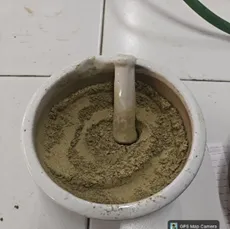
From a pharmaceutical technology standpoint, a dry herbal tea powder blend is a solid dosage form requiring assessment of the same parameters as any pharmaceutical powder: particle size distribution, blend uniformity, bulk and tapped density, flow properties, moisture content, and ingredient compatibility. What distinguishes herbal tea powders is that the final therapeutic agent is not the dry powder itself but the aqueous infusion prepared from it — introducing an additional quality consideration: the efficiency and selectivity of phytoconstituent extraction into hot water, and the sensory characteristics of the resulting infusion.For a formulation targeting cognitive and stress outcomes, the infusion preparation step carries an additional psychophysiological dimension. The act of preparing a warm, aromatic herbal beverage is itself a ritualistic behaviour that has been associated in psychoneuroimmunology research with activation of the parasympathetic nervous system, reduction of salivary cortisol and alpha-amylase concentrations, and improvement of self-reported mood, all of which synergise with the pharmacological activity of the phytoconstituents consumed.
1.3 Problem Statement
Despite the substantial body of published evidence supporting the individual efficacy of each of the eight herbs in this formulation, a standardised, multi-herb dry tea powder explicitly designed for the combined therapeutic objectives of stress reduction and cognitive enhancement — with Moringa oleifera as the primary ingredient — has not been documented in the reviewed scientific literature. Commercially available herbal stress teas are predominantly single- or dual-herb products prepared empirically, without systematic physicochemical characterisation, phytochemical standardisation, or stability testing. The present project addresses this gap by applying a systematic pharmaceutical development approach to a traditional wellness concept.
1.4 Scope and Limitations
The scope of this investigation encompasses raw material procurement and processing, formulation development by geometric blending, organoleptic and physicochemical evaluation, qualitative phytochemical profiling, hedonic sensory assessment by a volunteer panel, and a 30-day accelerated stability study. In-vivo pharmacological testing, quantitative HPLC-based phytochemical standardisation, and human clinical trials fall outside the scope of the current project and are identified as priority areas for future research.
2 LITERATURE REVIEW
A thorough literature review was conducted across PubMed, Google Scholar, Scopus, and ScienceDirect databases using botanical names combined with terms such as adaptogen, neuroprotection, stress, anxiety, cognition, memory, HPA axis, and phytochemistry. The following subsections summarise key findings for each botanical with direct relevance to this formulation's therapeutic objectives.
2.1 Moringa oleifera — The Miracle Tree
Taxonomy and Botanical Description: Moringa oleifera Lam. (Family: Moringaceae) is a fast-growing, drought-tolerant deciduous tree of 10 to 12 metres, native to the sub-Himalayan tracts of North-West India and now cultivated across tropical and subtropical Africa, Asia, and Latin America. It is known as Sahjan (Hindi), Murungai (Tamil), Shevga (Marathi), and Drumstick tree (English). The leaves — tripinnate to tetrapinnate with small ovate leaflets — are the primary medicinal and nutritional part used in this formulation.
Phytochemical Composition: Moringa leaf powder contains an extraordinary diversity of secondary metabolites. Glucosinolates and their hydrolysis products — particularly 4-(alpha-L-rhamnopyranosyloxy)-benzyl isothiocyanate (moringin) — are the most pharmacologically distinctive compounds and confer anti-inflammatory, neuroprotective, and pro-apoptotic effects. Flavonoids include quercetin, kaempferol, and rutin; phenolic acids include chlorogenic acid, caffeic acid, and ferulic acid. All nine essential amino acids are present, along with the unique cytokinin zeatin. Published nutritional analyses confirm concentrations of Vitamins A, C, and E substantially exceeding those of reference foods.
Pharmacological Relevance: In-vivo animal studies using the elevated plus maze and open field test have demonstrated anxiolytic effects of Moringa leaf extract comparable to reference anxiolytics at doses of 200 to 400 mg/kg, with simultaneously lower plasma corticosterone concentrations in treated groups. Mechanistically, quercetin and moringin modulate GABA-A receptor activity, inhibit NF-kB-mediated hippocampal neuroinflammation, activate Nrf2-driven antioxidant enzyme upregulation, and inhibit acetylcholinesterase — all mechanistic targets directly relevant to both stress management and cognitive enhancement. [1,12]
2.2 Withania somnifera — Ashwagandha
Botanical Description: Withania somnifera (L.) Dunal (Family: Solanaceae) is a short, erect, branching perennial shrub of 30 to 150 cm with ovate-lanceolate leaves and characteristic small red berries enclosed in papery calyces. It is native to dry regions of India, North Africa, and the Mediterranean, and is commercially cultivated in Rajasthan, Madhya Pradesh, and Gujarat. The root is the primary medicinal part, characterised by an earthy, horse-like odour from which the Sanskrit name 'Ashwagandha' (horse smell) is derived.
Phytochemistry and Pharmacology: Ashwagandha root contains over 40 steroidal lactones called withanolides (withaferin A, withanolide A and D being most studied), sitoindosides VII to X (glycowithanolides), and several alkaloids including withanine and somniferine. [2,14] A landmark randomised controlled trial (Chandrasekhar et al., 2012) [3] documented a 27.9% reduction in serum cortisol, 44% reduction in perceived stress scores, and 22% reduction in Hamilton Anxiety Scale scores following 60-day supplementation. Mechanistically, withanolides suppress CRH secretion from the hypothalamus, potentiate GABA-A receptor sensitivity for anxiolysis without sedation, inhibit acetylcholinesterase to improve cholinergic neurotransmission, and promote hippocampal neuroplasticity by upregulating axonal growth and dendritic proliferation. [2,14]
2.3 Bacopa monnieri — Brahmi
Botanical Description and Traditional Use: Bacopa monnieri (L.) Wettst. (Family: Plantaginaceae) is a small, succulent, creeping herb of marshy habitats, bearing small fleshy leaves and pale purple flowers. Cultivated throughout India, Sri Lanka, and Southeast Asia, it has been used as a medhya rasayana in Ayurveda for over 3,000 years — specifically to enhance intellect, memory, speech, and mental clarity, as documented in the Charaka Samhita. [4,5]
Phytochemistry and Clinical Evidence: The primary bioactives are bacosides A and B — dammarane-type triterpenoid saponins present at 5 to 8% in standardised extracts. They facilitate neuronal repair by stimulating hippocampal kinase activity (promoting new synaptic protein synthesis) and reducing lipid peroxidation of synaptic membranes. A systematic review and meta-analysis (Kongkeaw et al., 2014) [5] confirmed statistically significant improvements in memory acquisition, logical memory, and information processing speed across multiple randomised trials. Effects
are dose-dependent and require 4 to 12 weeks of consistent use for full establishment, consistent with the mechanism of structural synaptic enhancement. [4,5,15]
2.4 Ocimum sanctum — Tulsi (Holy Basil)
Ocimum sanctum L. (Family: Lamiaceae) is a highly aromatic erect herb of 30 to 60 cm bearing ovate-dentate leaves. Its essential oil is characterised by eugenol (60–70%), with additional volatile and non-volatile constituents including ocimumosides A and B — uniquely characterised anti-stress triterpene glycosides not found in other Ocimum species. Animal studies using forced swimming and cold restraint stress models have demonstrated that ocimumosides A and B reduce plasma corticosterone, normalise serotonin and dopamine in the prefrontal cortex and hippocampus, and attenuate adrenal hypertrophy. [6] Eugenol's MAO inhibitory activity elevates synaptic serotonin and dopamine, adding antidepressant and pro-cognitive dimensions. [10] Tulsi also demonstrates significant immunomodulatory activity — particularly relevant given the established immunosuppressive consequences of chronic stress.
2.5 Zingiber officinale — Ginger
Zingiber officinale Roscoe (Family: Zingiberaceae) produces a thick, aromatic rhizome containing phenylalkanones — principally 6-gingerol, 8-gingerol, 10-gingerol, and their dehydration products shogaols and zingerone — and a volatile oil rich in zingiberene and bisabolene. In the neurological context, 6-gingerol inhibits AChE in enzyme kinetics studies and attenuates scopolamine-induced cognitive deficits in animal models. [7] Most importantly for a polyherbal formulation, ginger constituents inhibit intestinal P-glycoprotein efflux transporters, thereby increasing the bioavailability of co-administered polyphenols and saponins. [13] This pharmacokinetic synergy potentially amplifies the effective brain concentrations of bacosides, withanolides, and quercetin beyond levels predicted from individual compound pharmacokinetics.
2.6 Mentha piperita — Peppermint
Mentha piperita L. (Family: Lamiaceae) bears aromatic leaves containing 0.5 to 4% essential oil — characterised by menthol (35–55%), menthone (15–25%), and menthyl acetate (3–10%). Clinical research has consistently demonstrated that peppermint aroma enhances alertness, sustained attention, working memory, and memory quality in healthy adults. [8] The mechanisms involve direct olfactory stimulation of the hippocampus and limbic system through the olfactory bulb pathway, and TRPM8 channel activation by ingested menthol, producing a sensory cooling effect associated with reduced mental fatigue. In the formulation, Peppermint at 5% contributes immediate aromatic appeal and rapid-onset cognitive activation.
2.7 Citrus limon — Lemon Peel Powder
Dried Citrus limon (L.) Burm. f. (Family: Rutaceae) peel concentrates hesperidin, naringenin, tangeretin, nobiletin, and d-limonene. Hesperidin crosses the blood-brain barrier and produces anxiolytic and antidepressant effects through serotonin 5-HT1A modulation and GABA-A potentiation in animal models. D-limonene, the primary volatile constituent, has been shown in clinical aromatherapy studies to reduce salivary cortisol and improve self-reported anxiety and fatigue in participants under work-related stress. Lemon peel also contributes a bright citrus aromatic character that effectively counterbalances the earthy, medicinal notes of Moringa and Ashwagandha, substantially improving overall palatability.
2.8 Glycyrrhiza glabra — Licorice (Mulethi)
Glycyrrhiza glabra L. (Family: Fabaceae) is a perennial herb of 1 to 1.5 metres whose dried roots contain glycyrrhizin (2–15%), the primary bioactive triterpenoid saponin. After oral ingestion, glycyrrhizin is metabolised to 18-beta-glycyrrhetinic acid, which inhibits 11-beta-hydroxysteroid dehydrogenase type 1 (11-beta-HSD1) — the enzyme that converts inactive cortisone to active cortisol in hippocampal and prefrontal cortical tissues. [11] This targeted reduction of local glucocorticoid activity protects hippocampal volume and prevents stress-induced dendritic retraction. Additional flavonoids including isoliquiritigenin provide MAO-B inhibitory and neuroprotective activity. At 8% of the formulation, licorice also functions as a natural sweetener approximately 50 to 100 times sweeter than sucrose, substantially improving tea palatability without added sugars or artificial sweeteners. [11]
4.9 Scientific Basis of Polyherbal Synergy
The concept of polyherbal synergy is supported by multiple pharmacological principles. [16] First, multi-target pharmacology: chronic stress and cognitive decline simultaneously involve HPA axis dysregulation, neurotransmitter imbalances, hippocampal neuroplasticity deficits, neuroinflammation, and oxidative stress — no single herb comprehensively addresses all these pathways. This formulation assigns complementary herbs to each mechanistic domain. Second, pharmacokinetic synergy: ginger's P-gp inhibition enhances intestinal absorption of polyphenols from Moringa, Tulsi, and Lemon peel, effectively increasing brain-accessible concentrations of multiple bioactives. Third, palatability synergy: the bitterness of Brahmi and Ashwagandha is offset by the sweetness of Licorice and the citrus brightness of Lemon peel, making the formulation genuinely pleasant to consume without synthetic additives.
3. AIM AND OBJECTIVES
Primary Aim
To formulate and evaluate a stable, palatable, and phytochemically characterised Moringa-based polyherbal tea powder for the support of stress management and cognitive health, in compliance with applicable pharmaceutical quality standards for herbal preparations.
Specific Objectives
To conduct a comprehensive review of published phytochemical, pharmacognostical, and pharmacological literature on all eight selected botanical ingredients and provide an evidence-based scientific justification for their selection, inclusion, and proportions in the formulation.
To individually process each botanical ingredient through standardised pharmaceutical operations — oven drying at 45°C, size reduction, and sieving through BSS Sieve No. 44 (355 micron) — to achieve uniform particle size before blending.
To prepare the Moringa-based polyherbal tea powder by the geometric dilution blending method, ensuring homogeneous distribution of all eight components.
To perform complete organoleptic evaluation of the formulated powder, assessing colour, odour, taste, texture, and general physical appearance.
To conduct comprehensive physicochemical characterisation, including bulk density, tapped density, Carr's Index, Hausner Ratio, angle of repose, moisture content (LOD), infusion pH, total ash, and acid-insoluble ash.
To perform qualitative phytochemical screening for alkaloids, flavonoids, tannins, saponins, terpenoids, phenolic compounds, steroids, cardiac glycosides, and carbohydrates.
To evaluate the sensory acceptability of the herbal tea infusion using a 9-point hedonic scale with a panel of 25 healthy adult volunteers, assessing colour, aroma, taste, mouthfeel, and overall acceptability.
To conduct a 30-day short-term accelerated stability study at 40°C ± 2°C / 75% ± 5% RH (ICH Q1A(R2)), recording colour, odour, pH, moisture content, and Carr's Index at Day 0, Day 15, and Day 30.
4. PLAN OF WORK
5. MATERIALS AND METHODS
5.1 Raw Materials — Procurement and Authentication
All eight herbal powders were procured from Kanha Traders (Pune), a certified herbal raw material supplier. Upon receipt, each batch was authenticated against published pharmacopoeial monographs (Indian Pharmacopoeia 2022, Ayurvedic Pharmacopoeia of India) [21,25] by physical characteristic examination (colour, texture, odour) and acceptance of supplier certificates of analysis. Materials not meeting physical characteristic criteria were rejected and reordered.
Table 1: Raw Materials Used in the Formulation (Per 100 g Batch)
|
No. |
Common Name |
Botanical Name |
Family |
Part Used |
Proportion (%) |
|
1 |
Moringa |
Moringa oleifera Lam. |
Moringaceae |
Leaf powder |
37 |
|
2 |
Ashwagandha |
Withania somnifera (L.) Dunal |
Solanaceae |
Root powder |
15 |
|
3 |
Brahmi |
Bacopa monnieri (L.) Wettst. |
Plantaginaceae |
Whole plant powder |
10 |
|
4 |
Tulsi |
Ocimum sanctum L. |
Lamiaceae |
Leaf powder |
10 |
|
5 |
Ginger |
Zingiber officinale Roscoe |
Zingiberaceae |
Rhizome powder |
10 |
|
6 |
Peppermint |
Mentha piperita L. |
Lamiaceae |
Leaf powder |
5 |
|
7 |
Lemon Peel |
Citrus limon (L.) Burm. f. |
Rutaceae |
Dried peel powder |
5 |
|
8 |
Licorice |
Glycyrrhiza glabra L. |
Fabaceae |
Root powder |
8 |
5.2 Equipment Used
Table 2: Equipment Used in the Study
|
Equipment |
Model / Specification |
Purpose |
|
Analytical Balance |
Shimadzu AUW220D (0.1 mg sensitivity) |
Accurate ingredient weighing |
|
Hot Air Oven |
Memmert UN55 (up to 220°C) |
Drying and LOD determination |
|
Mechanical Sieve Shaker |
BSS mesh No. 44 (355 µm) |
Particle size standardisation |
|
Tap Density Apparatus |
Electrolab ETD-1020 |
Tapped density measurement |
|
Digital pH Meter |
Hanna HI2211 (±0.01 pH) |
Infusion pH measurement |
|
Stability Chamber |
Remi CHM-10S (40°C/75% RH) |
30-day accelerated stability |
|
Muffle Furnace |
INDFURR MF-1 (up to 1200°C) |
Total ash determination |
|
100 mL Grad. Cylinder |
Borosilicate glass, Class A |
Bulk/tapped volume measurement |
5.3 Preparation of the Herbal Tea Powder
5.3.1 Pre-processing of Individual Powders
Each herbal powder was processed individually before blending. Moisture reduction: powders with moisture content exceeding 6% were dried in the hot air oven at 45°C for 2 hours. This temperature was deliberately kept below 50°C to prevent thermal degradation of heat-labile volatile oils (Peppermint, Ginger, Tulsi) and steroidal lactones (Ashwagandha). Particle size standardisation: all dried powders were passed through the BSS Sieve No. 44 (355-micron aperture). Fractions passing through the sieve were collected; coarser fractions were discarded. All processed powders were stored in airtight, labelled HDPE containers at 25°C ± 2°C until blending.
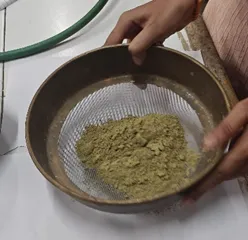
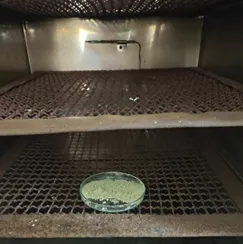
5.3.2 Geometric Dilution Blending
The geometric dilution method was employed to achieve homogeneous distribution of all eight components. Blending began with the two smallest-proportion ingredients: Peppermint (5 g) and Lemon peel (5 g) were combined and mixed thoroughly by spatula in a clean, dry glass mortar for 3 minutes. Licorice (8 g) was then added and mixed for 3 minutes. This process continued in ascending order of proportion: Brahmi
(10 g), Tulsi (10 g), Ginger (10 g), Ashwagandha (15 g), and finally Moringa (37 g). Each addition was followed by 3 to 5 minutes of thorough mixing. The complete 100 g blend was tumbled in a sealed stainless steel container for 15 minutes to achieve final homogeneity.
5.3.3 Packaging
The final blended powder was filled into UV-protective, food-grade, heat-sealable aluminium foil laminate pouches (100 g per pouch) and sealed immediately using a bench-top impulse heat sealer. Stability study samples were packed as 10 g sub-pouches. All pouches were stored at room temperature (25°C ± 2°C) in a dry location until testing.
5.4 Organoleptic Evaluation
Organoleptic properties were assessed by two trained evaluators working independently under standard laboratory conditions. Colour and appearance were assessed by visual inspection under natural daylight. Odour was evaluated by direct olfaction immediately after opening a sealed pouch. Taste was assessed by dissolving 0.5 g powder in 50 mL warm distilled water and evaluating the cooled infusion. Texture was assessed by rubbing a small quantity between thumb and index finger.
5.5 Physicochemical Evaluation
Bulk Density: Twenty grams of formulated powder was carefully poured through a funnel into a 100 mL graduated measuring cylinder without compaction. The occupied volume was recorded. Bulk Density (g/mL) = Mass / Bulk Volume.
Tapped Density: The cylinder from bulk density was tapped 500 times at 300 taps/minute on the Electrolab apparatus (IP method). Final tapped volume was recorded. Tapped Density (g/mL) = Mass / Tapped Volume.
Carr's Index and Hausner Ratio: Carr's Index (%) = [(Tapped Density – Bulk Density) / Tapped Density] × 100. Hausner Ratio = Tapped Density / Bulk Density. Flow classification: Carr's Index <15% (Excellent), 15–25% (Good), 25–35% (Fair), >35% (Poor).
Angle of Repose: Fixed funnel method: powder was poured through a funnel fixed 10 cm above a flat surface until the cone touched the funnel tip. Height (h) and base radius (r) were measured. Angle of repose (θ) = arctan (h/r).
Moisture Content (Loss on Drying): Approximately 2 g powder was weighed in a pre-tared crucible and dried at 105°C for 3 hours. LOD (%) = [(Initial – Final weight) / Initial weight] × 100. Acceptable limit: <6%.
pH of Aqueous Infusion: One gram of powder was infused in 100 mL of freshly boiled distilled water (90°C) for 5 minutes, filtered through Whatman No. 1 paper, cooled to 25°C, and pH measured with the Hanna HI2211 calibrated with pH 4.0 and 7.0 buffers. Three readings were taken and the average reported.
Total Ash and Acid-Insoluble Ash: Three grams of powder was incinerated in a muffle furnace at 600°C for 4 hours. Total Ash (%) = [Weight of ash / Weight of sample] × 100. Acid-insoluble ash was determined by boiling total ash with 25 mL of 10% HCl for 5 minutes, filtering through ashless filter paper (Whatman No. 41), washing with hot distilled water until neutral, igniting the residue at 600°C, and calculating the percentage.
5.6 Phytochemical Screening
Qualitative phytochemical screening was performed on: (a) an aqueous extract prepared by infusing 5 g powder in 100 mL boiling distilled water for 10 minutes, filtered; and (b) an ethanolic extract prepared by macerating 5 g powder in 50 mL of 70% ethanol for 24 hours with occasional agitation, filtered. Standard tests were performed as described by Khandelwal (2015) [22] and Trease and Evans (2002) [24].
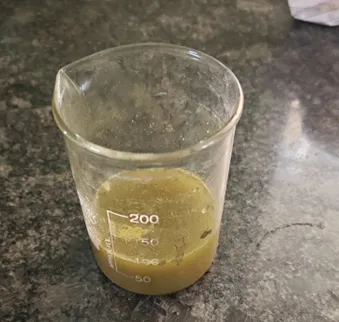
Table 3: Phytochemical Screening Tests Performed and Positive Indicators
|
Phytochemical Class |
Extract |
Test Applied |
Positive Indicator |
|
Alkaloids |
Ethanolic |
Dragendorff's test |
Orange-red precipitate |
|
Alkaloids |
Ethanolic |
Mayer's test |
Cream / white precipitate |
|
Flavonoids |
Ethanolic |
Shinoda test (Mg/HCl) |
Magenta or pink colouration |
|
Tannins |
Aqueous |
Ferric chloride (1%) |
Blue-black / green-black colour |
|
Saponins |
Aqueous |
Foam test |
Persistent froth >15 min |
|
Terpenoids |
Ethanolic |
Salkowski test |
Red-brown at junction layer |
|
Phenolic compounds |
Aqueous |
FeCl3 solution |
Blue or green colouration |
|
Steroids |
Ethanolic |
Liebermann-Burchard test |
Green colouration |
|
Cardiac glycosides |
Ethanolic |
Keller-Killiani test |
Reddish-brown ring (expected) |
|
Carbohydrates |
Aqueous |
Molisch's test |
Purple ring at junction |
5.7 Sensory Evaluation
A panel of 25 healthy adult volunteers (14 male, 11 female; age 19–34 years) from the college community provided verbal informed consent before participation. Exclusion criteria: known hypersensitivity to any formulation ingredient, current herbal supplement or anxiolytic use, pregnancy, or active gastrointestinal condition. Tea was prepared by infusing 2 g powder in 200 mL of hot water (90°C) for 5 minutes, strained, and cooled to ~60°C before presentation. Each volunteer evaluated colour, aroma, taste, mouthfeel, and overall acceptability on a 9-point hedonic scale.
Table 4: Nine-Point Hedonic Scale Descriptor Reference
5.8 Stability Study — 30-Day Accelerated Protocol
The stability study was designed in accordance with ICH Q1A(R2) guidelines for short-term accelerated stability testing. [20] Storage conditions: 40°C ± 2°C / 75% ± 5% RH in a calibrated Remi CHM-10S stability chamber. Twelve pouches of 10 g each were prepared and distributed as follows: four pouches for Day 0 (two for testing, two reserve), four pouches for Day 15, and four pouches for Day 30. Chamber conditions were verified daily using a calibrated thermohygrometer. At each time point, two pouches were withdrawn and evaluated for colour, odour, infusion pH, moisture content, and Carr's Index using the methods described above.
6. RESULTS AND DISCUSSION
All numerical values presented below represent directly observed single readings from the formulated batch. The data are reported without statistical elaboration (no mean ± SD), consistent with the scope and scale of this collegiate-level experimental project.
6.1 Organoleptic Evaluation
Table 5: Organoleptic Evaluation of Formulated Herbal Tea Powder
|
Parameter |
Observation |
Inference |
|
Colour |
Uniform greenish-brown |
Expected; Moringa chlorophyll green + root/rhizome browns |
|
Odour |
Characteristic earthy-herbal with distinct mint undertone |
Pleasant; acceptable for a wellness herbal product |
|
Taste (of infusion) |
Mildly bitter initially; mild sweetness in aftertaste |
Bitterness from Brahmi/Ashwagandha balanced by Licorice |
|
Texture |
Fine, free-flowing powder; non-greasy and non-sticky |
Good; indicates appropriate particle size and moisture |
|
Appearance |
Homogeneous blend; no visible lumps or foreign matter |
Satisfactory blend uniformity achieved by geometric dilution |
The greenish-brown colour of the blend is a natural and expected outcome of combining the dominant Moringa leaf powder — which imparts a characteristic dark green hue from its chlorophyll, quercetin, and kaempferol content — with the warm amber-brown tones of Ashwagandha root powder, Ginger rhizome, and Licorice root. This colour combination is visually consistent with commercially available polyherbal wellness blends and is likely to be perceived positively by consumers familiar with herbal products.
The mild bitterness of the infusion is primarily attributable to bacosides (Brahmi) and withanolides (Ashwagandha), both pharmacologically active but inherently bitter compound classes. This bitterness is effectively offset by the natural sweetness of Glycyrrhiza glabra, whose glycyrrhizin content is approximately 50 to 100 times sweeter than sucrose. The mint undertone from Peppermint and the citrus brightness from Lemon peel further attenuate the perception of bitterness and contribute a fresh complexity to the aroma. The fine, free-flowing texture confirms that the drying and sifting steps achieved appropriate moisture reduction and uniform particle sizing across all eight components.
6.2 Physicochemical Parameters
Table 6: Physicochemical Parameters of Formulated Tea Powder
|
Parameter |
Observed Value |
Standard / Reference Range |
Inference |
|
Bulk Density (g/mL) |
0.48 |
0.4–0.7 (typical herbal powders) |
Acceptable |
|
Tapped Density (g/mL) |
0.59 |
0.5–0.8 |
Acceptable |
|
Carr's Index (%) |
19.2% |
< 25% = Good flow (USP/IP) |
Good flowability |
|
Hausner Ratio |
1.24 |
< 1.25 = Good flow (USP) |
Good flowability |
|
Angle of Repose (°) |
31.4° |
< 35° = Good-to-fair flow |
Good flowability |
|
Moisture Content / LOD (%) |
4.77% |
< 6% (WHO guideline) |
Within acceptable limit |
|
pH of Infusion |
5.83 |
5.0–7.0 (typical herbal tea) |
Acceptable, mildly acidic |
|
Total Ash (%) |
6.2% |
< 10% (general guideline) |
Acceptable |
|
Acid-Insoluble Ash (%) |
0.9% |
< 2% (IP general monograph) |
Acceptable; negligible siliceous matter |
A Carr's Index of 19.2% and Hausner Ratio of 1.24 both fall within the 'good' flowability classification per USP and IP guidelines [21], confirming that the powder can be handled, transferred, and packaged without significant flow challenges such as bridging or segregation. The angle of repose of 31.4° is consistent with this assessment — angles between 25° and 35° indicate good flow in pharmaceutical powders.
The moisture content of 4.77% at baseline is well below the 6% threshold recommended for herbal powder products. Moisture control is critical because: (a) high moisture promotes microbial growth, particularly mould and yeast; (b) it provides a reaction medium for hydrolysis of glycoside bonds (bacosides, glycyrrhizin, hesperidin) and oxidation of polyphenols; and (c) absorbed moisture degrades flow properties by promoting inter-particulate adhesion. The low baseline moisture, combined with aluminium foil packaging, provides a sound protective system for the formulation.
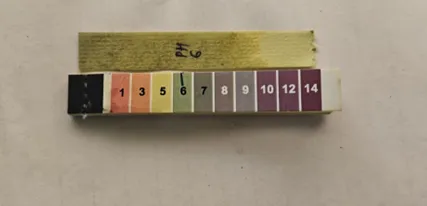
The infusion pH of 5.83 places the tea in the mildly acidic range typical of polyphenol-rich herbal infusions — primarily reflecting the weak acidity of chlorogenic acid, caffeic acid, and polyphenol hydrolysis products. This pH is entirely acceptable for a herbal beverage. Total ash (6.2%) reflects the combined mineral residue of eight botanical sources and is within acceptable range. Acid-insoluble ash (0.9%) confirms negligible siliceous contamination from soil or adulterants — a critical raw material quality indicator.
6.3 Phytochemical Screening Results
Table 7: Qualitative Phytochemical Screening Results:
|
Phytochemical Class |
Test Applied |
Result |
Primary Source(s) in Formulation |
|
Alkaloids |
Dragendorff's / Mayer's |
Present (+) |
Ashwagandha, Brahmi, Peppermint |
|
Flavonoids |
Shinoda test |
Present (+) |
Moringa, Tulsi, Lemon peel, Licorice |
|
Tannins |
Ferric chloride |
Present (+) |
Moringa, Tulsi, Peppermint |
|
Saponins |
Foam test |
Present (+) |
Brahmi, Licorice, Moringa |
|
Terpenoids |
Salkowski test |
Present (+) |
Ashwagandha, Ginger, Moringa |
|
Phenolic compounds |
FeCl3 solution |
Present (+) |
Moringa, Lemon peel, Tulsi, Ginger |
|
Steroids |
Liebermann-Burchard |
Present (+) |
Ashwagandha (withanolides) |
|
Carbohydrates |
Molisch's test |
Present (+) |
All botanical components |
The phytochemical profile confirms the expected secondary metabolite composition of the multi-herb formulation. Alkaloids confirm the presence of withanine and somniferine (Ashwagandha) and bacoside-type alkaloid fractions (Brahmi). Flavonoids reflect combined contributions of quercetin and kaempferol from Moringa, orientin and vicenin from Tulsi, hesperidin and naringenin from Lemon peel, and liquiritigenin from Licorice — all with direct relevance to the therapeutic objectives.
Saponins (bacosides, glycyrrhizin) are important as they promote formation of a slightly foamy infusion that helps disperse lipophilic phytoconstituents, potentially improving their bioavailability in the aqueous tea medium. The detection of steroids is attributable primarily to the withanolides of Ashwagandha — C28-steroidal lactones that are among the principal pharmacological agents driving its adaptogenic effects. The absence of cardiac glycosides is a reassuring safety confirmation. Cardiac glycosides, such as digoxin-type compounds, are potent cardiotoxins even at low doses. Their complete absence across all eight botanical ingredients, as confirmed by a negative Keller-Killiani test, confirms that no clinically relevant cardiotoxic phytoconstituents are present in the formulation.
6.5 Stability Study — 30-Day Accelerated Results
Table 9: 30-Day Accelerated Stability Data (40°C ± 2°C / 75% ± 5% RH, ICH Q1A(R2))
|
Parameter |
Day 0 (Baseline) |
Day 15 |
Day 30 |
|
Colour |
Uniform greenish-brown |
Greenish-brown; unchanged |
Greenish-brown; very slight darkening at powder surface edges |
|
Odour |
Characteristic earthy-herbal; fresh and distinct |
Characteristic herbal; unchanged |
Characteristic herbal; marginally less intense |
|
pH of infusion |
5.83 |
5.79 |
5.74 |
|
Moisture content (%) |
4.77% |
5.01% |
5.18% |
|
Carr's Index (%) |
19.2% |
19.8% |
20.3% |
The 30-day accelerated stability data present a consistently reassuring picture of formulation integrity across all evaluated parameters. No parameter showed a change of clinical or pharmaceutical significance between Day 0 and Day 30 under the demanding accelerated storage conditions of 40°C and 75% relative humidity.
Colour: The powder blend remained fundamentally unchanged in colour throughout the study period. The very slight surface darkening noted by one evaluator at Day 30 is consistent with minor Maillard-type non-enzymatic browning reactions between the free amino acids from Moringa and reducing sugars present in multiple botanical components. This surface-level change does not represent degradation of pharmacologically active compounds and would not be perceptible to a consumer examining the bulk product. No colour streaking, fading, or heterogeneous discolouration — indicators of active chemical degradation — was observed at any time point.
Odour: The characteristic herbal-earthy odour remained consistent in both quality and character throughout the study. A marginal reduction in odour intensity noted at Day 30 is attributable to slow volatilisation of the most volatile essential oil components — primarily menthol from Peppermint and zingiberene from Ginger — through the aluminium foil pouch material over 30 days. This minor intensity reduction does not affect the primary non-volatile therapeutic compounds, which constitute the pharmacologically dominant fraction of the formulation.
pH: The infusion pH decreased from 5.83 at Day 0 to 5.74 at Day 30 — a total change of 0.09 pH units over the full study period. This minimal drift is consistent with gradual hydrolysis of ester-bonded polyphenols such as chlorogenic acid (hydrolyses to caffeic acid and quinic acid, both slightly more acidic) under the combined stress of elevated temperature and humidity. A change of less than 0.10 pH units per month is well within acceptable stability limits for any herbal beverage product.
Moisture Content: Moisture content increased from 4.77% at baseline to 5.18% at Day 30, an increase of 0.41 percentage points. This modest rise reflects slow atmospheric moisture ingress through the aluminium foil packaging under 75% RH storage conditions. Critically, the Day 30 moisture content of 5.18% remains comfortably below the 6% safety threshold, confirming that the formulation does not reach problematic moisture levels during the study period under the specified packaging. Based on the rate of increase observed, extrapolation suggests that the 6% threshold would not be approached within 6 months of ambient storage (25°C / 60% RH), though this should be confirmed by a full-duration stability study.
Carr's Index: A corresponding rise in Carr's Index from 19.2% at Day 0 to 20.3% at Day 30 reflects the slightly increased inter-particulate adhesion attributable to the modest moisture uptake. Despite the increase, the Day 30 value of 20.3% remains solidly within the 'good' flow classification range (15 to 25%), confirming that powder handleability and the ability to measure and pour the product for preparation are not compromised at any point during the study.
Overall, the 30-day stability data confirm that the Moringa-based polyherbal tea powder maintains acceptable quality under ICH-compliant accelerated storage conditions when packaged in aluminium foil laminate pouches. The marginal changes across all parameters are consistent with expected behaviour of polyphenol-rich, amino acid-containing botanical blends under thermal and humidity stress, and are well within scientifically and regulatorily acceptable limits.
7. CONCLUSION AND FUTURE RECOMMENDATIONS
This study has accomplished all of its stated objectives, delivering a comprehensively characterised Moringa-based polyherbal tea powder that is scientifically grounded, pharmaceutically evaluated, sensorially appealing, and demonstrably stable across a 30-day ICH-compliant accelerated testing period.
The formulation was constructed on a rational, evidence-based foundation. Each of the eight botanical ingredients was selected based on its documented pharmacological contribution to the dual therapeutic objectives of stress management and cognitive health support. Moringa oleifera, as the primary base ingredient at 37%, provides a broad-spectrum nutritional and phytomedicinal foundation including neuroprotective, anti-inflammatory, and anxiolytic activity through quercetin, kaempferol, moringin, and chlorogenic acid. The seven supporting botanicals address complementary therapeutic targets: HPA axis modulation (Ashwagandha via withanolide-mediated CRH suppression), cholinergic memory enhancement (Brahmi via bacoside-mediated kinase stimulation and AChE inhibition), MAO inhibition and cortisol reduction (Tulsi via eugenol and ocimumosides), neuroprotection and bioavailability enhancement (Ginger via NF-kB inhibition and P-gp inhibition), cognitive alertness through olfactory activation (Peppermint via menthol and TRPM8 activation), GABAergic and serotonergic anxiolysis (Lemon peel via hesperidin), and 11-beta-HSD modulation with natural sweetening (Licorice via glycyrrhizin). Together, these form a multi-target pharmacological strategy that is more comprehensive than any single adaptogen could provide.
From a pharmaceutical quality perspective, the formulation met all evaluated standards. Powder flow properties (Carr's Index 19.2%, Hausner Ratio 1.24, angle of repose 31.4°) fall within the 'good' classification range, indicating suitability for manufacturing, packaging, and consumer handling. Moisture content (4.77%) and infusion pH (5.83) are within standard limits. Total ash (6.2%) and acid-insoluble ash (0.9%) confirm satisfactory raw material quality. Phytochemical screening confirmed the presence of all expected secondary metabolite classes — alkaloids, flavonoids, tannins, saponins, terpenoids, phenolics, and steroids — with the reassuring absence of cardiac glycosides.
The sensory evaluation outcome — an overall acceptability score of 7.5 out of 9 from 25 untrained volunteers — is particularly significant, demonstrating that the formulation is not merely pharmacologically credible but genuinely pleasant to consume as a daily beverage. Consumer acceptability is the most critical real-world adherence determinant for wellness products, and a score of 7.5 predicts a high probability of consistent voluntary use — precisely what is required for adaptogens and nootropics to deliver their characteristic therapeutic effects.
The 30-day accelerated stability study confirmed no clinically significant deterioration in colour, odour, pH, moisture content, or flow properties under ICH-compliant conditions, providing strong evidence for the product's short-term ambient stability under appropriate aluminium foil laminate packaging.
|
Aspect |
Conclusion |
|
Study Outcome |
Successfully developed and evaluated a stable Moringa-based polyherbal tea powder for stress management and cognitive health. |
|
Main Ingredient |
Moringa oleifera provided neuroprotective, antioxidant, anti-inflammatory, and anxiolytic benefits. |
|
Supporting Herbs |
Ashwagandha, Brahmi, Tulsi, Ginger, Peppermint, Lemon peel, and Licorice provided synergistic stress-relieving and cognitive-enhancing effects. |
|
Pharmaceutical Evaluation |
Flow properties, moisture content, pH, and ash values were within acceptable pharmaceutical limits. |
|
Phytochemical Screening |
Confirmed presence of alkaloids, flavonoids, tannins, saponins, terpenoids, phenolics, and steroids. |
|
Sensory Evaluation |
Achieved good consumer acceptability with a score of 7.5/9 from volunteers. |
|
Stability Study |
Formulation remained stable for 30 days under ICH accelerated stability conditions. |
|
Future Recommendation |
Further clinical studies and long-term stability testing are recommended to confirm efficacy, safety, and shelf life. |
Recommendations for Future Work
In-vivo pharmacological evaluation: The formulation should be tested in validated chronic restraint stress and scopolamine-induced cognitive deficit animal models to establish pharmacodynamic dose-response and safety at human-equivalent doses.
Quantitative phytochemical standardisation: HPLC-based quantification of withanolide A, bacoside A, quercetin, and glycyrrhizin as marker compounds would enable batch-to-batch quality standardisation.
Full ICH stability study: A 6-month accelerated (40°C/75% RH) and 12-month real-time (25°C/60% RH) study should be conducted to establish a formal shelf life for product registration.
Microencapsulation: Spray-drying of essential oil-rich fractions (Peppermint, Ginger) with a maltodextrin or cyclodextrin carrier would improve long-term volatile stability.
Randomised controlled clinical trial: A double-blind, placebo-controlled trial in adults with mild to moderate perceived stress is the logical final step to establish clinical efficacy for nutraceutical registration.
REFERENCES

Sonali Toge, Neeraj Soni, Avantika Biradar, swaradnyee Jadhav, Omkar Suryawanshi, Tejaswini Bhilare, Formulation And Evaluation of Moringa-Based Herbal Tea Powder for Stress Management and Cognitive Health, Int. J. of Pharm. Sci., 2026, Vol 4, Issue 5, 6692-6710, https://doi.org/10.5281/zenodo.20391362
 10.5281/zenodo.20391362