

We use cookies to ensure our website works properly and to personalise your experience. Cookies policy
1,2,3,5,6 Signa College of Pharmacy, Kanpur nagar 209304, Uttarpradesh, India.
4 Shanti College of Pharmacy Nowgong District Chhatarpur, Madhya Pradesh
Peptic ulcer disease (PUD) remains one of the most prevalent gastrointestinal disorders worldwide, affecting millions of individuals and imposing a substantial healthcare burden. The disease is characterized by mucosal erosion extending through the muscularis mucosa of the stomach or duodenum and primarily results from an imbalance between aggressive factors, including gastric acid, pepsin, Helicobacter pylori infection, and non-steroidal anti-inflammatory drugs (NSAIDs), and protective mucosal defense mechanisms [1,2]. Despite considerable advances in pharmacotherapy, recurrent ulcers and incomplete healing continue to be major clinical concerns due to poor patient adherence, rapid gastric emptying of conventional dosage forms, inadequate local antibiotic concentrations, and the emergence of antimicrobial resistance associated with H. pylori infection [3,4].Amoxicillin trihydrate remains one of the most effective first-line antibiotics for H. pylori eradication because of its potent bactericidal activity, favorable safety profile, and comparatively low resistance rate. However, its short gastric residence time and limited retention at the site of infection reduce therapeutic efficiency when administered as conventional oral formulations [5]. Consequently, gastroretentive drug delivery systems (GRDDS) have attracted increasing attention as an effective strategy to prolong gastric residence, sustain local drug release, and improve antibacterial activity within the stomach [6].Among the various gastroretentive approaches, sodium alginate-based floating beads have emerged as one of the most promising multiparticulate delivery systems. These beads are generally prepared through ionotropic gelation using calcium ions, producing a biocompatible hydrogel matrix capable of entrapping amoxicillin and releasing it in a controlled manner. Their low density allows prolonged flotation within gastric fluids, while their mucoadhesive nature promotes intimate contact with the gastric mucosa, thereby increasing local drug concentration and enhancing bacterial eradication [7,8].Recent research has focused on improving alginate bead formulations through the incorporation of natural polymers, interpenetrating polymer networks (IPNs), bioadhesive materials, and floating agents to optimize drug entrapment efficiency, buoyancy, mechanical stability, and sustained release characteristics. These advanced formulations not only improve therapeutic efficacy but also reduce dosing frequency, minimize systemic adverse effects, and enhance patient compliance [9,10].This review comprehensively discusses the pathophysiology of peptic ulcer disease, the therapeutic role of amoxicillin trihydrate, the principles of gastroretentive drug delivery, formulation strategies for alginate beads, recent pharmaceutical advancements, current challenges, and future perspectives. The review highlights the potential of gastroretentive amoxicillin trihydrate-loaded alginate beads as an effective localized drug delivery platform for improving peptic ulcer management and Helicobacter pylori eradication
Peptic ulcer disease (PUD) is a chronic gastrointestinal disorder characterized by the formation of ulcers within the gastric or duodenal mucosa due to disruption of the protective mucosal barrier. Despite remarkable progress in the understanding of gastrointestinal physiology and pharmacotherapy, PUD remains a significant global health problem because of its high prevalence, frequent recurrence, and potential complications, including gastrointestinal bleeding, perforation, gastric outlet obstruction, and gastric malignancy [1,2]. It is estimated that approximately 5–10% of the global population will develop peptic ulcer disease during their lifetime, making it one of the most common disorders encountered in gastroenterology practice [2].
The development of peptic ulcers results from an imbalance between aggressive factors, such as gastric acid secretion, pepsin activity, Helicobacter pylori infection, bile reflux, and prolonged non-steroidal anti-inflammatory drug (NSAID) therapy, and the defensive mechanisms of the gastric mucosa, including mucus secretion, bicarbonate production, prostaglandin synthesis, adequate mucosal blood flow, and rapid epithelial regeneration [3]. Among these factors, H. pylori infection remains the principal etiological agent responsible for the majority of duodenal ulcers and a significant proportion of gastric ulcers. The bacterium colonizes the gastric mucosa, induces chronic inflammation, and disrupts mucosal integrity through the production of virulence factors such as urease, cytotoxin-associated gene A (CagA), and vacuolating cytotoxin A (VacA), thereby promoting ulcer formation [4,5].
Current management of peptic ulcer disease primarily involves acid-suppressive therapy using proton pump inhibitors (PPIs) or potassium-competitive acid blockers (P-CABs), combined with antibiotic regimens for H. pylori eradication. Amoxicillin trihydrate remains an essential component of first-line eradication protocols because of its broad-spectrum antibacterial activity, excellent safety profile, and relatively low resistance compared with clarithromycin or metronidazole [6]. Nevertheless, conventional oral administration of amoxicillin exhibits several pharmacokinetic limitations, including rapid gastric emptying, short residence time in the stomach, and insufficient drug concentration at the gastric mucosal surface, which may reduce eradication efficacy and contribute to treatment failure [7].
To overcome these limitations, considerable attention has been directed toward the development of gastroretentive drug delivery systems (GRDDS). These systems are specifically designed to prolong gastric residence time, maintain sustained drug release, and improve localized drug delivery within the stomach. Floating drug delivery systems, particularly alginate-based floating beads, have gained significant interest because of their ability to remain buoyant in gastric fluids while continuously releasing the encapsulated drug over an extended period. This prolonged gastric retention enhances the local concentration of amoxicillin at the site of infection and improves therapeutic efficacy against H. pylori [8,9].
Sodium alginate, a naturally occurring anionic polysaccharide extracted from brown seaweed, has become one of the most widely investigated polymers for gastroretentive formulations. Its excellent biocompatibility, biodegradability, non-toxicity, and ability to undergo ionotropic gelation with calcium ions make it an ideal material for preparing floating hydrogel beads. Alginate beads exhibit desirable pharmaceutical characteristics, including high drug entrapment efficiency, controlled drug release, excellent buoyancy, and mucoadhesive properties. Furthermore, combining alginate with other natural polymers such as chitosan or hydroxypropyl methylcellulose (HPMC) further improves mechanical strength, gastric retention, and sustained drug release [9,10].
In recent years, numerous studies have explored innovative alginate-based gastroretentive formulations incorporating interpenetrating polymer networks, bioadhesive polymers, nanoparticles, and multifunctional excipients to optimize therapeutic performance. These advanced systems offer the potential to enhance H. pylori eradication, accelerate ulcer healing, reduce dosing frequency, minimize systemic toxicity, and improve patient compliance [10–12].
The present review critically summarizes the current knowledge regarding peptic ulcer disease, the pharmacological role of amoxicillin trihydrate, the design and mechanism of gastroretentive alginate beads, recent advances in formulation technologies, and future opportunities for the development of more effective localized drug delivery systems for peptic ulcer treatment.
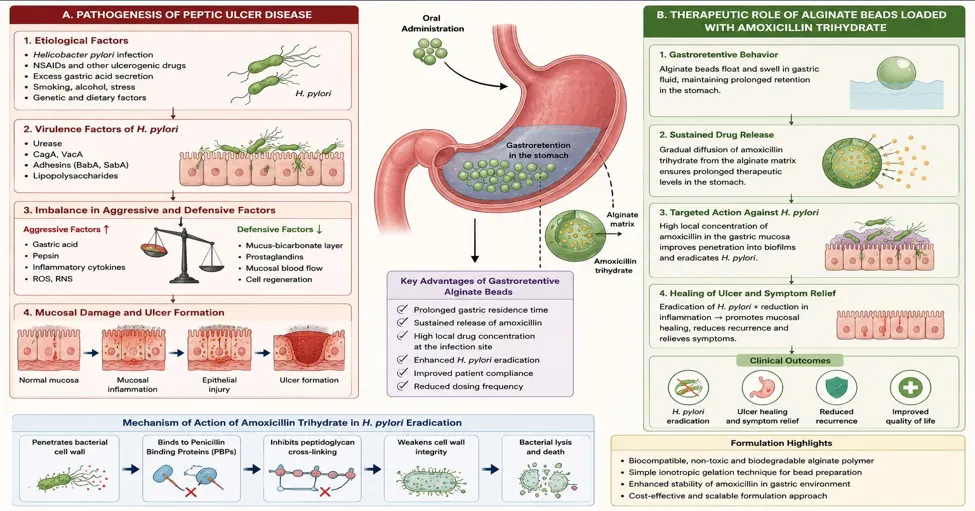
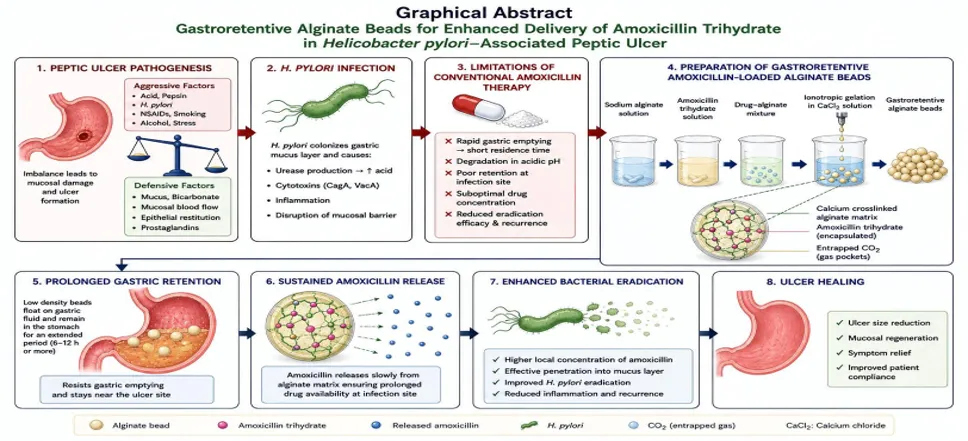
[Figure 1 : Overview of peptic ulcer disease pathogenesis and the therapeutic role of gastroretentive amoxicillin trihydrate-loaded alginate beads.]
2. Peptic Ulcer Disease: Pathophysiology, Etiology, and the Role of Helicobacter pylori
Peptic ulcer disease (PUD) is a chronic gastrointestinal disorder characterized by a localized defect in the gastric or duodenal mucosa that extends through the muscularis mucosae due to prolonged exposure to gastric acid and pepsin [1,2]. The disease remains one of the leading causes of upper gastrointestinal morbidity despite the availability of effective acid-suppressive therapies. According to global epidemiological studies, approximately 5–10% of individuals develop peptic ulcer disease during their lifetime, with duodenal ulcers occurring more frequently than gastric ulcers [2,3]. Although the incidence of uncomplicated ulcers has declined in developed countries following the introduction of proton pump inhibitors (PPIs) and Helicobacter pylori eradication therapy, ulcer-related complications such as bleeding and perforation continue to pose significant clinical challenges, particularly among elderly patients and chronic NSAID users [3].
The pathogenesis of peptic ulcer disease is multifactorial and involves disruption of the delicate balance between aggressive luminal factors and the protective mechanisms of the gastric mucosa. Aggressive factors include hydrochloric acid, pepsin, H. pylori infection, non-steroidal anti-inflammatory drugs (NSAIDs), bile reflux, alcohol consumption, smoking, psychological stress, and oxidative damage. In contrast, mucosal defense depends on an intact mucus-bicarbonate barrier, prostaglandin synthesis, adequate mucosal blood flow, epithelial regeneration, tight junction integrity, and antioxidant defense systems. Ulcer formation occurs when aggressive factors overwhelm these protective mechanisms, resulting in progressive mucosal injury and inflammation [3–5].
Among the various etiological factors, Helicobacter pylori infection remains the most important cause of peptic ulcer disease. This Gram-negative, spiral-shaped, microaerophilic bacterium colonizes the gastric mucus layer and infects nearly half of the global population. Epidemiological studies indicate that H. pylori is responsible for approximately 70–90% of duodenal ulcers and 50–70% of gastric ulcers, making it the primary target for therapeutic intervention [4,6]. Following colonization, the bacterium survives the acidic gastric environment by producing urease, an enzyme that hydrolyses urea into ammonia and carbon dioxide, thereby creating a localized neutral microenvironment that facilitates bacterial survival [6,7].
The pathogenicity of H. pylori is largely attributed to several virulence factors, including urease, cytotoxin-associated gene A (CagA), vacuolating cytotoxin A (VacA), and various outer membrane adhesins. These virulence determinants promote bacterial adhesion to gastric epithelial cells, disrupt intracellular signalling pathways, induce inflammatory cytokine production, and stimulate epithelial cell apoptosis. Chronic inflammation resulting from persistent bacterial colonization progressively weakens the gastric mucosal barrier, thereby increasing susceptibility to ulcer formation and delayed ulcer healing [5–7].
An additional factor contributing to the persistence of H. pylori infection is its ability to form biofilms on the gastric mucosal surface. Biofilms are highly organized bacterial communities embedded within an extracellular polymeric substance (EPS) composed primarily of polysaccharides, proteins, extracellular DNA, and lipids. This protective matrix acts as a physical and biochemical barrier that restricts antibiotic penetration, reduces bacterial metabolic activity, and protects microorganisms from host immune responses. Consequently, biofilm-associated bacteria exhibit significantly greater tolerance to antimicrobial therapy than planktonic cells, contributing to recurrent infection and eradication failure [8,9].
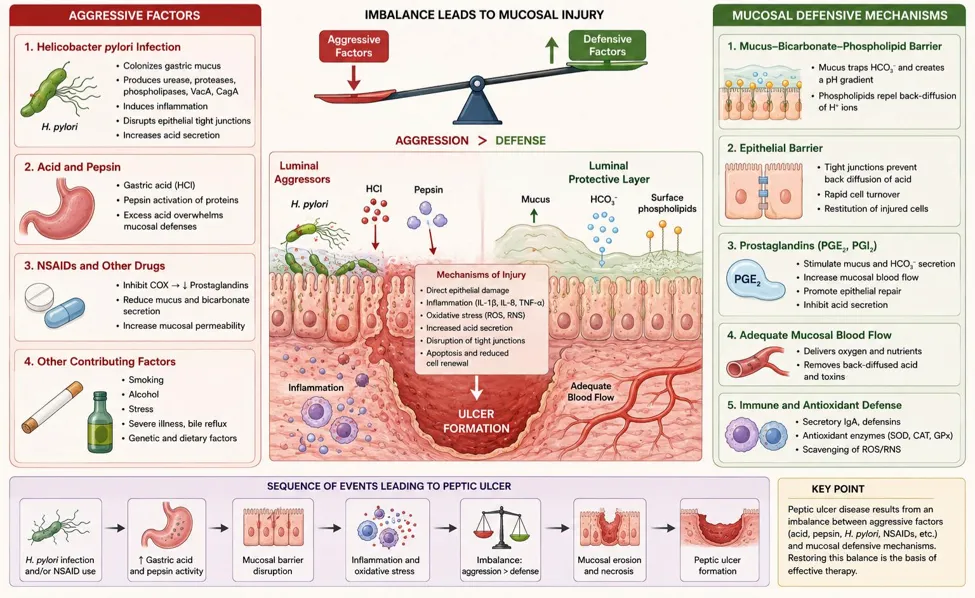
[Figure 2 : Pathogenesis of peptic ulcer disease illustrating the imbalance between aggressive factors and mucosal defensive mechanisms, highlighting the role of Helicobacter pylori.]
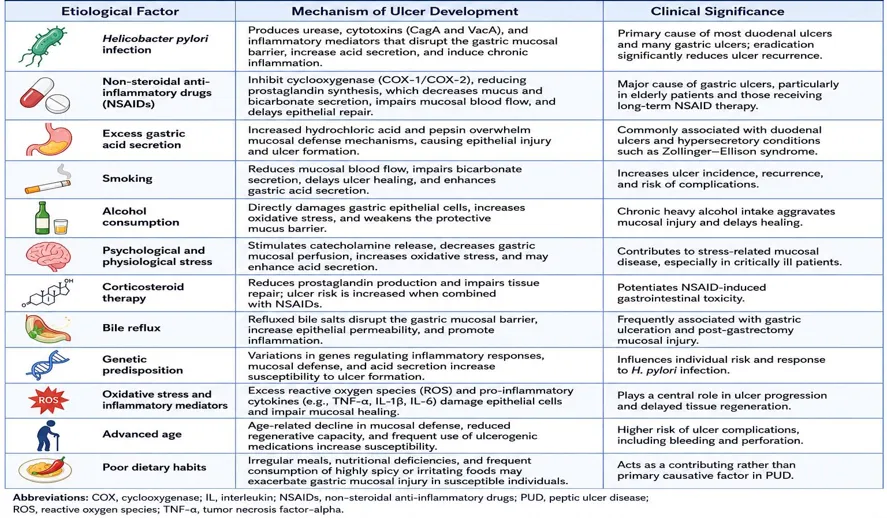
Besides H. pylori, prolonged use of non-steroidal anti-inflammatory drugs (NSAIDs) remains another major cause of peptic ulcer disease. NSAIDs inhibit cyclooxygenase (COX)-1-mediated prostaglandin synthesis, leading to reduced mucus and bicarbonate secretion, impaired mucosal blood flow, decreased epithelial regeneration, and increased gastric acid-mediated injury. Patients receiving long-term NSAID therapy are therefore at significantly higher risk of developing gastric ulcers, gastrointestinal bleeding, and perforation, particularly when additional risk factors such as advanced age or concurrent corticosteroid therapy are present [10].
Other contributing factors include cigarette smoking, excessive alcohol consumption, genetic predisposition, severe physiological stress, and dietary habits. Smoking delays ulcer healing by reducing gastric mucosal blood flow and impairing prostaglandin synthesis, whereas chronic alcohol intake directly damages epithelial cells and disrupts the mucus barrier. Although psychological stress alone is rarely considered a primary cause of peptic ulcer disease, it may exacerbate existing ulcers through alterations in gastric motility, acid secretion, and mucosal perfusion [3,10].
[Table 1 : Major etiological factors and mechanisms involved in the development of peptic ulcer disease.]
Clinically, patients with peptic ulcer disease commonly present with epigastric pain, burning sensation, abdominal discomfort, bloating, nausea, vomiting, early satiety, and dyspepsia. Duodenal ulcer pain typically improves after food intake and recurs several hours later, whereas gastric ulcer pain often worsens following meals. Severe complications include upper gastrointestinal bleeding, perforation, penetration into adjacent organs, gastric outlet obstruction, and recurrent ulceration, all of which may require urgent medical or surgical intervention [2,11].
Diagnosis of peptic ulcer disease is based on clinical assessment supported by endoscopy, histopathological examination, rapid urease testing, urea breath test, stool antigen testing, serological investigations, and molecular techniques for H. pylori detection. Upper gastrointestinal endoscopy remains the gold standard because it permits direct visualization of the ulcer, biopsy for histological examination, and exclusion of gastric malignancy [11,12].
Although current therapeutic strategies combining proton pump inhibitors with antibiotic regimens have significantly improved clinical outcomes, eradication failure continues to increase because of antibiotic resistance, rapid gastric emptying of conventional dosage forms, poor patient adherence, and inadequate local drug concentrations at the gastric mucosa. These limitations have stimulated extensive research into gastroretentive drug delivery systems, particularly amoxicillin trihydrate-loaded alginate beads, which are designed to prolong gastric residence time, sustain drug release, and maintain therapeutic antibiotic concentrations directly at the site of infection [8,12].
3. Conventional Management of Peptic Ulcer Disease and the Need for Gastroretentive Amoxicillin Trihydrate Delivery
The management of peptic ulcer disease (PUD) has evolved considerably over the past three decades owing to a better understanding of the disease pathogenesis and the discovery of Helicobacter pylori as a principal etiological factor. Modern therapeutic strategies aim to relieve symptoms, promote ulcer healing, eradicate H. pylori, prevent recurrence, and reduce ulcer-related complications such as bleeding and perforation. Current treatment primarily consists of acid-suppressive therapy combined with antimicrobial agents and supportive lifestyle modifications [13,14]. Despite the availability of highly effective medications, treatment failure and ulcer recurrence continue to be reported because of poor patient compliance, increasing antibiotic resistance, rapid gastric emptying of conventional dosage forms, and inadequate drug concentration at the gastric mucosal surface [14,15].
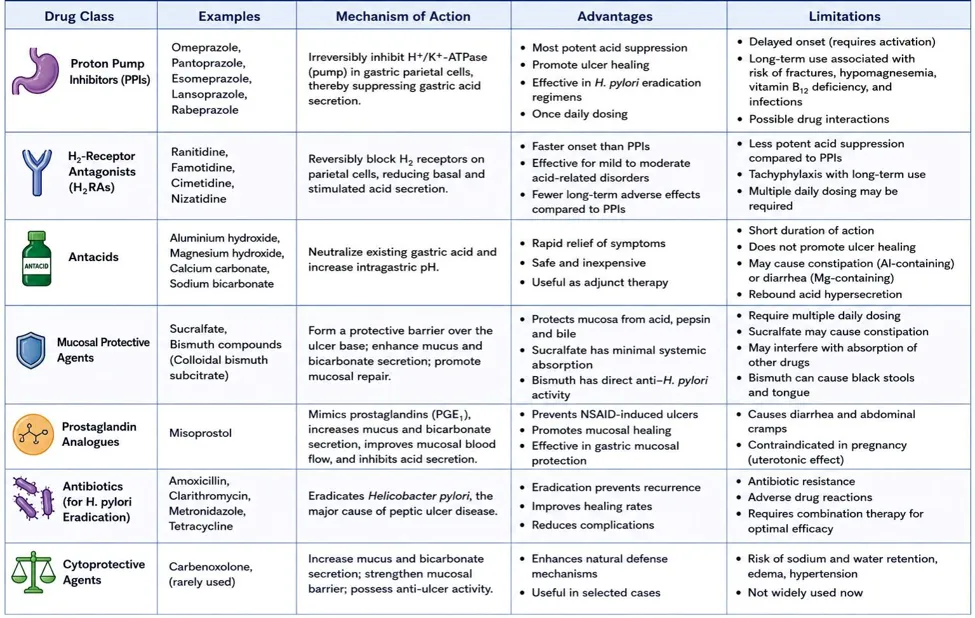
Acid suppression remains the cornerstone of peptic ulcer therapy. Proton pump inhibitors (PPIs), including omeprazole, pantoprazole, esomeprazole, lansoprazole, and rabeprazole, irreversibly inhibit the gastric H⁺/K⁺-ATPase enzyme, thereby markedly reducing gastric acid secretion and creating favourable conditions for ulcer healing. Compared with histamine H₂-receptor antagonists, PPIs provide superior acid suppression, faster symptom relief, and higher ulcer healing rates. More recently, potassium-competitive acid blockers (P-CABs), particularly vonoprazan, have demonstrated rapid and sustained acid suppression and have emerged as promising alternatives to conventional PPIs in H. pylori eradication therapy [13–15].
For patients with H. pylori-associated peptic ulcers, eradication therapy is essential because acid suppression alone cannot eliminate the underlying infection. International treatment guidelines recommend combination regimens consisting of a proton pump inhibitor and two or more antibiotics administered for 10–14 days. Standard triple therapy includes a PPI, amoxicillin trihydrate, and clarithromycin, whereas bismuth-based quadruple therapy combines a PPI with bismuth, tetracycline, and metronidazole. Concomitant therapy, sequential therapy, and levofloxacin-based rescue regimens are also employed depending on regional antibiotic resistance patterns [14–16].
Among the available antibiotics, amoxicillin trihydrate remains one of the most important components of first-line eradication therapy because of its broad-spectrum antibacterial activity, favourable pharmacokinetic profile, low toxicity, and comparatively lower resistance rate than clarithromycin or metronidazole. Amoxicillin is a β-lactam antibiotic that inhibits bacterial cell wall synthesis by binding to penicillin-binding proteins (PBPs), resulting in bacterial cell lysis and death. Since H. pylori resistance to amoxicillin remains relatively uncommon, the drug continues to play a central role in eradication protocols worldwide [16,17].
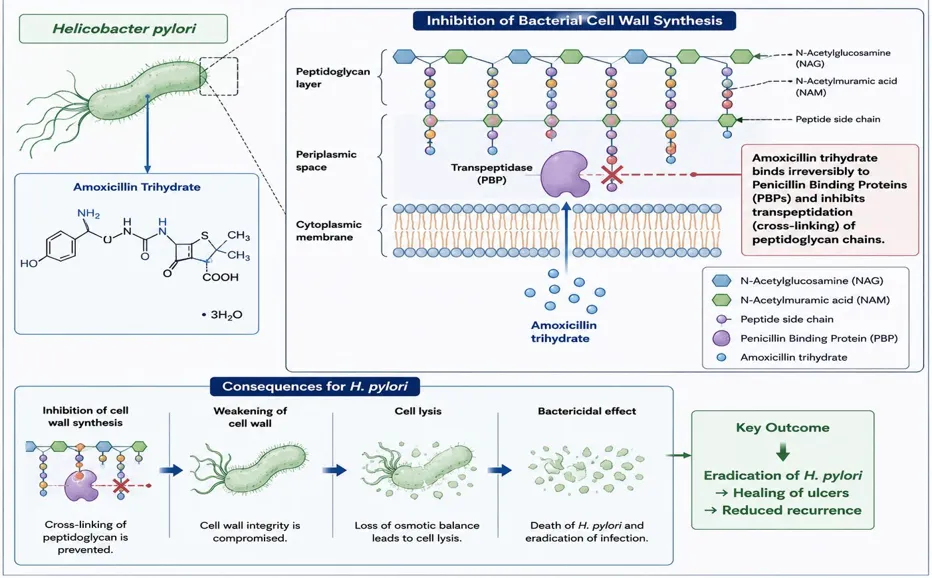
[Figure 3: Mechanism of action of amoxicillin trihydrate against Helicobacter pylori showing inhibition of bacterial cell wall synthesis.]
Despite its therapeutic advantages, conventional oral administration of amoxicillin trihydrate exhibits several pharmacokinetic limitations. The drug possesses a relatively short biological half-life and rapidly passes from the stomach into the small intestine because of normal gastric emptying. Consequently, the residence time of the antibiotic within the stomach is insufficient to maintain therapeutic concentrations at the gastric mucosal surface where H. pylori primarily colonizes. This reduced local exposure may compromise bacterial eradication and contribute to recurrent infection [17,18].
Another important limitation is the inability of conventional formulations to effectively penetrate the gastric mucus layer and bacterial biofilms. Biofilm-associated H. pylori cells are embedded within an extracellular polymeric substance (EPS) that restricts antibiotic diffusion, reduces bacterial metabolic activity, and protects bacteria from host immune responses. As a result, biofilm-associated organisms exhibit markedly greater tolerance to antimicrobial therapy than planktonic bacteria, leading to persistent infection and reduced treatment success [8,18].
Patient-related factors also contribute significantly to therapeutic failure. Conventional eradication regimens require multiple medications administered several times daily for up to two weeks. Such complex dosing schedules often reduce patient adherence, while adverse effects including nausea, diarrhoea, abdominal discomfort, and altered taste further decrease compliance. Incomplete treatment increases the likelihood of persistent infection and promotes the development of antibiotic-resistant bacterial strains [15,19].
[Table 2 : Conventional therapeutic agents used in peptic ulcer disease and their mechanisms, advantages, and limitations.]
The increasing prevalence of antimicrobial resistance has become another major challenge in peptic ulcer management. Resistance to clarithromycin, metronidazole, and levofloxacin has risen substantially in many regions, resulting in declining eradication rates with conventional therapies. Although amoxicillin resistance remains comparatively low, treatment outcomes are still affected by inadequate drug delivery to the site of infection rather than antimicrobial resistance alone [16,19].
These therapeutic limitations have stimulated the development of gastroretentive drug delivery systems (GRDDS) designed to prolong gastric residence time and improve localized drug delivery. An ideal gastroretentive formulation should remain buoyant within the stomach for prolonged periods, provide sustained drug release, adhere to the gastric mucosa, and maintain therapeutic antibiotic concentrations directly at the site of bacterial colonization. Such localized delivery systems have the potential to enhance bacterial eradication while reducing dosing frequency and systemic adverse effects [20].
Among the various gastroretentive approaches investigated, alginate-based floating beads have emerged as one of the most promising multiparticulate systems. These formulations are capable of floating on gastric contents for extended periods while gradually releasing amoxicillin in a controlled manner. The prolonged gastric retention provided by alginate beads increases the duration of contact between the antibiotic and the infected gastric mucosa, thereby improving therapeutic efficacy against H. pylori. In addition, the incorporation of bioadhesive polymers such as chitosan or hydroxypropyl methylcellulose (HPMC) further enhances gastric retention, mechanical stability, and sustained drug release characteristics [20–22].
The limitations associated with conventional oral therapy therefore provide a strong scientific rationale for developing gastroretentive amoxicillin trihydrate-loaded alginate beads as an advanced localized drug delivery system for the effective treatment of peptic ulcer disease.
4. Gastroretentive Amoxicillin Trihydrate-Loaded Alginate Beads: Formulation Strategies, Mechanism, and Therapeutic Potential
Conventional oral dosage forms of amoxicillin trihydrate exhibit limited therapeutic efficacy in the treatment of Helicobacter pylori-associated peptic ulcer disease because of rapid gastric emptying, short residence time, fluctuating drug concentrations, and inadequate exposure of the antibiotic to the gastric mucosa. Since H. pylori primarily colonizes the mucus layer lining the stomach, maintaining a prolonged local concentration of amoxicillin is essential for complete bacterial eradication and effective ulcer healing [20,21]. Gastroretentive drug delivery systems (GRDDS) have therefore emerged as an innovative pharmaceutical approach capable of overcoming these limitations by retaining the dosage form in the stomach for extended periods while providing sustained and localized drug release [22].
Among the various gastroretentive formulations, alginate-based floating beads have attracted considerable attention because of their simplicity, biocompatibility, biodegradability, and excellent floating characteristics. These multiparticulate systems are prepared using sodium alginate, a naturally occurring anionic polysaccharide extracted from brown seaweed. In the presence of divalent calcium ions, sodium alginate undergoes ionic cross-linking through the well-established "egg-box" mechanism, producing calcium alginate hydrogel beads capable of entrapping amoxicillin trihydrate within a three-dimensional polymeric network [23,24].
The preparation of alginate beads is commonly achieved by the ionotropic gelation technique, which remains one of the simplest and most reproducible methods for fabricating gastroretentive multiparticulate systems. In this process, sodium alginate is dissolved in purified water to obtain a homogeneous polymer solution, followed by uniform dispersion of amoxicillin trihydrate under continuous stirring. The resulting drug-polymer mixture is then introduced dropwise into an aqueous calcium chloride solution using a syringe, peristaltic pump, or nozzle system. Upon contact with calcium ions, immediate ionic cross-linking occurs between calcium ions and guluronic acid residues of alginate, resulting in the formation of spherical calcium alginate beads. The prepared beads are subsequently washed to remove excess calcium ions and dried under controlled conditions before further evaluation [24,25].
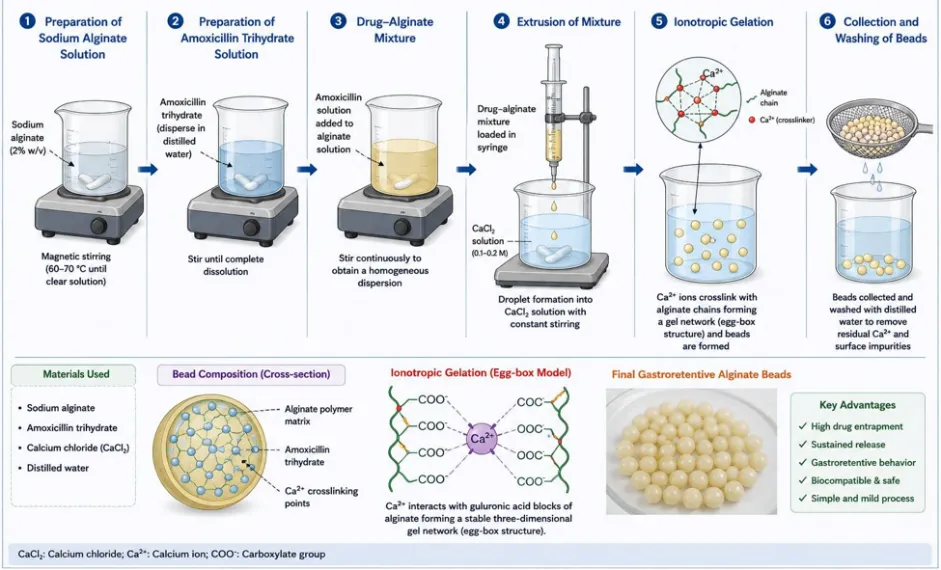
[Figure 4 : Preparation of gastroretentive amoxicillin trihydrate-loaded alginate beads by ionotropic gelation using sodium alginate and calcium chloride.]
Sodium alginate has become one of the most extensively investigated polymers for gastroretentive formulations because of several favourable pharmaceutical properties. It exhibits excellent biocompatibility, non-toxicity, biodegradability, high swelling capacity, and strong gel-forming ability under mild preparation conditions. In addition, alginate hydrogels effectively protect acid-sensitive drugs while providing sustained drug release within the gastric environment [23,25]. However, alginate alone may exhibit limited mechanical strength and rapid erosion during prolonged gastric exposure. Consequently, several investigators have combined alginate with complementary polymers to enhance formulation performance.
Among these, chitosan has received particular attention because of its cationic nature, excellent mucoadhesive properties, and intrinsic antimicrobial activity. Electrostatic interactions between positively charged chitosan and negatively charged gastric mucus improve gastric adhesion and prolong formulation residence time. Furthermore, chitosan enhances mechanical strength, reduces premature drug leakage, and promotes sustained drug release. Other polymers including hydroxypropyl methylcellulose (HPMC), pectin, xanthan gum, guar gum, carbopol, and gellan gum have also been successfully incorporated into alginate formulations to optimize buoyancy, swelling behaviour, drug entrapment efficiency, and release kinetics [26–28].
The mechanism of gastroretention of floating alginate beads is primarily based on buoyancy. Following oral administration, the low-density beads float on gastric contents because their overall density remains lower than that of gastric fluid. Floating enables the beads to resist gastric emptying and remain within the stomach for prolonged periods, thereby continuously releasing amoxicillin in close proximity to the infected gastric mucosa. As gastric fluid gradually penetrates the polymeric matrix, the beads swell, allowing controlled diffusion of the entrapped drug while simultaneously maintaining structural integrity through calcium-mediated cross-linking [22,27].
Drug release from alginate beads generally occurs through a combination of diffusion, polymer swelling, and gradual matrix erosion. Initially, water penetrates the polymeric network, causing hydration and swelling of the alginate matrix. Dissolved amoxicillin subsequently diffuses through hydrated polymer channels into the surrounding gastric fluid. During prolonged exposure, gradual polymer relaxation and erosion further contribute to sustained drug release. Depending on formulation composition, the release profile may extend over several hours, maintaining therapeutic concentrations within the stomach and reducing the frequency of drug administration [24,28].
Several formulation variables influence the performance of gastroretentive alginate beads, including alginate concentration, calcium chloride concentration, drug-to-polymer ratio, cross-linking time, drying method, bead size, and incorporation of secondary polymers. Increasing alginate concentration generally enhances mechanical strength and entrapment efficiency but may also slow drug release because of reduced matrix porosity. Similarly, higher calcium chloride concentrations increase cross-linking density, producing mechanically stronger beads with slower drug diffusion. Optimization of these formulation parameters is therefore essential for achieving the desired balance between buoyancy, drug loading, sustained release, and therapeutic efficacy [25,29].
Recent advances have further improved alginate bead technology through the incorporation of interpenetrating polymer networks (IPNs), floating agents, bioadhesive polymers, nanoparticles, and multifunctional excipients. These advanced systems demonstrate prolonged gastric residence, improved drug encapsulation efficiency, superior mechanical stability, and enhanced antibacterial activity against H. pylori. Some formulations have also incorporated gas-generating agents to improve floating behaviour or natural bioactive compounds possessing anti-inflammatory and antioxidant activities that further support ulcer healing [28–30].
Overall, gastroretentive amoxicillin trihydrate-loaded alginate beads represent a highly promising localized drug delivery platform capable of addressing many of the limitations associated with conventional oral therapy. Their ability to prolong gastric residence, sustain antibiotic release, improve mucosal contact, and maintain therapeutic drug concentrations directly at the site of infection provides a strong scientific basis for their continued development as an effective treatment strategy for Helicobacter pylori-associated peptic ulcer disease.
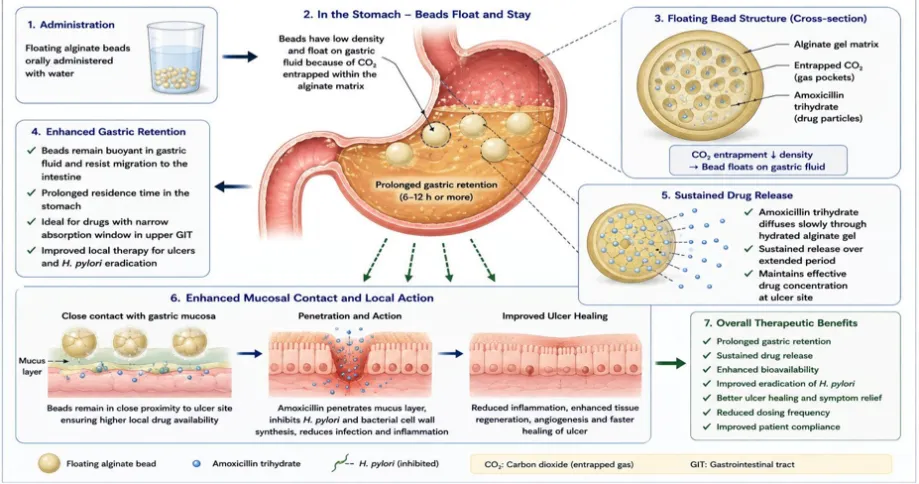
[Figure 5 : Gastroretentive mechanism of floating amoxicillin trihydrate-loaded alginate beads showing prolonged gastric retention, sustained drug release, enhanced mucosal contact, and improved ulcer healing.]
5. Current Advances, Challenges, Future Perspectives, and Conclusion
Recent advances in pharmaceutical technology have significantly enhanced the therapeutic potential of gastroretentive amoxicillin trihydrate-loaded alginate beads for the management of Helicobacter pylori-associated peptic ulcer disease. Modern research has shifted beyond conventional sustained-release formulations toward the development of multifunctional delivery systems capable of improving gastric retention, increasing drug bioavailability, enhancing mucoadhesion, and maintaining prolonged antibiotic concentrations directly at the site of infection. These innovations aim to maximize bacterial eradication while simultaneously promoting ulcer healing and improving patient compliance [30–32].
One of the most promising developments is the incorporation of interpenetrating polymer networks (IPNs) into alginate bead formulations. IPNs consist of two or more physically interlocked polymeric networks that provide superior mechanical strength, improved swelling characteristics, enhanced drug entrapment efficiency, and prolonged drug release. Combinations of sodium alginate with chitosan, hydroxypropyl methylcellulose (HPMC), carbopol, and pectin have demonstrated improved floating behaviour and sustained amoxicillin release compared with conventional alginate beads. These polymeric combinations also improve resistance to premature erosion under acidic gastric conditions, thereby maintaining therapeutic drug concentrations for longer durations [29,31].
Nanotechnology has further expanded the possibilities for gastroretentive drug delivery. Several investigators have explored the incorporation of polymeric nanoparticles, lipid nanoparticles, nanoemulsions, and nanocomposite systems into alginate bead matrices. These hybrid systems improve drug stability, increase surface area available for diffusion, and facilitate more efficient penetration through the gastric mucus layer. Nanotechnology-based formulations have shown enhanced antibacterial activity against H. Pylori while reducing the frequency of drug administration and minimizing systemic drug exposure [30,32].
Another important area of investigation involves the incorporation of bioadhesive and gastroprotective excipients within alginate formulations. Polymers such as chitosan, carbopol, and HPMC improve adhesion between the dosage form and the gastric mucosa, thereby increasing local drug concentration and reducing premature gastric emptying. Simultaneously, natural bioactive compounds possessing antioxidant and anti-inflammatory properties, including curcumin, aloe vera extract, quercetin, and glycyrrhizin, have been investigated as adjunctive agents to accelerate mucosal regeneration and reduce oxidative damage associated with chronic ulceration [31,33].
Despite these encouraging developments, several challenges continue to limit the successful clinical translation of gastroretentive alginate bead formulations. Variability in gastric physiology, including differences in gastric emptying rate, gastric pH, food intake, and gastrointestinal motility, may influence the floating behaviour and drug release profile of gastroretentive systems. Furthermore, achieving consistent bead size, high drug loading, reproducible buoyancy, and uniform sustained-release characteristics during large-scale manufacturing remains technically challenging. Long-term formulation stability and industrial scalability also require further optimization before commercial production can be achieved [22,30].
Another significant limitation is the scarcity of large-scale clinical studies evaluating gastroretentive amoxicillin-loaded alginate beads in human subjects. Most published investigations have focused on formulation development, in vitro characterization, and animal studies. Consequently, additional randomized clinical trials are required to establish long-term safety, therapeutic efficacy, patient acceptability, and cost-effectiveness before these formulations can be routinely incorporated into clinical practice [31–33].
Future research should focus on developing next-generation multifunctional gastroretentive systems capable of simultaneously providing prolonged gastric retention, controlled drug release, enhanced mucoadhesion, improved mucus penetration, and targeted antibacterial activity. Emerging technologies such as three-dimensional (3D) printing, artificial intelligence-assisted formulation optimization, machine learning-guided dosage design, and personalized drug delivery systems are expected to play increasingly important roles in optimizing gastroretentive formulations. Furthermore, integrating amoxicillin trihydrate with probiotics, antimicrobial peptides, phytopharmaceuticals, and biofilm-disrupting agents may further improve H. Pylori eradication while minimizing antibiotic resistance and promoting faster ulcer healing [32–35].
CONCLUSION
Peptic ulcer disease remains a significant global health concern despite remarkable advances in acid-suppressive therapy and Helicobacter pylori eradication strategies. Although amoxicillin trihydrate continues to be a cornerstone of first-line eradication therapy because of its potent antibacterial activity and relatively low resistance rate, conventional oral dosage forms are limited by rapid gastric emptying, short residence time, fluctuating drug concentrations, and inadequate exposure of the antibiotic to the gastric mucosa. These limitations often compromise therapeutic efficacy and contribute to recurrent infection and delayed ulcer healing [15,17].
Gastroretentive amoxicillin trihydrate-loaded alginate beads represent a promising localized drug delivery platform capable of overcoming many of these therapeutic challenges. Their ability to prolong gastric residence, sustain controlled drug release, enhance mucosal adhesion, and maintain effective antibiotic concentrations directly at the site of infection significantly improves the potential for successful H. Pylori eradication and accelerated ulcer healing. The use of sodium alginate in combination with complementary polymers such as chitosan and HPMC further enhances formulation stability, mechanical strength, and sustained-release performance [23,26].
Recent advances involving interpenetrating polymer networks, nanotechnology, multifunctional polymeric systems, and bioadhesive formulations have further expanded the therapeutic potential of gastroretentive alginate beads. Although additional clinical investigations are required to confirm their long-term effectiveness and commercial feasibility, current evidence strongly supports gastroretentive amoxicillin trihydrate-loaded alginate beads as an innovative and clinically promising strategy for improving the treatment of Helicobacter pylori-associated peptic ulcer disease.
REFERENCES


Ankush Maurya, Dr. Saurabh Bhargava, Anshuman Viswakarma, Dileep Kumar, Raushan Kumar, Mohd. Zubair Arshad, Gastroretentive Amoxicillin Trihydrate-Loaded Alginate Beads for the Treatment of Peptic Ulcer Disease: A Comprehensive Review, Int. J. of Pharm. Sci., 2026, Vol 4, Issue 8, 2994-3009, https://doi.org/10.5281/zenodo.22027356
 10.5281/zenodo.22027356