

We use cookies to ensure our website works properly and to personalise your experience. Cookies policy
Rashtrasant Janardhan Swami College of Pharmacy, Kokamthan, Kopargaon.
Nutraceutical tablets have played a pivotal role in the prevention and management of illnesses across centuries. Rooted in diverse cultural traditions, herbal medicine has contributed significantly to healthcare, leading to the development of detailed pharmacopeias. In modern practice, nutraceutical formulations—particularly Ayurvedic tablets—are increasingly integrated into mainstream healthcare due to their natural origin and therapeutic potential. Herbs such as Kanchanara and Shatavari have demonstrated efficacy in managing Polycystic Ovary Disease (PCOD) by regulating ovarian cyst size and restoring hormonal balance.The formulation of herbal tablets requires meticulous selection of excipients to ensure dosage accuracy, tablet integrity, and effective drug release. Excipients such as diluents, binders, disintegrants, and lubricants play critical roles: diluents provide bulk, binders maintain tablet cohesion post-compression, disintegrants facilitate dissolution for optimal bioavailability, and lubricants prevent manufacturing defects. Each excipient is carefully chosen to enhance tablet performance, ensuring safety, efficacy, and patient acceptability.The widespread use and growing acceptance of herbal tablets highlight their potential in addressing a range of medical conditions. Specifically, the therapeutic benefits of Shatavari and Kanchanara in PCOD underscore the medicinal value of herbal nutraceuticals. As research continues to validate the health benefits of various herbs, nutraceutical tablets are poised to become increasingly important in modern healthcare, offering natural and holistic alternatives to conventional treatments.
Nutraceutical tablets bare a type of natural remedy that has-been utilized for centuries to Manage and prevent illnesses. Across various cultures, herbs have played a crucial role in The advancement of healthcare practices. As civilizations evolved, each community Incorporated the healing properties of local herbs into their medicinal knowledge. This led to the systematic collection of information about herbs and the creation of detailed herbal Pharmacopeia. Many traditional herbal medicinal practices have been embraced for Diagnosing, preventing, and treating a variety of diseases. Herbal medicine is at the core of complementary and alternative medicine, a field that is gaining popularity Excipients Play crucial roles in tablet formulations. Diluents or fillers add bulk to ensure the correct Dosage of the active Ingredient. Binders help maintain the tablet’s integrity post Compression. Disintegrates promote tablet breakup for Effective drug release. Lubricants Prevent sticking during Manufacturing. Each excipient is carefully selected based on Its Compatibility and ability to contribute to the tablet’s Properties.Kanchanara (Bauhinia Purpurea), Shatavari (Asparagus Racemosus) tree has attracted worldwide prominence Owning to its wide range of medicinal properties, Kanchanara leaves and its constituents Help regulate the size of cysts in the Ovaries, which are common symptoms of PCOD, its Anti- Inflammatory properties also help to reduce inflammation Associated with the Condition. Shatavari is known for its Hormone-balancing properties, which can be Beneficial for Women with PCOD often experience hormonal Imbalances, it is also Believed to support ovarian function and Promote overall reproductive health. Herbal tablet Ingredients Were used Kanchanara, shatavari, in which both kanchnar and Shatavari Leaves were found effective against PCOD. Nutraceuticals have emerged as a promising Approach in the management of chronic disorders like PCOD. Nutraceuticals are defined as food-derived products that provide additional health benefits.
Polycystic Ovarian Disease (PCOD)
PCOD stands for Polycystic Ovary Disease, it also known as PCOS (Polycystic Ovary Disease) which is a common Hormonal disorder in women of reproductive age. It is Characterized by the presence of multiple cysts on the ovaries, Irregular or absent Menstrual periods, and high levels of Androgens (male hormones) in the body. Polycystic Ovarian Disease (PCOD) was first described in 1935 by Irving F. Stein and Michael. Leventhal. PCOD is characterized by hormonal imbalances, ovulatory Dysfunction, and The presence of multiple cysts on the ovaries. Common symptoms include irregular menstrual cycles, Hirsutism, acne, and infertility, all of which can significantly Impact the physical, psychological, and reproductive health of Affected individuals. Beginning during pregnancy, these Factors have an impact on future Generations through Epigenetic factors that affect the developing brain and germ Cells. (1)
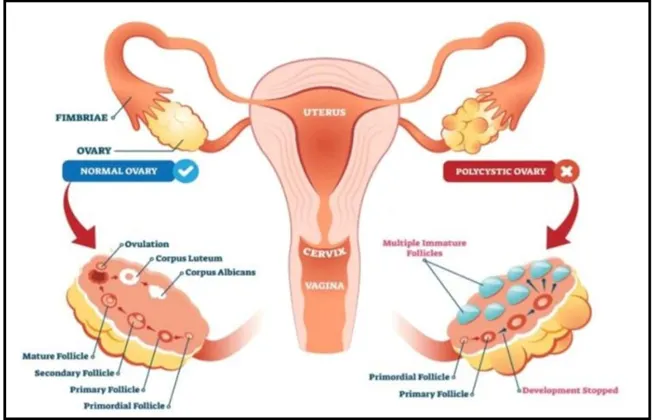
Fig no. 1. Difference between Normal Ovary and PCOD (1)
Causes of PCOD
1.Hormonal Imbalance: Women with PCOD Imbalance in their reproductive hormones, Excess of androgens (male hormones) This hormonal imbalance can disrupt of the ovaries and lead to the development.
2 Insulin Resistance: Insulin is a hormone Blood sugar levels. Some women with Resistance, where their cells do not Insulin. This can lead to high levels of Which in turn Can increase androgen Disrupt the menstrual cycle.
3. Genetics: There appears to be a genetic component to PCOD, as it tends to run in Families. Women with a family History of PCOD are more likely to develop the conditionThemselves.
4. Inflammation: Chronic low-grade inflammation in the Body may contribute to the Development of PCOD and its Associated symptoms.
5.Lifestyle Factors: Factors such as obesity, lack of physical Activity, and poor diet may Contribute to the development Is not yet and worsening of PCOD symptoms.
Symptoms of PCOD
1.Irregular menstrual cycles or no periods at all.
2. Heavy or prolonged menstrual bleeding
3.Excess hair growth on the face, chest, or back (hirsutism).
4.Acne, oily skin, or dandruff.
5.Weight gain or difficulty losing weight,
6.Male-pattern baldness or thinning hair.
7.Darkening of the skin, Particularly along the neck creases, In the groin, and underneath The breasts.
8. Skin tags, which are small excess flaps of skin in the Armpits or neck area.
Advantages of nutraceutical tablet in PCOD
• Herbs have a less side effect
• safe treatment.
• Herbal medicine has a promotive preventive and curative role.
• Presence of multiple potential chemical which have another beneficial effect on Body.
• Cost effective treatment than the synthetic medicines.
• Natural and safe therapy
• Improve hormone balance
• provide essential nutrients required for maintaining.
Applications
• Management of Hormonal Imbalance
• Regulation of Menstrual Cycle
• Enhance Ovarian function and support reproductive Health
• Maintaining healthy body weight
• Management of Metabolic Disorders
• Reduction of Acne and Hirsutism
• Nutritional Supplementation
• Improving Menstrual regularity and ovulation in Women suffering from PCOD.
• Help to improve insulin Sensitivity and glucose metabolism.
• Reduction of Oxidative Stress
• Reduce acne, excessive hair Growth, and other androgenic symptoms
Plant Profile
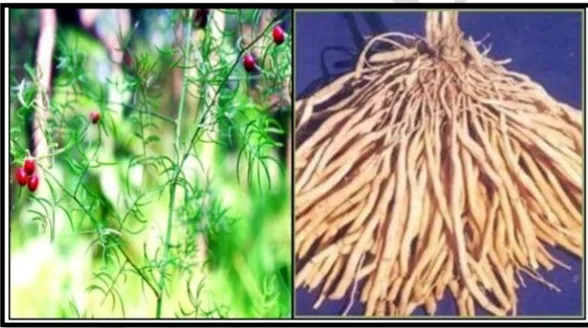
Fig no. 2. Shatavari Plant (2)
Synonyms – Asparagus racemosus, Wild asparagus, Satavar, Satmuli.
Biological source – It is dried spinous shrub with tuberous Roots of the plant Asparagus Racemosus.
Family – Asparagaceae
Geographical source – Asparagus racemosus is native to India, particularly found in Regions such as Himalayas, as well as Sri Lanka. It is also cultivated in other parts of India for its Medicinal properties.
Chemical Constituents – Shatavari contains saponins (2-5%), Steroidal glycosides (0.1-0.2%), Flavonoids (0.1-0.3%) and Polysaccharides (20-30%).
Uses – Shatavari is used as Anti-inflammatory, Anti-oxidant, Immunomodulatory, hormone Balancer. Shatavari is utilized for reproductive health, aiding in menstrual regulation, Fertility and balancing hormones and easing symptoms of Imbalances. Additionally, it Promotes digestive wellness, Boosts the immune system and acts as an anti- inflammatory Agent, particularly beneficial for joint health. (3)
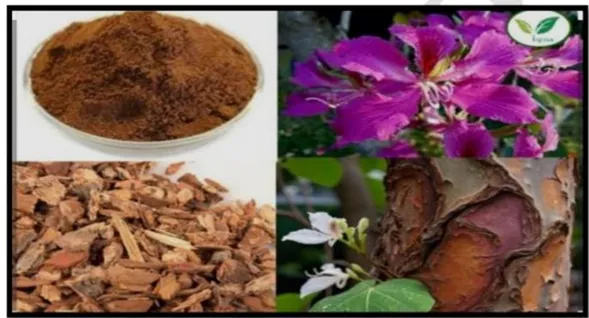
Fig no.3. Kanchnar Plant (4)
Synonyms – Bauhinia purpurea, Rakta Kanchan, Purple Bauhinia, Orchid tree, Camel’s Foot.
Biological source – The biological source of Kanchnar Includes both the dried bark and Leaves of the Bauhinia Purpurea Linn.
Family – Fabaceae
Geographical source – It is native to Indian subcontinent and Myanmar and widely Introduced elsewhere in tropical and Subtropical areas of the world.
Chemical constituents – The chemical constituents of Kanchnar are hentriacontane, Octacosanol, sitosterol, lupeol, Galactopyranoside, lignins, saponins, tannins, apigenin, Reducing sugars, steroids, cardiac glycosides.
Uses –Kanchnar is used as Anti-inflammatory, Anti-bacterial, Anti-cancer. Kanchnar is used in Traditional medicine to Support Thyroid health, reduce inflammation, cleanse the Lymphatic system and treat skin disorders. It is also beneficial for menstrual irregularities. (4)
MATERIAL AND METHOD
1.Shatavari –
Shatavari (Asparagus racemosus) is a well-known medicinal herb used in Ayurveda. It Belongs to the family Asparagaceae and is widely used for female Reproductive health, Hormonal balance, Infertility, and treatment of disorders such as PCOD and menstrual Irregularities. The roots of Shatavari contain important Phytoconstituents such as steroidal Saponins Flavonoids, alkaloids, and mucilage, which Contribute to its antioxidant, anti-Inflammatory Adaptogenic, and immunomodulatory Activities. It is also used as a Galactagogue to Improve milk production in lactating mothers in pharmaceutical and Nutraceutical Formulations, Shatavari is valued because it is Natural, safe, and produces Fewer side effects Compared to synthetic medicines. (5)
2.Kanchnar –
Kanchnar (Bauhinia variegata) is an important Ayurvedic medicinal plant belonging to the Family Fabaceae. It is commonly used for the Treatment of thyroid disorders, glandular Swelling, obesity, tumors, and gynecological Problems such as PCOD. The plant contains Various active constituents including Flavonoids, tannins, glycosides, sterols, and Saponins. That exhibit anti-inflammatory, Antimicrobial, antioxidant. Kanchnar is widely used inTraditional medicine because of its ability to Support hormonal balance Although it is a natural remedy with Comparatively fewer side effects. (6)
3.Methyl cellulose –
Methyl cellulose is a semi-synthetic derivative of cellulose widely used in pharmaceutical Formulations as a binder, thickening agent Suspending agent, and controlled-release Polymer. It appears as a white, odorless, and Tasteless powder that dissolves in cold water to form a viscous colloidal solution. In tablet Formulations, methyl cellulose helps in Binding Powder particles together and can also control The release of the drug by forming A gel layer Around the tablet when it comes in contact with water. Because of its non-toxic and stable Nature, it is commonly used in oral dosage Forms, suspensions, and film Coatings.
4.Magnesium stearate –
Magnesium stearate is one of the most Commonly used Pharmaceutical Excipients and acts mainly as a lubricant in tablet and Capsule Manufacturing. It is a fine white Powder that is hydrophobic and insoluble in water. During tablet compression, magnesium Stearate reduces friction between the powder and the machinery, preventing sticking of the Formulation to punches and dies and Improving powder flow properties.
5.Talc –
Talc is a naturally occurring hydrated Magnesium silicate commonly used in Pharmaceutical preparations as a glidant and Anti-adherent. It is a soft, fine white powder with slippery characteristics and is insoluble in Water. In tablet manufacturing, talc improves Powder flow and prevents sticking of granules to tablet punches and dies during Compression. It is also used in dusting Powders, cosmetics, and topical preparations Talc is widely preferred because it enhances Manufacturing efficiency and improves the Appearance of tablet
6.Lactose –
Lactose is a natural sugar obtained from milk and is widely used in pharmaceutical Formulations as a diluent or filler in tablets and Capsules. It is a white crystalline powder with a Slightly sweet taste and good water solubility. Lactose is preferred in tablet formulations Because of its excellent compressibility Stability, and economical nature. It helps in Increasing tablet bulk and improving uniformity of dosage forms. In addition, lactose is Commonly used as a carrier in dry powder Inhalers.
7.starch –
Starch is a natural polysaccharide obtained from plant sources such as maize, potato, rice, and wheat, and is widely used in Pharmaceutical formulations. It mainly Contains amylose and amylopectin and Functions as a binder, diluent, and disintegrant in tablet manufacturing. As a disintegrant, Starch absorbs water and swells, helping the Tablet to break apart after administration and Thereby enhancing drug release. It is Commonly used because it is inexpensive, Biodegradable, and easily available. Starch Also improves tablet formulation properties and processing. However, it is sensitive to Moisture and may support microbial growth if Stored improperly, so proper storage Conditions are necessary. (7)
Method –
Direct compression method
Principle – Direct compression is a method of tablet Manufacturing in which tablets are Prepared by Directly compressing a blend of active Pharmaceutical ingredient (API) and Excipients.The powders Used should possess good flowability and Compressibility so that They can be Compressed uniformly into tablets. Suitable Diluents, binders, disintegrants, Lubricants, and Glidants are mixed uniformly and compressed into tablets using a tablet Compression Machine. (7)
Procedure –
Advantages –
• Simple and economical process because Granulation steps are eliminated
• Less manufacturing time compared to wet Granulation
• Lower equipment requirement and Reduced labor cost.
• Suitable for heat and moisture sensitive Drugs since no heat or water is used
• Better drug stability due to absence of Moisture.
• Fewer processing steps reduce chances of Contamination and material loss.
• Improved tablet disintegration and Dissolution because tablets are less hard Than Granulated tablets.
• Easy scale-up for industrial production.
Limitations –
• Requires powders with good flowability and compressibility
• Not suitable for drugs with poor Compressibility.
• Segregation of powder blend may occur due to differences in particle size and density
• Uniform mixing is difficult when the drug is Present in low dose.
Experimental Work –
Table no. 1. Formula for 20 tablets
|
Sr. No |
Ingredients |
Quantity |
Role |
|
1 |
Kachnar |
1.6 gm |
Cysts Management |
|
2 |
Shatavari |
2gm |
Hormone Balance |
|
3 |
Methyl Cellulose |
0.2gm |
Binder |
|
4 |
Magnesium Stearate |
0.08 gm |
Lubricant |
|
5 |
Talc |
0.08gm |
Glidant |
|
6 |
Lactose |
0.24 gm |
Diluent |
|
7 |
Starch |
0.8 gm |
Disintegrant |
Procedure -
Phytochemical test –
Table no.2. Phytochemical test for shatavari (9)
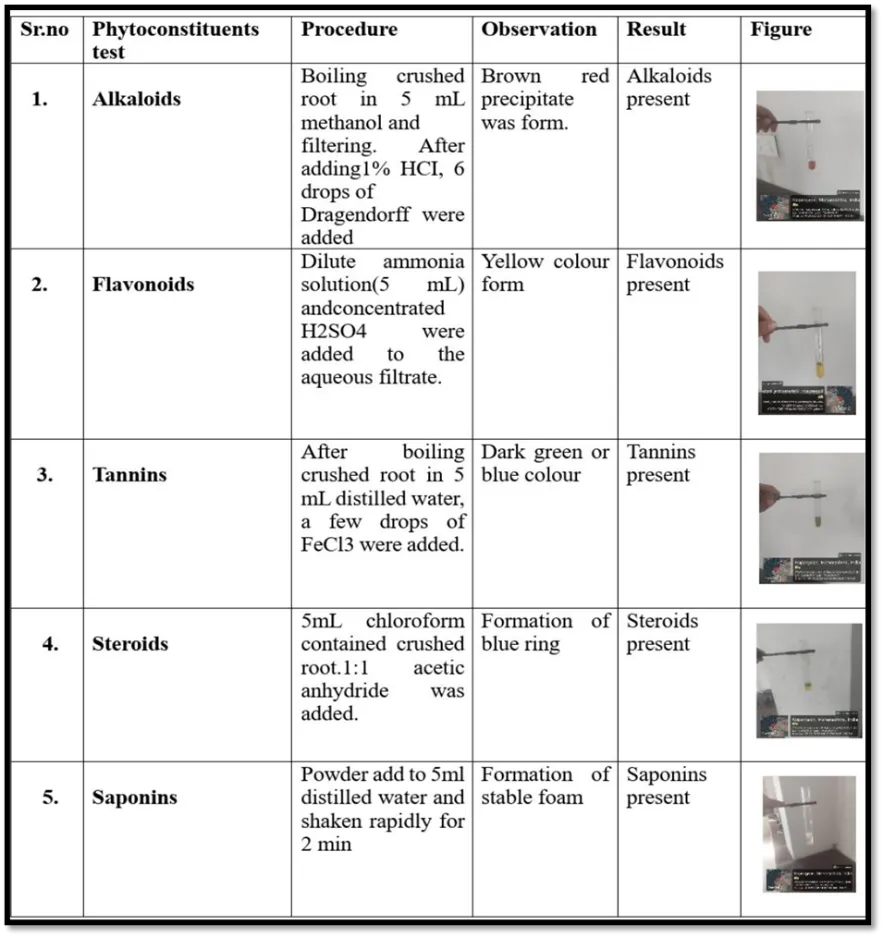
Table no.3. Phytochemical test for kanchnar (10)
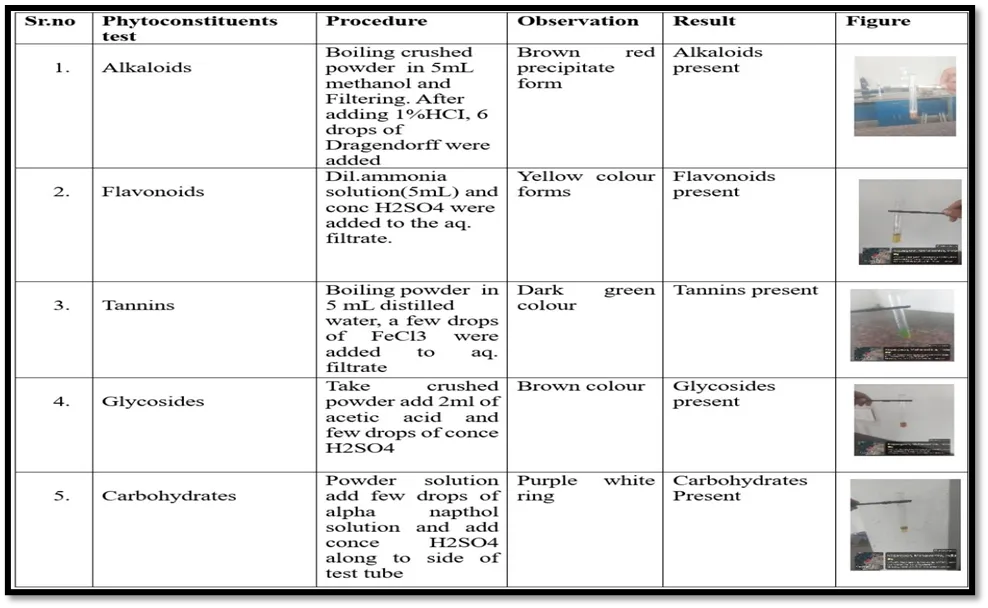
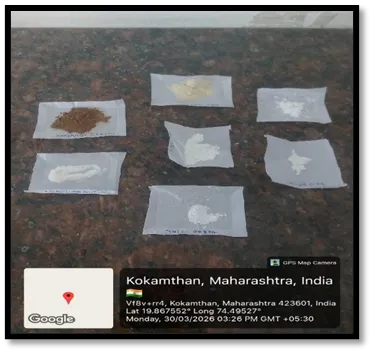
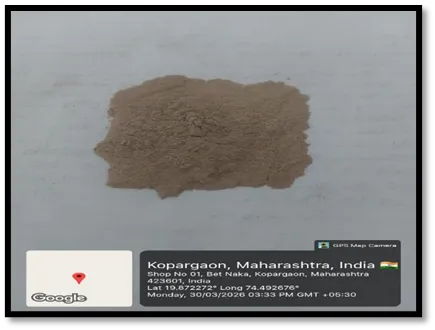
Fig no. 6. Weighed ingredients Fig no.7. Powder for compression
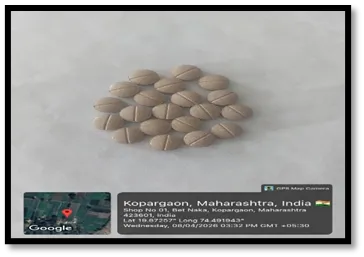
Fig no. 8. Prepared Tablets
Evaluation Parameters -
• Preformulation Parameters - (11)
• Evaluation of Tablet (12)
• Preformulation Parameters –
Bulk density testing was performed using a 100 mL measuring cylinder that was Dried Before handling. The formula below was applied to the powder were poured into The cylinder:
Bulk Density = Mass of the powder / Bulk volume of the powder. (13)
Tapped density was determined by adding powder into a 100 mL measuring Cylinder, Followed by 100 taps. The volume after tapping was noted, and the tapped Density was Calculated using the following formula:
Tapped Density = Weight of the powder / Volume of the tapped powder
(14)
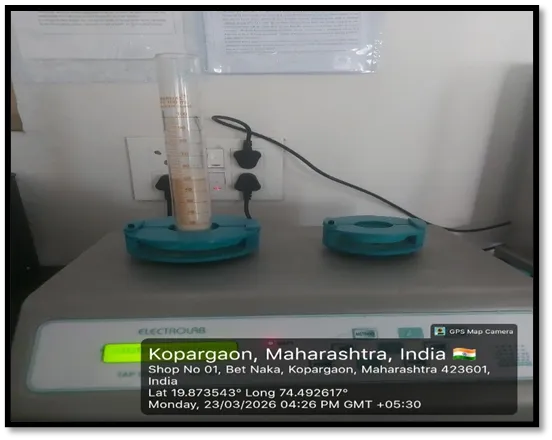
Fig no.9 Tapped density apparatus
The angle of repose was determined using the funnel technique. The following formula was Applied to calculate the angle of repose:
? =Tan?¹[h/r]
Where,
,H = Height of the powder cone formed
R = Radius of the powder cone formed.
The Carr’s Index, also known as the compressibility index, is determined using the Formula below.
Carr’s Index = (Tapped Density – Bulk Density) / Tapped Density
Table no.4. Flow properties Parameters (15)
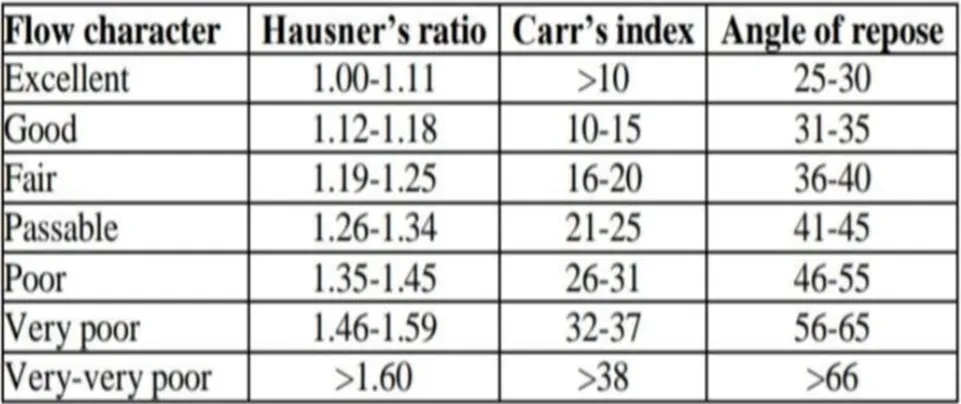
• Evaluation of Tablet (16)
The tablets underwent a series of evaluation tests. General appearance The General Appearance and colour of tablets were assessed visually.
Colour- Brown
Shape – Round
Tablets were tested using Monsanto or Pfizer hardness tester. Hardness expressed in kg/cm².Acceptable Range 4-6 kg/cm².
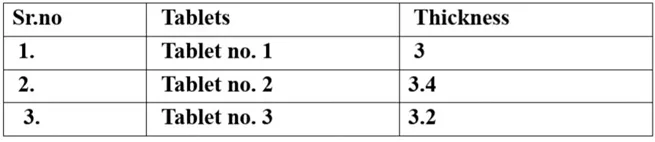
Thickness measure by using Vernier Calliper. Acceptable Range is 2-4 mm.
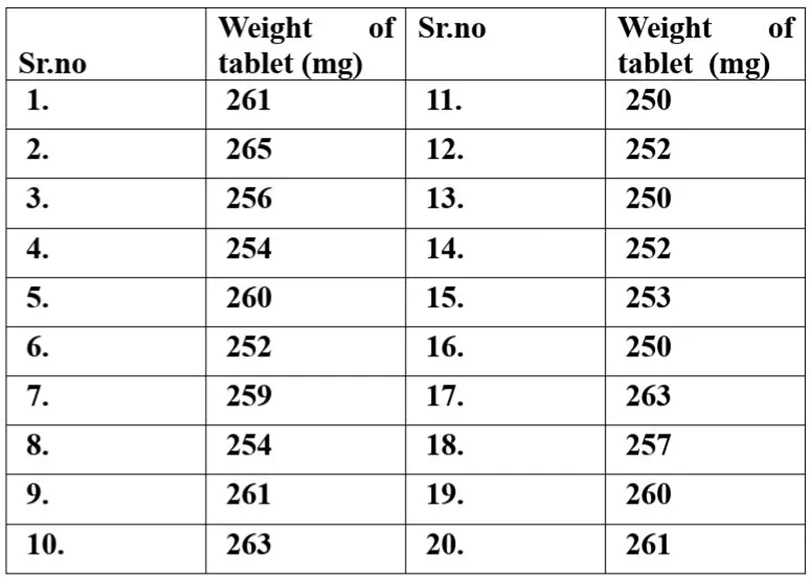
Select 20 tablets randomly, Weigh each tablet individually. Calculate average weight by Using formula
Weight variation = Initial weight- Average weight / Average weight *100
The friability of tablets can be assessed using a Roche Friabilator, device designed to Evaluate the mechanical strength of tablet formulations. The instrument comprises a Rotating Plastic chamber that operates at a speed of 25 rpm. During the test, tablets are Subjected to Repeated dropping from a height of six inches as the chamber rotates for a Total of 100 Revolutions. After completion of the test, the tablets are carefully reweighed. A tablet Fomulation is considered acceptable if the weight loss does not exceed 0.5% to 1.0% of the Initial tablet weight. (17)
Friability= Initial weight – Final weight/Initial weight* 100
This test evaluates the time required for a tablet to disintegrate into its Constituent Particles Under specific conditions. It evaluates the duration required for a Group of tablets to disintegrate into smaller particles within set time frame. The purposeof This test is to asses The disintegration of tablets within defined period. Time taken for the
Disintegration of the tablet = 15min (18)

RESULT AND DISCUSSION: -
Table no .5. Preformulation parameters
|
Sr. No |
Parameters |
Values |
Interpretation |
|
1 |
Bulk Density |
0.51 gm/ml |
Passable |
|
2 |
Tapped Density |
0.61 gm/ml |
Passable |
|
3 |
Carr’s Index |
22.66% |
Passable |
|
4 |
Housners ratio |
1.19 |
Fair |
|
5 |
Angle of repose |
38.66 |
Passable |
Colour – greyish brown
Shape – round
Table no. 6. Hardness of tablets
|
Sr. No |
Tablets |
Hardness |
|
1 |
Tablet no. 1 |
4.5 kg |
|
2 |
Tablet no. 2 |
4.6kg |
|
3 |
Tablet no. |
4.5 kg |
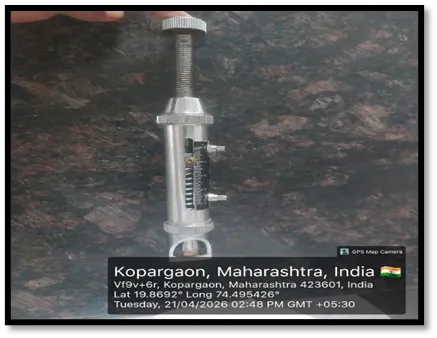
Fig no.10. Monsanto hardness tester
Thickness test of tablet was performed successfully by Vernier Calliper and Thickness was found to be 3.4 mm which is acceptable.
Table no. 7. Thickness Of Tablet
4.Weight variation –
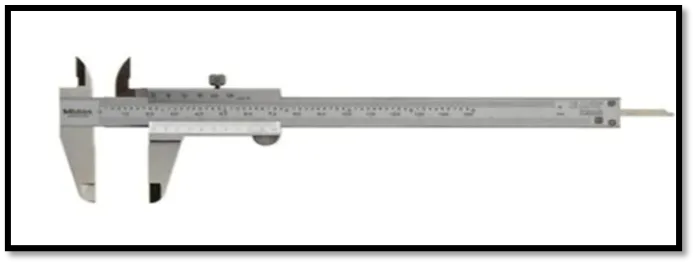
Fig no.11. Vernier Calliper
Weight variation = Initial weight – Average weight / Average weight * 100
= 250 – 256 / 256 *100
= 2.3 %
Standard range is ± 5 %
Table no. 8. Weight variation test
5.Friability –friability test was performed successfully. The result was found to be 0.19 % friability of nutraceutical tablet.
Friability = Initial weight of tablets – Final weight / Initial weight *100
= 5.490 – 4.507 / 5.490 * 100
= 0.19 %
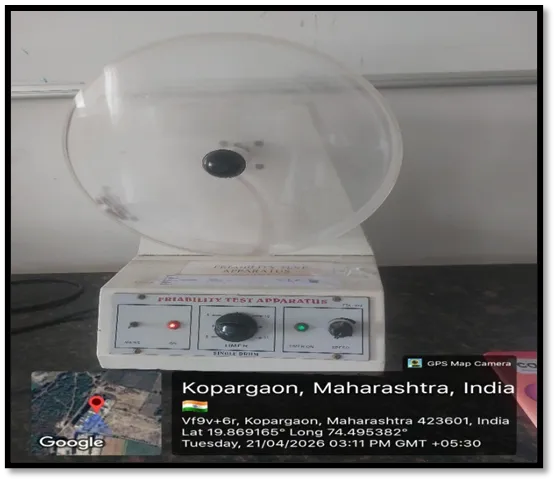
Fig no. 12. Roche Friabilator
The disintegration of nutraceutical tablet was performed successfully and Disintegration time of tablet was found to be 13 min.
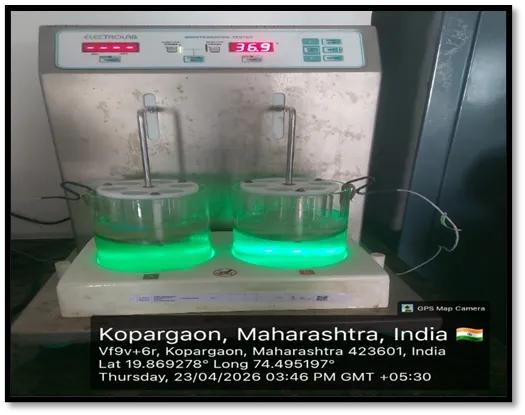
Fig no. 13. Disintegration test apparatus
The dissolution of nutraceutical tablet was performed successfully and dissolution Time was found to be 30 min. The % drug release was found to be 95 % at 30 min.
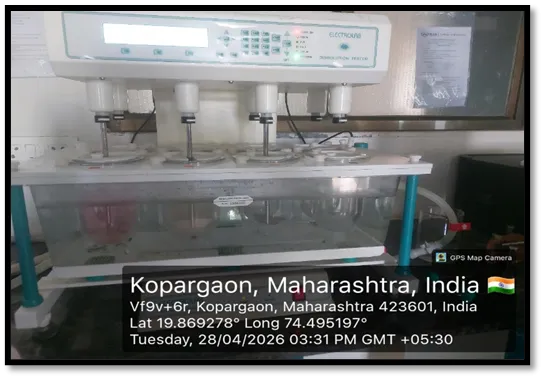
Fig no. 14. Dissolution test apparatus
Table no. 9. Dissolution test
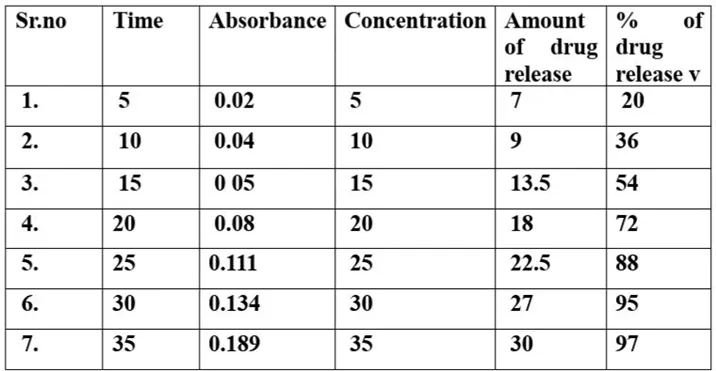
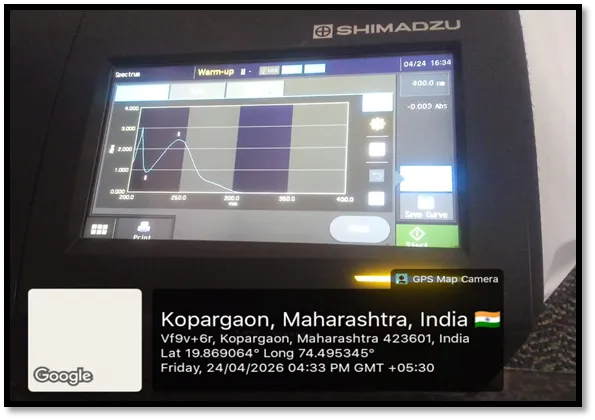
Fig no. 15. UV spectrum of tablet
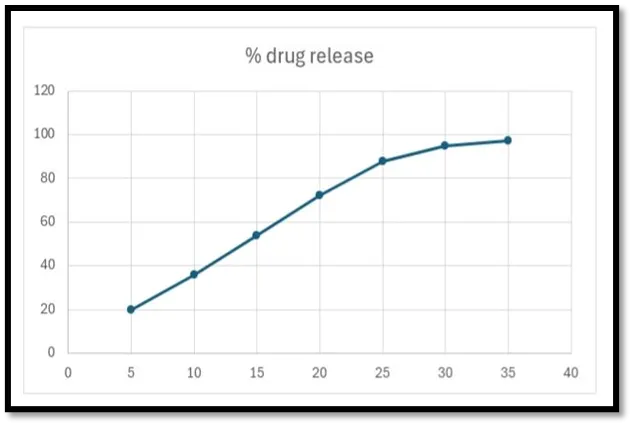
Fig no. 16. Graph of Time Vs % drug release
CONCLUSION
From the present investigation, it can be concluded that nutraceutical tablets for the Treatment of PCOD were successfully formulated and evaluated using suitable herbal and Pharmaceutical ingredients. The prepared formulation showed satisfactory pre-Compression and post-compression characteristics within acceptable limits. The tablets Exhibited good hardness (4.5 kg), Thickness (3.4 mm) friability (0.19%), proper weight uniformity (2.5 %), acceptable disintegration Time (13 min), and satisfactory drug release 95% at 30 min) behaviour use of nutraceutical ingredients offers a Natural, safe, and cost-effective approach for the management of PCOD with minimal side Effects. The formulation may help in improving hormonal imbalance, menstrual Irregularities, and metabolic complications associated with PCOD. Therefore, Nutraceutical tablet formulation can be considered a promising alternative or supportive Therapy for women suffering from PCOD.The research highlights the Potential of Integrating. Ayurvedic knowledge into modern Medicine for women’s health. The Therapeutic potential of Kanchnar and Shatavari in managing PCOD was supported by Their known pharmacological activities, including anti-Inflammatory, antioxidant, and Hormone-regulating effects. These properties are particularly beneficial in addressing the Underlying pathophysiology of PCOD, which includes Hormonal imbalance, oxidative Stress, and chronic Inflammation. In conclusion, the formulated herbal tablets Containing Kanchnar and Shatavari show promise as a Complementary treatment for PCOD. They Offer a natural and Holistic approach to managing this condition, potentially Reducing the Dependence on conventional pharmacological Therapies and their associated side effects.
REFERENCES

Sawant Aparna, Ghorpade Sakshi, Gosavi Shruti, Murtadak Bhagyashri, Dr. Thorat S., Formulation and Evaluation of Nutraceutical Tablet for treatment of PCOD, Int. J. of Pharm. Sci., 2026, Vol 4, Issue 7, 61-76, https://doi.org/10.5281/zenodo.21103255
 10.5281/zenodo.21103255