

We use cookies to ensure our website works properly and to personalise your experience. Cookies policy
Vaageswari institute of pharmaceutical sciences.
The present study focuses on the extraction and formulation of poly herbal hair gel using phyllanthus emblica (amla leaves), murraya koenigii (curry leaves), salvia hispanica .L (chia seeds). The leaves were subjected to Soxhlet extraction using methanol and water as the solvent to obtain a phytochemical-rich extract. This extract, known for its antioxidant, antimicrobial property was then incorporated into topical formulation, including a gel. Each formulation was prepared with suitable excipients and evaluated for phytochemical tests and physicochemical parameters like colour, odour, texture, washability, spreadability, viscosity, and pH. The phytochemical screening has shown the presence of Alkaloids, flavonoids and glycosides. The physicochemical evaluation of the developed formulations has shown pale green colour, pleasant odour, smooth texture, easy washability, good spread ability and almost neutral pH with no lumps were observed. And additionally, the antimicrobial activity of the amla, curry leaves, and chia seeds extract was assessed through a Minimum Inhibitory Concentration (MIC) test against selected bacterial strain Staphylococcus. The results demonstrated significant antimicrobial potential, suggesting the extract’s suitability for topical applications in skincare. This study highlights the potential of phyllanthus emblica, murraya koenigii, salvia hispanica.L extracts as a natural and effective ingredient in herbal cosmetic formulations. The promising results of the evaluation tests and MIC assay supports its further development in the cosmetic and pharmaceutical industries. The use of plant-based bioactives provides a sustainable and skin-friendly alternative to synthetic ingredients.
HAIR
The health of the hair is intrinsically linked to the nourishment and condition of both the hair shaft and the follicular environment. Effective hair care products need to support both structural integrity and biological activity. Herbal hair gels, with their water-based gel systems and botanical actives, offer a unique opportunity to provide intensive care without the drawbacks of synthetic formulations. This study aims to develop a natural, stable, and effective herbal hair mask gel that can provide therapeutic and cosmetic benefits to the hair and scalp through a scientifically informed approach grounded in traditional herbal wisdom[14].
PHYLLANTHUS EMBLICA
Amla leaves are obtained from the plant Phyllanthus emblica, Amla holds a prominent place in Ayurveda, where almost all parts of the plant, including leaves, fruits, bark, and roots, are used for medicinal purposes. The leaves are small, simple, sessile, and arranged in a pinnate fashion along branchlets, giving a feathery appearance[1].
Chemical Constituents of Amla Leaves (Phyllanthus emblica)
Tannins → Contribute to astringent property and wound healing Alkaloids→ Present in small quantities; show pharmacological actions Saponins → Help in therapeutic and immune-related activities
Vitamin C (Ascorbic Acid) → Present in lower amounts than fruit; supports immunity and antioxidant activity
Amino Acids → Help in protein synthesis and metabolic functions Carbohydrates → Provide nutritional value and energy
Fixed Oils → Useful in cosmetic and medicinal preparations Essential Oils → Contribute to therapeutic and aromatic properties[2].
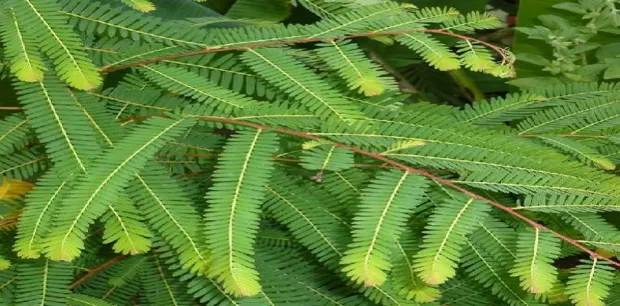
Fig :1:Phyllanthus emblica
Botanical name: Phyllanthus emblica
Family: Euphorbiaceae
Scientific Classification Kingdom : Plantae Order : Geantales
Family : Euphorbiaceae, Phyllanthaceae
Subfamily : Phyllanthoidea Tribe : Phyllantheae Sub tribe : Phyllanthinae Genus : Emblica
Species : officinalis Gaertn[3].
Chemical constitutions: Contains Emblicanin A, Gallic acid, Ellagic acid B,kaempferol, kaempferl-3-0-glucoside, gallo tannin, and rutin[4].
MURRAYA KOENIGII
Curry leaf (Murraya Koenigii) is a member of the Rutaceae family, which has 150 genera and 1600 species. It is native to South Asia, including India, Bangladesh and Sri Lanka.
The leaves of Murrayakoenigii contain koenimbine, O-methyl murrayamine, O-methyl mahanine, isomahanine, bismahanine, and bispyrayafoline, as well as koenigine, koenine, koenidine, mahanimbine, isomahanimbine, koenimbidine and murrayacine, isomahanimbicine, Euchrest. The glycozoline, 1-formyl-3-methoxy-6-methyl
carbazole, and 6, 7-dimethoxy-1-hydroxy-3-methyl carbazole are the main components of dried leaves. Additionally, Murraya koenigii's leaves contain nicotinic acid, proteins, carbohydrates, fiber, minerals, and carotene[5].
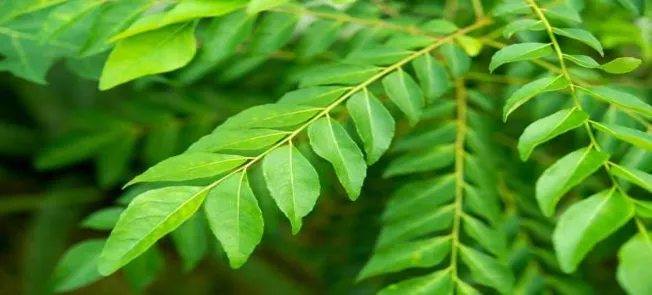
Fig :2: Murraya koenigii Botanical name: Murraya koenigii
Family: Rutaceae
scientific classification :
Kingdom : Plantae
Order : Sapindales
Family : Rutaceae Sub-family :Aurantioideae Tribe:clauseneae
Sub tribe : clauseninae
Genus : murraya J. koenigexl
Species : murraya koenigii (L)spreng[6].
Chemical constituents:
Mahanimbine, mahanine, koenine, murrayanine.
SALVIA HISPANICA .L
The Salvia genus has nearly 900 species. Chia seeds (Salvia hispanica Linn.) belong to the family Lamiaceae grow in tropical and subtropical climates. This herbaceous plant originated from the southern part of Mexico and the northern part of Guatemala; since 1500 BC, food seeds have played a major role in human nutrition.
Chia seeds include phytochemicals such as phenolic elements and essential fatty acids. Quercetin, omega 3, myricetin, caffeic acid,omega 6 and kaempferol are among the active ingredients. The composition of phytochemicals is influenced by nutrient availability, soil conditions, environmental variations, cropping year or climatic changes. Dietary fibre (18-30%), antioxidants, high fat (30-33%), vitamins, proteins (15-25%), minerals and carbs (26-41%) are all present in chia seeds.
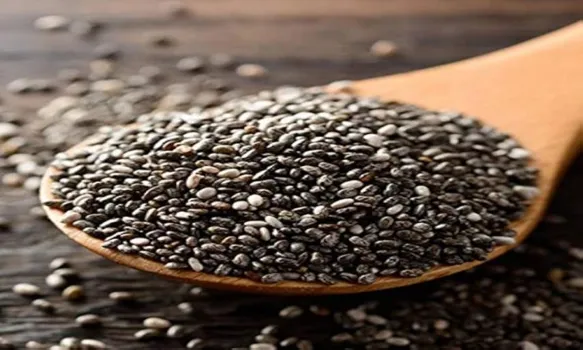
Fig 3: Salvia hispanica L. Botanical Name: Salvia hispanica L.
Family: Lamiaceae
Scientific Classification:
Kingdom : Plantae Order : Lamiales
Family : Lamiaceae
Subfamily : Nepetoideae Tribe : Mentheae
Genus : Salvia Species : hispanica L.
Chemical Constituents:
Omega 6 fatty acid, omega 3 fatty acid, omega 6 LA, omega 3 ALA[7].
Herbal Hair Gel:
Herbal hair gel is a natural hair styling product formulated using plant-based ingredients such as herbal extracts, gums, and essential oils. It is used to style, set , and hold hair in place while also providing nourishment and promoting scalp health, without the harmful side effects of synthetic chemicals.
Gels are semi-solid dosage forms in which small inorganic particles or large organic molecules are dispersed uniformly within a liquid medium, forming a three-dimensional network that imparts rigidity and consistency to the system.
They are typically composed of a gelling agent and a liquid phase, which together provide
desirable rheological and application properties. Due to their non-greasy nature, ease of application, and aesthetic appeal, gels are widely used in cosmetic and pharmaceutical preparations. These formulations are designed not only to provide hair styling and hold but also to deliver therapeutic benefits to the scalp and hair[8].
MATERIALS AND METHODS
Collection of materials
Phyllanthus emblica,murraya koenigii, salvia hispanica .L extracts.
Chemicals: carbopol 934, trimethanolamine, methyl paraben, vitamin E, Aloe vera, rose water, distilled water.
Soxhlet Extraction Process
Take dried plant material Powder ~100 gm Put in thimble
↓
Place thimble in Soxhlet Apparatus
↓
Add solvent in Round Bottom Flask Murraya koenigii → 250 ml Methanol Phyllanthus emblica → 250 ml Water Salvia hispanica → 250ml Water
↓
connect to Heating Mantle Heat at 40°C
↓
Solvent boils → Vapour rises
↓
. Vapour reaches condenser Condenses → Liquid drops
↓
Condensed solvent drips into thimble Hot solvent dissolves plant constituents
↓
Extract+solvent flows back to flask
↓
Repeat steps until extraction complete
↓
Evaporate solvent from extract
↓
Gel concentrated extract
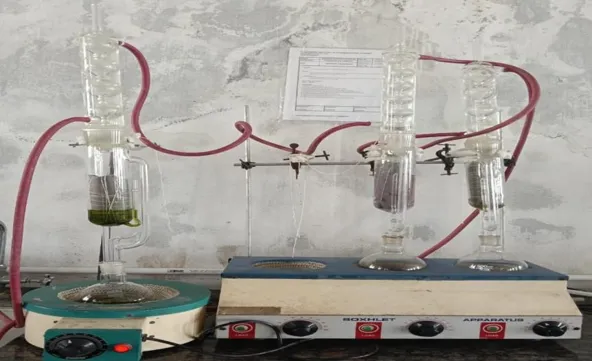
Fig. 4: Soxhlet extraction.
PRELIMINARY PHYTOCHEMICAL SCREENING
Preliminary phytochemical screening involves the testing of Methanolic and water extract of the plant material for the presence of various classes of phyto constituents.
Test for Alkaloids
The extract is treated with a few drops of dilute hydrochloric acid (HCL). The addition of a few drops of Dragendroff’s reagent to the solution may result in the formation of a yellow precipitate, indicating the presence of alkaloids[9].
Test for Flavonoids
A portion of the extract is treated with concentrated hydrochloric acid (HCL). The appearance of a yellow colour, becomes colourless upon addition of a few drops of dilute ammonia solution, shows presence of flavonoids[9].
Test for Glycosides
The extract is treated with a few drops of Fehling’s solution A and B and gently heated. The formation of a brick-red precipitate indicates the presence of glycosides[10][11].
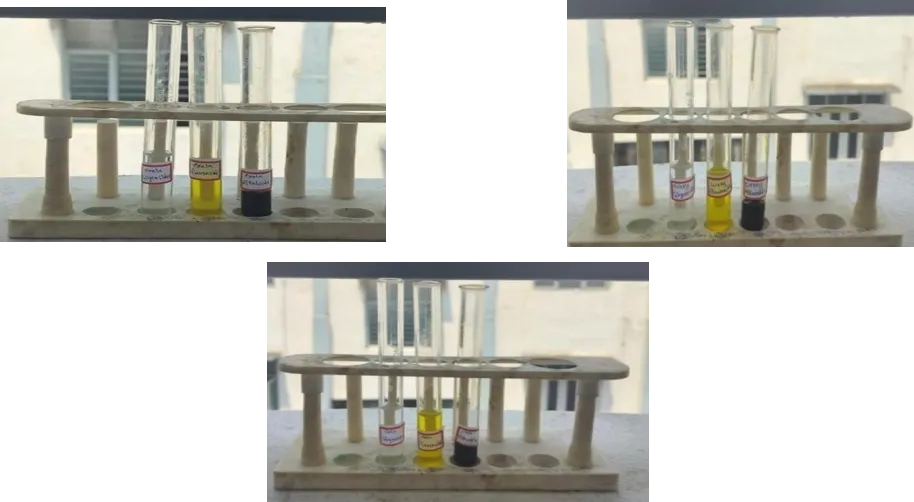
Fig 5: Preliminary tests
(a) Amla leaves, (b) Curry leaves, (c) Chia seed
Composition of poly herbal hair gel
|
Ingredients |
Composition% |
Category |
||
|
F1(g) |
F2(g) |
F3(g) |
||
|
Amla leaf extract(ml) |
0.5 |
1 |
2 |
Anti oxidant |
|
Curry leaf extract(ml) |
0.5 |
1 |
2 |
Anti oxidant, anti inflammatory |
|
Chia seed extract(ml) |
0.5 |
1 |
2 |
Nourishment |
|
Carbopol 934(gms) |
0.5 |
0.5 |
0.5 |
Gelling agent |
|
Triethanolamine(ml) |
0.2 |
0.2 |
0.2 |
pH adjuster |
|
Rose water(ml) |
1 |
1 |
1 |
Fragnance |
|
Aloe vera (ml) |
1 |
1 |
1 |
Moisturizer |
|
Vitamin E capsule |
1 |
1 |
1 |
Nourishment Moisturizer |
|
Methyl paraben (ml) |
0.3 |
0.3 |
0.3 |
Preservative |
|
Distilled water(ml) |
24.5 |
23 |
20 |
Vehicle |
Preparation of poly herbal hair gel
Take a beaker and add amla leaves extract, curry leaves extract, chia seeds extract and water. Keep the beaker on magnetic stirrer. Then slowly add carbopol, triethanolamine, rose water, vitamin E capsule, aloe vera gel & keep on stirring until the gel is obtained.
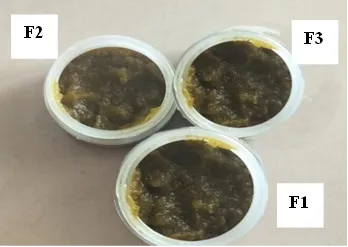
Fig 6: preparation of poly herbal hair gel
Evaluation tests for poly herbal hair gels
1. Homogeneity:
The formulation was tested for the homogeneity by visual appearance and by touch.
2. Grittiness:
Mark an area of 1 sq.cm on the dorsal surface of hand, apply the gel and rate the grittiness
/texture.
3. Spreadability :
Adequate amount of sample is taken between two glass slides and a weight of 100 gm is applied on the slides for 5 minutes. Spreadability can be expressed as,
S=M×L/T
Where,
S= Spreadability(g.cm/sec)
M= weight applied to upper slide(gm)
L = length moved on the glass slide(cm) T= time taken to separate the slides[12].
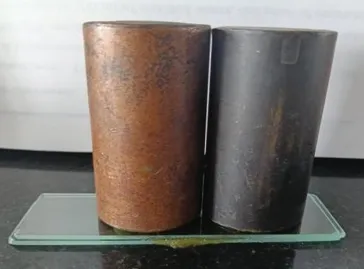
Fig 7: Spreadability
4. pH determination:
The pH of the gel can be measured on a standard digital pH meter at room temperature, by taking adequate amount of the formulation diluted with a suitable solvent in a suitable beaker[13].
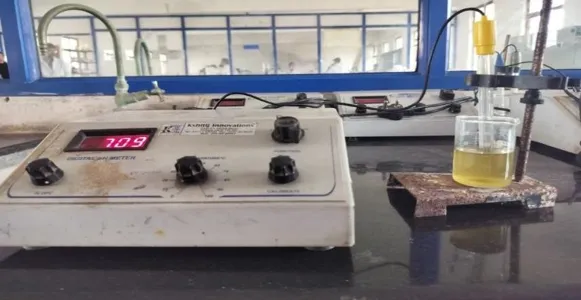
Fig 8: Digital pH meter
5. Viscosity:
Viscosity of formulated gel can be determined by using Brookfield Viscometer. It was checked at 100 RPM and spindle no:6 using brookefield viscometer.
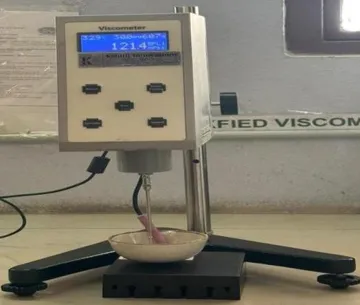
Fig 9: Brookfield viscometer
6. Irritancy study:
Mark an area of 1 sq.cm on the right-hand dorsal surface. The gel was applied to the specified area and time was noted. Irritancy, erythema, edema was checked, if any, for regular intervals up to 24 hours and reported.
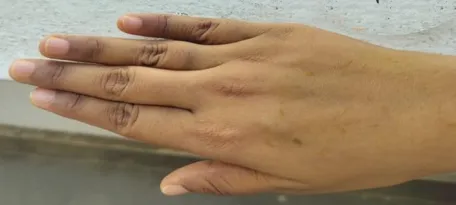
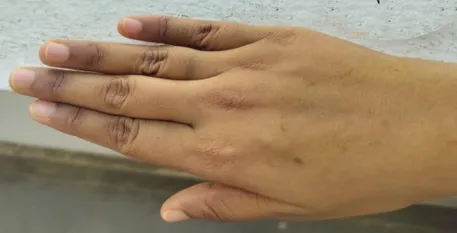
Fig 10: Before application of gel Fig 11: After application of gel
Determination of microbial growth:
7. Composition of Nutrient Media:
|
Ingredients |
Composition(gm/ml) |
|
Agar |
4gms |
|
Peptone |
1.6gms |
Preparation of nutrient media:
Agar and peptone were taken and dissolved in 200ml of distilled water. Mix and dissolved completely. Sterilized by autoclave at 121˚C for 15mins. Pour the liquid into Petri dish and wait for medium to solidify.
Determination of zone of inhibition:
The petri plates wells were made ready by using borer apparatus. Placed 1gram of prepared formulations in to the petri plates containing microorganisms such as staphylococcus aureus. Similarly the marketed product was added as standard solution. These plates were placed in incubator for 48hrs. Then next day plates were observed for the zone of inhibition.
RESULTS
|
Tests |
F1 |
F2 |
F3 |
|
Colour |
Pale green |
Olive green |
Green |
|
Odour |
pleasant |
pleasant |
pleasant |
|
Appearance |
Smooth |
Smooth |
Smooth |
|
pH |
7.09 |
6.64 |
6.70 |
|
Washability |
Washable |
Washable |
Washable |
|
Spreadability |
170.45gm/cm |
208gm/cm |
220.58gm/cm |
|
Irritancy |
Non-irritant |
Non-irritant |
Non-irritant |
|
Viscosity |
121.4cp |
111.9cp |
105.3cp |
Determination of microbial studies
Phyllanthus emblica, Murraya koenigii, Salvia hispanica linn extract gave potent antibacterial activity against staphylococcus aureus as observed by the zone of inhibition ranges from 14mm to 16mm.
Zone of inhibition standard and prepared formulations
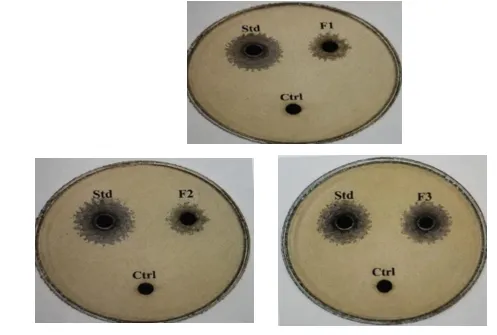
Fig. 12: gel
DISCUSSION
The herbal hair gel was successfully formulated using natural ingredients,resulting in a smooth and homogeneous product without lumps or phase separation. The formulation showed a suitable pH range (6.6 –7.0), making it safe and non-irritating for scalp application. The gel exhibited optimal viscosity and good spreadability, ensuring easy application and effective hair styling. The
absence of grittiness. Physical Stability studies indicated no significant changes in color, odour, or consistency, confirming good stability of the formulation.The product was easily washable and left no residue, enhancing user convenience. Irritancy tests showed no signs of redness or itching, proving its safety. Overall, the herbal hair gel demonstrated good stability, safety, and effectiveness, making it a suitable natural alternative to synthetic hair gels.
CONCLUSION
This study focused on creating and testing poly herbal hair gel using extracts. Known for its antioxidant, anti microbial. Three herbal extracts were successfully added to each product. The formulations were made using standard methods and tested for physicochemical parameters such as colour, odour,texture & for its pH, spreability, viscosity, washability, microbial safety, grittiness, homogeneity and user acceptance. Results showed that product had good characteristics and effectively delivered the benefits of the extract. The gel worked well as a hair gel formulation, providing good spreadability and easy of application while showing potential benefits for hair nourishment and scalp health.
REFERENCES





Mahankali Rajitha, Gonepally Vaishnavi, Vilasagarapu Rajasri, Gangadhara Saipoojitha, Erugulu Shivanandini, Nagunuri Mangadevi, Donthireddy Anjali, Gurrapu Niharika, Formulation And Evaluation of Poly Herbal Hair Gel, Int. J. of Pharm. Sci., 2026, Vol 4, Issue 9, 3372-3381, https://doi.org/10.5281/zenodo.22960265
 10.5281/zenodo.22960265