

We use cookies to ensure our website works properly and to personalise your experience. Cookies policy
AM Reddy Memorial College Of Pharmacy, Narsaraopet Aacharya nagarjuna university, Guntur Andra Pradesh,India-506009.
The majority of commercial soaps contain ingredients that may hurt skin.The extract obtained from the leaves of various medicinal plants have been employed as a natural remedy in curing various infections and diseases.The aim of the present study is to formulate herbal soap containing Neem (Azadirachta indica), Kuppinta (Acalypha indica), Orang peel (Citrus sinensis), and Aloe vera (Aloe barbadensis miller) which are well known for their antimicrobial, antioxidant, anti-inflammatory, moisturizing, and skin-protective activities.eliminates dangerous bacteria, removes dirt and excess oil, leaving the skin clear, supple and free of wrinkles. The prepared polyherbal soap was evaluated for various physicochemical parameters, including appearance, color, odor, texture, pH, foam height, foam retention, moisture content, alcohol-insoluble matter, and total fatty matter.The findings indicate that this polyherbal soap is a promising natural alternative to standard antibacterial soaps, promoting both skin hygiene and wellness.
Since the beginning of time, people have employed medicinal plants as a form of treatment. Several maladies and diseases have been treated naturally by using the extract made from the leaves.The increasing demand for natural and safe cosmetic products has led to significant interest in herbal formulations for personal care applications[1]. Herbal cosmetics are preparations containing plant-derived ingredients that provide cosmetic benefits while minimizing the adverse effects commonly associated with synthetic chemicals[2]. Among various herbal cosmetic products, herbal soaps have gained considerable popularity due to their cleansing, antimicrobial, antioxidant, moisturizing, and skin-protective properties[3].poly herbal soap containing Neem, Orange Peel, Kuppinta, and Aloevera.These ingredients were chosen for their traditional use in skincare, as well as their scientifically proven antibacterial and skin-protective characteristics.The purpose of this study is to develop a mild, effective, and eco-friendly soap formulation that promotes skin health[4].The combination of neem, orange peel, and Aloe vera in a single formulation is expected to produce synergistic effects. Neem, Kuppinta contribute antimicrobial and antifungal activities, while orange peel provides antioxidant and exfoliating properties[5]. Aloe vera offers moisturizing and soothing effects that help maintain skin health. Together, these ingredients may produce a multifunctional herbal soap capable of cleansing, protecting, moisturizing, and rejuvenating the skin[6].In recent years, extensive research has demonstrated the potential of herbal soaps as effective alternatives to synthetic cleansing products[7]. The growing consumer preference for natural, eco-friendly, and sustainable cosmetic products has further accelerated the development of herbal formulations[7,8].The attribute of a soap includes gentleness on the skin, rich lather, protection against various skin disorders (including rashes, eczema, scabies) treatment of skin infection (such as ringworm), protection of even skin toning and smoothness of the skin[9].The aim of the present study is to formulate herbal soap containing Neem, Kuppinta , Orang peel, and Aloe vera which are well known for their antimicrobial, antioxidant, anti-inflammatory, moisturizing, and skin-protective activities[10,11].
MATERIALS AND METHODS:
The materials used for the preparation of the polyherbal soap consisted of natural oils, herbal extracts, saponifying agents, moisturizing agents, and other excipients required for the formulation. All materials used in the study were of analytical grade and were obtained from reliable sources.
Table: 1 Materials and its sources
|
Material |
Sourse |
|
Coconut Oil |
Coconut Oil |
|
Castor Oil |
AMRMCP Laboratory |
|
Stearic Acid |
AMRMCP Laboratory |
|
Sodium Hydroxide (NaOH) |
AMRMCP Laboratory |
|
Distilled Water |
AMRMCP Laboratory |
|
Acalypha indica Extract |
leaves were collected from the university campus garden |
|
Neem Extract |
Neem peels were collected from ripe fruits obtained from the local market |
|
Aloe barbadensis miller |
Aloe vera juice is obtained by stripping away the outer leaf rind, rinsing or
|
|
Orange Peel Extract |
Fresh orange peels were collected from ripe fruits obtained from the local market |
|
Fragrnce |
AMRMCP Laboratory |
|
Glycerin |
AMRMCP Laboratory |
METHODOLOGY
The methodology adopted in the present research work involved systematic stages including collection and authentication of plant materials, extraction of herbal constituents, phytochemical screening, formulation of polyherbal soap by saponification method, microbiological evaluation, physicochemical evaluation, and stability studies. The selected medicinal plants (Azadirachta indica, Acalypha indica, Citrus sinensis, and Aloe vera) were processed using suitable extraction techniques to obtain bioactive phytoconstituents. responsible for antimicrobial, antioxidant, anti-inflammatory, moisturizing, and skin-protective activities. The prepared extracts were incorporated into a soap base prepared using natural oils and alkali, followed by comprehensive evaluation to determine quality, efficacy, and stability..
COLLECTION AND AUTHETIFITION
Fresh leaves of Azadirachta indica (Neem) were collected from the medicinal plant garden of AMRMC Pharmacy College. Fresh leaves of Acalypha indica and Aloe vera leaves were collected and oranges peel is collected. plant materials were washed thoroughly with running water to remove dust, soil particles, and other contaminants[12]. The materials were then shade-dried under ambient conditions to preserve thermolabile phytoconstituents. Dried materials were pulverized into coarse powder and stored in airtight containers until further use.
EXTRACTION
EXTRACTION OF HERBAL MATERIALS
5.2.1 Extraction of Acalypha indica Leaves
Method
Ethanolic Maceration Method
Procedure
Freshly collected leaves of Acalypha indica were washed thoroughly and shade-dried for seven days. The dried leaves were powdered using a mechanical grinder. Approximately 100 g of powdered material was soaked in 500 mL of ethanol and allowed to stand for 48 hours with occasional stirring.
The mixture was filtered through muslin cloth followed by Whatman filter paper. The filtrate was concentrated on a water bath maintained below 50°C until a semi-solid extract was obtained. The concentrated extract was stored in an airtight container under refrigerated conditions until further use[12,13].
Extraction of Neem Leaves
Method
Hydroalcoholic Extraction
Procedure
Fresh neem leaves were washed, shade-dried, and powdered. About 100 g of powdered leaves was soaked in 500 mL of ethanol-water mixture (70:30) and kept for 72 hours.
The extract was filtered and concentrated using a water bath at controlled temperature. The concentrated extract was collected and stored in airtight containers[14,15].
Extraction of Orange Peel
Method
Ethanolic Extraction
Procedure
Fresh orange peels were separated from fruits, washed thoroughly, and shade-dried until complete removal of moisture. The dried peels were powdered and 100 g of powder was soaked in 500 mL ethanol for 24 hours.
The extract was filtered and concentrated using a water bath. The obtained extract was stored in airtight containers[16,17,18]
Extraction of Aloe vera Gel
Method
Fresh Gel Extraction
Procedure
Fresh Aloe vera leaves were washed thoroughly with distilled water. The outer green rind was removed carefully using a sterile knife. The transparent inner gel was collected and homogenized using a blender.
The gel was filtered to remove fibers and stored in sterile containers under refrigeration[19,20].
Pharmacognostical profile of active ingredients
Table: 2 phytochemical screening test procedures
|
Phytochemical |
Test Name |
Procedure |
Observation |
|
Alkaloids |
Dragendorff’s Test |
Add Dragendorff’s reagent to extract |
Orange/red precipitate indicates presence |
|
Flavonoids |
Shinoda Test |
Add Mg turnings + conc. HCl |
Pink/red color indicates presence |
|
Tannins |
Ferric Chloride Test |
Add FeCl₃ solution |
Blue-black or green color indicates presence |
|
Saponins |
Foam Test |
Shake extract with water |
Persistent foam indicates presence |
|
Glycosides |
Keller-Killiani Test |
Add glacial acetic acid + FeCl₃ + H₂SO₄ |
Brown ring indicates presence |
|
Phenols |
Ferric Chloride Test |
Add FeCl₃ solution |
Deep blue/black color indicates presence |
|
Terpenoids |
Salkowski Test |
Add chloroform + conc. H₂SO₄ |
Reddish-brown interface indicates presence |
Table : 3 phytochemical components in selected plants
|
Name |
Chemical Constituents |
|
3. Alkaloids, flavonoids, tannins, saponins, phenolic compounds, glycosides, terpenoids, and steroids[25,26,27]
4. Essential oils, particularly limonene, along with flavonoids and hesperosiodes, naringoside[28,29]
|
FORMULATION OF POLYHERBAL SOAP
Method of Preparation
The polyherbal soap was prepared by the cold-process saponification method[30,31,32,33,34].
Table : 4 Composition of Polyherbal Soap
|
Ingredient |
Quantity (% |
|
Coconut Oil |
40 |
|
Castor Oil |
20 |
|
Stearic Acid |
15 |
|
Neem Extract |
5 |
|
Acalypha indica Extract |
5 |
|
Orange Peel Extrac |
5 |
|
Aloe vera Gel |
5 |
|
Glycerin |
3 |
|
Fragrance |
Quantiy sufficient |
|
Sodium Hydroxide Solution |
Quntity sufficient |
|
Distilled Water |
Quantit sufficient |
Step 1: Preparation of Lye Solution
Required quantity of sodium hydroxide was slowly added to distilled water with continuous stirring. The solution was allowed to cool to room temperature before use.
Step 2: Preparation of Oil Phase
Coconut oil, castor oil, and stearic acid were mixed and heated at 60–70°C until completely melted.
Step 3: Saponification
The cooled lye solution was slowly added to the oil phase with continuous stirring. Stirring was continued until trace formation occurred.
Step 4: Incorporation of Herbal Extracts
Measured quantities of:
were added to the soap base and mixed thoroughly.
Step 5: Addition of Additives
Glycerin and fragrance were added and mixed uniformly.
Step 6: Molding
The prepared soap mass was poured into molds and allowed to solidify.
Step 7: Curing
The soap bars were removed from molds after 24–48 hours and cured for 4 weeks at room temperature.
Saponification value:
About 2 g of the paraffin wax was taken in a conical flask and the weight of the paraffin was considered as w g. The paraffin wax was dissolved in 25 ml of 0.5 N alcoholic potassium-hydroxide solution. Then the reaction mixture was refluxed using a water condenser on a water-bath for half an hour. The resulting solution was cooled and titrated against a 0.5 N HCl solution adding 1 ml of phenolphthalein as an indicator. The number of ml of acid required was noted (a). An exactly identical blank experiment (leaving the paraffin wax) was performed. Number of ml of hydrochloric acid required was noted (b).
Saponification value=Volume of acid required to neutralize remaining KOH
*Equivalent fator*1000/w = (b-a)*0.02805*1000/w
Procedure
Sterile nutrient agar plates were prepared and inoculated with microbial cultures. Wells of 6 mm diameter were created using a sterile cork borer.Different concentrations of soap extract were introduced into the wells. Standard antibiotic solution served as positive control, while solvent served as negative control.The plates were incubated at 37°C for 24 hours.After incubation, zones of inhibition were measured in millimeters.
EVALUATION PARAMETERS
Physical evaluation:
Colour & shape: Colour and shape was checked by naked eye.
Odour: The smell of formulation was checked by applying preparation on hand and feels the fragrance of perfume.
pH: The pH of the prepared soap was assessed by touching a pH strip to the freshly formulated soap and jointly by dissolving 1 gram in 10 ml water with the help of digital pH meter.
Foam Height: 0.5 grams of sample of soap was taken dispersed in 25 ml distilled water. Then, transferred it in to 100ml measuring cylinder; volume was make up to 50 ml with water. 25 strokes were given and stand till aqueous volume measured up to 50 ml and measured the foam height, above the aqueous volume was measured.
Foam Retention: 25 ml of the 1% soap solution was taken in to a 100 ml graduated measuring cylinder. The cylinder was covered with hand and shaken 10 times. The volume of foam at 1 minute intervals for 4 minutes was recorded.
Irritation: It is carried out by applying soap on the skin for 10 minutes. If no irritation then it is considered as non-irritant product
Hardness Test: Soap hardness was evaluated by applying pressure manually
Washability Test: The ease of washing and rinsing the soap from the skin was evaluated by washing under running water
Stability StudyThe soap samples were stored at room temperature and elevated temperature (40 ± 2°C) for a specified period.
Cleansing Ability: The cleansing efficiency of the soap was assessed by washing standardized soiled surfaces or skin and observing the removal of dirt and oil[35,36].
Anti-microbial activity:
The antimicrobial activity of the prepared polyherbal soap was evaluated using the Agar Well Diffusion Method.
Test Organisms
Agar diffusion method was used. Petripclate containing 20ml of Mueller Hinton agar were seeded with 24hr culture[37,38]
Test Orgaisms
Procedure
Sterile nutrient agar plates were prepared and inoculated with microbial cultures. Wells of 6 mm diameter were created using a sterile cork borer. Different concentrations of soap extract were introduced into the wells. Standard antibiotic solution served as positive control, while solvent served as negative control.The plates were incubated at 37°C for 24 hours.
RESULT AND DISCUSSION
The prepared polyherbal soap formulation containing Azadirachta indica (Neem), Acalypha indica, Citrus sinensis (Orange Peel), and Aloe vera was evaluated through phytochemical screening, microbiological assay, physicochemical evaluation, and stability studies. The results obtained from various tests are discussed below.
Table 5 : phytochemical screeting test results
|
S.no |
Phytochemical test |
Azadirachta indica |
Acalypha indica |
Citrus sinensis |
Aloe vera |
|
1. |
Alkaloids |
+ |
+ |
– |
– |
|
2. |
Flavonoids |
+ |
+ |
+ |
+ |
|
3. |
Glycosides |
+ |
– |
+ |
+ |
|
4. |
Tannins |
+ |
+ |
+ |
– |
|
5. |
Saponins |
+ |
+ |
– |
+ |
|
6. |
Terpenoids |
+ |
+ |
+ |
+ |
|
7. |
Phenolic Compounds |
+ |
+ |
+ |
+ |
|
8. |
Steroids |
– |
+ |
– |
+ |
Table 6 : physical parameters of obtained sample Results and discussion
|
S. No |
Physiochemical Parameters |
F1 |
F2 |
F3 |
|
1. 2.
3. 4. 5. 6.
7. 8. |
Colour Odour
Shape Foam Height Foam Retention Thermal stability
pH Saponification value |
Pale Green Pleaseant smell sqare 2.0 cm 10 min Stable at room temperature soap melt at 40 c
8.0 150 mg KOH/g |
Green Pleaseant smell Sqare 2.0cm 12 min Stable at room temperature soap melt at 50c
8.1 170 mg KOH/g
|
Green Pleaseant Smell Round 2.5 15 mins Stable at room temperature soap melt at 60 c
8.5 195 mg KOH/g |
The stability studies demonstrated that the formulated polyherbal soap remained physically and chemically stable throughout the storage period. No significant changes were observed in color, odor, texture, appearance, pH, or foaming properties, indicating good compatibility among the formulation ingredients.
A slight increase in hardness was observed during storage due to gradual moisture loss and continued curing of the soap matrix. This change is generally considered beneficial as it improves durability and extends the useful life of the soap. Similarly, a minor reduction in moisture content was noted, which remained within acceptable limits and did not adversely affect product quality.
The fragrance intensity showed a slight decline during storage; however, it remained pleasant and acceptable. Importantly, no discoloration, cracking, microbial growth, rancidity, or deformation was observed, confirming the stability of both the soap base and herbal constituents.
The overall stability profile suggests that the formulated polyherbal soap possesses adequate shelf-life and can maintain its quality, efficacy, and consumer acceptability under normal storage conditions.
Microbial Assay test results and discussion :
AN IN VITRO COMPARATIVE STUDY
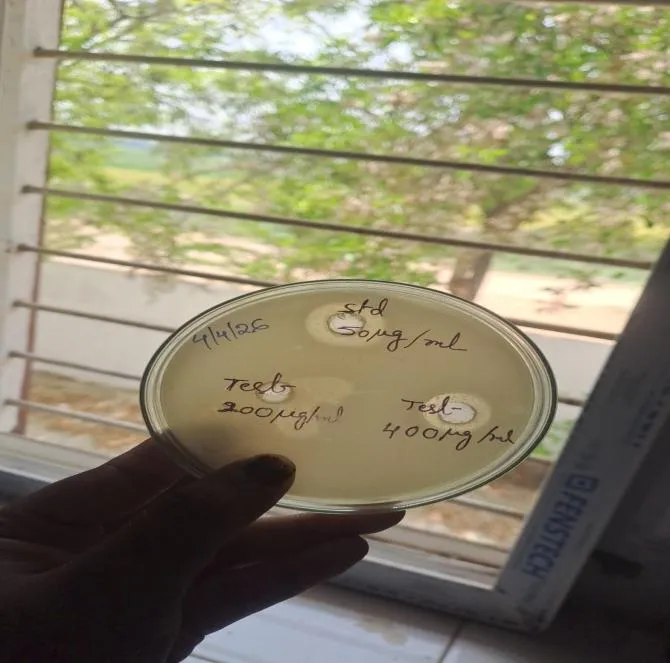
Figure 1 : Antifungal activity of formulated soap F1
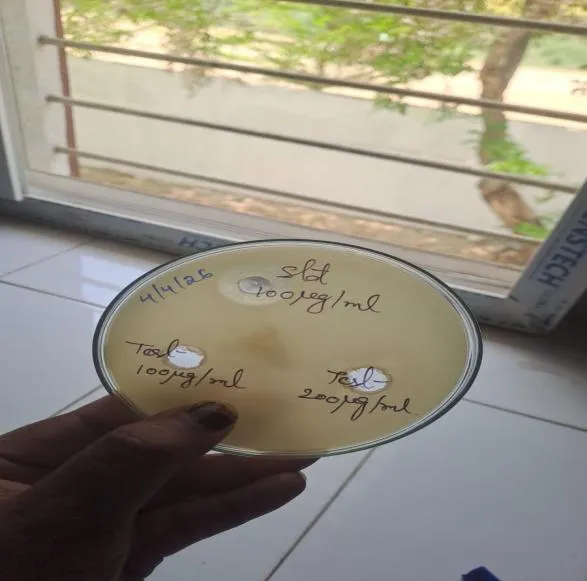
Figure 2 : Antifungal activity of formulated soap F2
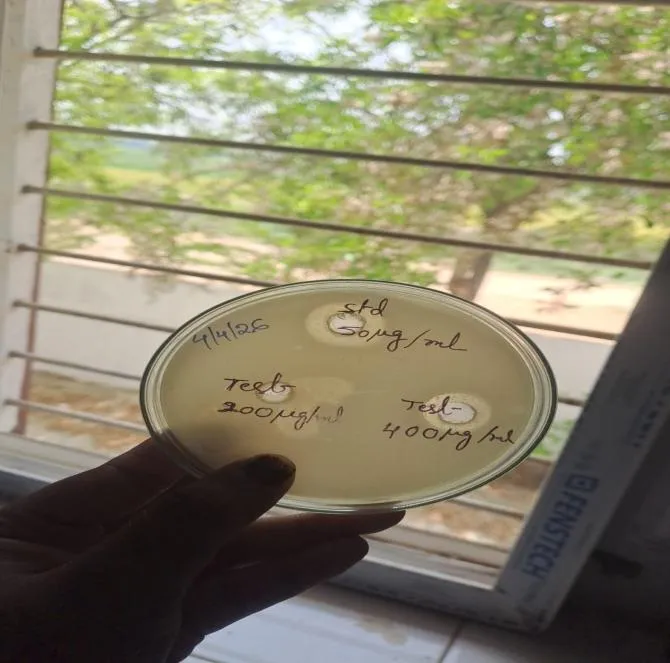
Figure 3 : Antifungal activity of formulated soap F3
After incubation, zones of inhibition were measured in millimeters.
The antimicrobial activity of the formulated polyherbal soap was evaluated using the agar well diffusion method by comparing its activity with standard antimicrobial drugs. The results demonstrated that the zone of inhibition increased with increasing drug concentration, indicating a concentration-dependent antimicrobial effect. At a concentration of 100 mg/mL, Fluconazole produced a zone of inhibition of 8–12 mm, which was interpreted as mild antimicrobial activity. This indicates limited inhibitory activity against the tested microorganism at this concentration. At 150 mg/mL, Ciprofloxacin showed a zone of inhibition of 12–17 mm, indicating moderate antimicrobial activity. The increase in the inhibition zone compared with the lower concentration suggests improved antimicrobial efficacy with increasing concentration. The highest concentration, 200 mg/mL of Ciprofloxacin, produced a zone of inhibition of 20–25 mm, which was interpreted as good antimicrobial activity. This result confirms that higher concentrations provide stronger inhibition of microbial growth.
Table 7 : Zone of inhibition
|
S.no |
Drug type |
concentration |
Zone of inhibition |
interptretation |
|
1 |
Standard drug
|
100 mg/mL |
10 mm 15 mm |
Moderate activity Higher activity |
|
2 |
Test drug |
150 mg/mL |
- 8 mm |
No activity Mild activity |
Calculation
Zone of Inhibition (mm) = Diameter of Clear Zone Around Well
Larger inhibition zones indicated stronger antimicrobial activity
CONCLUSION
The present research work entitled Preparation and Evaluation of Polyherbal Soap was successfully carried out using selected medicinal plants, namely Azadirachta indica (Neem), Acalypha indica, Citrus sinensis (Orange Peel), and Aloe vera. The study was undertaken with the objective of developing a safe, effective, economical, and eco-friendly herbal soap possessing cleansing, antimicrobial, antioxidant, moisturizing, and skin-protective properties.The antimicrobial study revealed that the formulated polyherbal soap possessed appreciable inhibitory activity against the tested microorganisms at higher concentrations. This activity may be attributed to the synergistic action of bioactive compounds present in neem, Acalypha indica, orange peel, and Aloe vera extracts. Although the antimicrobial activity was lower than that of the standard drug, the formulation showed promising potential as a natural antimicrobial cleansing agent. the formulated soap was non-irritant and safe for topical application. Stability studies demonstrated that the formulation remained physically and chemically stable throughout the study period without significant changes in color, odor, texture, pH, foamability, or appearance. These findings indicate good compatibility among formulation ingredients and suggest an adequate shelf life under normal storage conditions
ACKNOWLEDGMENT
The authors are thankful to the Principal and guide, AM Reddy Memorial College Of Pharmacy, Narsaraopet for providing top-notch research facilities and supporting research endeavors
REFERENCES





R. Sunitha, K. Manjeera, K. Bhuvaneswari, N. Sunitha, K. Keerthi, Formulation And Evaluation of Poly Herbal Soap, Int. J. of Pharm. Sci., 2026, Vol 4, Issue 7, 4000-4011, https://doi.org/10.5281/zenodo.21393984
 10.5281/zenodo.21393984