

We use cookies to ensure our website works properly and to personalise your experience. Cookies policy
P.S.V College of Pharmaceutical Science and Research, Orappam, Krishnagiri, Tamil Nadu 635108.
The present study was carried out to formulate and evaluate a polyherbal liniment containing Caesalpinia crista seed extract and Zingiber officinale essential oil for the management of pain and inflammation. Caesalpinia crista seeds were collected, shade dried, powdered and extracted by cold maceration using 70% ethanol. Preliminary phytochemical screening of the extract confirmed the presence of flavonoids, phenolic compounds, alkaloids, steroids and terpenoids. Two herbal liniment formulations, F1 and F2, were prepared using different concentrations of Caesalpinia crista extract and ginger oil. The prepared formulations were evaluated for organoleptic, physicochemical and safety parameters including colour, odour, homogeneity, consistency, skin feel, spreadability, washability, pH, specific gravity, solubility, stability and leak test. Both formulations showed satisfactory physical characteristics, good spreadability and washability, and a smooth, non-sticky feel on the skin. The pH values of F1 and F2 were 6.86 and 6.87, respectively, while specific gravity values were 0.94 and 0.95. Both formulations remained stable during the stability study and showed no leakage during the 24-hour leak test. Skin irritation testing showed no redness or irritation. The in-vitro anti-inflammatory activity of Caesalpinia crista extract was evaluated by the protein denaturation assay. The extract showed concentration-dependent activity, with inhibition increasing from 16% at 100 µg/ml to 70% at 500 µg/ml. The findings indicate that Caesalpinia crista seed extract possesses anti-inflammatory potential and can be successfully incorporated with Zingiber officinale essential oil into a topical herbal liniment.
Caesalpinia crista (L.) Roxb., commonly known as Fever Nut, Bonduc Nut, or Nicker Nut, is a medicinal plant belonging to the family Fabaceae. It is widely distributed in tropical and subtropical regions, including India, Sri Lanka, and Southeast Asia. The seeds have been extensively used in traditional systems of medicine such as Ayurveda, Siddha, and Unani for the treatment of fever, inflammation, rheumatism, skin diseases, and various infectious conditions. The seeds contain several bioactive phytoconstituents, including flavonoids, alkaloids, terpenoids, steroids, tannins, and phenolic compounds, which possess significant anti-inflammatory, analgesic, antioxidant, antimicrobial, and immunomodulatory activities.
Zingiber officinale Roscoe (Ginger) is one of the most widely used medicinal plants belonging to the family Zingiberaceae. Ginger oil, obtained from the rhizomes of the plant, contains important bioactive constituents such as gingerols, shogaols, zingiberene, and sesquiterpenes. These constituents exhibit potent anti-inflammatory, analgesic, antioxidant, and antimicrobial activities. Ginger oil is widely used in topical herbal formulations for the management of muscle pain, joint pain, arthritis, sprains, and inflammatory disorders. It also enhances skin penetration and improves local blood circulation.
Inflammation is the body’s natural response to injury, infection, or tissue damage. However, prolonged inflammation may result in pain, swelling, redness, stiffness, and loss of normal function. Musculoskeletal disorders such as arthritis, sprains, muscle strain, and joint pain are commonly associated with inflammatory conditions. Although synthetic anti-inflammatory drugs provide effective relief, their prolonged use may produce adverse effects, including gastrointestinal irritation and other systemic complications.
A polyherbal liniment containing Caesalpinia crista seed extract and Zingiber officinale oil may provide effective topical relief from pain and inflammation through their complementary pharmacological actions. The phytoconstituents present in Caesalpinia crista reduce inflammatory mediators and oxidative stress, while ginger oil enhances analgesic activity, improves local circulation, and promotes better penetration of the active constituents through the skin. Therefore, the combination of these two medicinal plants may produce a synergistic therapeutic effect and serve as a safe and effective herbal alternative for the management of inflammatory and painful musculoskeletal conditions.
Hence, the present study aims to formulate and evaluate a polyherbal liniment containing Caesalpinia crista seed extract and Zingiber officinale oil for its physicochemical properties, stability, safety, and anti-inflammatory and analgesic activities
AIM:
The aim of this study is to formulate and evaluate a herbal liniment containing Caesalpinia crista seed extract and Zingiber officinale essential oil for effective management of pain and inflammation.
OBJECTIVES:
PLANT PROFILE
Plant Profile for Caesalpinia crista:
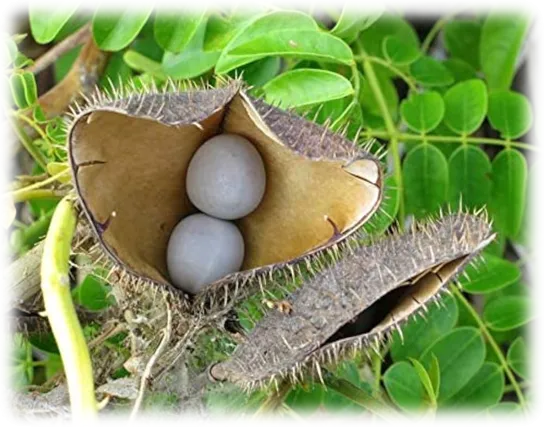
Figure 1: Caesalpinia crista
TAXONOMY
VERNACULAR NAMES:
MORPHOLOGY:
Shape – Globular to ovoid (round or slightly oval)
Size – About 1.5–2.5 cm in diameter
Colour – Ash grey, greenish grey or bluish grey
Surface – Smooth, hard and shiny
Texture – Very hard seed coat
Seed coat – Thick and tough, protects the inner kernel
Hilum – Small circular hilum present on the surface
Kernel – White or yellowish inside, oily and bitter in taste
Odor – Slight characteristic odour or odourless
Geographical source:
The pantropical medicinal plant Caesalpinia crista L. also known as fever nut , nicker nut , bonduc nut is a member of the Fabaceae family . It is found all across the world’s tropical and subtropical regions. The plant is widely distributed throughout coastal areas, scrub woods, hedges, wastelands, and forest margins in India, especially in the states of Tamil Nadu, Kerala, Karnataka, Andhra Pradesh, Odisha, West Bengal, Maharashtra, Gujarat, Goa, and the Andaman and Nicobar Islands. Sri Lanka, Bangladesh, Myanmar, Thailand, Malaysia, Indonesia, the Philippines, southern China, tropical Africa, northern Australia, and the tropical parts of Central and South America, including the Caribbean, are among the countries outside of India where it is found.
Phytoconstituents
ETHNOMEDICAL USES:
Caesalpinia crista (commonly called fever nut or nicker bean) seeds are heavily utilized in traditional systems like Ayurveda and folk medicine for their therapeutic properties, which include anti-malarial, anti-pyretic, anti-inflammatory and anthelmintic effects.
Historically used as an antimalarial and febrifuge (fever-reducing) agent. The seed oil is also applied to reduce fever.
External pastes made from ground seeds and castor oil are applied to mitigate swelling, joint pain, hydrocele and orchitis.
Used in folklore and Ayurvedic medicine to lower blood sugar levels and manage diabetes.
Employed as a stomachic, laxative and anthelmintic (to expel intestinal worms).
Powdered seeds are used to treat skin conditions, leprosy and blisters.
The seed oil has been traditionally used to manage spasms, convulsions and paralysis.
Plant Profile for Zingiber officinale (Ginger)
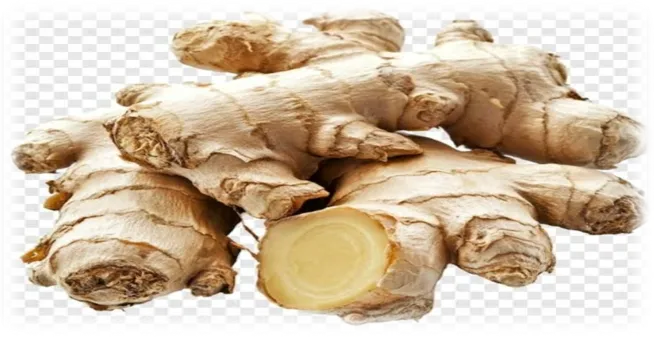
Figure 2: Zingiber officinale Roscoe
TAXONOMY
VERNACULAR NAMES
MORPHOLOGY
Rhizome – Thick, branched, aromatic underground stem.
Shape – Irregularly branched with finger-like projections.
Colour – Light brown externally and pale yellow internally.
Surface – Rough with distinct nodes and internodes.
Texture – Fibrous, fleshy and firm.
Odour – Strong aromatic characteristic odour.
Taste – Pungent, spicy and slightly sweet.
GEOGRAPHICAL SOURCE
Worldwide, Zingiber officinale is widely grown in tropical and subtropical climates. Ginger is produced in significant quantities in India, especially in the states of Kerala, Tamil Nadu, Karnataka, Andhra Pradesh, Meghalaya, Assam, Odisha, and West Bengal. China, Nepal, Sri Lanka, Nigeria, Indonesia, Thailand, and other Asian nations also grow it. Steam distillation is used to extract the essential oil from either fresh or dried rhizomes.
PHYTOCONSTITUENTS
ETHNOMEDICAL USES
Used for the relief of muscle pain, joint pain, arthritis and sprains.
Traditionally used to treat indigestion, nausea, vomiting and flatulence.
Used in the management of cough, cold and sore throat.
Helps protect tissues against oxidative stress.
Used against bacterial and fungal infections.
Ginger oil is widely used in herbal liniments, massage oils and pain-relieving preparations because of its analgesic and anti-inflammatory properties.
MATERIALS AND METHOD
COLLECTION OF RAW MATERIAL
The Caesalpinia crista seeds were collected on June 2026 from a local source, cleaned, shade dried, and powdered for extraction. Zingiber officinale essential oil (ginger oil) used in the formulation was purchased from a local herbal store.
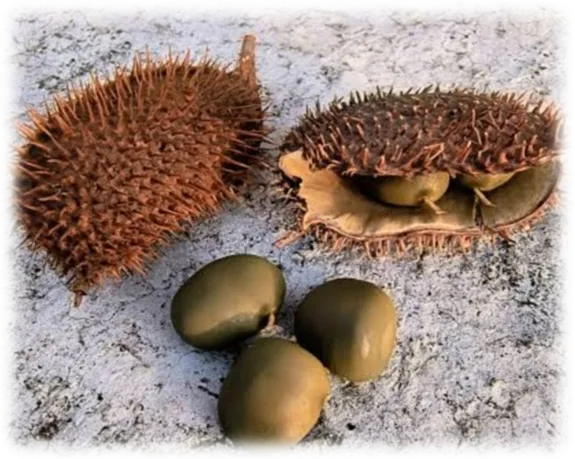
Figure:3 Collection of seed
DRYING
Drying is the process of removing moisture or liquid from a material, usually by evaporation, in order to preserve it, reduce its weight, or prepare it for further processing.
SHADE DRYING
The seeds of Caesalpinia crista were collected and cleaned to remove impurities. The seeds were then dried under shade for about one week in a well-ventilated area. After complete drying, the seeds became moisture-free and suitable for further processing such as pulverization.
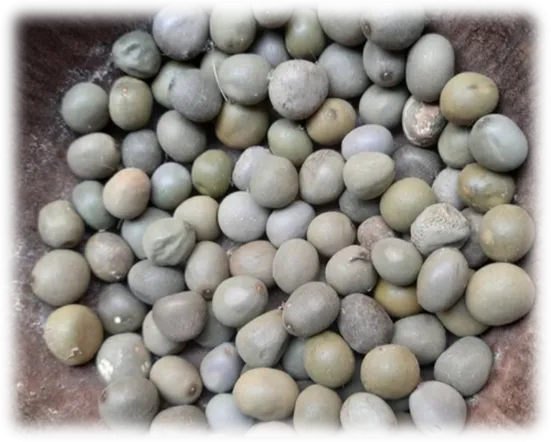
Figure:4 Dry of seed
POWDERING OF CAESALPINIA CRISTA SEED:
The dried seeds of Caesalpinia crista were taken after the shade drying process. The hard outer shell of the seeds was removed, and the kernels were collected. These kernels were then transferred into a mixer or grinder and pulverized to obtain a coarse powder. The powdered material was further passed through sieve No. 120 to obtain a fine powder.
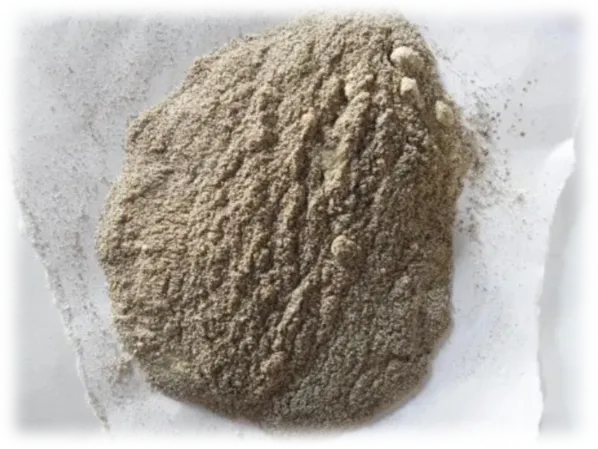
Figure:5 Powdering of seed
PREPARATION OF EXTRACT
Extraction is the process of separating bioactive or medicinally important constituents from seed materials using suitable solvents. This process helps to obtain concentrated forms of phytoconstituents while removing unwanted substances.
MACERATION METHOD:
The extraction of Caesalpinia crista powdered seed was carried out using cold maceration method, which is widely used for obtaining heat-sensitive phytoconstituents.
About 25 grams of powdered seeds were transferred to a clean, dry conical flask and macerated in 250mL of 70% ethanol (drug to solvent ratio is 1:10 w/v). Ethanol is used as solvent due to its ability to dissolve a broad range of phytochemicals. The mixture was sealed and kept at room temperature for 72 hours with intermittent shaking 2–3 times a day to enhance extraction of bioactive compounds. The extract was filtered after the maceration time using Whatman No.1 filter paper
The filtrate was then concentrated over a water bath at 45–50°C till a semi solid mass was obtained. The concentrated extract was kept in a covered container under refrigeration until used further for preparation of the herbal liniment. Maceration process is especially effective to extract flavonoids, alkaloids, phenolic,tannins, and other phytochemicals present naturally.
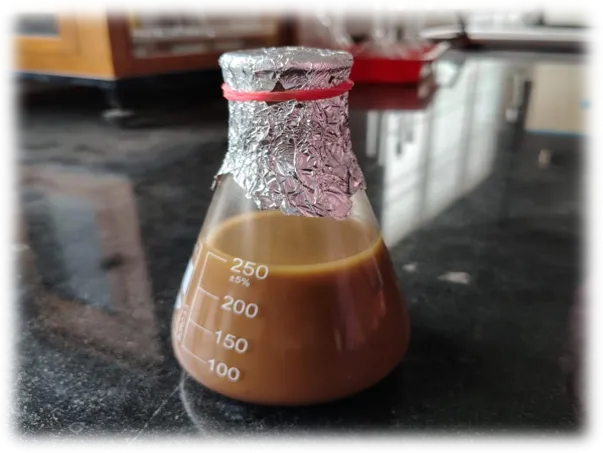
Figure:6 Maceration of caesalpinae crista
FORMULATION OF LINIMENT
INGREDIENTS USED IN LINIMENT:
Table no 1: Formulation of liniment
|
SR.NO |
INGREDIENTS |
CATEGORY |
F1 (50ml) |
F2 (50ml) |
|
1 |
Caesalpinia crista Extract |
Main active ingredient |
0.5g |
1.0g |
|
2 |
Zingiber officinale essential oil (Ginger oil) |
Active ingredient |
0.5ml |
1.0ml |
|
3 |
Methyl salicylate |
Analgesic / counter irritant |
2.0ml |
2.0ml |
|
4 |
Menthol |
Cooling agent |
0.5g |
0.5g |
|
5 |
Camphor |
Counter irritant |
0.5g |
0.5g |
|
6 |
Propylene glycol |
Cosolvent, penetration enhancer |
8ml |
8ml |
|
7 |
Ethanol ( 95%) |
Solvent for volatile actives |
10ml |
10ml |
|
8 |
Tween 80 |
Solubilizer/emulsifier |
2.5ml |
2.5ml |
|
9 |
Glycerin |
Humectant |
2ml |
2ml |
|
10 |
Sodium benzoate |
Preservative |
0.1g |
0.1g |
|
11 |
Purified water |
Vehicle |
q.s to 50ml |
q.s to 50ml |
EQUIPMENT REQUIRED
FORMULATION PROCEDURE: (F1)
A. Preparation of the solvent phase:
1. Dissolution of the menthol and camphor
In beaker 0.5g of menthol and 0.5g of camphor is dissolved in 8ml of propylene glycol.
2. Addition of ginger oil, methyl salicylate and ethanol
For (F1) add 0.5ml of Ginger oil, 2.0ml of methyl salicylate and add 10ml of 95% ethanol slowly with continuous stirring until clear.
3. Solvent phase is ready
Using glass rod stir until a clear homogeneous solution is obtained.
B. Preparation of aqueous phase:
1. Dissolution of sodium benzoate, tween 80 and glycerin
In separate beaker 0.1g of sodium benzoate is dissolved in a portion of purified water and add 2.5ml of tween 80 and 2ml of glycerin mix well.
2. Addition of Caesalpinia crista seed extract
For (F1) 0.5g of Caesalpinia crista seed extract is added to the above solution.
3. Aqueous phase is ready
Using glass rod stir until a clear homogeneous solution is obtained
C. Mixing of phase
Slowly add solvent phase (A) into the aqueous phase (B) with continuous stirring and using glass rod stir continuously until a clear solution is obtained.
D. Make up to final volume
Make up the volume to 50ml with purified water and stir well to ensure uniformity
E. Packaging and Storage
Transfer the prepared liniment into a clean, dry, amber-colored glass bottle and close the container tightly.
FORMULATION PROCEDURE: (F2)
A. Preparation of the solvent phase:
1. Dissolution of the menthol and camphor
In beaker 0.5g of menthol and 0.5g of camphor is dissolved in 8ml of propylene glycol.
2. Addition of ginger oil, methyl salicylate and ethanol
For (F2) add 1.0ml of Ginger oil, 2.0ml of methyl salicylate and add 10ml of 95% ethanol slowly with continuous stirring until clear.
3. Solvent phase is ready
Using glass rod stir until a clear homogeneous solution is obtained.
B. Preparation of aqueous phase:
1. Dissolution of sodium benzoate, tween 80 and glycerin
In separate beaker 0.1g of sodium benzoate is dissolved in a portion of purified water and add 2.5ml of tween 80 and 2ml of glycerin mix well.
2. Addition of Caesalpinia crista seed extract
For (F2) 1.0g of Caesalpinia crista seed extract is added to the above solution.
3. Aqueous phase is ready
Using glass rod stir until a clear homogeneous solution is obtained
C. Mixing of phase
Slowly add solvent phase (A) into the aqueous phase (B) with continuous stirring and using glass rod stir continuously until a clear solution is obtained.
D. Make up to final volume:
Make up the volume to 50ml with purified water and stir well to ensure uniformity
E. Packaging and Storage:
Transfer the prepared liniment into a clean, dry, amber-colored glass bottle and close the container tightly.
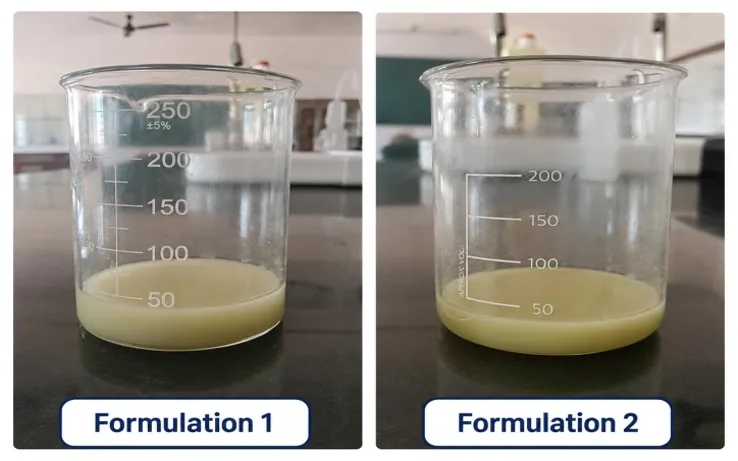
Figure:7 Formulation
PHYTOCHEMICAL SCREENING
Table no 2: Test for flavonoids
|
Test |
Procedure |
Observation |
Inference |
|
TEST FOR FLAVONOIDS |
|||
|
Alkaline reagent test |
Take 2 mL of extract and add a few drops of 10% sodium hydroxide solution. Then add dilute hydrochloric acid |
Yellow colour appears and disappears on addition of dilute HCl |
Presence of flavonoids |
|
Lead acetate test |
Add a few drops of 10% lead acetate solution to 2 mL of extract. |
A yellow precipitate is formed. |
Presence of flavonoids |
Table no 3: Test for phenolic compound
|
Test |
Procedure |
Observation |
Inference |
|
TEST FOR PHENOLIC COMPOUND |
|||
|
Ferric chloride test |
Add 2–3 drops of 5% ferric chloride solution to 2 mL of extract. |
Blue-green or dark green colour develops. |
Presence of phenolic |
Table no 4: Test for alkaloids
|
Test |
Procedure |
Observation |
Inference |
|
TEST FOR ALKALOIDS |
|||
|
Mayer’s Test:
|
Take 2 mL of the extract, add 2–3 drops of dilute hydrochloric acid (HCl) to acidify the extract. Then add 2–3 drops of Mayer's reagent. |
Cream or pale yellow precipitate is formed. |
Presence of alkaloids
|
|
Wagner’s test |
Take 2 mL of the extract, add 2–3 drops of dilute hydrochloric acid (HCl) to acidify the extract. Then add 2–3 drops of Wagner's reagent. |
Brown or reddish-brown precipitate is formed. |
Presence of alkaloids |
Table no 5: Test for steroids
|
Test |
Procedure |
Observation |
Inference |
|
TEST FOR STEROIDS |
|||
|
Liebermann-Burchard test |
2ml of extract and add 2ml of acetic anhydride. Then carefully add 1-2 drops of concentrated sulfuric acid along the side of the test tube. |
Blue-green or emerald green colour develops. |
Presence of steroids |
Table no 6: Test for terpenoids
|
Test |
Procedure |
Observation |
Inference |
|
TEST FOR TERPENOIDS |
|||
|
Salkowski test |
Mix 2 mL of extract with 2 mL chloroform. Carefully add 2 mL concentrated sulfuric acid along the side of the test tube. |
Reddish brown colour at the interface |
Presence of terpenoids |
EVALUATION
ORGANOLEPTIC EVALUATION
1. Colour
The colour of the liniment was observed by visual examination
2. Odour
The odour of the liniment was tested by smelling
3. Homogeneity
The homogeneity of the liniment was evaluated by visual inspection to ensure uniform distribution of all ingredients. The formulation was examined for the presence of lumps, particulate matter, sedimentation and phase separation. The absence of these defects indicated proper mixing and uniformity of the formulation.
4. Consistency
The consistency of the liniment was evaluated by visual inspection and gentle rubbing between the fingers to assess its flow property, uniformity and ease of application. The formulation was examined for its physical state and the presence of any grittiness, lumps or phase separation.
5. Feel on skin
The feel on skin of the liniment was evaluated by applying a small quantity of the formulation to the skin and assessing its greasiness, stickiness, and after-feel.
6. Volatility
The volatility of liniment was evaluated by applying a small quantity of the formulation onto the skin and observing its evaporation characteristics under normal room conditions. The formulation was assessed for residue formation and ease of absorption.
7. Spreadability
The spreadability for the liniment was determined by parallel plate method 1drop of liniment was placed at the center of a clean glass slide and covered with another glass slide. A 100g weight was placed on the upper glass slide for 1min to allow uniform spreading of the formulation. After removal of the weight, the spread diameter was measured in two perpendicular directions horizontal (D1) and vertical (D2) using a ruler the average diameter was calculated by using the formula.
Average diameter (Davg ) = D1+D22

Davg = Average diameter (cm)
D1 = Horizontal diameter (cm)
D2 = Vertical diameter (cm)
A large average diameter indicates good spreadability of the prepared liniment.
8. Washability
The washability of the prepared liniment was evaluated by applying a small quantity of formulation on the skin and allowing it to remain for 5min. The applied area was washed gently with running water under mild rubbing. The easy removal of formulation and the presence of any residual film or greasiness were visually assessed.
SAFETY EVALUATION
1. Skin irritation test
Purpose: To ensure the liniment does not cause irritation, redness, itching, or allergic reactions.
Method: Apply the liniment to a small area on the human volunteer Observe for signs of erythema, oedema, or rashes over 15min.
PHYSICOCHEMICAL EVALUATION
1. pH measurement
The pH of the prepared liniment was determined using a digital pH meter. The electrode was immersed directly into the prepared formulation, and the pH value was recorded after obtaining a stable reading.
2. Stability Study:
The procedure involves storing the prepared herbal liniment in a closed container at 40°C for 1 month. Observation shows no significant change in colour, odour, phase separation or consistency indicating good physical stability.
3. Specific gravity
Specific gravity = W3-W1W2-W1

Where:
W1= Weight of empty bottle
W2= Weight of bottle with water
W3 = Weight of bottle with sample
4. Solubility test
5. Leak test
The leak test was performed to evaluate the integrity of the liniment containers were tightly closed and cleaned externally to remove any adhered formulation. Each container was then kept in the inverted position at room temperature for 24hrs. The containers were visually examined at regular intervals for any signs of leakage, wetness around the closure or loss of contents. The absence of leakage, wetness or loss of formulation indicated that the liniment container successfully passed the leak test.
ANTI-INFLAMMATORY ACTIVITY TEST
1. Protein denaturation assay
% inhibition = control absorbance-sample absorbancecontrol absorbance ×100

RESULT AND DISCUSSION
PHYTOCHEMICAL EVALUATION
Table no 7: Phytochemical evaluation
|
SR.NO |
DESCRIPTION |
RESULT |
|
TEST FOR FLAVONOIDS |
||
|
|
Alkaline reagent test |
+ |
|
|
Lead acetate test |
+ |
|
TEST FOR PHENOLIC |
||
|
|
Ferric chloride test |
+ |
|
TEST FOR ALKALOIDS |
||
|
|
Mayer’s test |
+ |
|
|
Wagner’s test |
+ |
|
TEST FOR STEROIDS |
||
|
|
Liebermann-Burchard test |
+ |
|
TEST FOR TERPENOIDS |
||
|
|
Salkowski test |
+ |
The preliminary phytochemical screening of the Caesalpinia crista seed extract confirmed the presence of flavonoids, phenolic compounds, alkaloids, steroids, and terpenoids. These phytoconstituents are well known for their anti-inflammatory, analgesic, antioxidant, and antimicrobial properties. The presence of these bioactive compounds supports the therapeutic potential of Caesalpinia crista seed extract and justifies its incorporation into the herbal liniment formulation.
ORGANOLEPTIC EVALUATION
Table no 8: Organoleptic evaluation
|
SR. NO |
PARAMETERS |
RESULT |
|
|
F1 |
F2 |
||
|
1 |
Colour |
Olive green |
Olive green |
|
2 |
Odour |
Characteristics |
Characteristics |
|
3 |
Homogeneity |
No visible lumps, particulate matter, sedimentation or phase separation |
No visible lumps, particulate matter, sedimentation or phase separation |
|
4 |
Consistency |
Uniform and free-flowing with suitable consistency and no phase separation observed |
uniform and free-flowing with suitable consistency and no phase separation observed |
|
5 |
Feel on skin |
Smooth, non-sticky with mild cooling effect |
Smooth, non-sticky with mild cooling effect |
|
6 |
Volatility |
Evaporates gradually without leaving residue, aiding better absorption |
Evaporates gradually without leaving residue, aiding better absorption |
|
7 |
Spreadability |
Easily spreadable |
Easily spreadable |
|
8 |
Washability |
Easily washable |
Easily washable |
The organoleptic evaluation of the prepared herbal liniment formulations (F1 and F2) demonstrated satisfactory physical characteristics. F1 appeared olive green, whereas F2 showed a olive green colour. Both formulations exhibited a characteristic herbal odour, indicating the presence of herbal and volatile constituents. The formulations were homogeneous, with no visible lumps, particulate matter, sedimentation or phase separation.Both F1 and F2 showed uniform and free-flowing consistency with suitable consistency, making them convenient for topical application. On application to the skin, both formulations were smooth, non-sticky and produced a mild cooling effect, providing a comfortable and non-greasy feel. Both formulations showed good volatility, evaporating gradually without leaving significant residue, which may facilitate better absorption.The formulations exhibited good spreadability in F1 and F2, indicating easy and uniform application over the skin. Both formulations were also easily washable, suggesting that they can be removed conveniently after application. Overall, both F1 and F2 demonstrated satisfactory organoleptic properties and were found to be physically acceptable and suitable for topical application.
SAFETY EVALUATION
1.Skin irritation test
Table no 9: Skin irritation test
|
SR. NO |
PARAMETERS |
F1 |
F2 |
|
1 |
Skin irritation test |
No redness and irritation |
No redness and irritation |
Both formulations showed no signs of redness, itching, oedema, or irritation after topical application. This indicates that the prepared herbal liniments are safe and suitable for external use.
PHYSICOCHEMICAL EVALUATION
1.pH measurement
Table no 10: pH measurement
|
SR. NO |
PARAMETERS |
F1 |
F2 |
|
1 |
pH measurement |
6.86 |
6.87 |
The pH values of both formulations were found to be within the acceptable range for topical application. The results indicate that the prepared herbal liniments are compatible with the skin and are not expected to cause irritation during normal use
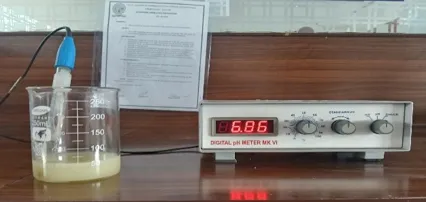
Figure:9 Formulation 1 (pH)
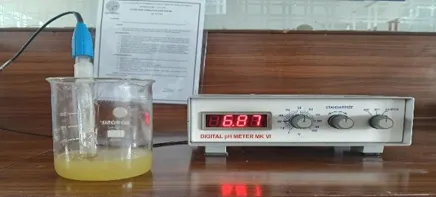
Figure:10 Formulation 2 (pH)
2.Stability test
Table no 11: Stability test
|
SR. NO |
PARAMETERS |
F1 |
F2 |
|
1 |
Stability test |
Stable |
Stable |
The stability study revealed that both formulations remained physically stable throughout the study period. No significant changes in colour, odour, consistency, or phase separation were observed, indicating good formulation stability.
3. Specific gravity
Table no 12: Specific gravity
|
SR. NO |
PARAMETERS |
F1 |
F2 |
|
1 |
Specific gravity |
0.94 |
0.95 |
The specific gravity values of both formulations were within the acceptable range for herbal liniments. This indicates uniformity and consistency of the prepared formulations.
4. Solubility test
Table no 13: Solubility test
|
SR. NO |
PARAMETERS |
F1 |
F2 |
|
1 |
Solubility test |
Soluble in ethanol, slightly soluble in water |
Soluble in ethanol, slightly soluble in water |
Both formulations were readily soluble in ethanol and only slightly soluble in water, which is consistent with the expected characteristics of herbal liniments. This confirms the suitability of the selected solvent system
5. Leak test
Table no 14: Leak test
|
SR.NO |
PARAMETERS |
OBSERVATION TIME |
F1 |
F2 |
|
1 |
Leak test |
24hrs |
No leakage |
No leakage |
No leakage was observed from the containers during the leak test. This confirms that the containers maintained their integrity and were suitable for the storage of the prepared herbal liniments.
ANTI-INFLAMMATORY ACTIVITY TEST
1. Protein denaturation assay
Control absorbance: 1.00
Standard absorbance: 0.550
|
Sr. No |
Concentration (µg/ml) |
Sample Absorbance |
% inhibition |
|
1 |
100µg/ml |
0.84 |
16% |
|
2 |
200µg/ml |
0.73 |
27% |
|
3 |
300µg/ml |
0.58 |
42% |
|
4 |
400µg/ml |
0.42 |
58% |
|
5 |
500µg/ml |
0.30 |
70% |
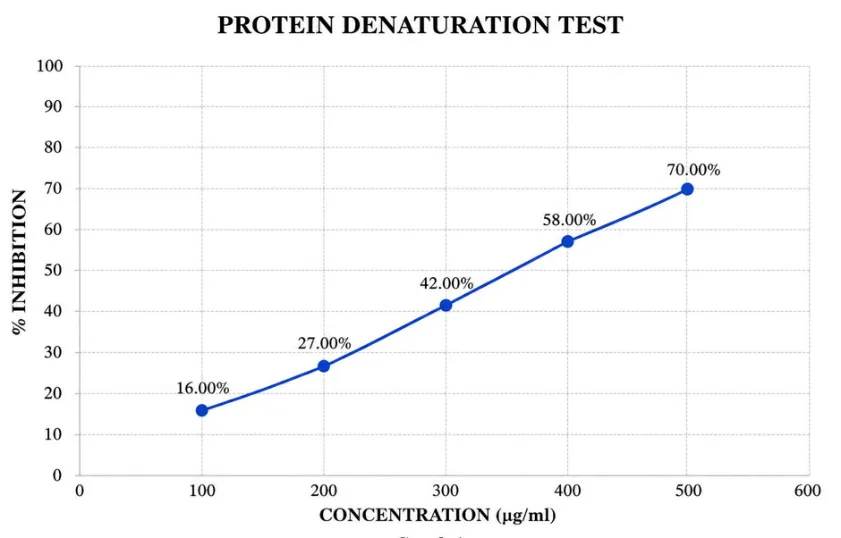
Graph:1
The protein denaturation method was used to assess Caesalpinia crista anti-inflammatory properties. The sample displayed a rise in percentage inhibition along with a concentration-dependent drop in absorbance.The extract exhibited 16.00% inhibition at 100 µg/ml and a maximum of 70.00% inhibition at 500 µg/ml. This suggests that the extract successfully stopped the denaturation of proteins caused by heat.The findings demonstrate that Caesalpinia crista has mild anti-inflammatory properties, which may be explained by the presence of phenolic compounds, flavonoids, and other bioactive ingredients.
CONCLUSION
The present study successfully formulated and evaluated polyherbal liniment formulations containing Caesalpinia crista seed extract and Zingiber officinale essential oil. Preliminary phytochemical screening confirmed the presence of flavonoids, phenolic compounds, alkaloids, steroids and terpenoids, supporting the potential therapeutic value of the plant extract.
Both F1 and F2 exhibited satisfactory organoleptic properties, including good homogeneity, suitable consistency, smooth skin feel, good spreadability and easy washability. The formulations showed acceptable physicochemical properties, with pH values of 6.86 and 6.87 and specific gravity values of 0.94 and 0.95 for F1 and F2, respectively. Both formulations remained physically stable and showed no leakage during the evaluation period.
The skin irritation test showed no redness, itching, oedema or irritation for either formulation, indicating good topical tolerability under the conditions tested.
The protein denaturation assay demonstrated concentration-dependent anti-inflammatory activity of Caesalpinia crista extract, with the highest inhibition of 70% at 500 µg/ml. Therefore, the developed polyherbal liniment shows promising potential as a topical herbal preparation for the management of pain and inflammation.
ACKNOWLEDGEMENTS
We sincerely acknowledge the management and faculty of PSV College of Pharmaceutical Science and Research, Krishnagiri, for providing the necessary facilities and support to carry out this research work.
REFERENCES

K. Sojarna, V. Dhileep, J. NiroshKumar, S. Pavithra, B. Sandhiya, D. Vinorithika, Formulation and Evaluation of Polyherbal Liniment Containing Caesalpinia crista Seed Extract and Zingiber officinale Oil for Anti-Inflammatory Activity, Int. J. of Pharm. Sci., 2026, Vol 4, Issue 8, 4252-4268. https://doi.org/10.5281/zenodo.22105093
 10.5281/zenodo.22105093