

We use cookies to ensure our website works properly and to personalise your experience. Cookies policy
Nirmala College of Health Science Meloor Chalakudy
Nail psoriasis a long-lasting inflammation problem that affects the part of the nail that grows and the part under the nail. This condition causes problems like holes in the nail separation of the nail from the nail bed extra skin under the nail changes in color, thickening and the nail breaking apart. Treating nail psoriasis is hard because the nail is very thick and hard which makes it hard for medicines put on the skin to get through. This study focuses on making a nail polish that has medicine in it. The goal is to help the medicine get into the nail and stay there for a time to treat nail psoriasis. The medicine used in the polish is called Indigo naturalis. It is a medicine that has been shown to reduce inflammation and slow down the growth of skin cells. The polish also uses collagen and calcium hydroxyapatite from tilapia fish scales. These materials are good for the nail. Are made in a way that is good for the environment. The polish also has a material called nitrocellulose that helps it form a film on the nail. Other ingredients like plasticizers and solvents are added to make the polish smooth, flexible and easy to apply. Another ingredient called dimethyl sulfoxide is used to help the medicine get into the nail better. The nail polish is made to form a layer on the nail after the liquid dries. This helps the medicine stay on the nail longer and release slowly. Before testing the polish there are things that are checked. These include if the ingredients work together how long it takes to dry how thick the film is, how well it sticks to the nail how easy it is to spread how shiny it is, how thick it is, the pH level how much medicine comes out and how well the medicine gets through the nail. The polish also needs to be stable, safe and free, from germs. This special nail polish is a way to treat nail psoriasis. It uses the healing power of Indigo naturalis and materials from tilapia fish scales. This new way of treating the nail could help with the condition. Also help the environment by using sustainable materials. More tests and studies are needed to be sure that the polish is safe works well lasts long and helps the medicine get into the nail properly
Nail psoriasis is a chronic inflammatory disorder that affects the nail unit and is frequently associated with cutaneous psoriasis. It can involve the nail matrix and nail bed and it produce pitting, onycholysis, subungual hyperkeratosis, discoloration, thickening and crumbling of the nail. These changes can affect physical comfort also functional ability and psychological well-being. The management of nail psoriasis is difficult because the nail plate forms a dense keratinized barrier that restricts the penetration of many topical therapeutic agents. [37,47,50,57]
The proposes a bio-inspired medicated nail lacquer containing Indigo naturalis as the anti-psoriatic medicament along with collagen derived from tilapia fish scales. The formulation is intended to combine localized transungual drug delivery with its supportive nail-conditioning properties. A nail lacquer can form an adherent drug-loaded film after evaporation of the solvent, thereby maintaining prolonged contact with the nail and supporting sustained drug release [46,37].
The present review summarizes the literature supporting the development of this formulation, with emphasis on nail anatomy, nail psoriasis, limitations of conventional therapy, transungual drug delivery, medicated nail lacquers, Indigo naturalis, collagen, and the potential of tilapia fish scales as sustainable biomaterials.
NAIL ANATOMY AND THE NAIL AS A DRUG-DELIVERY BARRIER:
The nail consists of the nail plate, nail bed, nail matrix, cuticle and other structures. The keratinized layer of nail plate give protection to the underlying tissues of the fingers and toes. The matrix is the only region responsible for the generating new nails keratinocytes [41,47]. The fingernails grow at a rate of 2–3 mm per month and their growth is influenced by age, diet, hormone production and systemic health. [47,57]
Walters and Flynn demonstrated the physiological characteristics of the human nail plate’s permeability barrier properties. [47] Murdan discussed the formulation and design of nail drug delivery systems while emphasizing the drug physicochemical properties and nail anatomy in topical and trans ungual delivery [57]. Moreover, he highlighted various approaches to improve the permeability of the nail plate and the importance of formulation design in the enhancement of trans ungual drug delivery [50]..[37].
Kobayashi et al. investigated drug permeation through the three-layered human nail plate and concluded that the nail’s anatomical features play a significant role in its permeability [53]. Gunt and Kasting concluded that the degree of hydration affects permeability of the nail plate to drugs such as ketoconazole. Their study demonstrated the effect of structural modification of the keratinized nail plate or its permeability characteristics that changes in the keratin structure can influence permeability [36]. These findings emphasize the importance of novel formulations for tansungual drug delivery over conventional topical dosage forms [45].
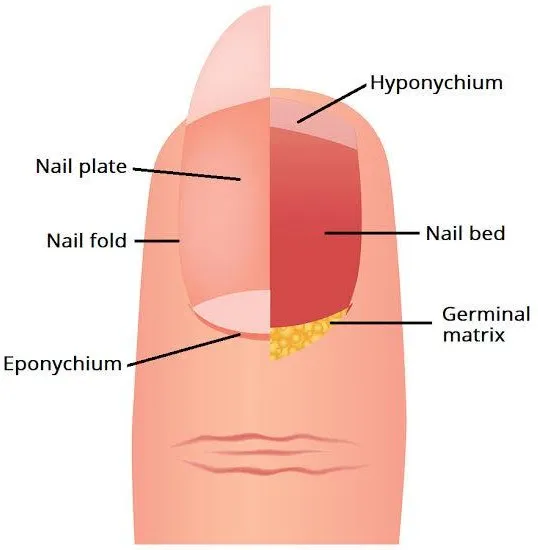
Figure 1: Anatomy of nail plate
NAIL PSORIASIS AND ITS MANAGEMENT:
Menter and Griffiths reviewed current and future approaches to psoriasis management and described psoriasis as an inflammatory disease requiring individualized therapeutic strategies [7]. The reports that nail psoriasis may occur in 10–82% of patients with psoriasis and in a high proportion of patients with plaque psoriasis. The condition is associated with abnormal keratinocyte proliferation and inflammatory cytokines including TNF-α, IL-17 and IL-23. Clinically, nail pitting, onycholysis, subungual hyperkeratosis, oil-drop discoloration, thickening and crumbling are characteristic manifestations.
Conventional treatment options include topical corticosteroids, calcipotriol and tazarotene; systemic therapies such as methotrexate, cyclosporine and biologics; intralesional corticosteroids; and physical approaches such as phototherapy and laser therapy. Although these treatments may be effective, the thesis identifies poor penetration through the nail plate, prolonged treatment duration, systemic toxicity, painful injections and relapse as important limitations. Gupta et al reviewed transungual topical therapies and emphasized the challenges associated with delivering therapeutic concentrations through the nail plate [8].
Because topical therapy generally produces fewer systemic effects, improving topical delivery is an attractive approach for nail psoriasis. However, simply applying a conventional cream or solution to the nail may not provide adequate drug penetration. This has encouraged the development of nail-specific delivery systems that can remain on the nail surface and provide sustained drug release.
MEDICATED NAIL COSMETICS AND NAIL LACQUERS:
Medicated nail cosmetics or cosmeceutical formulations combine cosmetic acceptability with a functional or therapeutic purpose. The thesis identifies non-invasive administration, reduced systemic exposure, improved patient compliance and sustained drug release as important advantages of medicated nail cosmetics.
Shivakumar et al. reviewed ungual and transungual drug-delivery systems and highlighted the potential of nail lacquers for localized delivery to the nail [37]. In a nail lacquer, the formulation is applied as a liquid and the volatile solvent evaporates to produce a drug-loaded polymeric film. The film remains in contact with the nail and acts as a reservoir from which the drug can gradually diffuse into the nail plate. This mechanism can increase residence time and support sustained delivery.
Monti et al. investigated in-vitro transungual permeation of ciclopirox from a hydroxypropyl chitosan-based nail lacquer and demonstrated the usefulness of nail lacquer systems for transungual drug delivery [54]. Veerabhadrappa et al. reviewed antifungal nail lacquer systems and emphasized the importance of film formation, polymer selection and formulation characteristics in achieving effective nail delivery [46]. Saner et al. also reviewed approaches for drug delivery across the nail plate and discussed the influence of formulation and barrier properties on transungual delivery [39].
Khengar et al. investigated nail swelling as a pre-formulation approach for selecting and optimizing ungual penetration enhancers [35]. Murthy et al. studied iontophoretic delivery across the human nail, demonstrating that physical enhancement strategies may also be used to improve transungual transport [41]. Together, these studies show that successful nail delivery depends on overcoming the keratin barrier through appropriate formulation and, where required, penetration-enhancing strategies \
ROLE OF MEDICATED NAIL LACQUER IN TRANSUNGAL DRUG DELIVERY:
Nail lacquers serve as the primary topical delivery vehicle for transugal drug administration forming polymeric drug-loaded films on the nail plate that maintain high drug concentration gradient to drive passive diffusion through the keratinized barrier. Conventional topical systems like creams, gels, and lotions fail to adequately deliver drugs across the nail because they cannot be retained at the application site long enough for meaningful penetration. [30]
Upon solvent evaporation, nail lacquers deposit a polymeric film that functions as a drug reservoir, establishing the concentration gradient necessary for passive diffusion across the nail plate. The film also provides prolonged tissue contact and resists environmental degradation from daily patient activities. Hydroalcoholic formulations further increase thermodynamic activity after solvent evaporation, favoring drug diffusion into the nail. A key limitation is that rapid solvent evaporation can leave behind crystallized drug that cannot partition into or diffuse across the nail plate. Hydrophobic, impermeable films may also prevent nail transpiration and paradoxically encourage fungal growth. [17]
INDIGO NATURALIS AS AN ANTI-PSORIATIC AGENT:
Indigo naturalis is a traditional Chinese medicine derived from indigo-bearing plants, has demonstrated clinically meaningful efficacy for nail psoriasis through topical formulations, with the refined oil extract Lindioil showing significant NAPSI reductions in randomized trials. The most rigorous nail psoriasis evidence comes from the Lind oil development program by Lin et al. The original Indigo naturalis oil extract showed remarkable therapeutic effect on nail psoriasis but suffered from poor patient compliance due to dark blue nail staining and difficulty in cleaning. Lind oil was formulated to improve compliance while preserving efficacy, and in a randomized, observer-blind, vehicle-controlled, intra subject trial, its therapeutic effect was significantly better than control with no adverse events reported. Indirubin, the main active component of Lind oil, was dose-optimized in a separate randomized, double-blind trial across concentrations of 10–200 μg/g, with 200 μg/g indirubin identified as the most effective and safe concentration for topical psoriasis treatment over 8 weeks. [32] Indigo naturalis exerts anti-psoriatic effects through multiple pathways: its active components indirubin, indigo, and tryptanthrin display anti-proliferative, anti-inflammatory, and anti-angiogenic activity by regulating TAK1, JAK3/STAT3, Wnt/β-catenin, and IL-17/IL-22 signalling.[10,33] Indirubin specifically suppresses IL-22-induced keratinocyte proliferation and inflammatory mediator production, while tryptanthrin directly inhibits Th17 polarization.[34] Lin et al. also investigated the anti-psoriatic effects of Indigo naturalis in an imiquimod-induced mouse model of psoriasis. Their findings supported anti-psoriatic activity and provided experimental evidence for its potential mechanism [26]. Topical Indigo naturalis application avoids the gastrointestinal adverse reactions and hepatotoxicity associated with oral administration, which include mild liver dysfunction and abdominal pain. [35,33] However, conventional IN ointments remain limited by greasy texture, unpredictable dosing, and cosmetic staining, motivating development of nano-fibrous patch formulations that improve transdermal delivery without skin discoloration. [10]
COLLAGEN AND CALCIUM IN NAIL HEALTH:
Collagen is a major structural protein and has been extensively studied for its structural and biomedical properties. Shoulders and Raines reviewed collagen structure and stability and described the relationship between collagen structure and its functional properties [24]. Collagen is considered a supportive component intended to improve nail flexibility and reduce brittleness and breakage. Collagen in the proposed nail lacquer is therefore intended to complement the anti-psoriatic action of Indigo naturalis with supportive structural benefits to the nail. Ahmed et al. investigated fish-scale-derived hydroxyapatite and reported its potential as a biomaterial for bone tissue engineering [23]. This work supports the use of fish scales as a source of calcium-containing biomaterial. Although the cited study concerns tissue engineering rather than nail psoriasis, it provides a scientific basis for the thesis rationale of utilizing fish-scale-derived hydroxyapatite as a value-added biomaterial. Collagen supplements show modest benefits for brittle or aging nails, calcium is clearly present in nails and tied to bone biology, and direct evidence for calcium supplementation improving nails is weak. Nails are primarily keratin, not collagen, so any collagen benefit is indirect, potentially via amino acids serving as substrates for keratin synthesis. This work supports the use of fish scales as a source of calcium-containing biomaterial. Although the cited study concerns tissue engineering rather than nail psoriasis, it provides a scientific basis for the thesis rationale of utilizing fish-scale-derived hydroxyapatite as a value-added biomaterial. Collagen, calcium content, and the nail–bone link are the three main facets. Collagen supplements show modest benefits for brittle or aging nails, calcium is clearly present in nails and tied to bone biology, and direct evidence for calcium
supplementation improving nails is weak. Nails are primarily keratin, not collagen, so any collagen benefit is indirect, potentially via amino acids serving as substrates for keratin synthesis. This work supports the use of fish scales as a source of calcium-containing biomaterial. Although the cited study concerns tissue engineering rather than nail psoriasis, it provides a scientific basis for the thesis rationale of utilizing fish-scale-derived hydroxyapatite as a value-added biomaterial. Although the cited study concerns tissue engineering rather than nail psoriasis, it provides a scientific basis for the thesis rationale of utilizing fish-scale-derived hydroxyapatite as a value-added biomaterial. Collagen, calcium content, and the nail–bone link are the three main facets. Collagen supplements show modest benefits for brittle or aging nails, calcium is clearly present in nails and tied to bone biology, and direct evidence for calcium supplementation improving nails is weak. Nails are primarily keratin, not collagen, so any collagen benefit is indirect, potentially via amino acids serving as substrates for keratin synthesis. The supplement industry is unregulated by the FDA, with inconsistent dosing and unchecked claims for hair, skin, and nail products.
TILAPIA FISH SCALE AS A SUSTAINABLE BIOMATERIAL:
Tilapia fish scales considered as the sustainable source of Type 1 and mineralized hydroxy apatiate. Tilapia fish scales contain 30-40% organic collagen matrix and 60-70% hydroxyapatite minerals [4,12] . Tilapia fish scales yield type 1 collagen through acid soluble & pepsin soluble extraction method with α1 and α2 chain pattern confirmed by SDS-PAGE [18] .
The extracted tilapia fish scales are triple helical structure which confirmed by FTIR spectroscopy and circular dichroism. [15] Collagen and calcium extracted from the skin of Oreochromis niloticus (Tilapia; TS) has gained visibility due to its extraction from waste materials from slaughterhouses, reducing environmental impacts, and because it is biodegradable, biocompatible, and nontoxic[5] .Tilapia scales provide a dual resource: an organic collagen matrix (~30–40%) and a mineral hydroxyapatite phase (~60–70%) rich in calcium, both recoverable through enzymatic and acid extraction for nutraceutical, biomedical, and cosmetic application [12,37] . Hydrolyzed tilapia scale collagen up regulated IGF-1, VEGF, and elastin expression while reducing pro-inflammatory cytokines TNF-α and IL-1β in vivo. Topical fish scale collagen cream achieved 94-97% skin layer retention increased fibroblast viability by 34% in vitro [14]. The use of fish-scale-derived materials therefore serves two purposes in the proposed formulation. Collagen provides supportive structural and film-related properties, while calcium hydroxyapatite provides a mineral component intended to support
nail strength. This combination also aligns with the bio-inspired and sustainable concept of the project.
PRE-FORMULATION CONSIDERATIONS:
The pre-formulation of nail lacquers for psoriasis centers on overcoming the dense keratinized nail plate barrier for deliver active ingredients. It also focuses about certain important aspects such as drug molecular size, hydrophobicity, lipophilicity, solvent system selection, film forming polymer choice, and penetration enhancer screening. By formulating a nail lacquer with Indigo naturalis and fish scale-derived collagen and calcium need balancing the botanical extract’s stability along with the marine biopolymers film forming properties. The marine derived bio actives that exhibit a board spectrum health benefiting properties like antioxidant, anti-inflammatory and wound healing properties relevant to nail bed treatment [6]. Drug transport across the nail plate follows Fick’s law of diffusion, where transungual flux depends directly on establishing a high thermodynamic concentration gradient as solvents evaporate [6]. Because the nail behaves primarily as a hydrophilic gel-like membrane rather than a lipophilic stratum corneum, adequate hydration is essential to swell the matrix and form transungual micro channels. Chemical enhancers with disulfide-reducing thiol groups—such as thioglycolic acid, 2-mercaptoethanol, and N-acetyl-L-cysteine—cleave keratin disulfide bridges to increase matrix porosity [17]. Keratolytic agents, including salicylic acid, urea, and papain, disrupt keratin structure and facilitate high transungual drug accumulation [6]. Pre-formulation screening based on factorial designs and Quality by Design frameworks to balance dependent quality variables [17]. Independent variables, notably polymer and solvent ratios, dictate lacquer drying time, spread ability, viscosity, and subsequent diffusion rates [43].
TRANSGUNGUAL DELIVERY AND FORMULATION OPTIMIZATION:
The major objective of the medicated nail lacquer is to maintain sufficient contact between the formulation and nail plate to enhance permeation of drug particles. For effective topical therapy, ungual drug permeation must be enhanced. This can be achieved by disrupting the nail plate using physical techniques or chemical agents [50,57]. The proposed formulation Indigo naturalis provides the anti-psoriatic component, while collagen and calcium hydroxyapatite are Incorporated for supportive nail benefits. The design is achieving a balance between therapeutic performance, film quality and cosmetic acceptability.
Formulation optimization is necessary because changes in polymer, plasticizer, solvent ratio and active concentration can influence drying time, viscosity, adhesion, film formation and drug release.
Table1: Formulation components and their functional purpose
|
Formulation Component |
Representative Materials |
Primary Functional Purpose |
|
Indigo naturalis |
Contain active constituents Indirubin, Indigo, Tryptanthrin |
Anti-psoriatic agent, Anti-inflammatory, Properties [10,33] . |
|
Collagen and calcium extract |
Contain type 1 collagen and hydroxyapatite |
Provides supportive structural and film-related properties [4,12] . |
|
Film-Forming Polymers |
Nitrocellulose, Eudragit RL/RS, HPCH, Polyurethane |
Forms coherent, substantive barrier and controls matrix drug release [7,8,17] . |
|
Volatile Solvents |
Ethyl acetate, ethanol, acetone, isopropanol |
Solubilizes polymers and controls film drying rates [3,43]. |
|
Plasticizers |
Triacetin, PEG 400, castor oil, dibutyl phthalate |
Imparts elasticity and adhesion, preventing brittle flaking [3,17,43] . |
|
Keratiolytic agents |
Salicylic acid, urea, papin |
Hydrates, breaks hydrogen bonds, and softens dense keratin [59] . |
|
Complexing Agents |
2-HP-β-cyclodextrin, surfactant lipid mixes |
Enhances poorly soluble antifungal drug dissolution [16]. |
EVALUATION OF MEDICATED NAIL LACQUER:
Medicated nail lacquer evaluated based on their psychochemical properties both in vivo ex vitro and clinical parameters should study in order to determine transunal drug delivery property. The evaluation framework consistently includes drying time, non-volatile content, drug content, adhesion, water resistance, permeation, and anti psoriatic activity. Evaluating a medicated nail lacquer begins with characterization of the dried polymeric matrix. Film - forming polymers, such as polymethacrylates (Eudragit RSPO, RL100) or cellulosic derivatives, provide structural integrity but must balance mechanical durability with solvent evaporation speed [17]. Drying time assesses how quickly volatile solvents evaporate to generate a dry-to-touch film, typically evaluated using stopwatch timing on glass or petri dish substrates [3,9] . Film characteristics such as non-volatile content measure the remaining solid matrix after oven evaporation at 105°C, ensuring sufficient polymer remains to form the reservoir [3]. Mechanical resistance is validated using peel adhesion assays, blush testing to assess resistance to whitening in moist conditions, and water-resistance or simulated hand washing protocols to ensure the film remains intact during routine daily activities [17] . Adhesion is assessed by applying the lacquer film to a glass plate, covering it with cellophane tape under pressure, and peeling it off to determine the percentage of film retained [2,49].
Water resistance is quantified as the percentage of weight loss after immersion in water, with optimized formulations achieving approximately 2% w/w loss [51,49] .
The viscosity is measured using the brook filed viscometer and gloss is assed by visual comparison to cosmetical lacquer [2,47] . The primary hurdle for topical antipsoriatic pharmacotherapy is the dense, multi-layered keratinized nail plate, which prevents sufficient drug from reaching the nail matrix and nail bed [52] . To establish transungual flux, formulations are evaluated ex-vivo using Franz diffusion cells mounted with human cadaver nail plates or bovine hoof membranes [17].
The Stability studies is an important parameter to evaluate a nail lacquer retains its physical, chemical and functional properties during storage. The thesis refers to ICH Q1A(R2) stability principles and identifies appearance, odor, drying time, viscosity, pH, gloss, smoothness, adhesion and drug content as relevant parameters [20]. Stability studies conducted per ICH guidelines store samples at 40 ± 2°C and 75 ± 5% RH for one to three months, after which physicochemical parameters and drug content are re-evaluated [47,31,16].
REGULATORY CONSIDERATIONS:
The medicated cosmetic products in India are subject to regulatory considerations under the Drugs and Cosmetics Act and Rules, with relevant roles for the Central Drugs Standard Control Organization, State Drug Control Departments and the Bureau of Indian Standards. Classification depends on factors such as intended use, composition, route of application and therapeutic claims [27,21, 22]. Conventional nail lacquers function primarily as cosmetic decorative items decorative items or barriers to protect nail plates. In contrast, formulations engineered to deliver active chemical moieties into the nail apparatus to prevent or mitigate diseases fall outside the cosmetic definition. When a lacquer contains an active therapeutic agent its intended purpose transitions from aesthetic adornment to medical therapy, requiring classification and licensing as a drug [2,51] .
The medicated nail lacquers containing active pharmaceutical ingredients, are manufactured, marketed, and distributed by pharmaceutical companies in India specifically for medical indications like onychomycosis and nail psoriasis [2] . the active botanicals and processing adhere to recognized classical texts listed in the First Schedule of the D&C Act, the formulation is regulated under Chapter IV-A as an ASU medicine [27] . If it combines classical extracts into a modern transungual lacquer base, it is assessed as a "proprietary ASU medicine," necessitating safety and proof of effectiveness [11]. Standardized extracts with characterized active chemical markers evaluated for modern medical indications fall under phyto pharmaceutical drug guidelines regulated directly by the Central Drugs Standard Control Organization (CDSCO) [13]. The nail lacquers contain herbal extracts and bio marine products such as calcium and collagen must be complied Schedule M (Good Manufacturing Practices) or Schedule M-I/T (for ASU pharmaceuticals), facilities producing therapeutic lacquers must maintain validated manufacturing protocols, controlled cleanrooms, and stringent solvent containment procedures [27,55].
RESEARCH GAP AND RATIONALE:
Proposed bio-inspired nail lacquer for nail psoriasis has a plausible rationale, but the main research gap is that no supplied paper directly studies the exact combination of Indigo naturalis and fish-scale collagen and calcium in a transungual lacquer. The reviewed literature explains that nail psoriasis remains challenging because the nail plate limits topical drug penetration. Existing studies support transungual delivery systems, particularly medicated nail lacquers, but formulation performance depends strongly on polymer selection, drug properties, penetration enhancement and film characteristics [37,39,45,47,50,57,46]. The literature is dense for topical indigo naturalis in psoriasis and for lacquer-based transungual delivery, but sparse where your concept becomes novel. Collagen as a functional nail-lacquer excipient, and especially collagen-integrated or indigo-based photodynamic systems for nail psoriasis. Indigo naturalis already has clinical efficacy in nail psoriasis, with randomized trials showing larger NAPSI reductions than control and better outcomes than calcipotriol in some comparisons [10,56,34] . By contrast, fish-scale collagen papers support sustainability, biocompatibility, and carrier potential in skin formulations, but not transungual delivery or nail psoriasis specifically [1] . There is no study in the supplied literature has developed or tested a fish-scale-collagen-based transungual nail lacquer carrying Indigo naturalis for nail psoriasis. The current indigo formulations work but have adherence and cosmetic drawbacks, while current nail delivery systems improve penetration but rarely use bio-inspired polymers or psoriasis-specific botanicals [58,59].
CONCLUSION:
The literature supports the development of specialized transungual formulations for nail psoriasis because the dense keratinized nail plate restricts conventional topical drug delivery. Medicated nail lacquers provide an attractive approach by forming an adherent film that can prolong drug contact and support sustained release. Research by Murdan, Walters and Flynn, Shivakumar et al., Kobayashi et al., Monti et al. and other investigators provides a foundation for understanding nail permeability and transungual delivery [37,47,50,57,11,13].
Indigo naturalis is supported by experimental and clinical literature as a potential topical anti-psoriatic agent, including evidence specifically related to nail psoriasis [26,42]. The inclusion of collagen and calcium hydroxyapatite is supported by literature concerning collagen structure and fish-scale-derived hydroxyapatite [23,24]. The strongest conclusion for a review article is therefore that the field now has a credible therapeutic anchor in Indigo naturalis, a validated formulation direction in film-forming ungual delivery, and a compelling biomaterial candidate in fish-scale collagen, but the integration of these elements into a cosmetically acceptable, stable, and clinically effective nail lacquer remains a genuine research gap that warrants systematic formulation, permeation, safety, and efficacy studies.
REFERENCES






Dr.Aadi Sathyan *, Amalu Kuttan, Antony M.J, Fathima Meharin P.S, Greeshma Geevarghese, Emerging Strategies In Nail Psoriasis Management: Indigo Naturalis-Loaded Nail Lacquer With Tilapia-Derived Collagen And Calcium, Int. J. of Pharm. Sci., 2026, Vol 4, Issue 10, 422-434.https://doi.org/ 10.5281/zenodo.23152614
 10.5281/zenodo.23152614