

We use cookies to ensure our website works properly and to personalise your experience. Cookies policy
Maharashtra Institute of Pharmacy, Betada, Bramhapuri, Chandrapur
Inflammation is a protective biological response to tissue injury, infection, and harmful stimuli; however, chronic inflammation contributes to the development of several diseases, including rheumatoid arthritis and osteoarthritis. Diclofenac sodium is one of the most widely prescribed non-steroidal anti-inflammatory drugs (NSAIDs) for the treatment of pain and inflammation. Despite its clinical effectiveness, its short half-life, frequent dosing, and gastrointestinal side effects limit long-term therapy. Polymeric nanospheres have emerged as a promising drug delivery system to overcome these limitations by providing sustained drug release, improved bioavailability, enhanced drug stability, and reduced systemic toxicity. This review highlights the recent advances in polymeric nanospheres for diclofenac sodium delivery. It discusses commonly used biodegradable polymers, preparation techniques, characterization methods, therapeutic applications, and recent developments in nanoparticle-based drug delivery. The advantages of polymeric nanospheres, including controlled drug release, targeted delivery, improved patient compliance, and reduced adverse effects, are also summarized. In addition, current challenges and future research directions are presented. Overall, polymeric nanospheres represent an effective and promising strategy for enhancing the therapeutic performance of diclofenac sodium and other anti-inflammatory drugs. Continued advances in nanotechnology are expected to support their successful clinical translation and broader pharmaceutical applications.
Inflammation is a natural protective response of the body's immune system against harmful stimuli such as pathogens, physical injury, toxic chemicals, and damaged tissues. It plays a vital role in eliminating the causative agents of tissue damage and initiating the healing process. Under normal physiological conditions, inflammation is self-limiting and resolves once the tissue has recovered. However, when the inflammatory response becomes persistent or dysregulated, it may progress into chronic inflammation, contributing to the development of several debilitating diseases. Chronic inflammatory disorders, including rheumatoid arthritis, osteoarthritis, ankylosing spondylitis, inflammatory bowel disease, and cardiovascular diseases, represent a significant global health burden. These conditions are often associated with prolonged pain, tissue destruction, reduced mobility, and impaired quality of life. Consequently, effective and long-term management of inflammation remains an important objective in modern pharmacotherapy. [1]
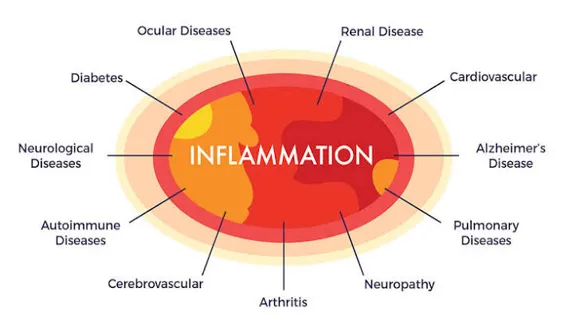
Figure 1: Inflammation
1.1 Inflammation and Chronic Inflammatory Disorders
Inflammation is a complex biological response initiated by the immune system to protect the body from infection, injury, or harmful agents. It involves the activation of immune cells and the release of various inflammatory mediators, including prostaglandins, cytokines, histamine, and leukotrienes. Acute inflammation is generally characterized by redness, swelling, heat, pain, and temporary loss of function, which gradually subside following tissue repair. In contrast, chronic inflammation persists for extended periods due to continuous exposure to inflammatory stimuli or failure of the normal resolution process. Persistent inflammation may lead to progressive tissue damage, fibrosis, and irreversible organ dysfunction. Chronic inflammatory diseases affect millions of individuals worldwide and require prolonged pharmacological intervention to control symptoms and prevent disease progression. [2]
Table 1. Common Inflammatory Disorders and Their Characteristics
|
Disease |
Cause |
Major Symptoms |
Common Treatment |
|
Rheumatoid arthritis |
Autoimmune inflammation |
Joint pain, swelling |
NSAIDs, DMARDs |
|
Osteoarthritis |
Cartilage degeneration |
Joint stiffness, pain |
NSAIDs, Physiotherapy |
|
Ankylosing spondylitis |
Chronic inflammation |
Back pain, stiffness |
NSAIDs, Biologics |
|
Musculoskeletal disorders |
Injury/inflammation |
Pain, swelling |
NSAIDs, Analgesics |
|
Postoperative inflammation |
Surgical trauma |
Pain, edema |
NSAIDs |
1.2 Role of NSAIDs in Clinical Practice
Non-steroidal anti-inflammatory drugs (NSAIDs) are among the most widely prescribed medications for the management of pain, inflammation, and fever. Their therapeutic effects are primarily achieved through inhibition of cyclooxygenase (COX-1 and COX-2) enzymes, thereby reducing the synthesis of prostaglandins that mediate inflammatory responses. NSAIDs are routinely used in the treatment of rheumatoid arthritis, osteoarthritis, ankylosing spondylitis, musculoskeletal injuries, postoperative pain, dysmenorrhea, and various acute inflammatory conditions. Owing to their rapid onset of action and proven clinical efficacy, NSAIDs remain an essential component of anti-inflammatory therapy. Nevertheless, prolonged administration is frequently associated with gastrointestinal irritation, gastric ulceration, renal impairment, and cardiovascular complications, highlighting the need for safer and more efficient drug delivery strategies. [3]
1.3 Diclofenac Sodium: Pharmacology and Therapeutic Importance
Diclofenac sodium is a phenylacetic acid derivative belonging to the NSAID class and is recognized for its potent anti-inflammatory, analgesic, and antipyretic properties. The drug exerts its pharmacological action by inhibiting cyclooxygenase enzymes, thereby decreasing prostaglandin synthesis at the site of inflammation. Diclofenac sodium is extensively prescribed for the treatment of rheumatoid arthritis, osteoarthritis, ankylosing spondylitis, acute musculoskeletal pain, postoperative pain, migraine, and dysmenorrhea. It is available in various dosage forms, including tablets, capsules, injections, topical gels, and transdermal preparations. Despite its therapeutic effectiveness, the drug exhibits a relatively short biological half-life of approximately 1–2 hours, necessitating repeated administration to maintain effective plasma concentrations. This frequent dosing schedule may reduce patient adherence, particularly during long-term therapy. [4]
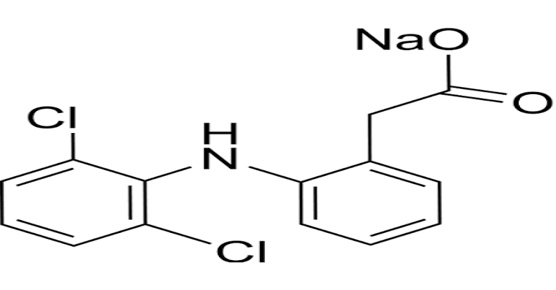
Figure 2: Diclofenac structure
1.4 Limitations of Conventional Diclofenac Dosage Forms
Although conventional diclofenac formulations provide rapid symptomatic relief, they are associated with several clinical limitations. Oral administration often produces fluctuations in plasma drug concentrations because of its short elimination half-life, requiring multiple daily doses. Repeated administration increases the risk of gastrointestinal adverse effects such as gastric irritation, nausea, peptic ulceration, and gastrointestinal bleeding. Long-term use may also contribute to renal dysfunction, hepatotoxicity, and cardiovascular complications. Furthermore, conventional immediate-release dosage forms are unable to maintain prolonged therapeutic drug levels, resulting in variable clinical responses and reduced patient compliance. These drawbacks emphasize the necessity for advanced drug delivery systems capable of providing sustained and controlled drug release. [5]
1.5 Need for Sustained Drug Delivery Systems
Sustained drug delivery systems have emerged as an effective approach to overcome the limitations associated with conventional pharmaceutical formulations. These systems are designed to release therapeutic agents at a predetermined and controlled rate over an extended period, thereby maintaining stable plasma drug concentrations and reducing dosing frequency. Sustained-release formulations improve therapeutic efficacy, enhance patient compliance, minimize peak-to-trough fluctuations, and decrease the incidence of dose-related adverse effects. For diclofenac sodium, sustained drug delivery can reduce gastrointestinal toxicity while providing prolonged anti-inflammatory activity. Advances in nanotechnology have further expanded the potential of sustained-release systems through the development of biodegradable polymeric nanoparticles capable of improving drug stability, bioavailability, and site-specific delivery.
2. Polymeric Nanospheres
Polymeric nanospheres are solid colloidal drug delivery systems with particle sizes generally ranging from 10 to 1000 nm. In these systems, the drug is uniformly dispersed, dissolved, or adsorbed throughout a biodegradable polymer matrix. Owing to their excellent biocompatibility, high drug-loading capacity, and ability to provide controlled and sustained drug release, polymeric nanospheres have gained considerable attention in pharmaceutical research. Biodegradable polymers such as poly(lactic-co-glycolic acid) (PLGA), polylactic acid (PLA), chitosan, gelatin, and polycaprolactone are commonly employed in their preparation. Polymeric nanospheres offer improved protection of encapsulated drugs against degradation, prolonged circulation time, enhanced therapeutic efficacy, and reduced systemic toxicity. [6]
Table 2. Comparison of Conventional and Polymeric Nanosphere Drug Delivery
|
Parameter |
Conventional Formulation |
Polymeric Nanospheres |
|
Drug release |
Immediate |
Sustained |
|
Dosing frequency |
Frequent |
Reduced |
|
Bioavailability |
Moderate |
Improved |
|
Drug stability |
Lower |
Higher |
|
Side effects |
More |
Reduced |
|
Patient compliance |
Moderate |
Better |
2.1 Definition
Polymeric nanospheres are matrix-type nanoparticles in which the drug is homogeneously distributed throughout a solid biodegradable polymeric matrix. Unlike reservoir systems, the active pharmaceutical ingredient is incorporated within the polymer structure rather than enclosed inside a central cavity. Drug release from polymeric nanospheres occurs through diffusion, polymer degradation, or a combination of both mechanisms, enabling sustained and controlled delivery over an extended period. [7]
2.2 Classification [7]
Polymeric nanoparticle-based drug delivery systems are broadly classified into three categories based on their structural organization.
2.2.1 Nanospheres
Nanospheres are matrix-type polymeric particles in which the drug is uniformly dispersed throughout the polymeric network. Drug release occurs gradually through diffusion and erosion of the polymer matrix, making them highly suitable for sustained-release applications.
2.2.2 Nanocapsules
Nanocapsules are reservoir-type nanoparticles consisting of a polymeric shell surrounding an inner core containing the drug in dissolved or dispersed form. The polymeric membrane controls the release of the encapsulated drug, providing targeted and prolonged therapeutic action.
2.2.3 Polymeric Nanoparticles
Polymeric nanoparticles represent a broader category that includes both nanospheres and nanocapsules. These nanoscale carriers are fabricated using biodegradable or biocompatible polymers and are extensively investigated for controlled drug delivery, targeted therapy, vaccine delivery, and gene delivery owing to their favorable physicochemical and biological characteristics
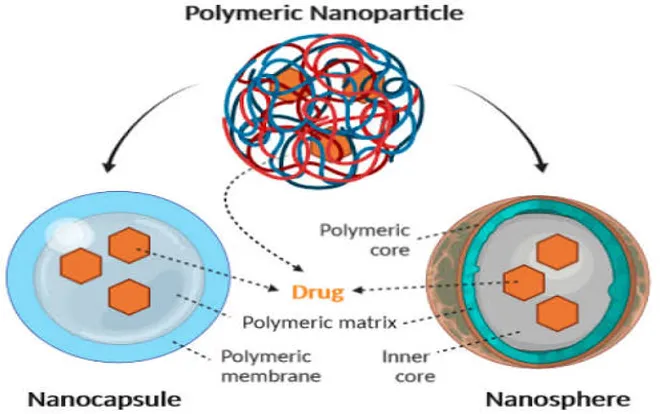
Figure 3 Polymeric Nanoparticles
2.3 Advantages
Polymeric nanospheres offer several advantages over conventional drug delivery systems. They provide sustained and controlled drug release, resulting in prolonged therapeutic activity and reduced dosing frequency. Their nanoscale dimensions improve drug absorption and bioavailability while protecting the encapsulated drug from chemical and enzymatic degradation. Polymeric nanospheres can also be engineered for targeted drug delivery, allowing preferential accumulation at diseased tissues and minimizing exposure to healthy organs. Additionally, these carriers reduce systemic toxicity, improve therapeutic efficiency, and enhance patient compliance. Their biodegradability and biocompatibility further contribute to their safety and widespread applicability in pharmaceutical formulations. [8]
2.4 Limitations
Despite their numerous advantages, polymeric nanospheres also present certain limitations that should be considered during formulation development. Their preparation often involves sophisticated manufacturing techniques requiring specialized equipment and technical expertise. The use of organic solvents during formulation may introduce concerns regarding residual solvent toxicity if not completely removed. Scale-up and large-scale manufacturing remain challenging because of reproducibility issues and process variability. In addition, polymeric nanospheres may exhibit limited drug loading for certain molecules, and long-term storage stability can be affected by particle aggregation or polymer degradation. Regulatory approval, quality control, and production costs also pose significant challenges for the successful clinical translation and commercialization of polymeric nanoparticle-based drug delivery systems. [9]
Table 3. Advantages and Limitations of Polymeric Nanospheres
|
Advantages |
Limitations |
|
Sustained drug release |
High production cost |
|
Improved bioavailability |
Complex manufacturing |
|
Reduced toxicity |
Scale-up challenges |
|
Targeted drug delivery |
Regulatory hurdles |
|
Better patient compliance |
Stability concerns |
|
Protection of drug |
Residual solvent issues |
3. Polymers Used in Polymeric Nanospheres
The selection of a suitable polymer is one of the most important factors in the successful development of polymeric nanospheres. The physicochemical properties of the polymer significantly influence particle size, drug loading, release kinetics, biodegradation, and overall therapeutic performance. An ideal polymer should be biocompatible, biodegradable, non-toxic, chemically stable, and capable of providing controlled drug release. Both natural and synthetic polymers have been extensively investigated for nanoparticle preparation because of their unique properties and pharmaceutical applications. Among these, PLGA, PLA, PCL, chitosan, alginate, gelatin, and Eudragit are the most commonly employed polymers in modern nanomedicine. [10]
3.1 Poly (Lactic-co-Glycolic Acid) (PLGA)
Poly (lactic-co-glycolic acid) (PLGA) is one of the most extensively studied biodegradable polymers used in controlled drug delivery systems. It is a synthetic copolymer composed of lactic acid and glycolic acid monomers, both of which are naturally metabolized into carbon dioxide and water through normal physiological pathways. Due to its excellent biocompatibility, biodegradability, and regulatory approval by the United States Food and Drug Administration (FDA), PLGA has become the preferred polymer for the preparation of nanoparticles, microspheres, implants, and injectable depot formulations. The degradation rate of PLGA can be controlled by altering the lactide-to-glycolide ratio, allowing researchers to design formulations with desired drug release profiles. In polymeric nanospheres, PLGA provides high drug encapsulation efficiency, protects the drug from degradation, and ensures sustained drug release over an extended period. [11]
3.2 Poly (Lactic Acid) (PLA)
Poly (lactic acid) (PLA) is another biodegradable aliphatic polyester widely used in pharmaceutical and biomedical applications. It is synthesized from renewable resources such as corn starch and sugarcane, making it an environmentally friendly polymer. PLA possesses excellent mechanical strength, biocompatibility, and biodegradability, making it suitable for sustained-release drug delivery systems. Compared with PLGA, PLA degrades more slowly because of its higher hydrophobicity, allowing prolonged drug release. PLA-based nanoparticles have been successfully developed for anticancer drugs, antibiotics, anti-inflammatory agents, proteins, and peptide delivery. [12]
3.3 Polycaprolactone (PCL)
Polycaprolactone (PCL) is a semicrystalline biodegradable polyester characterized by its slow degradation rate and excellent mechanical properties. It exhibits high compatibility with numerous pharmaceutical agents and provides prolonged drug release for several weeks or months. Due to its hydrophobic nature, PCL is particularly suitable for encapsulating poorly water-soluble drugs. Polycaprolactone nanoparticles have been widely investigated for oral, topical, injectable, ocular, and implantable drug delivery systems. Their excellent stability and controlled degradation make them promising carriers for chronic disease management requiring long-term therapy. [13]
3.4 Chitosan
Chitosan is a naturally occurring cationic polysaccharide obtained through the deacetylation of chitin, which is primarily extracted from the shells of crustaceans. Owing to its biodegradability, biocompatibility, mucoadhesive properties, and low toxicity, chitosan has gained considerable attention as a pharmaceutical polymer. The positively charged amino groups present in chitosan enhance interaction with negatively charged biological membranes, thereby improving drug absorption and cellular uptake. Chitosan nanoparticles have demonstrated excellent potential for oral, nasal, ocular, pulmonary, and transdermal drug delivery, as well as gene and vaccine delivery applications. [14]
3.5 Alginate
Alginate is a naturally occurring anionic polysaccharide isolated from brown seaweed. It is composed of β-D-mannuronic acid and α-L-guluronic acid residues arranged in varying proportions. Alginate possesses remarkable biocompatibility, biodegradability, non-toxicity, and gel-forming ability in the presence of divalent cations such as calcium ions. These characteristics make alginate an attractive polymer for controlled drug delivery and tissue engineering. Alginate nanoparticles are widely used for the encapsulation of proteins, peptides, probiotics, and various therapeutic agents, providing sustained release while protecting sensitive molecules from degradation. [15]
3.6 Gelatin
Gelatin is a natural protein polymer produced by the partial hydrolysis of collagen obtained from animal connective tissues. It exhibits excellent biodegradability, biocompatibility, low immunogenicity, and film-forming properties. Gelatin nanoparticles are capable of encapsulating both hydrophilic and hydrophobic drugs with high efficiency. Owing to their excellent safety profile, gelatin-based drug delivery systems have been extensively investigated for controlled drug release, tissue engineering, wound healing, vaccine delivery, and regenerative medicine. Crosslinking agents are often employed to improve the mechanical strength and stability of gelatin nanoparticles. [16]
3.7 Eudragit
Eudragit is a family of synthetic polymethacrylate polymers widely used for modified-release pharmaceutical formulations. Different grades of Eudragit possess unique pH-dependent solubility characteristics, allowing targeted drug release at specific regions of the gastrointestinal tract. These polymers are extensively employed for enteric coating, sustained-release tablets, colon-targeted delivery, and nanoparticle formulations. Eudragit nanoparticles improve drug stability, control release kinetics, and enhance the oral bioavailability of poorly soluble drugs. Their versatility and ease of formulation have made them valuable polymers in the development of advanced drug delivery systems.
Table 4. Common Polymers Used in Polymeric Nanospheres
|
Polymer |
Type |
Biodegradable |
Major Application |
|
PLGA |
Synthetic |
Yes |
Sustained drug delivery |
|
PLA |
Synthetic |
Yes |
Controlled release |
|
PCL |
Synthetic |
Yes |
Long-term release |
|
Chitosan |
Natural |
Yes |
Mucoadhesive delivery |
|
Alginate |
Natural |
Yes |
Controlled release |
|
Gelatin |
Natural |
Yes |
Protein delivery |
|
Eudragit |
Synthetic |
No |
pH-dependent release |
4. Preparation Methods
Several formulation techniques have been developed for the preparation of polymeric nanospheres. The selection of a suitable preparation method depends on the physicochemical properties of the drug, polymer characteristics, desired particle size, encapsulation efficiency, scalability, and intended route of administration. Each technique offers specific advantages and limitations with respect to nanoparticle characteristics, manufacturing complexity, and production cost. [17]
4.1 Solvent Evaporation
The solvent evaporation method is one of the most widely employed techniques for preparing polymeric nanospheres. In this method, the drug and polymer are dissolved in a volatile organic solvent such as dichloromethane or ethyl acetate. This organic phase is then emulsified into an aqueous phase containing a stabilizer such as polyvinyl alcohol (PVA). Continuous stirring or homogenization produces fine emulsion droplets, after which the organic solvent is evaporated, resulting in the formation of solid polymeric nanoparticles. The method is simple, reproducible, and suitable for sustained-release formulations. [18]
4.2 Solvent Diffusion
The solvent diffusion method involves dissolving the drug and polymer in a partially water-miscible organic solvent followed by controlled diffusion of the solvent into the aqueous phase. The rapid diffusion of the solvent decreases polymer solubility, leading to nanoparticle formation. This method generally produces nanoparticles with narrow size distribution and high drug encapsulation efficiency while requiring relatively mild processing conditions. [19]
4.3 Nanoprecipitation
Nanoprecipitation, also known as the solvent displacement method, is based on the spontaneous precipitation of the polymer following rapid mixing of the organic and aqueous phases. The polymer and drug are dissolved in a water-miscible organic solvent and added into an aqueous stabilizer solution under continuous stirring. Immediate solvent diffusion induces polymer precipitation, resulting in nanosized particles. This technique is simple, rapid, reproducible, and particularly suitable for hydrophobic drugs.
4.4 Emulsion–Solvent Evaporation
The emulsion–solvent evaporation technique is among the most commonly used methods for preparing biodegradable polymeric nanoparticles. It involves the formation of an oil-in-water emulsion followed by evaporation of the volatile organic solvent. As the solvent is removed, the polymer solidifies and entraps the drug within the nanoparticle matrix. This method offers high encapsulation efficiency, excellent particle uniformity, and sustained drug release characteristics. [20]
4.5 Salting-Out Technique
The salting-out method is an alternative nanoparticle preparation technique that avoids the use of high-energy homogenization. In this method, a concentrated salt solution or non-electrolyte reduces the miscibility between the organic solvent and water. Subsequent dilution with water promotes solvent diffusion and polymer precipitation, resulting in nanoparticle formation. The technique minimizes thermal stress and is particularly useful for heat-sensitive drugs.
4.6 Spray Drying
Spray drying is a single-step continuous process used for producing dry polymeric nanoparticles. The polymer-drug solution or suspension is atomized into a stream of heated air, causing rapid solvent evaporation and formation of dry particles. Spray drying is highly suitable for large-scale industrial production because it is rapid, cost-effective, and easily scalable while producing particles with acceptable stability.
4.7 Ionic Gelation
Ionic gelation is primarily employed for preparing nanoparticles from natural polymers such as chitosan and alginate. The method involves electrostatic interaction between oppositely charged polymers and crosslinking agents, leading to the formation of stable nanoparticles under mild conditions without the need for organic solvents. Because of its simplicity, low toxicity, and ability to encapsulate sensitive biomolecules, ionic gelation has become a popular technique for delivering proteins, peptides, vaccines, and nucleic acids.
Table 5. Preparation Methods of Polymeric Nanospheres
|
Method |
Principle |
Advantages |
Limitations |
|
Solvent evaporation |
Solvent removal |
Simple, reproducible |
Organic solvent use |
|
Nanoprecipitation |
Polymer precipitation |
Small particle size |
Limited drug types |
|
Solvent diffusion |
Controlled solvent diffusion |
High encapsulation |
Process sensitive |
|
Emulsion-solvent evaporation |
Emulsion formation |
High drug loading |
Multiple processing steps |
|
Salting-out |
Salt-induced precipitation |
Mild conditions |
Additional purification |
|
Spray drying |
Rapid solvent evaporation |
Industrial scale-up |
Heat exposure |
|
Ionic gelation |
Ionic crosslinking |
No organic solvent |
Limited polymer selection |
5. Characterization of Polymeric Nanospheres
The successful development of polymeric nanospheres requires comprehensive physicochemical characterization to ensure product quality, stability, safety, and therapeutic performance. Characterization techniques provide valuable information regarding particle size, morphology, surface charge, drug encapsulation, release behavior, and structural compatibility. These parameters directly influence the biological performance and clinical efficacy of nanoparticle-based drug delivery systems. [21]
5.1 Particle Size
Particle size is one of the most critical parameters affecting the performance of polymeric nanospheres. It influences drug release rate, biodistribution, cellular uptake, stability, and bioavailability. Nanoparticles with smaller particle sizes possess a larger surface area, resulting in enhanced dissolution and improved drug absorption. Particle size is commonly determined using Dynamic Light Scattering (DLS), which provides the average hydrodynamic diameter of nanoparticles suspended in a liquid medium. [22]
5.2 Polydispersity Index (PDI)
The Polydispersity Index (PDI) indicates the uniformity of particle size distribution within a nanoparticle formulation. Lower PDI values represent a narrow and homogeneous particle size distribution, whereas higher values indicate greater heterogeneity. Generally, a PDI value below 0.30 is considered suitable for pharmaceutical nanoparticle formulations, suggesting good formulation consistency and physical stability. [23]
5.3 Zeta Potential
Zeta potential measures the electrical charge present on the surface of nanoparticles and serves as an important indicator of colloidal stability. Particles possessing high positive or negative zeta potential values repel each other, thereby preventing aggregation and improving storage stability. Zeta potential is generally determined using electrophoretic light scattering. Stable nanoparticle formulations typically exhibit zeta potential values greater than ±20 mV.
5.4 Surface Morphology
Surface morphology provides information regarding the external appearance, shape, and structural integrity of nanoparticles. Morphological analysis is commonly performed using Scanning Electron Microscopy (SEM) or Transmission Electron Microscopy (TEM). These techniques reveal whether nanoparticles are spherical, smooth, porous, or aggregated. Uniform spherical particles are generally preferred because they provide predictable drug release and improved formulation stability. [24]
5.5 Fourier Transform Infrared Spectroscopy (FTIR)
Fourier Transform Infrared Spectroscopy (FTIR) is employed to evaluate possible interactions between the drug and polymer. The technique identifies characteristic functional groups present within the formulation by measuring infrared absorption at different wavelengths. The absence of significant changes in characteristic peaks indicates good compatibility between the drug and excipients, whereas peak shifts or disappearance may suggest chemical interactions or incompatibility.
5.6 Differential Scanning Calorimetry (DSC)
Differential Scanning Calorimetry (DSC) is a thermal analysis technique used to investigate the melting behavior, crystallinity, thermal stability, and physical state of pharmaceutical materials. DSC helps determine whether the drug remains crystalline or becomes amorphous after encapsulation within the polymer matrix. A reduction or disappearance of the characteristic melting peak generally indicates successful drug incorporation into the polymeric system.
5.7 X-Ray Diffraction (XRD)
X-ray diffraction is utilized to determine the crystalline or amorphous nature of drug-loaded nanoparticles. Pure crystalline drugs exhibit sharp diffraction peaks, whereas polymeric nanoparticles often display reduced peak intensity or broad diffraction patterns due to drug dispersion within the polymer matrix. XRD analysis provides valuable information regarding changes in crystallinity after formulation.
5.8 Drug Loading
Drug loading represents the quantity of drug successfully incorporated into the polymeric nanospheres relative to the total weight of nanoparticles. High drug loading is desirable because it allows administration of a greater amount of drug while minimizing the quantity of polymer required. Drug loading is influenced by polymer concentration, drug solubility, preparation technique, and formulation variables.
5.9 Entrapment Efficiency
Entrapment efficiency refers to the percentage of drug successfully encapsulated within the polymer matrix during nanoparticle preparation. High entrapment efficiency reflects efficient drug incorporation and minimal drug loss during processing. This parameter is influenced by the polymer-to-drug ratio, preparation method, solvent selection, and physicochemical properties of the drug.
5.10 In-vitro Drug Release
In-vitro drug release studies evaluate the release pattern of the encapsulated drug under simulated physiological conditions. These studies help determine whether the formulation provides immediate, sustained, or controlled drug release. Drug release experiments are commonly performed using dialysis bags or dissolution apparatus, and samples are analyzed by UV-Visible spectrophotometry or HPLC. The release profile provides valuable information regarding therapeutic performance and formulation optimization. [25]
5.11 Drug Release Kinetics
Drug release kinetics describe the mathematical models used to explain the mechanism of drug release from polymeric nanospheres. Experimental release data are commonly fitted into Zero-order, First-order, Higuchi, Korsmeyer-Peppas, and Hixson-Crowell models. These models help determine whether drug release occurs through diffusion, polymer erosion, swelling, or a combination of these mechanisms, thereby facilitating optimization of sustained-release formulations.
5.12 Stability Studies
Stability studies are performed to evaluate the ability of polymeric nanospheres to maintain their physical, chemical, and pharmaceutical characteristics during storage. The formulations are stored under long-term and accelerated conditions according to International Council for Harmonisation (ICH) guidelines. Parameters such as particle size, zeta potential, drug content, entrapment efficiency, and appearance are periodically monitored. Stability studies provide evidence regarding product shelf life, storage conditions, and overall formulation reliability.
Table 6. Characterization Techniques for Polymeric Nanospheres
|
Parameter |
Instrument |
Importance |
|
Particle size |
DLS |
Determines drug release |
|
PDI |
DLS |
Particle uniformity |
|
Zeta potential |
Zetasizer |
Stability |
|
Morphology |
SEM/TEM |
Surface characteristics |
|
FTIR |
FTIR Spectrometer |
Drug-polymer compatibility |
|
DSC |
DSC |
Thermal behavior |
|
XRD |
X-ray Diffractometer |
Crystallinity |
|
Drug loading |
UV/HPLC |
Drug incorporation |
|
Entrapment efficiency |
UV/HPLC |
Encapsulation efficiency |
|
Drug release |
Dissolution apparatus |
Release profile |
6. Applications of Polymeric Nanospheres
Polymeric nanospheres have emerged as versatile drug delivery systems with numerous pharmaceutical and biomedical applications. Their ability to provide controlled drug release, improve bioavailability, protect drugs from degradation, and enable targeted delivery has expanded their use in the treatment of various acute and chronic diseases. [26]
6.1 Rheumatoid Arthritis
Polymeric nanospheres have shown considerable promise in the management of rheumatoid arthritis by delivering anti-inflammatory drugs directly to inflamed joints. Sustained drug release reduces dosing frequency, improves therapeutic efficacy, and minimizes gastrointestinal adverse effects associated with long-term NSAID therapy. [27]
6.2 Osteoarthritis
In osteoarthritis, polymeric nanospheres provide prolonged local drug delivery, resulting in improved pain management and reduced joint inflammation. Controlled drug release helps maintain therapeutic drug concentrations over extended periods while reducing systemic exposure.
6.3 Musculoskeletal Disorders
Polymeric nanospheres are increasingly investigated for treating musculoskeletal disorders, including tendon injuries, ligament inflammation, and chronic back pain. Sustained drug delivery enhances pain relief, reduces inflammation, and improves patient compliance during long-term therapy. [28]
6.4 Topical Drug Delivery
Topical polymeric nanospheres improve skin penetration and prolong drug retention at the site of application. These systems enhance local therapeutic efficacy while reducing systemic absorption and minimizing adverse effects. They have been widely investigated for inflammatory skin disorders, wound healing, and localized pain management.
6.5 Oral Sustained Drug Delivery
Orally administered polymeric nanospheres protect drugs from degradation within the gastrointestinal tract and provide prolonged drug release. They improve oral bioavailability, reduce dosing frequency, and maintain consistent plasma drug concentrations, making them suitable for chronic disease management. [29]
6.6 Injectable Drug Delivery
Injectable polymeric nanospheres are capable of delivering drugs over several days, weeks, or even months following a single administration. These long-acting formulations improve patient adherence, reduce the frequency of injections, and provide sustained therapeutic effects. Injectable polymeric nanospheres have been widely explored for the delivery of anti-inflammatory drugs, anticancer agents, hormones, vaccines, and biological therapeutics.
Table 7. Therapeutic Applications of Polymeric Nanospheres
|
Disease |
Drug |
Therapeutic Benefit |
|
Rheumatoid arthritis |
Diclofenac |
Sustained anti-inflammatory effect |
|
Osteoarthritis |
Diclofenac |
Prolonged pain relief |
|
Cancer |
Doxorubicin |
Targeted chemotherapy |
|
Diabetes |
Insulin |
Controlled release |
|
Tuberculosis |
Rifampicin |
Improved bioavailability |
|
Wound healing |
Growth factors |
Enhanced tissue regeneration |
7. Recent Advances in Polymeric Nanospheres
Recent developments in nanotechnology have significantly improved the design and performance of polymeric nanospheres for drug delivery. Surface-functionalized nanoparticles have enhanced targeted drug delivery and reduced systemic toxicity. Stimuli-responsive polymers capable of releasing drugs in response to pH, temperature, or enzymes have gained considerable attention for site-specific therapy. Hybrid nanoparticles combining polymers with lipids or inorganic materials have further improved drug loading, stability, and therapeutic efficacy. In addition, computational modeling and artificial intelligence (AI) are increasingly being utilized to optimize formulation design, predict drug release behavior, and accelerate the development of advanced nanomedicines. These innovations are expected to improve the clinical effectiveness and commercial potential of polymeric nanosphere-based drug delivery systems. [30]
8. Challenges and Future Perspectives
Despite their promising therapeutic advantages, polymeric nanospheres continue to face several challenges that limit their widespread clinical application. Large-scale manufacturing, batch-to-batch reproducibility, high production costs, long-term stability, and stringent regulatory requirements remain major obstacles. Furthermore, comprehensive preclinical and clinical studies are required to establish their long-term safety and efficacy. Future research should focus on developing cost-effective manufacturing processes, environmentally friendly formulation techniques, personalized nanomedicine, smart polymeric carriers, and targeted drug delivery systems. Advances in nanotechnology, biotechnology, and regulatory science are expected to facilitate the successful translation of polymeric nanospheres from laboratory research to routine clinical practice.
CONCLUSION
Polymeric nanospheres have emerged as an effective and versatile drug delivery system for improving the therapeutic performance of conventional drugs such as diclofenac sodium. Their ability to provide sustained and controlled drug release, enhance bioavailability, reduce dosing frequency, and minimize adverse effects makes them highly suitable for the management of chronic inflammatory disorders. Owing to their biocompatibility, biodegradability, and flexibility in formulation design, polymeric nanospheres represent a promising platform for future pharmaceutical applications.
REFERENCES



Leena Borkar, Dr. Sachin Dudhe, Dr. Anup Barsagade, Formulation and Evaluation of Polymeric Nanospheres of Diclofenac Sodium for Sustained Anti-Inflammatory Activity, Int. J. of Pharm. Sci., 2026, Vol 4, Issue 7, 3178-3191. https://doi.org/10.5281/zenodo.21383531
 10.5281/zenodo.21383531