

We use cookies to ensure our website works properly and to personalise your experience. Cookies policy
Department of Pharmacy, Shree Dev Bhoomi Institute of Education Science and Technology, Vill. Mazhon P.O, via Premnagar, Dehradun, Uttarakhand 248007
Recently, many people have experienced sun tanning and skin darkening. Sun tanning can lead to sunburn, redness, weakened immunity, premature aging, and even skin cancer. Because skin is delicate, this study aimed to develop a cream that offers both sun protection and skin-brightening benefits, while being easy to use and minimizing side effects. Oxybenzone is known to protect against UVB rays. This research evaluates the sunscreen effect of oxybenzone and the skin-brightening effect of Arbutin. The chemical ingredients were first tested for quality, including color, odor, pH, melting point, residue after burning, moisture loss, and purity. Several cream bases were tried, and three were evaluated. Based on pH, thickness, and appearance, the second base (B2) was chosen to add the active ingredients. A cream with 6% Oxybenzone and 1.5% Arbutin was selected for further testing. Observations showed that the cream improved skin tone, made the skin softer, and was easy to apply. Therefore, it may be used as both a sunscreen and a fairness cream.
Skin is the outermost and largest part of the body, and it is most sensitive to photodamage because it is directly exposed to solar radiation and other environmental factors. The harmful effects of solar radiation are usually caused by the ultraviolet (UV) region of the electromagnetic spectrum, which can be divided into three regions: UVA(320-400nm), UVB (290-320nm), and UVC (200-290nm). UVC radiation is filtered out by the ozone layer before reaching Earth. UVA and UVB radiation are not completely filtered out by the ozone layer and are responsible for the damage due to sunburn and premature aging of the skin[1]. Exposure to UV radiation can result in various detrimental effects on the eyes, skin, and immune system. Extended contact with UV rays may trigger the generation of reactive oxygen species, leading to oxidative damage and disruption of the antioxidant defense mechanism. These damages hinder the skin's metabolic processes, resulting in issues such as photoaging, redness, swelling, sunburn, fine lines and wrinkles, increased sensitivity to light, immunosuppression, DNA harm, and in extreme cases, skin cancer. [2]. As a result, various sunscreen ingredients are commonly included in numerous cosmetic products like creams, lotions, moisturizers, and other skincare items [3]. The primary function of sunscreen is to shield the skin from UVA and UVB rays while helping to maintain the skin's moisture levels and its natural oils, which can be depleted through exposure to sunlight [4]. The sunscreen must be effective, stable in terms of chemistry, gentle on the skin, safe for use, and resistant to breakdown from sunlight [5]. The skin produces its own natural sun protection, including squalane, proteins, absorbing lipids, and nucleotides, which have been utilized for many years. Squalane helps safeguard the skin’s delicate lipids. Allantoin, which is derived from the breakdown of purine nucleotides, is also included [6] Substance that is found naturally within the body can absorb various UV radiation wavelengths; hence, it is incorporated into sun protection products and skincare lotions due to its capacity to heal small injuries and encourage healthy skin [7]. Phenolics, which consist of an aromatic ring with at least one hydroxyl group, demonstrate a diverse range of beneficial biological functions, including antiviral, antibacterial, immune-enhancing, antioxidant, anti-allergic, anti-hypertensive, antiarrhythmic, anti-thrombotic, liver-protective, cholesterol-lowering, anti-inflammatory, and anti-cancer properties. Flavonoids like quercetin, luteolin, and catechins have been shown to provide superior antioxidant effects compared to other antioxidants, such as vitamin C, vitamin E, and β-carotene, which are commonly found in various cosmetic products. Quercetin, apigenin, and rutin have been indicated to be effective against UVA and UVB radiation. Consequently, phenolics may be useful in mitigating UV-induced production of oxygen free radicals and lipid peroxidation, both of which contribute to photoaging and the development of skin cancer[8]. The most frequently utilized herbs in cosmetology include aloe vera, basil, green tea, almond, olive, jojoba, and cucumber, among others. Photo protection against ultraviolet radiation can be assessed either in vivo or in vitro. For several years, the in vivo assessment through photo testing in human subjects has been employed. This method is complex, time-consuming, and expensive. As a result, researchers have created an in vitro method to evaluate the effectiveness of sunscreen. The in vitro test serves as a rapid, cost-effective screening technique [9].
Types of sunscreens:
The types of sunscreen are divided into two types. They are given below;[10][11]
Physical sunscreen:-
Chemical sunscreen:-
To put it differently, using either mineral or chemical sunscreen is significantly better than not using any at all for the sake of skin health. "The established advantages of applying a chemical sunscreen — lower risk of skin cancer, decreased chance of sunburn, and reduced skin aging — certainly surpass the hypothetical risks associated with absorption.
CLASSIFICATION OF SUNSCREEN PROTECTION:-
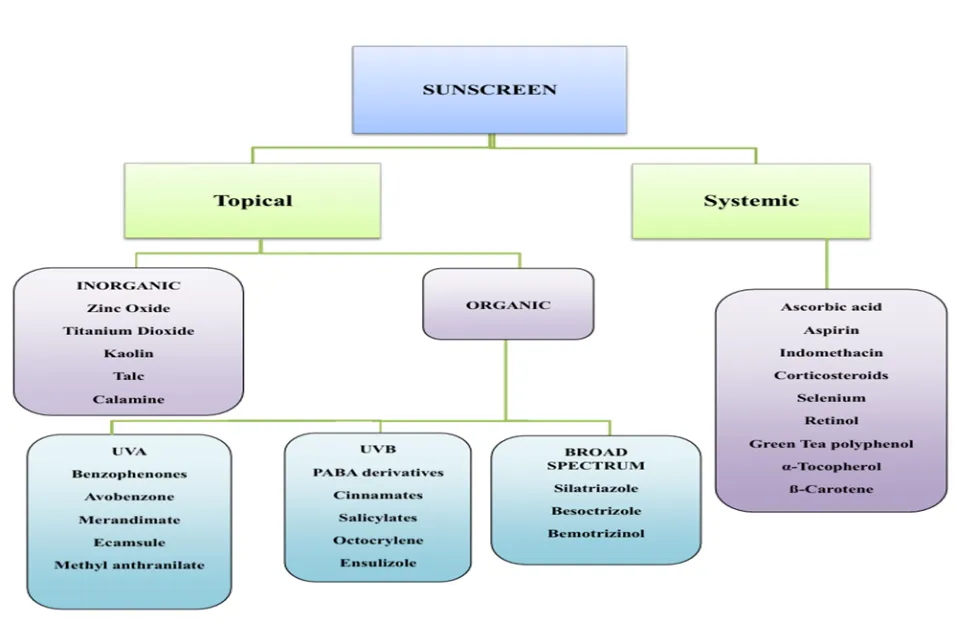
Figure 1 Classification of Sunscreen Protection
Inorganic Topical Sunscreen:-
Sunscreens are divided into inorganic sunscreens (often inaccurately termed 'physical'), such as zinc oxide and titanium dioxide, and organic sunscreens (also incorrectly labeled as 'chemical'). Contrary to common understanding, both types of sunscreens primarily function by absorbing UV radiation. Some examples include zinc oxide, titanium dioxide, kaolin, talc, and calamine.[15]
Organic Topical Sunscreen:-
An “organic” sunscreen, by definition, contains carbon-based compounds such as oxybenzone, avobenzone, and octinoxate to reduce the effects of ultraviolet rays. This is what is meant by "organic chemistry," which focuses on the examination of molecules that have carbon structures and carbon-hydrogen connections.
The UPF of sun protection is categorized in the following grades :[22]
Table 1 Grade of sunscreen protection
|
Grade |
UPF |
|
Good Protection |
15to24 |
|
Very Protection |
25to39 |
|
Excellent Protection |
45to50+ |
THE HUMAN SKIN:-
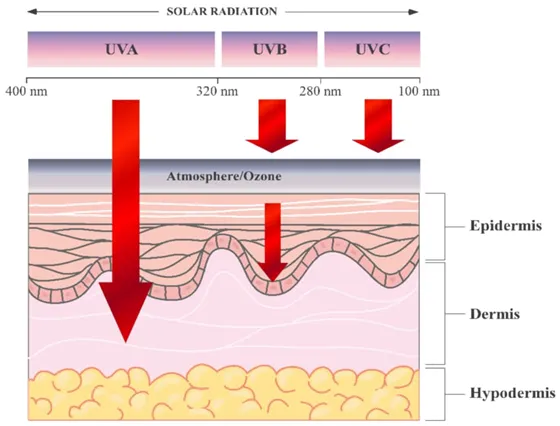
Figure 2 Skin layer anatomy illustrating UVA and UVB radiation penetration into skin layers
The skin constitutes 15% of an adult's overall body weight and is the body's largest organ. [23] Originating from the Latin term "integumentum," the integument refers to the external layer of skin composed of skin, hair, and nails. People can be identified by their skin and hair, along with the various layers of skin and adrenal glands, which encompass sweat glands, sebaceous glands, and hair follicles[24]. The skin comprises three primary layers: the epidermis, dermis, and hypodermis. While each layer has a specific function, the outermost layer mainly serves to guard against pathogens, ultraviolet light, chemicals, and physical pressures. Furthermore, it regulates temperature and the amount of water released into the environment[25].
a. Epidermis:- The outer layer is the epidermis. It serves to shield skin color by functioning as a barrier that repels water. Its main purposes are:
Every day, humans lose roughly 500 million skin cells. Actually, 2,630 layers of dead cells make up the outermost portions of the epidermis [26].
b. Dermis:- As a supportive layer, the dermis protects the body against tension and pressure. It also imparts elasticity and durability to the skin. Moreover, its main roles include:
The dermis can perform these functions because it contains blood vessels, lymphatic structures, and hair follicles. Several glands, including sweat glands, produce sebum, an oil that repels water and benefits hair.
c. The hypodermis:- The subcutaneous layer, also known as the subcutaneous tissue, is the innermost layer of the skin. While it assists in anchoring the skin to muscles and bones, it is not considered a part of the skin itself. Furthermore, the blood supply and nerves for the dermis originate from the subcutaneous tissue. This layer primarily consists of fat, connective tissue, and elastin, a protein that allows the skin to return to its original shape after being stretched. The dense layers of fat act as insulation, helping to retain heat and minimize heat loss. Additionally, the fat layer provides a protective function by cushioning the bones and muscles. [27]
The skin's function:-
ACTIVE INGREDIENTS OF SUNSCREEN:-
Mineral-based sunscreens, often referred to as sunblock, use titanium dioxide or zinc oxide as their active components and shield the skin by reflecting sunlight. Titanium dioxide is frequently a key ingredient in sunscreen due to its effectiveness as a UV filtering agent. [28]
Active ingredients of the sunscreen and their concentration
Table 2 Active ingredients of sunscreen and their concentration
|
Active ingredients |
Maximum concentration |
Protection against |
Protection against |
|
Active ingredients |
Maximum concentration |
UVA |
UVB |
|
Oxybenzone |
6%(US)10%(AUS, EU)5%(JP) |
Yes |
Yes |
|
Menthyl anthranilate |
5% |
Yes |
No |
|
Octyl methoxycinnamate |
7.5%(US)10%(AUS, EU)20%(JP) |
No |
Yes |
|
Sulisobenzone |
5%(US)10%(AUS, EU,JP) |
Yes |
Yes |
|
Titanium dioxide |
25%(US)no limits(JP) |
Yes |
Yes |
|
Zinc oxide |
25%(US) |
Yes |
Yes |
|
Avobenzone |
3%(US)5%(EU, AUS)10%(JP) |
Yes |
No |
FDA monograph of sunscreen ingredients with maximum concentration
Table 3 FDA monograph of sunscreen ingredients with maximum concentration
|
UV filter |
Maximum concentration |
|
Tinosorb M |
10% |
|
Tinosorb S |
10%(EU, AUS)3%(JP) |
|
TinosorbA2B |
10% |
WHAT IS SPF?
The sunscreen protection factor (SPF) is calculated by taking the amount of UV energy needed to cause a minimal erythema dose (MED) on skin that is protected and dividing it by the amount of UV energy required to create a MED on skin that is unprotected. [29]
SPF = MED in sunscreen - Protected skin
MED in non-sunscreen-protected skin
The MED is characterized as the minimum duration or amount of UV light exposure necessary to induce a slight, noticeable redness on unprotected skin. [30]
Sun Protection Factor (SPF):-
`
This is incorrect because SPF is not solely linked to the duration of sun exposure but rather to the total amount of solar energy received. While the total solar energy is influenced by the duration of exposure, various other factors also affect the amount of solar energy. For example, the strength of the solar energy plays a role in determining the amount. The following exposures could yield the same total amount of solar energy:
ADVANTAGES OF SUNSCREEN PROTECTION:-[35]
• Sunscreen aids in avoiding sunburns.
• Sunscreen lowers the risk of skin cancers.
• Sunscreen assists your body in defending against other dangers.
• Sunscreen is one of the most effective methods to prevent premature aging.
• Using sunscreen temporarily halts the formation of wrinkles and sagging skin.
• Sunscreen reduces UV damage to the skin.
• Regular application of sunscreen smooths the skin.
• Sunscreen helps to minimize discoloration.
• Utilizing sunscreen can aid in the prevention of melanoma and squamous cell carcinoma, both of which are forms of skin cancer.
DISADVANTAGES OF SUNSCREEN PROTECTION:-[36]
• Certain individuals may experience an allergic reaction to sunscreen.
• Extended use of sunscreen may result in a potential deficiency in vitamin D.
METARIALS AND METHOD
CHEMICALS
A fresh coconut was taken from the market and a pure coconut oil was extracted from it . Aloevera was taken from Aloevera plant for the requirement of gel in formulation and all other chemicals were obtained from the laboratories of Shree Dev Bhoomi Intitute of Education ,Science and Technology College, Dehradun. Triethanolamine was used as a neutralizer to adjust the pH. .All the chemicals used were of analytical grade. The chemicals used for formulation of cream base is given in figure number 2 .
Method Of Preparation Of Cream
Coconut oil (5g), Cetyl alcohol (2.5g), Stearic acid (2.5g)
6. Final Mixing and Storage:
Note: All glassware and equipment should be clean and dry before use.
Formulation of Cream Base
Table 4 Formulation of cream base
|
S.NO |
Ingredients |
Formulation(20g) |
|
1 |
Coconut oil |
5g |
|
2 |
Cetyl alcohol |
2.5g |
|
3 |
Steraic acid |
2.5g |
|
4 |
Triethanolamine |
1g |
|
5 |
Aloevera gel |
5g |
|
6 |
Titanium dioxide |
1g |
|
7 |
Distilled water |
1g |
|
8 |
Glycerine |
2g |
|
|
Total |
20g |
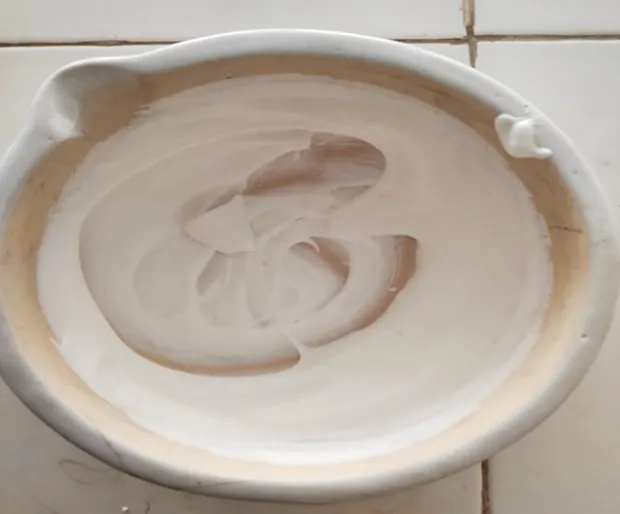
Figure 3 Sunscreen
Coconut oil :-
Cetyl Alcohol :-
Stearic Acid:-
Triethanolamine: -
Aloevera Gel:-
Titanium Dioxide:-
Distilled Water: -
Glycerine:-
NOTE :- Thus these are the ingredients that I have used in making sunscreen protection formulation of cream base.

Figure 4 Images of the chemicals used in formulation of cream
EVALUATION OF CREAM
The cream's physicochemical characteristics, including color, scent, pH level, viscosity, spreadability, and thermal stability were assessed.
One gram of cream was mixed with 9 milliliters of distilled water to measure the pH at 27° C utilizing a pH meter.[37]
Procedure: Viscosity of the formulation was determined by Brookfield Viscometer at 25 rpm, using spindle no. 647.[38]
The parallel plate method is the most commonly utilized technique for assessing the spreadability of semisolid formulations. A modified laboratory setup was employed to assess this property. The arrangement consists of two glass slides positioned on a tripod stand, with an excess of cream (3g) applied between them. The upper slide is movable while the lower slide is securely affixed to the stand. A weight of 100 g was placed on the slides for 5 minutes to compress the cream to a consistent thickness, and any excess cream was removed from the edges. Subsequently, a 50 g weight was added to one side of the slide, and the slide was drawn until it spanned a distance of 10 cm. The duration in seconds taken to separate the two glass slides by 10 cm was recorded as a measure of spreadability. A shorter duration suggests better spreadability. Spreadability was calculated using the following formula:
S = m * l / t
Where S = Spreadability, m = Weight attached to the upper glass slide, l = Length of the glass slide, and t = Time taken for separation.
The cream was transferred into a glass bottle with the help of a spatula and tapped to settle to the bottom. Filled up to two-thirds of the capacity of the bottle, the plug was inserted, and the cap was tightened. The filled bottle was kept in the incubator at 450 °C for 48 hr.[39]
SPF 1.0 g of cream formulation and commercial cream were weighed, transferred to a 100 ml volumetric flask, diluted to volume with ethanol and water (40:60), then sonicated for 5 minutes, filtered through Whatman No. 1 filter paper, and the filtrate was rejected, rejecting the first 10 ml of filtrate. 5.0 ml of aliquot was taken in 50 ml volumetric flask and diluted to volume with ethanol and water (40:60). Subsequently 5.0 ml of aliquot was transferred to 25ml volumetric flask and the volume completed with ethanol and water (40:60). The absorbance values of each aliquot prepared were determined from 290 nm to 320 nm at 5 nm interval, using ethanol and distilled water (40:60) solution as a blank. The readings were taken in triplicate, and the determinations were made at each point. The obtained absorbance values between 290 and 320 nm were multiplied by the respective EE(λ) values. Their summation was taken and multiplied by the correction factor (10) to obtain the SPF values. Data were expressed as ± standard error mean.[40]
2 mg/cm2 of each sunscreen cream was weighed and spread evenly between two plates of polis665hed fused quartz silica (thickness 5 mm and diameter 25 mm). To avoid absorption distortion, a thinner layer was applied. The AUC for UVA, UVA1(340–400nm), UVA2(320– 340nm), and UVB was measured for each spectrum before (AUC before) and after (AUC after) UV artificial (980 kJ/m2 UVA and 12 kJ/m2 of UV radiation (UVB included) and before and after UV natural. If the AUCI (AUCI=AUC after/ AUC before) was > 0.80, the sunscreen was considered photostable. The AUC was calculated with the following equation ;
𝛌𝐦𝐚𝐱
∑𝑨(𝛌)∆𝛌
𝛌𝐦𝐢𝐧
Where A is absorption and λ is wavelength. It was measured in steps of 1 nm.
For UVA, λ max = 400 nm and λ min = 320 nm. The same measurement was done for every UV range, respectively, before and after UV artificial, and before and after UV natural.[41]
Weighed 2 g of the material with 25 ml of dilute hydrochloric acid and refluxed until the solution was clear. The contents of the flask were cooled to room temperature. Add 50 ml of petroleum ether in portions of 10 ml and pour it into the separating funnel. The separating funnel was shaken well and left until the layers separated. Separated the aqueous phase and shook it with 50 ml portions of petroleum ether twice. Combined all the ether extracts and washed them with water until free of acid (when tested with methyl orange indicator solution). The petroleum ether extract was filtered through a filter paper containing sodium sulphate into a conical flask, which had been previously dried at a temperature of 90 °C and then weighed. Washed the sodium sulphate on the filter with petroleum ether and combined the washings with the filtrate. Distilled the petroleum ether and dried the material remaining in the flask at a temperature of 90 °C up to constant mass.[42]
Total fatty substance % By mass = M1/M2
M1 Mass in g of the residue.
M2 =Massing of the material taken for the test.
This study was an open, prospective, non-comparative phase III clinical trial. Cream was given to ten subjects (5 male and 5 female), aged between 18 and 45 years, for 4 weeks to carry out the subjective evaluation on the basis of their feedback. All the volunteers were followed up at weekly intervals for a period of 4 weeks, and the symptom score evaluation was done during each follow-up visit. Response to fairness cream was evaluated on a 5- point visual analogue scale (0-Nil, 1-Mild, 2-Moderate, 3-Good, 4-Excellent).[43]
RESULT
Physiochemical parameter of cream
Table 5 Showing physiochemical parameter of cream
|
Parameters |
Base |
|
Color |
White |
|
Odour |
Odourless |
|
pH |
6.69 |
|
Spreadability |
17.25±0.35 |
Monitoring the pH value is essential to know the stability of the product being formulated. Any alteration of pH value indicates there is a reaction occurred within the formulation, indicating the quality of the final product. Normal pH value of human skin is about 4.5 – 6.0. However due to constant cleansing using soaps, skin is deprived of acid value. It is therefore necessary to use moisturizers with acid pH value. The recommended pH value for moisturizer is in the range of 5 – 8. pH values of cream formulations were in the range of 6.5-7.5, which is in the acceptable range and will not irritate skin. Therapeutic efficiency of the formulation depends greatly on the spreadability of the cream. F3 had a greater spreadability than F1 and F2. Cream formulation is homogenous, emollient and easily spreadable.
Determination of In vitro SPF
SPF is a quantified measure of efficacy of sunscreen formulation. SPF determination for the cream formulation of oxybenzone and arbutine was done using the in vitro SPF technique in the present study. The obtained SPF values are presented in Table and spectra of all formulations were obtained from 290nm-400nm and illustrated in Figure 1 & 2.
Sun Protection Factor (SPF) values for cream
Table 6 Sun Protection Factor (SPF) values for cream
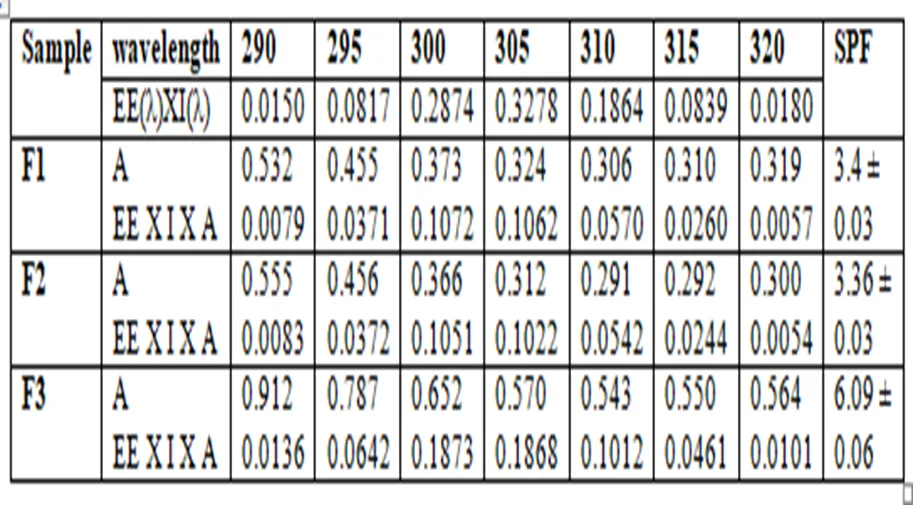
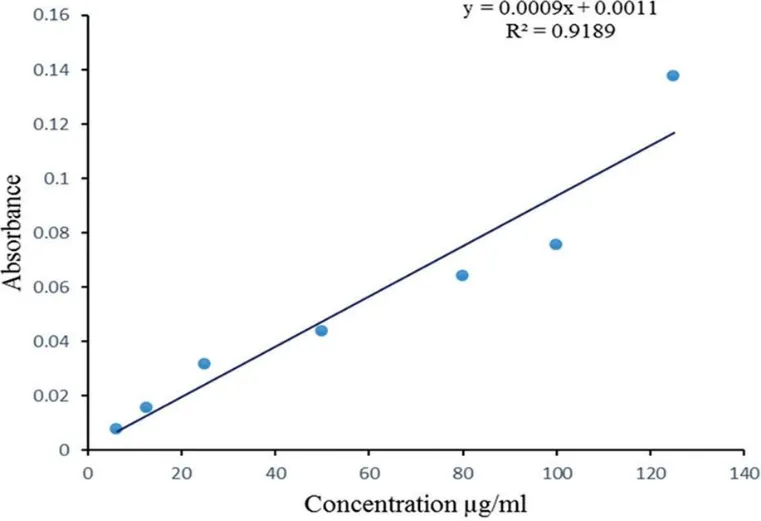
Figure 5 Absorbance concentration for SPF

Figure 6 Absorbance spectrum of F3 for SPF
Determination of photo stability
The photo stability test was performed on all formulations of the suncreen and revealed that the formulations are very stable. There is not much change in the spectrum of the samples kept in the plates before and after keeping in 50 oC for 20 mins. Photo unstablesunscreenstarts degrading when exposed to sunlight rapidly. It was revealed that after 120 mins of UV natural, AUCI value is less than 0.70 for sunscreen F1 and F2. So they are photounstable. But when the exposure was made of F3, it was found stable in both artificial UV and UV Natural. So F3 is considered photo stable.
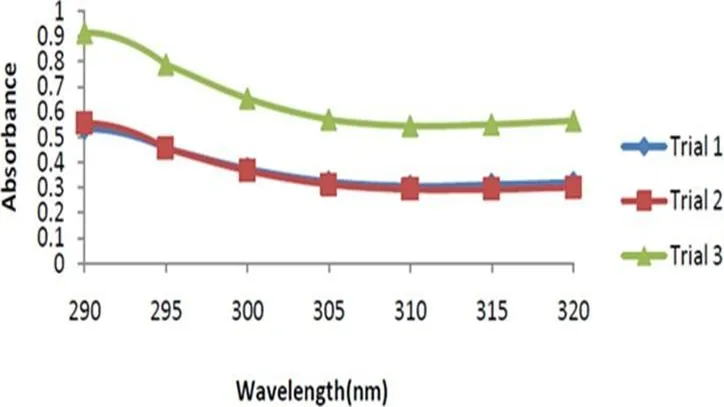
Table 8 Results of photo stability evaluation of sunscreen cream batches
|
AUCI (AUCI before/ AUCI after) |
||||||
|
|
After UV natural exposure |
After UV artificial exposure |
||||
|
Formulati on |
Exposure time |
UVA radiation (kJ/m2) |
UV A |
UV B |
UV A |
UVB |
|
F1 |
30 |
55 |
0.65 |
0.68 |
0.72 |
0.72 |
|
|
90 |
165 |
0.68 |
0.63 |
0.65 |
0.69 |
|
120 |
235 |
0.59 |
0.61 |
0.71 |
0.77 |
|
|
F2 |
30 |
58 |
0.45 |
0.59 |
05 |
0.73 |
|
90 |
160 |
0.85 |
0.88 |
0.78 |
0.81 |
|
|
120 |
230 |
0.65 |
0.69 |
0.82 |
0.87 |
|
|
F3 |
30 |
62 |
0.75 |
0.70 |
0.60 |
0.81 |
|
90 |
155 |
0.79 |
0.72 |
0.65 |
0.80 |
|
|
120 |
242 |
0.84 |
0.87 |
0.90 |
0.82 |
|
Determination of Total Fatty Content
Table 7 Determination of total fatty content(TFC)
|
Parameter |
Bas E |
F1 |
F2 |
F3 |
|
Total fatty content (% by mass) |
3 |
3. 5 |
3 |
4 |
Determination of Fairness Activity
From the findings of subjective evaluation for fairness activity, it was noticed that the cream formulation with 1.5% arbutin was highly appreciated by users. It did not cause any kind of skin irritation when used regularly. The cream also exhibited skin whitening activity in addition to good appearance, ease of spreading, and glow.
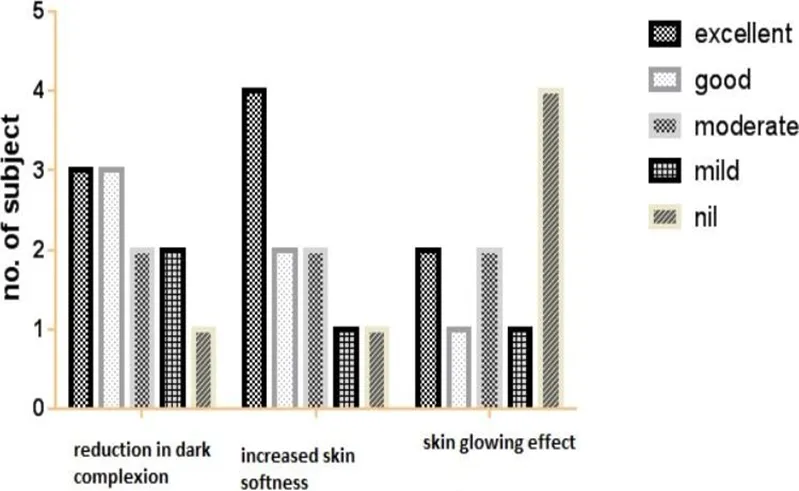
Figure 7 Effect of fairness cream at the end of study.
Stability studies
Stability studies for visual appearance, pH, spreadability, viscosity parameters revealed that no changes were found after a period of 1 month and the results are summarized in Table. In centrifugation studies, it was seen that no phase separation was present in F3 formulation, and therefore, it could be concluded that the formulation is stable at an accelerated rate. All formulations were seen to have increased viscosity after freezing and thawing study. Since all samples of creams were oil-in-water creams, their water content would be lost at varying temperatures. As a result, it could be recommended that a constant temperature be maintained for such formulations. There was no phase separation or any change in color and odor in all samples after stability studies.
DISCUSSION
Solar ultraviolet (SUV) light includes both ultraviolet light A (UVA) and ultraviolet light B (UVB) wavelengths. These can cause cutaneous squamous cell carcinoma (cSCC) and other skin cancers. To lessen or prevent exposure to UVA and UVB rays from sunlight, people often use sunscreen [33]. As far as we know, a mouse model simulating long-term solar exposure (SSL) has not been utilized to evaluate or compare the effectiveness of the eight most common sunscreen components that the FDA has approved in preventing skin cancer [38]. Society has become more open to the idea of creating sunscreen products that incorporate natural ingredients. Many individuals think that opting for natural components is safer and less detrimental than relying on chemical options. Phalleria macrocarpa serves as a natural resource that can be utilized for sunscreen formulation. The main compound present in P. macrocarpa is a benzophenone derivative that provides defense against the harmful impacts of ultraviolet radiation[39]. The primary concerns for the future involve motivating individuals to safeguard their skin through various methods and optimizing the use of sunscreens [40]. The primary immediate advantage of the sunscreens available today is their ability to prevent sunburn caused by UV radiation exposure. This effect has been suggested to have both positive and negative.
CONCLUSION
Thus, the results of the present study conclude that the formulated cream has the potential to protect against UVA and UVB rays, indicating sunscreen activity, as well as the formulations produced by incorporating different concentrations of extracts can be applicable for different types of Skin, respectively, as per SPF value. The use of sunscreens is an important component of sun protection. Regular and appropriate use is associated with a decreased risk of various skin complications and cancers as a result of UV radiation exposure.My conclusion is that it is important that we are aware of UV-ray exposure, even if it isn't a sunny day. However, sunscreen is very effective at blocking that exposure and lasts a surprisingly long time. It also doesn't seem to matter much what level of SPF you use. I learned how effective sunscreen is at blocking UV rays. I learned that even on a cloudy day, the unprotected beads change colors almost immediately when they are exposed to sunlight. Also, the sunscreens were effective for a much longer period of time than I had expected. It took six hours before the beads changed colors after they were exposed to sunlight. I also found that the SPF (sun protection factor) of the sunscreen didn't make a difference in the effectiveness of the sunscreen. The beads changed colors at almost exactly the same time, regardless of whether the SPF covering the bag was 30, 50, or 70.
REFERENCES



Ritik Patel, Manisha Rana, Shivanand M.Patil, Formulation And Evaluation of Sunscreen for UV Protection, Int. J. of Pharm. Sci., 2026, Vol 4, Issue 6, 5311-5329, https://doi.org/10.5281/zenodo.20772887
 10.5281/zenodo.20772887