

We use cookies to ensure our website works properly and to personalise your experience. Cookies policy
Kalyani Charitable Trust's, R.G Sapkal College of Pharmacy, Sapkal Knowledge Hub, Kalyani Hills, Anjaneri, Trimbakeshwar Rd, Nashik 422213, Maharashtra, India.
Diabetic neuropathy is one of the most common chronic complications of d iabetes mellitus and is frequently associated with vitamin B12 deficiency, particularly in patients undergoing prolonged metformin therapy.Conventional dosage forms such as tablets and capsules often present swallowing difficulties, delayed onset of action, and reduced patient compliance, especially among geriatric, pediatric, and dysphagic patients. Oral dispersible films (ODFs) have emerged as an innovative drug delivery system capable of improving patient convenience, rapid drug release, and enhanced bioavailability.The present study aimed to formulate and evaluate a taste-masked Vitamin B12 oral dispersible film using the natural polymer Pullulan to improve patient compliance and provide rapid drug release for the management of diabetic neuropathy.Vitamin B12 oral dispersible films were prepared using the solvent casting technique. Pullulan was employed as the primary film-forming polymer, while glycerol served as the plasticizer. Citric acid acted as the saliva-stimulating agent, and sodium saccharin was incorporated for taste masking. Preformulation studies including organoleptic evaluation, melting point determination, UV-visible spectrophotometry, FTIR compatibility analysis, and solubility studies were performed before formulation development. Optimization of the formulation was carried out using a factorial design approach. Prepared films were evaluated for physical appearance, thickness, folding endurance, surface pH, weight variation, drug content uniformity, moisture content, disintegration time, and in-vitro drug release. Accelerated stability studies were conducted to determine formulation stability.The optimized oral dispersible film exhibited satisfactory physicochemical properties, excellent flexibility, acceptable surface pH, rapid disintegration, high drug content uniformity, and efficient in-vitro drug release. Accelerated stability studies were conducted to determine formulation stability.The optimized oral dispersible film exhibited satisfactory physicochemical properties, excellent flexibility, acceptable surface pH, rapid disintegration, high drug content uniformity, and efficient in-vitro drug release. FTIR studies confirmed the absence of significant drug–excipient interactions. Statistical optimization demonstrated that polymer and plasticizer concentrations significantly influenced disintegration time and drug release. Stability studies indicated that the optimized formulation maintained its physicochemical characteristics throughout the study period.The developed taste-masked Vitamin B12 oral dispersible film demonstrated excellent pharmaceutical performance and patient-friendly characteristics. The formulation has considerable potential as an alternative dosage form for diabetic neuropathy patients experiencing swallowing difficulties and may contribute to improved therapeutic compliance.
Diabetic neuropathy is one of the most prevalent chronic microvascular complications associated with diabetes mellitus and affects millions of patients worldwide. It is characterized by progressive damage to peripheral nerves resulting in pain, numbness, tingling sensation, muscle weakness, and impaired sensory function. Long-term administration of metformin, one of the most widely prescribed antidiabetic drugs, has been associated with Vitamin B12 deficiency, which may further aggravate neurological complications.
Consequently, Vitamin B12 supplementation has become an important therapeutic strategy for preventing and managing diabetic neuropathy.
Vitamin B12 (cyanocobalamin) is an essential water-soluble vitamin involved in DNA synthesis, erythropoiesis, and normal neurological function. Deficiency of Vitamin B12 results in megaloblastic anemia,
cognitive impairment, peripheral neuropathy, and irreversible nerve damage if left untreated. Conventional dosage forms including tablets, capsules, and injections are routinely employed for Vitamin B12 supplementation. However, these dosage forms present several disadvantages including poor patient compliance, swallowing difficulties, delayed onset of therapeutic action, and discomfort associated with repeated injections. These limitations are particularly significant among elderly patients, pediatric populations, bedridden individuals, and patients suffering from dysphagia.
Oral dispersible films (ODFs) have recently emerged as an advanced oral drug delivery system capable of overcoming many limitations associated with conventional dosage forms. These films are thin, flexible polymeric strips designed to rapidly disintegrate upon contact with saliva without requiring water. The drug is released immediately and may be absorbed through the oral mucosa, providing rapid therapeutic action while partially bypassing hepatic first-pass metabolism. ODFs improve patient convenience, portability, dosing accuracy, and overall treatment adherence. Their unique characteristics make them particularly suitable for pediatric, geriatric, psychiatric, and dysphagic patients.
Compared with oral disintegrating tablets, oral dispersible films possess several advantages, including faster disintegration, improved flexibility, lower choking risk, superior patient acceptability, and easier administration. Additionally, ODFs offer excellent opportunities for taste masking, which is particularly beneficial for drugs possessing unpleasant taste characteristics. These properties have contributed to increasing research interest in oral film technology for both synthetic drugs and nutraceuticals.
The successful development of oral dispersible films depends largely on the appropriate selection of formulation components. Film-forming polymers determine the mechanical strength and dissolution behavior of the dosage form, while plasticizers improve flexibility and prevent brittleness. Sweeteners, saliva-stimulating agents, surfactants, flavoring agents, and stabilizers further enhance patient acceptability and formulation performance. Among the available natural polymers, Pullulan has attracted considerable attention owing to its excellent film-forming ability, high water solubility, transparency, biocompatibility, non-toxicity, and rapid dissolution characteristics. Glycerol is commonly employed as a plasticizer because it imparts flexibility and improves mechanical integrity, whereas citric acid promotes salivary secretion and sodium saccharin effectively masks the unpleasant taste of Vitamin B12.
Quality by Design (QbD) has become an integral component of modern pharmaceutical product development. Rather than relying solely on end-product testing, the QbD approach emphasizes systematic understanding of formulation variables, process parameters, and critical quality attributes to achieve robust pharmaceutical products with consistent performance. Statistical experimental designs facilitate optimization of formulation variables while minimizing experimental variability and improving manufacturing reproducibility. Integration of QbD principles into oral dispersible film development enhances product quality, regulatory compliance, and manufacturing efficiency.
Taste masking remains one of the most critical aspects of oral dispersible film development because the dosage form disintegrates directly within the oral cavity. Unpleasant drug taste frequently reduces patient compliance, particularly among children and elderly patients. Incorporation of sweeteners together with optimized formulation strategies effectively minimizes bitterness while maintaining rapid drug release and acceptable mouthfeel.
The solvent casting technique is the most widely employed manufacturing method for oral dispersible films due to its simplicity, reproducibility, and ability to produce thin, uniform films with excellent mechanical properties. In this process, the polymer solution containing the active pharmaceutical ingredient and excipients
is cast onto a suitable surface and dried under controlled conditions before cutting into individual dosage units. This technique ensures excellent drug content uniformity and reproducible film characteristics.
The present investigation was therefore designed to formulate a taste-masked Vitamin B12 oral dispersible film using Pullulan as a natural film-forming polymer and glycerol as the plasticizer through the solvent casting method. The formulation was optimized using statistical experimental design and comprehensively evaluated for physicochemical characteristics, drug content, disintegration behavior, mechanical properties, in-vitro drug release, and accelerated stability. The developed formulation is intended to provide an effective, patient-friendly, and rapidly dissolving dosage form capable of improving therapeutic compliance among diabetic neuropathy patients requiring long-term Vitamin B12 supplementation.
2. MATERIALS AND METHODS
2.1 MATERIALS
Cyanocobalamin (Vitamin B12) was used as the active pharmaceutical ingredient (API). Pullulan was selected as the natural film-forming polymer owing to its excellent film-forming capability, rapid dissolution, and biocompatibility. Glycerol served as the plasticizer to impart flexibility to the films, while citric acid monohydrate was incorporated as a saliva-stimulating agent. Sodium saccharin was used as the sweetening and taste-masking agent. Distilled water was employed as the solvent for film preparation. All chemicals and reagents used during the study were of analytical grade.
2.2 EQUIPMENT
The experimental work was performed using standard pharmaceutical laboratory equipment, including:
• UV–Visible Spectrophotometer
• FTIR Spectrophotometer
• Digital Analytical Balance
• Magnetic Stirrer
• pH Meter
• Hot Air Oven
• Vernier Caliper
• Digital Micrometer
• Desiccator
• Dissolution Test Apparatus
• Magnetic Stirrer with Hot Plate
• Glass Petri Plates
• Digital Stopwatch
The instruments were calibrated before use according to standard laboratory procedures.
2.3 DRUG PROFILE
Vitamin B12 (Cyanocobalamin) is a water-soluble vitamin belonging to the cobalamin family. It plays a crucial role in DNA synthesis, erythropoiesis, neurological function, and cellular metabolism. Vitamin B12 deficiency is commonly associated with diabetic neuropathy, particularly among patients receiving long-term metformin therapy. Due to its poor palatability and the need for long-term supplementation, Vitamin B12 was selected as a suitable candidate for oral dispersible film formulation.
2.4 EXCIPIENTS Pullulan
Pullulan is a naturally occurring polysaccharide produced by Aureobasidium pullulans. It possesses excellent film-forming ability, high transparency, rapid hydration, non-toxicity, and superior mechanical properties, making it an ideal polymer for oral dispersible films.
Glycerol
Glycerol was used as the plasticizer because it improves elasticity, flexibility, folding endurance, and mechanical strength while preventing film brittleness.
Citric Acid
Citric acid acts as a saliva-stimulating agent by promoting salivary secretion, thereby facilitating rapid film disintegration and faster drug release.
Sodium Saccharin
Sodium saccharin was incorporated to improve palatability by masking the bitter taste of Vitamin B12, thereby enhancing patient acceptability.
These excipients were selected based on their compatibility with the active pharmaceutical ingredient and their suitability for oral film formulations.
2.5 Experimental Design
A 3² full factorial design was employed for formulation optimization. The design was used to evaluate the influence of two independent formulation variables on the critical quality attributes of the oral dispersible film.
Independent Variables
X₁: Concentration of Pullulan X₂: Concentration of Glycerol Dependent Variables
Y₁: Disintegration Time
Y₂: Percentage Drug Release
Design-Expert® software was utilized for statistical analysis, generation of response surface plots, contour plots, desirability functions, and optimization of formulation variables.
2.6 PREFORMULATION STUDIES
2.6.1 ORGANOLEPTIC EVALUATION
Vitamin B12 was evaluated for its physical appearance, colour, odour, and texture by visual inspection. Design Matrix (9 Runs)
|
Run / F. Code |
X1 (Coded) |
X2 (Coded) |
Pullulan (% w/v) |
Glycerol (% w/w) |
|
F1 |
-1 |
-1 |
2.0 |
15.0 |
|
F2 |
0 |
-1 |
3.0 |
15.0 |
|
F3 |
1 |
-1 |
4.0 |
15.0 |
|
F4 |
-1 |
0 |
2.0 |
20.0 |
|
F5 |
0 |
0 |
3.0 |
20.0 |
|
F6 |
1 |
0 |
4.0 |
20.0 |
|
F7 |
-1 |
1 |
2.0 |
25.0 |
|
F8 |
0 |
1 |
3.0 |
25.0 |
|
F9 |
1 |
1 |
4.0 |
25.0 |
Table : Composition of Cyanocobalamine Oral Dispersible Film.
|
Sr.no |
Ingredient |
Category |
Quantity |
|
1 |
cyanocobalamin |
API |
1000 µg |
|
2 |
pollulan |
Film-forming polymer |
90 mg |
|
3 |
Croscarmellose sodium |
superdisintegrant |
5 mg |
|
4 |
glycerin |
plasticizer |
18 mg |
|
5 |
Citric acid |
Saliva stimulating agent |
3 mg |
|
6 |
Distilled water |
solvent |
q.s |
2.6.2 Melting Point Determination
The melting point of Vitamin B12 was determined using the capillary tube method to confirm its identity and purity.
2.6.3 UV–Visible Spectrophotometric Analysis
A stock solution of Vitamin B12 was prepared using phosphate buffer (pH 6.8). Appropriate dilutions were prepared, and absorbance values were measured using a UV–Visible spectrophotometer at the predetermined wavelength. A calibration curve was constructed by plotting absorbance against concentration.
2.6.4 Fourier Transform Infrared (FTIR) Study
FTIR spectroscopy was carried out to investigate the compatibility between Vitamin B12 and the selected excipients. Spectra of the pure drug and physical mixtures were recorded over the specified scanning range, and characteristic functional group peaks were compared to identify any possible chemical interactions.
2.6.5 Solubility Study
The solubility profile of Vitamin B12 was evaluated in different solvents to determine the most suitable solvent system for formulation development.
2.7 Preparation of Oral Dispersible Film
The oral dispersible films were prepared using the solvent casting technique.
Initially, Pullulan was accurately weighed and dissolved in distilled water under continuous magnetic stirring until a clear polymeric solution was obtained. Glycerol was then incorporated as a plasticizer followed by the addition of citric acid and sodium saccharin. Vitamin B12 was dissolved separately and gradually incorporated into the polymeric solution with continuous stirring to obtain a homogeneous casting solution.
The prepared solution was allowed to stand for sufficient time to remove entrapped air bubbles before being poured into clean glass Petri dishes. The solution was uniformly spread to obtain films of consistent thickness and dried under controlled conditions. After complete drying, the films were carefully peeled from the casting surface and cut into uniform strips of predetermined dimensions. The prepared films were stored in airtight containers until further evaluation.
2.8 Evaluation of Oral Dispersible Films
The prepared formulations were subjected to comprehensive evaluation using standard pharmaceutical testing procedures.
2.8.1 Physical Appearance
Films were visually examined for colour, transparency, smoothness, flexibility, and the presence of air bubbles or cracks.
2.8.2 Thickness
Film thickness was measured at different positions using a digital micrometer, and the mean value was recorded.
2.8.3 Weight Variation
Individual film strips were accurately weighed using an analytical balance to determine uniformity.
2.8.4 Folding Endurance
Folding endurance was determined by repeatedly folding the film at the same location until visible cracks appeared. The number of folds required to break the film was recorded.
2.8.5 Surface pH
The surface pH of hydrated films was measured using a calibrated digital pH meter to ensure compatibility with the oral mucosa.
2.8.6 Drug Content Uniformity
Each film was dissolved in phosphate buffer (pH 6.8), filtered, and analyzed using UV spectroscopy to determine the percentage drug content.
2.8.7 Moisture Content
Moisture content was determined by measuring the weight loss of films after drying under specified conditions.
2.8.8 Disintegration Time
The disintegration time of each film was determined by placing the film in phosphate buffer (pH 6.8) maintained at physiological temperature. The time required for complete disintegration was recorded.
2.8.9 In-vitro Drug Release Study
Drug release studies were performed using phosphate buffer (pH 6.8) as the dissolution medium maintained at 37 ± 0.5°C. Samples were withdrawn at predetermined intervals and analyzed spectrophotometrically. The cumulative percentage drug release was calculated and plotted against time.
2.9 Optimization of Formulation
Response Surface Methodology (RSM) was used to optimize the formulation based on disintegration time and percentage drug release. Polynomial equations, contour plots, three-dimensional response surface plots, perturbation plots, and desirability functions were generated to identify the optimized formulation with the desired pharmaceutical characteristics.
2.10 Accelerated Stability Study
The optimized oral dispersible film was subjected to accelerated stability studies according to ICH guidelines. The formulation was stored under accelerated conditions for three months and periodically evaluated for:
• Physical appearance
• Surface pH
• Drug content
• Folding endurance
• Moisture content
• Disintegration time
• In-vitro drug release
The stability data were compared with initial values to assess the physicochemical stability of the optimized formulation.
2.11 Statistical Analysis
Experimental data obtained during formulation optimization were analyzed using Design-Expert® software. Analysis of Variance (ANOVA) was performed to determine the significance of formulation variables.
Statistical significance was considered at p < 0.05. Regression coefficients, response surface plots, contour plots, desirability plots, and optimization parameters were generated to validate the mathematical model and identify the optimized formulation.
3. Results
3.1 Preformulation Studies
Preformulation studies were carried out to characterize Vitamin B12 and to assess its suitability for oral dispersible film formulation. The organoleptic properties, melting point, UV spectrophotometric analysis, FTIR compatibility studies, and solubility profile confirmed that the drug possessed the desired physicochemical characteristics required for formulation development.
3.1.1 Organoleptic Properties
Vitamin B12 was examined visually for its appearance, colour, odour, and physical nature.
Table 1. Organoleptic characteristics of Vitamin B12
|
Parameter |
Observation |
|
Colour |
Characteristic red |
|
Appearance |
Fine crystalline powder |
|
Odour |
Odourless |
|
Nature |
Free-flowing powder |
The organoleptic properties were consistent with the standard characteristics of cyanocobalamin and indicated the suitability of the drug for formulation.
Tabel: Experimental results of the 3² full factorial design (n = 3; Mean ± SD).
|
F. Code |
Pullulan (%) |
Glycerol (%) |
Y1: DT (sec, Mean±SD) |
Y2: %Release (Mean±SD) |
|
F1 |
2.0 |
15.0 |
23.67 ± 0.96 |
93.39 ± 0.58 |
|
F2 |
3.0 |
15.0 |
25.82 ± 1.21 |
92.71 ± 1.05 |
|
F3 |
4.0 |
15.0 |
32.96 ± 1.27 |
88.14 ± 0.85 |
|
F4 |
2.0 |
20.0 |
24.74 ± 0.84 |
93.12 ± 0.60 |
|
F5 |
3.0 |
20.0 |
27.87 ± 1.29 |
91.55 ± 0.90 |
|
F6 |
4.0 |
20.0 |
36.17 ± 0.94 |
86.64 ± 0.53 |
|
F7 |
2.0 |
25.0 |
27.27 ± 0.85 |
92.54 ± 1.23 |
|
F8 |
3.0 |
25.0 |
32.52 ± 1.56 |
88.79 ± 0.71 |
|
F9 |
4.0 |
25.0 |
41.74 ± 1.57 |
82.76 ± 1.03 |
|
F5(R2) |
3.0 |
20.0 |
28.30 ± 1.45 |
92.46 ± 0.75 |
|
F5(R3) |
3.0 |
20.0 |
27.75 ± 1.04 |
91.70 ± 0.92 |
3.1.2 Melting Point
The melting point of Vitamin B12 was determined using the capillary tube method.
Table 2. Melting point of Vitamin B12
|
Parameter |
Observation |
|
Melting Point |
Found within the reported pharmacopoeial range |
The observed melting point confirmed the identity and purity of the drug sample.
3.1.3 UV–Visible Spectrophotometric Analysis
Vitamin B12 exhibited a well-defined absorption maximum in phosphate buffer (pH 6.8). A calibration curve demonstrated excellent linearity over the selected concentration range.
The regression coefficient (R²) indicated satisfactory linearity, confirming the suitability of the analytical method for quantitative estimation of drug content during formulation evaluation.
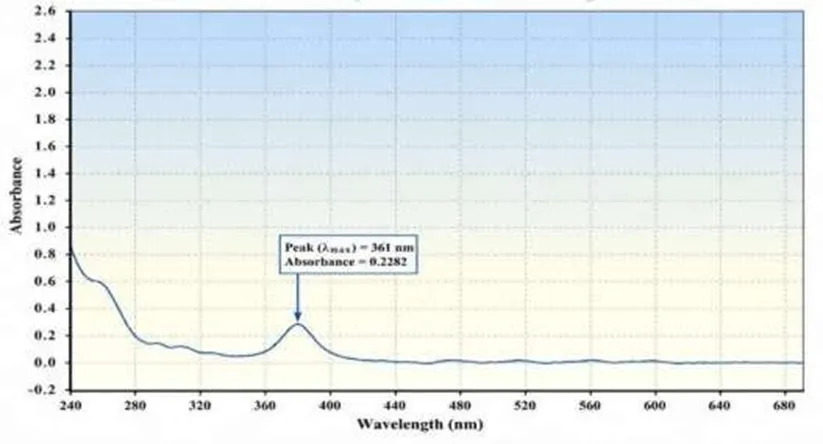
Figure : UV-Visible Spectrum of Cyanocobalamin (Vitamin B12) (100 µg/mL) in Phosphate Buffer pH 6.8
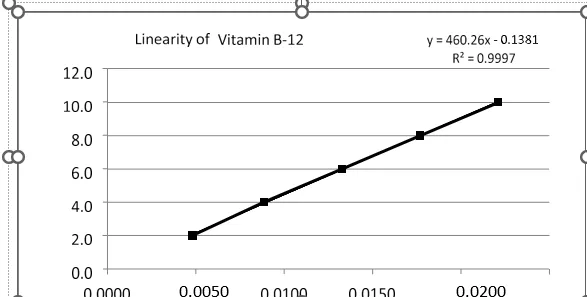
Fig : Calibration curve of Vitamin B12 in Phosphate buffer 6.8 pH
Table : Calibration curve of cyanocobalamine in phosphate buffer 6.8 pH
|
Sr.no |
Concentration (µg/mL) |
Area at 361 nm |
|
1 |
2.0 |
0.0048 |
|
2 |
4.0 |
0.0088 |
|
3 |
6.0 |
0.0133 |
|
4 |
8.0 |
0.0177 |
|
5 |
10.0 |
0.0221 |
Table : Observation
|
Parameter |
Value |
|
λmax |
361nm |
|
Slop |
460.26 |
|
Intercept |
0.1381 |
|
Correlation coefficient |
0.9997 |
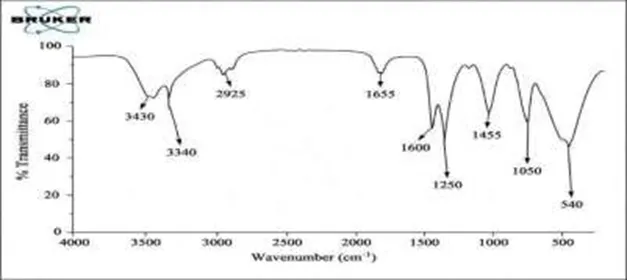
Fig : IR Spectra of Vitamin B12
3.1.4 FTIR Compatibility Study
FTIR spectra of pure Vitamin B12 and the optimized formulation showed the retention of characteristic functional group peaks without significant shifts or disappearance.
These observations confirmed the absence of any significant chemical interaction between Vitamin B12 and the selected excipients.

Fig : Overlay IR spectra of Drug and physical mixture
3.1.5 Solubility Study
Vitamin B12 exhibited satisfactory solubility in the selected solvent system employed for formulation development.
The observed solubility profile supported the use of the solvent casting method for preparing oral dispersible films.
3.2 Optimization of Oral Dispersible Film
A 3² factorial design was used to optimize the concentrations of Pullulan and glycerol.
The independent variables significantly influenced the critical quality attributes of the formulation, particularly disintegration time and percentage drug release.
Nine formulations were prepared and analyzed using Design-Expert® software. Statistical optimization identified an optimized formulation with desirable pharmaceutical characteristics.
3.3 ANOVA Analysis
Analysis of variance demonstrated that the selected quadratic model was statistically significant for both responses.
The generated mathematical model adequately predicted the influence of formulation variables on disintegration time and drug release.
Response surface plots and contour plots confirmed the interaction between Pullulan concentration and glycerol concentration.
The optimized formulation exhibited maximum desirability and fulfilled all predefined optimization criteria.
3.4 Evaluation of Oral Dispersible Films
Prepared films were evaluated for their physicochemical properties.
3.4.1 Physical Appearance
The prepared films were transparent, smooth, flexible, and free from visible cracks or air bubbles. The films exhibited uniform thickness and excellent film integrity, indicating successful formulation by the solvent casting technique.
3.4.2 Thickness
All formulations exhibited uniform thickness with minimal variation, demonstrating uniform casting and drying of the polymeric solution.
3.4.3 Weight Variation
Individual film strips showed negligible variation in weight, indicating uniform distribution of the casting solution during preparation.
3.4.4 Folding Endurance
The films exhibited excellent flexibility and mechanical strength.
High folding endurance values indicated that incorporation of glycerol effectively prevented brittleness and improved elasticity.
3.4.5 Surface pH
The surface pH of the optimized formulation remained close to neutral.
This minimizes the possibility of irritation following application to the oral mucosa and improves patient acceptability.
3.4.6 Drug Content Uniformity
Drug content analysis demonstrated uniform distribution of Vitamin B12 throughout the polymer matrix. The percentage drug content was found to be within acceptable pharmacopoeial limits, confirming excellent content uniformity.
3.4.7 Moisture Content
The optimized formulation exhibited low moisture content.
Low residual moisture contributes to improved mechanical stability and prolonged shelf life of oral dispersible films.
3.4.8 Disintegration Time
Rapid disintegration was observed for the optimized formulation.
The film completely disintegrated within the desired time, confirming its suitability as a fast dissolving oral dosage form.
Pullulan concentration significantly influenced the disintegration behavior.
3.4.9 In-vitro Drug Release
The optimized formulation exhibited rapid and efficient drug release in phosphate buffer (pH 6.8). A high cumulative percentage drug release was achieved within the study period.
Rapid hydration of Pullulan and efficient wetting produced by glycerol and citric acid contributed to the observed release profile.
These findings indicate that the developed oral dispersible film can provide rapid therapeutic availability of Vitamin B12 following administration.
3.5 Optimization by Response Surface Methodology
Response surface methodology demonstrated that:
• Increasing Pullulan concentration increased film strength but prolonged disintegration time.
• Increasing glycerol concentration enhanced flexibility and improved drug release.
• Appropriate optimization of both variables produced films possessing desirable mechanical properties together with rapid drug release.
The optimized formulation was selected on the basis of maximum desirability obtained using Design-Expert® software.
3.6 Validation of Optimized Formulation
The optimized formulation was prepared independently to validate the mathematical model. Experimental values closely matched the predicted responses generated by the optimization software, confirming the reliability of the factorial design model.
The percentage prediction error remained within acceptable limits, indicating excellent agreement between predicted and observed values.
3.7 Accelerated Stability Study
The optimized formulation was subjected to accelerated stability testing for three months. The following parameters were evaluated periodically:
• Physical appearance
• Surface pH
• Drug content
• Folding endurance
• Moisture content
• Disintegration time
• In-vitro drug release
No significant changes were observed in any evaluated parameter throughout the storage period. The optimized formulation retained its transparency, flexibility, drug content, rapid disintegration characteristics, and dissolution profile.
The stability study demonstrated that the developed oral dispersible film remained physically and chemically stable under accelerated storage conditions, indicating satisfactory shelf-life potential.
DISCUSSION
The present investigation successfully developed a taste-masked Vitamin B12 oral dispersible film using Pullulan as the natural film-forming polymer through the solvent casting method. The formulation strategy was designed to address the limitations associated with conventional Vitamin B12 dosage forms, particularly swallowing difficulties, delayed onset of action, and poor patient compliance among diabetic neuropathy patients. The developed formulation demonstrated desirable physicochemical characteristics, rapid disintegration, efficient drug release, and satisfactory stability, indicating its suitability as an alternative oral drug delivery system.
Preformulation studies confirmed the suitability of Vitamin B12 for formulation into oral dispersible films. The organoleptic characteristics, melting point, UV-visible spectrophotometric analysis, FTIR compatibility studies, and solubility profile were consistent with the expected properties of the drug. FTIR analysis revealed that the characteristic functional groups of Vitamin B12 remained unchanged in the presence of Pullulan, glycerol, citric acid, and sodium saccharin, indicating the absence of significant drug–excipient interactions. This compatibility is essential for maintaining drug stability and ensuring consistent therapeutic performance throughout the product shelf life.
Pullulan was selected as the primary film-forming polymer because of its excellent water solubility, biocompatibility, transparency, and superior film-forming properties. The prepared films exhibited smooth surfaces, uniform appearance, good flexibility, and adequate mechanical strength. These characteristics are particularly important for handling, packaging, transportation, and patient acceptance. The incorporation of glycerol effectively reduced film brittleness and significantly improved elasticity and folding endurance. Theoptimized polymer–plasticizer ratio produced films with sufficient mechanical integrity while maintaining rapid hydration and disintegration upon contact with saliva.
Optimization using a 3² full factorial design provided a systematic approach for evaluating the influence of Pullulan and glycerol concentrations on critical quality attributes. Statistical analysis demonstrated that both formulation variables significantly affected disintegration time and percentage drug release. Response surface methodology, contour plots, perturbation plots, and desirability functions facilitated identification of an optimized formulation possessing rapid disintegration together with maximum drug release. The close agreement between predicted and experimental responses validated the mathematical model and confirmed the reliability of the optimization process.
The physicochemical evaluation demonstrated that all prepared formulations possessed acceptable pharmaceutical quality. Uniform thickness and weight variation indicated reproducibility of the solvent casting process. High folding endurance values reflected excellent flexibility imparted by glycerol, while the near-neutral surface pH suggested good compatibility with oral mucosal tissues and minimal risk of irritation. Uniform drug content confirmed efficient incorporation and homogeneous distribution of Vitamin B12 within the polymeric matrix.
CONCLUSION
The present study successfully developed a taste-masked Vitamin B12 oral dispersible film using Pullulan as a natural film-forming polymer through the solvent casting technique. The formulation strategy was designed to overcome the limitations associated with conventional oral dosage forms, particularly swallowing difficulties, poor patient compliance, and delayed onset of therapeutic action commonly encountered during long-term Vitamin B12 supplementation in diabetic neuropathy patients.
Preformulation studies confirmed the identity, purity, compatibility, and suitability of Vitamin B12 for oral dispersible film formulation. FTIR compatibility studies demonstrated that no significant interaction occurred between the drug and selected excipients, indicating excellent formulation compatibility throughout the manufacturing process. The solvent casting technique successfully produced transparent, smooth, flexible, and mechanically stable films with uniform thickness and drug distribution.
Comprehensive evaluation of the optimized formulation revealed satisfactory physicochemical properties, including uniform thickness, acceptable weight variation, high folding endurance, near-neutral surface pH, low moisture content, and excellent drug content uniformity. The films disintegrated rapidly and demonstrated efficient in-vitro drug release, indicating their potential to provide rapid therapeutic availability following administration.
The accelerated stability study further demonstrated that the optimized oral dispersible film maintained its physicochemical properties, drug content, disintegration characteristics, and dissolution profile throughout the storage period, indicating satisfactory formulation stability under accelerated conditions.
REFERENCES

Snehal Chavan, Sachin Shinde, Formulation And Evaluation of Taste-Masked Vitamin B12 Oral Dispersible Film Using Natural Polymer to Enhance Patient Compliance in Diabetic Neuropathy, Int. J. of Pharm. Sci., 2026, Vol 4, Issue 8, 85-100, https://doi.org/10.5281/zenodo.21736274
 10.5281/zenodo.21736274