

We use cookies to ensure our website works properly and to personalise your experience. Cookies policy
Department of Pharmacy, VIVA Institute of Pharmacy, Mumbai, Maharashtra, India.
The objective of this study was to develop a polyherbal emulgel formulation from methanolic extracts of Tridax procumbens and Rubia cordifolia, which would provide better topical drug delivery. The emulgel formulation was developed by emulsifying an oil in water (o/w) emulsion in a gel base using the appropriate emulsifiers and stabilizers. There were a number of physicochemical properties that were tested on the final formulation; these included physical appearance, pH, viscosity, spreadability, and stability. The emulgel exhibited satisfactory characteristics: pH = 5.94, viscosity = 25350 cP, and good spreadability, indicating that the formulation can be used topically. There was no phase separation noted between the emulsion and gel, thereby demonstrating that the formulation is stable. The antimicrobial activity of the extracts was tested against both Escherichia coli (E. coli) and Staphylococcus aureus (S. aureus) using the agar well diffusion method. A combination of the two extracts showed appreciably greater antibacterial activity than either extract used alone, therefore, demonstrating a synergistic benefit of the combination. The zones of inhibition produced by the combination extracts were comparable to those produced by the standard drug used for comparison, indicating that the formulation has great therapeutic potential. In conclusion, the emulgel developed in this study appears to represent a stable, effective, and safe method for topical drug delivery with significant antimicrobial activity. It also has multiple benefits over traditional methods by providing increased drug retention, improved patient compliance, and the potential to treat microbial skin infections. Further in vivo studies should be performed to validate efficacy and safety.
Topical drug delivery systems have gained significant importance for treating localized skin infections because they can target a specific area to provide an organism with its effect but also reduce systemic side effects by minimizing (or eliminating) the body's metabolic process of the drug before reaching the blood supply (first-pass metabolism). Topical systems provide increased efficiency in treating patients and may provide increased patient compliance[1]. However, topical ointments and creams are often associated with disadvantages such as oily/sticky appearance, inability to cover skin surface evenly, poor stability of formulation, low amount of drug released into coating when applied to skin surface, and an inability of the user to apply adequate amounts of medication for proper medication delivery[2]. Because of these disadvantages, emulgels have been developed as a new drug delivery system, taking advantage of the properties of both emulsions and gels. Emulgels permit an easy incorporation of a hydrophobic drug into a gel matrix allowing for improved solubility, stability, and controlled release of the drug[3]. Emulgels also possess desirable properties, including thixotropic characteristics, non-oil based formulations, easy to administer, and improved penetration of medication into skin, making them ideal for use in dermatological applications[4].
Because of the increasing incidence of skin infections and concerns with antimicrobial resistance, there has been an increased interest in using plant-derived therapy for the treatment of skin infections, as plant-derived medications may represent a safer and effective alternative to synthetic medications[5]. In addition, plant-derived medications contain a variety of bioactive substances (e.g., flavonoids, tannins, alkaloids, phenolic compounds) that have antibacterial, anti-inflammatory, and wound healing properties[6]. Rubia cordifolia (Manjistha) has long been recognized as an herbaceous herb in numerous traditional forms of medicine for treatment against skin problems. The herb shows notable antibacterial, antifungal and antipruritic properties due to the presence of many bioactive ingredients including flavonoids and glycosides[7-9]. There are multiple instances in the literature demonstrating the efficacy of Rubia cordifolia against many pathogenic bacteria associated with skin infections[10].
Tridax procumbens also has many uses in wound care, contains large amounts of flavonoids, carotenoids, and terpenes, and shows excellent antimicrobial activity against both Gram-positive and Gram-negative bacteria, making the plant well suited for use in topical therapies[11,12]. Combination herbal formulations are made using several different plants together that help heal wounds or cure infection[13]. When used in this way, a "synergism" occurs where all of the unique active compounds located within each plant create a total sum equal to more than just their individual amount[14]. Therefore, this synergism will occur with the combination of Rubia cordifolia and Tridax procumbens, since both plants will still have unique bioactive components that will contribute to a greater extent to the total number of microorganisms that can be killed when used together, and to create improved types of wound healing abilities with the different components of both plants working in conjunction[15].
Although the known evidence-based medicine shows the pharmacological effects of each of the two plants listed above exist individually, there have been very little to no studies performed using these two plants in conjunction with the advanced formulation/drug delivery system such as emulgels. Therefore, the present study aims to formulate and evaluate a polyherbal antibacterial emulgel containing extracts of Rubia cordifolia and Tridax procumbens in order to manage skin infections effectively[16].
MATERIALS AND METHODS
Materials
Root and leaves of Rubia cordifolia and Tridax procumbens respectively were harvested locally from the Maharashtra area of India after authentication by plant systematist with the botany department. A voucher specimen of each plant was preserved for future usage.
The plant material was thoroughly washed with distilled water to remove dirt and impurities associated with the specimen. The harvested plant material was left to dry in a shaded area at room temperature to avoid damage to heat sensitive materials. The dried plant material was then coarse ground using a mechanical grinder and stored in sealed containers at cool dry conditions until it was required for use.
Carbopol 934, light liquid paraffin, Span 80, Tween 80, methyl paraben, propylene glycol and triethanolamine formed the gel of the study by using the appropriate amounts of each ingredient as follows: The Carbopol 934 acted as gelling agent; light liquid paraffin (oil) phase; Span 80 and Tween 80 (emulsifiers); propylene glycol (humectant and penetration enhancer); methyl paraben (preservative); triethanolamine (pH adjustment agent). Methanol was chosen as the solvent for the extraction procedure. The all chemicals and reagents were purchased from pharmaceutical manufacturers in analytical grade. All the studies utilized distilled water.
Preparation of Extracts
Individual samples of powdered Rubia cordifolia root and Tridax procumbens leaf were separated using Soxhlet extraction method using methanol. Each powder (50 g) was weighed and placed into a thimble, and each was extracted with 500 mL of methanol at a controlled temperature for a period of 6–8 hours or until the powder was fully exhausted as evidenced by a colorless siphon tube extract[¹⁷].
Methanol was chosen because of its ability to efficiently extract a wide range of polar and semi-polar phytoconstituents, including flavonoids, phenolic compounds, and glycosides[¹⁸]. Filtered extracts were obtained using Whatman filter paper to remove any insoluble plant material found in the extracts.
The filtered extracts were then concentrated under controlled conditions using a water bath (not exceeding 50°C) in order to prevent the degradation of thermolabile constituents followed by further drying to produce a semi-solid mass. The weight of each dried extract was recorded and used to calculate the percentage yield according to the following formula:
Percentage yield (% w/w) = (Weight of dried extract / Weight of crude drug) x 100
Dried extracts were stored in air-tight containers under refrigeration conditions (2–8°C) to avoid degradation and prevent microbial contamination until needed for formulation studies.
Phytochemical Screening
The methanolic extracts from Rubia cordifolia and Tridax procumbens were screened for preliminary identification of major phytoconstituent classes through standardized qualitative chemical tests. The alkaloids, flavonoids, tannins, saponins, glycosides, phenolic compounds, and terpenoids present in the extracts were screened in accordance with established pharmacognostic methods[17,18].
Alkaloids: Testing of the extracts with Mayer’s and Dragendorff’s reagents indicated positive alkaloids through formation of cream or reddish-brown precipitate. Flavonoids: Testing for flavonoids was achieved through the alkaline test. The presence of flavonoids indicated yellow coloration change to colorless with the addition of dilute acid.
Tannins and phenolic compounds were detected by application of ferric chloride solution and produced blue-black or green coloration. Saponins were determined through the foaming test and formation of enduring froth. Glycosides were tested via the Keller-Killiani test, indicating formation of brown ring at the interface. Terpenoids were tested with the Salkowski test, and positive confirmation indicated by reddish-brown coloration.
All testing procedures were repeated three times to increase reliability of results. Recorded observations were based on characteristics associated with color change or formation of precipitate.
Formulation of Polyherbal Emulgel
To create a polyherbal emulgel that would allow for the proper solubilization of hydrophobic phytocompounds to enhance their absorption and to stabilize both the ointment and gel into a single dosage form, an oil-in-water emulsion was incorporated into a gel base. This formulation aimed to contribute to better patient compliance by providing a non-greasy application and easy spreadability through much of the expected patient population[¹⁹]. Using several trial formulations, different quantities of the gelling agent and emulsifying agents were added to formulate a final optimized product that exhibited proper physicochemical properties.
Preparation of Emulsion
The emulsion was prepared by the conventional method of heating and stirring. For the preparation of the oil phase, Span 80 was dissolved in light liquid paraffin, while the aqueous phase was made by mixing Tween 80, propylene glycol, methyl paraben and purified water in one container. Each of these phases was heated separately to 70-75 °C for uniform mixing and total solubilization of the components of both phases.
The heated aqueous phase was then gradually mixed with the oil phase while continuing to stir with a mechanical stir from a fixed speed set up. After fully combining the two phases, stirring should be continued while cooling; this will prevent phase separation from occurring and will ensure uniform distribution of all components throughout the emulsion. The emulsion is then cooled to room temperature to produce a stable emulsion[²⁰].
Preparation of Gel Base
A gel was made from a water-soluble polymer called Carbopol 934 which was mixed with purified water through agitation to prevent clumping. After sufficient time, the Carbopol will completely hydrate and swell and will therefore have a smooth, thick consistency after it has been hydrated and swollen.
To make the gel, triethanolamine was mixed into the Carbopol dispersions until complete neutralization occurred to form a homogeneous, viscous, and clear gel. The pH of the gel was adjusted to between 5.5 and 7.0 to be acceptable for topically applied medicinal products[20].
Incorporation of Extracts and Preparation of Emugel
The methanolic extracts of Rubia Cordifolia and Tridax Procumbens were accurately weighed and combined with a small amount of propylene glycol so they could be mixed uniformly before being added to the 1:1 ratio of the emulsion to the gel base in the emulgel. Great care was taken during the mixing process to minimize the introduction of air into the mixture. Once all batches had been thoroughly mixed and had a uniform texture and resulting emulgel, each emulgel batch was transferred to containers with adequate seals and stored at room temperature for further recommended use.
EVALUATION OF POLYHERBAL EMUGEL
Systematic assessment of prepared emulgel formulations for physicochemical, functionality and stability to validate their viability for topical delivery. Triplicate measurements provided means to establish both accuracy and reproducibility.
Visual Examination
The prepared emulgels were visually recorded to allow measurement of colour, homogeneity, consistency (the lack of phase separation or particles) prior to performing any testing of the prepared products. In addition to visual assessment, the emulgel products will also be evaluated for smoothness and uniformity to validate acceptable aesthetic and application properties.
pH Measurement
The pH of each emulgel formula preparation will be measured with a calibrated digital pH meter. One gram of each emulgels will be dispersed into 100 ml of distilled water such that the calibrated pH probe measurable response will occur when it is placed into the dispersion at room temperature. Measurements will occur using triplicate measurements to obtain mean values such that each emulgel formulation will lie within the acceptable range for pH of human skin (pH 4-7)[21].
Spreadability
Spreadability measurement will be determined by placing a known amount of emulgel between two glass microscope slides, and applying a known physical load above one of the slides until the two slides separate over a predetermined distance, and will be recorded as time. Spreadability was calculated using the relation:
Spreadability = (Weight applied × Length of slide) / Time taken
This parameter reflects the ease of application and uniform distribution of the formulation on the skin[²²].
Viscosity
The viscosity of the formulations was evaluated using an appropriate viscometer at a controlled temperature. Measurements were taken at multiple rotational speeds to assess the flow behaviour of the emulgel. The evaluation of viscosity is essential for multiple reasons, such as determining the stability, spreadability and functionality of an emulgel formulation[²³].
Washability
Washability of the formulations was determined through the use of an emulgel applied onto the skin and then removing it with running water. If the emulgel could be removed easily from the skin without leaving behind any residue it was shown to be satisfactory.
Skin Irritation Test
The skin irritation potential of the emulgel formulation was determined by applying a small amount of the emulgel to the skin over a period of time and observing any evidence of erythema, swelling or irritation. The absence of these reactions indicates that the emulgel is safe for topical application[24].
Antimicrobial Activity
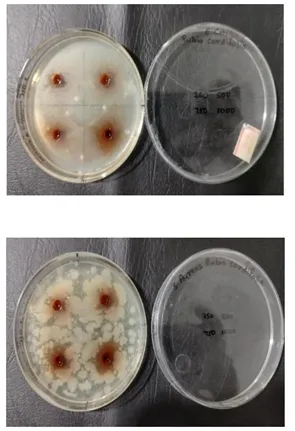
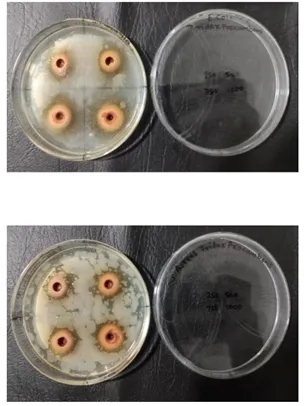
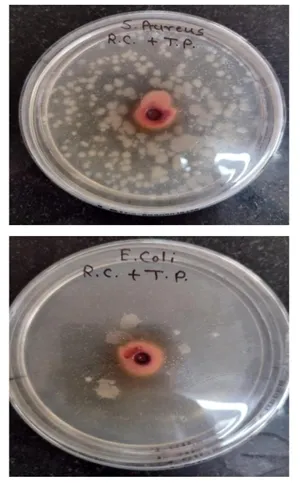
Antimicrobial activity of the formulated emulgels was determined using the agar well diffusion method on selected bacterial strains. The method involved inoculating sterile nutrient agar plates with the test organisms and using a sterile cork borer to prepare wells in the plates. The emulgel samples were added to the wells in each of the plates and incubated at 37°C for a period of 24 hours. Antibacterial activity of each formulation could then be determined by measuring the diameter of an area around each of the wells that showed no growth from the bacterial inoculum, thereby demonstrating the usefulness of the formulation for inhibiting the growth of bacteria[25].
Drug Content Determination
To achieve adequate uniformity through drug content determination, active constituents within the emulgel must be equally distributed throughout the mixture. The appropriately weighed formulation must first be extracted with a sonication using methanol as the extraction solvent. After completing the extraction process, the resulting solution must be filtered, properly diluted, and analyzed using a UV-visible spectroscopy for the correct identification of the actual drug concentration through calibration curves, then reported back as a percentage of the drug's label amount[²⁶].
Extrudability
Determining extrudability from the emulgel requires use of a collapsible tube filled with emulgel and a constant external force during expulsion from the tube; used to assess how readily and easily the emulgel can be extruded provides important information concerning product compatibility for patient use as well as effectiveness of the emulgel[27].
In Vitro Drug Release Study
The in vitro drug release study will be performed using a diffusion system, where an accurate quantity of emulgel will be positioned in a dialysis membrane, then subsequently placed in the receptor compartment containing phosphate buffer solution (pH 7.4), then set to incubate with continuous stir until approximately 37.0°C ± 0.5°C are achieved. Samples will be removed at predetermined times and equilibrated to maintain infinite sink conditions. The samples will be analyzed with a spectrophotometer, and the cumulative percentage of emulgel released will be calculated[²⁸].
Stability Studies
Research on product stability evaluated formulations based upon both their physical property stability and chemical stability over time under differing climate conditions. The formulations were stored within tightly sealed containers in both ambient and accelerated climate conditions (40 ± 2°C and 75 ± 5% relative humidity). Sample evaluations were performed at set times throughout the study. Evaluations included observations of changes in formulation physical characteristics, pH, viscosity and phase separation. No significant differences in each of these characteristics were found between the formulations based upon findings during the research study, and therefore all formulation samples are considered stable with respect to product stability[²⁹].
RESULTS AND DISCUSSION
The formulation studied was emulgel containing extracts of Tridax procumbens and Rubia cordifolia prepared and tested for physical properties (appearance, pH etc.) and antimicrobial activity (inhibition of bacterial growth). The results are presented below.
Physical Appearance
|
Parameter |
Observation |
|
Colour |
Yellowish Orange |
|
Odour |
Acceptable |
|
Consistency |
Viscous |
|
Homogeniety |
Good |
|
Phase Separation |
Absent |
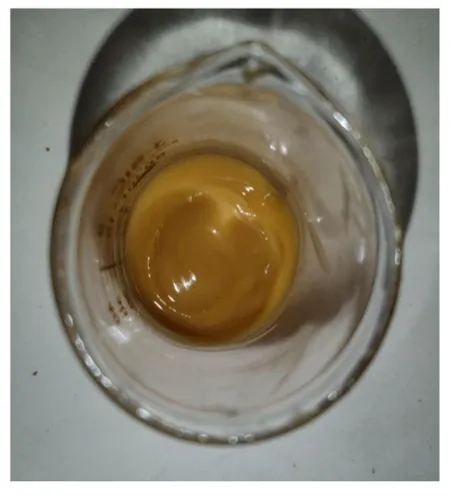
The formulation had a uniform and smooth texture and was aesthetically acceptable. No visual signs of instability were observed. This indicates that the emulsion was properly incorporated into the gel matrix[30].
pH Determination
|
Parameter |
Value |
|
pH of Emulgel |
5.94 |
The pH of the formulation was found to fall within the physiological range for human skin (between 5-6). This indicates that the emulgel is likely compatible with skin tissue and poses little risk of irritation when applied topically[31].
Spreadability
|
Parameter |
Value |
|
Spreadability |
5.5cm |
The emulgel exhibited good spreadability, and therefore can be easily applied and evenly distributed across the surface of the skin. This is an important characteristic for topical therapy to be effective[32].
Viscosity
|
Parameter |
Value |
|
Viscosity |
25350cP |
The viscosity of the emulgel was found to be within an optimal range for both adequate physical stability and ease of application[33].
Sedimentation Test
|
Time (min) |
Observation |
|
15 |
No phase separation |
|
30 |
No phase separation |
|
45 |
No phase separation |
|
60 |
No phase separation |
The absence of phase separation over time indicates good physical stability of the emulgel system[34].
Antimicrobial Activity of Extracts
Rubia cordifolia
|
Sr. No. |
Bacteria |
Dilute Concentration (µg/ml) |
Zone of Inhibition (mm) |
|
1 |
E.coli |
250 µg/ml |
20 mm |
|
500 µg/ml |
21 mm |
||
|
750 µg/ml |
24 mm |
||
|
1000 µg/ml |
26 mm |
||
|
2 |
S.aureas |
250 µg/ml |
21 mm |
|
500 µg/ml |
22 mm |
||
|
750 µg/ml |
24 mm |
||
|
1000 µg/ml |
25 mm |
Tridax procumbens
|
Sr. No. |
Bacteria |
Dilute Concentration (µg/ml) |
Zone of Inhibition (mm) |
|
1 |
E.coli |
250 µg/ml |
22 mm |
|
500 µg/ml |
24 mm |
||
|
750 µg/ml |
26 mm |
||
|
1000 µg/ml |
30 mm |
||
|
2 |
S.aureas |
250 µg/ml |
24 mm |
|
500 µg/ml |
25 mm |
||
|
750 µg/ml |
27 mm |
||
|
1000 µg/ml |
30 mm |
Synergistic Activity
|
Sr. No. |
Bacteria |
Dilute Concentration (µg/ml) |
Zone of Inhibition (mm) |
|
1 |
E.coli |
750 µg/ml |
33 mm |
|
2 |
S.aureas |
750 µg/ml |
35 mm |
Standard (Ciprofloxacin)
|
Bacteria |
Zone of Inhibition |
|
E.coli |
32mm |
|
S.aureas |
33mm |
The results of the antimicrobial tests showed that the activity of both extracts was dose-dependent; the combination exhibited higher levels of activity than either extract on its own and was equivalent to the standard drug, indicating that the synergistic effect of the phytoconstituents may be responsible for this result[35].
TLC Fingerprinting
|
Extract |
Rf value |
|
Rubia Cordifolia |
0.93 |
|
Tridax Procumbans |
0.87 |
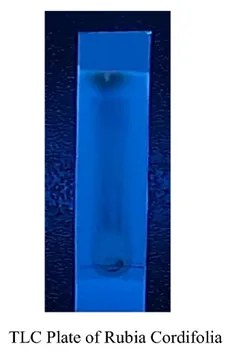

Additionally, the different Rf values indicate that each extract contains different phytoconstituents and provide evidence of the identity and purity of each extract[36].
CONCLUSION
This study reliably proves that a topical emulgel made from two different polyherbal formulations with methanol extracts of Rubia cordifolia and Tridax procumbens can be formulated and evaluated as an emulgel. The emulgel produced in this formulation has desirable physicochemical properties (pH, viscosity and spreadability), and physical stability, with no phase separation, indicating it can be used for the delivery of drugs via topical dosage forms. The in vitro antimicrobial studies demonstrated that the individual and combined methanolic extracts exhibited significant antibacterial activity. Additionally, the polyherbal formulation exhibited improved antibacterial activity compared with both single extracts and the standard drug. It has been suggested that synergistic actions of various constituents from both plants led to improved antibacterial activity. The emulgel system provides a simple yet effective means of utilizing both emulsified and gelled dosage forms for improved stability of drugs and the retention of drugs on the skin, resulting in improved patient compliance. The antimicrobial activity of the polyherbal emulgel can be partly attributed to the presence of bioactive compounds, such as flavonoids and phenolic compounds, present in both methanol extracts. With the above findings, the polyherbal emulgel developed in this study shows promise as an alternative to conventional topically applied formulations for treating microbial infections. Further studies, including in vivo studies and prolonged stability studies, will provide more information about clinical efficacy and long-term safety of this emulgel.
REFERENCES



Mohini Mishra, Shubham Chavan, Pallavi Chakor, Formulation, Characterization and Antimicrobial Evaluation of a Polyherbal Emulgel Containing Rubia cordifolia and Tridax procumbens: A Synergistic Approach for Topical Drug Delivery, Int. J. of Pharm. Sci., 2026, Vol 4, Issue 5, 8177-8186. https://doi.org/10.5281/zenodo.20471905
 10.5281/zenodo.20471905