

We use cookies to ensure our website works properly and to personalise your experience. Cookies policy
Dr. J.J. Magdum Pharmacy Collage, Jaysingpur
Urolithiasis is a common, recurrent urological condition, which is typified by the development of crystalline calculus in the urinary tract. Its rising prevalence in the world especially in third world countries and tropical areas are due to eating habits, lack of water, metabolic imbalances, and changes of lifestyles. The pathophysiology of urolithiasis is in an intricate interaction of physicochemical and biological roles, such as urine oversaturated with metallic salts, nucleation of crystals, crystal growth, aggregation and trapping at renal tubules. New data point to the important contribution of oxidative stress, inflammation and damage to renal epithelial cells in the facilitation of crystal adhesion and stone formation. Medical methods like pharmacotherapy and surgery used in the conventional treatment are effective in removal of stones, but they are mainly linked with high recurrence rates, adverse side effects and high cost. It is in this regard that medicinal plants have received a lot of focus as alternative and complementary therapeutic agents because of their safety, affordability, and multi-targeted action. A plants, such as Bryophyllum pinnatum and Piper nigrum have shown pronounced antiurolithiatic activity due to their ability to inhibit crystal nucleation, crystal growth and aggregation, diuretic action, antioxidant activity, and nephroprotection. the results indicate that plant-based treatments provide good alternatives in prevention and treatment of kidney stones which have promising potential, are cost-effective and safer. Nevertheless, additional clinical trials and standardization are needed to prove their effectiveness and enable the introduction of them into the contemporary medical systems.
Kidney stone disease, also known as urolithiasis, is a common and recurrent urological illness that poses a serious health issue in the whole world. Urolithiasis has become very common especially in the last few decades, especially in the third world like India, and in areas with hot climates like Southeast Asia and the Middle East.[1,2] It is also approximated that the rate of prevalence in almost 10-15 percent of the entire world population is at some point in life and a greater prevalence is recorded in the males and a high probability of relapse.[3] Urolithiasis is described as the presence of crystalline calculi in the urinary tract as a result of oversaturation of the urine with lithogenic substances like calcium, oxalate, phosphate and uric acid. The stone pathogenesis is a complex process, which entails nucleation, crystal growth, aggregation and retention in the renal tubules.[3,4] The condition presents clinically as acute renal colic, hematuria, nausea, vomiting, with a few cases being urinary obstruction and infection. Interestingly, the recurrence rates are high and about 50 percent of patients relapse after about 5-10 years.[2] Various risk factors lead to the occurrence of urolithiasis among them being improper intake of fluids, excessive intake of animal proteins and diets rich in oxalates, obesity, metabolic disorders, hypercalciuria and hyperoxaluria, and intestinal infections.[1,3] Besides these, it has been recently shown that oxidative stress and renal epithelial injury are the most essential factors that contribute to crystal adhesion and retention thus supporting stone formation.[5] Such results show that not only physicochemical processes are involved in urolithiasis but also intricate molecular and cellular processes. The pharmacological therapy, changes in diet and lifestyle, and surgical treatment, which may be extracorporeal shock wave lithotripsy, ureteroscopy,and percutaneous nephrolithotomyare the current approaches to urolithiasis management. In spite of the effectiveness of these methods in stone removal, they are usually linked to limitations which include being expensive, having side effects, failure to remove all the stones and being frequently recurrent. [2,6] All these issues highlight why alternative and more sustainable methods of therapy need to be offered. Medicinal plants have over the past few years been drawn to increased interest as alternative or complementary therapy in the prevention and management of kidney stones. Herbal medications have long been used over the centuries and are seeing more scientific backing that proves their effectiveness and safety.[7] The mechanisms of action of these types of plant therapies include inhibition of crystal nucleation, growth, and aggregation; diuretic effects to increase stone elimination; anti-oxidant effects to reduce oxidative stress; and antiinflammatory and nephroprotective effects to prevent the damage of renal tissues.[5,8] The present study was aimed at the formulation and evaluation of an herbal syrup containing Bryophyllum pinnatum leaves extract and piperine for the management of urolithiasis (kidney stones). Urolithiasis is a common urinary tract disorder caused by the supersaturation and crystallization of minerals, particularly calcium oxalate and calcium phosphate, resulting in stone formation, pain, and renal complications. Herbal therapies are gaining importance as safer and cost-effective alternatives for the prevention and management of kidney stones. Bryophyllum pinnatum has been traditionally used for its antiurolithiatic properties, while piperine, an alkaloid isolated from Piper nigrum, possesses various pharmacological activities including antioxidant, anti-inflammatory, and antiurolithiatic effects. However, piperine exhibits poor aqueous solubility, which limits its formulation into liquid dosage forms. To overcome this limitation, the cosolvency technique was employed using suitable cosolvents to enhance piperine solubility and improve syrup formulation characteristics. [9-10]
1.Bryophyllum Pinnatum:
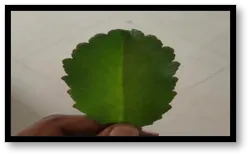
Fig. No 1: Bryophyllum Pinnatum Leaf
Bryophyllum pinnatum, commonly known as Patharchatta, Life Plant, or Miracle Leaf, is a medicinal plant traditionally used in herbal medicine for urinary disorders and kidney stone management. The leaves contain active phytoconstituents such as flavonoids, alkaloids, glycosides, triterpenes, and phenolic compounds, which contribute to its therapeutic properties. Bryophyllum pinnatum is reported to possess antiurolithiatic, diuretic, antioxidant, and antiinflammatory activities. It may help reduce calcium oxalate crystal formation, decrease crystal aggregation, and promote elimination of urinary stones. Because of these properties, it is considered a potential herbal remedy for kidney stone treatment. [11]
2. Piperine Nigrum (Piperine):
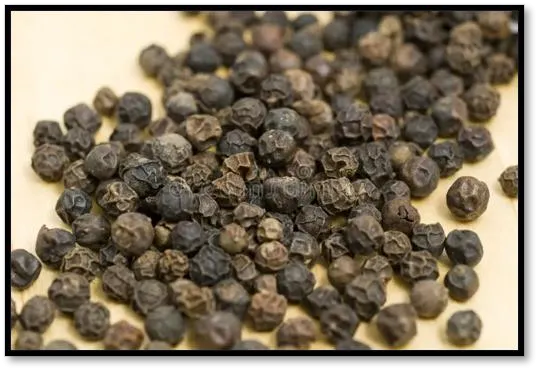
Fig No 2: Piperine Nigrum
Piperine is the major bioactive alkaloid obtained from black pepper, Black pepper (Piper nigrum). It is responsible for the pungent taste of pepper and possesses various pharmacological activities including antioxidant, anti-inflammatory, and bioavailabilityenhancing properties. In kidney stone management, piperine may help reduce oxidative stress associated with stone formation and can improve absorption of herbal active constituents, thereby enhancing therapeutic effectiveness. Piperine is often incorporated into herbal formulations to improve overall efficacy. [12]
Methodology:
Extraction and phytochemical analysis. Collection, Authentication and drying of plant material:
▪ Bryophyllum Pinnatum Extraction
Collection: The leaves of bryophyllum Pinnatum was collected in the month march 2026 from nursery of shirol dist.- Kolhapur, Maharashtra India
Authentication: After collection the plant material was identified, confirmed and authenticated by Prof. Manisha V. Kale, head department of botany, jaysingpur college jaysingpur
Drying: Drying of plant material was done using shade drying and crushed in an electrical grinder and the powdered.
Maceration plant materials:
Preparation of plant extract: bryophyllum pinnatum: [13]
1.Preparation
-Sample:100 gm of dried leaves powder was used. -Solvent:300 ml of 70% ethanol.
2.Maceration
-The powder was placed in a round bottom flask.
- The ethanol was added to the flask, ensuring the mixture was fully covered.
-The mixture was macerated for 3 days with occasional shaking every hour, while in a closed vessel.
3.Filtration:
-After 3 days, the solid residue(marc) was removed by filtering the extract.
-The filtrate was collected for further processing.
4.Concentration:
-The filtered extract was concentrated using a water bath maintained at temperature below500c.
-The aim to reduce the volume by evaporating some of the ethanol.
5.Evaporation:
-The concentrated extract was transferred into a previously weighted empty beaker.
-It was then evaporated to a thick paste on a water bath maintained at 50 c.
6.Drying:
-The thick paste was air dried thoroughly to remove all traces of the solvent.
-This step ensured that the final product was free of residual ethanol.
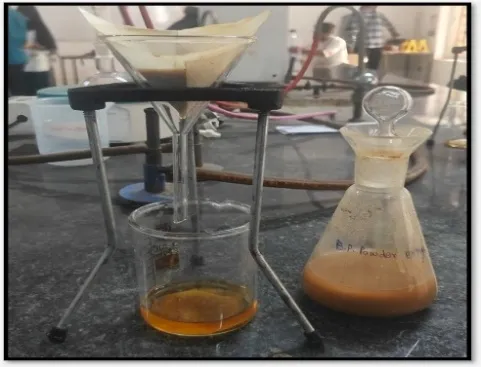
Fig No:3 Maceration
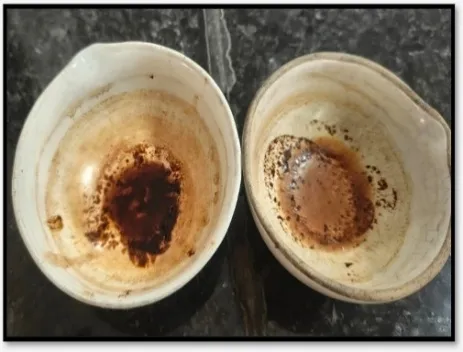
Fig No: 4 Extract of Bryophyllum pinnatum
Piperine Extraction
Collection: The Powder of piperine was collected in the month march 2026 from Patil Ayurvedic, Jaysingpur
Authentication: After collection the plant material was identified, confirmed and authenticated by Prof. Manisha V. Kale, head department of botany, jaysingpur college jaysingpur
Preparation of plant extract: [14]
1.Preparation:
-Sample:100 gm of dried powder was used.
-Solvent:500 ml of 95% ethanol
2.Soxhlation:
- Piperine was extracted and isolated from black pepper by the Soxhlet apparatus. The powdered drug (40g) was mixed with 500 ml of ethanol (95%) in a Soxhlet apparatus for three hours.
3.Filtration:
-The solution was filtered and concentrated under vacuum on a water bath at 60°c. 20ml of 10% alcoholic KOH was added with constant stirring to the concentrated extract and filtered. The alcoholic solution was allowed to stand overnight. Where upon needles of piperine separated out.
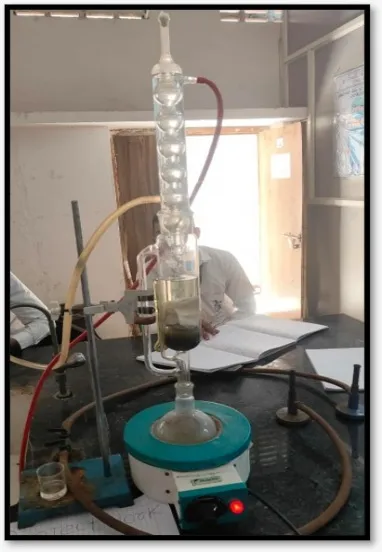
Fig No5:Soxhlet Apparatus
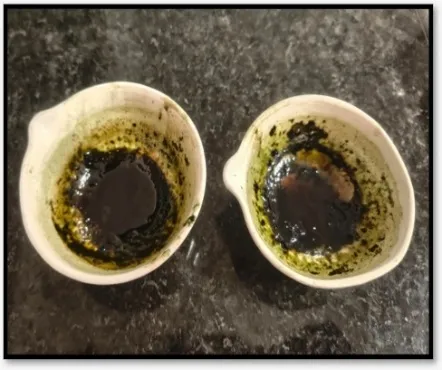
Fig No 6: Piperine Extract
Antiurolithiatic activity:
a) Calcium oxalate crystal assay: [15,16,17,18]
1) Preparation of Calcium oxalate by homogenous precipitation:
By taking equimolar solution of Calcium chloride dihydrate (A.R) was dissolved in distilled water and Sodium oxalate (A.R) was dissolved in 10 ml of 2N H2SO4 and distilled water, sufficient quantity is allowed to react in a beaker. The resulting precipitate was calcium oxalate which was freed from traces of sulfuric acid by ammonia solution. Washed with distilled water and dried at a temperature 60 °C for 4 hours.
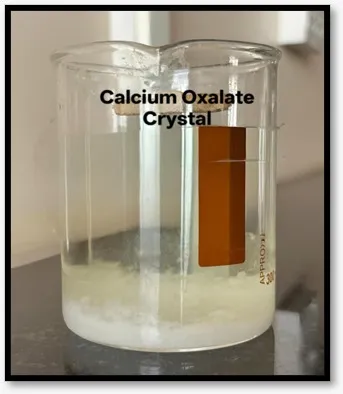
Fig No7 :Calcium Oxalate Crystal
2. Preparation of the Semi permeable membrane from eggs:
The outer calcified shell was removed chemically by placing the eggs in 2 ml HCL for overnight, which caused complete decalcification. Further, washed with distilled water and carefully with a sharp pointer a hole is made on the top and the contents squeezed out completely from the decalcified egg. Washed thoroughly with distilled water and placed it in ammonia solution, in the moistened condition for a while and then rinsed it with distilled water. Stored in refrigerator at a pH of 7-7.
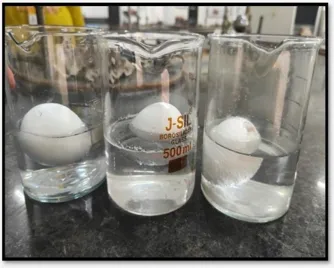
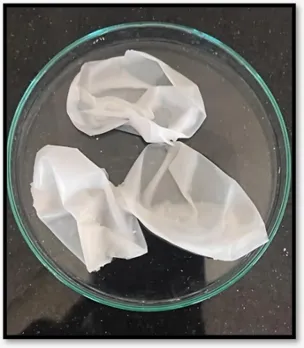
Fig No 8: Decalcification of egg membrane
Method:
The studies were carried out in 4 groups as per experimental design:
a)Group 1: Negative control (1mg calcium oxalate)
b)Group 2: 1mg calcium oxalate +1 mg standard (cystone)
c)Group 3: 1mg calcium oxalate + 1mg Bryophyllum pinnatum extract
d)Group 4: 1mg calcium oxalate + 1mg Piperine extract
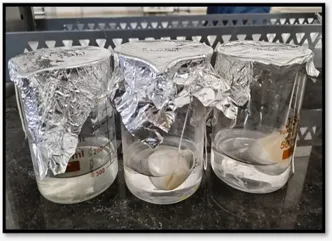
Fig No:10 In vitro model used to evaluate
Antiurolithiatic Activity
All the above groups were packed in semi permeable membrane by suturing. They were suspended in a conical flask containing 100 ml of 0.1 M TRIS buffer. The conical flasks of all groups were placed in an incubator and preheated to 37°C for 2 hours. The contents of semi permeable membrane from each group were taken into test tubes. 2 ml of sulphuric acid was added to each test tube and titrated with 0.2 M KMnO₄ till a light pink colour end point was obtained. 1 ml of 0.2 M KMnO₄ is equivalent to 0.1898 mg of calcium. Percentage dissolution of calcium oxalate in various groups was calculated. [19]
Preparation of piperine and Bryophyllum pinnatum Extract syrup:
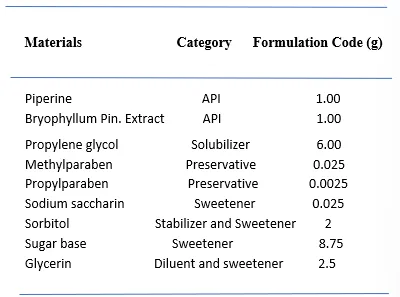
Sugar base was prepared by mixing 85 g of sucrose and 45 g of water, heated to boiling point. The liquid was strained and volume made up to 100 ml with distilled water. The preservatives were dissolved in few millilitres of boiled and cooled water and added to a sugar base. Piperine and Bryophyllum Pinnatum Extract was dissolved in propylene glycol at 45–50°C and this glycerin and sorbitol were added. The remaining sweetening agents were added and mixed thoroughly. Adjust the pH between 5.5 and 6.5 with citric acid, if necessary. Then, volume was made up to 25 ml with boiled and cooled water. [22]
Table no.1: Formulation table.
Evaluation of Syrup:
Determination of pH: pH is defined as the negative logarithm of hydrogen ion concentration which represents the acidity or alkalinity of the solution. pH of the syrup was determined using digital pH meter which was calibrated and stabilized using buffer tablets. The pH value was noted when there is constant reading. pH of the syrup also indicated the stability and characteristics of the formulation. [23]
Determination of Specific Gravity: The specific gravity bottle was cleaned, dried, and weighed with stopper (W₁). The bottle was then filled with distilled water, excess liquid was removed, and the bottle was weighed again (W₂). After emptying and drying, the bottle was filled with the syrup/sample and weighed (W₃). The specific gravity of the syrup was calculated. [24]
Stability study: The final syrup formulation was subjected to stability testing by storing at room temperature (250c ± 20c) for Three days. The samples were evaluated at 24hrs, 48hrs, and 72hrs for parameters such as appearance, pH, colour, Odor, and taste. [25]
Determine of Viscosity: Thoroughly clean the Ostwald viscometer with warm chromic acid and if necessary, used an organic solvent such as acetone. Mount viscometer in vertical position on a suitable stand. Fill water in dry viscometer up to mark G. Count time required, in second for water to flow from mark A to mark B. Repeat step 3 at least 3 times to obtained accurate reading. Rinse viscometer with test liquid and then fill it up to mark A,find out the time required for liquid to flow to mark B. Determination of densities of liquid as mentioned in density determination experiment. [26]
RESULT:
1) In-Vitro Evaluation of Anti-Urolithiatic Activity:
Egg Membrane Assay:
The studies were carried out in 4 groups as per experimental design:
Group 1: Negative control (1mg calcium oxalate)
Group 2: 1mg calcium oxalate +1 mg standard (cystone)
Group 3: 1mg calcium oxalate + 1mg Bryophyllum pinnatum extract
Group 4: 1mg calcium oxalate + 1mg Piperine extract
Table no.2 Percent of Calcium oxalate dissolution by various groups under study
|
Groups |
Volume of standard KMnO4 (ml) |
Wt. of calcium oxalate (mg) |
Wt. of calcium estimated (mg) |
Wt. of calcium reduced (mg) |
% Dissolution |
|
1 |
0.1 |
1 |
- |
- |
- |
|
2 |
0.6 |
1 |
0.11388 |
0.88612 |
88.61 |
|
3 |
1.1 |
1 |
0.20878 |
0.79122 |
79.12 |
|
4 |
1.5 |
1 |
0.2847 |
0.7153 |
71.53 |
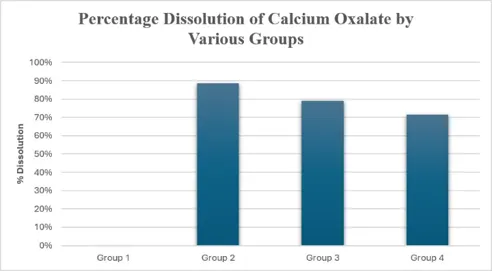
Percentage Dissolution of Calcium Oxalate by Various Groups under Study
The egg membrane assay showed considerable dissolution of calcium oxalate crystals in the treated groups. The standard drug (Cystone) exhibited 88.61% dissolution, while the Bryophyllum Pinnatum leaves extract showed 79.12% dissolution of calcium oxalate crystals and Piperine showed 71.53% dissolution of calcium oxalate crystals. The findings indicate that the extract possesses significant antiurolithiatic activity.
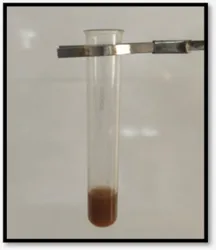
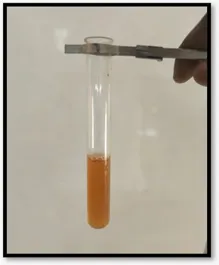
1) Phytochemical Evaluation:
Phytochemical Evaluation for Bryophyllum Pinnatum:
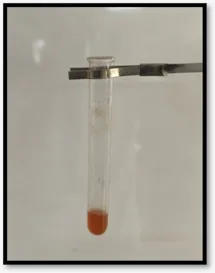
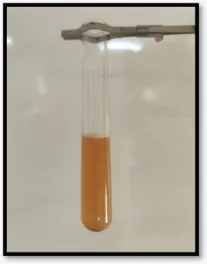
a) Test for Alkaloid:
|
Sr. No. |
Test |
Observation |
Inference |
|
1. |
Dragendroff’s Test |
Orange red Colour |
Present |
|
2. |
Tanic acid test |
Yellow Colour |
Present |
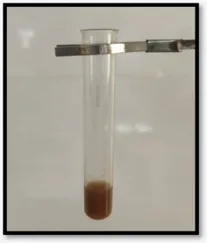
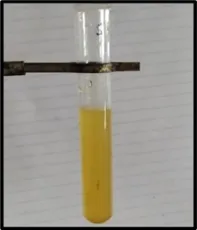
b) Test for tannins:
|
Sr. No. |
Test |
Observation |
Inferenc |
|
1. |
Ferric test |
Bluish black ppt |
Present |
|
2. |
Bromine water test |
Decolourization |
Present |
c) Test for Flavonoids.
|
Sr. No. |
Test |
Observation |
Inference |
|
1. |
Lead acetate Test |
Yellow ppt |
Present |
|
2. |
NaOH Test |
Dark yellow |
Present |
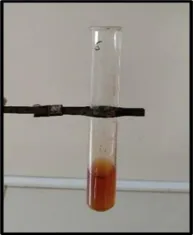
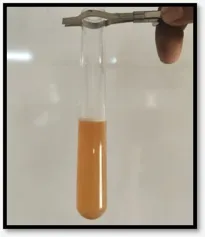
• Phytochemical evaluation for Piperine:
a) Test for alkaloid:
|
Sr. No. |
Test |
Observation |
Inference |
|
. |
Dragendorff’s Test |
Orange red |
Present |
|
2. |
Mayer’s Test |
Creamy precipitate |
Present |
a) Stability Study Result:
|
Batch |
Time duration (hr) |
Temperature 0c |
Colour |
Odour |
Taste |
pH |
|
1.
|
24 hrs |
R.T.*250c |
NC |
NC |
NC |
6.50 |
|
2.
|
48 hrs |
R.T.*250c |
NC |
NC |
NC |
6.52 |
|
3.
|
72 hrs |
R.T.*250c |
NC |
NC |
NC |
6.55 |
Physical Parameter:
|
Sr. No |
Parameter |
F1 |
|
1. |
Density |
1.092 g/cm3 |
|
2. |
Specific Gravity |
1.092 |
|
3. |
Viscosity |
2.00 cP |
|
4. |
pH determination |
6.50 |
|
5. |
Ph |
Neutral |
|
5. |
Colour |
Brownish/yellowish syrup |
|
6. |
Odour |
Characteristic |
|
7. |
Taste |
Sweet |
|
8. |
Appearance |
Uniform and clear syrup without precipitation |
DISCUSSION:
The present study was aimed at the formulation and evaluation of a herbal syrup containing Bryophyllum pinnatum extract and piperine for antiurolithiatic activity. Herbal medicines are widely accepted due to their safety, effectiveness, affordability, and lower chances of recurrence in comparison with conventional therapies used for kidney stone management. In the present work, Bryophyllum pinnatum and piperine were selected based on their reported antiurolithiatic, antioxidant, and anti-inflammatory activities. The prepared syrup formulation showed satisfactory physicochemical characteristics. The syrup was found to be brownish-yellow in colour with characteristic odour, sweet taste, and uniform appearance without precipitation, indicating acceptable organoleptic properties and stability. The pH of the formulation was found to be 6.5, which is suitable for oral administration and indicates good stability of the syrup formulation. The density and specific gravity values were found to be 1.092 g/cm³ and 1.092 respectively, suggesting appropriate consistency of the syrup. The viscosity of the formulation was found to be 2.00 cP, indicating good flow properties and pourability, which may improve patient acceptability and ease of administration. Phytochemical evaluation of Bryophyllum pinnatum extract confirmed the presence of alkaloids, tannins, and flavonoids, while piperine extract showed the presence of alkaloids. These phytoconstituents are known for their therapeutic activities such as antioxidant, antiinflammatory, nephroprotective, and antiurolithiatic effects. The antiurolithiatic activity was evaluated by the in-vitro egg membrane assay using calcium oxalate crystals. The standard drug Cystone showed 88.61% dissolution of calcium oxalate crystals, while Bryophyllum pinnatum extract and piperine showed 79.12% and 71.53% dissolution respectively. These findings indicate significant antiurolithiatic potential of the herbal extracts and suggest their ability to inhibit calcium oxalate crystal formation and dissolution of kidney stones. Overall, the study demonstrated that the formulated herbal syrup possesses satisfactory physicochemical properties along with promising antiurolithiatic activity. The formulation may serve as a safe, stable, patient-friendly, and cost-effective herbal alternative for the management of urolithiasis.
CONCLUSION:
The present study successfully formulated and evaluated a herbal syrup containing Bryophyllum pinnatum extract and piperine for antiurolithiatic activity. The prepared formulation exhibited satisfactory physicochemical properties including acceptable pH, viscosity, density, specific gravity, clarity, taste, and stability. Phytochemical screening confirmed the presence of important bioactive constituents such as alkaloids, tannins, and flavonoids responsible for therapeutic activity. The in-vitro antiurolithiatic study demonstrated significant calcium oxalate crystal dissolution, indicating the potential of the formulation in preventing and managing kidney stone formation. The results suggest that the combination of Bryophyllum pinnatum and piperine possesses promising antiurolithiatic activity and may provide a safe, effective, stable, and patient-friendly herbal alternative for the management of urolithiasis. Further in-vivo and clinical studies may be carried out to confirm its therapeutic efficacy and safety.
REFERENCES







Ankita Limkar*, Ajaj Mujawar, Alisha Nandniwale, Atharv Koshti, Apurva Bhandare, Priyanka Gaikwad, Ajinkya More, Formulation, Evalution, And Study of Antiurolithiatic Activity of Bryophyllum Pinnatum Extract and Piperine Syrup, Int. J. of Pharm. Sci., 2026, Vol 4, Issue 6, 3878-3889. https://doi.org/10.5281/zenodo.20715862
 10.5281/zenodo.20715862