

We use cookies to ensure our website works properly and to personalise your experience. Cookies policy
Department of Pharmaceutics, Shivajirao S. Jondhle College of Pharmacy, Asangaon, Thane 421601, affiliated to the University of Mumbai, Maharashtra, India
Background: Tooth discolouration is a widespread cosmetic concern, and the global cosmetic oral care market is projected to reach USD 8 billion by 2026. Conventional whitening systems rely on hydrogen peroxide or carbamide peroxide, which are associated with tooth sensitivity, enamel erosion, and gingival irritation on prolonged use. Optical colour correction, in which a purple pigment neutralises yellow tones on the tooth surface through complementary-colour theory, has emerged as a non-invasive alternative, but marketed purple whitening products predominantly use synthetic colourants such as blue covarine or PAP dyes. Aim: To formulate and evaluate a herbal purple toothpaste and a dissolving whitening strip using anthocyanin (ternatin) extract from butterfly pea flower (Clitoria ternatea) as a natural, peroxide-free, edible-grade optical colour-correcting agent. Methodology: Anthocyanin extract was obtained by aqueous extraction of sun-dried, powdered butterfly pea flowers (80 °C, 1 hour), followed by filtration and concentration. Dissolving whitening strips were prepared by solvent-casting a film-forming solution of HPMC E15 and CMC-Na, plasticised with glycerine, sorbitol and PEG 400, incorporating the anthocyanin extract, and drying to a flexible film. A purple herbal toothpaste was prepared by dispersing calcium carbonate and tamarind seed powder (abrasives) with sodium lauryl sulfate (foaming agent) and the anthocyanin extract in a glycerine–sorbitol–CMC-Na gel base, flavoured with peppermint oil. Both products were evaluated for organoleptic properties, pH, and short-term physical stability; the strips were additionally assessed for thickness, folding endurance and disintegration time, and the toothpaste for foaming ability and spreadability. Results: The whitening strips exhibited a uniform violet-blue colour, mean weight of 0.148 ± 0.012 g (CV 8.1%), a mean folding endurance of 289.8 folds, and a mean disintegration time of 11 minutes (range 10–12 minutes) in artificial saliva. The purple toothpaste showed satisfactory organoleptic properties, 75% foam retention at 1 minute, progressive spreadability with applied load, and physical stability (colour, texture, pH) over a 30-day observation period, with only slight colour fading noted from Day 15, attributable to the pH- and light-sensitivity of anthocyanins.
1.1 Tooth discolouration: prevalence and burden
Tooth discolouration is a common aesthetic concern arising from extrinsic causes (dietary chromogens such as tea and coffee, tobacco use, poor oral hygiene, and plaque or calculus accumulation), intrinsic causes (dental fluorosis, tetracycline staining, trauma, and genetic factors), and other contributing factors such as ageing, medication use, and environmental exposure.¹˒³ Dental problems are reported to affect nearly 90% of the Indian population, with an estimated 14% of individuals at heightened risk of noticeable tooth discolouration due to a combination of these intrinsic and extrinsic factors. A rising influence of social media and professional presentation norms has further increased demand for aesthetic dental treatments, and the global cosmetic oral care market is projected to reach USD 8 billion by 2026.
1.2 Limitations of existing whitening methods
Conventional tooth whitening relies principally on peroxide-based bleaching agents (hydrogen peroxide and carbamide peroxide) which oxidise chromogenic molecules within the tooth structure.¹ Although effective, these agents are associated with tooth sensitivity, enamel erosion, gingival irritation, higher cost, and a risk of over-bleaching with prolonged or improper use.¹˒³ These drawbacks have motivated the search for safer, plant-derived, peroxide-free alternatives that can deliver a whitening benefit without chemically altering tooth structure.¹˒¹⁸.
1.3 Purple colour-correction technology
Optical colour correction offers a non-invasive alternative to chemical bleaching.²˒¹⁸ According to colour theory, complementary colours positioned opposite one another on the colour wheel neutralise each other when combined.²˒⁵ Because yellow and purple are complementary, the application of a purple pigment to yellow-stained teeth visually cancels the yellow tone, producing an immediate, though optical rather than structural, whitening effect, a principle already exploited commercially in purple shampoos used to counteract yellow discolouration in light-coloured hair.²˒⁵˒¹⁸ Marketed purple whitening formats include toothpaste, serum, foam, and dissolving strips, which differ in contact time, ease of application, and durability of effect (Table 1).²˒¹² Among these, strips provide the longest direct contact time and the most sustained colour-correction effect, whereas toothpaste offers convenience for routine daily use.⁶˒¹²
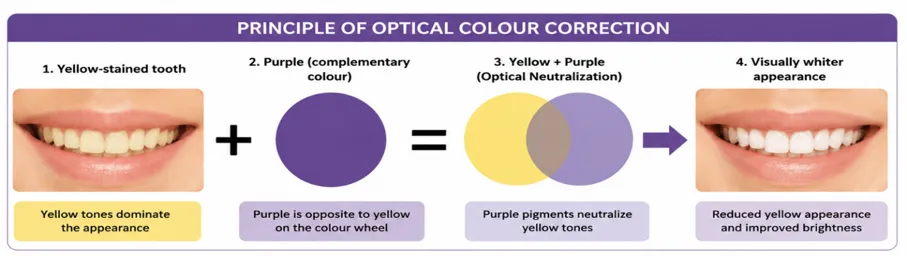
Figure 1. Principle of optical colour correction using complementary colour theory
Table 1. Comparative overview of marketed purple whitening formulation types
|
Formulation |
Advantages |
Disadvantages |
Remark |
|
Purple toothpaste |
Easy daily use |
Temporary effect; low contact time |
Routine maintenance product |
|
Purple serum |
Quick, instant cosmetic effect |
Short duration; uneven application possible |
Suited to quick results, not lasting effect |
|
Purple foam |
Spreads easily; cleans while whitening |
Low retention time; less effective whitening |
Supportive product only |
|
Purple whitening strip |
Direct contact; longer duration; better whitening |
Slightly higher cost; requires correct placement |
Selected formulation for this study, better adhesion and effectiveness |
1.4 Tooth-whitening strips and the role of anthocyanin
Dissolving/oral whitening strips are thin polymeric films designed for direct, sustained contact with the tooth surface.⁶˒¹² Anthocyanins are water-soluble flavonoid pigments responsible for red, purple and blue colouration in numerous fruits, flowers and vegetables (e.g., blueberry, purple cabbage, blackberry, grape, black rice, hibiscus, jamun and butterfly pea) and possess antioxidant, anti-inflammatory and antimicrobial activity in addition to their colouring function.⁷˒⁹˒²⁰ Among natural anthocyanin sources, butterfly pea flower (Clitoria ternatea) yields a comparatively true blue-violet pigment (through its principal ternatin anthocyanins) rather than the red-leaning shades typical of berry-derived anthocyanins, which makes it more suited to neutralising yellow tones, produces a lower staining tendency on surrounding tissue, and is compatible with common film-forming and toothpaste excipients (HPMC, CMC, glycerine).⁷˒¹¹˒¹³˒²⁰
1.5 Need for the study and research gap
This represents a research gap that the present study addresses by using a fully edible, GRAS-recognised, Ayurvedic-origin anthocyanin source, rather than a synthetic dye as the active optical colour-correcting agent in both a toothpaste and a dissolving strip format.
1.6 Aim and objectives
Aim: To formulate and evaluate herbal purple toothpaste and dissolving whitening strips using butterfly pea flower (Clitoria ternatea) anthocyanin extract as a natural optical colour-correcting agent for cosmetic teeth whitening a safe, peroxide-free, enamel-friendly alternative to conventional chemical whitening products.
Objectives:
2. LITERATURE REVIEW
Table 2. Literature Review
|
Author (Year) |
Topic |
Key finding |
|
Joiner (2006) |
The bleaching of teeth: a review |
Reviewed peroxide-based bleaching mechanisms and introduced colour-theory considerations in tooth whitening. |
|
Joiner et al. (2008) |
Optical tooth whitening |
Explored mechanisms and effectiveness of optical (non-bleaching) tooth-whitening techniques. |
|
Watts & Addy (2001) |
Tooth discolouration and staining: a review |
Characterised extrinsic and intrinsic causes of tooth staining. |
|
Ten Bosch & Coops (1995) |
Tooth colour and reflectance |
Related tooth colour and whiteness perception to light scattering and absorption. |
|
Kulkarni et al. (2010) |
Polymers for oral fast-dissolving strips |
Reviewed film-forming polymers suited to oral strip formulations. |
|
Nikijuluw (2013) |
Colour characteristics of butterfly pea anthocyanin extracts |
Reported that the ternatin A1 structure produces red at pH 1–2, purple-to-blue at pH 3–7, and yellow-green at pH 8–14. |
|
Jeyaraj et al. (2021) |
Clitoria ternatea: phytochemistry and pharmacology |
Detailed extraction procedures and phytochemical profile of butterfly pea. |
|
Aspinall et al. (2021) |
Role of abrasives / oral care formulation challenges |
Identified calcium carbonate (Mohs hardness 3) as an abrasive that removes plaque without eroding enamel (Mohs hardness ~5). |
|
Enaru et al. (2021) |
Anthocyanins: factors affecting stability and degradation |
Reviewed pH-, light-, temperature- and oxygen-dependent degradation of anthocyanins. |
|
Arora et al. (2019) |
HPMC/CMC buccal films |
Characterised HPMC/CMC-based oral films for enhanced solubility and delivery. |
|
Parhi (2017) |
Oral film technology: a review |
Reviewed advances and applications of oral film technology. |
|
Dewangan et al. (2024) |
Toothpaste formulation for sensitivity |
Identified sorbitol as a key humectant and SLS as a standard surfactant/foaming agent in toothpaste. |
|
Senthilkumar et al. (2022) |
Herbal toothpaste from natural sources |
Used glycerine as humectant and mint oil as flavouring agent in a herbal toothpaste base. |
|
Dhangar et al. (2023/2024) |
Herbal tamarind-seed toothpaste |
Incorporated Tamarindus indica seed powder as a natural abrasive. |
|
Serrano et al. (2024) |
Anthocyanin-based edible coatings |
Identified effective film-forming polymer strategies for anthocyanin-containing systems. |
3. MATERIALS AND METHODS
3.1 Materials and their Functions
Table 3. Function of key excipients used in the two formulations
|
Excipient |
Function |
Rationale |
|
HPMC E15 |
Film-forming agent, thickener, binder |
Forms smooth, flexible, transparent films with good bioadhesion in the oral cavity. |
|
CMC-Na |
Film-forming agent / thickener; mucoadhesive |
Enhances mucoadhesion and viscosity of the casting solution / gel base. |
|
Glycerine |
Plasticizer, humectant, sweetener |
Reduces film brittleness and prevents drying out. |
|
Sorbitol |
Humectant, sweetening agent |
Prevents moisture loss and improves palatability. |
|
PEG 400 |
Plasticizer, solvent, humectant |
Increases film flexibility. |
|
Sodium lauryl sulfate (SLS) |
Foaming/surfactant agent |
Improves surface wetting and generates foam in the toothpaste. |
|
Calcium carbonate |
Abrasive, polishing agent |
Mohs hardness ≈3, below enamel hardness (≈5), enabling plaque removal without enamel erosion. |
|
Tamarind seed powder |
Natural abrasive |
GRAS-recognised natural alternative/adjunct abrasive. |
|
Citric acid |
pH adjuster |
Adjusts final formulation pH (target 6.5–7.5) and helps stabilise the anthocyanin pigment. |
|
Xanthan gum |
Thickening agent |
Imparts pseudoplastic rheology suited to a toothpaste base. |
|
Peppermint/mint oil |
Flavouring agent |
Masks the characteristic herbal taste of the extract; improves patient acceptability. |
|
Butterfly pea flower extract |
Active optical colour-correcting agent, natural colourant, antioxidant |
Principal ternatin-anthocyanin source responsible for the violet–blue colour correction. |
3.2 Preparation of butterfly pea flower anthocyanin extract
3.3 Pre-formulation studies
Organoleptic evaluation of the raw extract indicated a deep blue/purple colour (pH-dependent), a mild characteristic herbal odour, and a slightly bitter/astringent taste. Solubility of the anthocyanin extract was assessed in distilled water, ethanol, and buffer solutions across pH 3–8, with maximum colour stability observed under acidic conditions (pH 3–5); the extract appeared red/pink at acidic pH, purple/blue at neutral pH, and faded greenish under alkaline conditions, consistent with the known pH-dependent chromic behaviour of anthocyanins.
3.4 Formulation of the dissolving whitening strips
Table 4. Composition of the dissolving whitening strip formulation
|
Ingredient |
Function |
Quantity |
|
HPMC E15 |
Film-forming agent, thickener, binder |
3 g |
|
CMC-Na |
Film-forming agent, mucoadhesive, thickener |
1 g |
|
Glycerine |
Plasticizer, humectant |
1.5 mL |
|
Sorbitol |
Humectant, sweetening agent |
1.5 mL |
|
PEG 400 |
Plasticizer, solvent, humectant |
2 mL |
|
Butterfly pea flower extract |
Active optical colour-correcting agent, natural colorant |
15 mL |
|
Mint oil |
Flavouring agent |
q.s. |
Preparation proceeded in five stages: (1) preparation of the polymer solution — HPMC dispersed with continuous stirring in purified water at 40–50 °C, followed by gradual addition of CMC-Na and hydration for 30 minutes; (2) addition of plasticisers/humectants (glycerine, sorbitol, PEG 400) with continuous stirring; (3) separate dissolution of the butterfly pea extract in a small volume of purified water, protected from light, and its incorporation into the polymer mixture with gentle stirring to obtain a uniform purple solution; (4) addition of mint oil, followed by a 10–15 minute deaeration period to remove entrapped air, casting onto a clean glass plate/Petri dish, and drying at room temperature or in a hot-air oven at 40–45 °C until a flexible, non-sticky film formed; and (5) peeling and cutting of the dried film into strips of 6 × 1.5 cm (female-sized) or 7 × 1.5 cm (male-sized).
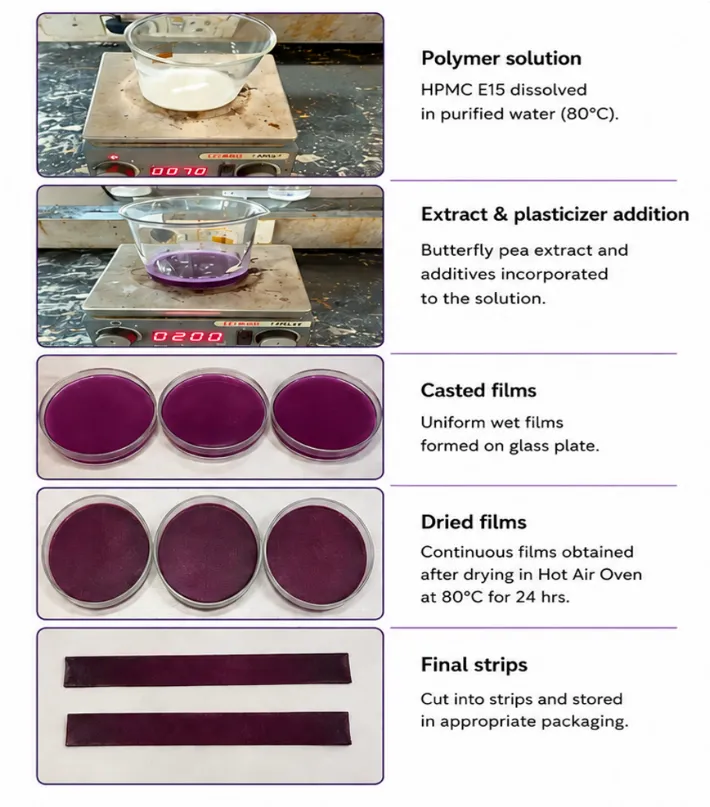
Figure 2. Stepwise preparation of anthocyanin-based dissolving whitening strips
3.5 Formulation of the herbal purple toothpaste
Table 5. Composition of the herbal purple toothpaste formulation
|
Ingredient |
Function |
Quantity |
|
Calcium carbonate |
Abrasive, polishing agent |
15 g |
|
Glycerine |
Humectant, sweetener |
15 mL |
|
Sorbitol |
Humectant, sweetener |
40 mL |
|
Tamarind seed powder |
Abrasive |
1 g |
|
Sodium lauryl sulfate (SLS) |
Foaming agent |
1 g |
|
Butterfly pea flower extract |
Natural colorant, antioxidant |
20 mL |
|
Peppermint oil |
Flavouring agent |
0.3 mL |
|
CMC-Na |
Thickener |
1 g |
|
Purified water |
Solvent, vehicle |
q.s. |
The gel base was prepared by hydrating CMC-Na into a sorbitol–glycerine mixture with continuous stirring for approximately 30 minutes until smooth. Purified water was then added gradually under stirring, followed by gradual incorporation of calcium carbonate and tamarind seed powder to ensure uniform dispersion. SLS was added slowly to minimise excessive foam generation during mixing, followed by the butterfly pea extract with continuous stirring until a uniform purple colour developed. Sweetening and flavouring agents were then incorporated, the pH was adjusted with citric acid solution and the final homogeneous paste was packaged into tubes and stored at room temperature.
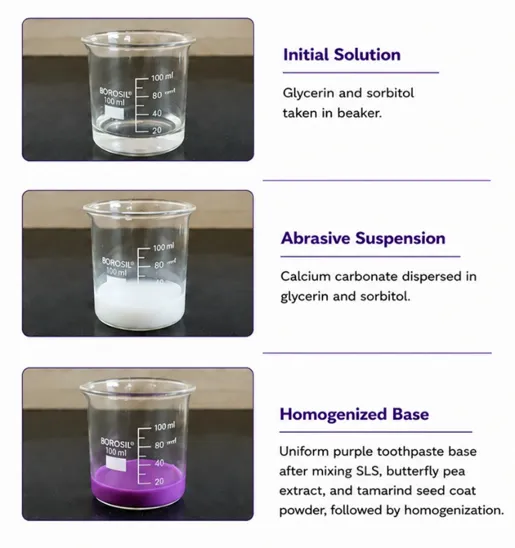
Figure 3. Stepwise preparation of herbal purple toothpaste
4. EVALUATION PARAMETERS AND TESTS
Dissolving whitening strips: physical appearance (colour, transparency, surface texture, dimensions, weight uniformity, edge integrity); thickness (Vernier calliper, multiple measurement points); folding endurance (repeated folding at a single point until fracture); disintegration time (in artificial saliva, simulating oral conditions); tensile strength (maximum stress before breaking); and surface pH (moistened strip surface tested with pH paper/electrode).⁶˒¹²˒¹³
Herbal purple toothpaste: organoleptic properties (colour, odour, taste, texture, consistency, phase separation) by sensory/visual assessment; foaming ability (foam volume generated on shaking a fixed toothpaste quantity in water, recorded initially and after 1 minute); spreadability (area of spread of a fixed quantity of toothpaste under increasing applied load, using an ointment/spreadability test apparatus); pH (of an aqueous dispersion of the toothpaste); and short-term stability (colour, odour, texture, pH, spreadability, foaming, phase separation and microbial growth monitored at Day 0, 7, 15 and 30 under room-temperature storage).¹⁴˒¹⁵˒¹⁶˒¹⁷
4.1 Part A — Dissolving whitening strips
Table 6. Physical appearance of the dissolving whitening strips
|
Attribute |
Observation |
Remark |
|
Colour |
Uniform violet-blue |
Characteristic of butterfly pea extract; pass |
|
Transparency |
Translucent to semi-transparent |
Acceptable for a film-type formulation |
|
Surface texture |
Smooth, glossy on the release-liner side |
No pitting, cracks, or air bubbles |
|
Dimensions (L × W) |
65 mm × 15 mm |
Within intended design specification |
|
Weight uniformity |
Mean 0.148 ± 0.012 g (CV 8.1%) |
Acceptable; CV < 10% |
|
Edge integrity |
Clean, no fraying or tears |
Pass |
The strips displayed a uniform, characteristic violet-blue colour attributable to the anthocyanin content of the butterfly pea extract, with a smooth, defect-free surface and acceptable weight uniformity (CV < 10%), indicating a consistent casting process.
Table 7. Thickness measurement of the whitening strips (Vernier calliper)
|
Measurement point |
Thickness (mm) |
|
Centre |
0.11 |
|
Top-left |
0.10 |
|
Top-right |
0.12 |
|
Bottom-left |
0.09 |
|
Mean ± SD |
0.105 ± 0.011 mm |
Table 8. Folding endurance of individual whitening strips
|
Strip |
S1 |
S2 |
S3 |
S4 |
S5 |
Mean |
|
Folds withstood |
278 |
312 |
295 |
263 |
301 |
289.8 |
A mean folding endurance of 289.8 folds indicates good mechanical flexibility, consistent with the plasticising combination of glycerine and PEG 400 alongside the HPMC/CMC film-forming matrix.
Artificial saliva (disintegration-testing medium)
Table 9. Composition of artificial saliva used for strip disintegration testing (per 1000 mL)
|
Ingredient |
Quantity |
Role |
|
Sodium chloride (NaCl) |
8.00 g |
Electrolyte - mimics salivary sodium |
|
Potassium chloride (KCl) |
0.20 g |
Electrolyte - mimics salivary potassium |
|
Disodium hydrogen phosphate (Na₂HPO₄) |
1.15 g |
Buffer - maintains pH |
|
Potassium dihydrogen phosphate (KH₂PO₄) |
0.20 g |
Buffer |
|
Calcium chloride (CaCl₂) |
0.10 g |
Mimics salivary calcium |
|
Magnesium chloride (MgCl₂) |
0.05 g |
Trace electrolyte |
|
Purified water |
q.s. to 1000 mL |
Vehicle |
|
Final pH |
6.8 ± 0.1 (adjusted with 0.1 N NaOH/ HCl) |
— |
Table 10. Disintegration time of the whitening strips in artificial saliva
|
S1 |
S2 |
S3 |
S4 |
S5 |
S6 |
Mean |
Range |
|
10:30 |
11:15 |
10:45 |
12:00 |
11:30 |
10:00 |
11:00 min |
10–12 min |
A mean disintegration time of 11 minutes (range 10–12 minutes) is considered satisfactory for a dissolving whitening strip, providing sufficient tooth-surface contact time to allow optical colour correction before the film fully dissolves.
Surface pH: A surface pH of 6.3 (acceptable range of 6.0–6.5), obtained by wetting the strip with 0.5 mL of purified water and applying pH paper after 1 minute.
4.2 Part B — Herbal purple toothpaste
Table 11. Organoleptic properties of the herbal purple toothpaste
|
Parameter |
Observation |
Standard/ expected |
Remark |
|
Colour |
Violet-purple (characteristic) |
Any uniform colour |
Pass |
|
Odour |
Mild peppermint fragrance |
Characteristic, pleasant |
Pass |
|
Taste |
Mildly sweet, cool |
Palatable, non-bitter |
Pass |
|
Texture |
Smooth, homogeneous paste |
No lumps or grit |
Pass |
|
Consistency |
Semi-solid, non-watery |
Adequate body |
Pass |
|
Phase separation |
Absent |
Absent |
Pass |
All organoleptic parameters were satisfactory. The violet-purple colour was visually appealing and the peppermint flavour masked the characteristic herbal taste of the extract, which is expected to support patient acceptability and compliance.
Table 12. Foaming ability of the toothpaste
|
Parameter |
Observation |
|
Initial foam volume |
24 mL |
|
Foam volume after 1 min |
18 mL |
|
Foam retention |
75% |
|
Foam quality |
Moderate, fine-bubbled |
|
Acceptability |
Satisfactory |
Table 13. Spreadability of the toothpaste under increasing applied load.
|
Load applied |
Area of spread (cm²) |
|
0 g (self-weight) |
3.8 |
|
10 g |
5.2 |
|
20 g |
7.1 |
Toothpaste pH: A pH of 6.2 (acceptable range 6.0–6.5), each obtained on an aqueous dispersion of the toothpaste. The spreadability data show a progressive increase in spread area with applied load in both sources, consistent with pseudoplastic (shear-thinning) rheological behaviour appropriate for a toothpaste.
Table 14. Short-term stability of the herbal purple toothpaste (room temperature).
|
Parameter |
Day 0 |
Day 7 |
Day 15 |
Day 30 |
|
Colour |
Violet-purple |
Violet-purple |
Slight fade |
Slight fade |
|
Odour |
Mild, pleasant |
Mild, pleasant |
Mild, pleasant |
Mild, pleasant |
|
Texture |
Smooth, creamy |
Smooth, creamy |
Slightly thicker |
Slightly thicker |
|
pH |
7.1 |
7.1 |
6.9 |
6.7 |
|
Spreadability |
Good |
Good |
Good |
Good |
|
Foaming |
Moderate |
Moderate |
Moderate |
Moderate |
|
Phase separation |
Absent |
Absent |
Absent |
Absent |
|
Microbial growth |
Nil |
Nil |
Nil |
Nil |
The toothpaste remained physically stable over the 30-day observation period, with a slight colour fade and a modest downward drift in pH from Day 15 onward, consistent with the known pH- and light-sensitivity of anthocyanin pigments. No phase separation or microbial growth was observed across the study period.
5. DISCUSSION
The present study successfully formulated and evaluated a herbal purple toothpaste and a dissolving whitening strip containing butterfly pea flower (Clitoria ternatea) anthocyanin as a natural optical colour-correcting agent. Both formulations exhibited satisfactory physicochemical properties and short-term stability, indicating the suitability of anthocyanin for peroxide-free whitening formulations.¹˒²˒²⁰
The dissolving whitening strips showed acceptable thickness, folding endurance, disintegration time, and surface pH, demonstrating that the HPMC–CMC polymer system produced flexible and stable oral films. These findings are consistent with previous reports on HPMC/CMC-based oral dissolving films.⁶˒¹²˒¹³
The herbal toothpaste demonstrated acceptable organoleptic properties, pH, foaming ability, spreadability, and remained physically stable throughout the 30-day study. The slight colour fading observed during storage is consistent with the known pH- and light-sensitivity of anthocyanins.⁹˒¹⁵˒¹⁶˒²⁰
Overall, the findings suggest that butterfly pea flower anthocyanin is a promising natural alternative to synthetic colourants for temporary optical tooth whitening. However, further studies involving objective colour analysis, long-term stability, and clinical evaluation are required to establish its whitening efficacy and commercial applicability.
6. NOVELTY OF THE STUDY
The principal novelty of this work lies in the substitution of the synthetic colourants used in many marketed purple whitening products (e.g., blue covarine, PAP dyes) with a fully edible, GRAS-recognised, Ayurvedic-origin anthocyanin source, butterfly pea flower (Clitoria ternatea) as the active optical colour-correcting pigment, in two complementary formats (a dissolving strip for sustained contact and a toothpaste for routine daily use). ²˒⁷˒¹⁸˒²⁰
Table 15. FLORAWHITE positioning relative to marketed synthetic purple whitening products.
|
Feature |
Marketed purple strips/pastes |
FLORAWHITE (this study) |
|
Pigment source |
Synthetic (blue covarine, PAP dyes) |
Natural — butterfly pea flower (C. ternatea) |
|
Edible / food-grade |
Not edible |
Fully edible, GRAS-recognised anthocyanin |
|
Herbal origin |
None |
Ayurvedic plant, traditional use documented |
|
Peroxide content |
Some contain PAP or H₂O₂ |
Completely peroxide-free |
|
Antioxidant benefit |
None |
Anthocyanins provide oral antioxidant activity |
|
pH-responsive colour |
Fixed synthetic colour |
Natural purple at oral pH ~6.5–7.0 |
Positioning this formulation strategy within a rigorous pharmaceutical evaluation framework (physicochemical, mechanical, and short-term stability testing, rather than purely cosmetic/consumer testing) is itself a modest contribution, distinguishing this work from purely commercial or descriptive accounts of butterfly-pea-based cosmetics.
7. LIMITATIONS
8. FUTURE SCOPE
9. CONCLUSION
This study demonstrates the formulation and preliminary evaluation of a herbal purple toothpaste and a dissolving whitening strip using butterfly pea flower (Clitoria ternatea) anthocyanin extract as a peroxide-free, natural optical colour-correcting agent. Both formulations exhibited satisfactory physicochemical, mechanical and short-term stability properties, supporting the feasibility of anthocyanin-based purple whitening products as a safer, edible-grade, herbal alternative to synthetic colour-correcting whitening systems. Confirmatory whitening-efficacy testing, spectroscopic characterisation, and longer-duration stability and safety studies are required to substantiate the products' cosmetic claims and to support eventual clinical or commercial translation.
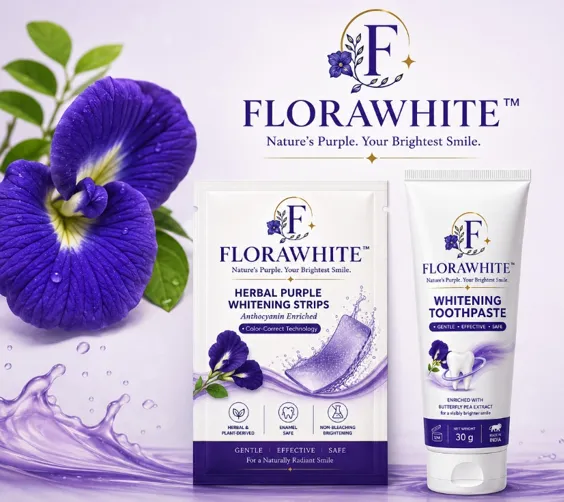
Figure 4. Final FLORAWHITE formulations with packaging
10. ACKNOWLEDGEMENTS
The student authors thank their project guide, Ms. Suvidha S. Kabadi, Assistant Professor, Department of Pharmaceutics, for supervision and guidance throughout this work. The authors also thank at the Department of Pharmaceutics, Shivajirao S. Jondhle College of Pharmacy, Asangaon, Thane, University of Mumbai, for institutional and technical support.
11. CONFLICT OF INTEREST
The authors declare no conflict of interest.
12. AUTHOR CONTRIBUTIONS
Conceptualisation and supervision: Suvidha S. Kabadi. Formulation development, evaluation, data acquisition and drafting: Vaibhavee P. Shinde, Dravinkumar R. Singh, Garima D. Singh, Sahil S. Sondkar. Co-Guide: Sanket S. Gabhale
REFERENCES





Sahil Sondkar, Suvidha Kabadi, Sanket Gabhale, Vaibhavee Shinde, Dravinkumar Singh, Garima Singh, From Flower to Anthocyanin-Powered Optical Tooth Whitening: A Peroxide-Free Optical Tooth-Whitening Approach Using Butterfly Pea Flower (Clitoria ternatea) Extract, Int. J. of Pharm. Sci., 2026, Vol 4, Issue 8, 2274-2286. https://doi.org/10.5281/zenodo.21927028
 10.5281/zenodo.21927028