

We use cookies to ensure our website works properly and to personalise your experience. Cookies policy
Dr. R. G. Bhoyar Institute of Pharmaceutical Education and Research, Wardha, Maharashtra, India
Vector-borne diseases transmitted by houseflies remain a major public health concern due to their role in spreading pathogens responsible for diseases such as cholera, typhoid, and dysentery. Synthetic chemical repellents are widely used for control; however, their toxic effects, environmental hazards, and increasing insect resistance necessitate the development of safer alternatives. The present study aims to formulate and evaluate an eco-friendly herbal flies repellent oil using plant-based ingredients. Essential oils from lemongrass, neem, peppermint, eucalyptus, and cinnamon leaves were extracted using the hydro-distillation method and formulated into a spray using ethanol as a solvent. These plant oils contain bioactive compounds such as terpenoids and phenolics, known for their insect repellent properties. The formulation was evaluated through laboratory mortality studies and a public survey to assess its practical efficacy. Results showed a significant increase in fly mortality, reaching up to 80.77% within 60 minutes, along with a marked reduction in fly density in real-life conditions. The study concludes that the polyherbal formulation is effective, economical, and environmentally safe, offering a promising alternative to synthetic insect repellents for controlling houseflies.
In recent era, vector-borne diseases are spread over the world and chronic infections are transmitted by the infected arthropods, viz. mosquitoes, ticks, bugs, sand flies, black flies and house flies, are serious threat to society for transmission of several life killing diseases.
1.Flies:
Adult house flies have reddish eyes, sponging mouthparts, are 3–8 mm in length and can be recognized by the presence of four dark stripes on the dorsum of the thorax and the pronounced upward bend in the fourth longitudinal wing vein (vein M1+2). The basal portion of the abdomen is usually yellowish, especially along the sides, with males typically showing greater lateral yellowing than females. A dark longitudinal band runs along the median dorsal region of the anterior abdominal segments. The eyes of females are much more widely separated than those of males. The key provided in Cross key and Lane (1993) is useful for distinguishing Musca domestic a from related muscoid flies. Eggs are deposited in batches in moist substrates, are creamy white, and approximately 1 mm long (Fig. 4). Mature house fly larvae can be recognized by the ‘D’-shaped peritreme surrounding sinusoidally shaped spiracular slits. Pupae range in color from light red to dark brown, are 4–7 mm long, and have hardened spiracles with the same characteristics as the larvae. House flies are found most commonly and abundantly at animal production facilities, but also occur in urban settings where the larvae develop in a wide range of decaying vegetable materials, feces, and household garbage. The common denominator among suitable developmental substrates is an abundant, viable microbial community.
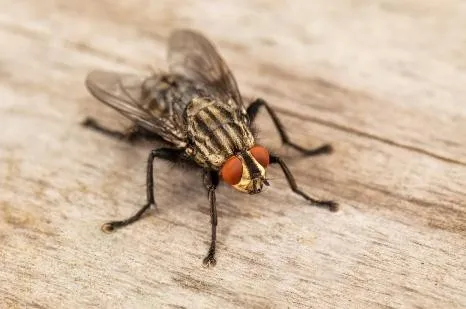
Figure No.1: House Fly
The house fly is considered a filth fly because its immature stages develop in feces, carcasses, rotting garbage, and similar sites. House fly larvae use a range of habitats, so long as they are moist and contain suitable organic nutrients. Similarly, adult house flies use various foods and, due to their short developmental cycle and high reproductive rate, can rapidly increase their population numbers.
Flies collect pathogens on their legs and mouths when females lay eggs on decomposed feces, garbage and animal corpses, thus populations of flies are increases. Diseases carried by house flies are includes typhoid, cholera and dysentery. Other diseases are like salmonella, anthrax and tuberculosis. They are also transmit the eggs of parasitic worms. The estimated actual burden of cholera is in the vicinity of 3 to 5 million cases and 100 000 to 130 000 deaths per year (Zuckerman et al., 2007). There are several ways to control or destroy the population of mosquitoes and flies by means of chemical treatments like DEET (N,N-Diethyl-meta-toluamide), DDT (dichlorodiphenyltrichloroethane), can be readily absorbed through the skin, causing many skin poisonings, especially of children. DEET is suspected to be a carcinogen, teratogen and mutagen. They also causes rashes, swelling, eye irritation, and worse problems, though unusual including brain swelling in children, anaphylactic shock, and low blood pressure (Shasany et al., 2000; Phal et al., 2012).
Thereafter house flies are controlled by organochlorines, organophosphates, pyre thyroids but these chemicals again detrimental to environment and have unwanted side effects an even long term usage of these chemicals developed insects resistance (Thomas and Jes person, 1994). Even though elimination or eradication of mosquitoes, flies or their larvae, as well as development of economic, less toxic, more effective, human friendly insect repellants have not received proper focus or attention in the research field but in recent era, the thought is gradually turned towards herbal formulations which are known to be effective against a large repertoire of diseases and ailments.
2. Flies Repellent:
An flies repellent (also commonly called "bug spray") is a substance applied to the skin, clothing, or other surfaces to discourage insects (and arthropods in general) from landing or climbing on that surface.
Plants are rich source of bioactive organic chemicals which are less toxic, less prone to development of resistance, easily biodegradable and rich storehouse of chemicals of diverse biological activity (Mudrigal et al., 1979). As per the literatures, there are very few natural plants; their formulations are available for insect repellant activities (Rani et al., 2013; Sarvamangala et al., 2014; Bhide et al., 2014; Chavare et al., 2015). Some natural products which effectively repel mosquitoes and flies are reported. Thereafter research evidences are also established on plant based oils, viz., citronella oil, Castor oil, Rosemary oil, lemongrass oil, Cedar oil, peppermint oil, clove oil, geranium oil, oils from verbena, pennyroyal, lavender, pine, cajuput, cinnamon, basil, thyme, allspice, soybean and garlic are have insect repellency activities due to presence of groups of terpenoid active compounds, but they require more frequent reapplication (at least every 2 h.) and higher concentration than chemical ones. Furthermore very few patents are available on mosquito repellants or herbal insect repellants. WHO, World Bank and NGO’s are keen to encourage and support preventive and curative research efforts in this field widely.
How To Use:
Step 1: Spray the flies repellent in the air in areas where houseflies are infested. Also, spray the fly repellent on kitchen counters and on dining tables and then wipe with a cloth.
Step 2: Keep windows open so that the Houseflies can flies away.
Step 3: Spray continuously 3-4 times a day till the houseflies disappear completely. For Indoor use only.
2.Plants Profile:
I. Lemon grass leaves
Taxonomical Classification – Kingdom: Plantae
Class: Liliopsida
Order: Poales
Family: Poaceae
Genus: Cymbopogon
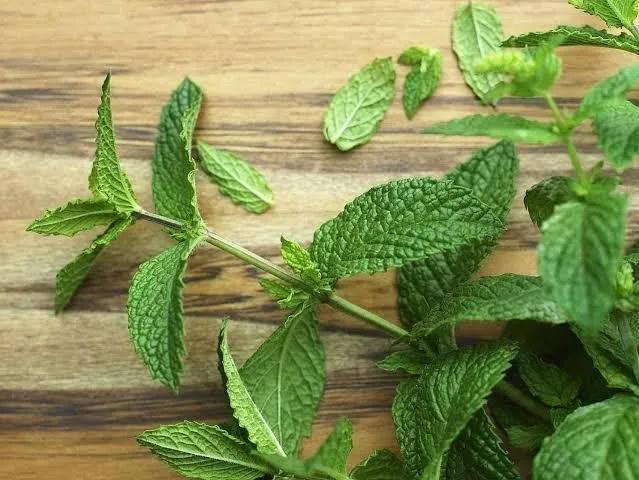
Figure No.2: Lemongrass
Chemical Constituents - The major components in most lemongrass species include neral, isoneral, geranial, isogeranial, geraniol, citronellal, citronellol, germacrene-D, and elemol
II. Neem leaves
Taxonomical Classification
Kingdom:Plantae
Class: Magnoliopsida (Dicotyledons)
Order: Sapindales
Family: Meliaceae
Genus: Azadirachta
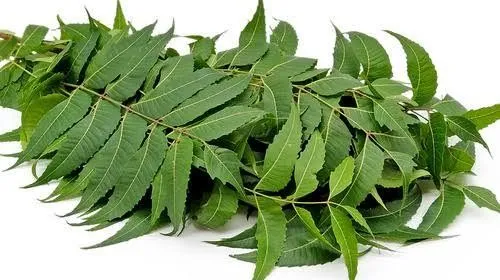
Figure No.3: Neem
Chemical Constituents –
There are different types of chemicals in different parts of this plant. Some of them being:
leafs: quercetin, nimbosterol, nimbin. Flowers: nimbosterol, kaempferol, melicitrin.
III. Peppermint
Taxomic Classification
Kingdom: Plantae
Class: Magnoliopsid
Order: Lamiales
Family: Lamiaceae
Genus: Mentha
FigureNo.4: Peppermint
Chemical Constituents -Dried peppermint typically has volatile oil containing menthol, menthone, menthyl acetate, menthofuran, and 1,8-cineol
IV. Eucalyptus leaves
Taxonomical Classification –
Kingdom: Plantae
Class: Magnoliopsida Dicotyledons
Order: Myrtales
Family: Myrtaceae
Genus: Eucalyptus
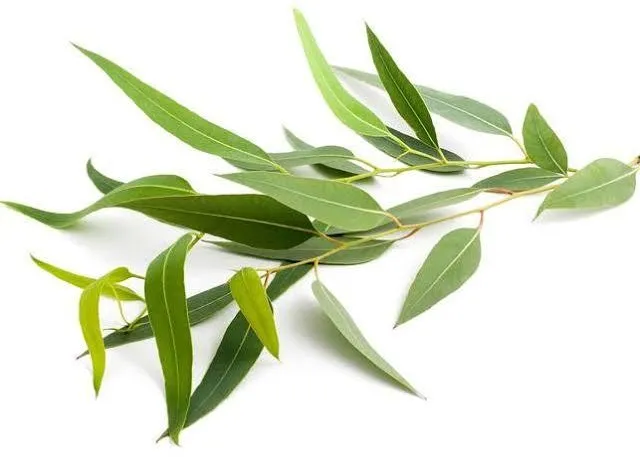
Figure No.5: Eucalytus
Chemical Constituents –
The main components were 1,8-cineole, p-cimene, a-pinene, and a-limonene.
V. Cinnamon leaves
Taxonomical Classification –
Kingdom: Plantae
Class: Magnoliopsida
Order: Laurales
Family: Lauraceae
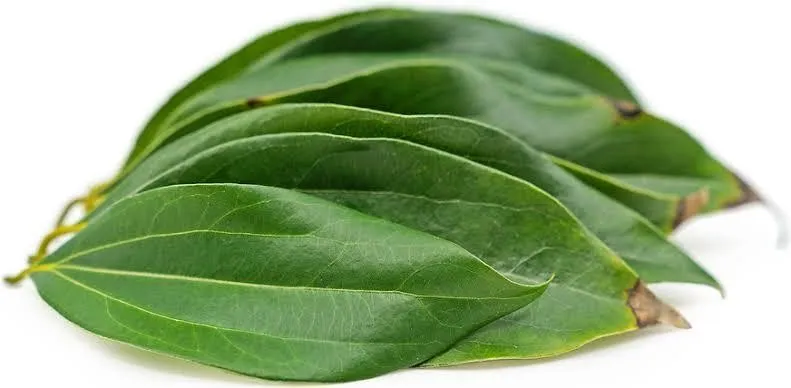
Figure No. Cinnamon
Genus: Cinnamomum
Chemical Constituents -
Cinnamon consists of a variety of resinous compounds, including cinnamaldehyde, cinnamate, cinnamic acid, and numerous essential oils.
PLAN OF WORK:

EXPERIMENTAL WORK
Apparatus:
Chemicals:
Ingredients:
1.Collection of Plant
The leaf of all individed plants were collected from the college Campus Dr.R.G.Bhoyar Institute of Pharmaceutical Education & Research, Wardha and surrounding are of college campus.
2. Cleaning of leaves
Collected leaves was washed under tap water to remove soil unwanted dust particles. Then the leaves was spread on paper to remove excess water.
3. Method Of Preparation:
All the plant leaves material were clean with distilled water and size reduce with sharp knife Weigh 150 g of leaves to place in rbf and water was pour into rbf
Then assemble the apparatus Clavenger
Extraction was carried out by hydro-distillation method at temperature 40 to 45 °C
Extraction was carried out for 15 hr
Finally the gold was estimated.

Figure No. 7: Clevenger Apparatus
Formulation of insect repellent:
Table 1: Ingredient required for herbal flies repellent
|
Sr. No. |
Ingredient |
Quantity |
|
1. |
Neem oil |
3.6 ml |
|
2. |
Lemon grass oil |
1.6 ml |
|
3. |
Peppermint |
1.2 ml |
|
4. |
Eucalyptus |
1.2 ml |
|
5. |
Cinnamon oil |
1.2 ml |
|
6. |
Ethanol |
100 ml |
Procedure:
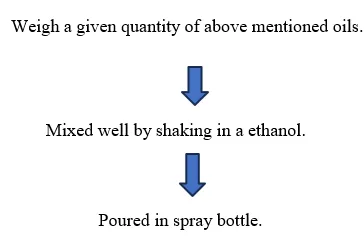
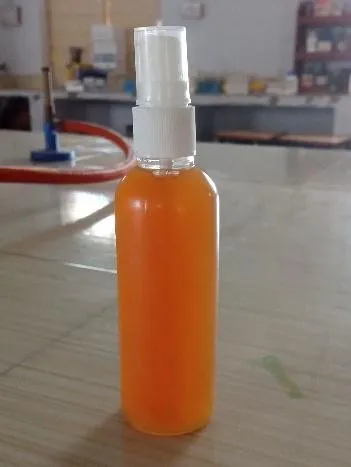
Final product
EVALUATION TESTS:
Mortality Rate
The toxicity of the oil was tested against the flies using well closed containers. Flies were inside the containers and the filter paper impregnated with test compound was attached to the inner side of cap and thin layer of cotton was used to avoid direct contact and cap was immediately closed. The mortality of flies was observed after one hour.
Table 2: Mortality rate of house flies repellent of formulated spray
|
Time (Min) |
Killed (Unit) |
Total Unit |
Mortality (%) |
|
0 |
0 |
26 |
0 |
|
10 |
4 |
26 |
15.38 |
|
20 |
7 |
26 |
26.92 |
|
30 |
10 |
26 |
38.46 |
|
40 |
14 |
26 |
53.84 |
|
50 |
17 |
26 |
65.38 |
|
60 |
21 |
26 |
80.77 |
Public survey
Public volunteer survey carried on shops in selected locality to study safety and efficacy of the formulations. The formulation was distributed to all volunteers and feedbacks were collected. The study was conducted for 1 month. The data was collected and studied statistically.
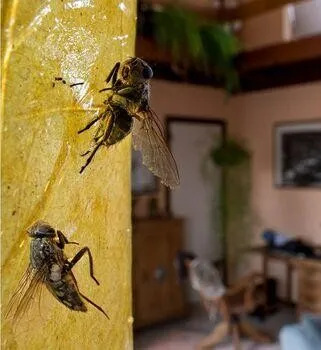
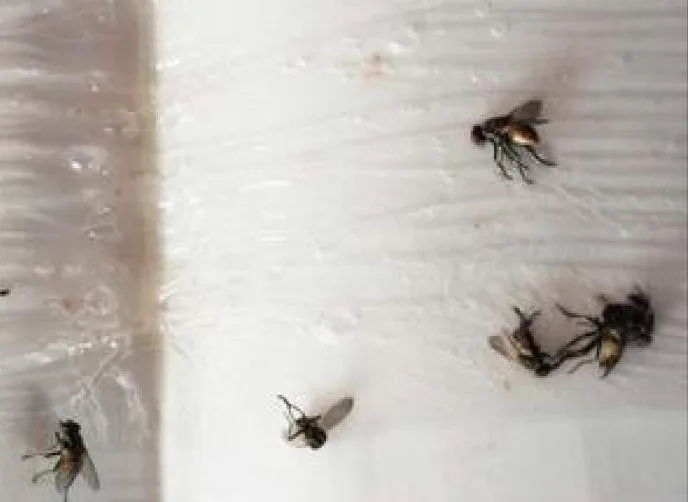
Table 3: Human survey for efficacy of formulated products
|
Shop Name |
Density of flies before using spray |
Time span |
Density of flies after using spray |
|
Gajanan Maharaj Zhunka Bhakar Kendra |
35 – 40 |
4:00 pm to 9:00 pm |
5 – 10 |
|
Hotel Vaishnavi |
40 – 50 |
4:00 pm to 9:00 pm |
10 – 15 |
|
Selani Chiken Center |
60 – 70 |
12:00 pm to 7:00 pm |
15 – 20 |
|
Ashwini Amruttulya |
30 – 45 |
4:00 pm to 9:00 pm |
10 – 15 |
|
Ashwini Amruttulya (Branch Wardha) |
20 – 35 |
4:00 pm to 9:00 pm |
5 – 10 |
|
Chanchal Idli Center |
30 – 40 |
4:00 pm to 9:00 pm |
|
RESULT
In the the present study we formulate a natural herbal house flies repellent base on the Lemongrass, Neem, Cinnamon, Peppermint, Eucalyptus, are the natural source of essential oil. Herbal flies repellent spray were formulated and evaluatetd. Individual compound present in the compound with high repellent activity include quercetin, nimbosterol, nimbin. citronellal, citronellol, germacrene-D, elemol menthol, menthone, menthyl acetate, menthofuran, 1,8- cineole, p-cimene, a-pinene, and a-limonene, cinnamaldehyde, cinnamate, cinnamic acid, and numerous essential oils. Still, synthetic chemicals are still more frequently used as repellents than essential oil,these natural products have the potential to provide efficient, and the safer repellent for humans and the environment.
DISCUSSION
Plants like Lemongrass, Neem, Cinnamon, Peppermint, Eucalyptus have better repellent efficacy rather than other plant materials. However, a single plant extract obtained from plants contributes to poor longevity as flies repellents. Therefore plant extracts of the Lemongrass, Neem, Cinnamon, Peppermint, Eucalyptus are suitable to be used as a poly herbal flies repellent. In our study, most of the formulated types of flies repellent have been shown to posses satisfactory repellency effects against flies.
CONCLUSION
Novel economical flies repellent formulations were prepared with mixed herbal oils which showed more efficiency without any side effect. The best formulation was herbal spray followed as per the human surveyed. It was also concluded that effectiveness of the product is also depends on the combined application of the herbals rather than single use to get synergistic action. The present investigation leads us to formulate more such products for human use with modern delivery systems to substantial improve in the performance of botanicals for vector and sanitary flies control than synthetic ones, and can easily available in the market with economic price for replacement to synthetic insecticide.
AKNOWLEDGEMENT
The author thanks Dr. R.G.Bhoyar Institute of pharmaceutical and research, wardha for support.
REFERENCES





Vaishnavi Vairagade*, Unnati Pempakwar, Astha Ramteke, Komal Raut, Nitin Indurwade, Green Solution Formulation And Evaluation Of Herbal House Flies Repellent Oil, Int. J. of Pharm. Sci., 2026, Vol 4, Issue 7, 3098-3108. https://doi.org/10.5281/zenodo.21379116
 10.5281/zenodo.21379116