

We use cookies to ensure our website works properly and to personalise your experience. Cookies policy
Department of Pharmacy Practice, Sant Gajanan Maharaj College Of Pharmacy (Site – chinchewadi/ Shivaji University 416503, Maharashtra, India.).
Mosquito-borne diseases remain a major global health concern, necessitating the development of safe and effective repellent systems. The present study focuses on the formulation and evaluation of polyherbal mosquito repellent dhoop sticks incorporating medicinal plant materials such as tulsi, neem, and nirgundi (Vitex negundo). The formulation was prepared using herbal powders, activated charcoal, starch as a binder, camphor, and a blend of essential oils including clove, cinnamon, and eucalyptus oils.Phytochemical screening of the extracts confirmed the presence of bioactive constituents such as alkaloids, flavonoids, tannins, phenols, and steroids, which are known to possess insect-repellent and antimicrobial properties. The prepared dhoop sticks were evaluated for physical characteristics, moisture content, burning time, ash value, repellency activity, and smoke toxicity.The results demonstrated that the formulated dhoop sticks exhibited uniform burning behavior, acceptable physicochemical properties, and significant mosquito repellent activity comparable to marketed products. The presence of active constituents such as eugenol, cinnamaldehyde, flavonoids, and terpenoids contributed to the enhanced repellent efficacy. Furthermore, the formulation showed minimal irritation and improved safety profile compared to synthetic repellents.In conclusion, the developed polyherbal dhoop sticks provide an effective, eco-friendly, and safe alternative for mosquito control and can be further explored for large-scale application.
Mosquito-borne diseases such as malaria, dengue, chikungunya, and filariasis continue to pose a major public health challenge, particularly in tropical and subtropical regions1. These diseases are transmitted through the bites of infected mosquitoes and are responsible for significant morbidity and mortality worldwide. Preventing mosquito bites remains one of the most effective strategies for controlling the spread of these infections, thereby increasing the demand for efficient mosquito repellent systems 2-3.Conventional mosquito repellents, including coils, vaporizers, and sprays, are widely used but are often based on synthetic chemicals such as pyrethroids and allethrins4. Prolonged exposure to these chemicals has been associated with adverse health effects such as respiratory irritation, headaches, allergic reactions, and potential neurotoxicity5. Moreover, continuous use of synthetic repellents has contributed to the development of resistance in mosquito populations and has raised environmental concerns due to their persistence and non-biodegradable nature6.In recent years, there has been a growing interest in herbal alternatives that are safe, eco-friendly, and sustainable. Plant-based repellents utilize natural bioactive compounds that possess insect-repellent, insecticidal, and antimicrobial properties7. These formulations are generally considered less toxic to humans and the environment while still providing effective protection against mosquitoes8. Herbal dhoop sticks, in particular, offer advantages such as ease of use, cost-effectiveness, and the ability to disperse active constituents through smoke, thereby creating a protective fumigant environment9.Medicinal plants such as neem, tulsi, and sandalwood have been traditionally used for their insect-repellent and therapeutic properties10. Neem exhibits strong insecticidal activity, while tulsi shows antimicrobial and repellent effects. Sandalwood contributes a pleasant aroma and ensures smooth and controlled combustion11. In addition to these, Vitex negundo (Nirgudi) has gained significant attention due to its potent pharmacological properties, including anti-inflammatory, antimicrobial, and insect-repellent activities12-13.The effectiveness of the formulation is largely attributed to the presence of bioactive phytoconstituents such as eugenol, cinnamaldehyde, terpenoids, and flavonoids14. Eugenol, are main component of clove oil, exhibits strong insecticidal and neurotoxic effects on mosquitoes by interfering with their nervous system, leading to repellency and mortality15. Cinnamaldehyde, present in cinnamon oil, acts as a fumigant and contact toxin, disrupting respiratory and metabolic processes in insects16. Terpenoids, widely present in essential oils and Nirgudi, contribute to repellency by affecting the olfactory receptors of mosquitoes, thereby preventing host detection 17-18. Flavonoids, on the other hand, enhance the overall biological activity by providing antioxidant, antimicrobial, and mild insecticidal effects, supporting the synergistic action of the formulation19.
From a safety and toxicological perspective, the use of herbal ingredients offers a comparatively safer alternative to synthetic repellents20. The absence of harmful synthetic chemicals reduces the risk of long-term toxicity and environmental hazards. However, it is important to consider that certain essential oils, particularly clove and cinnamon oils, may cause mild irritation if used in higher concentrations21. Therefore, maintaining an optimal concentration of essential oils is crucial to ensure safety, minimize irritation, and achieve effective repellency22. The formulated dhoop sticks are expected to produce less toxic smoke with minimal adverse effects such as coughing, eye irritation, or allergic responses when used under controlled conditions23.The selection of Nirgudi in the present study is based on its rich phytochemical profile, which includes flavonoids, terpenoids, and essential oils known to exhibit mosquito repellent and larvicidal effects 24. Incorporating Nirgudi into a dhoop stick formulation not only enhances the biological activity but also provides a novel and effective approach in developing a safe, eco-friendly mosquito repellent 25. Therefore, the present study focuses on the formulation and evaluation of polyherbal mosquito repellent dhoop sticks incorporating Nirgudi as a key active ingredient.
MATERIALS AND METHODS
Materials:
All the raw materials used in the formulation were of analytical or herbal grade. The plant-based ingredients included neem powder, tulsi powder, sandalwood powder, and nirgudi powder obtained from Vitex negundo. Activated charcoal was used as a fuel base, while starch served as a binding agent. Camphor was incorporated as an ignition enhancer and aromatic component. The essential oil blend consisted of cinnamon oil, clove oil, and eucalyptus oil, which contributed to the mosquito repellent activity due to their volatile bioactive constituents. Water was used as a granulating agent for dough preparation.
Table 1: Composition of Herbal Mosquito Repellent Dhoop Stick Formulation
|
Sr. No. |
Ingredient |
Quantity Taken |
Category / Role |
Function in Formulation |
|
1 |
Neem Powder |
10 g |
Herbal ingredient |
Natural mosquito repellent and antimicrobial agent |
|
2 |
Tulsi Powder |
10 g |
Herbal ingredient |
Provides mosquito repellent and aromatic properties |
|
3 |
Sandalwood Powder |
5 g |
Herbal ingredient |
Enhances fragrance and smooth burning |
|
4 |
Nirgudi Powder (Vitex negundo) |
10 g |
Herbal ingredient |
Possesses insect repellent activity |
|
5 |
Activated Charcoal |
15 g |
Fuel base |
Facilitates uniform combustion and smoke generation |
|
6 |
Starch |
5 g |
Binding agent |
Provides binding and structural integrity |
|
7 |
Camphor |
2 g |
Ignition enhancer |
Improves ignition and aroma |
|
8 |
Cinnamon Oil |
1 mL |
Essential oil |
Contributes to mosquito repellent activity |
|
9 |
Clove Oil |
1 mL |
Essential oil |
Provides insecticidal and aromatic properties |
|
10 |
Eucalyptus Oil |
1 mL |
Essential oil |
Acts as mosquito repellent and cooling aromatic agent |
|
11 |
Water |
q.s. |
Granulating agent |
Used for dough preparation and molding |
q.s. = Quantity sufficient
Formulation of Mosquito Repellent Dhoop Sticks:
All powdered ingredients, including neem powder, tulsi powder, sandalwood powder, nirgudi powder, activated charcoal, and starch, were initially passed through a 60–80 mesh sieve to ensure uniform particle size and to facilitate proper mixing and combustion. The sieved powders were transferred into a clean mixing vessel and blended thoroughly for 5–10 minutes to obtain a homogeneous mixture.
Camphor was finely powdered separately and incorporated into the mixture with continuous blending. The essential oils, namely cinnamon oil, clove oil, and eucalyptus oil, were premixed and added dropwise to the powder blend with constant stirring to ensure uniform distribution and proper adsorption onto the base material.
Water was added gradually to the mixture with continuous kneading until a semi-solid, non-sticky dough with adequate plasticity was formed. Care was taken to avoid excess addition of water, as it may adversely affect the burning characteristics and structural integrity of the dhoop sticks.
The prepared dough was divided into small portions and manually rolled or molded into thin sticks of approximately 8–10 cm in length and 2–4 mm in diameter. The sticks were shaped uniformly, ensuring a smooth surface without cracks or air gaps.The formed dhoop sticks were placed on clean trays and dried under shade at room temperature (25–30°C) for 24–48 hours. Direct exposure to sunlight was avoided to prevent degradation of volatile constituents and to minimize surface cracking.After complete drying, the dhoop sticks were evaluated for parameters such as ignition time, burning behavior, and smoke characteristics. The final product was stored in airtight containers to maintain stability, preserve volatile components, and ensure prolonged effectiveness.
Evaluation Parameters:
a. Physical Appearance
The prepared mosquito repellent dhoop sticks were visually inspected for their physical characteristics including color, surface texture, shape, and odor. The formulated sticks were observed to be uniformly cylindrical in shape with smooth surface texture and black coloration due to the presence of activated charcoal. The odor was found to be aromatic and pleasant, attributed to the essential oil blend and camphor. The sticks were free from visible cracks and structural deformities, indicating good binding and formulation integrity.
b. Moisture Content
The moisture content of the prepared dhoop sticks was determined by measuring the difference between the initial weight of freshly prepared sticks and the final weight after complete drying. The moisture content was calculated using the formula:
Moisture Content (%) =(Initial Weight – Final Weight / Initial Weight) × 100
Controlled moisture content is essential to ensure proper combustion, as excessive moisture may lead to incomplete burning and smoke irregularities.
c. Burning Time
The burning time of the dhoop sticks was determined by igniting one end of the stick and recording the total time required for complete combustion. The formulated dhoop sticks exhibited uniform and steady burning, indicating appropriate composition of combustible materials such as charcoal and herbal powders. Adequate burning time ensures prolonged mosquito repellent action.
Table 2: Burning Time of Prepared Dhoop Sticks
|
Batch |
Reading 1 (min) |
Reading 2 (min) |
Reading 3 (min) |
Mean ± SD |
|
F1 |
22 |
23 |
22 |
22.3 ± 0.5 |
|
F2 |
23 |
24 |
23 |
23.3 ± 0.5 |
|
F3 |
24 |
25 |
24 |
24.3 ± 0.5 |
The burning time of all formulations was found to be within the range of 22–24 minutes, indicating uniform combustion behavior among the prepared batches. The steady and controlled burning pattern ensured prolonged release of volatile bioactive constituents responsible for mosquito repellency. No significant variation was observed between batches, demonstrating good formulation consistency and reproducibility. The optimized burning duration further confirms the suitability of the formulation for practical application as an effective herbal mosquito repellent.
d. Ash Value
The ash value was determined by completely burning a known weight of the dhoop stick and measuring the residual ash. The ash obtained was minimal and uniform, indicating efficient combustion and low inorganic residue. This parameter reflects the purity and quality of the formulation.
e. Repellency Test
The mosquito repellency activity was evaluated using a controlled enclosure (mosquito cage method). A fixed number of mosquitoes were introduced into the enclosure, and the dhoop stick was ignited. The number of mosquitoes escaping or showing avoidance behavior was recorded over a specific time interval. The formulation demonstrated effective repellency, as a significant number of mosquitoes moved away from the treated area due to the release of volatile bioactive compounds.
f. Smoke Toxicity Test
The smoke toxicity test was conducted to evaluate the insecticidal effect of the dhoop smoke. Mosquitoes were exposed to the smoke generated by the burning dhoop sticks in a confined space, and mortality was recorded at regular intervals. The formulation exhibited moderate mortality, indicating that the smoke not only repels but also possesses mild toxic effects on mosquitoes due to active constituents such as essential oils and phytochemicals.
g. Safety Evaluation
The safety profile of the formulated dhoop sticks was assessed based on observation of adverse effects such as irritation, coughing, eye watering, or allergic reactions during exposure. The formulation showed minimal irritation and acceptable smoke quality, suggesting that it is relatively safe for household use when compared to synthetic mosquito repellents. This safety is attributed to the use of natural ingredients and controlled levels of essential oils.
RESULTS AND DISCUSSION
The formulated mosquito repellent dhoop sticks were evaluated for various physicochemical and biological parameters, and the results obtained are presented and interpreted below.
Table 3: Physical Evaluation of Dhoop Sticks
|
Parameter |
Observation |
|
Colour |
Black |
|
Shape |
Cylindrical |
|
Surface |
Smooth, crack-free |
|
Odour |
Pleasant, aromatic |
The prepared dhoop sticks exhibited uniform cylindrical shape with smooth surface and no visible cracks, indicating proper binding and formulation. The black color was due to activated charcoal, while the pleasant aroma was attributed to essential oils and camphor.
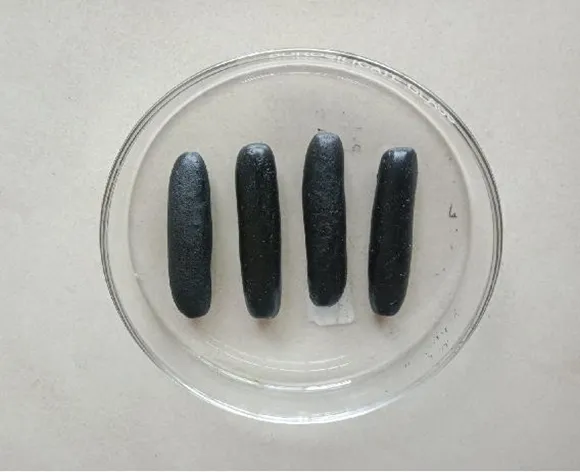
Figure1: Physical Appearance of Dhoop Sticks
Table 4: Physicochemical Parameters
|
Parameter |
Result |
|
Moisture Content |
8.5–9.5 % |
|
Burning Time |
22–26 minutes |
|
Ash Value |
0.12–0.15 % |
The moisture content was found within an acceptable range, ensuring proper combustion without excessive smoke. The burning time indicated sustained release of active constituents, which is essential for prolonged mosquito repellency. The low ash value reflects efficient combustion and minimal inorganic residue.
Burning Time Study
Table 5: Burning Time of Prepared Dhoop Sticks
|
Batch |
Reading 1 (min) |
Reading 2 (min) |
Reading 3 (min) |
Mean ± SD |
|
F1 |
22 |
23 |
22 |
22.3 ± 0.5 |
|
F2 |
23 |
24 |
23 |
23.3 ± 0.5 |
|
F3 |
24 |
25 |
24 |
24.3 ± 0.5 |
The burning time of all formulations was found to be within the range of 22–24 minutes, indicating uniform combustion behavior among the prepared batches. The steady and controlled burning pattern ensured prolonged release of volatile bioactive constituents responsible for mosquito repellency. No significant variation was observed between batches, demonstrating good formulation consistency and reproducibility. The optimized burning duration further confirms the suitability of the formulation for practical application as an effective herbal mosquito repellent.
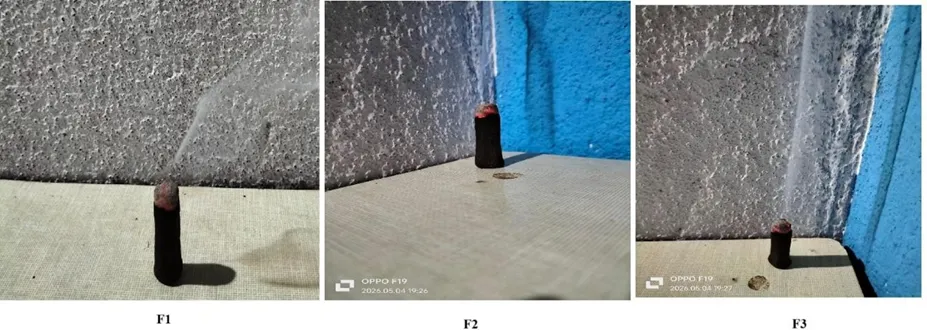
Figure 2: Burning Time Study
Ash Value Study
Table 6. Ash Value of Prepared Dhoop Sticks
|
Batch |
Reading 1 (%) |
Reading 2 (%) |
Reading 3 (%) |
Mean ± SD |
|
F1 |
0.12 |
0.13 |
0.12 |
0.12 ± 0.01 |
|
F2 |
0.13 |
0.14 |
0.13 |
0.13 ± 0.01 |
|
F3 |
0.14 |
0.15 |
0.14 |
0.14 ± 0.01 |
The ash value of all formulations was found to be low, ranging from 0.12–0.14%, indicating efficient combustion with minimal inorganic residue formation. The uniform ash formation among all batches suggests good quality, purity, and proper selection of raw materials used in the formulation. No significant variation in ash value was observed between different batches, demonstrating consistency and reproducibility of the preparation method. The low ash content further confirms the suitability of the formulation for clean burning behavior and minimal residue generation during use.
Table 7: Phytochemical Screening Results
|
Sr. No. |
Test |
Tulsi Extract |
Neem Extract |
Nirgundi Extract |
|
1 |
Alkaloids |
+ |
+ |
+ |
|
2 |
Saponins |
– |
+ |
+/– |
|
3 |
Flavonoids |
+ |
+ |
+ |
|
4 |
Tannins |
+ |
+ |
+ |
|
5 |
Carbohydrates |
+ |
+ |
+ |
|
6 |
Proteins |
– |
– |
– |
|
7 |
Steroids |
+ |
+ |
+ |
|
8 |
Phenols |
+ |
+ |
+ |
|
9 |
Proteins + Amino Acids |
+ |
+ |
+ |
(+ = Present, – = Absent)
The phytochemical screening confirmed the presence of important bioactive constituents such as flavonoids, tannins, phenols, and alkaloids in all extracts. These compounds are known to contribute significantly to mosquito repellent and antimicrobial activities. The presence of terpenoid-related compounds (indirectly indicated through plant extracts) enhances the fumigant and repellent properties of the formulation.
Table 8: Repellency Test
|
Parameter |
Marketed Coil |
Formulated Dhoop |
|
No. of Mosquitoes |
10 |
10 |
|
Mosquitoes Escaped |
9 |
8 |
|
Time (minutes) |
20 |
25 |
|
Temperature |
21°C |
21°C |
|
Burning Time |
30 min |
24 min |
The formulated dhoop sticks demonstrated significant mosquito repellency, with most mosquitoes escaping from the enclosure. Although slightly lower than the marketed product, the formulation showed comparable effectiveness, confirming the repellent potential of the herbal ingredients.
Table 9: Smoke Toxicity Test
|
Parameter |
Marketed Coil |
Formulated Dhoop |
|
No. of Mosquitoes |
10 |
10 |
|
Mosquitoes Dead |
8 |
7 |
|
Time (minutes) |
20 |
25 |
|
Burning Time |
30 min |
25 min |
The results indicate that the formulated dhoop sticks possess moderate insecticidal activity. The mortality observed is due to the presence of volatile bioactive compounds in the essential oils and herbal constituents.
DISCUSSION
The results confirm that the formulated dhoop sticks exhibit effective mosquito repellent activity along with acceptable physicochemical properties. The presence of Vitex negundo (Nirgudi) plays a crucial role in enhancing repellency due to its rich content of terpenoids and flavonoids, which interfere with mosquito olfactory receptors and reduce host detection.The essential oil blend further contributes to the overall efficacy of the formulation. Clove oil contains eugenol, which exhibits neurotoxic effects on mosquitoes, leading to repellency and mortality. Cinnamon oil provides cinnamaldehyde, which acts as a fumigant and disrupts insect respiration. Eucalyptus oil enhances the volatility and dispersion of active compounds, improving the spread of repellent smoke.The burning characteristics of the dhoop sticks were found to be satisfactory, with uniform combustion and adequate burning time. Activated charcoal facilitated sustained burning, while starch provided structural integrity. Camphor aided in easy ignition and contributed to aromatic smoke.
From a safety perspective, the formulation produced less irritating smoke compared to synthetic mosquito coils. No significant adverse effects such as excessive coughing, eye irritation, or allergic reactions were observed during evaluation. This indicates that the herbal formulation is relatively safer and environmentally friendly.Overall, the study demonstrates that the developed polyherbal dhoop sticks are effective, safe, and can serve as a potential alternative to conventional synthetic mosquito repellents.
CONCLUSION
The present study successfully demonstrated the formulation and evaluation of polyherbal mosquito repellent dhoop sticks using natural ingredients such as tulsi, neem, and Vitex negundo (nirgundi). The phytochemical screening confirmed the presence of important bioactive compounds including flavonoids, tannins, phenols, alkaloids, and steroids, which are responsible for the observed biological activity.
The formulated dhoop sticks exhibited satisfactory physical characteristics, controlled moisture content, uniform burning behavior, and low ash value, indicating good formulation stability and combustion efficiency. The repellency and smoke toxicity studies confirmed that the formulation possesses significant mosquito repellent and moderate insecticidal activity, comparable to conventional marketed products.
The effectiveness of the formulation can be attributed to the synergistic action of phytoconstituents and essential oil components such as eugenol and cinnamaldehyde, which act through fumigant and neurotoxic mechanisms on mosquitoes. Additionally, the formulation demonstrated minimal irritation and improved safety, making it a suitable alternative to synthetic chemical-based repellents.
Overall, the developed herbal dhoop sticks offer a promising, eco-friendly, and cost-effective approach for mosquito control, with potential for further optimization and large-scale commercialization.
REFERENCES


Nida Patil, Harshal Gangdhar, Shubhangi Koli, Siddhi Kamble, Sanket Gangaram Kumbhar, Karan Chougule, Dr. Vrushabh Sanghai, Dr. Jayashri Pandhare, Formulation And Evaluation of Polyherbal Mosquito Repellent Dhoop Sticks Incorporating Nirgundi, Int. J. of Pharm. Sci., 2026, Vol 4, Issue 8, 473-483, https://doi.org/10.5281/zenodo.21785678
 10.5281/zenodo.21785678