

We use cookies to ensure our website works properly and to personalise your experience. Cookies policy
1Associate Professor & HOD, Department Of Pharmaceutics, Chemists College Of Pharmaceutical Sciences And Research, Varikoli.
2,3,4,5,6Students, Department Of Pharmaceutics, Chemists College Of Pharmaceutical Sciences And Research, Varikoli.
Green synthesis of nanoparticles using herbal extracts has emerged as a sustainable and environmentally friendly alternative to conventional chemical and physical synthesis methods. Zinc oxide nanoparticles (ZnO NPs) have gained significant attention in biomedical applications owing to their unique physicochemical properties and diverse biological activities, including antimicrobial, antioxidant, anti-inflammatory, and wound-healing effects. Herbal extracts contain bioactive phytochemicals such as flavonoids, phenolics, alkaloids, terpenoids, and proteins that can facilitate the formation, stabilization, and functionalization of ZnO NPs. This review discusses recent advances in the green synthesis of ZnO NPs using herbal extracts, with emphasis on synthesis mechanisms, influencing parameters, and characterization approaches. The therapeutic potential of green-synthesized ZnO NPs and their applications in topical drug delivery are explored, particularly for wound healing, antimicrobial therapy, and dermatological applications. The role of herbal and polyherbal systems in enhancing the biological potential of ZnO NPs is also highlighted. Furthermore, safety considerations, formulation challenges, standardization, scalability, and future prospects are discussed. Overall, herbal-mediated green synthesis of ZnO NPs offers a promising approach for developing sustainable and effective nanomaterials for advanced topical drug delivery.
Nanotechnology has emerged as a rapidly advancing field with significant potential to transform modern pharmaceutical and biomedical applications. The development of nanomaterials with controlled physicochemical properties has provided new opportunities for improving drug delivery, therapeutic efficacy, and patient outcomes. Nanotechnology-driven drug delivery systems have arisen as a novel strategy to address the challenges linked to traditional drug delivery techniques, such as low solubility, restricted bioavailability, swift systemic clearance, and non-targeted distribution of therapeutic agents.1
Nanoparticles can facilitate targeted delivery of drugs directly to the affected area, enhancing the absorption of poorly soluble medications, directing drugs to precise locations, and increasing drug bioavailability.
Nanoparticles that carry drugs tend to accumulate in hair follicles, which helps facilitate the infiltration of drug molecules through the upper layers of the stratum corneum (SC), followed by the release of the drug into the deeper layers of the skin. The nanoparticles most frequently utilized for topical and/or transdermal drug delivery include polymeric nanoparticles, nano-emulsions, lipid-based nanoparticles (such as liposomes and solid-lipid nanoparticles), metal nanoparticles, and dendrimers.2
Zinc oxide nanoparticles (ZnO NPs) rank among the most widely researched metal oxide nanomaterials due to their unique physicochemical characteristics and diverse biological activities. They can be synthesized using chemical, physical, and biological methods. They are widely investigated for pharmaceutical and biomedical applications due to their antimicrobial, antioxidant, anti-inflammatory, and wound-healing properties. Their high surface area and unique physicochemical characteristics make them promising for topical drug delivery and other therapeutic applications.3
Among various methods available for the preparation of zinc oxide nanoparticle, green synthesis has emerged as a promising an eco-friendly approach. Conventional physical and chemical methods may involve high energy requirements, toxic chemicals, harsh reaction conditions and the generation of hazardous by-products. Green synthesis is an alternative eco-friendly approach that utilises biological materials such as plant extracts, microorganisms, and biopolymers for the synthesis and stabilisation of nanoparticles.4
Plant-mediated synthesis is widely explored because plant extracts are easily available, economical and relatively simple to prepare. Plant extracts contain several biologically active phytochemicals such as phenolics, flavanoids, alkaloids, tannins, saponins, terpenoids that can participate in nanoparticle formation. These phytochemicals may act as reducing, capping and stabilizing agents during the synthesis process.5
Topical drug delivery entails applying therapeutic substances directly onto the skin to provide targeted treatment while minimizing systemic absorption. Nevertheless, traditional topical formulations often encounter challenges such as inadequate penetration through the stratum corneum, insufficient drug retention, swift removal from the skin's surface, and variable drug release, all of which may diminish therapeutic effectiveness.6 Systems based on nanoparticles, including ZnO nanoparticles, have the potential to enhance drug stability, skin retention, controlled release, and therapeutic effectiveness, positioning them as promising candidates for various dermatological uses. Although there has been significant research into green-synthesized ZnO nanoparticles, their utilization in topical drug delivery, especially through polyherbal methods, is still quite limited. This review examines their synthesis, characterization, therapeutic capabilities, topical applications, safety, and future possibilities.
ZINC OXIDE NANOPARTICLES: AN OVERVIEW
Zinc oxide nanoparticles consist of nanoscale zinc oxide (ZnO) particles, typically measuring between 1 and 100 nanometers. Their nanoscale dimensions make them a subject of extensive research due to their unique optical, electrical, catalytic, antimicrobial, and UV-absorbing characteristics.
They also demonstrate notable thermal stability, photocatalytic performance, and resistance to chemical degradation. These attributes enable their use in reinforcing composite materials and in environmental technologies, including the breakdown of pollutants and energy conversion processes. Research further indicates that incorporating ZnO NPs into polymers can improve mechanical strength, thermal conductivity, and flame resistance.7
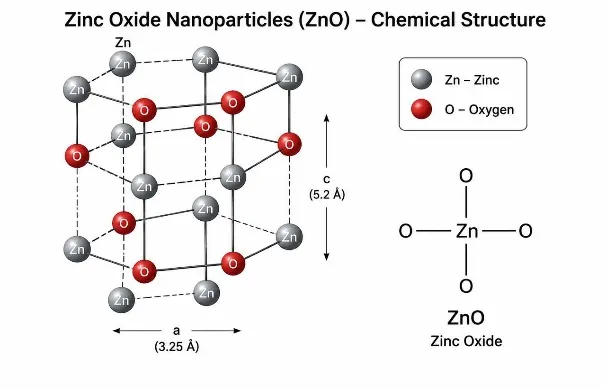
Figure 1: Zinc Oxide Nanoparticle
PROPERTIES:
1. Nanoscale dimensions – Typically range from 1 to 100 nm, which results in a significantly high surface-area-to-volume ratio.
2. Crystal structure – ZnO typically adopts a hexagonal wurtzite structure.
3. Wide band gap – Approximately 3.37 eV, which is ideal for applications related to UV electronics and optics.
4. High exciton binding energy – Around 60 meV, facilitating excitonic optical processes even at room temperature.
5. UV absorption – Exhibits strong absorption of ultraviolet light, especially below roughly 380 nm.
6. Photocatalytic properties – Capable of producing reactive oxygen species under suitable lighting conditions and can engage in photocatalytic reactions.Antimicrobial property – Exhibits activity against various bacteria and fungi.
7. Semiconducting characteristic – Demonstrates beneficial electrical conductivity and electronic properties that can be altered through defects and doping.
8. Optical characteristics – Shows strong UV emission and photoluminescence that is influenced by size and defects.
9. High surface reactivity – The extensive surface area offers many active sites for chemical reactions.
10. Chemical durability – Generally stable in a variety of environmental and processing situations.
11. Thermal durability – ZnO exhibits good thermal stability compared to various other nanoscale materials. 12. Piezoelectric characteristic – ZnO displays piezoelectric properties, making it useful for sensors and nanoelectronic applications.
13. Affordability and accessibility – Zinc and ZnO are relatively plentiful and low-cost compared to many advanced semiconductor materials.
14. Morphological variety – ZnO can be produced in forms such as nanoparticles, nanorods, nanowires, and nanosheets.8
APPLICATIONS
GREEN SYNTHESIS USING HERBAL EXTRACTS
Green synthesis presents a sustainable method for creating zinc oxide nanoparticles (ZnO NPs) by leveraging biological materials like plants and microorganisms, as well as their extracts. Herbal extracts are particularly advantageous due to their accessibility, affordability, and wealth of bioactive compounds that support the synthesis process. Traditional methods of synthesizing ZnO nanoparticles often rely on chemical reducing and stabilizing agents, which can be toxic and lead to harmful by-products. In contrast, green synthesis utilizes natural plant materials, effectively minimizing the dependence on detrimental chemicals.
In the plant-mediated approach, zinc salts like zinc acetate or zinc nitrate serve as precursors. The procedure involves mixing the herbal extract with the zinc precursor under regulated conditions of pH, temperature, and reaction time, culminating in the formation of ZnO nanoparticles.
Herbal extracts encompass a variety of naturally occurring substances, including flavonoids, phenolic compounds, alkaloids, terpenoids, proteins, sugars, and tannins. These compounds interact with zinc ions, playing active roles in the synthesis of nanoparticles.
The phytochemicals function as: -
Therefore, the composition of the herbal extract can significantly influence the size, shape, morphology, stability, and biological activity of the synthesized ZnO NPs.
Phytochemicals in ZnO Nanoparticle Synthesis:
Various phytochemicals play distinct roles in the synthesis of nanoparticles. Flavonoids and phenolic compounds feature functional groups that can effectively interact with zinc ions. Additionally, terpenoids, proteins, sugars, and other biomolecules contribute to the stabilization and surface modification of nanoparticles. The abundance and type of these phytochemicals vary based on plant species, specific plant parts, extraction methods, solvents used, and extraction conditions. As a result, different herbal extracts can yield ZnO nanoparticles with varying physicochemical and biological properties.11
MECHANISM OF GREEN SYNTHESIS
The green synthesis of zinc oxide nanoparticles (ZnO NPs) using herbal extracts occurs through a series of phytochemical-mediated reactions, in which plant-derived compounds assist in the formation, growth, and stabilization of nanoparticles.
a) Preparation of Herbal Extract:
The selected plant material is washed, dried, and powdered. It is then extracted using a suitable solvent, commonly water or ethanol. The resulting extract contains bioactive phytochemicals such as flavonoids, phenolics, alkaloids, terpenoids, proteins, and sugars.
b) Interaction with Zinc Precursor:
The herbal extract is mixed with a zinc salt such as zinc acetate or zinc nitrate. Phytochemicals present in the extract interact with Zn²⁺ ions through their functional groups.
c) Nucleation and Formation of ZnO:
The interaction between Zn²⁺ ions and phytochemicals promotes the formation of zinc-containing nuclei. With continued reaction and appropriate heating, these nuclei grow and undergo conversion to ZnO nanoparticles.
d) Growth and Stabilization:
The newly formed nanoparticles undergo controlled growth. Phytochemicals adsorb onto their surface and act as capping and stabilizing agents, limiting particle aggregation and influencing the final size and morphology.12
Role of Reaction Conditions
The synthesis is strongly influenced by:
These factors determine the particle size, shape, crystallinity, and stability of the resulting ZnO NPs.13
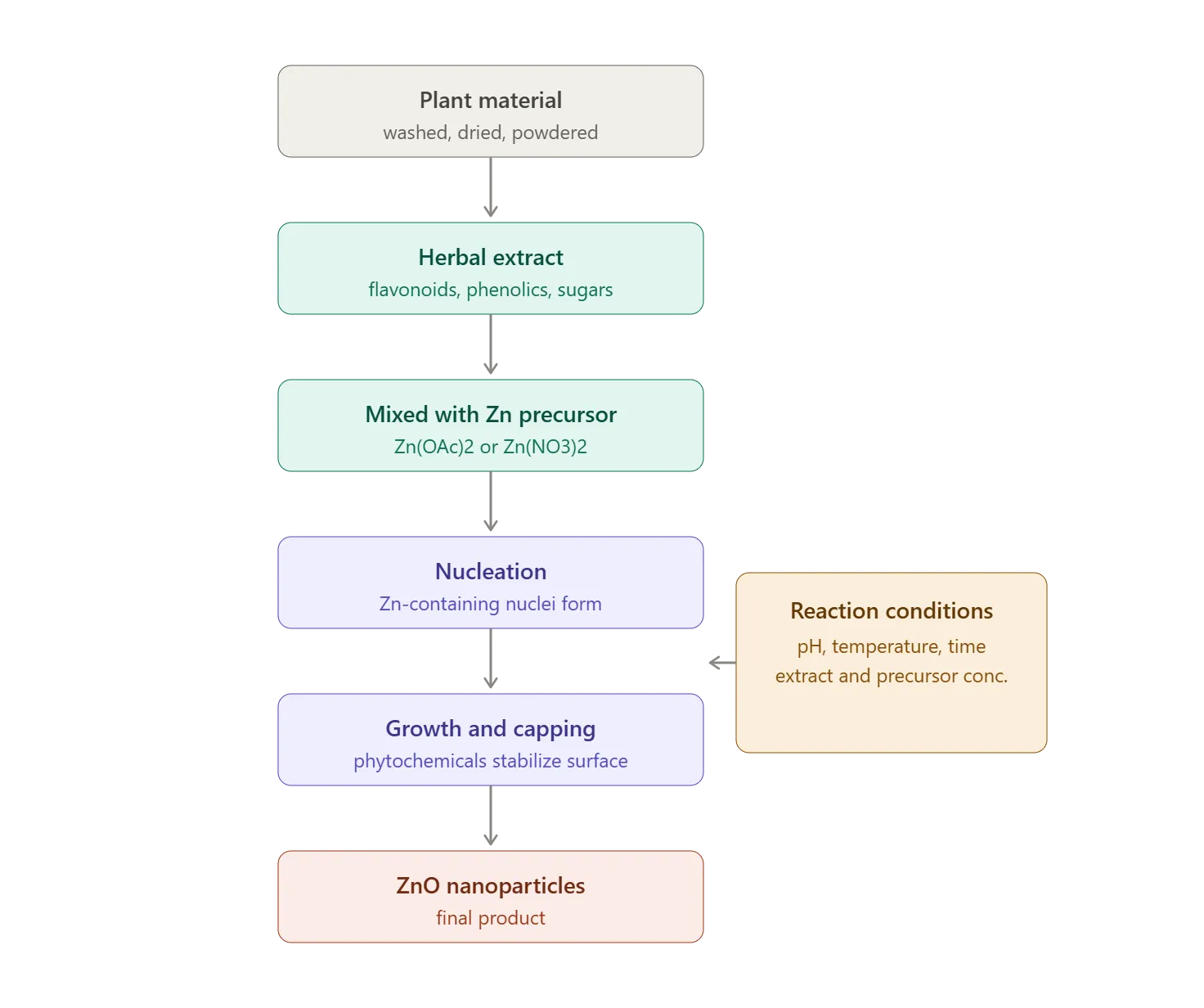
Figure 2: Mechanism of Green Synthesis
CHARACTERISATION OF ZnO NANOPARTICLES
1. UV–Visible Spectroscopy:
UV–Visible spectroscopy is a straightforward method for confirming the formation of ZnO nanoparticles. These nanoparticles display distinct absorption characteristics in the ultraviolet spectrum, primarily linked to their electronic and optical properties. By analyzing the absorption spectrum, one can gather insights into the optical attributes and approximate band-gap energy of the nanoparticles. Variations in the absorption peak might indicate differences in particle size, morphology, and aggregation.
2. Fourier Transform Infrared Spectroscopy (FTIR):
FTIR spectroscopy is essential for identifying the functional groups present on the surface of ZnO nanoparticles. Its significance is heightened in green synthesis, as it helps to ascertain the role of plant-derived phytochemicals. Functional groups associated with phenolic compounds, flavonoids, proteins, carbohydrates, and other biomolecules may interact with zinc ions, becoming part of the nanoparticle surface. Thus, FTIR offers valuable evidence of how herbal phytochemicals assist in capping and stabilizing ZnO NPs.
3. X-Ray Diffraction (XRD):
XRD is instrumental in determining the crystalline nature, crystal structure, and phase composition of ZnO nanoparticles. This technique confirms whether the synthesized material is indeed crystalline ZnO. Additionally, the width of the diffraction peaks can be utilized to estimate the average crystallite size, often employing the Scherrer equation. Therefore, XRD plays a crucial role in evaluating the structural quality of green-synthesized ZnO NPs.
4. Scanning Electron Microscopy (SEM):
SEM delivers in-depth information about the surface morphology and shape of nanoparticles. It can illustrate whether the particles are spherical, rod-shaped, irregular, or aggregated. The images obtained through SEM can also provide estimates of particle size and assess the extent of particle aggregation. Understanding these morphological characteristics is vital, as the shape and size of particles can significantly influence surface area, interaction with microorganisms, and the biological efficacy of ZnO NPs.
5. Transmission Electron Microscopy (TEM):
TEM offers higher-resolution insights compared to conventional microscopy and is widely employed to assess the actual size, shape, morphology, and distribution of individual nanoparticles. This technique can reveal whether the nanoparticles are well-dispersed or form aggregates. Since the size of nanoparticles can affect cellular uptake and therapeutic activity, TEM analysis is particularly beneficial for biomedical applications.
6. Dynamic Light Scattering (DLS):
DLS is utilized to determine the hydrodynamic diameter and particle-size distribution of ZnO nanoparticles when they are dispersed in a liquid medium. It's important to note that the hydrodynamic size may exceed the physical size observed by TEM, as it encompasses the particle along with the surrounding layer of solvent or molecules attached to its surface. DLS is therefore useful for evaluating dispersion and aggregation behavior in formulations intended for topical or pharmaceutical applications.
7. Zeta Potential:
Zeta potential reveals key details about the surface charge of nanoparticles, serving as a critical measure of colloidal stability. Typically, a higher surface charge—whether positive or negative—enhances electrostatic repulsion among particles, thereby decreasing the likelihood of aggregation. This makes zeta potential a valuable tool for evaluating the stability of ZnO nanoparticle suspensions and formulations.
8. Energy-Dispersive X-Ray Spectroscopy (EDX/EDS):
EDX is usually conducted alongside SEM or TEM to analyze the elemental composition of the synthesized nanoparticles. This technique is essential for verifying the presence of zinc and oxygen, and it can also give insights into the elemental purity of the sample. This is particularly beneficial when confirming that the green synthesis process has yielded ZnO, as opposed to any undesired inorganic phases.14
BIOLOGICAL AND THERAPEUTIC ACTIVITIES
Green-synthesized ZnO nanoparticles are known for their diverse biological activities, attributed to their tiny size, increased surface area, the generation of reactive oxygen species (ROS), the release of Zn²⁺, and the presence of bioactive phytochemicals from herbal extracts.
ZnO NANOPARTICLES IN TOPICAL DRUG DELIVERY
Topical drug delivery is important for the treatment of a variety of skin diseases since it enables the therapeutic agent to be applied directly to the affected area. Zinc oxide nanoparticles (ZnO NPs) have become notable in topical drug delivery thanks to their nanoscale size, high surface area, antimicrobial properties, UV-protective action, and capability to interact with active pharmaceutical ingredients. Further advantages may be provided by green-synthesized ZnO NPs because of the phytochemicals linked to the nanoparticle surface.
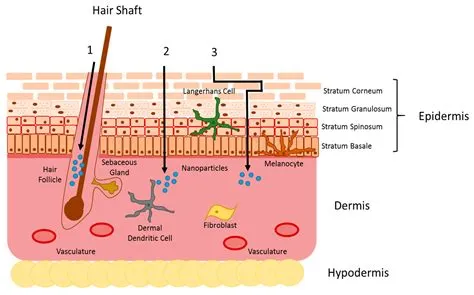
Figure 3: ZnO Nanoparticle-Mediated Topical Drug Delivery
The skin barrier and topical delivery:
The skin consists of three main layers: the epidermis, the dermis, and the hypodermis. The stratum corneum, which is the outermost section of the epidermis, functions as the main barrier preventing the entry of foreign substances, such as drugs. While this barrier safeguards the body, it may also hinder the delivery of therapeutic agents into the skin.
Topical delivery is thus useful for producing a local therapeutic effect, for reducing the amount of drug absorbed systemically, and for increasing patient convenience. It is especially advantageous for the treatment of skin infections, wounds, inflammation, burns, and other dermatological conditions.
Advantages:
Compared with conventional topical formulations, zinc oxide nanoparticles have several advantages. Because of their small particle size and large surface area they can enhance their interaction with both the formulation and the skin surface. They also have inherent antimicrobial, antioxidant, anti-inflammatory, and photoprotective properties, all of which can contribute to their therapeutic effects. ZnO NPs can also be included in various topical dosage forms, for example in creams, gels, hydrogels, ointments, films, and wound dressings. The green synthesis method can even further improve their biological potential by incorporating phytochemicals derived from plants.
a) Drug Loading and Release:
ZnO nanoparticles are capable of incorporating or associating with drugs, herbal extracts, and other bioactive compounds, the drug loading taking place by means of surface adsorption or other physicochemical interactions between the drug and the nanoparticle surface.
The system based on nanoparticles is capable of giving a controlled and sustained release of the drug, thus enabling the active ingredient to stay at the target site for a long time. The rate at which the drug is released depends on the size of the particles, their surface characteristics, the properties of the drug, the composition of the formulation, and the environmental conditions.
b) Skin retention and penetration:
The way that zinc oxide nanoparticles interact with the skin can affect how much of the active ingredients are retained and distributed among the various layers of the skin. In the case of topical treatment, greater retention in the skin would be desirable since it allows for a longer duration of local action while reducing exposure throughout the body.
c) Penetration is influenced by a number of factors, such as particle size, surface charge, formulation type, the properties of the drug, the condition of the skin, and the length of time the substance is in contact with the skin. Nanoparticle characteristics therefore have to be carefully optimized in relation to the specific therapeutic application.16
The factors which affect topical performance:
The effectiveness of ZnO NP-based topical formulations depends on several formulation and biological factors, including:
Green-synthesized ZnO NPs as a whole constitute a promising multifunctional platform for topical drug delivery, since they combine the properties associated with drug delivery with their inherent therapeutic activities. Yet it is essential to optimise the formulation characteristics, skin penetration, efficacy, and safety before these nanoparticles can be translated into clinical applications.17
HERBAL AND POLYHERBAL APPROACHES FOR TOPICAL APPLICATIONS
Table 1: Herbal Plants Used in Topical Applications and Their Reported Biological Activities.
| HERBAL/PLANT EXTRACT | PLANT PART USED | MAJOR PHYTOCHEMICALS | REPORTED BIOLOGICAL ACTIVITY | POTENTIAL TOPICAL APPLICATIONS |
|---|---|---|---|---|
| Aloe vera Aloe vera (L.) Burm.f. |
Leaf (gel / latex) | Anthraquinones (aloin, emodin) Polysaccharides (acemannan) Flavonoids, phenolic acids |
ZnO NPs: antibacterial vs. E. coli, S. aureus, S. typhi, B. subtilis, K. pneumoniae (MIC 0.013–0.063 mg/mL) |
Antibacterial wound dressings and topical antiseptic gels |
| Neem Azadirachta indica A. Juss |
Leaf | Flavonoids, phenols, alkaloids, terpenes, tannic compounds | ZnO NPs: shape-dependent antimicrobial activity |
Antiseptic/antimicrobial topical formulations, acne care |
| Tulsi (holy basil) Ocimum sanctum L. |
Leaf | Phenolics, flavonoids (eugenol-related compounds) |
ZnO NPs: antibacterial vs. P. aeruginosa (41 mm zone at 100 µg); antibiofilm (biofilm disruption, EPS degradation) |
Antibiofilm topical/oral-care formulations for infected wounds |
| Moringa Moringa oleifera Lam |
Leaf | Phenolic compounds Alkaloids, flavonoids |
ZnO NPs: antibacterial vs. Gram +/− strains; concentration-dependent antioxidant (DPPH scavenging, up to 67% at 100 µg/mL) |
Antioxidant wound-healing dressings and topical gels |
| Turmeric Curcuma longa L. |
Rhizome | Curcuminoids (curcumin) Phenolic compounds |
ZnO NPs: antibacterial (E. coli, S. aureus, S. pyogenes), antifungal (C. albicans), antioxidant (superoxide/NO/H2O2 scavenging) |
Antimicrobial/antifungal topical creams and ointments |
| China rose Hibiscus rosa-sinensis L. |
Leaf | Flavonoids, anthocyanins Phenolic acids |
ZnO NPs: antibacterial and antifungal (boosted activity vs. undoped ZnO in Fe-doped formulation) |
Topical antibacterial/antifungal nanocomposite preparations |
| Green tea Camellia sinensis (L.) Kuntze |
Leaf | Catechins (e.g., EGCG) Polyphenols, flavonoids |
ZnO NPs: antibacterial vs. E. coli, S. aureus; strong antioxidant (DPPH, H2O2 assays); in vitro antitumor activity (HeLa cells) |
Antioxidant / anti-aging topical formulations |
| Guava Psidium guajava L. |
Leaf | Flavonoids (quercetin) Tannins, phenolics |
ZnO NPs: antibacterial activity against selected bacterial strains |
Topical antibacterial preparations |
| Pomegranate Punica granatum L. |
Fruit peel | Punicalagins, ellagic acid Gallic acid, flavonoids |
ZnO NPs: dose-dependent antimicrobial activity vs. Gram +/− bacteria and fungi |
Antimicrobial/antioxidant topical formulations |
| Asiatic pennywort Centella asiatica (L.) Urb. |
Leaf | Triterpenoids (asiaticoside, asiatic/madecassic acid) Flavonoids |
ZnO NPs: photoprotective (SPF 14.12, 93.9% UV-protection in a cosmetic mask formulation); antibiotic adsorption capacity |
Sunscreen / photoprotective cosmetic-topical products |
Polyherbal Approaches
Polyherbal approaches use two or more medicinal plant extracts together for ZnO nanoparticle synthesis. The different phytochemicals may contribute to nanoparticle formation and biological activity.
Advantages
SAFETY, CHALLENGES, AND FUTURE PERSPECTIVES
Safety
Although green-synthesized ZnO nanoparticles show promising therapeutic potential, their safety and biocompatibility need to be carefully evaluated before they are used in topical formulations. Their biological effects can vary depending on factors such as particle size, concentration, surface properties, and exposure time.
Therefore, dose optimization, cytotoxicity studies, skin irritation testing, and in vivo safety evaluations are important before clinical application.
Challenges:
Despite the advantages of herbal-mediated ZnO nanoparticles, several challenges remain in their development as pharmaceutical products. One of the major concerns is the variation in the chemical composition of herbal extracts, which can affect nanoparticle formation and biological activity.
Future Perspectives:
Future research should focus on improving the standardization, safety, reproducibility, and therapeutic performance of green-synthesized ZnO nanoparticles.
Polyherbal synthesis may be explored by combining different medicinal plants to obtain complementary or synergistic biological effects. Optimized topical formulations, including creams, gels, hydrogels, nanoemulgels, films, and wound dressings, could further improve drug delivery and therapeutic outcomes.
Greater attention should also be given to the standardization of plant materials, extraction procedures, and nanoparticle synthesis conditions. The incorporation of ZnO NPs into advanced nanocarrier systems may provide better drug loading, controlled release, and improved skin targeting.
Finally, more in vivo studies and well-designed clinical trials are required to establish their therapeutic efficacy, skin penetration, toxicity, and long-term safety. Addressing these issues will be essential for translating herbal-mediated ZnO nanoparticles from laboratory research into safe, effective, and clinically useful topical pharmaceutical products.20
CONCLUSION
Green synthesis of zinc oxide nanoparticles (ZnO NPs) using herbal extracts has emerged as a promising and sustainable approach for developing multifunctional nanomaterials for biomedical applications. Plant-derived phytochemicals can act as natural reducing, capping, and stabilizing agents during nanoparticle synthesis, while also contributing to their biological activity. Green-synthesized ZnO NPs have demonstrated important antibacterial, antifungal, antioxidant, anti-inflammatory, antibiofilm, and wound-healing properties, making them particularly attractive for topical applications.
The incorporation of ZnO NPs into topical drug-delivery systems may improve drug stability, skin retention, controlled release, and localized therapeutic action. Herbal and polyherbal approaches may further enhance these effects by providing a combination of bioactive phytochemicals. However, variations in herbal composition, nanoparticle size, synthesis conditions, stability, toxicity, and reproducibility remain important challenges.
Future research should focus on standardized green synthesis methods, optimized topical formulations, advanced nanocarrier systems, comprehensive safety evaluation, and well-designed in vivo and clinical studies. With appropriate optimization and regulatory evaluation, herbal-mediated ZnO nanoparticles have considerable potential to develop into safe and effective topical therapeutic systems.
REFERENCES






Neeba Babu, Devika Prasad, Anupama Arackal, Alin Khadeeja K. M., Aparna Jayaprakash, Afnitha Aliyar, Green Synthesis of Zinc Oxide Nanoparticles Using Herbal Extracts: A Review of Therapeutic Properties and Applications in Topical Drug Delivery, Int. J. of Pharm. Sci., 2026, Vol 4, Issue 11, 4854-4866. https://doi.org/10.5281/zenodo.24548732
 10.5281/zenodo.24548732