

We use cookies to ensure our website works properly and to personalise your experience. Cookies policy
Department of Pharmacognosy, Ashokrao Mane Institute of Pharmacy Ambap 416112
The current research aims to develop and assess a herbal lip balm containing Nyctanthes arbor-tristis extract to improve lip protection and nourishment. Lips are highly sensitive and prone to dryness, cracking, and environmental damage, which necessitates the use of safe and effective protective formulations. The herbal lip balm formulations developed in this research contained natural constituents including beeswax, coconut oil, castor oil, almond oil, and Nyctanthes arbor-tristis extract, which was incorporated for its antioxidant and anti-inflammatory activities. The formulations were developed using the fusion method and evaluated for various physicochemical parameters including color, texture, pH, melting point, spreadability, homogeneity, stability, and skin irritation. The results indicated that all formulations were stable, non-irritant, and exhibited satisfactory properties suitable for lip application. The variation in extract concentration influenced the color intensity and consistency of the formulations. Among the prepared batches, formulation F2 was found to be optimal due to its balanced composition, smooth texture, and better spreadability. The study concludes that Nyctanthes arbor-tristis can be effectively incorporated into herbal lip balm formulations as a natural alternative to synthetic ingredients, providing both cosmetic and therapeutic benefits. This formulation offers a safe, economical, and eco-friendly approach to lip care.
1.1 The History of Ayurveda:
Ayurveda, recognized as one of the oldest holistic healthcare systems in the world, began in India over 5,000 years ago and has its origins in the Vedic era, with early mentions appearing in the Rig Veda around 1500 BCE; the word “Ayurveda” comes from the Sanskrit terms “Ayur,” meaning life, and “Veda,” meaning knowledge or science, together signifying “the science of life.”.[1] Classical Texts
The core principles of Ayurveda are detailed in several classical texts:
1. The Charaka Samhita, attributed to the sage Charaka, is a comprehensive work on internal medicine that discusses diagnosis, treatment methods, and the fundamental principles of medical practice, and is regarded as one of the most authoritative texts in Ayurveda.[2-3]
2. The Sushruta Samhita, credited to the sage Sushruta, primarily focuses on surgical science (Shalya Tantra) and describes various surgical procedures, instruments, and therapeutic techniques in Ayurveda.It shows numerous surgical procedures, instruments, and the importance of anatomy. Sushruta is often referred to as the "father of surgery" for his contributions to the field.[4-5]
3. Ashtanga Hridaya: Written by Vagbhata, this text is a concise compilation that integrates the concepts from both Charaka Samhita and Sushruta Samhita, making it one of the most accessible and practical guides to Ayurveda.[6]
Philosophical Foundations
Ayurveda is deeply intertwined with Indian philosophy, particularly the Sankhya school of thought, which posits that the universe is composed of two fundamental entities: Purusha (consciousness) and Prakriti (matter). It also includes the concept of the five basic elements (Panchamahabhutas)—earth, water, fire, air, and ether—which are believed to constitute all living and non-living matter, and these elements combine to form the three vital doshas: Vata (air and ether), Pitta (fire and water), and Kapha (earth and water), whose balance is considered essential for maintaining health and body constitution in Ayurveda. [7]
Spread and Influence
Ayurveda flourished in ancient India and influenced medical practices in neighboring regions. It significantly impacted traditional medicine systems in countries such as China, Tibet, Sri Lanka, and Thailand. The spread of Buddhism from India facilitated the dissemination of Ayurvedic knowledge across Asia. [8]
Decline and Revival
With the advent of Islamic rule in India and later British colonialism, Ayurveda experienced a period of decline. The introduction of Western medicine marginalized traditional practices. However, in the late19th and early 20th centuries, there was a resurgence of interest in Ayurveda, spurred by the nationalist movement and a renewed appreciation for indigenous knowledge systems.[9]
Modern Era
In contemporary times, Ayurveda has gained global recognition. It is integrated into the healthcare systems of countries like India and Sri Lanka, where it is practiced alongside modern medicine. Ayurvedic principles are also applied in various fields such as diet, lifestyle, and holistic wellness. Institutions dedicated to Ayurvedic education and research continue to proliferate, ensuring the growth and adaptation of this ancient science to meet modern health challenges.[10]
1.2 Reasons for using polyherbal formulation
Polyherbal formulations, a cornerstone of Ayurvedic medicine, involve the combination of multiple herbs to create a synergistic therapeutic effect. Here are the key reasons for their use
Polyherbal formulations are considered to produce a synergistic effect in which the combined action of multiple herbs offers greater therapeutic benefits than their individual effects alone, thereby improving efficacy and providing a wider range of activity against different diseases. [11]
2. Reduced Toxicity and Side Effects
Combining multiple herbs can help mitigate the toxicity of individual herbs. The presence of various compounds can balance each other, reducing potential side effects.[12]
3. Broader Therapeutic Scope
Different herbs in a formulation can target multiple pathways and aspects of a disease, providing a more comprehensive treatment approach. This is particularly useful in managing complex, chronic conditions.[13]
4. Enhanced Bioavailability
Certain herbs can enhance the bioavailability of other herbs' active compounds. This means that the body can absorb and utilize these compounds more effectively.[14]
5. Holistic Approach
Polyherbal formulations support the holistic principles of Ayurveda by helping to maintain balance within the body and enhance overall well-being instead of focusing only on individual symptoms or specific diseases..[15]
6. Adaptation and Versatility
Polyherbal formulations can be tailored to individual needs, accommodating variations in dosha balance and specific health conditions. This customization allows for a more personalized approach to treatment.[16]
1.3 Topical Drug Delivery System
Introduction
TDDS indicates to the application of a drug directly onto the skin or mucous membranes, allowing it to act locally or systemically. This method is commonly used to treat dermatological conditions, deliver pain relief, and administer certain systemic medications.
These systems provide several advantages, including localized drug action, reduced systemic absorption, and minimized side effects, making them particularly effective for managing skin-related ailments.
In this context, the integration of polyherbal formulations into topical drug delivery systems has garnered significant interest. Polyherbal preparations, which combine extracts from multiple medicinal plants, leverage the synergistic effects of various bioactive compounds, enhancing therapeutic efficacy while reducing the likelihood of resistance development. This research explores the formulation of a polyherbal antifungal soap incorporating extracts from Ocimum sanctum (Tulsi), Azadirachta indica (Neem), Cuminum cyminum (Jeera), and Trachyspermum ammi (Ova). These herbs have been selected based on their welldocumented antifungal, anti-inflammatory, and skin-soothing properties.
The primary aim of this study is to develop an effective polyherbal antifungal soap that delivers active compounds directly to the affected skin areas, providing a natural and safe alternative to conventional synthetic antifungal agents. The soap's formulation process, antifungal efficacy, and dermatological safety are systematically evaluated to establish its potential as a novel topical drug delivery system.
By addressing the growing need for effective antifungal treatments and leveraging the benefits of herbal medicine, this research seeks to contribute to the development of safer, more efficient therapeutic options for managing fungal infections and promoting overall skin health.
Advantages of Topical Drug Delivery System
1. Targeted delivery through topical application enables the drug to act directly at the affected site, enhancing local drug concentration while minimizing systemic absorption and side effects.
2. Convenience and Ease of Use: Topical formulations are generally easy to apply, enhancing patient compliance and convenience, especially for treating skin conditions.
3. Non-Invasive: Topical delivery avoids the need for injections or oral ingestion, making it a non-invasive method of drug administration.
4. Rapid Onset of Action: Drugs applied topically can act more quickly on the site of application, providing faster relief from symptoms.
5. Flexibility in Dosage Forms: Topical drugs can be formulated in various forms such as creams, ointments, gels, patches, and lotions, allowing for versatility in treatment approaches.
6. Localized Treatment with Systemic Effects: In some cases, topical drugs can achieve systemic effects through transdermal delivery, offering an alternative to oral or injectable routes.[17]
Disadvantages of Topical Drug Delivery System
The skin functions as a protective barrier, allowing only certain drugs to penetrate effectively and achieve the desired therapeutic concentration.
2. Variable Absorption
The rate and extent of drug absorption can vary significantly between individuals due to differences in skin condition, thickness, hydration, and site of application.
3. Skin Irritation and Sensitization
Topical formulations can cause local adverse reactions such as irritation, redness, itching, and allergic reactions, especially with long-term use.
4. Potential for Systemic Absorption
While topical delivery aims for localized treatment, some drugs can be absorbed systemically, potentially leading to unintended systemic effects and side effects.
5. Short Contact Time
Topical formulations can be easily removed by washing, sweating, or friction, reducing their contact time with the skin and thus their effectiveness.
6. Formulation Stability
Many topical formulations, especially those containing natural or sensitive ingredients, can have stability issues, leading to reduced efficacy over time. [18]
Factors Affecting Topical Drug Delivery
Penetration Enhancers
Penetration enhancers are agents that temporarily decrease the resistance of the skin barrier, thereby improving drug permeation, and common examples include alcohol, propylene glycol, and various surfactants..[20]
Evaluation of Topical Drug Delivery Systems
1. In vitro studies are performed using Franz diffusion cells to evaluate the permeation of drugs through excised human or animal skin under controlled laboratory conditions.
2. In Vivo Studies: Measuring the drug concentration in the skin or systemic circulation after topical application in animal models or human volunteers.
3. Skin Irritation Tests: Assessing the potential of the formulation to cause irritation or allergic reactions. [21-22]
Applications of Topical Drug Delivery
Herbal Lip Balm Formulation Incorporating Nyctanthes arbor-tristis
Introduction:
Lips are delicate structures lacking sebaceous glands, making them highly susceptible to dryness, cracking, and environmental damage such as UV exposure and pollution. Lip balms are widely used cosmetic preparations designed to protect, moisturize, and restore the natural condition of the lips. Conventional lip care products often contain synthetic additives, artificial colorants, and preservatives, which may cause irritation or long-term adverse effects. [25]
Herbal lip balms utilize plant-based ingredients such as natural waxes, oils, and extracts that provide hydration, nourishment, and therapeutic benefits. The incorporation of medicinal plants into lip care products enhances their functional value by providing antioxidant, anti-inflammatory, and healing properties. [26]
Nyctanthes arbor-tristis, commonly known as Parijat or Night-flowering jasmine, is a medicinal plant from the Oleaceae family known for its antioxidant, antimicrobial, anti-inflammatory, and wound-healing properties, making it useful for topical applications. [27]
The plant contains various bioactive compounds including flavonoids, glycosides, alkaloids, tannins, and essential oils that contribute to its therapeutic activities by reducing inflammation, promoting healing, and protecting skin tissues from oxidative damage.Due to these properties, Nyctanthes arbor-tristis holds great potential for use in cosmetic formulations, particularly in lip care products. [28]
Incorporating Nyctanthes arbor-tristis extract into a herbal lip balm can provide dual benefits of protection and therapy. It may help in soothing chapped lips, reducing inflammation, and enhancing lip health while avoiding the harmful effects of synthetic ingredients.
Thus, it aims for formulation and Evaluation of a herbal lip balm incorporating Nyctanthes arbor-tristis extract, focusing on its physicochemical properties, stability, and effectiveness in lip care. [29]
Advantages of Polyherbal Lip Balm
Natural and safe formulation
Use of herbal ingredients reduces the risk of irritation and toxicity compared to synthetic lip care products.
Therapeutic properties
Nyctanthes arbor-tristis possesses anti-inflammatory, antioxidant, and antimicrobial activities that help in healing chapped and damaged lips.
Moisturizing effect
Natural oils and waxes used in the formulation provide long-lasting hydration and prevent dryness.
Eco-friendly and biodegradable
Herbal formulations are environmentally friendly and support sustainable cosmetic development.
Reduced side effects
Absence of harmful chemicals like parabens and synthetic dyes minimizes allergic reactions and long-term adverse effects.
Disadvantages of Polyherbal Lip Balm
Short shelf life
Herbal formulations may degrade faster due to the absence of strong synthetic preservatives.
Stability issues
Natural extracts can be sensitive to light, heat, and oxidation, affecting product stability.
Variability in raw materials
The composition of plant extracts may vary depending on source, season, and processing conditions.
Limited color intensity
Herbal ingredients may not provide as vibrant or consistent color as synthetic pigments.
Cost and availability
High-quality herbal raw materials may be costly or not easily available in all regions.
2. PLANT PROFILE OF Nyctanthes arbor-tristis
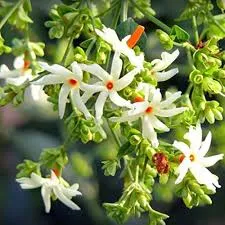
Fig 1: Nyctanthes arbor-tristis
1. Scientific Name: Nyctanthes arbor-tristis
2. Family: Oleaceae
3. Common Names: Parijat, Night-flowering jasmine, Harsingar, Coral jasmine
4. Biological Source: Nyctanthes arbor-tristis consists of the leaves, flowers, and seeds of a small tree belonging to the family Oleaceae. It is widely used in traditional systems of medicine for various therapeutic purposes. [30]
5. Geographical Distribution: The plant is mostly found in South Asia and Southeast Asia and is commonly found in India, Nepal, and surrounding regions. It grows well in tropical and subtropical climates and is often cultivated in gardens and forests. [31]
6. Morphological Characteristics: It is a small tree or shrub that can grow up to about 10 meters in height. The bark is grey and rough, while the leaves are simple, opposite, and slightly hairy. [32]
7. Chemical Constituents: The plant contains several chemical constituents such as:
Flavonoids, Alkaloids, Glycosides, Tannins, Sterols and triterpenes,
8. Pharmacological Activities: Nyctanthes arbor-tristis possesses several biological activities such as antioxidant, anti-inflammatory, antimicrobial, hepatoprotective, and wound-healing effects, which make it beneficial for treating skin disorders and enhancing tissue repair. [33]
9. Role in Lip Balm Formulation: In herbal lip balm formulations, Nyctanthes arbor-tristis is used for its antioxidant and anti-inflammatory properties, which help soothe dry and cracked lips, protect against environmental damage, and support healing while enhancing the therapeutic and cosmetic value of the product. [34]
3. Eperimental Procedure/Methodology
1. Collection and Preparation
Fresh leaves and flowers of Nyctanthes arbor-tristis were collected from a reliable source, authenticated, washed with distilled water to remove impurities, shade-dried at room temperature, powdered using a mortar and pestle, and stored in an airtight container for further use. [35]
2. Preparation of Extract
The powdered plant material was extracted using ethanol or a hydroalcoholic solvent by maceration for 48–72 hours with occasional shaking, followed by filtration and concentration of the filtrate on a water bath to obtain a semi-solid extract for formulation purposes. [36]
3. Preparation of Herbal Lip Balm (Fusion Method)
The lip balm was prepared using the fusion method:
Beeswax and butter (shea butter or cocoa butter) were accurately weighed and melted together on a water bath.
After complete melting, oils such as coconut oil, castor oil, and almond oil were added slowly with continuous stirring.
The prepared Nyctanthes arbor-tristis extract was incorporated into the melted base and mixed uniformly.
Vitamin E was added as an antioxidant to improve stability.
Finally, a small quantity of essential oil (rose or peppermint) was added for fragrance.
The mixture was stirred continuously to obtain a uniform consistency. [37]
4. Moulding and Solidification
The molten lip balm mixture was poured into pre-cleaned and dry moulds or lip balm containers. Taken care to avoid air bubbles during pouring. The filled moulds were allowed to cool at room temperature until complete solidification occurred. The prepared lip balm was then stored in airtight containers. [38]
5. Evaluation of Lip Balm
a. Physical Appearance
The formulation was visually evaluated for its color, texture, smoothness, and uniformity.
b. pH Determination
A small quantity of lip balm was dispersed in distilled water, and the pH was measured using a pH meter to ensure compatibility with lip skin.
c. Melting Point
The melting point was examined by heating a small sample and noting the temperature at which it melted.
d. Spreadability
The ease of application was tested by applying the lip balm on a glass surface and observing its spreading behavior.
e. Stability Study
The formulation was stored under different temperature conditions and observed for changes in color, odor, or consistency over time.
f. Skin Irritation Test
A small amount of the formulation was applied to the skin to check for irritation, redness, or allergic reactions. [39]
Formulation Table:
|
Ingredients |
Batches |
Role |
||
|
Nyctanthes arbor-tristis extract |
0.5 |
1 |
1.5 |
Natural colorant & therapeutic agent |
|
Beeswax |
6 |
6 |
6 |
Stiffening agent |
|
Coconut oil |
5 |
5 |
5 |
Moisturizer |
|
Castor oil |
4 |
4 |
4 |
Gloss enhancer |
|
Almond oil |
3 |
3 |
3 |
Emollient |
|
Shea butter / Cocoa butter |
2 |
2 |
2 |
Softening agent |
|
Vitamin E |
0.5 |
0.5 |
0.5 |
Antioxidant |
|
Rose/Peppermint oil |
Q.S |
Q.S |
Q.S |
Flavoring agent |
4. Result:
The prepared formulations (F1, F2, and F3) were evaluated for different physicochemical parameters, and all batches showed satisfactory results. The color of the formulations varied with composition, where F1 showed a light greenish shade, F2 exhibited a moderate green color, and F3 developed a dark green appearance. All formulations possessed a pleasant odor, indicating good acceptability. The texture of F1 and F2 was smooth, while F3 was slightly thick, likely due to higher concentration of components.
The pH of the formulations was found to be between 6.4 and 6.6, which is considered suitable for topical application. The melting point showed a gradual increase from F1 (60–62°C) to F3 (62–64°C), suggesting improved firmness with increased concentration of ingredients. Spreadability was found to be good for F1 and F3, whereas F2 exhibited very good spreadability, indicating better ease of application.
All formulations were uniform in consistency, confirming proper mixing of ingredients. Stability studies indicated that all batches remained stable without any significant changes in physical properties. Additionally, no skin irritation was observed in any formulation, confirming their safety for use. Overall, formulation F2 demonstrated the most balanced characteristics among all batches.
5. CONCLUSION
The study of formulation and evaluation of a herbal lip balm incorporating Nyctanthes arbor-tristis extract using natural ingredients. The prepared formulations (F1, F2, and F3) exhibited satisfactory physicochemical properties, including appropriate pH, good spreadability, acceptable melting point, and uniform consistency. The inclusion of Nyctanthes arbor-tristis provided additional therapeutic benefits such as antioxidant, anti-inflammatory, and soothing effects, which are useful in the management of dry and chapped lips.
All formulations were found to be stable under different storage conditions and showed no signs of irritation, indicating their safety for topical application. Variation in extract concentration influenced color intensity and consistency, with formulation F2 demonstrating the most balanced characteristics in terms of appearance, texture, and ease of application.
Overall, the study concludes that Nyctanthes arbor-tristis can be effectively utilized in herbal lip balm formulations as a natural and safe alternative to synthetic ingredients. The developed formulation offers a promising, eco-friendly approach to lip care with both cosmetic and therapeutic advantages.
REFERENCES


Anamika Waingade*, V.A.Mahajan , Dr. N. B Chougule, Herbal Lip Balm formulation incorporating Nycta nthes arbor-tristis: Preparation and Evaluation, Int. J. of Pharm. Sci., 2026, Vol 4, Issue 9, 3382-3392. https://doi.org/10.5281/zenodo.22960850
 10.5281/zenodo.22960850