

We use cookies to ensure our website works properly and to personalise your experience. Cookies policy
Siddhi’s Institute of Pharmacy, Nandgaon. Tal. Murbad, Dist. Thane, 421401,.
To regulate perspiration can have serious side effects. thereby reducing the effica Excessive perspiration that exceeds what is normal for environmental factors and thermoregulatory demands is known as hyperhidrosis. Medications or general medical disorders may cause primary or secondary hyperhidrosis. Studies estimate that primary hyperhidrosis affects nearly 3% of the population. The pathophysiology of hyperhidrosis is unclear. Eccrine glands, which are concentrated in the forehead, soles, and palms, and axillae, are innervated by sympathetic nervous system cholinergic fibers. One of this system's intricate dysfunctions is probably a contributing factor to the disease. Hyperhidrosis primary raises the possibility of cutaneous infection and has a substantial psychological strain and a detrimental effect on life quality. Although topical antiperspirants are quick and simple to use, their short half-life and potential for skin irritation are drawbacks. Systemic drugs, especially anticholinergics decrease perspiration, but the dosage needed cray of the drugs. Iontophoresis is a straightforward and well-received technique for the treatment of hyperhidrosis without causing long-term problems, but long-term maintenance therapies are necessary to maintain patients' symptom-free status. Over the years, botulinum toxin A has become a popular treatment for hyperhidrosis. last five to six years, with research yielding positive findings. Regretfully, botulinum toxin A is not a long-term fix. and patients require repeat injections every 6–8 months to maintain benefits. Psychotherapy has proven advantageous in a few instances. More importantly, excessive sweating of the face, hands, feet, or armpits can seriously impair a patient's ability to interact with others, work, engage in physical exercise, and enjoy leisure activities. It can also create emotional and psychological distress.
Hyperhidrosis is a long-term condition in which sweating exceeds the body′s normal needs for temperature regulation. It is classified into primary (focal) and secondary (generalized) forms. Secondary hyperhidrosis is associated with underlying conditions such as infectious, endocrine, metabolic, neurological, neoplastic, cardiovascular, respiratory, or psychological disorders. In contrast, primary hyperhidrosis is idiopathic and is thought to result from increased sympathetic nerve activity that stimulates eccrine sweat glands. It usually causes localized excessive sweating on the palms, soles, underarms, face, or scalp in otherwise healthy individuals. Although benign, the condition can significantly impair quality of life by interfering with everyday routines, interpersonal relationship, and work-related activities performance, often leading to psychosocial distress.[1,2,6,15]
Epidemiological studies indicate that hyperhidrosis is more prevalent than previously recognized, with reported prevalence rates of approximately 1% in adolescents and up to 2.8% in the general population. Despite its clinical impact, hyperhidrosis remains underdiagnosed and insufficiently characterized. Treatment options include topical and systemic therapies, physical modalities, and surgical interventions. Botulinum toxin (BT) has become a widely used therapeutic option for localized condition hyperhidrosis, with newer formulations such as Xeomin® potentially offering pharmacological advantages. Further research is required to optimize and standardize management strategies.[1,2,3]
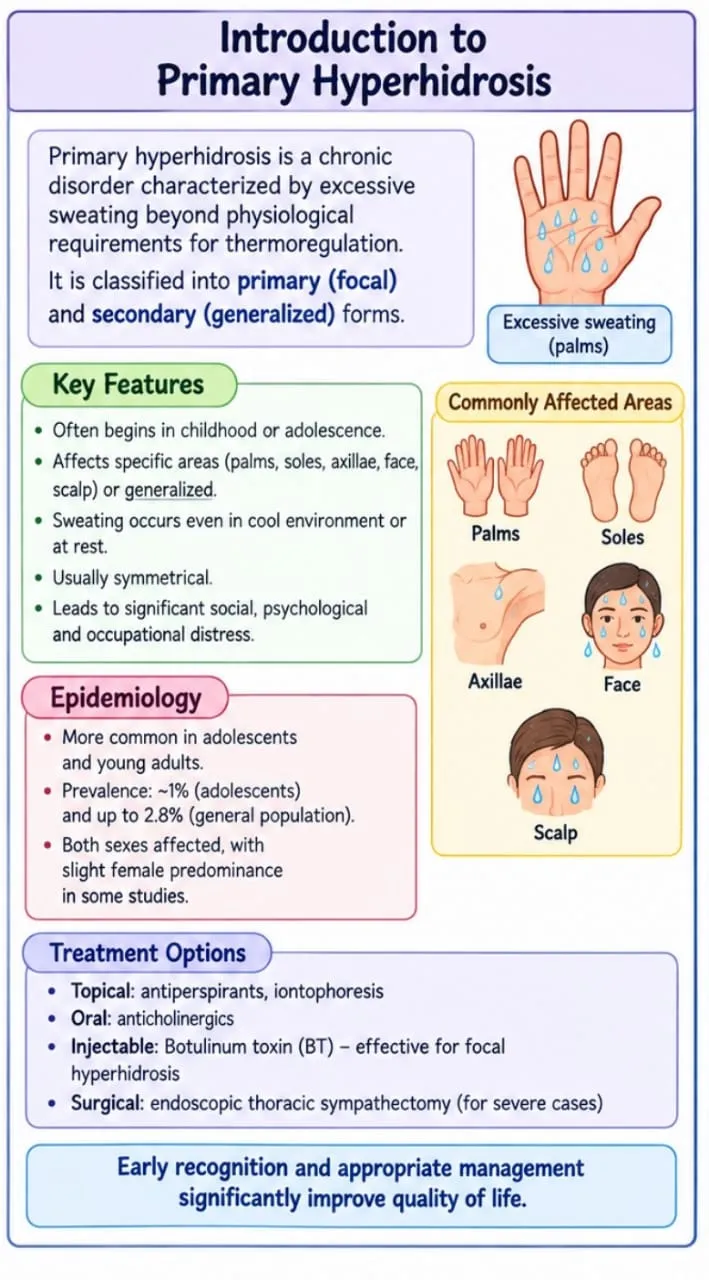
Figure 1: Introduction to Primary Hyperhidrosis
Mechanism
Excessive perspiration in the hands and feet occurs due to an unusual interaction between physiological processes thermoregulatory and emotional sweating pathways. Thermoregulatory sweating, which serves as the primary mechanism for heat dissipation, is controlled by the hypothalamic preoptic region and associated with the activity of eccrine sweat glands distributed throughout the body. Emotional sweating, regulated by higher cortical centers such as the anterior cingulate cortex, is limited mainly to the face, axillae, palms, and soles.[1,9,18]
Both neural pathways meet at the neurons located with the intermediolateral column of the spinal cord and activate sympathetic efferent fibers. Postganglionic sympathetic nerve endings secrete acetylcholine, activating muscarinic receptors present on eccrine sweat glands to produce sweat. Eccrine glands are abundant in glabrous skin, particularly the palms and soles, which are also richly innervated by sympathetic vasoconstrictor fibbers. In healthy individuals, palmar and plantar sweating at rest is largely emotionally driven. In primary hyperhidrosis, emotional triggers can cause an exaggerated sweating response provoke exaggerated sweating that is absent during sleep. Increased sympathetic activity also causes vasoconstriction, resulting in cold, clammy hands. Enhanced sweating during heat or exercise further indicates combined hyperactivity of emotional and thermoregulatory pathways. These findings support a central sympathetic mechanism underlying primary hyperhidrosis.[1,9]
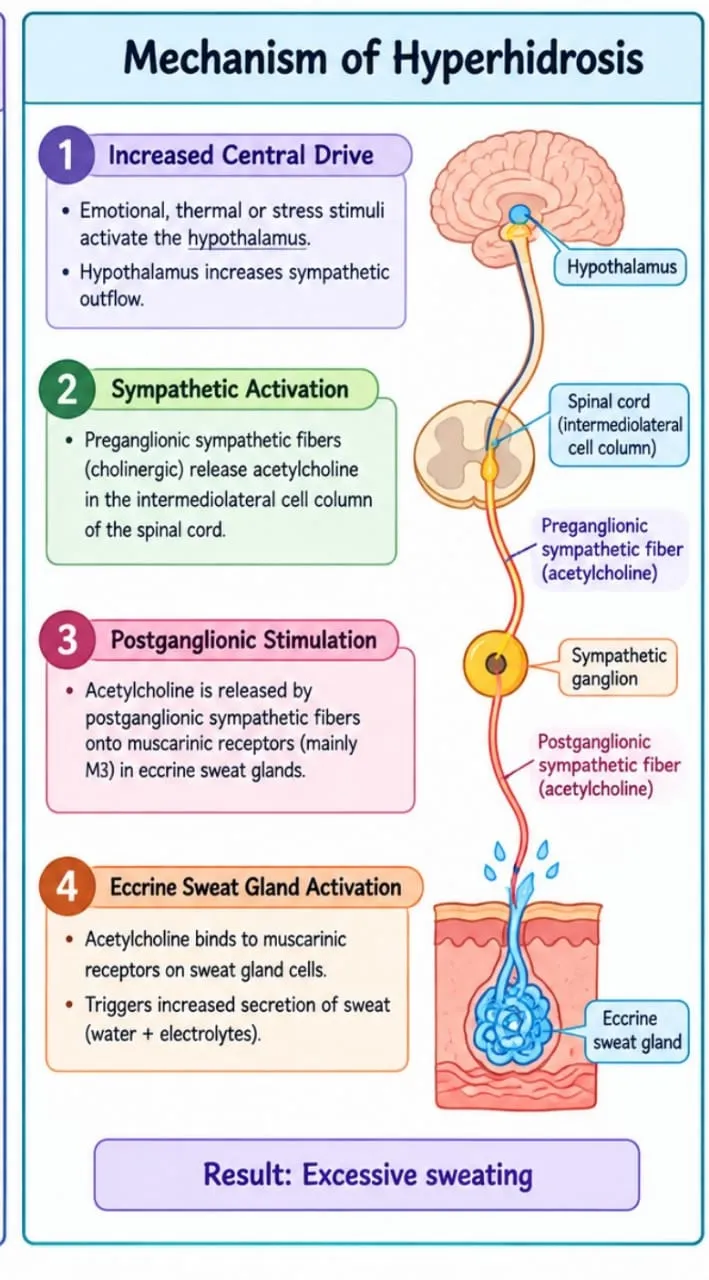
Figure 2: Mechanism of Hyperhidrosis
Diagnosis of Hyperhidrosis:-
Hyperhidrosis is mainly diagnosed through clinical evaluation, with particular emphasis on the patient′s reported symptoms and medical history and physical examination. Most patients report excessive sweating beginning in childhood or adolescence. Palmar hyperhidrosis commonly interferes with manual activities and may lead to social and professional embarrassment, avoidance behaviors, and psychosocial distress. It is frequently associated with severe perspiration in the foot region may promote unpleasant smells, moisture-related skin damage, and microbial infections. When excessive sweating is confined to the armpits, changes in local sweat gland function may be involved and apocrine gland activity, while craniofacial hyperhidrosis is rare and typically triggered by emotional or environmental stimuli.[6,15]
Primary focal hyperhidrosis presents as bilateral, symmetrical excessive sweating characterized by excessive perspiration in specific body region, such as the hands, feet, underarms, or face, without any detectable systemic disorder a with absence of symptoms during sleep. Secondary causes must be excluded through clinical evaluation.[15,18]
Additional tests are generally not required for diagnosis but may aid in localization and severity assessment. The starch-iodine method is used to detect region of increased sweat production. While gravimetry provides quantitative measurement. When an underlying medical condition is suspected or to assess treatment outcomes.[1,18]
Overall, a detailed history and focused examination are sufficient for diagnosing primary focal hyperhidrosis, with adjunctive tests reserved for selected cases.[15]
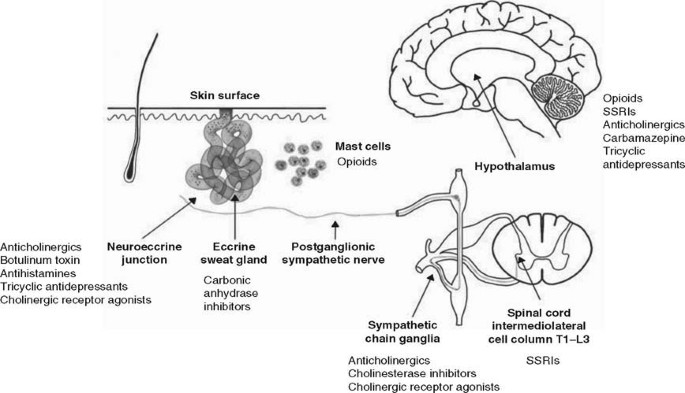
Figure None: 3. A Sympathetic Sudomotor Nerve and an Eccrine Sweat Gland in Glabrous Skin.
Included are the mechanisms of action of the therapeutic modalities for hyperhidrosis (see text). Surgical sympathetic denervation actually is performed more proximally, under video assisted thoracoscopy, interrupting the corresponding extremity innervation along the thoracic sympathetic chain. The mechanism of action for iontophoresis is unknown. ACh = acetylcholine; M = muscarinic cholinergic receptor.
Treatment of Hyperhidrosis:
Anticholinergic therapy has historically demonstrated the role of cholinergic pathways in sweat production. Systemic anticholinergics agents, including atropine and glycopyrrolate are rarely used for palmar or plantar hyperhidrosis due to adverse effects, but may be beneficial in craniofacial hyperhidrosis. Topical glycopyrrolate (0.5%) has shown efficacy in reducing craniofacial sweating. Clonidine, an α2-adrenergic agonist, may reduce sympathetic activity and improve symptoms when carefully titrated, with nighttime dosing minimizing sedation.[7,8,15]
Localized hyperhidrosis is often initially managed with preparations applied to the skin that contain aluminium-based compounds to help control perspiration and antiperspirants, applied at bedtime with maintenance therapy as needed. Patients unresponsive to topical therapy may benefit from botulinum toxin injections. Surgical interventions, including sweat gland removal or endoscopic sympathectomy, is generally considered only for patients with severs symptoms that do not respond to other treatments, as it may lead to increased sweating in other parts of the body. Evidence supporting iontophoresis and systemic anticholinergics for axillary hyperhidrosis remains limited.[9,12,16]
Figure 4: Stepwise Treatment of Hyperhidrosis
| Treatment step | Therapy | Indication /notes |
|---|---|---|
| First -line | Topical aluminium chloride antiperspirant | Applied at bedtime to dry skin; helps manage localized sweating when symptoms are not sever maintenance every 1-3 weeks. |
| Second -line (medical) | Topical glycopyrrolate (0.5⁒) Clonidine (oral) |
Particularly effective for craniofacial hyperhidrosis reduce central sympathetic activity; useful in selected patient with emotional triggers; nighttime dosing preferred. |
| Third -line (Injectable) | Botulinum toxin injections | Effective for focal hyperhidrosis refractory to topical therapy |
| Adjunct option | Iontophoresis or systemic anticholinergics | Limited evidence; systemic anticholinergics associated with adverse effects. |
| Last resort (Surgical) | Sweat gland removal or endoscopic sympathectomy | Reserved for severe, refractory cases; risk of compensatory hyperhidrosis |
DISCUSSION:
Excessive sweating of the hands and feet is a frequently encountered condition that can considerably affect an individuals quality of life, particularly in warm and humid climates. Although surgical sympathectomy provides permanent symptom relief, its high rate of postoperative reflex sweating and potential complications limit its acceptability. Treatment with botulinum toxin can reduce excessive sweating for a limited period, although repeated session may be necessary to maintain the benefits associated with functional discomfort.[12,16]
In contrast, d.c. iontophoresis represents a noninvasive and well-tolerated treatment option with a favorable safety profile. The high satisfaction rate observed in this study supports its role as an effective therapeutic alternative, particularly for patients unwilling or unsuitable for invasive procedures. The simultaneous improvement of palmar and plantar sweating following localized treatment suggests central modulation of sweat regulation, possibly involving hypothalamic feedback mechanisms.[3,4,12]
The frequent association with emotional triggers and family history further supports a central autonomic component in the pathophysiology of palmoplantar hyperhidrosis. Overall, iontophoresis should be considered a valuable first- or second-line therapy, while surgical and injectable treatments may be reserved for refractory cases.[3,4,12]
CONCLUSION:
Tap-water iontophoresis using direct current represents a safe, effective, and a nonsurgical treatment approach for controlling excessive sweating of the hands and feet. A structured treatment protocol achieves meaningful symptom control, and repeat treatment courses may provide enhanced benefit following recurrence. Improvement in plantar sweating may also be observed during treatment of palmar disease. Given its favorable safety profile, simplicity of administration, and good patient tolerance, iontophoresis should be considered an early therapeutic option in primary hyperhidrosis, before proceeding to botulinum toxin therapy or surgical sympathectomy.
RESULT:
In a survey of 150,000 households, 69% responded and 64% completed all components for prevalence estimation. Weighted analysis indicated a hyperhidrosis prevalence of 2.9% in the US, affecting approximately 7.8 million individuals, with similar rates in males (2.9%) and females (2.8%). Average age of affected individuals was 40 years, with onset at 25 years. Prevalence peaked in adults aged 25–64 years (3.5–4.5%) and was lowest in children under 12 (0.5–0.7%). Only 38% had discussed symptoms with a healthcare professional, more commonly females (47.5%) than males (28.6%).
Axillary hyperhidrosis affected 50.8% of hyperhidrotic individuals (~4 million), with mean onset at 22 years and peak prevalence at 18–54 years. About 19% had axillary hyperhidrosis as the only affected site.
In a cohort of 112 patients (mean age 20.3 ± 4.9 years), hyperhidrosis was palmar in 7.1%, palmoplantar in 78.6%, and palmoplantoaxillary in 14.3%. Emotional triggers (89.2%) and family history (53%) were common; no patients had psychiatric or endocrine abnormalities.
Direct current iontophoresis reduced palmar sweat in 81.2% of patients, from 2.98 ± 1.19 to 0.39 ± 0.12 g/h (right) and 3.04 ± 1.32 to 0.52 ± 0.15 g/h (left) (P < 0.001). Plantar sweating improved in 65 responders. Minor transient adverse effects included erythema, vesicles, and burning.
REFERENCES


Vaishali Pawar, Tejaswini Asawe, Aditya Arun Ram, Rohit Ajay Kumar, Puneet Vinod Kumar Pandey, Hyperhidrosis : A Comprehensive Review of Pathophysiology , Diagnosis and Treatment, Int. J. of Pharm. Sci., 2026, Vol 4, Issue 11, 3066-3071. https://doi.org/10.5281/zenodo.24339386
 10.5281/zenodo.24339386