
View Article

  • Resistance in Uncommon Genetic Disorders: Unlocking the Potential of Ai-Driven Pharmacogenomics

  • 1Centre for Research and Innovation (CRI), Amritsar Group of Colleges, Amritsar, Punjab, India.

    2Department of Pharmaceutical Sciences, Global Group of Institutes, Sohian Khurd, NH -54, Amritsar – 143501 (Punjab) India.

    3,4Department of Pharmaceutical Sciences, Guru Nanak Dev University, Grand Trunk Road, Off NH 1, Amritsar-143005, Punjab, INDIA.

Abstract

Multidrug resistance continues to be the principal barrier to the clinical treatment of uncommon genetic illnesses, severely impeding therapeutic outcomes. Traditional drug development models as well as treatment models do not take into account patient-specific genomic differences. The convergence of AI with pharmacogenomics demonstrates a strong base that can be leveraged to promote therapeutic precision and resistance. Reflecting the current individual-treatment-strategy focus necessary for patients with rare diseases, this review discusses the potential paradigm-shifting impact of AI-facilitated pharmacogenomic approaches in drug discovery. We describe how computational methods—such as machine learning and deep learning—can be used to predict pharmacologic performance, to discover new therapeutic targets, and to understand molecular mechanisms of multidrug resistance (MDR) in rare genetic diseases. Even with much advancement, significant barriers still exist in producing precision therapeutics that can effectively counter MDR, becoming rigorously clinically validated, and translating AI platforms to span diverse genomic datatypes. In stating these unmet gaps, we outline focused research directions that can address these gaps and enable the development of more effective, genomically informed therapeutic strategies bridging computational modeling and clinical translation. This review emphasizes how crucial interdisciplinary cooperation is to the development of AI-driven precision medicine for uncommon diseases, which has the potential to significantly enhance patient outcomes and therapeutic efficacy.

Keywords

Pharmacogenomics, Artificial Intelligence, Multidrug Resistance, Precision Medicine, Rare Genetic Disorders

Introduction

× Popup Image

A significant obstacle to the discovery of new treatments for uncommon genetic illnesses is multidrug resistance (MDR), since individuals with MDR often show reduced responsiveness to standard treatment plans [1]. By enabling clinically relevant personalization of treatment, pharmacogenomics, which customizes drug regimens based on patient-specific genetic profiles, holds significant promise for overcoming these therapeutic obstacles [2]. However, the intricacy of underlying genomic diversity and the lack of extensive datasets linking genetic factors with therapy outcomes continue to limit its application in uncommon genetic illnesses [3]. By enabling high-throughput analysis of large-scale datasets to identify novel drug targets and forecast therapeutic success, recent advancements in artificial intelligence (AI) offer a strong framework to supplement pharmacogenomics [4]. Drug discovery in rare genetic illnesses could be drastically changed by AI-based modeling approaches, but significant gaps in domain knowledge still stand in the way [5]. These constraints include the limited clinical validation of AI-driven models, the lack of reliable, high-fidelity datasets tailored to uncommon genetic illnesses, and ongoing challenges in integrating heterogeneous multi-omics data [6]. Furthermore, because of the complex dynamics of drug-drug interactions and the significant variation among patient populations, developing precision therapies that can overcome multidrug resistance (MDR) continues to be a difficult task [7]. The potential of AI-integrated pharmacogenomics to close present gaps is examined in this review, which also provides a summary of recent findings and outlines future directions for developing successful treatment approaches for uncommon genetic illnesses [8]. Current research on multidrug resistance in rare genetic illnesses is fragmented and lacks an integrative analytical framework, despite significant advancements in pharmacogenomics and artificial intelligence [9]. Translational adoption is nevertheless hampered by persistent limitations in clinical validation and significant data heterogeneity. In order to maximize precision-guided treatment development, this study comprehensively examines current AI-enabled pharmacogenomic approaches, identifies key flaws, and develops an integrative framework [10].

METHODOLOGY

To maximize the retrieval of relevant literature, the review was conducted using a highly structured bibliographic search. Publications published between 2015 and 2026 were methodically searched through the major scientific databases PubMed, Scopus, Web of Science, and Google Scholar.

Keywords such as ‘artificial intelligence’, ‘pharmacogenomics’, ‘multidrug resistance’, ‘rare genetic disorders’, and ‘precision medicine’ were used in combination with Boolean operators. Peer-reviewed primary research and review articles about AI applications in pharmacogenomics and multidrug resistance were among the eligibility requirements. Studies that were published in languages other than English, were restricted to conference abstracts without complete papers, or had no direct bearing on the specified topic were not included. The selected studies were critically analyzed to identify technological advancements, comparative performance of AI models, and existing research gaps.”

3. PHARMACOGENOMIC TECHNIQUES WITH AI CAPABILITIES TO REDUCE MULTIDRUG RESISTANCE (MDR)

By providing computational techniques that directly address the complexity of multi-drug resistance in uncommon genetic diseases, artificial intelligence is revolutionizing pharmacogenomic therapy [11]. Robust prediction of treatment efficacy, adverse drug reactions, and genotype-specific pharmacologic responses is made possible by the integration of high-dimensional genomic, clinical, and pharmacologic datasets with artificial intelligence frameworks [12]. This section outlines the use of AI in precision therapies, with a focus on how AI-driven platforms can be used to improve treatment paradigms for uncommon genetic illnesses, reduce multi-drug resistance, and make it easier to find new molecular targets.

3.1 AI Applications in Pharmacogenomics

Machine learning and deep learning frameworks are driving pharmacogenomic innovation by enabling computational analysis of complex genomic, clinical, and pharmacologic datasets to predict drug responsiveness, identify clinically actionable genetic variants, and improve therapeutic design in rare disease contexts. Below is a summary of the main applications.

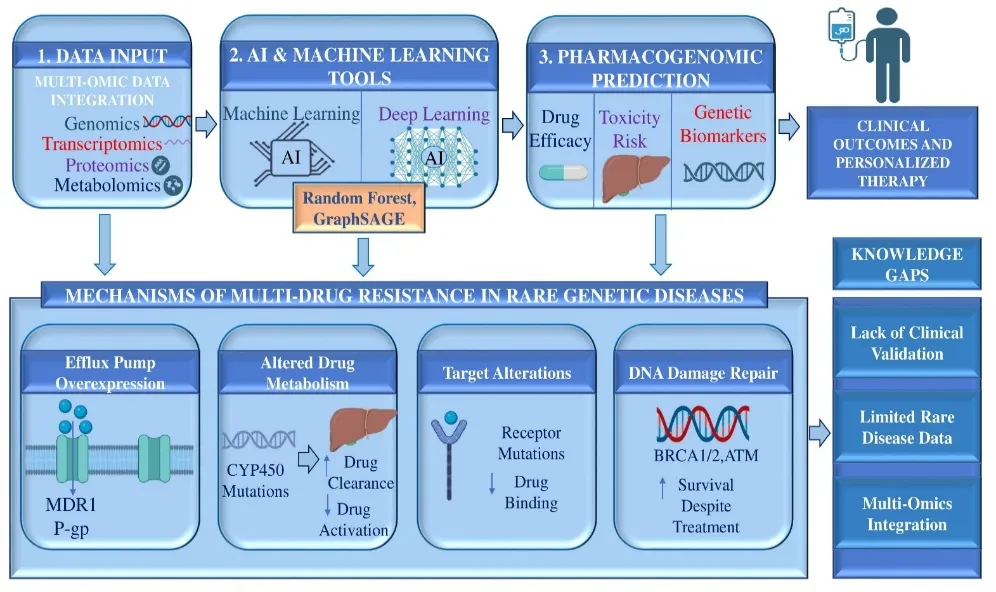
A complete layout of the whole Pipelines is depicted in Figure 1 [13]. While AI systems show great promise in pharmacogenomics, their predicted accuracy varies significantly depending on the size of the dataset, the dimensionality of the features, and the clinical setting. Although deep learning architectures are particularly good at simulating complex biological connections, they are nonetheless hampered by significant processing expense and poor interpretability [14, 15]. Conventional machine learning paradigms, on the other hand, provide more algorithmic transparency but are sometimes unable to handle intricate multi-omics interactions [16].

3.1.1 Predicting Drug Efficacy

Using algorithmic frameworks that iteratively identify patterns from data to provide prediction outputs or decision rules without the need for explicit programming instruction, machine learning is a specific area of artificial intelligence [17]. By identifying genetic markers predictive of therapeutic success or failure, these models allow clinicians to customize treatment selection to the individual molecular profile, thereby reducing reliance on empirical trial-and-error prescribing and significantly improving clinical outcomes. Pharmacogenomics uses machine learning algorithms to examine genomic variation and predict patient-specific drug performance [18, 19].

3.1.2 Drug Toxicity Prediction

In order to capture and simulate complex data structures inside large-scale datasets, deep learning, an advanced extension of machine learning, uses multi-layered neural network topologies [20]. Deep learning architectures are used in pharmacogenomics to model the impact of individual genomic profiles on drug responsiveness, including toxicity risk; by resolving genetic variants linked to drug metabolism, these systems can predict adverse drug reactions and assist physicians in avoiding agents that may cause negative effects in patients who are genetically predisposed [21, 22].

3.1.3 Genetic Response to Therapy

Artificial intelligence frameworks can resolve these polymorphisms and anticipate their functional influence on pharmacokinetics and pharmacodynamics. Genetic variants indicate changes in DNA sequence that modulate interindividual drug response [23]. For example, polymorphism variation in cytochrome P450 isoenzymes, which are important determinants of xenobiotic metabolism, can either increase or decrease metabolic clearance, which modulates systemic drug exposure and directly affects the risk of toxicity and the efficacy of treatment [24]. By resolving therapeutically actionable genetic variations, artificial intelligence technologies enable the development of extremely accurate, patient-specific treatment regimens, guaranteeing ideal drug selection and dosage calibration. This precision is especially important in rare genetic diseases, where unique molecular profiles require customized treatment strategies [25].

3.2 Mechanisms of MDR in Rare Genetic Disorders

Multidrug resistance is a significant barrier to the successful treatment of uncommon genetic illnesses since afflicted patients often show cross-resistance to numerous pharmacologic treatments due to underlying genomic and biological factors [26]. In order to rationally create targeted therapies that can overcome pharmacologic refractoriness, it is imperative to define these resistance pathways. Multidrug resistance's mechanistic foundations are intrinsically complicated and multivariate, with patient-level genomic architecture and disorder-specific pathobiology dictating variability [27, 28]. Through integrative study of pharmacological and genetic datasets, artificial intelligence models can be strategically used to identify and predict resistance pathways. These prediction abilities improve the effectiveness of therapy for uncommon genetic illnesses by facilitating the early identification of resistance trajectories and guiding the logical development of focused therapeutic strategies [29].

3.2.1 Genetic Mutations

In many uncommon genetic illnesses, pathogenic mutations can cause the overexpression of efflux transporters like MDR1 (P-glycoprotein), which actively expel therapeutic drugs from intracellular compartments. Pharmacologic efficacy is compromised by this mechanism, which lowers local drug concentrations at targeted locations [30, 31]. One of the main mechanisms behind multi-drug resistance is efflux transporters. Pathogenic mutations in the genes encoding these pumps contribute to resistance by limiting intracellular distribution and systemic drug absorption, which reduces therapeutic availability [32, 33].

3.2.2 Altered Drug Metabolism

The Cytochrome P450 isoforms serve as the main enzymes which perform drug biotransformation, but the genetic variations that exist among different individuals lead to major differences in their metabolic rates. The ultrarapid metabolic phenotype shows evidence of subtherapeutic drug exposure, while poor metabolizers face higher risks of developing concentration-dependent toxic effects [34, 35]. The creation of tailored treatment programs which use genetic information to determine drug metabolism requires the assessment of metabolic differences that exist because of genetic variations. Such polymorphic variations are commonly found in rare genetic diseases, where patients frequently display unique metabolic phenotypes [36, 37].

3.2.3 Genetic Heterogeneity

Individual patients with rare genetic illnesses may carry unique pathogenic variations that generate varied clinical presentations and produce varying therapy responsiveness. This is known as marked allelic heterogeneity [38, 39]. This genetic variation creates obstacles for establishing standard treatment protocols because it demonstrates the necessity of using precise methods to treat multidrug resistance. By defining patient-specific variant architecture, the integration of AI-driven pharmacogenomic profiling allows for customized treatment optimization that is in line with each genomic context [40].

3.3 Recent Studies in AI-Driven Drug Discovery

Artificial intelligence developments have significantly sped the discovery of new pharmacologic entities and enabled methods to overcome multidrug resistance in uncommon genetic illnesses. New studies highlight how AI-based models may predict drug efficacy by integrating patient-specific genetic datasets, identify previously unknown therapeutic targets, and expedite drug discovery pipelines [41-43]. Even though recent studies highlight the potential of AI-driven drug discovery, many are still constrained by small cohort sizes, a lack of external validation, and low generalizability across diverse patient groups. Moreover, cross-study performance evaluation is made more difficult by the absence of standardized evaluation metrics, highlighting the need for more exacting and repeatable methodological frameworks [44].

3.3.1 Target Identification

By methodically analyzing genomic datasets from uncommon genetic illnesses, artificial intelligence has been successfully used to identify new treatment targets. AI-driven frameworks can resolve disease-associated genes and prospective biomarkers by utilizing high-dimensional data processing, creating translational routes for focused medication development [45, 46]. In order to identify potential molecules or signaling pathways that could be therapeutically intervened with either new drugs or repurposed pharmaceuticals, AI-based analytical tools can examine disorder-specific mutational spectra [47].

3.3.2 Drug Repurposing
figure

Figure 1: This Figure Shows How Multi-Omic Profiles Are Integrated with AI-based Computer Models to Predict Genotype-Linked Biomarkers, Toxicity, and Medication Efficacy. It Outlines the Main Principles Underlying Multidrug Resistance (MDR) and Shows How Precision Medicines Might Be Applied to Uncommon Genetic Illnesses.

Drug repurposing, in which current pharmacologic drugs are methodically assessed for new therapeutic indications, is increasingly utilizing AI-driven approaches. These computational frameworks can predict candidate medications with potential efficacy against uncommon genetic illnesses by quickly analyzing large pharmacological databases [48]. Since many compounds have known safety profiles, medication repurposing offers a quicker and more economical option to de novo drug discovery, significantly reducing the time needed for clinical evaluation [49].

Table 1: This Table Consolidates Principal AI Architectures Applied in Pharmacogenomics, Detailing Their Utility in Forecasting Drug Efficacy, Toxicity, and Genotype-Specific Therapeutic Responses in Rare Genetic Disorders. It Further Delineates Each Model’s Prospective Contribution to Mitigating Multidrug Resistance (MDR).

AI Model Application Example
Deep Learning uses modeling guided by genomic data to predict therapy efficacy and unfavourable medication responses. predictive biomarkers controlling pharmacologic response in uncommon genetic diseases are described.
Random Forests identifies the genotype-specific variations that support pharmacologic response prediction modeling. classification of patients based on profiles of differential pharmacologic sensitivity.
Support Vector Machines uses genotype-resolved molecular profiles to classify patient cohorts. uses predictive modeling of treatment results to separate therapeutic responders from non-responders.
K-Nearest Neighbours compares genotype-concordant molecular profiles to provide predictions about medication efficacy. uses patient-specific genetic profiling to develop customized pharmacotherapeutic regimens.
Gradient Boosting incorporates computational models to improve pharmaceutical efficacy evaluations' predictive accuracy. improving pharmaceutical discovery pathways in relation to indications for uncommon genetic diseases.
Bayesian Networks predicts harmful pharmacologic effects and models gene-drug interaction networks. uses analysis based on genomic data to anticipate unfavourable pharmaceutical reactions.

3.3.3 Overcoming MDR

Artificial intelligence is being used more and more to forecast synergistic drug combinations that can avoid resistance pathways in order to combat multidrug resistance. To understand how genetic variation affects these pharmacologic dynamics, computational models include genomic factors and simulate inter-drug interactions [50, 51]. Artificial intelligence makes it possible to discover new therapeutic approaches to overcome resistance in uncommon genetic illnesses, where standard therapy paradigms are rarely applicable, by identifying effective drug combinations [52, 53]. The integrated AI-driven pharmacogenomic pipeline, shown in Figure 1, integrates multi-omic datasets with computational techniques to address multidrug resistance (MDR) in uncommon genetic illnesses and predict medication efficacy. Table 1 summarizes the applications and example use cases of sample AI model architectures used in pharmacogenomics for drug response prediction. Comparative evaluations show that by combining complementing algorithms, hybrid and ensemble AI architectures increase prediction accuracy. Data heterogeneity, restricted interpretability, and inadequate clinical validation continue to be major obstacles, highlighting the necessity of strong translational frameworks [54].

3.4 Knowledge Gaps and Future Directions

The prospect of AI‐enabled pharmacogenomics for rare genetic diseases is largely translatable with its ability to circumvent multidrug resistance (MDR). However, there remain vital gaps in mechanistic knowledge and evidence, and their resolution is crucial to translate these models of AI-based precision medicine to the clinic [55, 56].

3.4.1 Limited High-Quality Datasets

The predicted accuracy of AI-driven models is limited by the lack of large-scale, high-fidelity datasets in uncommon genetic illnesses. The ability to train reliable and broadly applicable pharmacogenomic algorithms is limited by the fragmented and inadequately heterogeneous nature of current datasets [57].

Future Direction:

The creation of cooperative, multi-center repositories with uniform data collection procedures across organizations would improve dataset fidelity and make it easier to create more dependable AI-driven models. The portrayal of unique disease characteristics is further enhanced by the use of patient-derived experimental systems, such as organoids and induced pluripotent stem cells (iPSCs) [58, 59].

3.4.2 Clinical Validation of AI Models

Clinical validation is still lacking, despite the fact that AI-based models show great promise in preclinical studies. The application of AI-derived predictions to a variety of patient populations is complicated by heterogeneity in patient responses resulting from genetic, environmental, and other biological factors [60].

Future Direction:

Validating AI model performance in actual clinical settings requires prospective clinical studies. In addition to prediction accuracy, these studies must assess clinically significant endpoints such as overall survival outcomes, adverse event incidence, and therapeutic efficacy [61].

3.4.3 Integration of Multi-Omics Data

Due to their inherent complexity and the heterogeneity across platforms, the integration of multi-omic data including genomics, proteomics, and metabolomics is still a major challenge in methodology. Such varied data formats are difficult for current AI frameworks to harmonize and resolve for precise interpretation [62].

Future Direction:

The incorporation of multi-omic datasets into cohesive prediction frameworks depends critically on developments in computational techniques, especially deep learning. The standardization of data capture and analysis will also enhance the consistency and reproducibility of AI-driven pharmacogenomic modeling [63].

3.4.4 Ethical Considerations and Data Privacy

Pharmacogenomics driven by AI-enabled, relies on big genetic and clinical data, and raises substantial concerns of data privacy, patient consent, and algorithmic bias. For these models to be reliably translated into clinical settings, strict patient confidentiality protection and fair decision-making procedures are still necessary [64].

Future Direction:

To standardize data collecting, guarantee transparency in AI-driven decision processes, and protect patient confidentiality, ethical governance and regulatory infrastructures must be developed. To improve the validity and generalizability of AI model training, a variety of representative datasets must be used in order to address algorithmic bias [65].

4. DESIGNING PRECISION DRUG THERAPIES

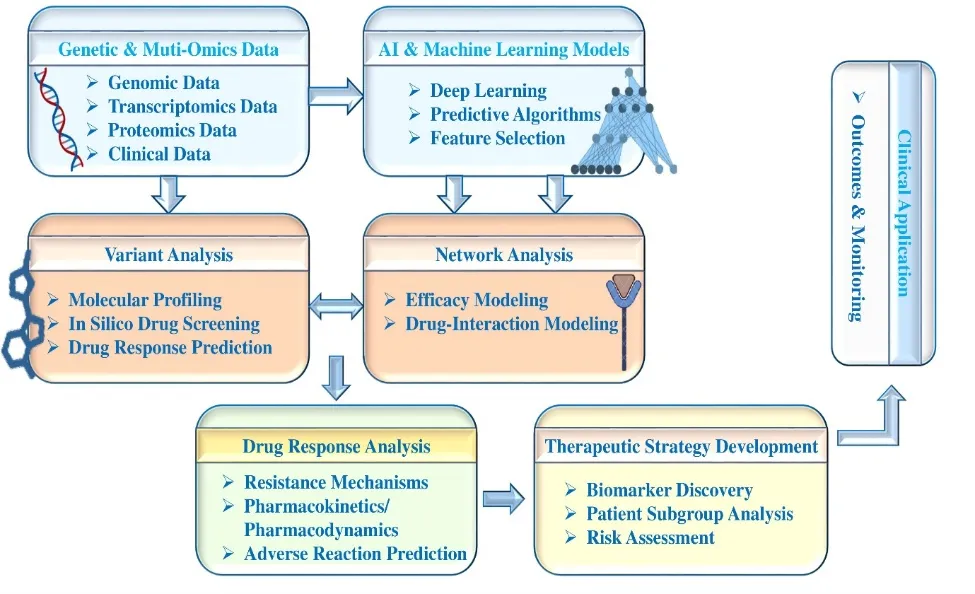
An integrated and scalable system that combines multi-omics datasets with cutting-edge artificial intelligence architectures for accurate prediction of drug response and resistance mechanisms is needed to overcome the shortcomings of present research. In order to speed up the creation of precision treatments for uncommon genetic illnesses, the current paper presents a conceptual AI-driven pharmacogenomic framework [66]. Artificial intelligence platforms use genomic data together with clinical data and pharmacological data to predict treatment effectiveness and treatment safety and patient-specific dosage requirements. This technology enables medical professionals to create personalized treatment strategies for patients who have rare genetic disorders. Figure 2 presents a visual representation of the entire process which starts with data ingestion and ends with clinical validation to demonstrate how AI-based precision treatment develops.

4.1 Precision Medicine and AI-Driven Therapeutics

Precision medicine uses genomic stratification to develop personalized treatment methods which enhance treatment effectiveness while decreasing treatment-related harmful effects. Regimens for uncommon genetic disorders are progressively being optimized using machine learning and deep learning techniques [67]. Artificial intelligence systems can estimate patient-specific drug responses, including efficacy, adverse event risk, and customized dose parameters, by integratively analyzing large-scale genetic, clinical, and pharmacological datasets. Precision-aligned treatment approaches that overcome the limitations of traditional drug research and clinical practice are made possible by such computational integration [68]. However, the lack of established clinical protocols, the complexity of data integration, and insufficient validation across large patient cohorts continue to limit the clinical application of AI-driven approaches [69].

4.2 Challenges in Designing Precision Therapies for Rare Genetic Disorders

The intrinsic biological complexity and inter-individual variation of uncommon genetic illnesses continue to limit the development of precision therapies for these conditions. Reliable prediction of therapy responsiveness is complicated by the fact that even patients with similar pathogenic mutations often display different clinical presentations [70, 71]. Robust data generation is limited by the rarity of these illnesses, which prevents appropriately powered clinical trials. Although diverse multi-omics inputs must be integrated by AI frameworks, the complexity and dimensionality of these datasets make it difficult to build prediction models with reliable accuracy [72]. The development of successful precision medicines is still hampered by practical limitations, such as high computing needs, limited access to high-quality datasets, and inadequate interdisciplinary integration, in addition to inherent biological complexity. These restrictions highlight the need for standardized data-sharing infrastructures and coordinated multi-center research projects [73].
figure

Figure 2. The sequential framework for AI and machine learning-driven tailored medicines development starting with the integration of genomic, transcriptomic, proteomic, and clinical datasets. Drug response profiling that incorporates resistance mechanisms and pharmacokinetic parameters, variant and network analyses through model deployment, and the development of customized therapeutic approaches are the next steps, which culminate in clinical implementation and monitoring to guarantee efficacy and safety.

Table 2: This Table Presents the Case Studies Using AI to Treat Uncommon Genetic Illnesses Are Compiled in This Table, with a Focus on Patient-Specific Outcomes, Therapeutic Domains, Multidrug-Resistance Tactics, and Model Frameworks.

Case Genetic Disorder AI Model Used Therapeutic Focus Outcome
Case 1 Leukemia Deep Learning Finding medication combinations that work well together. Improved survival rates by optimizing medication combinations that work well together.
Case 2 Phenylketonuria Machine Learning Optimization of dosage parameters unique to each patient. Treatment-related side effects are decreased by genotype-guided dosage regimens.
Case 3 Duchenne Muscular
Dystrophy
AI Drug Screening Creation of treatment plans based on gene editing. Mutation-targeted intervention techniques improve therapeutic efficacy.
Case 4 Metabolic Disorders Support Vector Machines Drug repurposing Repurposed medications that work well for uncommon genetic subgroups have been found.
Case 5 Cystic Fibrosis Reinforcement Learning Combination of drugs that produce synergistic effect Enhanced efficacy by addressing resistance mechanisms

4.3 Case Studies of AI-Designed Precision Therapies

The usefulness of AI in improving precision treatments for uncommon genetic diseases and combating multidrug resistance is highlighted by numerous case studies. Clinical outcomes have been improved by using AI-driven computer algorithms to identify new combinatorial regimens for uncommon cancers that are resistant to conventional treatments [74-76]. Artificial intelligence models have been used to anticipate customized dosing strategies in rare metabolic illnesses like phenylketonuria, improving clinical outcomes through genotype-guided treatment tailoring. These applications show how AI may remove obstacles like antibiotic resistance and enable focused therapies in populations with rare diseases [77, 78]. Although case studies show that AI-driven therapy approaches are effective, their scalability is yet unknown due to small cohort sizes and disease-specific variability. To support these findings and guarantee wider therapeutic usefulness, validation in larger, diverse groups is necessary [79].

4.4 Knowledge Gaps

The translational potential of artificial intelligence in precision medicine for uncommon genetic illnesses is still limited by a number of unfilled gaps, despite recent advancements.

  • Inadequate Understanding of Genetic Variations: The efficient integration of genetic variation data with artificial intelligence-based predictive frameworks for the development of precision therapies is still poorly understood [80].
  • Limited Clinical Trials and Data: The creation of artificial intelligence models with strong generalizability for rare genetic disorders is hampered by the lack of suitably large and diverse datasets as well as the dearth of clinical trials centered on uncommon diseases [81].

5. FUTURE DIRECTIONS AND POTENTIAL

Pharmacogenomics for uncommon genetic illnesses is about to change thanks to new technology and creative research directions. By addressing multidrug resistance and enhancing patient-specific results, these developments offer increased precision and treatment efficacy as discussed in table 3 [82, 83].

5.1 Emerging Technologies:
figure

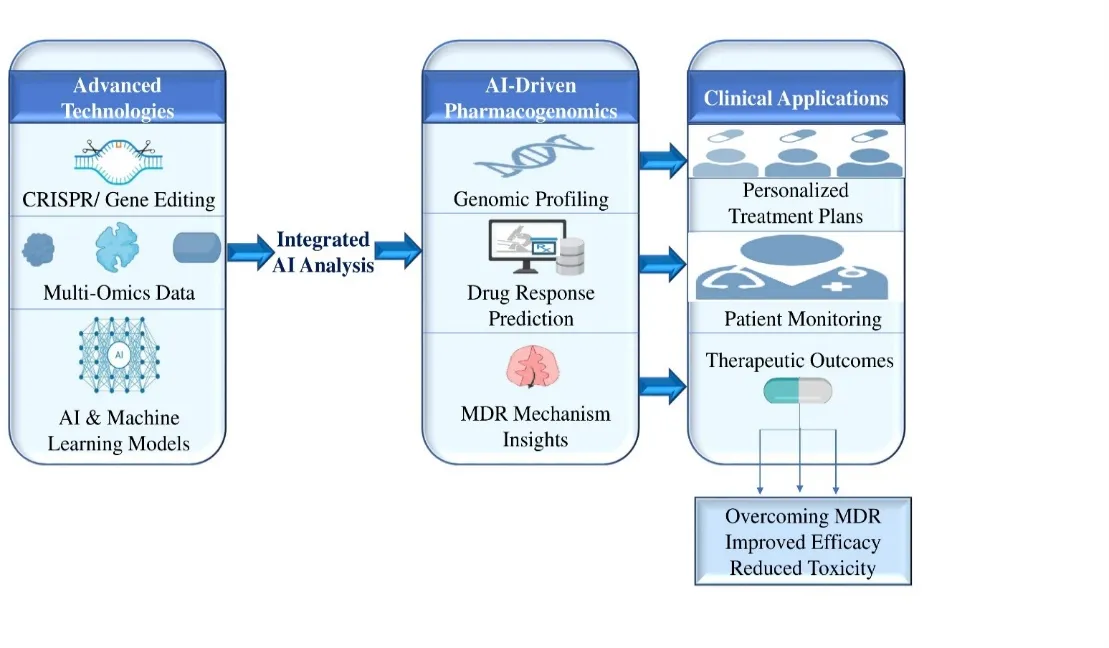
Pharmacogenomics is seeing revolutionary advancements thanks to new technologies like CRISPR-based gene editing. By directly altering harmful variations in uncommon genetic disorders, CRISPR addresses the molecular underpinnings of multidrug resistance and promotes the creation of customized gene-targeted treatments as shown in Figure3 [84, 85]. High-fidelity analysis of intricate genomic and clinical datasets to enhance medication response prediction is becoming more and more possible thanks to sophisticated AI frameworks like deep and reinforcement learning. These methods facilitate the creation of customized treatment plans, providing more potent treatments for uncommon genetic illnesses when combined with multi-omics data [86, 87]. To increase clinician trust, future research should focus on standardized, high-quality datasets and enhanced interpretability. While long-term advancements require worldwide collaborative networks and real-time AI-enabled clinical decision systems to alter the management of uncommon genetic disorders, mid-term success will rely on integrating multi-omics data with explainable AI [88].

Figure 3. This figure shows a thorough framework that advances individualized therapeutic approaches by combining CRISPR-based gene editing, multi-omics datasets, and AI-driven modeling. It describes a series of steps that are essential for resolving treatment limits in uncommon genetic illnesses, such as genomic profiling, drug response prediction, and study of multidrug resistance mechanisms. The approach places a strong emphasis on translational application in clinical practice, directing customized treatment planning, facilitating real-time patient response monitoring, and enhancing outcomes through decreased toxicity and increased efficacy.

Table 3: The Table Represents Areas of Collaboration of AI with Pharmacogenomics and Clinical Medicine for the Development of Precision Therapeutics, Improvement of Drug Efficacy, Overcoming of Multidrug Resistance and Patient Benefit by Integrating Genetics, Real Time Monitoring of Patients, and Targeted Drug Repurposing in Rare Genetic Diseases.

Collaboration Area Description Key Participants Impact
Integration of Pharmacogenomics & AI Pharmacological response profile classification based on genomic information Experts in translational pharmacogenomic sciences, human genetics, and computational artificial intelligence Personalized treatment plans.
Clinical Validation Thorough assessment of AI algorithms in regulated clinical trial settings Multidisciplinary healthcare delivery experts, computational artificial intelligence engineers, and clinical practitioners Increased clinical reliability.
Multi-Omics Data Integrating genomic, transcriptomic, and other molecular data sources into cohesive computational analytical frameworks Experts in cutting-edge artificial intelligence techniques and computational bioinformatics Improved predictions of drug efficacy
Global Data Sharing Encouraging multinational research infrastructures to facilitate the cross-border exchange of genomic and clinical datasets Integrated clinical care infrastructures and cooperative biomedical research consortiums More diverse datasets for accurate models.
Drug Repurposing Repurposing already existing approved drugs in medical practice for new therapeutic indications Computational AI research and experimental pharmaceutical sciences experts Faster therapies for rare diseases.
Real-Time Monitoring Strong analytic systems driven by AI to quantitatively track patient treatment results. Knowledge in computational AI engineering as well as in multidisciplinary clinical care. Adaptive treatment adjustments.

5.2 Personalized Healthcare Integration:

A crucial step toward real-time therapy customisation is the incorporation of AI-driven pharmacogenomics into healthcare delivery. Using patient-specific genomic data to create customized treatment plans that are safe and effective is made possible by integrating AI into clinical operations [89, 90]. Clinicians can anticipate pharmacological efficacy, reduce adverse responses, and dynamically monitor therapeutic performance because to this integration. By minimizing empirical prescribing, this method improves outcomes, especially for uncommon genetic illnesses with few treatment alternatives, and gives patients optimal regimens from the start [91, 92].

5.3 Knowledge Gaps:

  • Lack of Large-Scale Datasets for Rare Genetic Disorders: Large-scale, comprehensive datasets covering clinical symptoms and genetic variations of uncommon illnesses are needed. These kinds of data are essential for building AI models that are more therapeutically relevant and predictive [93].
  • Need for International Collaboration: The current state of affairs is hindered by the lack of international cooperation in the development of AI applications in pharmacogenomics. To close data gaps, increase genetic diversity, and hasten the use of AI-driven models in clinical settings, cross-border activities are crucial [94].

6. LIMITATIONS

There are some restrictions on this review. Because the study is limited to published literature, publication bias may be introduced. Furthermore, the generalizability of results is limited by the lack of large-scale datasets in rare genetic illnesses. Furthermore, given how quickly AI technologies are developing, certain new approaches might not be fully covered here [95].

CONCLUSION

A disruptive approach for overcoming the enduring obstacle of multidrug resistance (MDR) in uncommon hereditary diseases is AI-enabled pharmacogenomics. This method advances clinical efficacy and improves patient-level outcomes by combining CRISPR-based genome engineering, machine learning algorithms, and integrative multi-omics profiling to rationally design tailored therapeutic strategies with increased precision [96]. Despite significant progress, there are still important shortcomings, such as the lack of long-term multinational consortia, the shortage of carefully selected datasets, and the inadequate clinical validation of AI-driven models. Cross-disciplinary integration and systematic data interchange will be essential to this field's advancement in order to speed up methodological improvement and facilitate the reliable clinical use of these technologies [97]. Current developments in AI-guided pharmacogenomics have the potential to completely change the way that uncommon genetic illnesses are treated, allowing for more accurate, patient-specific interventions and improving therapy effectiveness against multidrug resistance [98]. All things considered, this study offers a critical synthesis of AI-driven pharmacogenomic approaches to treating multidrug resistance in uncommon genetic illnesses. It promotes precision medicine research by outlining important constraints and offering an integrative conceptual framework. To transform these breakthroughs into better patient outcomes, persistent efforts in clinical validation, data harmonization, and interdisciplinary collaboration will be necessary [99].

REFERENCES

  1. Elshobary ME, Badawy NK, Ashraf Y, Zatioun AA, Masriya HH, Ammar MM, et al. Combating antibiotic resistance: mechanisms, multidrug-resistant pathogens, and novel therapeutic approaches: an updated review. Pharmaceuticals. 2025;18 (3):402. doi: https://doi.org/10.3390/ph18030402
  2. Roman YM. Pharmacogenomics and rare diseases: optimizing drug development and personalized therapeutics. Pharmacogenomics. 2025;26 (3-4):121-8. doi: https://doi.org/10.1080/14622416.2025.2490465
  3. Marques-Garcia F, Martinez-Bravo C. A review of pharmacogenomics in the individualization of pharmacological treatment: present and future. J Lab Precis Med. 2026;11:6. doi: https://doi.org/10.21037/jlpm-25-9
  4. Zack M, Stupichev DN, Moore AJ, Slobodchikov ID, Sokolov DG, Trifonov IF, et al. Artificial intelligence and multi-omics in pharmacogenomics: a new era of precision medicine. Mayo Clin Proc Digit Health. 2025;3 (3):100246. doi: https://doi.org/10.1016/j.mcpdig.2025.100246
  5. Amorim AMB, Orzeł U, Caniceiro AB, Rosário-Ferreira N, Moreira IS. Artificial intelligence in rare diseases: toward clinical impact. Trends Pharmacol Sci. 2025;46 (12):1241-68. doi: https://doi.org/10.1016/j.tips.2025.10.010
  6. Zeng Q, Huang C, Zhu J. AI-driven transformation of precision medicine: a comprehensive narrative review of key application areas, emerging paradigms, and future directions. Front Public Health. 2026;13:1656603. doi: https://doi.org/10.3389/fpubh.2025.1656603
  7. Huang W, Wang X, Chen Y, Yu C, Zhang S. Advancing drug-drug interactions research: integrating AI-powered prediction, vulnerable populations, and regulatory insights. Front Pharmacol. 2025;16:1618701. doi: https://doi.org/10.3389/fphar.2025.1618701
  8. Judijanto L. Integrating pharmacogenomic and AI: a review on personalised drug response and clinical implementation in precision medicine. Am J Biomed Sci Res. 2026;30 (3):AJBSR.MS.ID.003919. doi: https://doi.org/10.34297/AJBSR.2026.30.003919
  9. Gangwal A, Lavecchia A. AI-driven drug discovery for rare diseases. J Chem Inf Model. 2025;65 (5):2214-2231. doi: https://doi.org/10.1021/acs.jcim.4c01966
  10. Zhang L, Chen K, Li S, Liu S, Wang Z. A novel integrative framework for depression combining network pharmacology, artificial intelligence, and multi-omics with a focus on the microbiota-gut-brain axis. Curr Issues Mol Biol. 2025;47 (12):1061. doi: https://doi.org/10.3390/cimb47121061
  11. Saini JPS, Thakur A, Yadav D. Precision pharmaceutics: bioinformatics and pharmacogenomics as catalysts for personalized drug therapy. J Pharm Pharmacol. 2026;78 (2):rgag001. doi: https://doi.org/10.1093/jpp/rgag001
  12. Khan SN, Danishuddin, Khan MWA, Guarnera L, Akhtar SMF. Multi-modal AI in precision medicine: integrating genomics, imaging, and EHR data for clinical insights. Front Artif Intell. 2026;8:1743921. doi: https://doi.org/10.3389/frai.2025.1743921
  13. Patel YA, Narkhede K, Prajapati A, Narkhede S, Luhar S. AI-driven pharmacogenomics: the future of personalized medicine. Asian J Pharm Technol. 2025;15 (1):00009. doi: https://doi.org/10.52711/2231-5713.2025.00009
  14. Bodinier B, Dissez G, Ter-Minassian L, Bleistein L, Codato R, Klein J, et al. Predicting gene essentiality and drug response from perturbation screens in preclinical cancer models with LEAP: layered ensemble of autoencoders and predictors. arXiv. 2025. doi: https://doi.org/10.48550/arXiv.2502.15646
  15. Tremmel R, Honore A, Park Y, Zhou Y, Xiao M, Lauschke VM. Machine learning models for pharmacogenomic variant effect predictions: recent developments and future frontiers. Pharmacogenomics. 2025;26 (5-6):171-182. doi: https://doi.org/10.1080/14622416.2025.2504863
  16. Srivastava R. Advancing precision oncology with AI-powered genomic analysis. Front Pharmacol. 2025;16:1591696. doi: https://doi.org/10.3389/fphar.2025.1591696
  17. Sadiku MNO, Ajayi SA, Sadiku JO. Machine learning: an overview. Int J Trend Sci Res Dev. 2025;9 (5):1121-31.
  18. Tremmel R, Honore A, Park Y, Zhou Y, Xiao M, Lauschke VM. Machine learning models for pharmacogenomic variant effect predictions: recent developments and future frontiers. Pharmacogenomics. 2025;26 (5-6):171-182. doi: https://doi.org/10.1080/14622416.2025.2504863
  19. Calvo H, Islas-Díaz D, Hernández-Laureano E. Pattern recognition algorithms in pharmacogenomics and drug repurposing: case study ribavirin and lopinavir. Pharmaceuticals. 2025;18 (11):1649. doi: https://doi.org/10.3390/ph18111649
  20. Tsirtsakis P. Deep learning for object recognition: a comprehensive review of models and algorithms. Int J Cogn Comput Eng. 2025;6. doi: https://doi.org/10.1016/j.ijcce.2025.01.004
  21. He M, Shi Y, Han F, Cai Y. Prediction of adverse drug reactions based on pharmacogenomics combination features: a preliminary study. Front Pharmacol. 2025;16:1448106. doi: https://doi.org/10.3389/fphar.2025.1448106
  22. Yu G, Fan Q. Deep learning-driven drug response prediction and mechanistic insights in cancer genomics. Sci Rep. 2025;15 (1):20824. doi: https://doi.org/10.1038/s41598-025-91571-2
  23. Srivastav AK, Mishra MK, Lillard JW Jr, Singh R. Transforming pharmacogenomics and CRISPR gene editing with the power of artificial intelligence for precision medicine. Pharmaceutics. 2025;17 (5):555. doi: https://doi.org/10.3390/pharmaceutics17050555
  24. Zheng J, Liu G, Wang Q, Liang Y. Insights into CYP450 polymorphisms and their impact on drug metabolism in Alzheimer's disease therapy. Drug Metab Rev. 2025;57 (4):523-34. doi: https://doi.org/10.1080/03602532.2025.2552786
  25. Abbas SR, Abbas Z, Zahir A, Lee SW. Advancing genome-based precision medicine: a review on machine learning applications for rare genetic disorders. Brief Bioinform. 2025;26 (4):bbaf329. doi: https://doi.org/10.1093/bib/bbaf329
  26. Abd Alridha AM, Kadhim DJ, Alkhazrajy AHA. Assessing the association of rare MDR1 variants with steroid response in Iraqi children with idiopathic nephrotic syndrome. Egypt J Med Hum Genet. 2025;26:31. doi: https://doi.org/10.1186/s43042-025-00662-2
  27. Birlutiu V, Birlutiu RM. An overview of the epidemiology of multidrug resistance and bacterial resistance mechanisms: what solutions are available? Microorganisms. 2025;13 (9):2194. doi: https://doi.org/10.3390/microorganisms13092194
  28. Wei JR, Lu MY, Wei TH, Fleishman JS, Yu H, Chen XL, et al. Overcoming cancer therapy resistance: from drug innovation to therapeutics. Drug Resist Updat. 2025;81:101229. doi: https://doi.org/10.1016/j.drup.2025.101229
  29. Alpsoy S, Sezerman OU. Transfer learning with multiomics integration and deep neural networks reveals drug resistance mechanisms in cancer. Sci Rep. 2025;15 (1):42295. doi: https://doi.org/10.1038/s41598-025-23435-8
  30. Tia ST, Luo M, Fan W. Mapping the role of P-glycoprotein in multidrug resistance: insights from recent structural studies. Int J Mol Sci. 2025;26 (9):4179. doi: https://doi.org/10.3390/ijms26094179
  31. Álvarez-Carrasco P, Morales-Villamil F, Maldonado-Bernal C. P-glycoprotein as a therapeutic target in hematological malignancies: a challenge to overcome. Int J Mol Sci. 2025;26 (10):4701. doi: https://doi.org/10.3390/ijms26104701
  32. Almeida da Silva PE, Von Groll A, Ramis I, Reis AJ, Ramos D, Viveiros M. Efflux systems driving resistance and virulence across biological domains. PeerJ. 2025;13:e20360. doi: https://doi.org/10.7717/peerj.20360
  33. Dev S, Stevenson K, Le D, Kim M. Efflux pumps control intracellular drug-target kinetics by limiting rebinding in bacteria. Sci Adv. 2026;12 (5):eaea7983. doi: https://doi.org/10.1126/sciadv.aea7983
  34. Lauschke VM, Ingelman-Sundberg M. The evolving landscape of pharmacogenomics: current achievements and future directions. Pharmacol Rev. 2026;78 (2):100122. doi: https://doi.org/10.1016/j.pharmr.2026.100122
  35. Prost R, Płaziński W. Natural polymorphic variants in the CYP450 superfamily: structural mechanisms and functional consequences. Int J Mol Sci. 2025;26 (16):7797. doi: https://doi.org/10.3390/ijms26167797
  36. Rojas Velazquez MN, Lopez Dacal J, Jørgensen FS, Sanguineti N, Sharma K, Marino R, et al. A novel POR G88S mutation causes severe PORD and establishes a critical pharmacogenomic risk profile. J Clin Endocrinol Metab. 2025. doi: https://doi.org/10.1210/clinem/dgaf630
  37. Tyminska P, Fraczek J, Borówka K, Machnik G, Okopien B. Pharmacogenetics in metabolic diseases: impact of cytochrome P450 variants on drug response. J Appl Pharm Sci. 2026;255397. doi: https://doi.org/10.7324/JAPS.2026.255397
  38. Reinholdt L, Chesler E, Pera M, Rosenthal N. The rare-to-common disease journey: a winding road to new therapies. Trends Genet. 2025;41 (9):762-73. doi: https://doi.org/10.1016/j.tig.2025.05.003
  39. Wei A, Border R, Fu B, Cullina S, Brandes N, Jang SK, et al. Investigating the sources of variable impact of pathogenic variants in monogenic metabolic conditions. Nat Commun. 2025;16 (1):5223. doi: https://doi.org/10.1038/s41467-025-60339-7
  40. Yin R, Gutiérrez-Sacristán A, Kobren SN, Avillach P. VarPPUD: pinpointing diagnostic variants from prioritized candidate variants. PLoS Comput Biol. 2025;21 (9):e1013414. doi: https://doi.org/10.1371/journal.pcbi.1013414
  41. Wang Q, Sun B, Yi Y, Velkov T, Shen J, Dai C, et al. Progress of AI-driven drug-target interaction prediction and lead optimization. Int J Mol Sci. 2025;26 (20):10037. doi: https://doi.org/10.3390/ijms262010037
  42. Jarallah SJ, Almughem FA, Alhumaid NK, Fayez NA, Alradwan I, Alsulami KA, et al. Artificial intelligence revolution in drug discovery: a paradigm shift in pharmaceutical innovation. Int J Pharm. 2025;680:125789. doi: https://doi.org/10.1016/j.ijpharm.2025.125789
  43. Álvarez-Machancoses Ó, DeAndrés Galiana EJ, Cernea A, Fernández de la Viña J, Fernández-Martínez JL. Role of artificial intelligence in genomics to enhance precision medicine. Pharmacol Genomics Pers Med. 2020;13:105-19. doi: https://doi.org/10.2147/PGPM.S205082
  44. Mao B, Gao Y, Xu C, Macha S, Shao S, Ahamadi M. Evaluating the impact of AI-based model-informed drug development. AAPS J. 2025;27 (4):102. doi: https://doi.org/10.1208/s12248-025-01075-0
  45. Fahim YA, Hasani IW, Kabba S, et al. Artificial intelligence in healthcare and medicine: clinical applications and future perspectives. Eur J Med Res. 2025;30 (1):848. doi: https://doi.org/10.1186/s40001-025-03196-w
  46. Wan Z, Sun X, Li Y, Chu T, Hao X, Cao Y, et al. Applications of artificial intelligence in drug repurposing. Adv Sci. 2025;12 (14):e2411325. doi: https://doi.org/10.1002/advs.202411325
  47. Herráiz-Gil S, Nygren-Jiménez E, Acosta-Alonso DN, León C, Guerrero-Aspizua S. AI-based methods for drug repurposing and development in cancer. Appl Sci. 2025;15 (5):2798. doi: https://doi.org/10.3390/app15052798
  48. Akodad S, Niu X, Secades B, Stevens H. Impact of drug repurposing between 1985 and 2024 on pharmaceutical innovation. Commun Med. 2026;6 (1):84. doi: https://doi.org/10.1038/s43856-025-01344-1
  49. Jin S, Long H, Huang A, Wang J, Yu X, Xu Z, et al. Accurate prediction of synergistic drug combination using multi-source information fusion. BMC Biol. 2025;23 (1):200. doi: https://doi.org/10.1186/s12915-025-02302-y
  50. Ge X, Lee YT, Yeh SJ. MD-Syn: synergistic drug combination prediction using multidimensional feature fusion. Front Pharmacol. 2025;16:1564339. doi: https://doi.org/10.3389/fphar.2025.1564339
  51. Güvenç Paltun B, Kaski S, Mamitsuka H. Machine learning approaches for drug combination therapies. Brief Bioinform. 2021;22 (6):bbab293. doi: https://doi.org/10.1093/bib/bbab293
  52. Chen J, Lin A, Jiang A, Qi C, Liu Z, Cheng Q, et al. Computational frameworks transform antagonism to synergy in optimizing combination therapies. NPJ Digit Med. 2025;8 (1):44. doi: https://doi.org/10.1038/s41746-025-01435-2
  53. Wei JR, Lu MY, Wei TH, Fleishman JS, Yu H, Chen XL, et al. Overcoming cancer therapy resistance: from drug innovation to therapeutics. Drug Resist Updat. 2025;81:101229. doi: https://doi.org/10.1016/j.drup.2025.101229
  54. Zhu Y, Wang X, Su S, Qiao Z, Guo M, Zhang K, et al. Interpretable hybrid-ensemble acute myocardial infarction diagnosis with clinical transparency. Int J Cardiol. 2025;438:133598. doi: https://doi.org/10.1016/j.ijcard.2025.133598
  55. Duong D, Solomon BD. Artificial intelligence in clinical genetics. Eur J Hum Genet. 2025;33 (3):281-8. doi: https://doi.org/10.1038/s41431-024-01782-w
  56. Abbas SR, Abbas Z, Zahir A, Lee SW. Advancing genome-based precision medicine: machine learning applications for rare genetic disorders. Brief Bioinform. 2025;26 (4):bbaf329. doi: https://doi.org/10.1093/bib/bbaf329
  57. Clayton EW, Rose S, Nebecker C, Novak L, Bensoussan Y, Chen Y, et al. Biomedical data repositories require governance for AI/ML applications. JAMIA Open. 2025;8 (6):ooaf134. doi: https://doi.org/10.1093/jamiaopen/ooaf134
  58. Wang Q, Yuan F, Zuo X, Li M. Breakthroughs and challenges of organoid models in personalized treatments. Cell Death Discov. 2025;11:222. doi: https://doi.org/10.1038/s41420-025-02505-w
  59. Sokol K, Fackler J, Vogt JE. AI support in clinical reasoning and decision making. NPJ Digit Med. 2025;8 (1):345. doi: https://doi.org/10.1038/s41746-025-01725-9
  60. Riley RD, Ensor J, Snell KIE, Archer L, Whittle R, Dhiman P, et al. Importance of sample size in AI-based prediction models. BMJ Health Care Inform. 2025;32 (2):e100123. doi: https://doi.org/10.1136/bmjhi-2025-100123
  61. Baião AR, Cai Z, Poulos RC, Robinson PJ, Reddel RR, Zhong Q, et al. Multi-omics data integration methods review. Brief Bioinform. 2025;26 (4):bbaf355. doi: https://doi.org/10.1093/bib/bbaf355
  62. Li Z, Chen W, Zhong H, Liang C. Multi-omics integration model for cancer survival prediction. Brief Bioinform. 2025;26 (2):bbaf124. doi: https://doi.org/10.1093/bib/bbaf124
  63. Qiu P, Zhang H, Han Y, Lei J, Zhang X. Ethical issues and strategies for AI in medical research. Technol Disabil Res. 2025;12 (4):100051. doi: https://doi.org/10.1016/j.tdr.2025.100051
  64. Goktas P, Grzybowski A. Ethical clinical challenges and trustworthy AI in healthcare. J Clin Med. 2025;14 (5):1605. doi: https://doi.org/10.3390/jcm14051605
  65. Huang K, Zeng T, Koc S, Pettet A, Zhou J, Jain M, et al. Small-cohort GWAS discovery with AI. medRxiv. 2024. doi: https://doi.org/10.1101/2024.12.03.24318375
  66. Azmal SM, Krishna ST. OmniNet-Fusion model for multi-omics integration in drug response prediction. Comput Biol Chem. 2026;120:108658. doi: https://doi.org/10.1016/j.compbiolchem.2025.108658
  67. Chen YM, Hsiao TH, Lin CH, Fann YC. Clinical applications of AI-integrated precision medicine. J Biomed Sci. 2025;32 (1):16. doi: https://doi.org/10.1186/s12929-024-01110-w
  68. Shi H, Xu T, Li X, Gao Q, Xia J, Yue Z. DRExplainer for drug response prediction interpretability. Artif Intell Med. 2025;162:103101. doi: https://doi.org/10.1016/j.artmed.2025.103101
  69. Bezzina Wettinger S, Karaduzovic-Hadziabdic K, Attard R, Farrugia R, Wolford BN, Chierici M, et al. Bottlenecks in multiomic data integration. Brief Bioinform. 2025;26 (5):bbaf526. doi: https://doi.org/10.1093/bib/bbaf526
  70. Dong M, Shi X, Zhou Y, Duan J, He L, Song X, et al. Genetic spectrum and genotype-phenotype correlations in rare diseases. Orphanet J Rare Dis. 2025;20 (1):97. doi: https://doi.org/10.1186/s13023-025-03596-5
  71. Braconi D, Nadwa H, Bernardini G, Santucci A. Omics in rare diseases: challenges and applications. Expert Rev Proteomics. 2025;22 (3):107-22. doi: https://doi.org/10.1080/14789450.2025.2468300
  72. Tosh C, Tec M, White JB, Quinn JF, Ibanez Sanchez G, Calder P, et al. Bayesian active learning platform for drug screening. Nat Commun. 2025;16 (1):156. doi: https://doi.org/10.1038/s41467-024-55287-7
  73. Aikawa M, Sonawane AR, Chelvanambi S, Asano T, Halu A, Matamalas JT, et al. Precision cardiovascular medicine paradigm shift. Front Sci. 2025;3:1474469. doi: https://doi.org/10.3389/fsci.2025.1474469
  74. Si H, Kumar S, Lata S, Ahmad A, Ghosh S, Stephansen K, et al. Explainable AI model for predicting synergistic cancer therapy combinations. Curr Oncol. 2025;32 (10):548. doi: https://doi.org/10.3390/curroncol32100548
  75. Chen J, Lin A, Jiang A, Qi C, Liu Z, Cheng Q, et al. Computational frameworks for combination therapies. NPJ Digit Med. 2025;8 (1):44. doi: https://doi.org/10.1038/s41746-025-01435-2
  76. Blasiak A, Tan LWJ, Chong LM, Tadeo X, Truong ATL, Senthil Kumar K, et al. Personalized dose selection using AI in clinical trials. NPJ Digit Med. 2024;7 (1):223. doi: https://doi.org/10.1038/s41746-024-01195-5
  77. Yönden Z, Reshadi S, Hayati AF, Hooshiar MH, Ghasemi S, Yönden H, et al. AI-designed antibiotic strategies for drug-resistant pathogens. Drug Dev Res. 2025;86 (1):e70066. doi: https://doi.org/10.1002/ddr.70066
  78. Gundorova P, Yousefi B, Woidy M, Rose-Heine MS, Khatri R, Kasten V, et al. Personalized genotype-based treatment of phenylketonuria. J Inherit Metab Dis. 2025;48 (5):e70067. doi: https://doi.org/10.1002/jimd.70067
  79. Mishra A, Majumder A, Kommineni D, Anna Joseph C, Chowdhury T, Anumula SK. Generative AI in personalized medicine: a systematic review. Cureus. 2025;17 (4):e82310. doi: https://doi.org/10.7759/cureus.82310
  80. Poddar A, Innes GK, Liu Q, Saha A, Hanger M, Franzetti K, et al. Mitigating limited data challenges in AI for rare disease drug development. NEJM AI. 2025;2 (12):AIp2500802. doi: https://doi.org/10.1056/AIp2500802
  81. Jarrar Y, Hakooz N, Hashem DA, Homsi M, Ajeen SA, Ghedan MA, et al. Genome-wide screening of pharmacogenomic biomarkers. Pharmacogenomics J. 2025;25 (6):28. doi: https://doi.org/10.1038/s41397-025-00387-w
  82. Gu J, Zhang J, Zeng S, Zhang W, Xia R, Wang X, et al. AI in tumor drug resistance: mechanisms and prospects. Int Oncol. 2025;1:73. doi: https://doi.org/10.1016/j.intonc.2025.02.001
  83. Zebanaz A, Kareem AM, Aher AA, Thitame SN. Personalized medicine in rare genetic disorders. J Pharm Bioallied Sci. 2025;17 (Suppl 1):S59-62. doi: https://doi.org/10.4103/jpbs.jpbs_583_25
  84. Findik B, Dannenmann B, Bernhard F, Kaufmann MM, Ammann S, Kandabarau S, et al. Targeted gene editing for congenital neutropenia. Mol Ther Methods Clin Dev. 2025;33 (4):101626. doi: https://doi.org/10.1016/j.omtm.2025.101626
  85. Alpsoy S, Sezerman OU. Multiomics deep learning for drug resistance mechanisms. Sci Rep. 2025;15:42295. doi: https://doi.org/10.1038/s41598-025-23435-8
  86. Sheikholeslami M, Mazrouei N, Gheisari Y, Fasihi A, Irajpour M, Motahharynia A. DrugGen model using reinforcement learning. Sci Rep. 2025;15 (1):13445. doi: https://doi.org/10.1038/s41598-025-98629-1
  87. Zavadskaya M, Orlova A, Dmitrenko A, Vinogradov V. QSAR modelling with reinforcement learning for drug discovery. J Cheminform. 2025;17 (1):52. doi: https://doi.org/10.1186/s13321-025-00998-2
  88. Roychowdhury S, Lanfranchi V, Mazumdar S. Clinical decision support system evaluation using AI. Comput Biol Med. 2025;197:110944. doi: https://doi.org/10.1016/j.compbiomed.2025.110944
  89. Jakka AL, Chacko RM, Vasam M, Alagarsamy S, Chandragiri SS, Gavini SD, et al. AI in pharmacogenomics and personalized medicine. Pharmacogenomics. 2025;26 (13-14):573-585. doi: https://doi.org/10.1080/14622416.2025.2591596
  90. Diao X, Zhang H, Wang S, Zhang Q, Wang Z. AI and multi-omics framework in personalized medicine. Front Mol Biosci. 2025;12:1732340. doi: https://doi.org/10.3389/fmolb.2025.1732340
  91. Srivastav AK, Mishra MK, Lillard JW Jr, Singh R. AI and CRISPR in pharmacogenomics. Pharmaceutics. 2025;17 (5):555. doi: https://doi.org/10.3390/pharmaceutics17050555
  92. Greengrass CJ. AI in clinical reasoning and cognitive support. Front Digit Health. 2026;7:1715440. doi: https://doi.org/10.3389/fdgth.2025.1715440
  93. Mani S, Lalani SR, Pammi M. Genomics and multiomics in precision medicine. Pediatr Res. 2025;97 (4):1399-1410. doi: https://doi.org/10.1038/s41390-025-04021-0
  94. Omran S, Gan SH, Teoh SL. Pharmacogenomics in drug therapy: regulatory guidelines. Eur J Hum Genet. 2026;34:27-36. doi: https://doi.org/10.1038/s41431-025-01950-6
  95. Abu-El-Ruz R, Hasan A, Hijazi D, Masoud O, Abdallah AM, Zughaier SM, et al. Artificial intelligence in biomedical sciences: a scoping review. Br J Biomed Sci. 2025;82:14362. doi: https://doi.org/10.3389/bjbs.2025.14362
  96. Zack M, Stupichev DN, Moore AJ, Slobodchikov ID, Sokolov DG, Trifonov IF, et al. AI and multi-omics in pharmacogenomics. Mayo Clin Proc Digit Health. 2025;3 (3):100246. doi: https://doi.org/10.1016/j.mcpdig.2025.100246
  97. Agboola OE, Agboola SS, Odeghe OB, Olaiya OE, Ayinla ZA, Akinsanya PO, et al. AI-CRISPR integration in precision medicine. Ann Pharm Fr. 2025;83 (6):1073-85. doi: https://doi.org/10.1016/j.pharma.2025.08.001
  98. Novak R, Lin T, Kaushal S, Sperry M, Vigneault F, Gardner E, et al. AI-enabled drug prediction for Rett syndrome. Commun Med. 2025;5 (1):249. doi: https://doi.org/10.1038/s43856-025-00975-8
  99. Karako K. Artificial intelligence applications in rare diseases: advances and future directions. Intractable Rare Dis Res. 2025;14 (2):88-92. doi: https://doi.org/10.5582/irdr.2025.01030

Reference

  1. Elshobary ME, Badawy NK, Ashraf Y, Zatioun AA, Masriya HH, Ammar MM, et al. Combating antibiotic resistance: mechanisms, multidrug-resistant pathogens, and novel therapeutic approaches: an updated review. Pharmaceuticals. 2025;18 (3):402. doi: https://doi.org/10.3390/ph18030402
  2. Roman YM. Pharmacogenomics and rare diseases: optimizing drug development and personalized therapeutics. Pharmacogenomics. 2025;26 (3-4):121-8. doi: https://doi.org/10.1080/14622416.2025.2490465
  3. Marques-Garcia F, Martinez-Bravo C. A review of pharmacogenomics in the individualization of pharmacological treatment: present and future. J Lab Precis Med. 2026;11:6. doi: https://doi.org/10.21037/jlpm-25-9
  4. Zack M, Stupichev DN, Moore AJ, Slobodchikov ID, Sokolov DG, Trifonov IF, et al. Artificial intelligence and multi-omics in pharmacogenomics: a new era of precision medicine. Mayo Clin Proc Digit Health. 2025;3 (3):100246. doi: https://doi.org/10.1016/j.mcpdig.2025.100246
  5. Amorim AMB, Orze? U, Caniceiro AB, Rosário-Ferreira N, Moreira IS. Artificial intelligence in rare diseases: toward clinical impact. Trends Pharmacol Sci. 2025;46 (12):1241-68. doi: https://doi.org/10.1016/j.tips.2025.10.010
  6. Zeng Q, Huang C, Zhu J. AI-driven transformation of precision medicine: a comprehensive narrative review of key application areas, emerging paradigms, and future directions. Front Public Health. 2026;13:1656603. doi: https://doi.org/10.3389/fpubh.2025.1656603
  7. Huang W, Wang X, Chen Y, Yu C, Zhang S. Advancing drug-drug interactions research: integrating AI-powered prediction, vulnerable populations, and regulatory insights. Front Pharmacol. 2025;16:1618701. doi: https://doi.org/10.3389/fphar.2025.1618701
  8. Judijanto L. Integrating pharmacogenomic and AI: a review on personalised drug response and clinical implementation in precision medicine. Am J Biomed Sci Res. 2026;30 (3):AJBSR.MS.ID.003919. doi: https://doi.org/10.34297/AJBSR.2026.30.003919
  9. Gangwal A, Lavecchia A. AI-driven drug discovery for rare diseases. J Chem Inf Model. 2025;65 (5):2214-2231. doi: https://doi.org/10.1021/acs.jcim.4c01966
  10. Zhang L, Chen K, Li S, Liu S, Wang Z. A novel integrative framework for depression combining network pharmacology, artificial intelligence, and multi-omics with a focus on the microbiota-gut-brain axis. Curr Issues Mol Biol. 2025;47 (12):1061. doi: https://doi.org/10.3390/cimb47121061
  11. Saini JPS, Thakur A, Yadav D. Precision pharmaceutics: bioinformatics and pharmacogenomics as catalysts for personalized drug therapy. J Pharm Pharmacol. 2026;78 (2):rgag001. doi: https://doi.org/10.1093/jpp/rgag001
  12. Khan SN, Danishuddin, Khan MWA, Guarnera L, Akhtar SMF. Multi-modal AI in precision medicine: integrating genomics, imaging, and EHR data for clinical insights. Front Artif Intell. 2026;8:1743921. doi: https://doi.org/10.3389/frai.2025.1743921
  13. Patel YA, Narkhede K, Prajapati A, Narkhede S, Luhar S. AI-driven pharmacogenomics: the future of personalized medicine. Asian J Pharm Technol. 2025;15 (1):00009. doi: https://doi.org/10.52711/2231-5713.2025.00009
  14. Bodinier B, Dissez G, Ter-Minassian L, Bleistein L, Codato R, Klein J, et al. Predicting gene essentiality and drug response from perturbation screens in preclinical cancer models with LEAP: layered ensemble of autoencoders and predictors. arXiv. 2025. doi: https://doi.org/10.48550/arXiv.2502.15646
  15. Tremmel R, Honore A, Park Y, Zhou Y, Xiao M, Lauschke VM. Machine learning models for pharmacogenomic variant effect predictions: recent developments and future frontiers. Pharmacogenomics. 2025;26 (5-6):171-182. doi: https://doi.org/10.1080/14622416.2025.2504863
  16. Srivastava R. Advancing precision oncology with AI-powered genomic analysis. Front Pharmacol. 2025;16:1591696. doi: https://doi.org/10.3389/fphar.2025.1591696
  17. Sadiku MNO, Ajayi SA, Sadiku JO. Machine learning: an overview. Int J Trend Sci Res Dev. 2025;9 (5):1121-31.
  18. Tremmel R, Honore A, Park Y, Zhou Y, Xiao M, Lauschke VM. Machine learning models for pharmacogenomic variant effect predictions: recent developments and future frontiers. Pharmacogenomics. 2025;26 (5-6):171-182. doi: https://doi.org/10.1080/14622416.2025.2504863
  19. Calvo H, Islas-Díaz D, Hernández-Laureano E. Pattern recognition algorithms in pharmacogenomics and drug repurposing: case study ribavirin and lopinavir. Pharmaceuticals. 2025;18 (11):1649. doi: https://doi.org/10.3390/ph18111649
  20. Tsirtsakis P. Deep learning for object recognition: a comprehensive review of models and algorithms. Int J Cogn Comput Eng. 2025;6. doi: https://doi.org/10.1016/j.ijcce.2025.01.004
  21. He M, Shi Y, Han F, Cai Y. Prediction of adverse drug reactions based on pharmacogenomics combination features: a preliminary study. Front Pharmacol. 2025;16:1448106. doi: https://doi.org/10.3389/fphar.2025.1448106
  22. Yu G, Fan Q. Deep learning-driven drug response prediction and mechanistic insights in cancer genomics. Sci Rep. 2025;15 (1):20824. doi: https://doi.org/10.1038/s41598-025-91571-2
  23. Srivastav AK, Mishra MK, Lillard JW Jr, Singh R. Transforming pharmacogenomics and CRISPR gene editing with the power of artificial intelligence for precision medicine. Pharmaceutics. 2025;17 (5):555. doi: https://doi.org/10.3390/pharmaceutics17050555
  24. Zheng J, Liu G, Wang Q, Liang Y. Insights into CYP450 polymorphisms and their impact on drug metabolism in Alzheimer's disease therapy. Drug Metab Rev. 2025;57 (4):523-34. doi: https://doi.org/10.1080/03602532.2025.2552786
  25. Abbas SR, Abbas Z, Zahir A, Lee SW. Advancing genome-based precision medicine: a review on machine learning applications for rare genetic disorders. Brief Bioinform. 2025;26 (4):bbaf329. doi: https://doi.org/10.1093/bib/bbaf329
  26. Abd Alridha AM, Kadhim DJ, Alkhazrajy AHA. Assessing the association of rare MDR1 variants with steroid response in Iraqi children with idiopathic nephrotic syndrome. Egypt J Med Hum Genet. 2025;26:31. doi: https://doi.org/10.1186/s43042-025-00662-2
  27. Birlutiu V, Birlutiu RM. An overview of the epidemiology of multidrug resistance and bacterial resistance mechanisms: what solutions are available? Microorganisms. 2025;13 (9):2194. doi: https://doi.org/10.3390/microorganisms13092194
  28. Wei JR, Lu MY, Wei TH, Fleishman JS, Yu H, Chen XL, et al. Overcoming cancer therapy resistance: from drug innovation to therapeutics. Drug Resist Updat. 2025;81:101229. doi: https://doi.org/10.1016/j.drup.2025.101229
  29. Alpsoy S, Sezerman OU. Transfer learning with multiomics integration and deep neural networks reveals drug resistance mechanisms in cancer. Sci Rep. 2025;15 (1):42295. doi: https://doi.org/10.1038/s41598-025-23435-8
  30. Tia ST, Luo M, Fan W. Mapping the role of P-glycoprotein in multidrug resistance: insights from recent structural studies. Int J Mol Sci. 2025;26 (9):4179. doi: https://doi.org/10.3390/ijms26094179
  31. Álvarez-Carrasco P, Morales-Villamil F, Maldonado-Bernal C. P-glycoprotein as a therapeutic target in hematological malignancies: a challenge to overcome. Int J Mol Sci. 2025;26 (10):4701. doi: https://doi.org/10.3390/ijms26104701
  32. Almeida da Silva PE, Von Groll A, Ramis I, Reis AJ, Ramos D, Viveiros M. Efflux systems driving resistance and virulence across biological domains. PeerJ. 2025;13:e20360. doi: https://doi.org/10.7717/peerj.20360
  33. Dev S, Stevenson K, Le D, Kim M. Efflux pumps control intracellular drug-target kinetics by limiting rebinding in bacteria. Sci Adv. 2026;12 (5):eaea7983. doi: https://doi.org/10.1126/sciadv.aea7983
  34. Lauschke VM, Ingelman-Sundberg M. The evolving landscape of pharmacogenomics: current achievements and future directions. Pharmacol Rev. 2026;78 (2):100122. doi: https://doi.org/10.1016/j.pharmr.2026.100122
  35. Prost R, P?azi?ski W. Natural polymorphic variants in the CYP450 superfamily: structural mechanisms and functional consequences. Int J Mol Sci. 2025;26 (16):7797. doi: https://doi.org/10.3390/ijms26167797
  36. Rojas Velazquez MN, Lopez Dacal J, Jørgensen FS, Sanguineti N, Sharma K, Marino R, et al. A novel POR G88S mutation causes severe PORD and establishes a critical pharmacogenomic risk profile. J Clin Endocrinol Metab. 2025. doi: https://doi.org/10.1210/clinem/dgaf630
  37. Tyminska P, Fraczek J, Borówka K, Machnik G, Okopien B. Pharmacogenetics in metabolic diseases: impact of cytochrome P450 variants on drug response. J Appl Pharm Sci. 2026;255397. doi: https://doi.org/10.7324/JAPS.2026.255397
  38. Reinholdt L, Chesler E, Pera M, Rosenthal N. The rare-to-common disease journey: a winding road to new therapies. Trends Genet. 2025;41 (9):762-73. doi: https://doi.org/10.1016/j.tig.2025.05.003
  39. Wei A, Border R, Fu B, Cullina S, Brandes N, Jang SK, et al. Investigating the sources of variable impact of pathogenic variants in monogenic metabolic conditions. Nat Commun. 2025;16 (1):5223. doi: https://doi.org/10.1038/s41467-025-60339-7
  40. Yin R, Gutiérrez-Sacristán A, Kobren SN, Avillach P. VarPPUD: pinpointing diagnostic variants from prioritized candidate variants. PLoS Comput Biol. 2025;21 (9):e1013414. doi: https://doi.org/10.1371/journal.pcbi.1013414
  41. Wang Q, Sun B, Yi Y, Velkov T, Shen J, Dai C, et al. Progress of AI-driven drug-target interaction prediction and lead optimization. Int J Mol Sci. 2025;26 (20):10037. doi: https://doi.org/10.3390/ijms262010037
  42. Jarallah SJ, Almughem FA, Alhumaid NK, Fayez NA, Alradwan I, Alsulami KA, et al. Artificial intelligence revolution in drug discovery: a paradigm shift in pharmaceutical innovation. Int J Pharm. 2025;680:125789. doi: https://doi.org/10.1016/j.ijpharm.2025.125789
  43. Álvarez-Machancoses Ó, DeAndrés Galiana EJ, Cernea A, Fernández de la Viña J, Fernández-Martínez JL. Role of artificial intelligence in genomics to enhance precision medicine. Pharmacol Genomics Pers Med. 2020;13:105-19. doi: https://doi.org/10.2147/PGPM.S205082
  44. Mao B, Gao Y, Xu C, Macha S, Shao S, Ahamadi M. Evaluating the impact of AI-based model-informed drug development. AAPS J. 2025;27 (4):102. doi: https://doi.org/10.1208/s12248-025-01075-0
  45. Fahim YA, Hasani IW, Kabba S, et al. Artificial intelligence in healthcare and medicine: clinical applications and future perspectives. Eur J Med Res. 2025;30 (1):848. doi: https://doi.org/10.1186/s40001-025-03196-w
  46. Wan Z, Sun X, Li Y, Chu T, Hao X, Cao Y, et al. Applications of artificial intelligence in drug repurposing. Adv Sci. 2025;12 (14):e2411325. doi: https://doi.org/10.1002/advs.202411325
  47. Herráiz-Gil S, Nygren-Jiménez E, Acosta-Alonso DN, León C, Guerrero-Aspizua S. AI-based methods for drug repurposing and development in cancer. Appl Sci. 2025;15 (5):2798. doi: https://doi.org/10.3390/app15052798
  48. Akodad S, Niu X, Secades B, Stevens H. Impact of drug repurposing between 1985 and 2024 on pharmaceutical innovation. Commun Med. 2026;6 (1):84. doi: https://doi.org/10.1038/s43856-025-01344-1
  49. Jin S, Long H, Huang A, Wang J, Yu X, Xu Z, et al. Accurate prediction of synergistic drug combination using multi-source information fusion. BMC Biol. 2025;23 (1):200. doi: https://doi.org/10.1186/s12915-025-02302-y
  50. Ge X, Lee YT, Yeh SJ. MD-Syn: synergistic drug combination prediction using multidimensional feature fusion. Front Pharmacol. 2025;16:1564339. doi: https://doi.org/10.3389/fphar.2025.1564339
  51. Güvenç Paltun B, Kaski S, Mamitsuka H. Machine learning approaches for drug combination therapies. Brief Bioinform. 2021;22 (6):bbab293. doi: https://doi.org/10.1093/bib/bbab293
  52. Chen J, Lin A, Jiang A, Qi C, Liu Z, Cheng Q, et al. Computational frameworks transform antagonism to synergy in optimizing combination therapies. NPJ Digit Med. 2025;8 (1):44. doi: https://doi.org/10.1038/s41746-025-01435-2
  53. Wei JR, Lu MY, Wei TH, Fleishman JS, Yu H, Chen XL, et al. Overcoming cancer therapy resistance: from drug innovation to therapeutics. Drug Resist Updat. 2025;81:101229. doi: https://doi.org/10.1016/j.drup.2025.101229
  54. Zhu Y, Wang X, Su S, Qiao Z, Guo M, Zhang K, et al. Interpretable hybrid-ensemble acute myocardial infarction diagnosis with clinical transparency. Int J Cardiol. 2025;438:133598. doi: https://doi.org/10.1016/j.ijcard.2025.133598
  55. Duong D, Solomon BD. Artificial intelligence in clinical genetics. Eur J Hum Genet. 2025;33 (3):281-8. doi: https://doi.org/10.1038/s41431-024-01782-w
  56. Abbas SR, Abbas Z, Zahir A, Lee SW. Advancing genome-based precision medicine: machine learning applications for rare genetic disorders. Brief Bioinform. 2025;26 (4):bbaf329. doi: https://doi.org/10.1093/bib/bbaf329
  57. Clayton EW, Rose S, Nebecker C, Novak L, Bensoussan Y, Chen Y, et al. Biomedical data repositories require governance for AI/ML applications. JAMIA Open. 2025;8 (6):ooaf134. doi: https://doi.org/10.1093/jamiaopen/ooaf134
  58. Wang Q, Yuan F, Zuo X, Li M. Breakthroughs and challenges of organoid models in personalized treatments. Cell Death Discov. 2025;11:222. doi: https://doi.org/10.1038/s41420-025-02505-w
  59. Sokol K, Fackler J, Vogt JE. AI support in clinical reasoning and decision making. NPJ Digit Med. 2025;8 (1):345. doi: https://doi.org/10.1038/s41746-025-01725-9
  60. Riley RD, Ensor J, Snell KIE, Archer L, Whittle R, Dhiman P, et al. Importance of sample size in AI-based prediction models. BMJ Health Care Inform. 2025;32 (2):e100123. doi: https://doi.org/10.1136/bmjhi-2025-100123
  61. Baião AR, Cai Z, Poulos RC, Robinson PJ, Reddel RR, Zhong Q, et al. Multi-omics data integration methods review. Brief Bioinform. 2025;26 (4):bbaf355. doi: https://doi.org/10.1093/bib/bbaf355
  62. Li Z, Chen W, Zhong H, Liang C. Multi-omics integration model for cancer survival prediction. Brief Bioinform. 2025;26 (2):bbaf124. doi: https://doi.org/10.1093/bib/bbaf124
  63. Qiu P, Zhang H, Han Y, Lei J, Zhang X. Ethical issues and strategies for AI in medical research. Technol Disabil Res. 2025;12 (4):100051. doi: https://doi.org/10.1016/j.tdr.2025.100051
  64. Goktas P, Grzybowski A. Ethical clinical challenges and trustworthy AI in healthcare. J Clin Med. 2025;14 (5):1605. doi: https://doi.org/10.3390/jcm14051605
  65. Huang K, Zeng T, Koc S, Pettet A, Zhou J, Jain M, et al. Small-cohort GWAS discovery with AI. medRxiv. 2024. doi: https://doi.org/10.1101/2024.12.03.24318375
  66. Azmal SM, Krishna ST. OmniNet-Fusion model for multi-omics integration in drug response prediction. Comput Biol Chem. 2026;120:108658. doi: https://doi.org/10.1016/j.compbiolchem.2025.108658
  67. Chen YM, Hsiao TH, Lin CH, Fann YC. Clinical applications of AI-integrated precision medicine. J Biomed Sci. 2025;32 (1):16. doi: https://doi.org/10.1186/s12929-024-01110-w
  68. Shi H, Xu T, Li X, Gao Q, Xia J, Yue Z. DRExplainer for drug response prediction interpretability. Artif Intell Med. 2025;162:103101. doi: https://doi.org/10.1016/j.artmed.2025.103101
  69. Bezzina Wettinger S, Karaduzovic-Hadziabdic K, Attard R, Farrugia R, Wolford BN, Chierici M, et al. Bottlenecks in multiomic data integration. Brief Bioinform. 2025;26 (5):bbaf526. doi: https://doi.org/10.1093/bib/bbaf526
  70. Dong M, Shi X, Zhou Y, Duan J, He L, Song X, et al. Genetic spectrum and genotype-phenotype correlations in rare diseases. Orphanet J Rare Dis. 2025;20 (1):97. doi: https://doi.org/10.1186/s13023-025-03596-5
  71. Braconi D, Nadwa H, Bernardini G, Santucci A. Omics in rare diseases: challenges and applications. Expert Rev Proteomics. 2025;22 (3):107-22. doi: https://doi.org/10.1080/14789450.2025.2468300
  72. Tosh C, Tec M, White JB, Quinn JF, Ibanez Sanchez G, Calder P, et al. Bayesian active learning platform for drug screening. Nat Commun. 2025;16 (1):156. doi: https://doi.org/10.1038/s41467-024-55287-7
  73. Aikawa M, Sonawane AR, Chelvanambi S, Asano T, Halu A, Matamalas JT, et al. Precision cardiovascular medicine paradigm shift. Front Sci. 2025;3:1474469. doi: https://doi.org/10.3389/fsci.2025.1474469
  74. Si H, Kumar S, Lata S, Ahmad A, Ghosh S, Stephansen K, et al. Explainable AI model for predicting synergistic cancer therapy combinations. Curr Oncol. 2025;32 (10):548. doi: https://doi.org/10.3390/curroncol32100548
  75. Chen J, Lin A, Jiang A, Qi C, Liu Z, Cheng Q, et al. Computational frameworks for combination therapies. NPJ Digit Med. 2025;8 (1):44. doi: https://doi.org/10.1038/s41746-025-01435-2
  76. Blasiak A, Tan LWJ, Chong LM, Tadeo X, Truong ATL, Senthil Kumar K, et al. Personalized dose selection using AI in clinical trials. NPJ Digit Med. 2024;7 (1):223. doi: https://doi.org/10.1038/s41746-024-01195-5
  77. Yönden Z, Reshadi S, Hayati AF, Hooshiar MH, Ghasemi S, Yönden H, et al. AI-designed antibiotic strategies for drug-resistant pathogens. Drug Dev Res. 2025;86 (1):e70066. doi: https://doi.org/10.1002/ddr.70066
  78. Gundorova P, Yousefi B, Woidy M, Rose-Heine MS, Khatri R, Kasten V, et al. Personalized genotype-based treatment of phenylketonuria. J Inherit Metab Dis. 2025;48 (5):e70067. doi: https://doi.org/10.1002/jimd.70067
  79. Mishra A, Majumder A, Kommineni D, Anna Joseph C, Chowdhury T, Anumula SK. Generative AI in personalized medicine: a systematic review. Cureus. 2025;17 (4):e82310. doi: https://doi.org/10.7759/cureus.82310
  80. Poddar A, Innes GK, Liu Q, Saha A, Hanger M, Franzetti K, et al. Mitigating limited data challenges in AI for rare disease drug development. NEJM AI. 2025;2 (12):AIp2500802. doi: https://doi.org/10.1056/AIp2500802
  81. Jarrar Y, Hakooz N, Hashem DA, Homsi M, Ajeen SA, Ghedan MA, et al. Genome-wide screening of pharmacogenomic biomarkers. Pharmacogenomics J. 2025;25 (6):28. doi: https://doi.org/10.1038/s41397-025-00387-w
  82. Gu J, Zhang J, Zeng S, Zhang W, Xia R, Wang X, et al. AI in tumor drug resistance: mechanisms and prospects. Int Oncol. 2025;1:73. doi: https://doi.org/10.1016/j.intonc.2025.02.001
  83. Zebanaz A, Kareem AM, Aher AA, Thitame SN. Personalized medicine in rare genetic disorders. J Pharm Bioallied Sci. 2025;17 (Suppl 1):S59-62. doi: https://doi.org/10.4103/jpbs.jpbs_583_25
  84. Findik B, Dannenmann B, Bernhard F, Kaufmann MM, Ammann S, Kandabarau S, et al. Targeted gene editing for congenital neutropenia. Mol Ther Methods Clin Dev. 2025;33 (4):101626. doi: https://doi.org/10.1016/j.omtm.2025.101626
  85. Alpsoy S, Sezerman OU. Multiomics deep learning for drug resistance mechanisms. Sci Rep. 2025;15:42295. doi: https://doi.org/10.1038/s41598-025-23435-8
  86. Sheikholeslami M, Mazrouei N, Gheisari Y, Fasihi A, Irajpour M, Motahharynia A. DrugGen model using reinforcement learning. Sci Rep. 2025;15 (1):13445. doi: https://doi.org/10.1038/s41598-025-98629-1
  87. Zavadskaya M, Orlova A, Dmitrenko A, Vinogradov V. QSAR modelling with reinforcement learning for drug discovery. J Cheminform. 2025;17 (1):52. doi: https://doi.org/10.1186/s13321-025-00998-2
  88. Roychowdhury S, Lanfranchi V, Mazumdar S. Clinical decision support system evaluation using AI. Comput Biol Med. 2025;197:110944. doi: https://doi.org/10.1016/j.compbiomed.2025.110944
  89. Jakka AL, Chacko RM, Vasam M, Alagarsamy S, Chandragiri SS, Gavini SD, et al. AI in pharmacogenomics and personalized medicine. Pharmacogenomics. 2025;26 (13-14):573-585. doi: https://doi.org/10.1080/14622416.2025.2591596
  90. Diao X, Zhang H, Wang S, Zhang Q, Wang Z. AI and multi-omics framework in personalized medicine. Front Mol Biosci. 2025;12:1732340. doi: https://doi.org/10.3389/fmolb.2025.1732340
  91. Srivastav AK, Mishra MK, Lillard JW Jr, Singh R. AI and CRISPR in pharmacogenomics. Pharmaceutics. 2025;17 (5):555. doi: https://doi.org/10.3390/pharmaceutics17050555
  92. Greengrass CJ. AI in clinical reasoning and cognitive support. Front Digit Health. 2026;7:1715440. doi: https://doi.org/10.3389/fdgth.2025.1715440
  93. Mani S, Lalani SR, Pammi M. Genomics and multiomics in precision medicine. Pediatr Res. 2025;97 (4):1399-1410. doi: https://doi.org/10.1038/s41390-025-04021-0
  94. Omran S, Gan SH, Teoh SL. Pharmacogenomics in drug therapy: regulatory guidelines. Eur J Hum Genet. 2026;34:27-36. doi: https://doi.org/10.1038/s41431-025-01950-6
  95. Abu-El-Ruz R, Hasan A, Hijazi D, Masoud O, Abdallah AM, Zughaier SM, et al. Artificial intelligence in biomedical sciences: a scoping review. Br J Biomed Sci. 2025;82:14362. doi: https://doi.org/10.3389/bjbs.2025.14362
  96. Zack M, Stupichev DN, Moore AJ, Slobodchikov ID, Sokolov DG, Trifonov IF, et al. AI and multi-omics in pharmacogenomics. Mayo Clin Proc Digit Health. 2025;3 (3):100246. doi: https://doi.org/10.1016/j.mcpdig.2025.100246
  97. Agboola OE, Agboola SS, Odeghe OB, Olaiya OE, Ayinla ZA, Akinsanya PO, et al. AI-CRISPR integration in precision medicine. Ann Pharm Fr. 2025;83 (6):1073-85. doi: https://doi.org/10.1016/j.pharma.2025.08.001
  98. Novak R, Lin T, Kaushal S, Sperry M, Vigneault F, Gardner E, et al. AI-enabled drug prediction for Rett syndrome. Commun Med. 2025;5 (1):249. doi: https://doi.org/10.1038/s43856-025-00975-8
  99. Karako K. Artificial intelligence applications in rare diseases: advances and future directions. Intractable Rare Dis Res. 2025;14 (2):88-92. doi: https://doi.org/10.5582/irdr.2025.01030

Photo
Navroop Kaur
Corresponding author

Department of Pharmaceutical Sciences, Guru Nanak Dev University, Grand Trunk Road, Off NH 1, Amritsar-143005, Punjab, INDIA

Photo
Arshdeep Singh
Co-author

Department of Pharmaceutical Sciences, Guru Nanak Dev University, Grand Trunk Road, Off NH 1, Amritsar-143005, Punjab, INDIA

Photo
Saksham
Co-author

Department of Pharmaceutical Sciences, Global Group of Institutes, Sohian Khurd, NH -54, Amritsar – 143501 (Punjab) India.

Photo
Upasana
Co-author

Centre for Research and Innovation (CRI), Amritsar Group of Colleges, Amritsar, Punjab, India.

Upasana, Saksham, Arshdeep Singh, Navroop Kaur, Resistance in Uncommon Genetic Disorders: Unlocking the Potential of Ai-Driven Pharmacogenomics, Int. J. of Pharm. Sci., 2026, Vol 4, Issue 11, 2990-3006. https://doi.org/10.5281/zenodo.24334066

More related articles
Resistance in Uncommon Genetic Disorders: Unlockin...
Navroop Kaur, Upasana, Saksham, Arshdeep Singh...
Neem, Aloe vera and Camphor - Based Herbal Soap: C...
Bhoomi Murekar, Rima Khade, Dr. Shriram Bairagi, Aditi Kachave...
Ideal Gas Law Based Assessment of Gas Generation a...
Srikanth Reddy Jonnala, Ranjith Kumar Patnala, Srinivas Satti, Ra...
Formulation Development and Evaluation of Fast Disintegrating Tablets of Cetiriz...
Khan Saadullah Noorullah, Navale Sampat D., Kate Prajkta S....
Novel Triazole and Pyrazole Functionalized Quinazolinone Scaffolds as Anticancer...
Dr. Jahnabi Deka, Shravan Kumar Gunda, Krishna Reddy Yeduru, Hitesh Das, Damodar Reddy Kasireddy...
Development and Evaluation of a Curcumin-Loaded ph-Responsive In-Situ Gelling Sp...
Sarthak Mahajan, Vinod Anuse, Sima Khemnar, Manthan Wade, Kalyani Deore, Anita Karnar...
Related Articles
Advanced Analytical Techniques for Identification and Quantification of Impuriti...
Raj Khateghare, Saniya Shelar, Rupali Karale, Chaitanya Patil, Ashish Jamghare, Abhilasha Gambhirrao...
A Review on Anti-Gout Activity by Using Various Herbal Plants...
Pratiksha Jadhav, Abhimanyu Patil, Sammed Lakhane, Omkar Patil, Tushar Patil, Varad Sutar, Vaidehi P...
Green Synthetic Routes for Active Pharmaceutical Ingredients (APIs): A Comprehen...
Prakash Sahu, Sanjay Kumar Gautam, Smita Patel, Varsha Singh, Govind Yadav, Dr. Maninder Kaur...
Nanotechnology-Enabled Topical Drug Delivery for Trigeminal Neuralgia: Current S...
Sanket Patil, Dr. S. P. Pawar, Neha Patil, Mrunal Pendharkar...
More related articles
Neem, Aloe vera and Camphor - Based Herbal Soap: Comprehensive Review of Formula...
Bhoomi Murekar, Rima Khade, Dr. Shriram Bairagi, Aditi Kachave...
Ideal Gas Law Based Assessment of Gas Generation and Pressure Raise in Industria...
Srikanth Reddy Jonnala, Ranjith Kumar Patnala, Srinivas Satti, Ravindra Chitturi, Naidu Dwarapureddi...