

We use cookies to ensure our website works properly and to personalise your experience. Cookies policy
Department of pharmacognosy, Indira Gandhi Institute of Pharmaceutical Science, Perumbavoor (Affliated to Kerala Univesity of Health Sciences, Thrissur).
This study was carried out to standardize the stem of Phaleria macrocarpa and evaluate its potential anti-diabetic activity. The work started with collection and botanical authentication of the plant material, followed by organoleptic, microscopic, powder microscopic and physicochemical evaluation. The dried stem was extracted using aqueous maceration, and the resulting extract was subjected to preliminary phytochemical screening to identify important secondary metabolites. TLC was performed to obtain a preliminary chromatographic profile of flavonoids and phenolic acids. Finally, the aqueous extract was submitted for in-vitro ?-glucosidase inhibitory evaluation to assess its anti-diabetic potential. Thus, the study combines pharmacognostical standardization with phytochemical and biological evaluation to provide preliminary scientific data on P. macrocarpa stem.
Diabetes mellitus is a metabolic disorder with an elevated level of glucose in the blood. Alpha glucosidase is an enzyme in the intestine that catalyzes the breakdown of carbohydrates in to glucose [1]. The enzyme inhibition prevents the breakdown of carbohydrates and the subsequent increase of blood glucose level [2]. Consequently, Alpha glucosidase inhibition is one of the effective methods for diabetes treatment [3]. Phaleria macrocarpa (scheff) Boerl is a medicinal plant native to Papua, Indonesia.The plant is also referred to as God’s crown. This plant has been employed by the traditional people of Indonesia to treat cancer, diabetes, common cold, viral infections, allergy problems, asthma, cardiovascular disease, high blood pressure, acne, insect bites [4]. Further, it has shown promising medicines to treat cancers, impotence, diabetes mellitus, heart diseases, high blood pressure, and various skin diseases [5]. Several studies on Phaleria macrocarpa have been conducted mostly on investigating the potential use of the plant parts. Considering the medicinal value of P.macrocarpa from the traditional view point and the biological action of the phytoconstituents of this plant, the current investigation was designed to establish some preliminary scientific information regarding the stem of this plant [6]. This investigation includes pharmacognostical standardization, aqueous extraction, preliminary phytochemical screening, TLC analysis, and anti-diabetic screening by inhibition of alpha glucosidase method [7].
PLANT PROFILE
Phaleria macrocarpa, also called God’s Crown, Mahkota Dewa, or Pau, is an Indonesian plant belonging to the Thymelaceae family. Phaleria macrocarpa is found natively in the tropical areas of Papua Island. Phaleria macrocarpa is an entire tree consisting of its stem, leaves, flowers, and fruits. Its height can reach up to 18 meters, while its straight root can grow up to 1 meter. Its bark is brownish-green in color, and the tree has white wood. Phaleria macrocarpa grows well at altitudes of 10 to 1,200 meters above sea level and usually lives for 10 to 20 years. The tree’s leaves are green, pointed in shape, and measure 7 to 10 cm in length and 3 to 5 cm in width. The flowers appear in clusters of 2 to 4, are colored in green and maroon, while the fruit is round in shape, white, but poisonous, having an ellipsoidal shape with a diameter of about 3 cm. This plant has a crown with branches, a straight and round trunk, bark that is brownish green and wood that is white. This plant has been used for a time in traditional medicine in Asian countries like Indonesia and Malaysia. Different parts of the plant are used to help with pain, stomachaches, diarrhea, tumors and problems with the body’s metabolism. Scientists have found active substances, in the plant like things called phenolics, benzophenones, lignans, terpenoids, xanthones, acids and sugars. Because of the benefits it has the plant known as P. Macrocarpa is being used more and more in traditional medicine, herbal products, cosmetics and food [8].
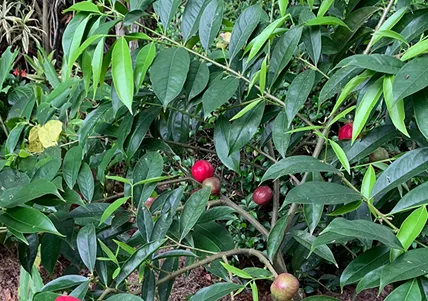
Figure 01: Phaleria macrocarpa
| SI NO | KINGDOM | PLANTAE |
|---|---|---|
| 1 | DIVISION | Tracheophyta |
| 2 | CLASS | Equisetopsida |
| 3 | SUBCLASS | Magnoliidae |
| 4 | ORDER | Malvales |
| 5 | FAMILY | Thymelaeaceae |
| 6 | SUBFAMILY | Thymelaeoideae |
| 7 | GENUS | Phaleria |
| 8 | SPECIES | P.macrocarpa |
| 9 | COMMON NAME | Mahkota dewa |
Table no.01 plant profile
MATERIALS AND METHODS
AQUEOUS MACERATION
The procedure involves putting the herb, either whole or as a powder into a solvent, inside a sealed container. The container should stay at room temperature for least three days. During this time it should be stirred occasionally to help everything that can dissolve to dissolve completely. After three days all the solid particles should be filtered out and collected [9].
THIN LAYER CHROMATOGRAPHY
Thin Layer Chromatography Silica gel 60 GF254 TLC plates were employed to isolate and examine metabolites. Prior to beginning the procedure a Thin Layer Chromatography chamber was pre‑saturated with the phase to provide the most effective environment for development. The Thin Layer Chromatography plates were developed up to a distance of 5.0 cm in order to provide distance for the substances in samples to separate. After development the plates were. Left to dry in the air. The spots were visualized with the aid of either light or by using UV rays at 254 nm and 366 nm respectively and then sprayed with different reagents such as aluminum chloride and ferric chloride. Different mobile phases were used to find out the metabolites, in the samples [10].
PHYTOCHEMICAL SCREENING OF phaleria macrocarpa STEM
Screening for Alkaloids
Five hundred mg of pulp extract of Phaleria macrocarpa was taken and mixed with 1 mL of 2N hydrochloric acid, and 9 mL of water and then heated at 40 degrees Celsius for 2 minutes in water bath, allowed to cool and stand for a minute. The filtrate was taken in three test tubes and three drops of lucidity in each test tube was added; in the first tube 2 drops of Mayer’s reagent were added; and in second tube 2 drops of Buchard’s reagent were added with 2 drops of Dragendrofs reagent in third tube. After that, if there is clumpy precipitate of white or yellow color in Mayer’s test, it means the presence of alkaloids is positive. And if the solution gives brown to black precipitate in Buchard test it means it is positive for tanins, and Dragendrof test gives yellow-orange colored precipitate [11].
Screening of flavonoids
The examination of flavonoids involves the heating of 500 mg of pulp extract of Phaleria macrocarpa with water and filtered, after which 100 mg of magnesium powder and 1 ml of 2N hydrochloric acid are added to the obtained filtrate. The yellow to red color indicates the presence of flavonoids [12].
Saponins Examination
For the saponins examination, 500 mg of the pulp extract of Phaleria macrocarpa was dissolved in hot water and shaken well. If there are saponin compounds present in the tested sample then a bubbly froth should form which must last for at least 10 minutes [11].
Tannins Examination
To examine the presence of tannins, 500 mg of the pulp extract of Phaleria macrocarpa was dissolved in 20 ml of distilled water and evaporated. A few drops of a 10% FeCl3 solution are then added to the evaporated solution and checked for the formation of a blue or dark green color [11].
Triterpenoids Examination
Five hundred milligrams of Phaleria macrocarpa of Heaven pulp extract was taken and made to dissolve in two milliliters of chloroform. Next, 0.5 ml of dry acetic acid was added. Then, two mL of concentrated sulfuric acid was added through the wall of the tube, and the color obtained was observed. Steroid compounds are indicated by the bluish green color (the presence of steroid rings), while the presence of triterpenoids is proven by a browny or purple color obtained in the junction of two solutions [11].
Ash Values Determination
The figure of ash values can be beneficial in determining the purity and quality of a crude drug that is in the form of powder. The residue left after incineration shows us the amount of ash in the drug, which means the presence of inorganic salts either naturally occurring in the drug or adhered to it or added to the drug purposely as a form of adulteration. Definition of the ash value of the drug: ash value of the crude drug is defined as the inorganic residue (ash) left after burning the drug, which counts as the inorganic salts.
Total Ash
The total ash procedure measures the total amount of the substance that comes out after burning the drug. This includes the physiological ash that is produced from the plant tissue itself and non-physiological ash that is residue coming from external matters that was stuck to the plant.
Procedure: A silica crucible was heated until red hot for half an hour. About 2 to 3 grams of drug powder was weighed and burned in a pre-weighed silica dish at a temperature below 450^0. The remaining ash was weighed. The total ash percentage was calculated.
Water-Soluble Ash
It is defined as the difference between total ash and the weight of solid remaining upon the analysis of total ash in water.
Method: The obtained total ash is allowed to boil in 25 ml of water for five minutes, during which the solids that do not dissolve are filtered off using an ash less filter paper and further washed with hot water and burned for 15 minutes at a temperature not exceeding 450 °C. The weight of the residue is deducted from total ash, thereby giving the water-soluble ash.
Acid-Insoluble Ash
It is defined as the residue obtained upon boiling total ash with dilute hydrochloric acid. Only solid materials, insoluble in acid, remain that can be measured. The amount of silica present is measured.
Method: The total ash from the sample is mixed with 25 ml of dilute hydrochloric acid. The solid materials that are insoluble in acid are filtered using an ash less filter paper (Whatman 41) to collect what is left of the acid. The solid residue is dried on a hot plate and burned until it reaches a constant weight. Then the ash is put into a desiccator for 30 minutes and then weighed. The amount of acid-insoluble ash is calculated based on the weight of the air-dried plant material.
Extractive Values
The extractive values shall be used for evaluating the phytonutrients since it is not possible to measure the constituents of a drug in any other way. These values also reveal the kind of constituents present in a crude drug.
The process of calculating the water-soluble extractive is as follows. The air-dried sample that is coarsely powdered weighing about 5gm is taken and is macerated along with 100 ml of chloroform water, holding 95 ml distilled water and 5 ml chloroform in a tightly sealed flask for 24 hours. During the process, the flask was shaken for 6 hours and then was kept in still for the remaining 18 hours. The liquid was then filtered out quickly by ensuring that no solvent is lost during the process. A total of 25 ml of the resulting filtrate has been taken up in a flat shallow dish which is weighed and dried at 105 degree centigrade in an oven before weighing after keeping it in a desiccator after drying.
MOISTURE CONTENT
Loss on Drying:
Accurately weighed about 5g of the drugs is weighed in different petridish and kept in hot air oven for 4 hours. The ware kept in desiccator and weighed on weighing machine, the loss in weight is noted. The procedure is carried out till the constant weight is obtained [13].
IN VITRO ANTI-DIABETIC ACTIVITY BY α-GLUCOSIDASE INHIBITORY ASSAY
The alpha glucosidase activity was determined from the estimate of reducing sugar produced due to hydrolysis of sucrose by alpha glucosidase enzyme. The activity was determined by following the method of Matsui et al., with slight modifications.
PRINCIPLE
α-glucosidase is an enzyme involved in the final step of carbohydrate metabolism. Inhibition of this enzyme decreases carbohydrate breakdown and may thus decrease postprandial blood glucose levels. The inhibitory effect of plant extract on α-glucosidase activity was evaluated.
PROCEDURE
Different concentrations of sample like 25μg/mL - 100μg/mL from a stock concentration of1mg/mL were made up to 100µl using 0.1M phosphate buffer pH 7.2, containing 25µl of α Glucosidase (SIGMA-ALDRICH, LOT- 0000221279) was incubated at 25°C for 10 min. After preincubation, 1 ml of 0.1M phosphate buffer (pH 7.2) containing 37mM sucrose was added. The reaction mixture was then incubated for 30 min at 370C. The reaction was terminated by incubation in a boiling water bath for 2 min. Enzyme and phosphate buffer were used as control tube. The tubes were incubated with 250µL of glucose reagent for 10 minutes and absorbance was measured at 510nm with a microplate reader (Erba, Lisascan) [14].
CALCULATION
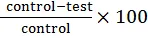
% inhibition =
RESULTS AND DISCUSSION
PHARMACOGNOSTICAL STANDARDIZATION OF Phaleria macrocarpa STEM
The pharmacognostical standardization of Phaleria macrocarpa was carried out according to the guidelines set by the World Health Organization. Ash value determination helps in identifying low-quality products as it shows the presence of matter sandy particles or other impurities mixed with the drug. The percentage of ash, acid-insoluble ash and water-soluble ash were calculated. Extractive values are important because they give information, about the nature of chemical constituents and help detect any form of adulteration.
5.2.1 MORPHOLOGY
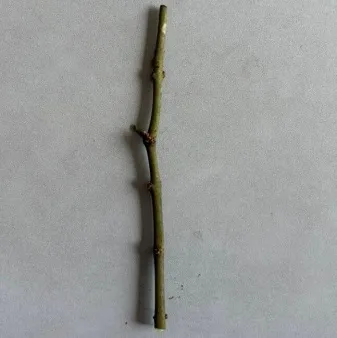
The stem of Phaleria macrocarpa is woody, upright, cylindrical and branched forming a tree or shrub. The main trunk is thick. Can grow to a large diameter. The bark is usually greenish-brown to brown in color. Has a smooth surface or slight wrinkling. Young branches are green. May be hollow while older stems become hard and solid. The wood inside is white and when the stem is injured it produces a sap. Overall the stem shows the features of a perennial dicotyledonous plant.
P.macrocarpa stem Fig no.02
POWDER ANALYSIS
For studies we cut thin slices of P. Macrocarpa’s fresh stem with sharp blades. We then selected the slices. To clear the color we treated the slices with a 5% KOH solution. After that we stained the slices with concentrated HCl. Finally we mounted the slices looked at them under a microscope and took photographs.
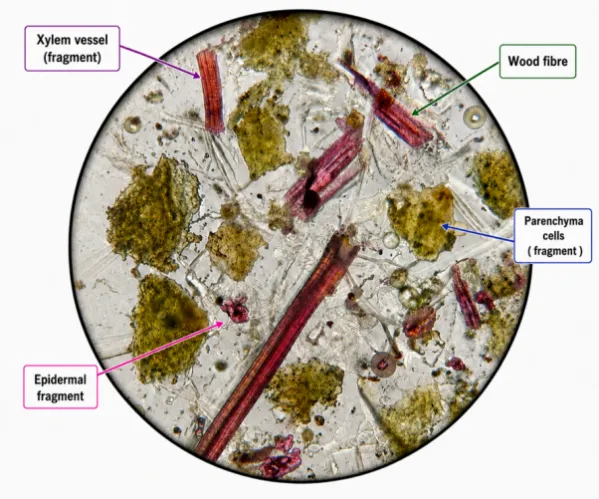
Figure 03: Powder Microscopy of P. macrocarpa
T.S OF P. Macrocarpa
For studies transverse sections of P. Macrocarpa’s fresh stem were taken with the aid of sharp blades. Thin sections were chosen. Pigments were removed by treating with 5% KOH solution. Stained with concentrated HCl. Then the sections were mounted. Examined them under a microscope. Photographed.
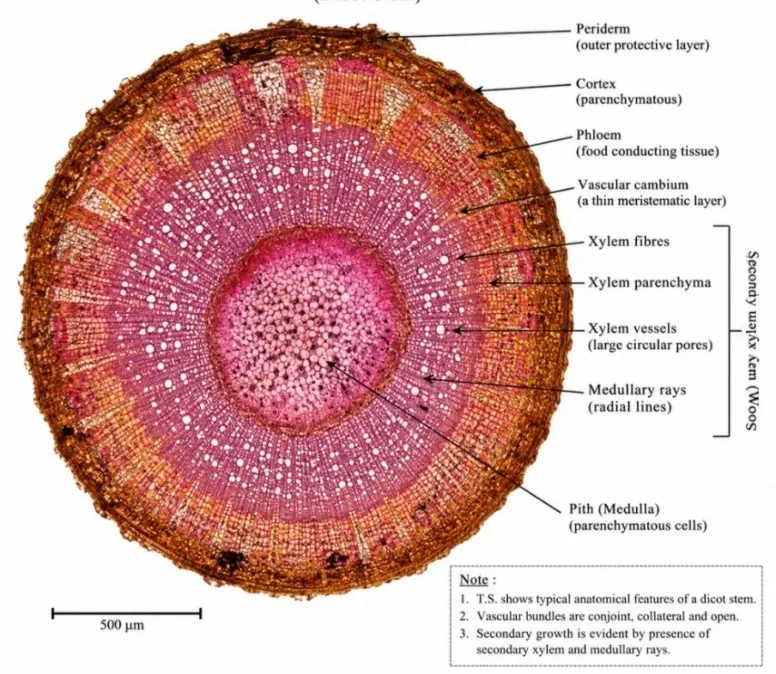
Figure 04: TC of P. macrocarpa
PHYSICAL EVALUATION
The loss on drying of the stem was found to be 6.5% w/w. This shows that the moisture content is low. A low moisture content helps reduce the chance of the drug breaking down or spoiling. The total ash value came out to be 17.5% w/w. The water-soluble ash value was 10% w/w. The acid-insoluble ash value was 6% w/w. These values give an idea about the amount of matter present in the sample.The extractive values tell us what kind of compounds are in the plant material. They show whether the plant contains moderately polar or non-polar substances. The water-soluble extractive value was 22% w/w. The alcohol-soluble extractive value was 21% w/w. The ether-soluble extractive value was 8% w/w. Each of these values gives insight into types of compounds that can dissolve in water, alcohol or ether.The swelling index was found to be 1 mL/g. This means how volume the substance occupies when it absorbs liquid. A swelling index of 1 mL/g suggests that the material swells slightly when exposed to water. This property may influence how the material behaves during processing or, in formulations.
Table 2: Physical Evaluation
| SI NO | EVALUATION | EXPERIMENTAL VALUES |
|---|---|---|
| 1 | Loss on drying(Fresh stem) | 6.5% w/w |
| 2 | Ash value | |
| a. Total ash | 17.5% w/w | |
| b. Water soluble ash | 10.5%w/w | |
| c. Acid insoluble ash | 6%w/w | |
| 3 | Extractive value | |
| a. Water-soluble extractive value | 22.0%w/w | |
| b. Alcohol-soluble extractive value | 21.0%w/w | |
| c. Ether –soluble extractive value | 8.00%w/w | |
| 4 | Swelling index | 1mL/g |
EXTRACTION OF Phaleria macrocarpa STEM BY MACERATION
The dried stem powder of Phaleria macrocarpa was weighed accurately. Then the powder of Phaleria macrocarpa was soaked in distilled water inside a container. The mixture of Phaleria macrocarpa and water was left for twenty‑four to forty‑eight hours with stirring or shaking. After that the liquid, from the Phaleria macrocarpa mixture was filtered using Whatman filter paper. The filtrate was then gently heated in a water bath to concentrate it creating an extract of Phaleria macrocarpa. This aqueous extract of Phaleria macrocarpa was stored in a container for later phytochemical screening and anti‑diabetic testing.
PHYTOCHEMICAL SCREENING OF Phaleria macrocarpa STEM
| SI NO | CHEMICAL CONSTITUENTS | INFERENCE |
|---|---|---|
| 1 | Alkaloids | +ve |
| 2 | Flavonoids | +ve |
| 3 | Tannins | +ve |
| 4 | Phenolic compounds | +ve |
| 5 | Steroids | +ve |
| 6 | Glycoside | +ve |
Table no.03 phytochemical screening
IN VITRO ANTI-DIABETIC ACTIVITY BY α- GLUCOSIDASE INHIBITORY ASSAY
Table 04:
| SI NO | CONCENTRATION (µg/mL) | ABSORBANCE | PERCENTAGE OF INHIBITION (%) |
|---|---|---|---|
| Sample code- Mahkota Dewa | |||
| Control | 0.415 | 0.0000 | |
| 1 | 25 | 0.236 | 43.1325 |
| 2 | 50 | 0.202 | 51.3253 |
| 3 | 100 | 0.174 | 58.0723 |
IC50 Value- Mahkota Dewa -45.9559µg/mL (Calculated using ED50 PLUS V1.0 Software)
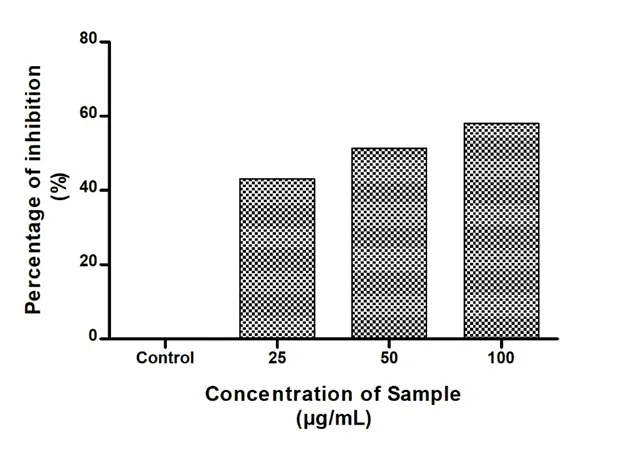
Figure 05:
Graphical representation depicting invitro alpha glucosidase inhibition assay of sample. Along X axis, Concentration of sample. Along Y axis, Percentage of Inhibition.
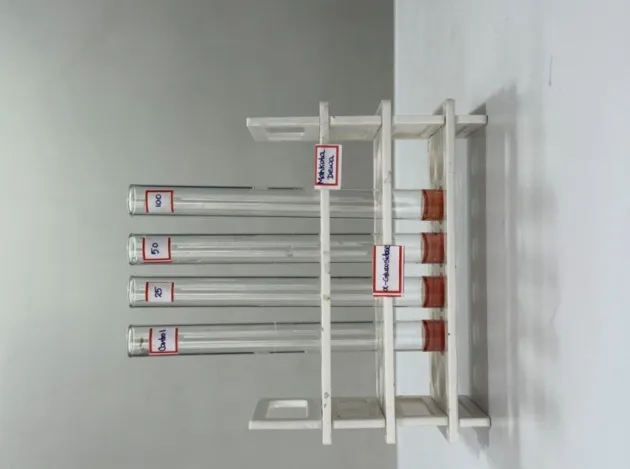
Figure 06: Samples for Testing
DETECTION OF FLAVONOIDS AND PHENOLIC COMPOUNDS BY TLC ANALYSIS
The TLC analysis of the aqueous extract of Phaleria macrocarpa stem revealed the presence of phenolic compounds and flavonoids. The developed TLC plate showed different bands at different Rf values indicating the presence of different phytoconstituents in the extract. The identified bands can be assigned to phenolic and flavonoid compounds with the corresponding detection methods.
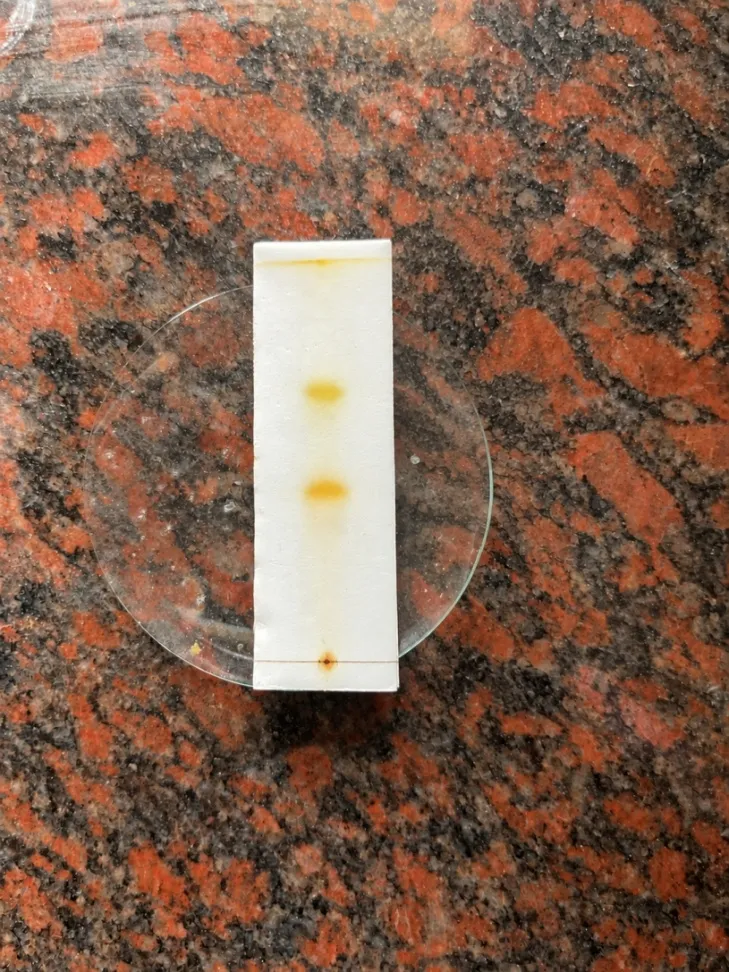
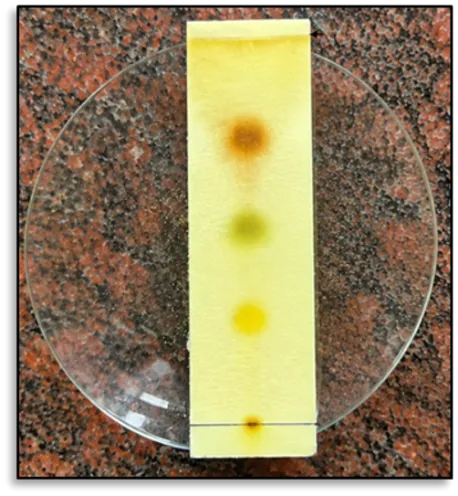
Figure 07: TLC of Phenolic Acid Figure 08: TLC of Flavonoids
CONCLUSION
The present study was carried out for the pharmacognostical evaluation and standardization of the stem of Phaleria macrocarpa. The study included the macroscopic and microscopic evaluation of the stem, determination of physicochemical parameters and preliminary phytochemical screening. The pharmacognostical evaluation revealed characteristic morphological and anatomical features of the stem, which may be useful for its identification and authentication. Physicochemical parameters such as ash values and extractive values were determined as part of the standardization study. Preliminary phytochemical screening revealed the presence of various phytoconstituents, particularly phenolic compounds and flavonoids. TLC analysis was performed to obtain the phytochemical profile of the aqueous extract, and different bands were observed at different RF values. Since no reference standard was used, the TLC findings were considered as a qualitative phytochemical profile rather than confirmation of a specific compound. The aqueous extract prepared by maceration was further evaluated for in-vitro anti-diabetic activity using the α-glucosidase inhibition assay. The findings indicated the presence of α-glucosidase inhibitory activity in the tested extract. Overall, the present study provides useful pharmacognostical, physicochemical and phytochemical information for the standardization and authentication of Phaleria macrocarpa stem and supports its further investigation for potential anti-diabetic activity.
FUTURE DIRECTIONS
• Further studies can be carried out for the isolation and identification of individual bioactive compounds.
• HPTLC/HPLC analysis can be performed using suitable reference standards for better phytochemical characterization.
• Further in-vitro and in-vivo studies may be conducted to establish the anti-diabetic potential of the plant.
• Toxicological and safety studies are required before considering further therapeutic applications.
REFERENCES







Ansiya M. S., Adithya Rajesh, Adithya. S., Alfiya Latheef, Dr. J. Nandhakumar, Dr. Seena K. X., Dr. Loganathan. T., Pharmacognostical Standardisation and Evaluation of Anti-Diabetic Potential of Phaleria Macrocarpa (Scheff.) Boerl, Int. J. of Pharm. Sci., 2026, Vol 4, Issue 11, 3042-3050. https://doi.org/10.5281/zenodo.24334514
 10.5281/zenodo.24334514