

We use cookies to ensure our website works properly and to personalise your experience. Cookies policy
Biotecnika info & labs, India
Alzheimer’s disease (AD) is a progressive neurodegenerative disorder characterized by cognitive decline, amyloid-beta (A?) accumulation, neuroinflammation, oxidative stress, and neuronal dysfunction. Microglia–astrocyte interactions play an important role in modulating A?-associated cellular responses and neuroprotection. The present study aimed to computationally identify and characterize candidate genetic variants associated with AD using bioinformatics and machine-learning approaches. Sequencing data corresponding to accession SRR29819222, derived from a human induced pluripotent stem cell-based three-dimensional neurosphere model investigating microglia–astrocyte interactions and A? toxicity, were retrieved from the NCBI database. The paired-end sequencing dataset comprised 38,384,873 sequences, approximately 90 bp in length, with 45% GC content and approximately 3.4 Gbp of sequence data. Sequence reads were aligned to the reference genome using HISAT2, followed by SAM/BAM processing and statistical assessment using SAMtools. Genomic variants were identified using DeepVariant and subsequently annotated using Ensembl Variant Effect Predictor (VEP) and SnpEff. Machine-learning-based analysis was further applied to examine variant patterns and associated genes. Three notable variants were identified on chromosomes 7 and 10, comprising one intergenic variant on chromosome 7 and two intronic variants on chromosome 10. Gene-level analysis highlighted PSEN1, ABCA7, APP, NOS3, and APOE among the genes associated with the analyzed variant patterns. The findings provide candidate genomic regions and genes for further investigation of molecular mechanisms underlying AD and A?-associated cellular responses. However, the identified variants should be considered candidate genomic variants rather than confirmed RNA-editing events. Further RNA-editing-specific analyses, transcriptomic studies, experimental validation, and functional investigations are required to establish their biological significance and contribution to AD pathology.
Alzheimer’s disease (AD) is a progressive neurodegenerative disorder characterized by cognitive decline and extensive molecular and cellular abnormalities within the central nervous system. Amyloid-beta (Aβ) accumulation is one of the major pathological features associated with AD and can contribute to neuroinflammation, oxidative stress, neuronal dysfunction, and neuronal loss.
The response of glial cells to Aβ accumulation is an important component of AD pathology. Astrocytes and microglia undergo characteristic changes in response to injury and disease, collectively referred to as gliosis. Microglia can interact with astrocytes and influence their responses to Aβ, thereby affecting inflammatory and neuroprotective pathways.
Human induced pluripotent stem cell (hiPSC)-derived three-dimensional neurosphere models provide an experimental platform for investigating interactions between neural and glial cells. The source study investigated Aβ-induced pathology in 3D neurospheres containing astrocytes and neurons and compared this with systems supplemented with hiPSC-derived microglia. In the presence of microglia, Aβ phagocytosis and neuroprotective responses were observed, suggesting that microglia–astrocyte interactions may influence Aβ-associated cellular injury.
In the present study, sequencing data associated with accession SRR29819222 were computationally analyzed to identify and characterize variants potentially associated with Alzheimer’s disease. The study employed a workflow involving HISAT2, SAMtools, DeepVariant, Ensembl VEP, and SnpEff, followed by machine-learning-based analysis of the identified variants.
2. MATERIALS AND METHODS
2.1 Dataset Retrieval
The sequencing dataset analyzed in this study was obtained from the National Center for Biotechnology Information (NCBI) database using accession number SRR29819222. The dataset corresponds to a study investigating microglia–astrocyte interactions and Aβ toxicity in a human 3D neurosphere model of Alzheimer’s disease.
2.2 Sequence Quality Assessment
The retrieved sequencing data were subjected to quality-control analysis. The dataset consisted of paired-end sequencing reads containing both forward and reverse reads. The reported total number of sequences was 38,384,873, with a sequence length of approximately 90 bases and a GC content of 45%. The dataset contained approximately 3.4 Gbp of total bases. No poor-quality sequences were reported in the analyzed dataset.
Sequence characteristics and nucleotide composition were assessed before downstream processing.
2.3 Sequence Alignment
The sequencing reads were aligned against the reference genome using HISAT2. The alignment workflow generated aligned reads suitable for downstream processing and variant analysis.
The source workflow also included processing phases involving SAM/BAM files, including indexing, sorting, merging, reheadering, and phasing-related processing.
2.4 SAM/BAM Processing and Statistical Analysis
SAMtools was used for processing and assessment of the aligned sequencing data. Alignment statistics were evaluated using SAMtools stats and SAMtools idxstats. These analyses provided information regarding sequencing and alignment characteristics and facilitated downstream variant analysis.
2.5 Variant Calling
Genomic variants were identified using DeepVariant. The variant-calling workflow generated Variant Call Format (VCF) data for subsequent annotation and interpretation.
The source report indicates that DeepVariant generated the VCF file successfully and that the workflow subsequently proceeded to variant annotation.
2.6 Variant Annotation
The identified variants were annotated using Ensembl Variant Effect Predictor (VEP). VEP was used to determine the genomic location and predicted variant consequence.
Functional annotation was additionally performed using SnpEff, which provides information regarding the potential effects of genetic variants on genes and proteins.
2.7 Machine-Learning-Based Variant Analysis
The annotated variant dataset was subjected to machine-learning-based analysis to identify patterns in the distribution of variants and associated genes. The analysis included examination of variant types and genes identified within the dataset.
According to the source analysis, genes including PSEN1, ABCA7, APP, NOS3, and APOE were identified among the analyzed variants.
3. RESULTS
3.1 Sequencing Data Characteristics
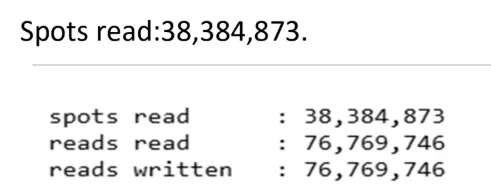
The analyzed SRR29819222 dataset contained both aligned and unaligned reads and represented paired-end sequencing data. A total of 38,384,873 sequences were reported. The sequence length was approximately 90 bases, the GC content was 45%, and the total amount of sequence data was approximately 3.4 Gbp.
The dataset passed the reported basic quality-control assessments. The sequencing data were subsequently processed through alignment, BAM processing, variant calling, and annotation pipelines.
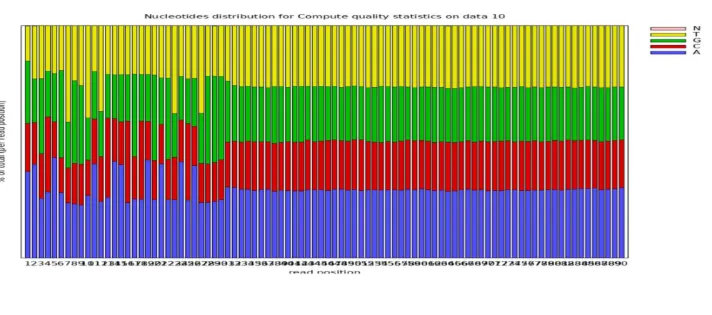
Figure 1. Spots read.
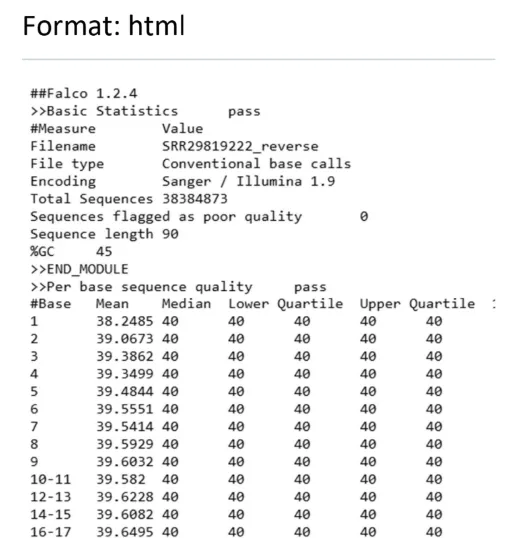
Figure 2. Format of html
3.2 Identification of Genomic Variants
Following alignment and variant calling, VEP identified three notable variants associated with chromosomes 7 and 10.
Chromosome 7
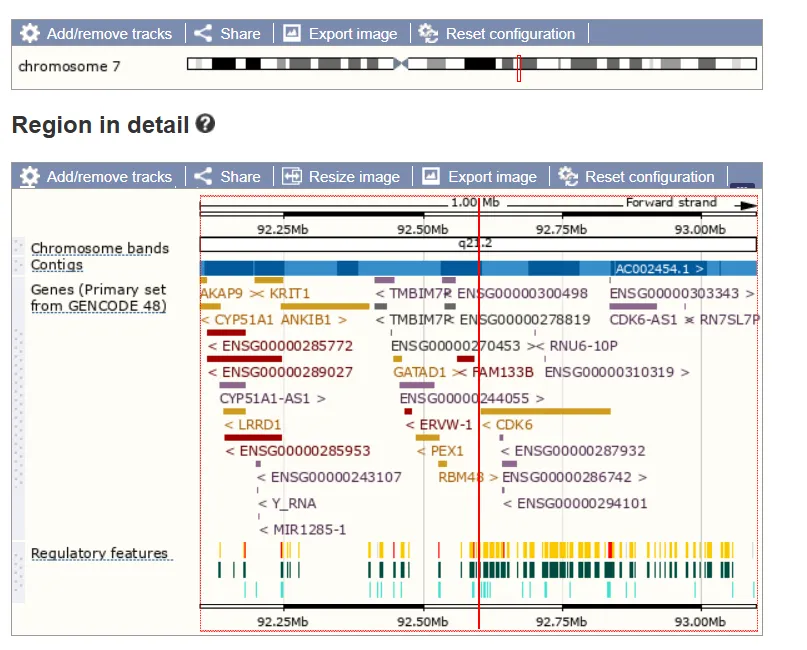
Figure 3. Chromosome no.7 Retrieved through VEP Ensembl
A variant was identified in the genomic region:
Chromosome 7: 92,597,676–92,597,776
The variant was classified as an intergenic variant. The source analysis indicates that the region is associated with long non-coding RNA (lncRNA)-related genomic regions. Variants located in intergenic regions may potentially influence regulatory elements or non-coding transcripts; however, functional effects require experimental validation.
Chromosome 10
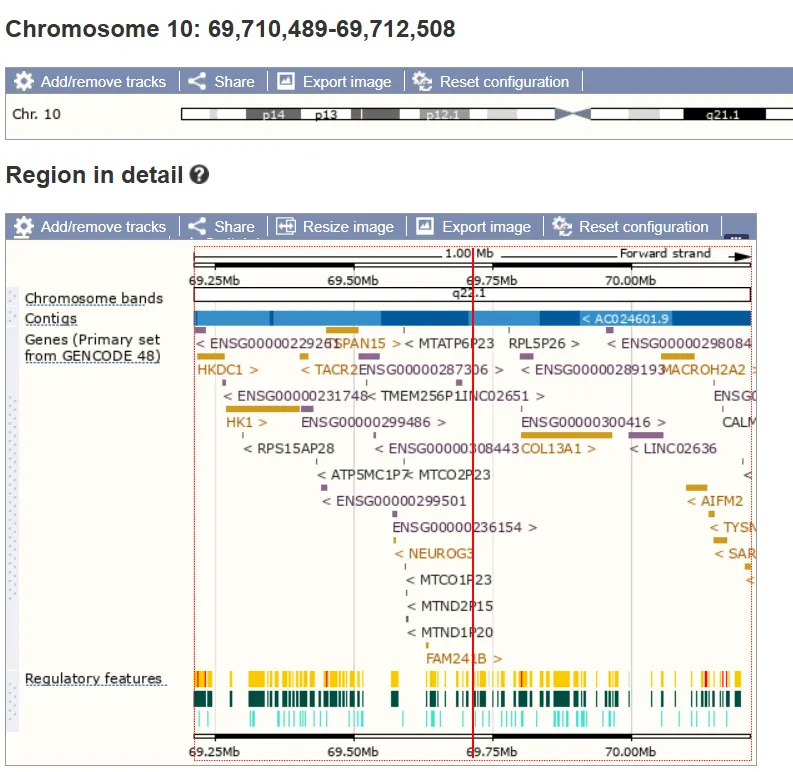
Figure 4. Chromosome no.10 Retrieved through VEP Ensembl
Two additional variants were identified on chromosome 10:
Chromosome 10: 49,703,047–49,703,147
This variant was classified as an intronic variant.
A second variant was identified at:
Chromosome 10: 112,676,367–112,676,467
This variant was also classified as an intronic variant.
3.3 Gene-Level Analysis
Machine-learning-based analysis identified variants involving several genes of potential relevance to Alzheimer’s disease, including PSEN1, ABCA7, APP, NOS3, and APOE.
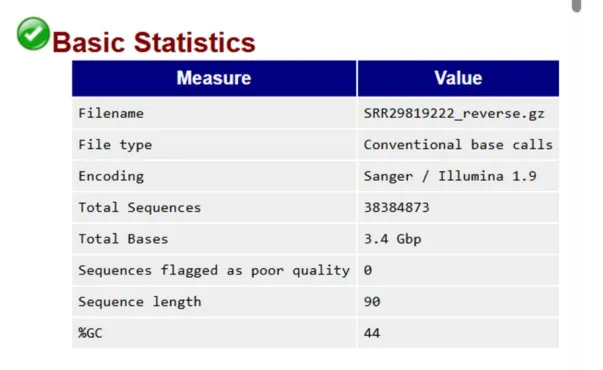
Figure 5. Basic Statistics
The source report describes two deletions involving PSEN1 and ABCA7, three single-nucleotide variants associated with PSEN1, and a cluster of single-nucleotide variants involving APP, NOS3, and APOE.
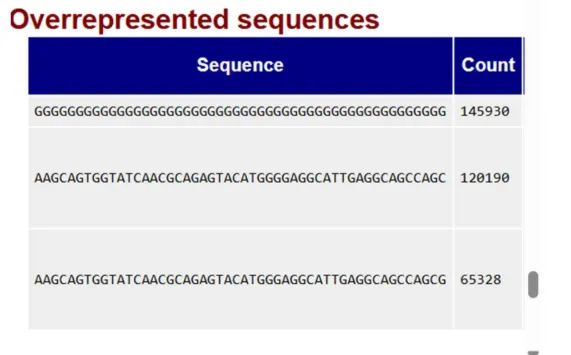
Figure 6. Overrepresented sequences
Among these genes, APOE was highlighted because of its role in Aβ-related biological processes. The original analysis associated increased APOE expression with Aβ clearance and microglial responses.
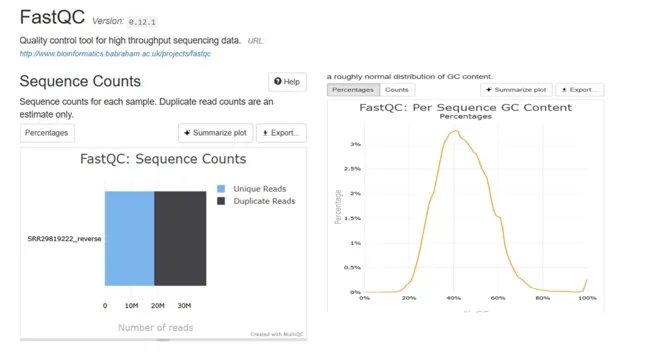
Figure 7. Fast QC & GC Content
DISCUSSION
The present computational analysis identified three notable genomic variants within the analyzed Alzheimer’s disease-associated sequencing dataset. These variants were located on chromosomes 7 and 10 and were classified as one intergenic and two intronic variants.
The identification of an intergenic variant on chromosome 7 is potentially relevant because intergenic regions can contain regulatory elements and non-coding transcripts. The source report specifically associates this region with lncRNAs. However, the biological significance of the identified variant cannot be established solely from its genomic position and requires additional functional investigation.
The two chromosome 10 variants were classified as intronic variants. Intronic variants may influence gene regulation, transcript processing, splicing, or other molecular processes depending on their genomic context. Nevertheless, functional effects should not be inferred solely from the intronic classification.
The analysis also identified variants involving PSEN1, ABCA7, APP, NOS3, and APOE. These genes are biologically relevant to neurological disease mechanisms, making them potentially important candidates for further investigation. The source report particularly emphasizes APOE in relation to Aβ clearance and microglia–astrocyte interactions.
The findings are consistent with the broader concept that microglia can influence astrocytic responses to Aβ. The original experimental model described differences between neurospheres containing astrocytes and neurons and systems additionally containing microglia. Microglia were reported to contribute to Aβ phagocytosis and neuroprotective responses.
Importantly, the present computational findings should be interpreted carefully. Identification of sequence variants from sequencing data does not by itself establish that the variants are RNA-editing events. RNA editing requires evidence demonstrating that the observed nucleotide alteration occurs at the RNA level and differs from the corresponding genomic sequence. Therefore, the variants identified in the present workflow are more appropriately described as candidate genomic variants associated with the analyzed dataset, unless additional RNA-editing-specific analyses were performed.
Similarly, the identification of variants in genes such as APOE, PSEN1, ABCA7, APP and NOS3 does demonstrate that incorporating these genes into medication would cure or eradicate Alzheimer’s disease. Such therapeutic conclusions require extensive mechanistic, preclinical, and clinical evidence.
CONCLUSION
The present study demonstrates a computational workflow for the identification and characterization of sequence variants from an Alzheimer’s disease-associated sequencing dataset. Using HISAT2, SAMtools, DeepVariant, Ensembl VEP, SnpEff, and machine-learning-based analysis, three notable variants were identified on chromosomes 7 and 10, including one intergenic variant and two intronic variants.
The gene-level analysis highlighted PSEN1, ABCA7, APP, NOS3, and APOE as genes associated with the identified variant patterns. The findings provide candidate genomic regions and genes for further investigation of molecular mechanisms associated with Aβ toxicity and microglia–astrocyte interactions.
The study supports the utility of integrated bioinformatics and machine-learning approaches for exploratory analysis of Alzheimer’s disease sequencing data. However, additional RNA-editing-specific analyses, experimental validation, transcriptomic investigation, and functional studies are necessary to confirm the biological significance of the identified variants and to establish their contribution to Alzheimer’s disease pathology.
REFERENCES

Seema Tabassum*, Identification And Computational Characterization Of Novel Genetic Variants Associated With Alzheimer’s Disease Using Bioinformatics And Machine Learning, Int. J. of Pharm. Sci., 2026, Vol 4, Issue 8, 3659-3668. https://doi.org/10.5281/zenodo.22057543
 10.5281/zenodo.22057543