

We use cookies to ensure our website works properly and to personalise your experience. Cookies policy
Rajarambapu College Of Pharmacy, Kasegaon.
Wound healing is a complex biological process involving tissue repair and regeneration, where topical formulations like creams play an essential role in promoting recovery and preventing infection. The present study focuses on the in-vitro safety evaluation of a herbal wound healing cream using the Hen’s Egg Chorioallantoic Membrane (HET-CAM) assay, along with assessment of drug release behavior using the Franz diffusion cell method. Herbal formulations are increasingly preferred due to their natural origin, reduced side effects, and therapeutic efficacy.The HET-CAM test was employed to evaluate the irritation potential of the formulation by observing vascular responses such as hemorrhage, lysis, and coagulation on the chorioallantoic membrane. The irritation score (IS) was calculated based on the onset time of these reactions. The formulation exhibited an IS value of 3.7, classifying it as slightly irritant, indicating its safety for topical application.Additionally, the Franz diffusion study demonstrated a steady and sustained drug release profile over time, confirming effective permeation through the membrane. Physicochemical evaluation parameters such as pH, viscosity, spreadability, and homogeneity were found to be within acceptable limits, supporting formulation stability and usability.In conclusion, the herbal wound healing cream showed minimal irritation potential and favorable drug diffusion characteristics, suggesting that it is safe, effective, and suitable for topical therapeutic use in wound management.
provide specific benefits.
There are two main types of creams: water-in-oil creams, which are thicker and more moisturizing, and oil-in-water creams, which are lighter and less greasy. Creams can carry useful ingredients like vitamins or anti-inflammatory agents that help improve skin health and appearance. They are widely used because they are easy to apply, feel good on the skin, and are effective for many skin problems. Herbal creams, which are made from plant-based ingredients, are becoming more popular because people prefer natural products.[1]
Wound And Wound Healing:
A wound is any damage to the body’s tissue where its normal structure and function are disturbed. This can happen due to many reasons like cuts, physical injury, chemicals, heat, infection, or problems with the immune system.
Wounds are mainly of two types:
• Open wound: when the skin is cut, torn, or pierced.
• Closed wound: when the skin is not broken but the inner tissue is injured (like a bruise from a hard hit).
Burns are also a type of wound caused by heat, fire, chemicals, electricity, radiation, or strong sunlight.
Wound healing is the natural process by which the body repairs the damaged tissue and restores its normal function. This process happens step by step and involves different cells working together.
The main stages of healing include:
• Inflammation (body’s initial response to injury)
• Formation of new tissue
• Growth of new blood vessels and repair tissue
• Closing of the wound surface with new skin
• Strengthening and remodeling of the healed area
Usually, healing happens in a proper order and time. But if it does not go well, the wound may become long-lasting (like ulcers) or form thick scars (like keloids).[5]
HET-CAM TEST:
The HET-CAM test is an experiment used to check whether a substance can irritate biological tissue.
In this method, fresh fertilized chicken eggs are used. The eggs are first kept in a warm incubator so the embryo can develop. After a few days, only healthy eggs are selected. On the 10th day, a small part of the eggshell is carefully removed to expose a thin membrane called the chorioallantoic membrane (CAM), which has tiny blood vessels.
A small amount of the test substance is placed directly on this membrane. Then the researchers watch it for about 5 minutes to see if it causes any damage. They look for three main reactions:
• Bleeding of blood vessels
• Breaking or damage of vessels
• Protein clumping or thickening
The time taken for these effects to appear is recorded.
Based on these reactions, a score is calculated to show how irritating the substance is. Finally, the substance is placed into one of three groups:
• 0-0.9 non-irritating
• 1-8.9 irritating
• 9-21 strongly irritating[4]
Marketed Wound Healing Cream: Dvija Wound Healing Cream
Introduction:
Dvija Wound Healing Cream is a proprietary Ayurvedic topical formulation developed for the management of different types of wounds, including acute and chronic conditions such as cuts, burns, ulcers, bedsores, and post-surgical wounds. It is formulated using natural herbal ingredients and is approved under AYUSH guidelines, indicating its basis in traditional Indian medicine.
Composition:
The cream contains a combination of classical Ayurvedic ingredients known for their wound-healing properties, including:
• Jatyadi Taila
• Vranaropan Taila
• Panchavalkala
• Mandukparni (Centella asiatica)
• Yashtimadhu (Glycyrrhiza glabra)
• Nimba (Azadirachta indica)
• Lodhra
• Lajjalu (Mimosa pudica)
• Yashada Bhasma (zinc-based compound)
Mechanism of Action:
Dvija cream promotes wound healing through multiple mechanisms:
• Hemostasis: Helps in quick blood clotting and stops bleeding
• Antimicrobial action: Prevents infection due to herbal antiseptic components
• Anti-inflammatory effect: Reduces swelling, redness, and pain
• Angiogenesis and tissue regeneration: Enhances formation of new blood vessels and tissues
• Collagen synthesis: Improves strength and repair of damaged tissue
• Re-epithelialization: Supports formation of new skin over the wound
• Scar reduction: Minimizes scar formation by improving skin regeneration
Indications (Uses):
• Cuts, wounds, and abrasions
• Diabetic ulcers and foot ulcers
• Bedsores and pressure sores
• Post-surgical wounds
• Burns and skin injuries
Benefits:
• Provides faster wound healing
• Controls bleeding without causing irritation
• Reduces chances of infection
• Promotes tissue repair with minimal scarring
• Suitable for both minor and chronic wounds
Directions for Use:
The affected area should be cleaned and dried before applying the cream. It is generally applied 1–2 times daily or as directed by a healthcare professional.
Conclusion:
Dvija Wound Healing Cream is an effective herbal formulation that combines traditional Ayurvedic ingredients with modern therapeutic needs. Its multi-targeted action, including antimicrobial, anti-inflammatory, and tissue-regenerating effects, makes it useful for managing various types of wounds safely and effectively.[2],[3]
Franz Diffusion Cell:
The Franz diffusion cell is a lab method used to check how medicines pass through the skin. It is mainly used for creams, gels, ointments, and other skin or patch-based (transdermal) drug systems.In this method, researchers measure how much drug is released from a product and how much goes through the skin. It can be done using lab skin tests or animal/human skin taken outside the body.This method is important because it helps in understanding drug absorption, safety, and skin irritation. It also helps scientists develop better and more effective skin medicines and patches.[6]
Objectives:
To comprehensively evaluate the safety and performance of the herbal wound healing cream by assessing:
• Irritation potential (HET-CAM)
• Drug release and skin permeation behavior (Franz diffusion study)
This ensures that the formulation is safe, effective, ad suitable for topical therapeutic use.[7],[8]
Safety and Operation Precautions:
All work with chicken eggs should follow the rules set by the institution for handling biological materials. Basic safety measures should be used, such as wearing a lab coat, gloves, and eye protection. If needed, extra safety instructions for specific substances can be checked in their Material Safety Data Sheet (MSDS).[10]
Material, Methods and Suppliers:
A.METHODS:
• This method involved studying and analyzing research papers, review articles, and other information available from online sources.[9]
• In vitro skin permeation studies on human skin were carried out using vertical glass Franz diffusion cells (Soham Scientific, UK). The experiments were performed following OECD guidelines to ensure proper standard methods were used.[11]
B. Biological materials:-
• Fertilized chicken eggs (9–10 days incubated)
• Herbal cream formulation (test sample)
• Controls:
o Negative: PBS / saline
o Positive: 0.1–1% SDS (sodium dodecyl sulphate )[12]
C.Solutions:-
Always follow the instructions provided by the manufacturer for storing stock solutions, including the correct temperature and how long they can be used. All solutions should be prepared using accurate volumetric methods.
Prepare the following solutions using distilled or deionized water:
• A 0.9% (w/v) sodium chloride (NaCl) solution
• A 1% (w/v) sodium dodecyl sulfate (SDS) solution
• A 0.1 N sodium hydroxide (NaOH)solution[10]
D.Equipments And Supplies:-
• A candling light (used to see inside eggs)
• Distilled or deionized water (pure water without impurities)
• A small rotating saw used by dentists
• An incubator
• Micropipettes with disposable tips for measuring small amounts of liquid
• A mortar and pestle (or similar tools) for grinding substances
• A stopwatch or digital timer
• Basic lab equipment (like small tubes for measuring liquids), as needed
• Tapered forceps (narrow tweezers for handling small objects)
• A volumetric flask (a special container for measuring liquids accurately)[10]
Test Substance Preparation:-
Test substances should normally be used as they are (undiluted). Only dilute them if really necessary. If dilution is needed, use 0.9% NaCl or olive oil based on how well the substance dissolves. Any other solvent should have a proper reason. Always prepare dilutions on the same day of testing.
Controls:
• Negative control: Use 0.9% NaCl in every test to make sure the test itself does not cause irritation.
• Solvent control: If olive oil is used for dilution, include it as a control. If another solvent is used, test both that solvent and 0.9% NaCl to ensure they are not causing irritation.
• Positive control: Use a known irritant to confirm the test is working properly. For strong irritant testing, use substances like SDS or NaOH, but the reaction should not be too extreme. Choose controls that have reliable previous data
INCUBATOR.
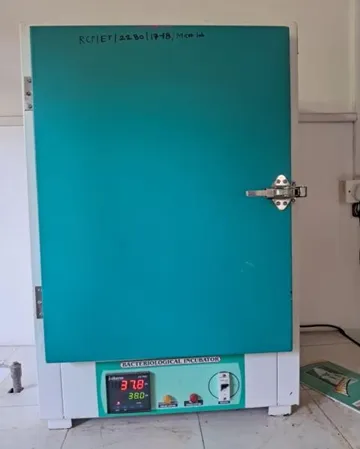
A laboratory incubator is an essential device used to maintain controlled environmental conditions, mainly temperature, for the growth of microorganisms, cells, and tissues.It works on the principle of temperature regulation using a thermostat, which keeps the internal environment stable for biological processes. Incubators typically consist of an insulated chamber, heating system, temperature controller, and shelves to hold samples.They are widely used in microbiology, pharmaceutical research, clinical diagnostics, and biotechnology for culturing bacteria, fungi, and cells.[20][21]
Procedure: HET-CAM Assay for Herbal Wound Healing Cream
• Selection of eggs:
Fertilized White Leghorn eggs, 7 days old, were selected for the experiment.
• Incubation conditions:
The eggs were incubated for 10 days at 37.0°C with controlled relative humidity of about 52.5% ± 2.5%.
• Test method followed:
The experimental procedure was carried out based on the method described by Gilleron et al. (1996).
• Application of test substance:
A pure sample of the herbal cream was applied directly onto the chorioallantoic membrane (CAM) of the embryo.
• Dose and exposure:
Approximately 300 µL of the test substance was applied for 20 seconds using a Test Substance Applicator (TSA).
• Observation process:
After application, the CAM was examined under a microscope for up to 5 minutes.
• Observed reactions:
The membrane was checked for irritation signs such as:
o Bleeding (hemorrhage)
o Tissue breakdown (lysis)
o Blood clot formation (coagulation)
• Recording of results:
The reaction time was noted only when visible effects clearly spread over the treated area of the CAM.
• Evaluation of irritation:
The irritation score (IS) was calculated using the standard equation given by Kalweit et al. (1990).(13)
Irritation score:-
The effects are evaluated by looking at when bleeding starts, how blood clotting happens, and whether blood vessels break down. Each of these is checked separately and then combined to calculate a final value called the irritation score (IS), which is used to decide how irritating the tested substance is.[14]
Calculation of Irritation Score (IS)
The irritation score is calculated using the recorded times for hemorrhage (H), lysis (L), and coagulation (C) with the following formula:
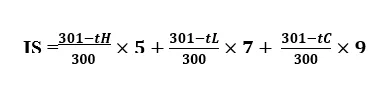
Where:
• H = hemorrhage time (seconds)
• C = coagulation time (seconds)
• L = lysis time (seconds)
Hemorrhage time means the time (in seconds) taken to observe bleeding reactions on the CAM. Lysis time means the time (in seconds) taken for blood vessels on the CAM to break down.
Coagulation time means the time (in seconds) taken for clot formation on the CAM[14]
Observations:-
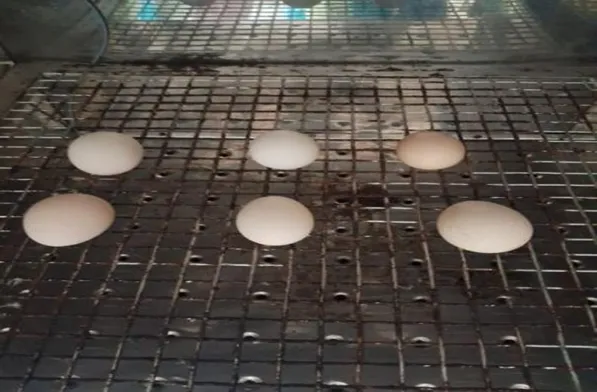
Egg incubation with regularly rotation
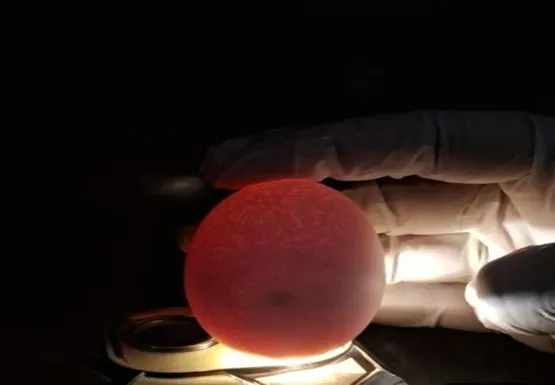
Candling lamp observation for embryo development confirmation
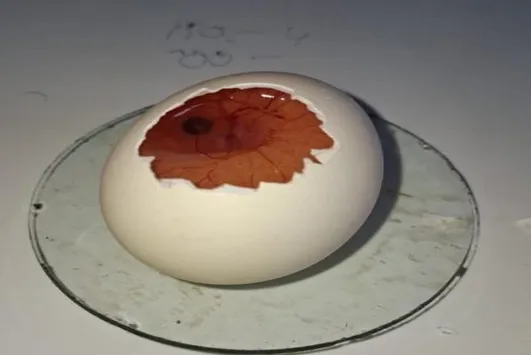
Lysis
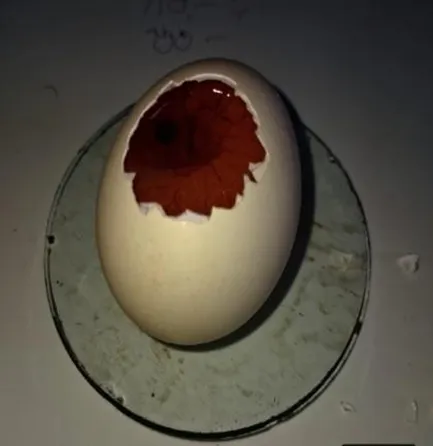
Hemorrhage
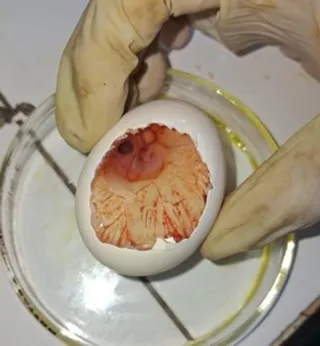
coagulation
Irritation Score calculations:-

= 5.01 + 0.723 + 0.029
= 3.7
CONCLUSION
The irritation potential of the formulation was assessed by observing hemorrhage, lysis, and coagulation on the chorioallantoic membrane (CAM).
• No immediate hemorrhage, lysis, or coagulation was observed within the first few seconds of application.
• Mild changes, if any, appeared after a longer duration, indicating minimal tissue interaction.
• The calculated Irritation Score (IS) was found to be in the range of 3.7 classifying the formulation asSlightly-irritant.
This confirms that the herbal cream is safe for topical application and does not produce significant irritation on biological membranes.[18][19]
Evaluation Tests of Herbal Wound Healing Cream
|
Sr. No. |
Evaluation Parameter |
Result (Observed Value) |
Standard/Acceptable Range |
|
1 |
Color |
White Cream |
Acceptable |
|
2 |
Odor |
Oil based aroma,medicated earthy smell |
Acceptable |
|
3 |
Consistency |
Smooth, semi-solid |
Smooth |
|
4 |
pH |
6 |
5.5 – 7.0 |
|
5 |
Spreadability |
Good (≈ 5–7 g·cm/sec) |
Good spreadability |
|
6 |
Homogeneity |
Homogeneous, no lumps |
Uniform |
|
7 |
Grittiness |
Free from gritty particles |
Acceptable |
|
8 |
Viscosity |
5495cps |
3000-10000cps |
|
9 |
Irritancy |
Non -Irritant |
Non –Irritant |
|
10 |
Washability |
Easily Washable |
Washable |
• Franz Diffusion Cell :-
Franz diffusion cell was primarily used to evaluate the permeability and stability of formulations such as topical (gels and creams) and transdermal (lipid nanoparticle formulations). Diffusion cell is a straightforward assay that can reliably measure the in-vitro and ex-vivo drug release from topical preparations such as creams, ointments, liposomes formulations, and gels. It offered crucial critical perspectives on skin, drug, and formulation relationships. In addition, it is also employed for toxicity testing and quality control. Currently, many medications are available in the market, administered through transdermal routes. To treat various skin conditions, medical professionals use a wide range of methods aimed at increasing the skin’s permeability and drug absorption. The biggest challenge with transdermal drug delivery system is determining the amount of medication penetrating the skin. Today, there is a lot of research into creating new dermal dosage forms for pharmaceuticals. In this review, the authors discuss various evaluation methods to determine the amount of drug penetrating the skin. With their strengths and weaknesses, these models and assessment methods provide a valuable framework for investigating the dermato-pharmacokinetics of different transdermal formulations. The assessment techniques aid in assessing molecules that cause skin irritation by shedding light on the molecular mechanisms by which they penetrate the skin. These assessment tools and models provide a novel strategy for creating topical medicinal formulations for various skin infection disorders. The present review explores Franz diffusion cell application, its implication in pharmaceutical research, and the regulation related to pharmacopeia.[15]
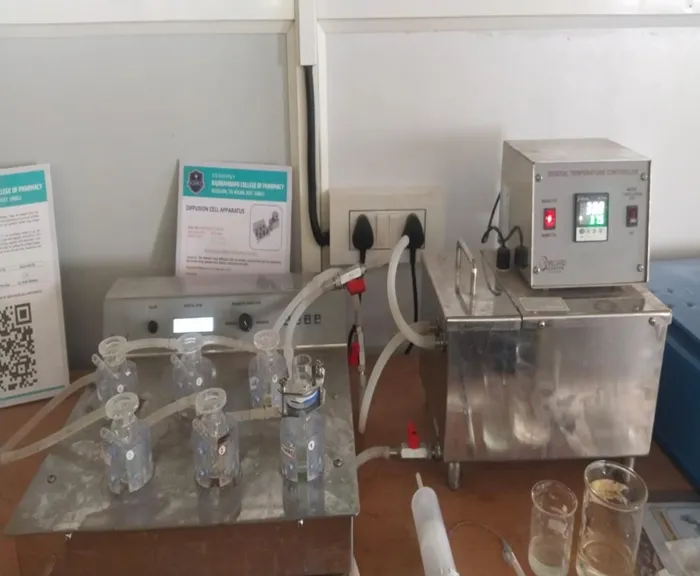
Procedure For Franz Diffusion Cell:
Preparation of receptor phase
Fill the receptor compartment with suitable buffer (e.g., pH 6–7.4). Maintain temperature at 37 ± 0.5 °C using a water bath.
Mounting of membrane/skin
Place the prepared membrane (egg membrane/synthetic/skin) between donor and receptor compartments. Ensure no air bubbles under the membrane.
Assembly of diffusion cell
Clamp donor and receptor compartments securely.
Start continuous stirring of receptor medium using a magnetic stirrer to maintain sink conditions.
Application of sample
Apply a measured amount of formulation (cream/gel/drug solution) in the donor compartment.
Diffusion study
Allow diffusion to occur over time.
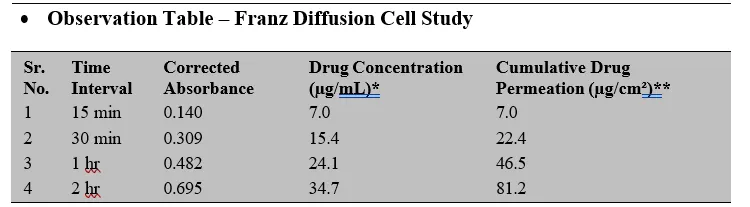
Withdraw samples from receptor compartment at predetermined intervals (e.g 15 min,30 min,1 hr,2 hretc).
Replace withdrawn volume with fresh buffer to maintain constant volume.
Analysis of samples
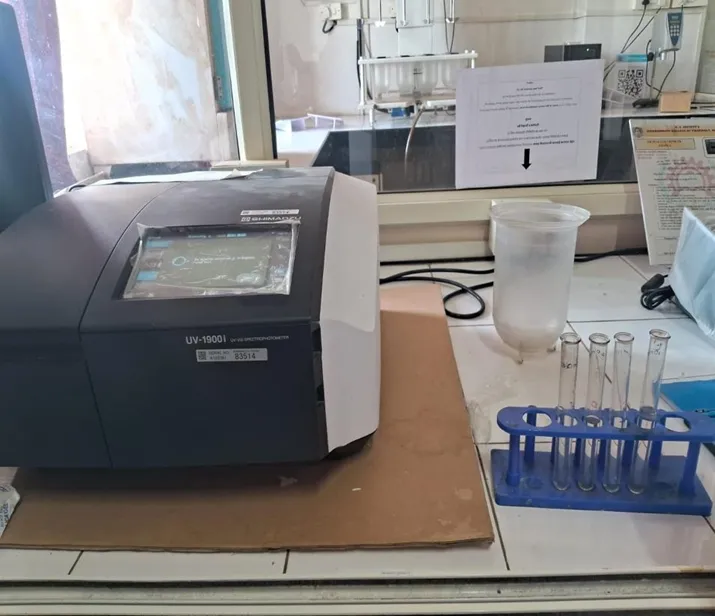
Analyze collected samples using UV spectrophotometry or HPLC to determine drug concentration.
Data interpretation
Calculate cumulative drug permeation (µg/cm²) and plot against time to determine flux and permeability.[16][17]
CONCLUSION
The formulation shows a steady and time-dependent increase in drug release, indicating good diffusion through the membrane. Maximum drug release was observed at 2 hours, suggesting that the cream exhibits sustained release behavior, which is suitable for wound healing applications.
REFERENCES
https://doi.org/10.1016/j.tiv.2021.105150
SYSTEM. World Journal of Pharmaceutical Science and Research, 4(6), pg: 96-104.
Franz diffusion cell and its implication in skin permeation studies
DOI: 10.1016/0887-2333(93)90055-a
Edwards, A. D., et al. (2021).
“MicroMI: A portable microbiological mobile incubator…” HardwareX, 10, e00242.
DOI: 10.1016/j.ohx.2021.e00242
https://doi.org/10.1016/j.tiv.2021.105150
SYSTEM. World Journal of Pharmaceutical Science and Research, 4(6), pg: 96-104.
Franz diffusion cell and its implication in skin permeation studies
DOI: 10.1016/0887-2333(93)90055-a
Edwards, A. D., et al. (2021).
“MicroMI: A portable microbiological mobile incubator…” HardwareX, 10, e00242.
DOI: 10.1016/j.ohx.2021.e00242

Yogeshwari Jadhav, Payal Bansode, Shivani Chinchkar, Manasi Autade, Ankita Kore, In-Vitro Safety Evaluation Of Herbal Wound Healing Cream Via Hen’s Egg Chorioallantoic Membrane (HET-CAM) Test Assay, Int. J. of Pharm. Sci., 2026, Vol 4, Issue 7, 3343-3352, https://doi.org/10.5281/zenodo.21405077
 10.5281/zenodo.21405077