

We use cookies to ensure our website works properly and to personalise your experience. Cookies policy
Department of Chemistry, SNS COLLEGE OF PHARMACY Motihari Bihar.
Terminalia paniculata is a medicinal plant traditionally used for the treatment of various ailments due to its rich phytochemical composition. The present study aimed to isolate phytoconstituents from the ethanolic bark extract of Terminalia paniculata. The bark was collected, shade-dried, powdered, and extracted using ethanol by Soxhlet extraction. Preliminary phytochemical screening indicated the presence of alkaloids, flavonoids, tannins, phenolic compounds, saponins, glycosides, and triterpenoids. The crude extract was subjected to chromatographic techniques for the isolation of major phytoconstituents. The isolated compounds were purified and characterized using suitable analytical methods such as Thin Layer Chromatography (TLC), UV-Visible spectroscopy, FTIR, and other spectral techniques wherever applicable. The results confirmed that the ethanolic bark extract contains several bioactive constituents, particularly phenolic compounds and flavonoids, which may contribute to its antioxidant and therapeutic activities. This study supports the medicinal importance of Terminalia paniculata and provides a scientific basis for further pharmacological investigations and the development of herbal formulations.
All over the world, for the treatment of diseases, medicinal plants are widely used. According to a WHO report above 80% of the world, the population is taking interest in indigenous medicinal plant remedies [1].
Conventional medicine accountable for multiple health practices, advanced, awareness, and faith assimilate plant, animal, and/or mineral-based medicines, spiritual healing, manual expertise, and examination, involved solely or in the mixture to continue well-being, as well as to treat, diagnose or arrest illness [2].
The World Health Organization (WHO) has been encouraged a movement for “Saving Plants for Saving Lives”. Because of the crucial role of medicinal plants providing herbal remedies to a health epidemic [3,4].
WHO defined total health as not just the absence of diseases but a state of physical, mental, social, and spiritual wellbeing? Today, we are more anxious with diseases like depression, cancer, and heart trouble originate from unusable nutrition and stress. Because these diseases have a mental or emotional component which is growing convection that allopathy is largely unable to cure them all, but offers temporary relief from symptoms. There is a need for alternative therapy to cover good health for all. Herbal therapy is the best practice to overcome the illness [5].
It is estimated that about 75% of the biologically active plant-derived compounds, presently in use worldwide, have been derived through follow-up researchers to verify the authenticity data from folk and ethnomedicinal uses. So there is a great scope for new drug discoveries based on traditional plant uses [6].
The ethnobotanical information obtained from traditional herbal practitioners may serve as an initial lead for the isolation and characterization of bioactive compounds.Phytoconstituents are the natural bioactive compounds, exhibit potential therapeutic properties, work with nutrients and
fibers to form an integrated part of the defensive system in which alkaloids, flavonoids, saponins, terpenoids, phenolics, tannins, etc considered as major constituents in crude drugs [6].
1.2.Herbal drugs-current scenario:
Above three-quarters of the world's population depend mainly on plants and plant extracts for medical attention. More than 30% of the entire plant species, at one time or other, were used for medicinal purposes. It is a guess that the world market for plant-derived drugs may consider about Rs.2,00,000 crores. Currently, the Indian offering is less than Rs.2000 crores. Indian send-out of crude drugs has gradually increased at 26% to Rs. 165 crores in the year 1994-95 from Rs. 130 crores in the year 1991-92. The production of medicinal and aromatic plant crude material is worth Rs. 200 crores annually. This is hopefully to touch the US $1150 by the year 2000 and the US $5 trillion by 2050 [7].
1.3Phytochemicals:
Medicinal plants are offer different phytochemicals. Phytochemicals, such as alkaloids, flavonoids, tannins, saponins, steroids, phenols, etc., have different diseases Phytochemicals present in medicinal plants, such as alkaloids, tannins, saponins, flavonoids, phenols, steroids, carotenoids, etc., have several disease preventive activities [8]. These plant-based chemical compounds produce important preventive activities as anti-inflammatory, antiaging, antidiabetic,antimicrobial, anticancer, antidepressant, antioxidant, and wound healing. The routine bioactive compound found in medicinal plants is flavonoids. They have different preventive activities in human disease like antimicrobial, antioxidant, anticancer, wound-healing, and anti-inflammatory [8].
1.4.Selection of plants:
In the present dissertation, the author has selected an important medicinal plant, which is available abundantly and is used till today by the rural folk for the treatment of various diseases and ailments. It was observed that very little phytochemical information is available in the literature on the selected plant. The study aims at isolation, purification, and structure elucidation of chemical constituents and evaluates their biological activities. The selected plant includes:
• Terminalia paniculata Roth. (Family: Combretaceae).
2.1. Plant Profiles and Survey of Literature
A thorough literature survey from all available scientific sources has been appended for the selected plant species.
The selected plant for the study includes
• Terminalia paniculata Roth. (Family: Combretaceae).
2.1.1. Plant profile:
Name of the plant: Terminalia paniculata Roth. (Family: Combretaceae). Synonym: Pentaptera paniculata.
Vernacular names [9-11]: English: Flowering murdah; Sanskrit: Asvakarnah; Malayalam: Pumarutu; Marathi: Kindal; Tamil: Pumarutu; Telugu: Putanallamanu.
2.1.2. Origin, geographical distribution and botanical characters:
Terminalia paniculata is a tropical tree. Native from Australia and Africa, and in West Indies and
Bermuda. In India it is found in the western and eastern ghats, in the semi-evergreen and moist deciduous forests. It is found in West Bengal, Bihar, Odisha, Andhra Pradesh and peninsular India[9-11]. A large deciduous tree, 20-30 m in height with a clear bole of about 10 m and brown to dark brown rough bark peeling off in thin flakes; leaves simple, upper alternate, lower opposite, oblong or elliptic, acute or acuminate, pale brown with two glands near the base of the midrib below, main nerves 10-15 pairs; flowers reddish brown, sessile, in rusty pubescent spikes; fruits reddish brown-winged, one wing broad and the other two narrow [9,10].
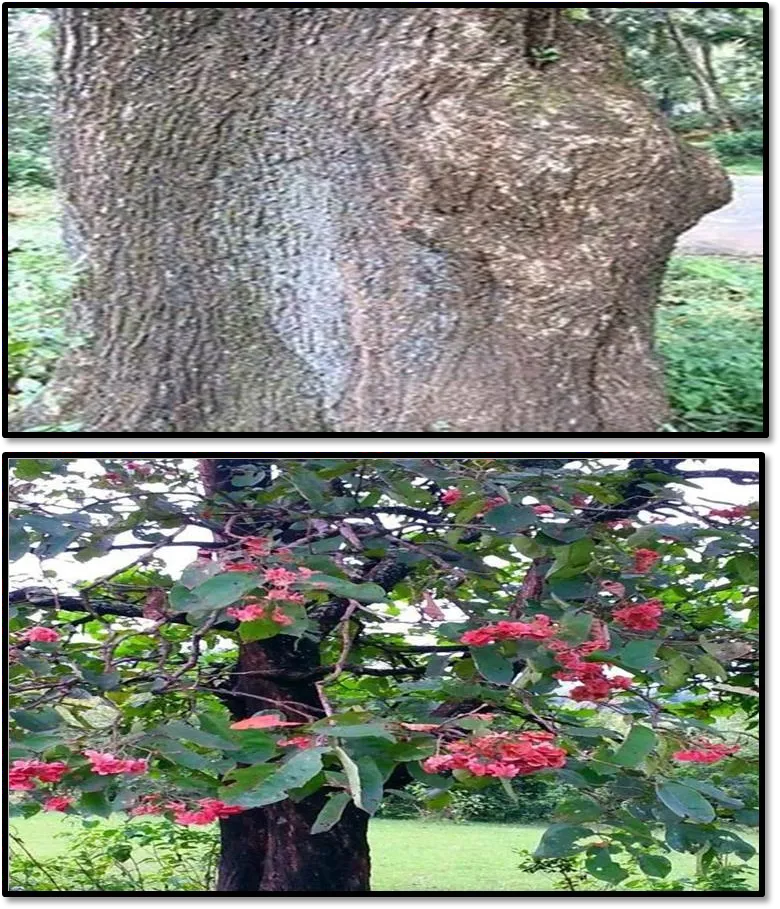
Fig. 1. Photographs of Terminalia paniculata Roth.
2.1.3Specimen and authentication:
The bark part of Terminalia paniculata were collected during May-June 2020 from rural areas of Nadia district of West Bengal, India and authenticated from Central National Herbarium, Botanical Garden, Howrah, India.
2.1.4. Ethnomedical informations:
Ethnobotanical knowledge is very ancient in India. Systematic field and ethnobotanical investigations have been carried out by several researchers [12]. Traditionally, flower juice and bark of Terminalia paniculata have been used as a remedy for cholera, diabetes, inflamed parotid glands, menstrual disorders, cough, wounds, ulcer, skin disease, leprosy and anaemia [9,10,13].
2.1.5. Pharmacological informations:
T. paniculata is also used to treat cough, bronchitis, cardiac debility, hepatitis and diabetes
[14] and has spermicidal activity [15,16]. The methanolic extracts of stem bark, leaf and fruit possess antibacterial, antifungal and antioxidants activity [17,18]. The antioxidant activity with 2, 2diphenyl-1-picrylhydrazyl (DPPH) has been evaluated [18]. The acetone extract of leaves and methanolic extract of fruit are reported to have marked Anti-HIV-1 effect [19, 20]. The aqueous bark extract possesses protective effect against CCl4-induced liver injury in rodents [21].
2.1.6. Phytochemical informations:
Only a few phytochemicals have been reported on this plant in the literature. Ellagic acid was isolated from the methanol extract of T. paniculata leaves and heartwood [19]. 3,3’-di-O-methyl ellagic acid and 3,4,3’-O-trimethyl flavellagic acid was isolated from methanol extract of heart wood [22, 23]. β-sitosterol, terminic acid, a dihydroxytriterpene carboxylic acid isolated from this plant [8,24].
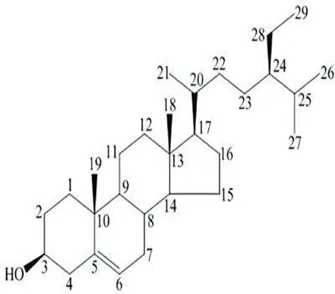
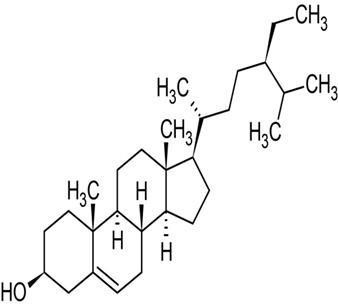
Fig: structure of β- sitosterol
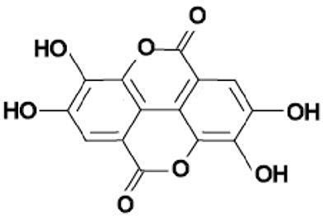
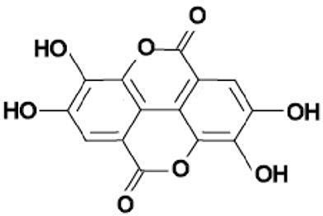
Fig :structure of ellagic acid Fig: Terminic acid
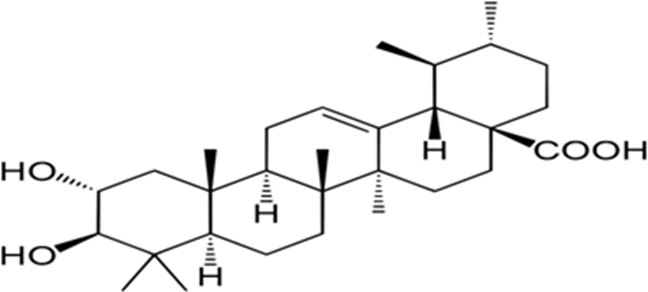
Fig: dihydroxytriterpene carboxylic ac
3.1. Materials:
3.1.1. Plant materials:
The fresh plant (bark) materials of Terminalia paniculata was collected during May-June 2020 from rural areas of Nadia district of West Bengal, India.
3.1.2. Drugs and chemicals used:
All the drugs and chemicals used in the present dissertation were of analytical grade or laboratory-grade supplied by standard manufacturers.
Mayer’s reagent, Wagner’s reagent, Dragendorff’s reagent, Hager’s reagent, Hcl, NaOH, chloroform, acetic anhydride, metallic tin, lead acetate, Millon’s reagent, NaNO2, HNO3., α-napthol (5%) in ethanol [freshly prepare], 0.2% anthrone solution in Conc. H2SO4.
Fehling's solution A: Dissolve 35 g of CuSO4 5H2O in water and make the volume 500 ml. Fehling's solution B: Dissolve 120 g of NaOH and 173 g of Na-K tartrate (Rochelle salts) in water and make the volume 500 ml.
3.1.3. Benedict’s reagents:
1. Reagents No. 1: Dissolve 173 g of sodium citrate + 100 g of anhydrous Na2CO3 in 600 ml of hot water. Dilute it to 800 ml with distilled water.
2. Reagents No. 2: Dissolve 17.3 g of CuSO4 5H2O in 100 ml hot water. Cool and dilute to 100 ml dist. water.
3. Reagents No. 3: Then add Reagents No. 1 to Reagents No. 2 slowly with constant stirring and makeup to 100ml with dist. water.
Benzene, Chloroform, Ethanol, Methanol, n-butanol, Ethyl acetate, Ether, Silica Gel G, Silica Gel for column chromatography (60-120 mesh), Iodine, Sulphuric acid.
3.1.4. Apparatus:
Test tube, Measuring cylinder, Conical flask, Beaker, Petridish, Pipette, TLC plate, Glass road, Distillation unit, UV chamber, Glass column, Hot plate, Hot air oven.
3.2. Methods:
3.2.1 Phytochemical examination:
Column fractionation was carried out for isolation of phytoconstitutent of extract of selected plant Terminalia paniculata.
4.1 Extraction:
4.1.2. Preparation of extracts:
Dried bark was powdered and extracted overnight with ethanol (90%v/v) by the maceration technique. It was sonicated and filtered. Determination of extractive value was done with respect to the dried plant material.
The above extracts were studied for their color, consistency, and extractive values and reported in Table 4.1
Table 4.1.1.: Data showing the color, consistency and yield values of leave extracts of the
Terminalia paniculata.
|
Sl. No |
Plant |
Extract |
Colour |
Consistency |
Yield % w/w |
|
1 |
Terminalia paniculata |
Ethanolic |
Grey |
Sticky |
4.2 |
Results and discussion:
The colour, consistency and yield values of ethanolic extract of the selected plant (Terminalia paniculata) materials (bark) were reported in Table 4.1.1.
5.1. Preliminary phytochemical examination of bark extract:
Carbohydrates, proteins, and lipids are made by plants used as food by man. Compounds like alkaloids, glycosides, volatile oils, and saponins, etc. produce a physiological effect. So the plant is considered a biosynthetic laboratory. The secondary metabolites compounds are responsible for therapeutic effects. The plant by metabolism process able to synthesis primary and secondary metabolites. The plant material may be subjected to preliminary phytochemical screening for the detection of various plant constituents [25-27].
1. Tests for alkaloids:
a) Mayer’s reagent: Dissolve 1.36g of mercuric chloride in 60ml. Distilled water (a). Dissolve 5g potassium iodide in 60ml. distilled water (b). Mix (a) & (b) and adjust the volume to 100ml with distilled water. With alkaloids, it produces white to buff-colored precipitate.
b) Wagner’s reagent: Dissolve 1.27 g of iodine and 2g of potassium iodide in 5ml of water and make up the volume of 200 ml with distilled water. Wagner's reagent with alkaloids produces a
reddish-brown precipitate.
c) Dragendorff’s reagent: sodium iodide 14 g mixed with 5.2 g of bismuth carbonate, 50 ml glacial acetic acid, and boil for a few minutes. kept overnight and filter the precipitate of sodium acetate crystals. Stoke solution kept in an amber-colored bottle. When needed, add 20 ml of acetic acid to 10ml of this stock solution and makeup to 100ml with water. With alkaloids, it produces an orange-brown precipitate.
d) Hager’s reagent: A saturated aqueous solution of picric acid used for detection of alkaloids. It gives characteristics of crystalline precipitate with many alkaloids.
2. Test for glycosides:
Test for cardiac glycosides:
a) Keller-Kiliani test: To an extract of the drug in glacial acetic acid, few drops of ferric chloride and conc. Sulphuric acid is added. A reddish-brown color is formed at the junction of two layers and the upper layer turns bluish-green. The test confirms the presence of cardiac glycosides with the presence of digitoxose as the glycone moiety.
Test for anthraquinone glycosides:
a) Borntrager’s test: Boil 0.1 g of the powdered drug with 5ml. 10% sulphuric acid for 2min.
Filter while hot, cool the filtrate, and shake gently with an equal volume of benzene. Allow the benzene layer to separate completely from the lower layer. Pipette out and transfer the benzene layer to a clean test tube. Add about half its volume to an aqueous solution of ammonia (10%). After gentle shaking kept the solution separate. The lower ammoniacal layer will acquire a pink to
3. Test for carbohydrates:
a) Molisch’s test: To aqueous or alcoholic solution of the substance in a test tube add 10% alcoholic solution of alpha-naphthol. Shake well then by the side of the test tube add a few drops of Conc. Sulphuric acid. The presence of carbohydrates may confirm if a violet ring is observed at the junction of two liquids.
b) Fehling’s test: Add 2ml of Fehling’s solution A and 2ml of Fehling’s solution B to 2ml of liquid extract in a test tube and boil. The presence of reducing sugar indicates by the formation of a yellow or bricked red precipitate.
c) Benedicts test: Add 5ml of Benedict’s reagent to 3ml of test solution in a test tube and boil on a water bath. The appearance of a brick-red precipitate at the bottom of the test tube shows the presence of monosaccharides.
4. Test for gums and mucilages:
a) Precipitation with 95% alcohol: Gums and mucilages precipitate with the addition of 95% alcohol, being insoluble in alcohol.
b) Molisch’s test: To aqueous or alcoholic solution of the substance in a test tube add 10% alcoholic solution of alpha-naphthol. Shake well and by the side of the test tube adds a few drops of Conc. sulphuric acid. At the junction of two liquids, violet ring formation confirms the presence of carbohydrates, gums, and mucilages.
5. Test for proteins and amino acids:
a) Biuret test: To 2ml of extract, 2ml of 10% NaOH solution, and 2 to 3 drops of 1% CuSO4 solution is added and mixed. Violet or purple color formation confirms the tested sample are proteins.
b) Ninhydrin test: To 2 ml. of extract add 0.5ml of ninhydrin solution. Boil for 2 minutes and cool. The blue color formation indicates the presence of protein.
c) Xanthoproteic test: To 2 ml of extract add 1ml of Conc. HNO3, boil, cool, and add 40% NaOH drop by drop. The appearance of the colored solution indicates the presence of proteins.
d) Millon’s test: To 2 ml of extract add 2 ml of Millon’s reagent, boil, cool, and add few drops of NaNO2 solution. The appearance of red precipitate or coloration indicates the presence of proteins.
6. Test for tannins and phenolic compounds:
a) Ferric chloride test: A 5% W/V solution of ferric chloride in 90% alcohol is used for the detection of phenols.
b) Lead acetate test: Tannins are precipitated with lead acetate.
c) Gelatin solution test: To a solution of tannins (0.5-1%) aqueous solution of gelatins (1%) and sodium chloride (10%) are added. A white to buff-colored precipitate is formed.
7. Test for steroids and sterols:
a) Lieberman Burchard reagent: To about 2ml of a solution extract in chloroform in a dry test tube, add 2 ml of acetic anhydride and 2-3 drops of Conc. H2SO4 Mix and allow for a few minutes. An emerald green color develops if steroids or sterols are present.
b) Salkowski’s test: To 5ml of a solution of extract in chloroform in a dry test tube add gently along the sides, on an equal volume of conc. Sulphuric acid. Observe the upper chloroform layer and the lower acid layer. The acid layer develops a yellow color with green fluorescence. The chloroform layer produces bluish-red to gradually violet red color.
8. Test for triterpenoids:
a) Noller’s test: The extract is taken in a test tube and dissolved in chloroform, then add a piece of metallic tin. Add 1 drop of thionyl chloride. If pink-colored develops then triterpenoids are present.
9. Test for saponins:
a) Foam test (1ml of extract + 9 ml of water): About 1 ml of alcoholic extract is diluted with 10 ml of distilled water and shaken for 15 minutes and kept aside. Near about one cm layer of foam, formation occurs after standing indicates the presence of saponins.
b) Haemolysis Test (3 drops of blood + 1 drop of extract): Haemolysis occurs if saponins are present.
10. Test for flavonoids:
a) Sodium hydroxide test: The extract dissolved in water, filtrate treated with sodium hydroxide a yellow color is observed if flavonoids are present.
b) Sulphuric acid test: A drop of Conc. Sulphuric acid when added to the above, the yellow color disappears.
The results of the preliminary phytochemical studies are tabulated (Table 5.1.1).
Table 5.1.1: Preliminary phytochemical screening of ethanolic extract of Terminalia paniculata.
|
Alkaloids |
- |
|
Glycosides |
- |
|
Carbohydrates |
+ |
|
Gums and mucilages |
+ |
|
Proteins and amino acids |
+ |
|
Tannins and phenolic compounds |
+ |
|
Steroids and sterols |
- |
|
Triterpenoids |
+ |
|
Saponins |
- |
|
Flavonoids |
+ |
(+): Present; (-): Absent.
Results and discussion:
The preliminary phytochemical screening of Terminalia paniculata revealed the presence of carbohydrates, tannins and phenolic substances, terpenoids, and flavonoids in ethanolic leave extracts (Table 5.1.1.).
6.1.1. Phytochemical examination: Column fractionation was carried out for isolation of phytoconstituents of ethanolic extract of selected plant Terminalia paniculata.
6.1.2. .Characterization of isolated compound:
Isolation and purification of the compounds will be carried out using various chromatographic techniques like TLC and column chromatography followed by their characterization based on their spectral data using UV, IR, NMR, and Mass Spectroscopy.
6.1.3. . Examination of the ethanolic extract:
The ethanolic extract of Terminalia paniculata gave positive ferric chloride and Shinoda tests for flavonoids and negative Liebermann-Burchard reaction. TLC examination over silica gel (60-120 mesh particle size) showed two clear spots (solvent system: ethyl acetate: ethanol -1: 0.25) on spraying with 5% alcoholic H2SO4 followed by heating. The ethanolic residue was subjected to column chromatography over silica gel (Merck). Fractions of 200 ml were collected. The course of the chromatogram was given in the following table- 6.1.1.
Table 6.1.4.: Chromatography of the ethanolic extract of T. paniculata.
|
Eluent |
Fractions |
Compound |
|
Benzene |
1-4 |
Waxy |
|
Benzene: Chloroform (90:10) |
5-11 |
Waxy |
|
Benzene: Chloroform (80:20) |
12-16 |
Waxy |
|
Benzene: Chloroform (70:30) |
17-22 |
Waxy |
|
Benzene: Chloroform (60:40) |
23-27 |
Intractable gum |
|
Benzene: Chloroform (50:50) |
28-33 |
Intractable gum |
|
Benzene: Chloroform (40:60) |
34-38 |
Intractable gum |
|
Benzene: Chloroform (30:70) |
39-42 |
Intractable gum |
|
Benzene: Chloroform (20:80) |
43-47 |
Intractable gum |
|
Benzene: Chloroform (10:90) |
48-52 |
Intractable gum |
|
Chloroform |
53-57 |
Intractable gum |
|
Chloroform: Ethanol (90:10) |
58-61 |
Intractable gum |
|
Chloroform: Ethanol (80:20) |
62-66 |
Intractable gum |
|
Chloroform: Ethanol (70:30) |
67-71 |
Intractable gum |
|
Chloroform: Ethanol (60:40) |
72-77 |
Intractable gum |
|
Chloroform: Ethanol (50:50) |
78-83 |
Intractable gum |
|
Chloroform: Ethanol (40:60) |
84-87 |
Intractable gum |
|
Chloroform: Ethanol (30:70) |
88-95 |
Compound-01 (PS 01) |
|
Chloroform: Ethanol (20:80) |
96-101 |
Intractable gum |
|
Chloroform: Ethanol (10:90) |
102-107 |
Compound-02 (PS 02) |
|
Ethanol |
108-116 |
Intractable gum |
6.2. Examination of the fraction (ethanolic extract): Fractions 1- 87
Fractions 1 to 87 were found to be waxy and gummy and were not pursued further.
PS-01 (3, 3’,4’, 5, 7-pentahydroxy flavone):
Fractions 88 to 95 were found to be similar and showed a single spot. Thus they were combined as they were similar in TLC and crystallized from acetone. On TLC, a purple spot was observed under UV light and darkened when exposed to ammonia. The compound had UV absorption maxima at 275 nm.
Characterization of Isolated compound (PS-01):
The isolated compound (PS-01) was characterized by using physical properties, chemical test, Rf value, and spectral data particularly IR,1H NMR,13C NMR, and Mass spectroscopy.
Physical properties:
The purified compound (PS-01) was solid powder and yellowish in color.
Chemical test:
The qualitative chemical tests of purified compound (PS-01) gave positive ferric chloride and Shinoda tests for flavonoid.
Melting point:
The melting point of the isolated compound (PS-01) was 282-284 °C by using the melting point apparatus.
5.1.4.4. Thin-layer Chromatographic (TLC) method:
The calculated Rf value of the isolated compound PS-01 was 0.73 by using a solvent system (chloroform: ethanol 8:2).
Spectroscopic methods:
IR (KBr, υmax/cm-1):
The IR (v cm-1) spectrum of compound (PS-01) showed absorption band at 3404.73 (str, Alcoholic OH at C-3), 3316 (str, =C-H of Aromatic ring), 1665.78 (str, γ-lactone 6 membered ring), 1562.21 ( str, C=O of ketone in lactone ring at C-4), 1520.92 (str, non-conjugated C=C at C2 and C3), 1382.16 (str, Phenolic OH at C9, C10, C13, C14).
IH-NMR (DMSO-d6, 500 MHz, δ ppm):
The 1H-NMR spectrum of compound (PS-01) displayed the characteristic signals at δH12.48 (s, 1H, -OH at C3), 6.94 (s, 1H, Ar-H at C7), 6.93 (s, 1H, Ar-H at C9), 6.89-6.88 (d, Ar-H at C15), 6.47 ((s, 1H, Ar-H at C12), 6.41-6.40 (d, Ar-H at C16), 5.52 (s, 1H, Phenolic OH at
C9), 5.42 (s, 1H, Phenolic OH at C8), 5.11 (s, 1H, Phenolic OH at C13), 5.04 (s, 1H, Phenolic OH at C14).
I3C-NMR (DMSO-d6, 500 MHz, δ ppm):
The 13C-NMR spectrum of compound (PS-01) displayed the characteristic signals at δC
175.91 (C4), 163.95 (C8), 160.80 (C10), 156.22 (C16), 147.75 (C14), 146.87 (C2), 145.12 (C13),
122.05 (C12), 120.08 (C3), 155.69 (C11), 115.14(C5), 103.10 (C9), 98.27 (C7), 93.44 (C6).
Mass spectroscopy:
The mass data which showed m/z = 303.15 (M+H) indicative of C15H11O7+. The mass data (ESI-MS) of compound (PS-01) showed peaks are at (m/z): 303.15 (M+H, 100%, C15H11O7+), 304.05 (M+2H, 18 %, C15H12O7+2), 305.05 (M+3H, 3 %, C15H13O7+2).
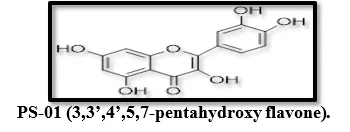
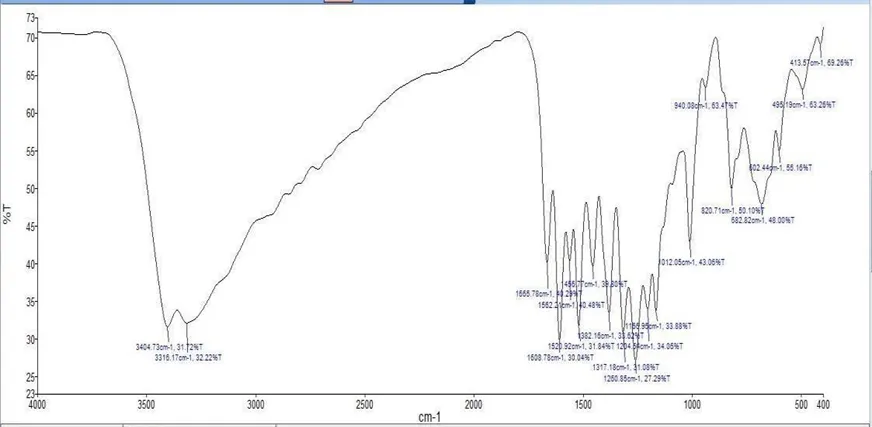
Figure 6.1.1. IR Spectrum of compound PS-01 (3,3’,4’,5,7-pentahydroxy flavone).
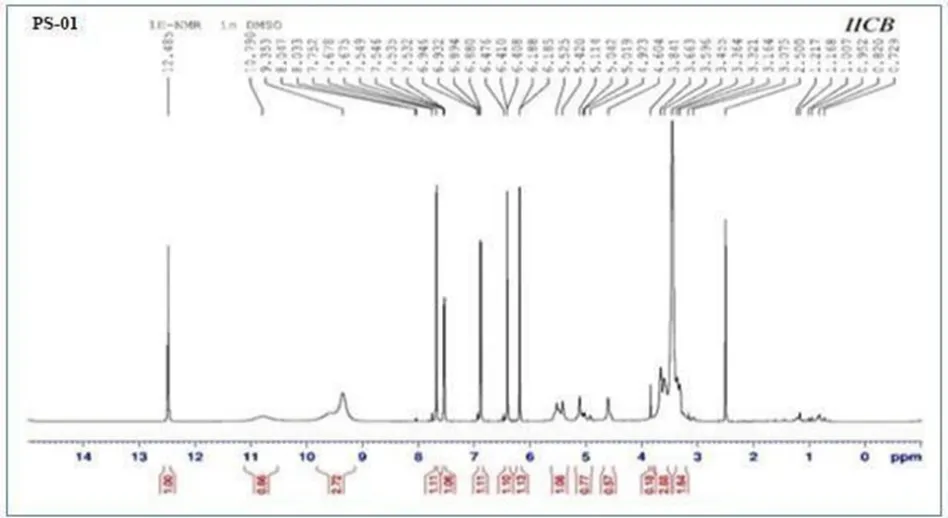
Figure 6.1.2.1H NMR Spectrum of compound: (PS-01) (3,3’,4’,5,7-pentahydroxy flavone).
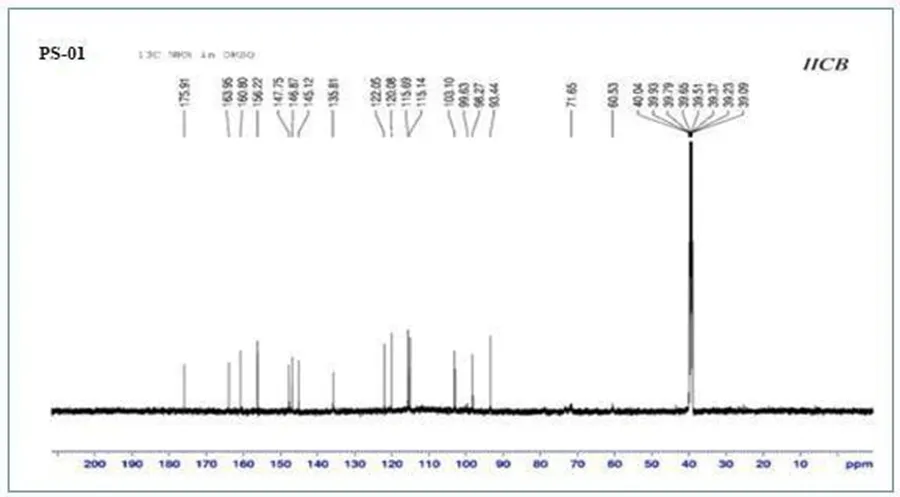
Figure 6.1.3.13C NMR Spectrum of compound: (PS-01) (3,3’,4’,5,7-pentahydroxy flavone).
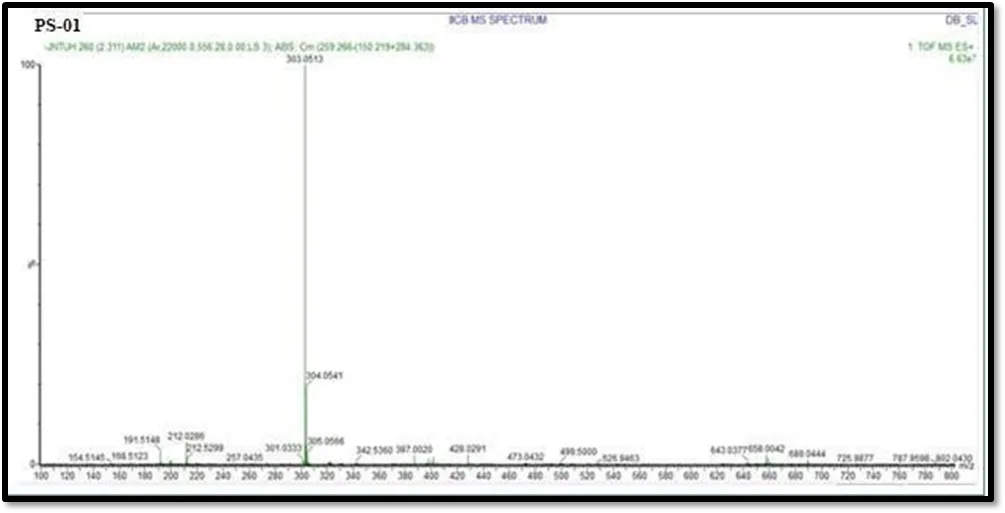
Figure 6.1.4. Mass Spectrum of compound: (PS-01) (3,3’,4’,5,7-pentahydroxy flavone).
PS-02 (3’, 3, 6, 7-tetramethoxy -4’, 5, 8-trihydroxy flavones):
Fractions 102 to 107 were found to be similar and showed a single spot. Thus they were combined as they were similar in TLC and crystallized from ethyl acetate. On TLC, a purple spot was observed under UV light and darkened when exposed to ammonia. The compound had UV absorption maxima at 265 nm.
Characterization of Isolated compound (PS-02):
The isolated compound (PS-02) was characterized by using physical properties, chemical test, Rf value and spectral data particularly IR,1H NMR,13C NMR, and Mass spectroscopy.
Physical properties:
The purified compound (PS-02) was solid colorless powder.
Chemical test:
The qualitative chemical tests of purified compound (PS-02) gave positive ferric chloride and shinoda tests for flavonoid.
Melting point:
The melting point of the isolated compound (PS-02) was 178-1800 C by using melting point apparatus.
Thin layer Chromatographic (TLC) method:
The calculated Rf value of the isolated compound PS-02 was 0.40 by using solvent system (chloroform : ethanol 1:2).
Spectroscopic methods:
IR (KBr, υmax/cm-1):
The IR (v cm-1) spectrum of compound (PS-02) showed absorption bands at 3608.9 to 3315.7 (O-H, free hydroxyl group), 2953.1 (Cyclic C-H, str), 2866.3 (Ali- C-H, str), 1660.7 (C=O), 1500.0-1400.3 (C-C ring stretch), 1284.6-1193.8 (C-C stretching), 1114.8-997.2 (O-H, out of plane bend), 786.9-709.8 (monosubstituted in aromatic ring).
IH-NMR (DMSO-d6, 500 MHz, δ ppm):
The 1H-NMR spectrum of compound (PS-02) displayed the characteristic signals at δH 7.80 (OH-6, s), 7.30 (OH-5, s), 6.67 (OH-4’, s), 5.89 (H-5’, s), 4.29 (H-2’, s), 4.17 (OCH3-3, dd, H-6’),
3.85 (OCH3-3’, t), 3.14 (OCH3-6, s), 2.37 (OCH3-5).
I3C-NMR (DMSO-d6, 500 MHz, δ ppm):
The 13C-NMR spectrum of compound (PS-02) displayed the characteristic signals at δH 2-77.37, 3-126.99, 4-123, 5-135.55, 6-140.11, 7-145.84, 8-105.20, 3’-148.77, 1’-100.62, 2’-77.00,
5’-76.57, 6’-64.21.
Mass spectroscopy:
The mass data which showed m/z = 390 (100) [M+] indicative of C19H18O9. The compound (PS-02) characterized as 3’,3,6,7-tetramethoxy -4’,5,8-trihydroxy flavone.
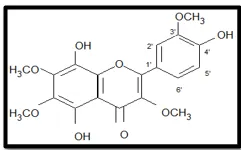
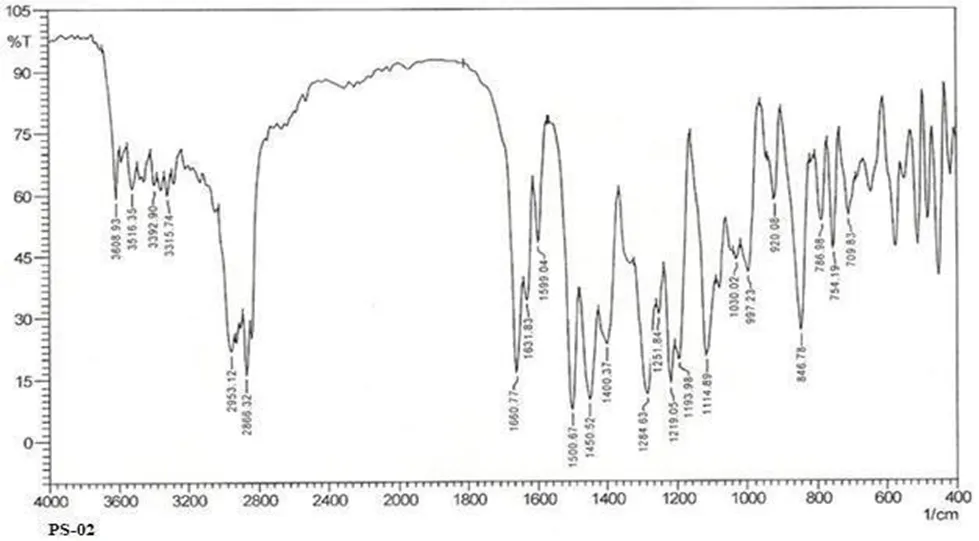
Figure 6.2.1: IR Spectrum of compound: (PS-02) 3’,3,6,7-tetramethoxy -4’,5,8-trihydroxy flavone.
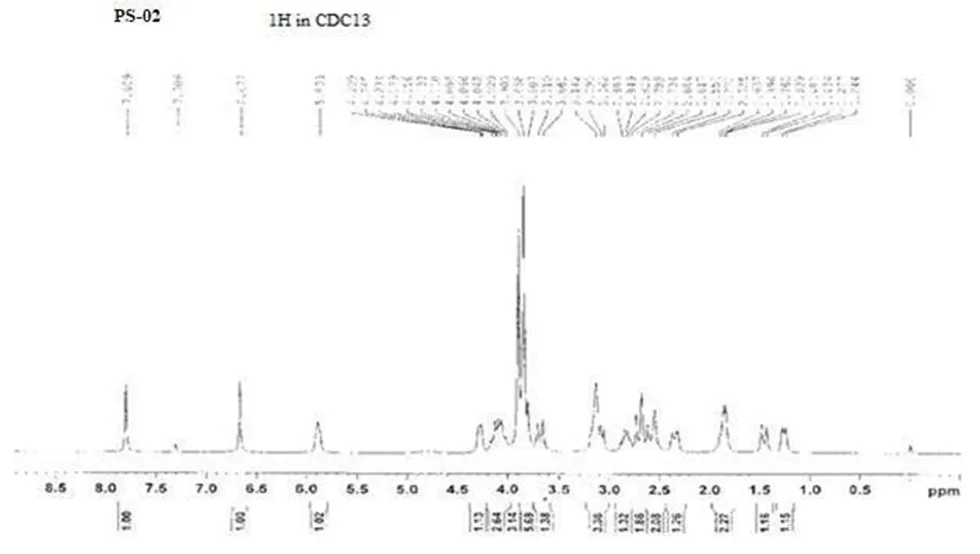
Figure 6.2.2: 1H NMR Spectrum of compound: (PS-02) 3’,3,6,7-tetramethoxy -4’,5,8-trihydroxy flavone.
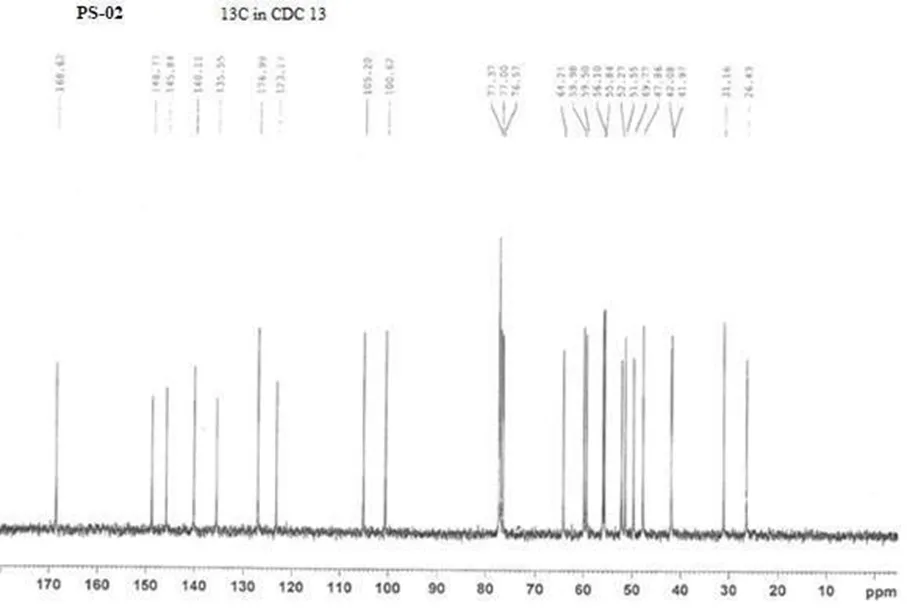
Figure 6.2.3: 13C NMR Spectrum of compound: (PS-02) 3’,3,6,7-tetramethoxy -4’,5,8-trihydroxy flavone.
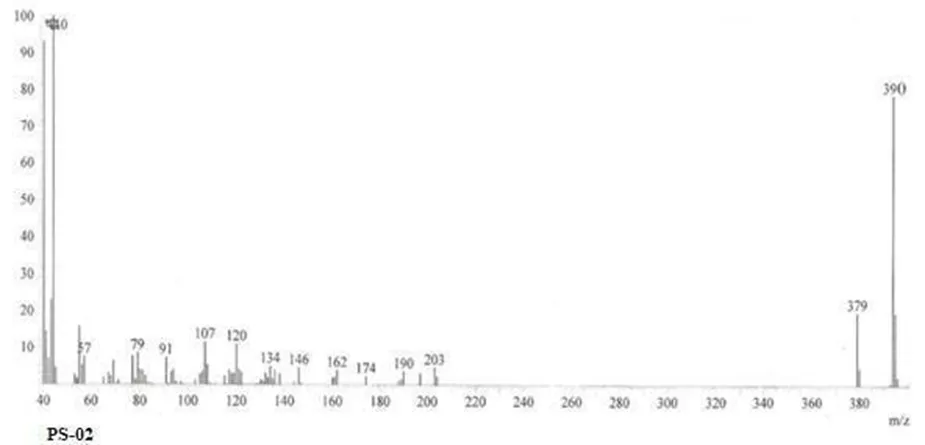
Figure 6.2.4: Mass Spectrum of compound: (PS-02) 3’,3,6,7-tetramethoxy -4’,5,8-trihydroxy flavon
RESULTS AND DISCUSSION
The chemical examinations of the ethanolic extract of Terminalia paniculata barks yielded two compounds 3,3’,4’,5,7-pentahydroxy flavone (PS-01) 3’,3,6,7-tetramethoxy -4’,5,8-trihydroxy flavones (PS-02) on column chromatography and purification. Compounds were characterized by spectral data and chemical tests. The ethanolic bark extract showed the presence of alkaloids, flavonoids, tannins, phenolic compounds, glycosides, saponins, and triterpenoids.
Chromatographic separation successfully isolated major phytoconstituents from the extract. TLC analysis confirmed the purity of the isolated fractions with distinct Rf values.
Spectral studies suggested that the isolated compounds mainly belonged to flavonoid and phenolic classes, which are known for their antioxidant and therapeutic properties.
CONCLUSION
The spectral data and chemical tests of isolated compounds from ethanolic extract of bark of Croton bonplandianum yielded two compounds, 3,3’,4’,5,7-pentahydroxy flavone (PS-01) 3’,3,6,7-tetramethoxy -4’,5,8-trihydroxy flavones (PS-02).The ethanolic bark extract of Terminalia paniculata is a rich source of biologically active phytoconstituents. The isolation process successfully yielded important secondary metabolites, particularly phenolic compounds and flavonoids. These findings support the traditional medicinal use of the plant and provide a foundation for future pharmacological, toxicological, and structural characterization studies to develop novel herbal therapeutic agents.
REFERENCES
6(3): 481-485.
6(3): 481-485.


Ragib Anwar, Aarti Kumari, Isolation of Phytoconstituents from Ethanolic Bark Extract of Terminalia paniculata (Combretaceae), Int. J. of Pharm. Sci., 2026, Vol 4, Issue 7, 4431-4445, https://doi.org/10.5281/zenodo.21490049
 10.5281/zenodo.21490049