

We use cookies to ensure our website works properly and to personalise your experience. Cookies policy
Sri Venkateswara Dental College and Hospital, Chennai, Tamil Nadu, India
Background Periodontitis is a chronic inflammatory illness of the tooth supporting structures with a complicated interplay between microbial assault and host immune response. Macrophages are highly flexible cells of the immune system that play a vital, albeit dual role in this process as critical mediators of tissue damage and essential orchestrators of inflammation resolution and tissue restoration. Understanding their changing phenotypes and functions is essential for the development of tailored treatment methods. Role of Macrophages: This review addresses the complex roles of macrophages in periodontal health and disease. In healthy tissues and during the resolution of inflammation, macrophages display a pro-resolving (M2-like) phenotype, which contributes to tissue homeostasis and repair. In contrast, a switch to a pro-inflammatory (M1-like) phenotype in chronic periodontitis causes alveolar bone resorption and soft tissue damage . The ratio of these characteristics is important for the course and resolution of disease. Therapeutic implications: Recent studies have suggested that modulation of macrophage polarization may be a therapeutic strategy. This includes pharmaceutical approaches to guide macrophages to a pro-resolving state and new biomaterial designs. Especially the design of dental implant coatings tailored to elicit specific macrophage phenotypes appears promising to improve osseointegration and minimize peri-implantitis by establishing a regenerative milieu. Conclusion: Macrophages are crucial to the etiology and resolution of periodontal disease. Future treatment strategies, such as sophisticated implant surface modifications, are anticipated to focus on specific modulation of macrophage phenotypes to restore periodontal health and improve long-term implant success.
Periodontitis is a common chronic inflammatory illness resulting from dysbiotic microbial biofilms that cause progressive damage of the supporting tissues of the tooth, including the periodontal ligament, cementum, and alveolar bone (1). If left untreated, this can result in tooth mobility and ultimately tooth loss which can have a great influence on the health of the mouth and general systemic health (2). Central to periodontitis pathogenesis is the host immune response. Immune cells are trying to eliminate the bacterial assault, but in the process, they cause tissue damage (3).
The various immune cells involved . Macrophages are the major orchestrators of innate and adaptive immunity . These highly flexible cells are characterized by a remarkable functional heterogeneity, with a phenotypic and effector functions that can be modulated by microenvironment stimuli (4). In periodontal disease, macrophages can polarize into several states that can be generally classified as pro-inflammatory (M1-like) or anti-inflammatory/pro-resolving (M2-like) phenotypes with profound effects on tissue destruction or repair (5).
This study seeks to provide a complete overview of the dual role of macrophages in periodontal health and disease with a focus on their “friend” role in tissue homeostasis and “foe” role in pathogenic processes. We will also review the present knowledge of macrophage polarization and point out new therapeutic options, including novel use of dental implant coatings with the aim to regulate the macrophage phenotype for enhanced clinical success.
MACROPHAGES IN PERIODONTAL HOMEOSTASIS: THE “FRIENDS”
Macrophages are an important component of immune surveillance and tissue homeostasis in healthy periodontal tissues. These resident macrophages, generally M2-like, are required to constantly clear cellular debris, apoptotic cells and low-grade microbial threats without provoking a strong inflammatory response (6). Functions include phagocytosis, antigen presentation and synthesis of growth factors and anti-inflammatory cytokines.
During the resolution phase of inflammation, macrophages switch their phenotype from pro-inflammatory to pro-resolving. This transition is important to reduce tissue injury and to induce healing mechanisms. For example, Serhan et al. (2020) emphasized the significance of specific pro-resolving mediators (SPMs) in programming macrophages to resolve inflammatory exudates and tissue regeneration (7). M2 macrophages in periodontium secrete anti-inflammatory cytokines such IL-10 and TGF-β which further reduce pro-inflammatory responses and promote fibroblast proliferation and extracellular matrix deposition (8). In addition, these macrophages are implicated in angiogenesis and lymphangiogenesis, which are essential for tissue remodeling and restoration of tissue integrity after an inflammatory assault (9). A healthy and robust periodontal environment is characterized by a balanced macrophage population, favoring M2.
MACROPHAGES IN PERIODONTAL PATHOGENESIS: THE “FOES”
In chronic periodontitis, the continuous bacterial assault and dysregulated host response induce a change in macrophage polarization toward a pro-inflammatory M1-like phenotype. These M1 macrophages are activated by pathogen-associated molecular patterns (PAMPs) from periodontal pathogens (e.g. lipopolysaccharide) and danger-associated molecular patterns (DAMPs) from damaged host cells, as well as pro-inflammatory cytokines such as interferon-gamma (IFN-γ) and tumor necrosis factor-alpha (TNF-α) (10).
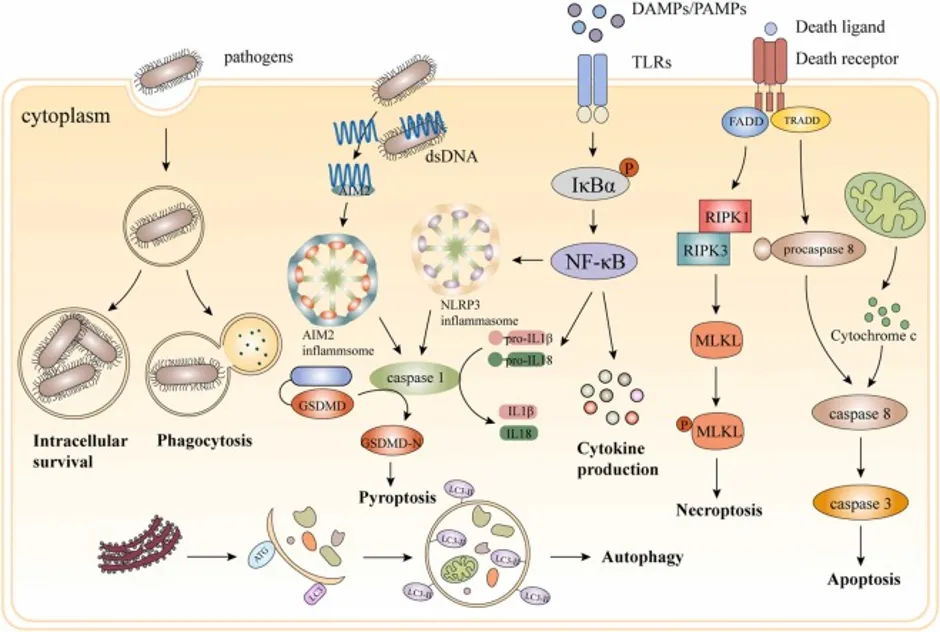
Figure1- Macrophage cell death and cytokine production in periodontitis.
Macrophages are activated when PRRs recognize PAMPs/DAMPs. The binding stimulates multiple signal transduction pathways: (A) Binding of PRRs activates NF-κB signaling and secretes various cytokines; (B) Binding of PRRs results in various forms of cell death, including pyroptosis, necroptosis, apoptosis and autophagy; ultimately leading to periodontal tissue destruction and repair. NF-κB: nuclear factor kappa-B; IκBα: NF-κB inhibitor α; dsDNA: double-stranded DNA; FADD: Fas-associated protein with death domain; TRADD: tumor necrosis factor receptor type 1-associated death domain; RIPK: receptor interacting protein kinase; GSDMD: gasdermin D; ATG: autophagy-related; LC3: microtubule-associated protein 1A/1B-light chain 3
Activated M1 macrophages are strong mediators of tissue damage. They release many pro-inflammatory cytokines such as TNF-α, IL-1β, IL-6 and IL-12, which sustain the inflammatory cascade and recruit more immune cells to the infection site (11). Significantly, M1 macrophages also release matrix metalloproteinases (MMPs) and reactive oxygen species (ROS), which are directly involved in the breakdown of collagen and other extracellular matrix components in the periodontal ligament and gingival connective tissue (12). Furthermore, these macrophages induce alveolar bone resorption by secreting receptor activator of nuclear factor kappa-B ligand (RANKL) and other osteoclastogenic substances that induce differentiation and activation of osteoclasts (13). Hence, the continued presence of M1 macrophages promotes gradual and irreversible tissue degradation, a hallmark of periodontitis, and they are cemented as “foes” in the disease process.
MACROPHAGE POLARIZATION AND PHENOTYPES IN PERIODONTITIS
Macrophage polarization is a plastic process that is dictated by the local microenvironment to determine their functional phenotype. The M1/M2 paradigm is a simplification yet it is a useful framework to understand the role of macrophages in periodontitis (5). M1 macrophages usually express high levels of inducible nitric oxide synthase (iNOS), produce pro-inflammatory cytokines, and have improved microbicidal activity. M2 macrophages, in contrast, express arginase-1 (Arg1) and secrete anti-inflammatory cytokines (IL-10, TGF-β) and are linked with tissue healing and immune control (4).
Studies have repeatedly demonstrated an imbalance in macrophage morphologies in periodontitis . For example, Sima et al. (2022) showed that inflamed periodontal tissues had a higher proportion of M1-like macrophages compared to healthy controls, which was correlated with disease severity (14). This change is due to the continuous presence of bacterial endotoxins and the proinflammatory milieu of IFN-γ and TNF-α. By contrast, successful periodontal therapy, like as scaling and root planing, has been demonstrated to cause a shift to an M2-like phenotype, indicating a critical involvement of macrophage repolarization in disease resolution and tissue repair (15). Elucidation of the specific molecular pathways involved in macrophage polarization in the periodontium provides potential opportunities for targeted therapeutic approaches to restore the M1/M2 equilibrium.
Table 1. M1 and M2 macrophages characteristics and functions in periodontal health and disease.
|
Characteristic |
M1 (Pro-inflammatory) Macrophages |
M2 (Anti-inflammatory/Pro-resolving) Macrophages |
|
Activation Stimuli |
LPS, IFN-γ, TNF-α, PAMPs, DAMPs |
IL-4, IL-13, IL-10, TGF-β, apoptotic cells, SPMs |
|
Key Markers |
iNOS, CD80, CD86, MHC-II |
Arg1, CD163, CD206, Fizz1 |
|
Cytokine Profile |
TNF-α, IL-1β, IL-6, IL-12, IL-23 |
IL-10, TGF-β, CCL17, CCL22 |
|
Effector Functions |
Microbicidal activity, antigen presentation, tissue destruction, osteoclastogenesis |
Phagocytosis of debris, tissue repair, immune regulation, angiogenesis, lymphangiogenesis |
|
Role in Periodontitis |
Foes: Drive inflammation, bone resorption, tissue degradation |
Friends: Promote resolution, tissue regeneration, maintain homeostasis |
MACROPHAGES AS THERAPEUTIC TARGET FOR PERIODONTAL DISEASE
Macrophages are a crucial player and, therefore, an intriguing target for innovative periodontal therapy. The approaches are designed to block the damaging roles of M1 macrophages or to increase the helpful actions of M2 macrophages. Pharmacological options include the use of anti-inflammatory medications that could affect macrophage polarization. Certain statins have been demonstrated to alter macrophage activity, converting them to an M2 phenotype, and reduce inflammation in experimental models of periodontitis (16). Resolvins and other specific pro-resolving mediators (SPMs) are also being studied for their potential to actively reprogram macrophages to a pro-resolving state and hence promote spontaneous resolution of inflammation and tissue healing (7).
Other cell-based therapies under research for regenerative reasons include the transplantation of M2-polarized macrophages or their progenitors in addition to systemic or local medication delivery. Although these techniques are currently primarily experimental they have the promise for tissue regeneration in advanced periodontal abnormalities (17). The difficulty is to stabilize the desired macrophage phenotype in vivo and to target delivery to the inflammatory periodontal tissues.
IMPLANT COATINGS AND MACROPHAGE PHENOTYPES
The success of dental implants is largely dependent on osseointegration, which is a direct structural and functional connection between living bone and the surface of a load-bearing implant (18). Nevertheless, peri-implantitis, an inflammatory condition affecting the tissues surrounding the dental implant, continues to be a major problem and a frequent cause of implant failure. Macrophages have an important role in the host reaction to implant materials and in the development of peri-implantitis (19). Thus, designing the implant surface for macrophage behaviour control is a viable technique to enhance osseointegration and reduce peri-implant inflammation.
Recent advances in biomaterials research have focused on the design of implant coverings that can modulate macrophage phenotype to a pro-healing (M2) state. For example, surfaces functionalized with certain growth factors such as bone morphogenetic proteins (BMPs) or vascular endothelial growth factor (VEGF) have been shown to induce M2 polarization, leading to increased bone production surrounding implants (20). Similarly, coatings containing anti-inflammatory molecules such as IL-10 or particular peptides can counteract the M1 activation and promote a regeneration environment (21).
Also, macrophage responses can be determined by physical features of implant surfaces such as topography and roughness. Nanostructured surfaces or surfaces with specific micro-patterns were shown to drive macrophage differentiation towards an M2 phenotype, therefore increasing osteogenic differentiation of mesenchymal stem cells and facilitating osseointegration (22). Designing implant coatings to promote an M2 macrophage phenotype is a cutting-edge strategy to increase implant longevity by promoting a peaceful tissue-implant interface and minimizing the risk of inflammatory problems such as peri-implantitis.
CONCLUSION
Macrophages are important components of the periodontal immune system and their ability to adapt determines whether they are “friends” or “foes” in health and disease. M2-like macrophages also enhance tissue healing and immunological tolerance in periodontal homeostasis and inflammation resolution. In chronic periodontitis, however, the dominant M1-like phenotype promotes destructive inflammation and alveolar bone loss.
The capacity to finely tune macrophage polarization presents significant therapeutic prospects. Future therapies will likely incorporate drugs that can re-programme macrophages to a pro-resolving phenotype, as well as novel biomaterials designs. Specifically, the development of dental implant coatings that actively drive macrophage differentiation toward M2 phenotype is very promising for improving osseointegration and reducing peri-implantitis, thus boosting the long-term success of dental implant therapy. Further studies of the complex mechanisms controlling macrophage activity in the periodontium are necessary for translation of these findings into practical treatment approaches.
REFERENCES


Charumathy R, Jenifer Cynthia R A, Kadhiresan R, Arunmozhi U, Macrophages and Periodontal Health: Friends, Foes and the Future, Int. J. of Pharm. Sci., 2026, Vol 4, Issue 7, 3123-3128. https://doi.org/10.5281/zenodo.21380861
 10.5281/zenodo.21380861