

We use cookies to ensure our website works properly and to personalise your experience. Cookies policy
1,2 Department of Pharmacognosy, SMBT College of Pharmacy, Nandi Hills, Nashik- 422403, Maharashtra, India.
3 Research Scholar, Pacific Academy of Higher Education and Research University, Udaipur, Rajasthan, India.
Grape seed extract (GSE), which is made from the seeds of Vitis vinifera, is rich in polyphenolic chemicals, particularly oligomeric proanthocyanidins (OPCs), which have strong anti-inflammatory and antioxidant properties. The research suggests that GSE may be used in several ways to treat endometriosis and dysmenorrhea. Flavonoids such as resveratrol stimulate the smooth muscles in the uterus to relax and cease contracting by blocking calcium channels and activating the nitric oxide–cGMP pathway. GSE also reduces inflammation by inhibiting the COX-2 enzyme, lowering prostaglandin formation, and down regulating cytokines such TNF-alfa and IL-6. Because the Nrf2 pathway enhances the expression of antioxidant enzymes, it reduces oxidative stress in reproductive organs. Grape seed polyphenols have an impact on hormone signaling as well. In experimental endometriosis models, high-dose GSE reduced ERalfa expression, stopped angiogenesis, and reduced estrogen receptor-positive cells. When combined, these actions help restore pelvic blood flow, uterine motility, and endometrial function. Preclinical studies show that GSE has effects comparable to several conventional therapies in reducing uterine hypercontractility, pain behavior, and lesion size in rodent models. It also preserves ovarian structure by reducing lipid peroxidation and increasing the expression of antioxidant genes. Standardized dosages (150–475 mg/day, or roughly 70–85% OPCs) are generally well tolerated. All things considered, GSE shows a lot of potential as a nutraceutical that promotes menstrual health and merits controlled clinical research.
Despite their repeated abandonment, grape seeds and wine industry by-products contain a variety of beneficial bioactive components. Grape Seed Extract (GSE), derived from the seeds of Vitis vinifera, is one supplement that transforms what was formerly considered vineyard waste into a health benefit. Strong antioxidants called polyphenols account for 20–55% of the weight of a grape seed. Perhaps the most well-known of these are oligomeric proanthocyanidins (OPCs), which are widely known for their ability to reduce inflammation and cellular damage. Each grape seed contains between 20 and 55 percent polyphenols, a powerful antioxidant. One of the things that makes GSE more attractive is that it can affect multiple biosystems instead of just one.[71] Blocking the calcium channels that trigger muscle spasms can alleviate endometriosis and menstrual discomfort by reducing uterine contractions. reducing TNF-alfa and other inflammatory cytokines associated with tissue irritation and pain. According to preliminary study, it might also alter estrogen activity, which is connected to issues related to reproductive health. Benefits for the heart alleviating the condition known as chronic venous insufficiency, which reduces blood flow from the legs. overall circulatory health by enhancing blood pressure control and maintaining arterial flexibility. By blocking the COX-2 enzyme, it lessens pain and inflammatory signals similarly to nonsteroidal anti-inflammatory drugs. It activates the Nrf2 pathway, which tells cells to make their own antioxidants to fight oxidative damage. By controlling calcium entrance and inflow, it keeps muscles from being overexcited. It also raises nitric oxide and encourages vasodilation, both of which improve blood flow. A daily dose of 150–475 mg, which is standardized to contain 70–85% OPCs, has been found to be an effective strategy to give the active chemicals rather than the inert seed hull.
Sources Of Literature
A thorough literature search was carried out for this review using electronic databases such as PubMed, Scopus, Web of Science, Google Scholar, and Science Direct. Included were reviews, preclinical research, clinical trials, and peer-reviewed original research articles published until 2025.
Grape Seed Extract ( GSE )
Phramacognostic studies of Grape Seeds
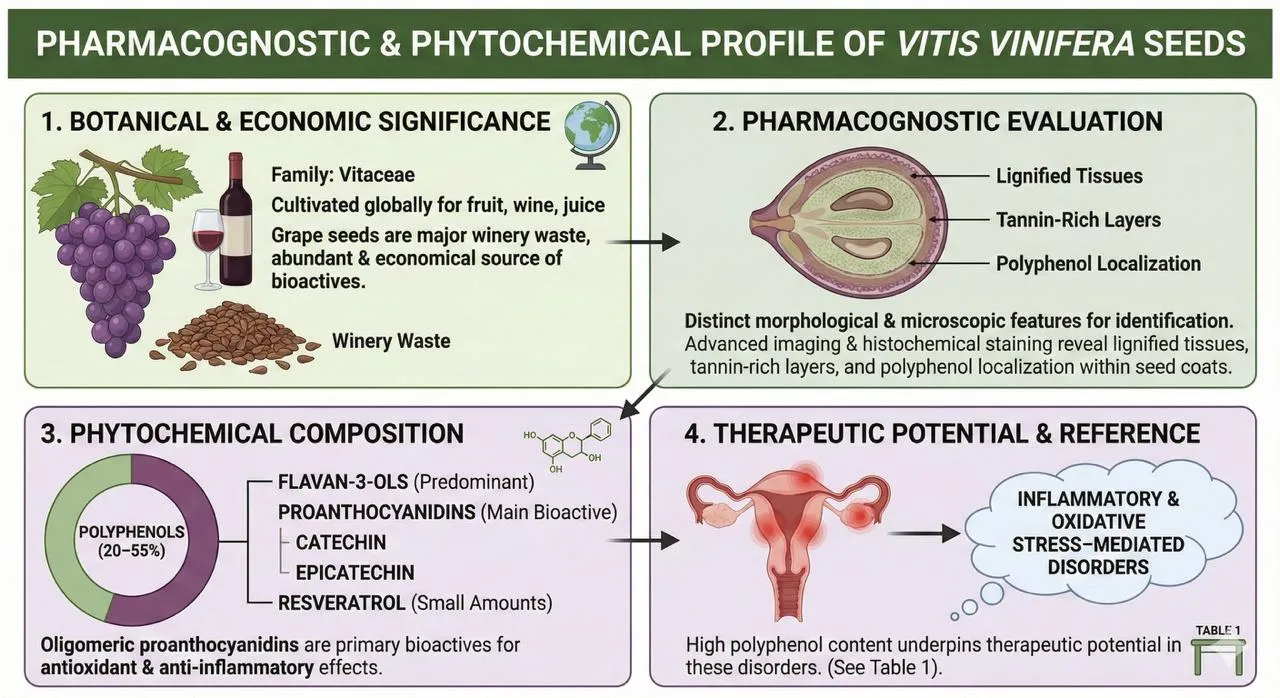
Because of their high concentration of active chemicals and wide range of therapeutic potential, grape seeds are one of the most studied plant materials in pharmacognosy.
Biological Source and Origin
Originally cultivated in southern Europe and Western Asia, grapes are an important fruit crop farmed all over the world and belong to the Vitaceae family. A significant portion of the trash generated during the manufacture of wine and juice—roughly 75 million metric tons annually worldwide—comes from grape seeds. These seeds are a wonderful choice for making pharmaceutical and nutraceutical goods because they are widely accessible and reasonably priced. [16, 19]
Pharmacognostic Characterization
Morphological Features
To distinguish between different varieties of grapes, scientists have examined the composition of grape seeds. To exclude any subjective judgments, the seed form can be carefully studied from different anatomical sites and sections using cutting-edge 3D imaging tools. Mathematically based evaluations that offer a more objective classification enable this. Because each cultivar of Vitis vinifera has distinct seed characteristics, these modest physical changes are useful indicators for differentiating each variety.
Microscopy and Histochemistry
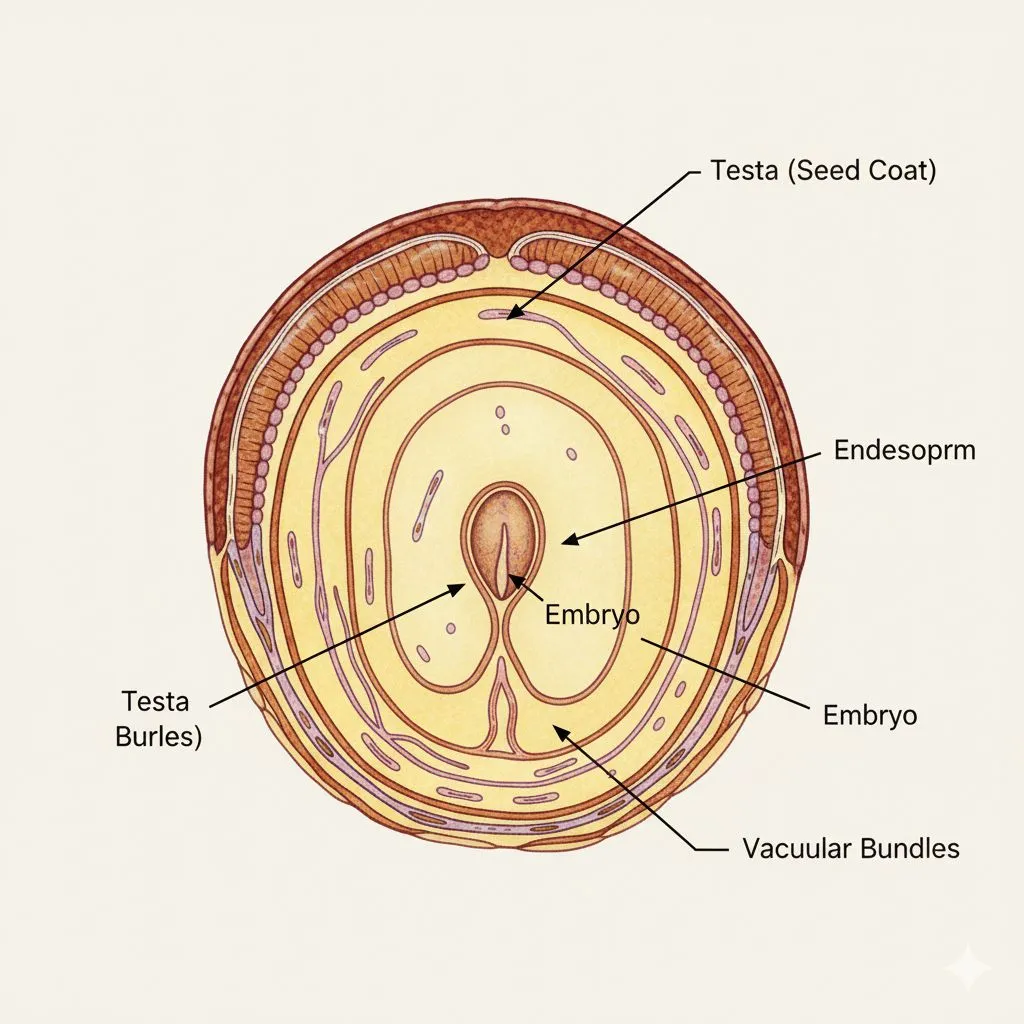
Certain grape seed tissues are displayed using stains such as toluidine blue O, phloroglucinol, periodic acid–Schiff reagent, and 4-dimethylaminocinnamaldehyde. These staining methods demonstrate how proteins, tannins, lignin, and polysaccharides accumulate as seeds develop. The grape is thought to be indigenous to a part of Southwestern Asia close to the Caspian Sea. The Phoenicians introduced wine varieties to Greece, Rome, and Southern France; the Romans then dispersed the vine throughout Europe. Spanish supporters introduced Vinifera grapes to California in the 1700s. About 6000 years ago, the Egyptians ate grapes, and some Greek philosophers praised their therapeutic properties. Later, Europeans utilized dried grapes to treat constipation and thirst, unripe grapes to relieve sore throats, and a lotion produced from grape sap to treat skin and eye conditions (Badet, 2011)The bioactive components of grape seed extracts were initially studied at the start of the 20th century. While working on the separation of vitamin C, 1937 Nobel Prize winner Albert Szent-Gyorgyi discovered flavonoids, which he named "vitamin P" (Szent-Györgyi, 1936). Professor Jacques Masquelier then hypothesized that since pine bark showed ascorbate-like effects, it must contain both vitamin C and flavonoids, which he called "pycnogenols." The scientific community no longer uses this term other than as a trademark for proanthocyanidins that are extracted from French maritime pine bark. In 1947, Masquelier developed and patented a method for extracting proanthocyanidins from oligomeric grape seeds (Fine, 2000, Murray, 1999). He noted that the bioflavonoids derived from grape seeds seemed to be better than those from pine bark in terms of concentration and antioxidant effect (Masquelier, 1991). The term "flavonoids" was first used in 1952 by Geissmann and Hinreiner, and tannins were defined the following decade by Bate-Smith and Swain (1962).
Table 1. Phytochemical Composition of GSE
|
Constituent |
Description |
References |
|
Polyphenols |
Major antioxidant compounds (20–55%) |
[95–98] |
|
Proanthocyanidins |
Primary bioactive oligomers |
[95,96] |
|
Catechin/Epicatechin |
Flavan-3-ols with anti-inflammatory activity |
[97,98] |
|
Resveratrol |
Minor constituent with smooth muscle relaxant effect |
[99] |
Dysmenorrhea
Menstrual cramps or period pains are other names for dysmenorrhea, the medical term for pain experienced throughout the menstrual cycle. It affects 50–90% of menstrual people, with some sources estimating 80–85%. It is the most prevalent gynecological problem among women of reproductive age and a major cause of pelvic pain.[46] The most common type of dysmenorrhea is primary dysmenorrhea, which has no discernible pathophysiology. Depending on personality neurotype, it usually contracts 1-3 days before menstruation or roughly at the start of bleeding. It lasts for 1-3 days and then goes away after the first few days of the menstrual cycle.[25] Conversely, secondary dysmenorrhea is associated with genital tract pathology or other disorders.Pain typically begins before to a woman's menstrual cycle and may persist long after it has ended. It typically occurs after the age of 25 or later in life [79].
Background Of The Problem
Although the exact cause of dysmenorrhea is still unknown, the most common theory holds that the desquamation of the endometrium produces an excess of uterine prostaglandins, including PGF2alfa and PGE2.[21] The uterus contracts as a result of these substances, which narrows the blood arteries. This increases the accumulation of metabolites that cause pain and decreases the quantity of oxygen that reaches the cells (ischemia), making the pelvic nerve more sensitive. Prostaglandins are produced via the arachidonic acid pathway. Progesterone levels impact this pathway, which is regulated by COX enzymes. Progesterone levels are at their peak during the mid-luteal phase, which follows ovulation.[45, 21] The corpus luteum shrinks and progesterone levels rapidly decrease when a woman is not pregnant. Menstrual bleeding, enzyme activation, increased arachidonic acid, and prostaglandin synthesis result from this breakdown of the endometrium.
Womens Quality Of Life
Menstrual pain, or dysmenorrhea, damages young women's bodies and hinders their ability to perform everyday duties and be productive. One of the main causes of missed work and school is primary dysmenorrhea. It requires 600 million work hours and $2 billion annually in the United States. According to research, menstruation pain causes 14% to over 50% of girls to miss school, and during that time, attendance in class might decrease by 29% to 50%. Over 50% of Palestinian women who attended college reported missing classes due to menstrual pain.Similar research from Hong Kong and Turkey demonstrates that young women with dysmenorrhea have a significantly lower quality of life and feel worse overall.
Mechanisms of Action
Mechanisms of Action on Uterine Contraction
Compounds derived from grapes, especially resveratrol, influence calcium signaling to aid in uterine muscle relaxation. Similar to calcium channel blockers, resveratrol lessens contractions by keeping calcium from entering uterine smooth muscle cells.[32, 34] Animal research indicates that resveratrol blocks calcium channels, which lowers intracellular calcium levels and hence decreases uterine activity.[32, 36] This inhibition reduces contractions induced by prostaglandin F2alfa, oxytocin, and other stimulants. Grape leaf extracts have a similar calcium-blocking effect. In experiments using isolated rat uterine tissue, the leaf extract decreased contractions brought on by oxytocin and potassium chloride, having a stronger impact at higher dosages. At certain doses, it significantly reduced oxytocin-induced contractions, suggesting that it could be a natural remedy for uterine spasms.[43]
Nitric Oxide-cGMP Pathway
Grape components can lessen uterine contractions by triggering the nitric oxide (NO)–cGMP signaling pathway. Grape seeds' procyanidins and anthocyanins trigger the release of NO, which increases intracellular cGMP by activating enzymes and promotes smooth muscle relaxation in a manner similar to that of blood vessels. In laboratory and animal research pertaining to reproductive health, proanthocyanidin-rich grape seed extract (GSE) possesses potent antioxidant properties and influences hormone balance. Some benefits of these effects include enhanced ovarian function, decreased oxidative stress in the mother-fetal milieu, and increased follicle development.[29, 30, 31, 80]
Antioxidant Effects on Ovarian Tissues
In a study employing a D-galactose-induced aging paradigm in hens, grape seed proanthocyanidin extract (GSPE) enhanced ovarian function by boosting the activity of critical antioxidant enzymes as SOD, GPx, and catalase.[89] Additionally, it lessened chromatin condensation, a typical indicator of granulosa cell aging, and maintained normal ovarian shape and balance. By increasing the amounts of genes encoding these antioxidant enzymes and decreasing lipid peroxidation markers, GSPE protects granulosa cells from apoptosis and slows down age-related ovarian degeneration.GSE and its active component proanthocyanidin B2 (GSPB2) both reduced oxidative stress in granulosa cells by inhibiting NOX4, a significant source of reactive oxygen species, at lower concentrations.
Antioxidant Effects on Ovarian Tissues
In a study employing a D-galactose-induced aging paradigm in hens, grape seed proanthocyanidin extract (GSPE) enhanced ovarian function by boosting the activity of critical antioxidant enzymes as SOD, GPx, and catalase.[89] Additionally, it lessened chromatin condensation, a typical indicator of granulosa cell aging, and maintained normal ovarian shape and balance. By increasing the amounts of genes encoding these antioxidant enzymes and decreasing lipid peroxidation markers, GSPE protects granulosa cells from apoptosis and slows down age-related ovarian degeneration.GSE and its active component proanthocyanidin B2 (GSPB2) both reduced oxidative stress in granulosa cells by inhibiting NOX4, a significant source of reactive oxygen species, at lower concentrations.
Steroidogenesis Modulation
By activating the ERK1/2 MAPK pathway and promoting proteins like StAR and CREB, low concentrations of grape skin extract (GSE) and its component GSPB2 (ranging from 0.01 to 1 μg/mL) increased the production of progesterone and oestradiol in human granulosa cells (hGCs) and the KGN granulosa tumor cell line.[89] This led to increased synthesis of steroid hormones within a normal physiological range. At these same low quantities (≤1 μg/mL), GSE likewise decreased oxidative stress; however, at greater concentrations (≥50 μg/mL), it had the reverse effect, raising ROS levels and causing G1 phase cell cycle arrest. This illustrates the typical two-phase reaction that polyphenolic compounds go through.[41]
Reduced Oxidative Stress
Adding 0.5–1% GSE to hens' meals decreased oxidative stress markers in their blood and tissues by raising SOD gene expression and lowering NOX4/5 activity. Additionally, it changed lipid-related hormones, resulting in decreased chemerin levels and increased visfatin and adiponectin levels. Better hatch results and higher chick survival rates resulted from this increase in antioxidant capacity, suggesting that the mother's antioxidant defense benefits the young.[11, 13] Giving GSE to pregnant animals enhanced reproductive outcomes and the growth of offspring while lowering oxidative damage in maternal blood and tissues, according to similar findings in other research using pigs and poultry.[11]
Antioxident properties
While it is commonly known that wine contains phenolic compounds, new research has focused on winemaking leftovers such grape stems and seeds that are rich in these beneficial chemicals.[16,17] Polyphenols, which are essential for making red wine, are present in 20–55% of grape seeds.[18] Except for cinnamic derivatives, phenolic compounds are categorized as either flavonoids (such as flavones, flavonols, flavan-3-ols, and anthocyanins) or non-flavonoids (such as hydroxybenzoic acids, hydroxycinnamic acids, and stilbenes, which are usually found in small levels).[17, 18, 75] Flavonoids are the main phenolic chemicals found in grapes. They have a C6–C3–C6 structure, with two benzene rings (A and B) joined by a three-carbon bridge to form ring C. Based on the oxidation state of ring C, they are further classified as flavonols, flavan-3-ols (including their polymeric forms known as proanthocyanidins), and anthocyanins [17,18,89]. Grape marc, which is made up of seeds, pulp, stems, and skins, accounts for about 30% of the solid waste produced during the winemaking process. Anthocyanins, phenolics, dietary fiber, and seed oil are abundant in this residue.
Because these antioxidants have been investigated for their possible preventive effects against health problems like diabetes, cancer, cardiovascular illnesses, and neurological disorders, this byproduct is a useful resource for the food and pharmaceutical industries.[86] The growing need for natural antioxidants as safer substitutes for synthetic ones has sparked interest in these materials, with an emphasis on grape byproducts as possible sources of high-value extracts and novel products.[18]
Mechanism of Action of Grape Seeds on Dysmenorrhea
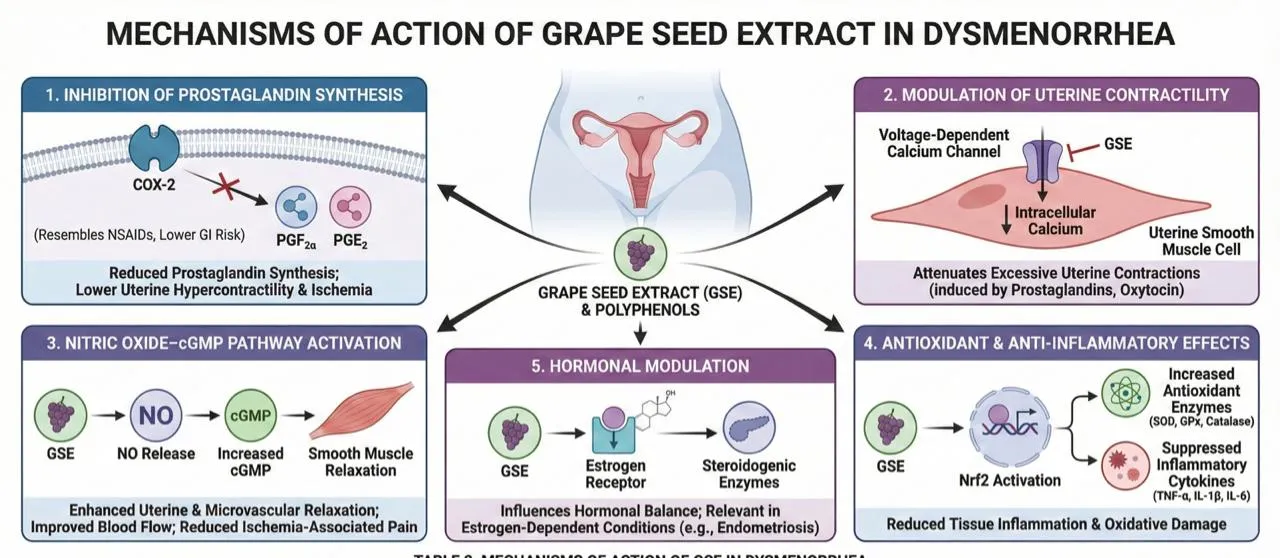
Grape seed extract (GSE), which is high in polyphenols like proanthocyanidins and resveratrol, shows several mechanisms that may reduce dysmenorrhea, a condition marked by excruciating menstrual cramps, through its effects on inflammation, hormone regulation, oxidative stress, and uterine function.[47, 43, 14, 67]
Table 2. Mechanisms of Action of GSE in Dysmenorrhea
|
Mechanism |
Biological Effect |
References |
|
COX-2 inhibition |
Reduced prostaglandin synthesis |
[90,92,102] |
|
Calcium channel blockade |
Reduced uterine contractions |
[99] |
|
NO–cGMP activation |
Smooth muscle relaxation |
[110] |
|
Nrf2 activation |
Enhanced antioxidant defense |
[103,104] |
|
Estrogen modulation |
Reduced estrogen-dependent inflammation |
[114,115] |
Inhibition of Prostaglandin-Mediated Inflammation
Cyclooxygenases cause the uterus to produce more prostaglandin, which causes contractions and cramps that exacerbate dysmenorrhea. Because GSE includes polyphenols that prevent the production of prostaglandins and other inflammatory signals, it helps to alleviate this illness. By inhibiting COX enzymes, particularly COX-2, these bioactive compounds reduce the synthesis of PGF2alfa, the prostaglandin most strongly linked to uterine spasms.[58] Additionally, it has been demonstrated that grape seed extract reduces menstrual inflammation and endometrial irritation by downregulating genes linked to the NF-kB and interleukin signaling pathway. [47, 40]
Regulation of Hormonal Balance
Hormonal changes in progesterone and estrogen are the main cause of menstrual discomfort. Proanthocyanidins and resveratrol, two of the components of grape seed extract, have been demonstrated to modify estrogen receptors, promote the synthesis of ovarian hormones that can assist balance hormone levels, and facilitate the metabolism of estrogen—all of which are factors in reducing cramping.[83] Menstrual regularity and overall reproductive health may be improved by these effects.[43]
Reduction of Oxidative Stress
Oxidative stress in reproductive tissues might aggravate menstrual pain.[25, 14] Antioxidants present in grape seed extract protect endometrial and ovarian cells[24], oppose free radicals, and improve tissue health. Grape seed extract can help relieve dysmenorrhea pains that are mainly caused by the oxidative damage.[43]
Improving Blood Circulation and Microvascular Integrity
Sufficient Blood Flow Is Necessary to Reduce Menstrual Pain The grape seed extract's proanthocyanidins strengthen blood vessel walls, increase their flexibility, and enhance microcirculation in the uterus. Additionally, improved circulation can ease cramps and lessen the amount of menstrual blood that accumulates.[28, 29]
Support for Endometrial and Uterine Function
Polyphenols found in grape seeds influence the expression of genes related to endometrial activity, alter the uterine cells' sensitivity to steroid hormones, and are linked to decidualization and endometrial integrity.[41, 43, 96] These advantages could improve uterine function and help prevent or treat endometriosis, a disorder that frequently causes painful periods.[62]
Potential Synergy in Combination Therapies
In clinical trials and commercial supplements, grape seed extract is sometimes combined with additional medicines, such as hormone regulators and anti-inflammatory drugs, to improve its capacity to reduce menstrual discomfort. In other research, pain and prostaglandin-related gene expression decreased more when resveratrol from grape seed extract was added to oral contraceptive medication than when contraceptives were used alone.[67, 65]
Mechanisms of Action on Uterine Contraction After GSE Use
Anti-inflammatory and COX-2 Inhibition
Grape seed proanthocyanidin extract, or GSPE, has potent anti-inflammatory qualities that are especially relevant to dysmenorrhea. Animal studies that demonstrate that GSPE reduces pro-inflammatory cytokines such TNF-alfa, IL-1-beta, and IL-6 in inflammation models support these findings. It also suppresses prostaglandin synthesis and lowers COX-2 expression, which is crucial because high PGF2alfa levels cause pain from decreased blood flow and strong uterine contractions. Grape seed extract has also been demonstrated to reduce inflammatory markers and estrogen receptor activation in endometriosis animals.[47,40,89]
Modulation of Uterine Contractility
Studies on resveratrol, a polyphenol found in grapes that is related to proanthocyanidin, have shown that it considerably reduces uterine contractions. Resveratrol was shown to prevent contractions brought on by PGF2alfa, oxytocin, acetylcholine, and carbachol in both in vivo and isolated rat uterine studies. The amount of intracellular calcium required for contraction is reduced as a result of a decrease in intracellular calcium influx through voltage-gated channels in the cell membrane [32]. Furthermore, via modifying calcium influx, experiments combining adlay extract with grape seed extract significantly decreased PGF2alfa-induced contractions, suggesting that grape seed may function as a natural regulator of calcium channels to lessen excessive uterine activity [34].
Antioxidant and Nrf2 Pathway Activation
By activating the Nrf2 pathway, grape seed proanthocyanidin extract (GSPE) demonstrates strong antioxidant qualities. By increasing antioxidant enzyme levels and decreasing oxidative stress markers, it protects reproductive organs from oxidative damage and ovarian aging, according to studies conducted in animal models.[41, 39, 82, 70] Research on the toxicity to male fertility also shows that GSPE lowers oxidative damage in testicular tissue by activating Nrf2, which leads to the activation of genes such as NAD(P)H quinone dehydrogenase 1 (NQO1), glutathione S-transferase (GST), and heme oxygenase-1 (HO-1).[39] When oxidative stress impacts women's reproductive cells in conditions like dysmenorrhea, this defense response may also be essential.
Pain Pathway Modulation
Proanthocyanidins given intrathecally to mice with inflammation induced by Complete Freund's Adjuvant increased their tolerance to thermal and mechanical pain by inhibiting the activated PI3K/Akt/mTOR signaling pathway in dorsal root ganglion neurons [49,65,73]. Proanthocyanidin microinjections into the insular cortex also reduced mechanical and spontaneous pain in neuropathic models by lowering pyramidal neurone activity. Preclinidins may reduce pain through a variety of central and peripheral pathways. Furthermore, it has been demonstrated that repeated oral grape seed extract treatment prevents trigeminal sensitization by activating CB1 and CB2 endocannabinoid receptors in models of temporomandibular dysfunction and migraine. The analgesic effects of beta-endorphin suggest a potential connection with endogenous opioid pathways, despite the lack of direct study on grape seed extract. Treatments for dysmenorrhea have been shown to increase its serum levels.
Endometriosis Models
Oral grape seed extract at a dose of 450 mg/kg/day significantly reduced the number of oestrogen receptor-positive cells, suppressed Eralfa expression, and hindered angiogenesis in rats with surgically induced endometriosis.[65] It worked similarly to atorvastatin in stopping the growth of lesions. Additionally, by lowering oxidative stress markers like malondialdehyde, increasing levels of antioxidant enzymes like glutathione peroxidase and superoxide dismutase, and decreasing inflammation, grape seed extract enhanced overall tissue health.[62, 89]
Dosage and Administration in Animal Studies
Oral administration: The daily dosage in rodent studies typically ranges from 50 to 400 mg/kg. While 50–200 mg/kg is an effective range for ovarian protection, 450 mg/kg is employed in endometriosis models.[41] Doses of 100–300 mg/kg are frequently used in standard analgesic and anti-inflammatory assessments. Treatment duration: The length of a research program might range from one week to around three months. Security: The no-observed-adverse-effect level (NOAEL) in 90-day toxicity tests was around 2.5% of the diet, or about 1,780–2,150 mg/kg/day in rats, indicating a significant safety buffer.[4,5,6,64,84]
Bioavailability and Metabolism
Proanthocyanidins retain their biological action despite their low oral absorption; about 90% of them pass through the small intestine unaltered. While intact short oligomers can remain in the colon and offer local protective effects, gut bacteria convert them from dimers to hexamers into phenolic acids and valerolactones, which have systemic benefits. The small intestine absorbs very little of the monomers and dimers, which are mostly found in the bloodstream as methylated or glucuronidated derivatives. The more widespread anti-inflammatory and antioxidant benefits are probably caused by dimers, which are absorbed at a rate of roughly 5–10%.[65]
Pharmacokinitic And Pharmacodynamic Analysis
Absorption
The majority of GSE is composed of proanthocyanidins, which are chains of procyanidins that occur as short oligomers to bigger polymers, and monomeric units like (+)-catechin and (−)-epicatechin.[81]Monomeric flavan-3-ols are more absorbed because they go through significant phase II metabolism in the intestinal wall and liver. After being absorbed through the duodenum, jejunum, and ileum of the small intestine, they reach their maximal plasma level after one to two hours of ingestion.[65, 72, 87]
Nevertheless, the polymers and oligomers are little absorbed. The absorption diminishes with increasing chain length: bigger structures show nearly negligible bioavailability, while dimers and trimers are absorbed in very modest amounts. Because dimers are not converted into monomers during digestion, the maximal plasma concentration (0.12–0.57 nM) is reached when administered with food.Excretion studies showed that only about 27–36% of the catechin and epicatechin eaten appeared as urine metabolites after a day.
Distribution
Most of the chemicals found in plasma after ingesting grape seed extract (GSE) are phase II metabolites rather than the original molecules. The primary types used are sulphate conjugates, methylated forms such as 3′-methylepicatechin and 3′-methylcatechin, and catechin glucuronides.[65, 66] Peak plasma concentrations of catechin and epicatechin glucuronides are roughly 6–10 nM two hours after dose. Both plasma and urine contain trace levels of unaltered procyanidin dimers (B1–B4) and trimers (such as C2); procyanidin B4, for example, has a Cmax of 3.68 nM (2.13 ng/mL).[77, 85]
Tissue Distribution: Research employing radiolabeled grape polyphenols shows that metabolites enter a range of tissues, including as the brain, liver, kidneys, heart muscle, skin, cartilage, and artery walls.[65] The residual label in brain tissue 24 hours after injection, which is between 0.1 to 1.7% of the dose, indicates that grape seed polyphenols or their metabolites can get through the blood-brain barrier.[69] Crucially, sustained GSPE ingestion (12 weeks daily) does not cause flavanol buildup in tissues, suggesting that clearance happens with each daily dose.This indicates that polyphenols do not accumulate in tissues over time, but rather have a daily effect that occurs in bursts. The Effects of the Food Matrix: Procyanidin dimers and trimers may become less accessible to the body while consuming foods high in carbs. The dimer concentration decreases from 0.57 nM to 0.12 nM when GSPE is consumed with carbs.[65]
Metabolism
In the intestines and liver, phase II enzymes such as sulfotransferases and UDP-glucuronosyltransferases rapidly degrade monomeric flavan-3-ols from grape seed extract. Four primary types of metabolites are produced by this process: sulfate conjugates, 4-O-methylgallic acid, methylated glucuronides (the most prevalent after basic glucuronides), and glucuronides of catechin and epicatechin. These water-soluble metabolites are the primary components of the blood. As they pass through the colon, the majority of proanthocyanidins—especially the larger polymers—don't significantly alter. There, ring cleavage and dehydroxylation are two ways that gut microorganisms break them down into smaller phenolic acids.[70]
Excretion
Urine is the primary means of eliminating grape seed polyphenol compounds. The maximum amounts of monomer metabolites are detected six hours after eating, and procyanidin levels in urine range from roughly 5 to 30 ng/mg creatinine. Urine contains approximately 27% catechin and 36% epicatechin metabolites during a day, while only 0.004–0.019% of the oligomer dosage is eliminated. Additionally, urine contains a lot of colonic microbial breakdown products, such as 3-HPP. According to research on animals, bile excretion aids in the body's removal of monomers and tiny oligomers.[65] Urine is the main way that grape seed polyphenol metabolites are eliminated. Peak monomer metabolite concentrations happen six hours after ingestion, and corresponding procyanidin levels range from roughly five to thirty ng/mg creatinine. Only 0.004–0.019% of the given dose is excreted as oligomers over the course of a day, while the urine metabolites comprise roughly 27% catechin and 36% epicatechin.[44] Additionally, urine has a significant concentration of microbial metabolites from the colon, namely 3-HPP. Additionally, the timing of dose affects plasma levels because circadian rhythms affect metabolism and absorption.[59]
Future prospects
Early Proof of Support
In the 2024 study, we found that an adlay-based formula containing GSE, onion, and cinnamon reduced inflammatory markers PGE2, PGF2-alfa, and Hs-CRP as well as VAS pain ratings, nausea, and back pain sensations over two menstrual cycles. Additionally, at oral doses within reach, GSE-resveratrol considerably and dose-dependently reduces prostaglandins/oxytocin-induced contractions and inhibits uterine cell calcium influx.[68]
Standardization is necessary
Among the commercial GSEs now on the market, including extracts containing 40–95% proanthocyanidins, consistent dosing is difficult because the grape seed extract is highly variable due to extraction processes. In oncology studies, methods such as phytosome administration and lipid nanoparticles have been employed to enhance absorption, perhaps reducing this heterogeneity.
Increasing Bioavailability
The body's ability to absorb nutrients is influenced by timing, nutrition, and gut bacteria. Larger oligomers are broken down in the colon, although some smaller ones might be absorbed. Probiotic pills and microbiome analysis will eventually improve each person's ability to absorb nutrition.
Advantages of Combination Therapy
When used with NSAIDs or oral contraceptives, herbal versions of GSE can reduce pain with fewer side effects. This could lead to lower NSAID dosages, which could lessen gastrointestinal and cardiovascular problems.
Wider Uses
Endometriosis and adenomyosis, two secondary causes of dysmenorrhea, are similarly related to the mechanisms of GSE, which include reducing oxidative stress, inflammation, and hormone control. Case studies show that using GSE in multi-herb therapies reduces lesion size.
Roadmap for Development
Short-term (one to three years): Conduct large randomized controlled trials (RCTs) with over 200 participants, test phytosome administration, and use standardized ≥80% GSE. Mid-term (three to five years): Examine secondary dysmenorrhea, look into combination treatments, and carry out human tissue research. Long-term (5–10 years): Develop innovative delivery systems (such as nanoparticles), incorporate microbiome-based tailoring strategies, and make GSE the primary botanical treatment choice.[66]
Advantages of GSE on dysmenorrhea
GSE and dysmenorrhea Inadequate treatment methods, such medicine, can promote the usage of nutriceuticals to manage uncomfortable periods. Grape seed extract (GSE) improves dysmenorrhea and lessens cramps, largely because of its proanthocyanidins and anthocyanidins. For people who are concerned about drug interactions with opioids, GSE is helpful.
Anti-inflammatory Properties
The reduction in progesterone action during menstruation triggers the NF-κB signaling pathway, which is inhibited by GSE. Lower levels of COX-2 and prostaglandins (PGF2-alfa and PGE2), which heighten pain perception and induce markedly intense uterine contractions, are the outcome.
Pain Reduction in Clinical Trials
In another study where OC and pycnogenol (GSE extract, 100 mg/day) were co-administered, the pain scale dropped from a baseline value of 9 to 2, and roughly 27% of patients reported no discomfort unrelated to the medication. This formulation remained to be effective after therapy was completed and shown a 30% reduction in symptoms, requiring fewer days of painkiller use.
Antioxidant Benefits
Strong antioxidants found in GSE outperform those found in vitamins C and E. It reduces IL-6 and shields tissues from oxidative damage. When endometriosis patients took antioxidants, their chronic pelvic discomfort decreased by 43%, and their dysmenorrhea decreased by 37%.[69]
Shortened Pain and Bleeding Time
A low dose of proanthocyanidins decreased cramps and the number of bleeding days compared to a control group, as well as lowering the rate and dosage of painkillers when given in conjunction with hormonal therapy, according to moderate quality evidence (p < 0.001) from small populations with short menstrual cycles.
Impact on Hormones and the Endometrium
The anti-aromatase qualities of GSE prevent the body from producing excessive amounts of estrogen, but they have no effect on regular estrogen production. This makes it helpful for estrogen-related diseases like endometriosis and PCOS.
Lower Risk Compared to NSAIDs
Compared to NSAIDs, which may have gastrointestinal adverse effects, GSE is a safer choice. This is because GSE has few adverse effects and lessens the demand for pain medication. It was discovered that doses of 50–300 mg/day for 8–16 weeks were safe and had no effect on estrogen levels.
Synergistic Effects
Combining GSE with hormonal birth control or other herbal extracts (such as adlay, cinnamon, or onion extracts) appears to further reduce prostaglandin levels, which lessens the discomfort of menstruation.
Limitations and challenges
Grape seed extract (GSE) faces challenges in the treatment of dysmenorrhea owing to insufficient clinical evidence, low oral bioavailability, and safety concerns.
Insufficient proof
Very little study has been done on the use of GSE for menstrual cramps. The use of endotelon for PMS has not been supported by preliminary findings from products like Additional research. The use of herbal medicines including cinnamon, fennel, and ginger has more evidence. Moreover, there are no comprehensive clinical studies comparing GSE to NSAIDs and oral contraceptives.[76]
Insufficient bioavailability
Proanthocyanidins absorb relatively little in GSE, while monomers and dimers absorb only 5–10% and modestly, respectively; bigger oligomers absorb almost nothing. Most of these substances migrate to the colon, where gut bacteria can transform them into potentially active metabolites, though it's unclear if they have an impact on period cramps.
Unreliable metabolism
Because the activity of GSE can vary based on their circadian cycle, food, hormone levels, and even seasonal variations in their gut microbiota, it becomes challenging to find a healthy, constant dose.
Human mechanisms that are not supported
Although tests in the lab show that GSE has antioxidant and anti-inflammatory qualities, no clinical research has shown that it is as effective as nonsteroidal anti-inflammatory medicines (NSAIDs) at reducing prostaglandin levels or women's uterine contractions. The function of metabolites generated from the gut is yet unclear.
Concerns regarding the quality of the product
A study found that peanut material, which is probably undetected by standard testing, is included in 28% of commercial GSE lifestyle products. There is no standardized product, and the active ingredient amount fluctuates significantly between formulations and batches.
Uncertain dosage recommendations
Its active dose may be approximately 375–1,000 mg/kg, according to animal research, whereas human doses of 100–400 mg per day can be determined from independent applications. Research on dysmenorrhea has not yet established the optimal dosage.
Less successful than substitutes
Research conducted in a clinical context Clinical studies show that herbs and spices, such as ginger, cinnamon, fennel, and Menstrugole products, are more effective than GSE at relieving pain. Meta-analyses of antioxidant therapies only show short-term gains that eventually fade, most likely due to placebo effects. Melatonin, vitamin D, and vitamin E were all superior to GSE.
Safety issues
GSE contains flavonoids that behave similarly to estrogen and may lead to hormonal problems. Its anticoagulant properties may make heavy menstrual bleeding worse, and changes in liver enzymes may interfere with medication metabolism.
Individual variations
Age, metabolic differences, and hormonal condition all affect individual responses; no studies have looked at the effects of GSE in different age or reproductive groups. Grape seed extract (GSE) has demonstrated efficacy in treating dysmenorrhea in pre-clinical trials; however, human research and more advanced formulations with improved standardizations are urgently needed to validate its therapeutic effects.
CONCLUSION
A number of symptoms unique to women, such as dysmenorrhea (painful bleeding during menstruation), endometriosis, and decreased circulation, are associated with chronic, low-grade inflammation brought on by oxidative stress and hormone imbalances. "Grape Seed Extract (GSE) is one of the most potent sources of polyphenols such as proanthocyanidins." Larger proanthocyanidins are not effectively absorbed, but their breakdown products by microorganisms and local impacts may result in overall health advantages.Research on animals and in vitro confirms that GSE reduces levels of prostaglandins, inflammatory cytokines (TNF-alfa and IL-6), oxidative stress, and uterine hypercontraction. Daily dosages of 150–475 mg (standardized to include 70–85% oligomeric proanthocyanidins) in humans exhibit a favorable tolerance and a strong safety profile, indicating that this botanical may be used in more extensive clinical trials.
Declaration
There is no funding.
Conflict of Interest: No conflicting interests are disclosed by the author.
Ethics Approval: Not relevant.
Participation Consent: Not relevant.
Publication Consent: Not relevant.
Data Accessibility: Not relevant.
K.K. contributed conceptualization, writing, and analysis.
REFERENCES


Yogesh Ushir, Krishna Kapure, Sakshi Kapure, Mechanism And Translational Potential of Grape Seed Extract in Dysmenorrhea and Endometriosis , Int. J. of Pharm. Sci., 2026, Vol 4, Issue 7, 5380-5400, https://doi.org/10.5281/zenodo.21644467
 10.5281/zenodo.21644467