

We use cookies to ensure our website works properly and to personalise your experience. Cookies policy
1Asst .prof. Rashtriya college of pharmacy, hatnoor kannad, dist. Chha .sambhajingar.
2,3students of rashtriya college of pharmacy, Hatnoor.
Mentha, commonly known as mint, is an including Mentha piperita (peppermint), Mentha spicata (spearmint), Mentha arvensis (Japanese mint), Mentha longifolia, and Mentha aquatica. Mentha species have been traditionally used in different systems of medicine for the management of digestive disorders, respiratory problems, headaches, inflammation, and microbial infections. The medicinal properties of mint are mainly attributed to its diverse bioactive compounds, including essential oils, terpenoids, phenolic acids, flavonoids, and other secondary metabolites. The major volatile constituents of peppermint essential oil include menthol, menthone, menthyl acetate, and 1,8-cineole. Important non-volatile compounds include rosmarinic acid, caffeic acid, eriocitrin, luteolin, and hesperidin. These compounds have demonstrated several biological activities, including antioxidant, antimicrobial, anti-inflammatory, antispasmodic, analgesic, and gastroprotective effects in experimental and clinical investigations. Among the various health benefits associated with Mentha, its potential role in gastrointestinal health has received considerable scientific attention. Peppermint oil has been investigated for the management of irritable bowel syndrome (IBS), abdominal discomfort, and intestinal spasms. Mint extracts have also demonstrated promising antioxidant and antimicrobial properties in laboratory studies.
Medicinal plants have played an important role in human healthcare for thousands of years. They are considered valuable sources of natural bioactive compounds that may contribute to the prevention and management of various diseases.
The increasing interest in herbal medicines and natural products has encouraged researchers to investigate the phytochemical composition and pharmacological properties of medicinal plants.
Among the various aromatic medicinal plants, Mentha occupies an important position because of its characteristic fragrance, therapeutic potential, and widespread availability.
Mentha is a genus of aromatic herbs belonging to the family Lamiaceae, commonly known as the mint family. The plants are characterized by their aromatic leaves, square-shaped stems, opposite leaf arrangement, and essential oil-producing glandular structures.
Mint is widely used in food preparation, beverages, pharmaceutical formulations, cosmetics, oral hygiene products, and traditional medicine.
The genus Mentha includes several species with different chemical compositions and biological activities. Peppermint (Mentha piperita) and spearmint (Mentha spicata) are among the most commonly studied species.
The essential oil obtained from peppermint is rich in menthol and menthone, whereas spearmint essential oil is generally characterized by carvone and limonene.
The non-volatile constituents of Mentha include phenolic acids and flavonoids, particularly rosmarinic acid, caffeic acid, eriocitrin, luteolin, and hesperidin.
These phytochemicals have attracted considerable scientific interest because of their potential antioxidant, anti-inflammatory, antimicrobial, and other biological activities.
Several investigations have suggested that Mentha extracts may help protect biological systems against oxidative stress, microbial infections, and inflammatory processes.
Peppermint oil has also been investigated for its effects on gastrointestinal smooth muscle relaxation and the management of irritable bowel syndrome.
However, the biological properties of Mentha cannot be generalized to every species or preparation. The concentration of active constituents differs considerably between plant varieties, extraction techniques, and environmental conditions.
Therefore, understanding the phytochemical composition and biological activities of different Mentha species is essential for their appropriate scientific and medicinal utilization.
This review provides an overview of the major bioactive compounds present in Mentha and discusses their potential health benefits, pharmacological activities, safety, and future research applications.
The major objectives of this review are:
1. To study the botanical characteristics and classification of Mentha.
2. To understand the phytochemical composition of different Mentha species.
3. To identify the major bioactive compounds present in mint.
4. To review the antioxidant properties of Mentha.
5. To investigate its potential antimicrobial and anti-inflammatory activities.
6. To understand the potential benefits of Mentha in gastrointestinal health.
7. To summarize its traditional medicinal uses.
8. To discuss its pharmaceutical, food, and cosmetic applications.
9. To evaluate the available scientific evidence regarding its health benefits.
10.To identify limitations and future research opportunities.
Mentha is a genus of aromatic perennial or occasionally annual herbs belonging to the family Lamiaceae.
The botanical classification of peppermint is presented below.
2.1 Taxonomical Classification
| Kingdom | Plantae |
|---|---|
| Division | Angiosperms |
| Class | Eudicots |
| Order | Lamiales |
| Family | lamiaceae |
| Genus | Mentha |
| Species | Mentha pipertia L. |
The classification may vary according to the particular Mentha species under investigation.
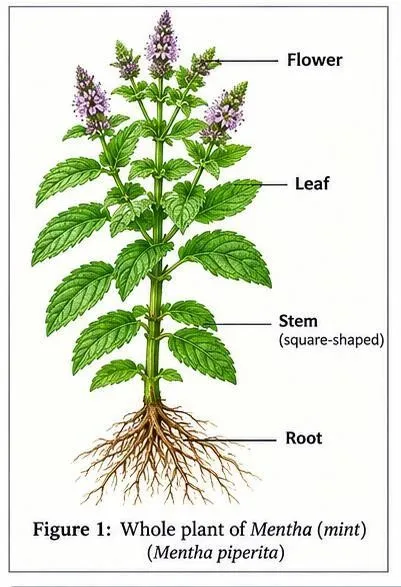
Several species of Mentha are cultivated and utilized for their medicinal and commercial properties.
1. Mentha piperita
Mentha piperita, commonly known as peppermint, is a hybrid species believed to originate from the hybridization of Mentha aquatica and Mentha spicata.
Peppermint is characterized by its strong aromatic smell and high menthol content.
Its essential oil is widely used in pharmaceutical preparations, oral hygiene products, and flavoring agents.
2. Mentha spicata
Mentha spicata, commonly known as spearmint, is widely used in food products, beverages, and traditional medicine.
Its essential oil contains carvone and limonene as major volatile constituents.
Spearmint has been investigated for antioxidant, antimicrobial, antiinflammatory, and digestive properties.
3. Mentha arvensis
Mentha arvensis is commonly known as Japanese mint or field mint.
It is commercially important because of its essential oil, which is rich in menthol.
The plant is extensively cultivated in India and other Asian countries for industrial production of mint oil and menthol.
4. Mentha longifolia
Mentha longifolia is commonly known as horse mint or wild mint.
It is distributed across different regions of Europe, Asia, and Africa.
The plant has been traditionally used for digestive complaints and respiratory problems.
5. Mentha aquatica
Mentha aquatica, commonly known as water mint, generally grows in moist environments.
It has been investigated for its essential oil composition and biological activities.
Mentha plants possess characteristic morphological features that help in their botanical identification.
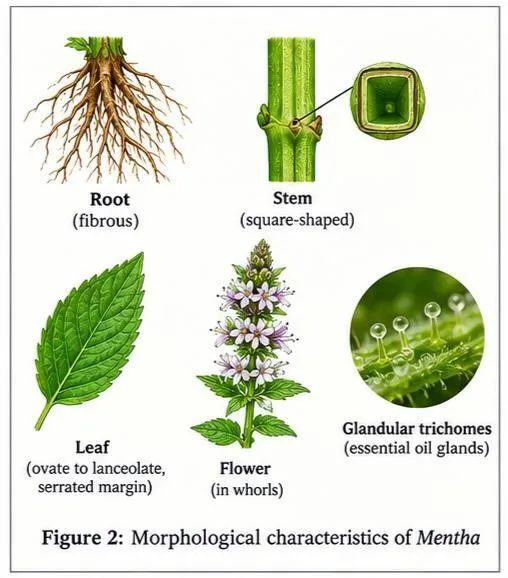
The root system of Mentha generally consists of fibrous roots and underground rhizomes.
The rhizomes allow the plant to spread vegetatively and produce new shoots.
The stem is usually erect, branched, and quadrangular in shape.
The square-shaped stem is a characteristic feature of many plants belonging to the family Lamiaceae. The stem may be green or slightly purplish depending on the species and environmental conditions.
The leaves are generally opposite and decussate in arrangement. They are commonly ovate, lanceolate, or oblong in shape. The leaf margin is usually serrated, and the surface may contain glandular trichomes. These glandular structures produce and store essential oils responsible for the characteristic aroma of mint.
The flowers are generally small and arranged in terminal or axillary inflorescences. They are commonly white, pink, or purple in color. The flowers are bisexual and possess a characteristic structure typical of the family Lamiaceae.
The fruit is a small schizocarp that develops into four nutlets. The seeds are generally small and may vary in size and shape according to the species.
1. Aromatic herbaceous plant.
2. Square-shaped stem.
3. Opposite leaf arrangement.
4. Serrated leaf margins.
5. Glandular trichomes containing essential oils.
6. Small flowers arranged in clusters.
4. PHYTOCHEMICAL COMPOSITION OF MENTHA
The medicinal properties of Mentha are associated with its diverse phytochemical composition.
Phytochemicals are naturally occurring chemical compounds produced by plants. They often play important roles in plant defense, environmental adaptation, and biological interactions. Mentha contains several important classes of phytochemicals.
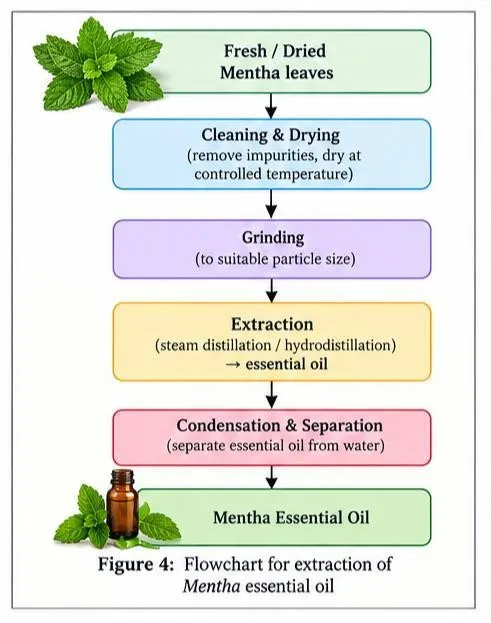
Essential oils are volatile aromatic compounds obtained from different parts of aromatic plants. Mint essential oils are generally extracted from leaves and aerial parts through steam distillation or hydrodistillation. The chemical composition of essential oils varies according to species, geographical origin, harvesting conditions, and extraction techniques.
The major constituents of peppermint essential oil include:
These compounds contribute to the characteristic aroma and biological properties of peppermint.
the are important non-volatile phytochemicals found in Mentha species. They are known for their potential antioxidant and anti-inflammatory properties.
Important phenolic acids reported in mint include:
Rosmarinic acid is one of the most extensively investigated phenolic compounds in Mentha. It is a naturally occurring polyphenol formed from caffeic acid and 3,4dihydroxyphenyllactic acid. Rosmarinic acid has demonstrated antioxidant activity in several experimental studies.
Flavonoids
Flavonoids are a large group of naturally occurring polyphenolic compounds. They are widely distributed in medicinal plants and are associated with antioxidant, anti-inflammatory, and other biological activities.
Important flavonoids reported in Mentha include:
1. Eriocitrin
2. Luteolin
3. Hesperidin
4. Apigenin
5. Diosmin
6. Rutin
The concentration and distribution of these compounds vary between Mentha species.
Terpenoids
Terpenoids are an important class of natural compounds found in Mentha essentias oil. They contribute to the aroma, flavor, and biological activities of mint.
These compounds have been investigated for their potential antimicrobial, antioxidant, anti-inflammatory, and analgesic activities.
In addition to essential oils, phenolic acids, flavonoids, and terpenoids, Mentha species may contain:
The overall phytochemical composition depends on the species, plant part, and extraction method.
Bioactive compounds are naturally occurring substances that can influence biological processes.
Mentha contains several bioactive compounds that have been investigated for their potential health benefits.
Menthol is one of the most important bioactive compounds found in peppermint and Japanese mint essential oils.
It is a cyclic monoterpene alcohol responsible for the characteristic cooling sensation of mint.
Menthol interacts with transient receptor potential melastatin 8 (TRPM8), a cold-sensitive receptor present in sensory neurons.
Activation of TRPM8 produces a cooling sensation without an actual reduction in tissue temperature.
Menthol has been investigated for:
Menthol is widely used in pharmaceutical formulations, topical preparations, toothpaste, mouthwash, and cosmetic products.
Menthone is a major monoterpene ketone found in peppermint essential oil. It contributes to the characteristic mint aroma. Menthone has been investigated for its potential antimicrobial, antioxidant, and anti-inflammatory properties. Its concentration varies according to the Mentha species and the developmental stage of the plant.
Rosmarinic acid is an important phenolic compound found in several Mentha species.It is formed through the combination of caffeic acid and 3,4dihydroxyphenyllactic acid. Rosmarinic acid has demonstrated antioxidant activity through its ability to interact with reactive oxygen species. It has also been investigated for potential anti-inflammatory and antimicrobial properties.
Eriocitrin is a flavanone glycoside found in peppermint and other Mentha species. It is recognized as an important antioxidant phytochemical.
Eriocitrin has been investigated for its potential role in reducing oxidative stress and influencing inflammatory pathways.
Luteolin is a flavonoid present in different medicinal plants, including Mentha.
It has demonstrated antioxidant and anti-inflammatory activities in experimental studies.
Luteolin has also been investigated for potential effects on cellular signaling pathways.
Carvone is a monoterpene ketone that is particularly abundant in spearmint essential oil.
It is responsible for the characteristic spearmint aroma.
Carvone has been investigated for its antimicrobial, antioxidant, and other biological properties.
Limonene is a naturally occurring monoterpene found in several essential oils.
It contributes to the aroma of mint and other aromatic plants.
Limonene has been investigated for its potential antioxidant, antimicrobial, and anti-inflammatory activities.
Mentha has been traditionally used for several health-related purposes.
Modern scientific research has investigated its potential benefits through laboratory experiments, animal studies, and clinical investigations. The major potential health benefits are discussed below.
Oxidative stress occurs when the production of reactive oxygen species exceeds the antioxidant defense capacity of the body.
Excessive oxidative stress can damage cellular components such as DNA, proteins, and lipids.
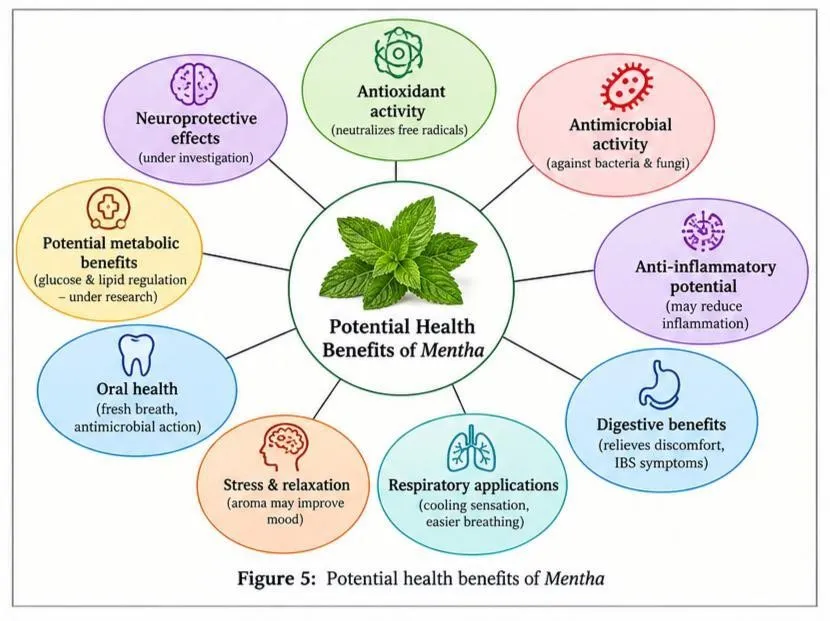
It has been associated with several pathological conditions, including inflammatory disorders and certain chronic diseases.
Mentha contains several antioxidant compounds, including:
These compounds have demonstrated antioxidant activity in different experimental systems.
Phenolic compounds may contribute to antioxidant activity by donating electrons or hydrogen atoms to reactive species.
Mint extracts have been investigated using different antioxidant assays, including:
1. DPPH radical scavenging assay.
2. ABTS radical scavenging assay.
3. FRAP assay.
4. Total phenolic content estimation.
5. Total flavonoid content estimation.
The antioxidant activity of Mentha extracts may vary according to the extraction solvent, plant species, and concentration of bioactive compounds.
Although experimental studies suggest promising antioxidant properties, further investigations are required to establish the clinical significance of these effects in humans.
Inflammation is a protective biological response against injury, infection, and harmful stimuli.
However, excessive or prolonged inflammation may contribute to tissue damage and chronic diseases.
Several Mentha constituents have been investigated for their potential antiinflammatory properties.
Rosmarinic acid, luteolin, menthol, and other phytochemicals may influence inflammatory signaling pathways.
Experimental studies have investigated their effects on inflammatory mediators such as:
These findings suggest that Mentha extracts may possess anti-inflammatory potential.
However, the effects observed in laboratory experiments should not be interpreted as proof that mint can treat inflammatory diseases in humans.
Mentha essential oils and extracts have demonstrated antimicrobial activity against certain microorganisms in experimental investigations.
The antimicrobial properties of mint are mainly associated with its volatile compounds.
Menthol, menthone, carvone, and other terpenoids may interact with microbial cell membranes.
Such interactions may influence membrane permeability and cellular functions.
Mentha extracts have been investigated against different groups of microorganisms, including:
The antimicrobial activity of mint essential oils may depend on their chemical composition and concentration.
Different Mentha species may demonstrate different levels of antimicrobial activity.
The findings suggest potential applications in food preservation, oral hygiene products, and pharmaceutical research.
However, laboratory antimicrobial activity does not establish that mint can replace clinically approved antimicrobial medicines.
One of the most widely investigated medicinal applications of peppermint is its potential role in gastrointestinal health.
Peppermint oil has been studied for its effects on intestinal smooth muscle.
Menthol may contribute to smooth muscle relaxation through effects on calcium-related signaling mechanisms.
This property has attracted attention in the management of intestinal spasms and abdominal discomfort.
Peppermint oil has been investigated for:
Clinical studies have investigated enteric-coated peppermint oil preparations for the management of symptoms associated with irritable bowel syndrome.
Some studies have reported improvements in abdominal pain and discomfort.
However, clinical outcomes vary between studies, and further research is required to establish the most appropriate formulations, dosage, and duration of treatment.
Peppermint oil may also worsen acid reflux in some individuals because it can influence smooth muscle function.
Therefore, its use should be considered carefully in individuals with gastroesophageal reflux disease.
Menthol is widely used in topical preparations because of its cooling sensation and potential analgesic properties.
It interacts with sensory receptors involved in temperature perception and pain signaling.
The cooling sensation produced by menthol may influence the perception of pain.
Menthol-containing formulations are used in certain topical products for temporary relief of minor muscular discomfort.
However, the analgesic effects depend on the concentration, formulation, and application method.
Further research is required to understand the complete mechanisms underlying its analgesic activity.
7.6 Respiratory Health
Mentha has been traditionally used for respiratory discomfort.
Peppermint contains menthol, which produces a cooling sensation in the respiratory tract.
Menthol may influence sensory receptors associated with the perception of airflow.
This can create a subjective feeling of improved nasal breathing.
Menthol-containing products are commonly used in certain inhalation and topical preparations.
However, the sensation of improved airflow does not necessarily indicate an actual increase in nasal airway diameter.
Mentha should not be considered a replacement for prescribed treatment of asthma, respiratory infections, or other respiratory diseases.
7.7 Potential Antidiabetic Activity
Certain Mentha species have been investigated for their potential effects on glucose metabolism.
Experimental studies have evaluated mint extracts and isolated phytochemicals for their effects on:
Some studies have suggested potential antidiabetic effects in experimental models.
However, the available evidence is not sufficient to establish Mentha as a treatment for diabetes in humans.
More controlled clinical investigations are required to determine its efficacy, safety, and possible interactions with antidiabetic medications.
7.8 Neuroprotective Potential
Oxidative stress and inflammation have been investigated as contributing factors in several neurological disorders.
The antioxidant and anti-inflammatory properties of certain Mentha constituents have attracted interest in neurological research.
Mentha extracts and isolated compounds have been studied for their potential effects on:
Some experimental findings suggest possible neuroprotective properties.
However, the clinical significance of these observations remains uncertain.
Further investigations are required to determine whether these effects can be demonstrated safely and effectively in humans.
7.9 Potential Anticancer Activity
Certain Mentha extracts and isolated phytochemicals have demonstrated cytotoxic or antiproliferative effects in laboratory studies.
These investigations have focused on the effects of plant-derived compounds on cancer cell growth and cellular signaling pathways.
Potential mechanisms investigated include:
However, laboratory studies involving cancer cell lines do not establish the effectiveness of mint in treating cancer patients.
There is insufficient clinical evidence to recommend Mentha as an anticancer treatment.
Further research is necessary to establish the safety, bioavailability, and clinical significance of its bioactive compounds.
8. PHARMACOLOGICAL ACTIVITIES OF MENTHA
The pharmacological properties of Mentha have been investigated through different experimental approaches.
The biological activities of Mentha are generally associated with its essential oils, phenolic compounds, and flavonoids.
8.1 Antioxidant Mechanism
The antioxidant properties of Mentha may involve several mechanisms.
Free Radical Scavenging
Phenolic compounds can interact with reactive oxygen species through electron or hydrogen donation.
Metal Chelation
Certain phytochemicals may bind metal ions involved in oxidative reactions.
Modulation of Antioxidant Defense
Some compounds have been investigated for their effects on cellular antioxidant defense pathways.
Protection Against Oxidative Damage
Experimental studies have investigated the effects of mint extracts on oxidative damage to cellular components.
8.2 Antimicrobial Mechanism
Essential oil constituents may interact with microbial cell membranes.
This interaction may influence:
1. Membrane permeability.
2. Ion balance.
3. Cellular energy production.
4. Microbial growth.
5. Membrane-associated enzymes.
The degree of antimicrobial activity depends on the chemical composition of the essential oil and the susceptibility of the microorganism.
8.3 Anti-Inflammatory Mechanism
Certain Mentha constituents have been investigated for their effects on inflammatory signaling pathways.
Potential mechanisms include:
These mechanisms are primarily based on experimental investigations.
8.4 Smooth Muscle Relaxation
Peppermint oil has been investigated for its effects on gastrointestinal smooth muscle.
Menthol may influence calcium-related mechanisms involved in smooth muscle contraction.
The relaxation of intestinal smooth muscle may contribute to the observed effects of peppermint oil on intestinal spasms.
This mechanism has been investigated in experimental studies and is relevant to its potential use in gastrointestinal disorders.
9. TRADITIONAL MEDICINAL USES OF MENTHA
Mentha species have been used in traditional medicine across different geographical regions.
The leaves and essential oils are commonly used in traditional preparations.
Traditional uses include:
9.1 Digestive Disorders
Mint leaves have traditionally been used for digestive discomfort, abdominal pain, and indigestion.
Mint preparations are commonly consumed as herbal teas.
9.2 Respiratory Problems
Mentha has traditionally been used for cough, cold, and respiratory discomfort.
The characteristic aroma of mint is associated with its traditional respiratory applications.
9.3 Headache and Pain
Certain mint preparations have traditionally been used for headaches and minor pain.
Menthol-containing topical products are also used in contemporary formulations.
9.4 Fever and General Discomfort
Some Mentha species have been used traditionally for fever and general discomfort.
9.5 Oral Hygiene
Mint is widely used in toothpaste, mouthwash, and other oral hygiene products.
Its aroma and sensory properties make it an important ingredient in these preparations.
It is important to distinguish traditional medicinal uses from scientifically established therapeutic effects.
Traditional use provides a basis for research but does not independently establish clinical efficacy.
10. EXTRACTION AND ISOLATION OF BIOACTIVE COMPOUNDS
The extraction of bioactive compounds is an important step in phytochemical investigations.
Different extraction techniques are used depending on the chemical nature of the compounds.
10.1 Sample Collection
Fresh or dried Mentha leaves are collected from a suitable source.
The plant material should be properly identified and authenticated.
The collected material should be free from visible contamination.
10.2 Drying
The leaves may be dried under controlled conditions.
Drying helps reduce moisture content and may improve the stability of the plant material during storage.
The drying method can influence the chemical composition of the extract.
10.3 Powder Preparation
The dried leaves are ground into a fine powder.
The powder is stored in a suitable container until extraction.
10.4 Extraction Methods
A. Solvent Extraction
Solvent extraction is commonly used for obtaining non-volatile phytochemicals.
Different solvents may be used depending on the polarity of the target compounds.
Examples include:
B. Hydrodistillation
Hydrodistillation is used for extracting essential oils from aromatic plants.
The plant material is heated with water, and the volatile components are separated from the distillate.
C. Steam Distillation
Steam distillation is another commonly used method for obtaining essential oils.
The volatile compounds are carried by steam and subsequently condensed.
D. Soxhlet Extraction
Soxhlet extraction may be used for extracting certain phytochemicals from dried plant material.
The extraction efficiency depends on the solvent, extraction duration, and temperature.
10.5 Phytochemical Analysis
The obtained extracts can be analyzed using different analytical techniques.
Common techniques include:
1. Thin-layer chromatography (TLC).
2. High-performance liquid chromatography (HPLC).
3. Gas chromatography-mass spectrometry (GC-MS).
4. Liquid chromatography-mass spectrometry (LC-MS).
5. Spectrophotometric analysis.
GC-MS is commonly used for investigating volatile compounds present in essential oils.
HPLC and LC-MS are useful for analyzing non-volatile compounds such as phenolic acids and flavonoids.
11. APPLICATIONS OF MENTHA
Mentha has several commercial and industrial applications.
Its characteristic aroma, flavor, and phytochemical composition make it valuable in different industries.
11.1 Pharmaceutical Applications
Mentha is used in pharmaceutical formulations because of its aroma, cooling sensation, and potential biological activities.
Menthol is commonly used in topical preparations and certain oral formulations.
Peppermint oil has also been investigated for gastrointestinal applications.
11.2 Food Industry
Mint is widely used as a flavoring ingredient in:
Its characteristic aroma improves the sensory properties of various food products.
11.3 Cosmetic Industry
Mentha extracts and essential oils are used in several cosmetic formulations.
Examples include:
11.4 Aromatherapy
Mint essential oils are used in certain aromatherapy preparations.
The characteristic aroma of peppermint is associated with its sensory and cooling properties.
However, claims regarding the treatment of medical conditions through aromatherapy require appropriate scientific evidence.
11.5 Agricultural Applications
Certain Mentha essential oils have been investigated for their potential use in agricultural applications.
Experimental studies have evaluated their effects on selected insects and microorganisms.
Further research is required to establish their effectiveness, safety, and suitability for agricultural use.
12. ADVANTAGES AND LIMITATIONS OF MENTHA
12.1 Advantages
The major advantages of Mentha include:
1. Widespread availability. 2. High commercial value.
3. Rich source of bioactive compounds.
4. Important source of essential oils.
5. Potential antioxidant properties.
6. Potential antimicrobial properties.
7. Potential anti-inflammatory properties.
8. Wide applications in food and pharmaceutical industries.
9. Traditional use in digestive preparations.
13. FUTURE RESEARCH PERSPECTIVES
The increasing interest in medicinal plants has created new opportunities for the scientific investigation of Mentha.
Although several studies have reported promising biological activities, additional research is required to establish their clinical significance.
Phytochemical Standardization
Future investigations should focus on the standardization of Mentha extracts. Standardization can help ensure consistency in the concentration of important bioactive compounds.
Advanced analytical techniques may help identify additional compounds present in Mentha species.
These compounds may provide new opportunities for pharmaceutical research.
More well-designed clinical trials are required to establish the effectiveness and safety of Mentha preparations.
Clinical studies should evaluate:
Further investigations are required to understand the molecular mechanisms underlying the biological activities of Mentha.
Sustainable cultivation practices may improve the availability of high-quality Mentha plant material.
Research on cultivation, harvesting, and storage may help improve the quality of essential oils and extracts.
The development of suitable pharmaceutical formulations may improve the stability, bioavailability, and therapeutic potential of selected Mentha compounds.
CONCLUSION
These species are widely used in traditional medicine, food products, pharmaceutical preparations, cosmetics, and other commercial applications. The medicinal and biological properties of Mentha are mainly associated with its diverse phytochemical composition.
Important bioactive compounds include menthol, menthone, carvone, rosmarinic acid, caffeic acid, eriocitrin, luteolin, and other phenolic constituents. Scientific investigations have demonstrated that Mentha extracts and essential oils possess several biological activities, including antioxidant, antimicrobial, anti-inflammatory, analgesic, and smooth muscle-relaxing properties.
Among these activities, the potential role of peppermint oil in gastrointestinal health has received considerable scientific attention. Clinical investigations have evaluated peppermint oil for the management of irritable bowel syndrome and associated abdominal discomfort. The antioxidant and antimicrobial properties of Mentha have also attracted interest in pharmaceutical and food-related research. However, the biological activities of Mentha vary according to species, chemical composition, extraction methods, and experimental conditions. Several reported health benefits are based on laboratory or animal studies, and their clinical significance remains uncertain. Furthermore, concentrated essential oils may cause adverse effects and should be used with appropriate precautions. Therefore, additional research is necessary to establish the efficacy, safety, standardization, and clinical applications of Mentha preparations.
Further scientific investigations may contribute to a better understanding of its biological activities and help identify new opportunities for the development of evidence-based natural products.
REFERENCES

Ram Ingle, Pooja Walunje, Gayatri Udhar, Mentha: A Review on ITS Bioactive Compounds and Potential Health Benefits., Int. J. of Pharm. Sci., 2026, Vol 4, Issue 10, 4828-4841. https://doi.org/10.5281/zenodo.23793663
 10.5281/zenodo.23793663