

We use cookies to ensure our website works properly and to personalise your experience. Cookies policy
University Institute of Pharmaceutical Education & Research, University of Kota, Kota, Rajasthan, 324005.
Microneedle-based transdermal drug delivery systems have emerged as a promising alternative to conventional routes of drug administration, offering a minimally invasive, painless, and efficient approach for delivering therapeutic agents. These systems overcome the limitations of the stratum corneum by creating transient microchannels, enabling enhanced drug permeation and improved bioavailability. This review provides a comprehensive overview of microneedle types, including solid, coated, dissolving, hollow, and hydrogel-forming systems, along with the materials and fabrication techniques involved in their development. Recent advancements such as smart microneedles, 3D printing technologies, and their applications in vaccine delivery and biologics are also highlighted. Despite significant progress, challenges related to large-scale manufacturing, limited drug loading capacity, and complex regulatory approval pathways persist. Nevertheless, microneedle technology holds strong potential for future applications in personalized medicine, chronic disease management, and large-scale immunization programs.
Poor bioavailability, patient discomfort, and the need for qualified medical personnel are some of the difficulties associated with traditional drug administration routes, such as oral and injection procedures. Alternative distribution systems that are more effective and patient-friendly have been developed as a result of these limitations.1 Two benefits of transdermal medication delivery systems are increased compliance and sustained drug release. However, their utility is restricted by the stratum corneum's strong barrier properties, which keep large macromolecules and hydrophilic compounds from penetrating. Since microneedle technology offers a less invasive means of overcoming this barrier, it has garnered a lot of attention.2 By penetrating the skin's outer layers without triggering nerve ends, these microscopic projections enable painless medication administration. By creating temporary microchannels, microneedles allow the transfer of medicinal materials into the skin's deeper layers. Microneedles have shown remarkable promise for both medicine administration and vaccination. The skin's high density of antigen-presenting cells makes it an ideal target for immunization. Vaccines administered with microneedles can increase immune response, reduce dosage requirements, and improve patient acceptability. 3
2. SKIN ANATOMY AND BARRIER FUNCTION
As a protective barrier between the body and the outside world, the skin is a multipurpose organ. It is essential for sensation, thermoregulation, immunological defense, and protection. The three main layers that comprise the structure of the skin are the epidermis, dermis, and hypodermis. Immune cells, blood arteries, and nerve endings are found underneath the stratum corneum, which acts as the primary barrier to drug penetration in the epidermis.4 This layer's vascular nature makes it perfect for administering medications and immunizations. It has multiple sublayers and is the outermost layer. Keratinized cells embedded in a lipid matrix make up this layer, which is frequently called a "brick-and-mortar" structure. Insulation and structural support are provided by the dermis, which is a hypodermis mainly composed of adipose tissue.
The primary barrier to transdermal delivery is the stratum corneum's restricted permeability. Microneedles address this issue by briefly breaching this barrier without causing significant damage5.
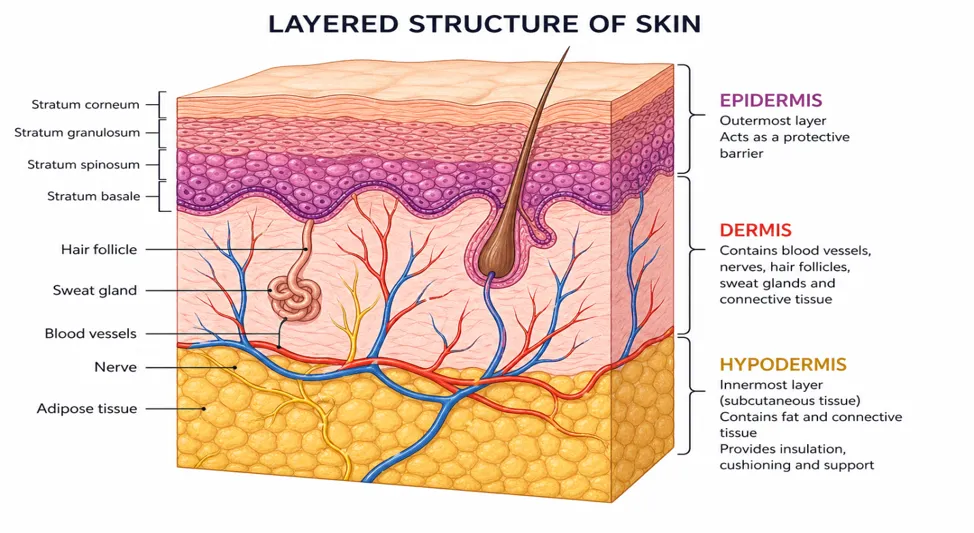
Figure 1 Layered structure of skin (Epidermis, Dermis, Hypodermis)
3. MICRONEEDLES: CONCEPT AND DEVELOPMENT
Microneedles are tiny, needle-like devices that are intended to help administer drugs by penetrating the outer layer of the skin. Usually between 25 to 2000 µm long, they are designed to stay away from deeper nerve terminals, causing little or no pain. 6
The necessity to enhance transdermal delivery techniques gave rise to the idea of microneedles. Technological limitations restricted early study, but late 20th-century developments in microfabrication made it possible to create useful microneedle systems.7
Materials, design, and usefulness have all seen notable advancements over time. Biodegradable polymers, smart materials, and nanotechnology are incorporated into modern microneedles to increase their use in medication administration, immunization, and diagnostics.8
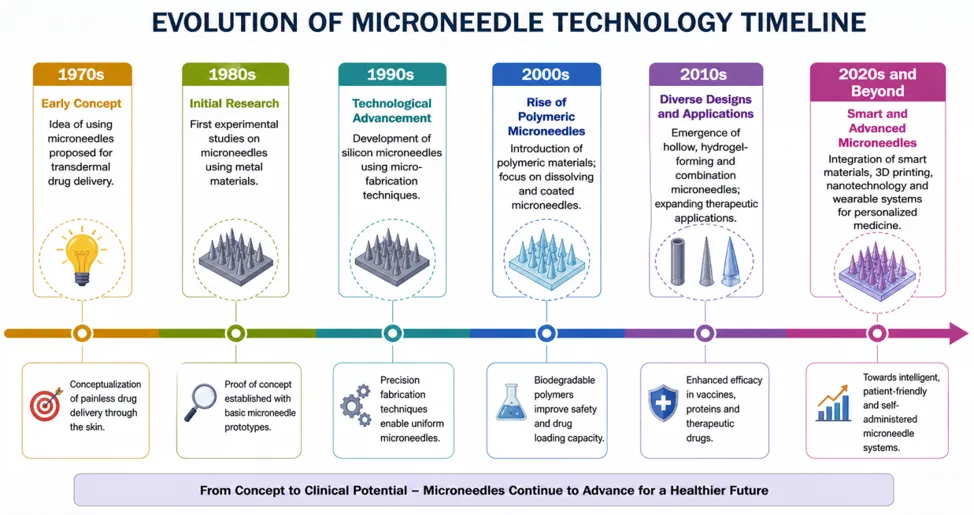
Figure 2 Evolution of microneedle technology timeline
4. TYPES OF MICRONEEDLES
Microneedles are classified based on their structure and mechanism of drug delivery.9
4.1 Solid Microneedles
The main purpose of these is to make microchannels in the skin. Diffusion along the established routes is made possible by the external application of a medication formulation following implantation.9,10
4.2 Coated Microneedles
This kind coats the needles' surface with a thin layer of medication. The coating quickly melts after implantation, releasing the medication.11
4.3 Dissolving Microneedles
These are made of biodegradable materials with the medication contained in the matrix. The needles totally disintegrate after insertion, delivering the medication in a regulated way.12,
4.4 Hollow Microneedles
These structures have a central lumen that allows liquid formulations to be injected straight into the skin.13
4.5 Hydrogel-Forming Microneedles
These consist of swellable polymers that allow drug passage from an attached reservoir while absorbing interstitial fluid.14
5. MATERIALS USED IN MICRONEEDLES
The choice of material significantly influences the performance and safety of microneedles.15
Table: Comparison of Microneedle Types15
|
Type |
Material |
Drug Delivery |
Advantage |
Limitation |
|
Solid |
Metal/Silicon |
Pre-treatment |
Simple |
Two-step process |
|
Coated |
Metal |
Fast release |
Precise dose |
Limited loading |
|
Dissolving |
Polymer |
Controlled release |
No sharp waste |
Low strength |
|
Hollow |
Silicon |
Injection |
High dose |
Complex |
|
Hydrogel |
Polymer |
Diffusion |
Sustained release |
Slow response |
6. FABRICATION TECHNIQUES
Microneedle fabrication methods determine their structural properties and scalability.
7. MECHANISM OF DRUG DELIVERY
Microneedles function by breaching the stratum corneum and forming temporary microchannels. These channels facilitate drug transport into the epidermis and dermis.
Depending on the type of microneedle, drug delivery may occur through diffusion, dissolution, or direct infusion. Once delivered, the drug either acts locally or enters systemic circulation.19
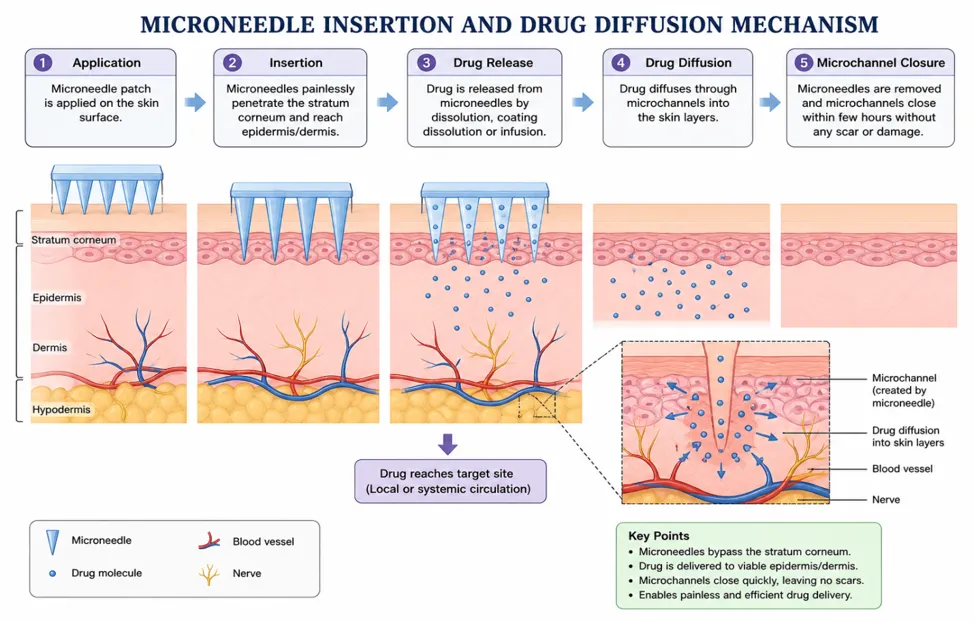
Figure 3 Microneedle insertion and drug diffusion mechanism
8. APPLICATIONS OF MICRONEEDLES
They improve bioavailability and patient compliance.20
9. ADVANTAGES
10. LIMITATIONS
11. SAFETY AND REGULATORY CONSIDERATIONS
Microneedles must meet strict safety requirements, including:
They are often classified as drug-device combination products, making regulatory approval complex.21
12. RECENT ADVANCEMENTS22
Recent innovations include:
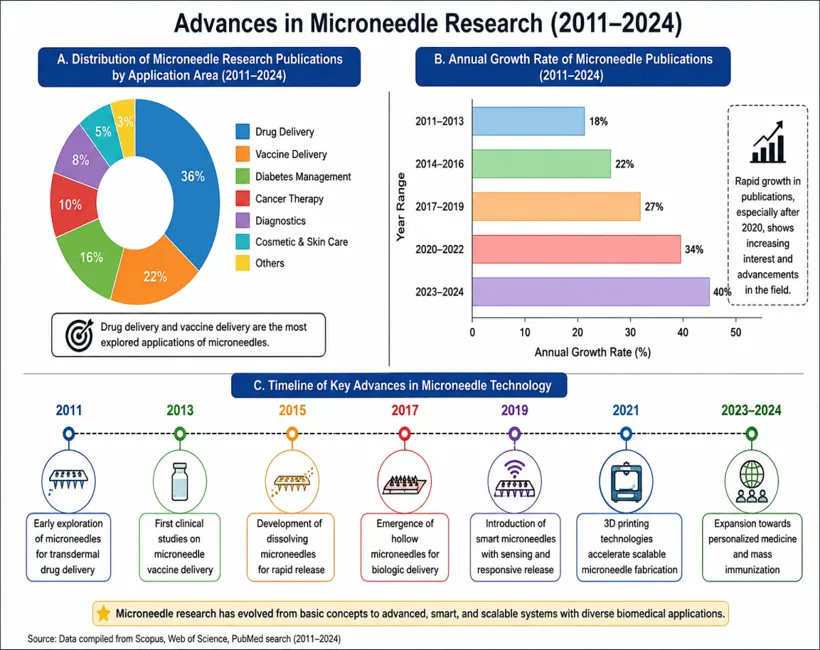
Figure 4 Growth trend of microneedle-related research publications from 2011 to 2024 based on PubMed-indexed bibliometric data
14. FUTURE PERSPECTIVES
Microneedle technology is expected to play a major role in:
Further research is needed to address manufacturing and regulatory challenges.23
15. CONCLUSION
Microneedle-based delivery systems have emerged as a highly innovative and transformative approach in the field of pharmaceutical and biomedical sciences, offering a practical solution to many limitations associated with conventional drug and vaccine administration methods. By enabling minimally invasive penetration of the skin without stimulating pain receptors, these systems provide a nearly painless alternative to traditional hypodermic injections, significantly improving patient comfort and acceptance. Their ability to create transient microchannels in the stratum corneum facilitates efficient transport of a wide range of therapeutic agents, including small molecules, peptides, proteins, and vaccines, thereby expanding the scope of transdermal drug delivery. In addition to enhancing bioavailability through avoidance of first-pass metabolism, microneedles also support controlled and targeted delivery, which can lead to improved therapeutic outcomes and reduced systemic side effects. The incorporation of biodegradable and biocompatible materials further enhances their safety profile by eliminating concerns related to sharp medical waste and needle-stick injuries. Moreover, the potential for self-administration reduces dependence on trained healthcare professionals and makes these systems particularly valuable in large-scale immunization programs and resource-limited settings. Recent technological advancements, including the integration of smart materials, stimuli-responsive systems, and additive manufacturing techniques, have further expanded the functional capabilities of microneedles, paving the way for personalized and precision medicine. Despite existing challenges such as limited drug loading capacity, manufacturing complexities, and evolving regulatory frameworks, ongoing research and interdisciplinary collaboration continue to address these barriers. With continuous innovation and increasing clinical validation, microneedle technology is poised to play a crucial role in shaping the future of modern healthcare by offering safe, efficient, and patient-centric solutions for drug and vaccine delivery.
REFERENCES


Khushi Rathore, Hariom Rajput, Microneedles for Painless Vaccination and Drug Delivery: A Comprehensive Review, Int. J. of Pharm. Sci., 2026, Vol 4, Issue 6, 7914-7921. https://doi.org/10.5281/zenodo.21100954
 10.5281/zenodo.21100954