

We use cookies to ensure our website works properly and to personalise your experience. Cookies policy
S.V.P.M College of Pharmacy Malegaon (bk) Baramati, Pune
Microsponges are advanced drug delivery carriers composed of highly porous, cross-linked polymeric microspheres with a spherical structure, typically ranging from 5 to 300 ?m in diameter. These systems have gained considerable attention due to their ability to provide controlled and sustained release of poorly water-soluble drugs. By enhancing drug stability, minimizing adverse effects, and modifying drug release patterns, microsponges serve as an effective and versatile delivery platform. The porous structure of microsponges enables encapsulation of a wide range of active pharmaceutical ingredients, which can subsequently be incorporated into various dosage forms including gels, creams, capsules, powders, and liquid formulations. This review highlights the fundamental aspects of Microsponge Delivery Systems (MDS), including their unique properties, advantages, preparation techniques such as liquid–liquid suspension polymerization and quasi-emulsion solvent diffusion, and drug release mechanisms. In addition, the article discusses important characterization parameters including particle size and distribution, surface morphology, production yield, drug loading efficiency, compatibility studies, true density, and in-vitro drug release evaluation. Furthermore, the applications of MDS in oral delivery, topical therapy, cosmetics, bone regeneration, and tissue engineering are also summarized. (1)
The drug delivery technology landscape has become highly competitive and rapidly evolving. More and more developments in delivery systems are being integrated to optimize the efficacy and cost-effectiveness of the therapy. New classes of pharmaceuticals, biopharmaceuticals (peptides, proteins and DNA-based therapeutics) are fuelling the rapid evolution of drug delivery technology. These new drugs typically cannot be effectively delivered by conventional mean. Drug delivery systems (DDS) that can precisely control the release rates or target drugs to a specific body site have had an enormous impact on the health care system. (1)
In recent years there is increasing demand in cosmetic and skin care, extensive usage of substances like α-hydroxy acids and vitamins in topical solutions, which can offer advantages, particularly in aging or photodamaged skin, has encouraged consumers growing interest in skin care and treatment goods. Despite its benefits, these substances may cause irritation, which manifests as burning, stinging, or redness and is especially common in people with sensitive skin. Acknowledging this issue, the formulators have tried to address it using one of the two approaches. They have decreased the concentration of these components, but their effectiveness has been compromised in the process. Additionally, the vehicle has been altered to make the substance more skin-compatible or emollient. This strategy frequently also lessens the positive impacts of formulations. Several predictable and dependable systems for systemic medications have been created within the category of transdermal delivery systems (TDS), which use the skin as a portal of entry. It has enhanced the safety and effectiveness of numerous medications that might be more effectively applied topically. However, materials whose ultimate goal is the skin itself cannot be delivered using TDS. Research on the controlled release of pharmaceuticals onto the epidermis with the guarantee that the medication stays mostly localized and does not significantly penetrate the systemic circulation. This is research gap showing significant need for another novel approach to deliver medication systemically by crossing barriers on epithelium of skin.
The most practical and widely used method of administering drugs is the oral route. Drugs with a short half-life and easy gastric absorption are quickly removed from the bloodstream. Oral controlled release formulations, which release medication gradually into the gastrointestinal tract and aid in maintaining a steady drug concentration in the serum for extended periods of time, have been created to avoid these issues. The oral method of medicine delivery is widely accepted. Up to 50–60% of oral solid dose forms are popular due to self-medication, pain avoidance, regular, simple, and appropriate administration with exact amount, and most importantly, patient compliance. Tablets and capsules are the most popular solid dosage forms; they can be used in a variety of innovative drug delivery systems, including nanoparticles, microparticles, microspheres, nanospheres, and microsponges.(2)
Defining Microsponges
Highly cross-linked, porous polymeric microspheres known as Micro-sponge Delivery Systems (MDS) are capable of capturing a wide variety of active substances and releasing them gradually in response to stimuli. This approach was previously suggested to improve the effectiveness of medications. Microporous beads filled with an active ingredient make up this novel technique for controlled release.(2)
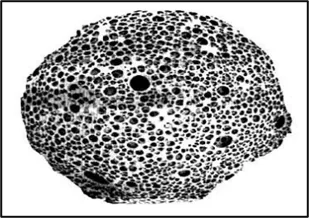
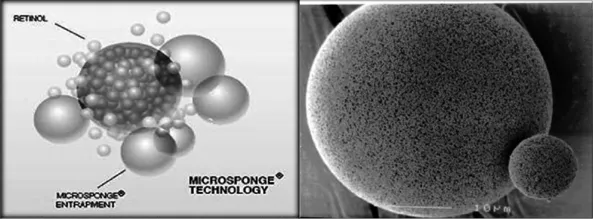
Fig. Porous structure Of Microsponges.
The microsponge system can prevent excessive drug accumulation in the dermis and epidermis. Without sacrificing the efficacy of strong drugs, the microsponge system may be able to significantly reduce the irritation they produce. The unfilled spheres are subsequently eliminated by the next washing. The microsponge delivery technology satisfies these requirements and has created a new generation of inventive, highly efficient, and well-tolerated goods. These products, which are typically sold to customers in conventional forms like creams, gels, or lotions, have a relatively high concentration of active ingredients. Numerous active substances, including emollients, sunscreen, essential oils, perfumes, and anti-inflammatory compounds, can be captured by microsponges. The microsponges' diameters might vary, often falling between 5 and 300 μm., based on the level of smoothness or after-feel needed for the final recipe. A typical 25 μm sphere can contain up to 250000 pores and an interior pore structure similar to 10 ft in length, yielding a total pore volume of around 1 ml/g, though the microsponge size may vary. As a result, each microsponge has a reservoir that can hold up to its own weight of active material.
Rationale Of Microsponge Drug Delivery:
I) Microspheres: Unable to regulate the drug's release rate. The medication inside the microspheres will be released after the outer coating burst.
II) Liposomes: They have drawbacks such as reduced drug entrapment, formulation preparation challenges, and limited chemical and microbiological stability, necessitating the use of preservatives.
III) Nanomaterial: They can readily enter the systemic circulation through inhalation, and they may also be absorbed through the skin, particularly if the skin is injured.
IV) Lipid nanoparticles: The majority of their advantages are limited to topical medication delivery.
Limitations (3):
The preparation methods usually use organic solvents as porogens, which pose an environmental hazard, as some may be highly inflammable, posing a safety hazard. In some cases, the traces of residual monomers have been observed, which may be toxic and hazardous to health.
Selection criteria of drug in Microsponges delivery
|
Properties |
Desired Characteristic |
|
Molecular weight |
Low to moderate |
|
Solubility |
Slightly Soluble |
|
Log P |
Moderate |
|
Stability |
High |
|
Melting Point |
<250 o C |
|
Polymer Compatibility |
high |
|
Volatility |
Non volatile |
|
Half life |
Short (less than 2 hr) |
|
Dose |
Low |
|
Therapeutic Index |
Wide |
|
Bioavailability |
Moderate |
|
Absorption |
Predictable |
|
Action Site |
Localized/ Topical and controlled systemic |
Characteristics of material to be entrapped [4]
Components of Microsponge Formulation
METHODOLOGY
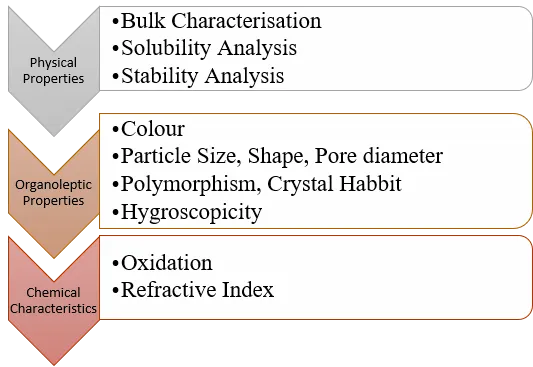
Pre-formulation represents a vital step in the research and development of a new drug compound. This phase focuses on analysing the physical, chemical, and mechanical properties of the active pharmaceutical ingredient (API), both independently and in combination with excipients. The primary objective is to design a dosage form that ensures stability, safety, and therapeutic effectiveness
Calibration Curve is Obtained by Taking Solvent of suitable Wavelength as reference standard and drug. Graph is plotted against Wavelength Vs % Absorbance.
The drug's and polymer's solubility properties play a major role in the choice of encapsulating technique. The diffusion solvent method is a widely used technique for encasing water-insoluble medications in water-insoluble polymers. This technique can be easily carried out in the lab and has the potential to be scaled up to manage enormous amounts of water.
When creating a microencapsulation process, the chosen approach should ideally result.
Various Polymers used in Microsponges formulation For different purpose such as Eudragit RS100, Carbapol, Ethyl Cellulose, forming cage like Structure and plasticizers Triethyl citrate for cross linking are added with API.
Quasi Emulsion Solvent Diffusion(12,13)
This Process Involves Two Steps:
I). Internal Phase Preparation
Drug+ Polymer added in volatile solvent like acetone, Ethanol/ Dichloromethane.
II). External Phase consist of aqueous solution Such as (PVA) with Stirring continuously. Add sufficient amount of Plasticizer eg. Triethyl citrate. Following emulsification, the liquid was constantly agitated for two hours to create distinct emulsion globules known as quasi-emulsion globules. The rigid microparticles (MSPs) separate from the mixture by filtering. The product clean and dry for 24 hours at 40 °C in a hot air oven.
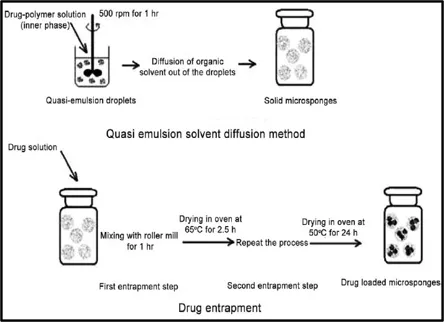
Fig. Quasi Emulsion solvent diffusion method
Liquid Liquid Suspension Polymerisation(14)
The preparation involves dissolving the monomers and active ingredients in an appropriate solvent solution before dispersing them in the aqueous phase (surfactant, suspending agent). After that, a catalyst is added or the temperature is raised to start the polymerization. A reservoir-like system that opens at the surface through pores. Sometimes the pore network is formed during the polymerization process using an inert solvent that is entirely miscible with monomer but immiscible with water. The solvent is removed from the porous microspheres following polymerization. When Drug is sensitive to Polymerization Quasi emulsion solvent diffusion Method is used.
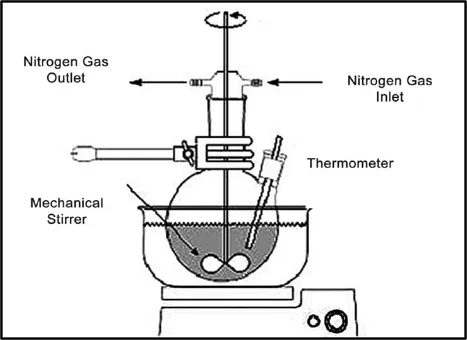
Fig. Liquid Liquid Suspension Polymerisation
Microsponge Release Mechanism(15)
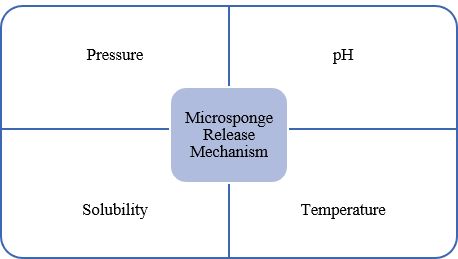
Microsponge Release Its Product upon triggering Mechanism such as Rubbing, Change in the pH, Temperature may increase pressure on pores and release Medicament at controlled manner.
Characterization of microsponges
Particle size and size distribution are evaluated using either an optical microscope or an electron microscope. This is an extremely crucial step, as the size of the particles greatly affects the texture of the formulation and its stability. Free flowing powders with fine aesthetic attributes are possible to obtain by controlling the size of particles during polymerization. Particle size analysis of loaded and unloaded Microsponges can be performed by laser light diffractometry or any other suitable method. The values (d50) can be expressed for all formulations as mean size range. Cumulative percentage drug release from Microsponges of different particle size will be plotted against time to study effect of particle size on drug release.
For morphology and surface topography, various techniques have been used like photon correlation spectroscopy (PCS), Scanning electron microscopy (SEM), transmission electron microscopy (TEM) etc. SEM is used widely for which prepared Microsponges are coated with gold–palladium under an argon atmosphere at room temperature and then the surface morphology of the Microsponges is studied.
% loading efficiency =
Actual drug content in microsponges × 100
Theoretical drug content
The production yield of the microparticles can be determined by calculating accurately the initial weight of the raw materials and the last weight of the SPM obtained.
%Production yield =
Production yield × 100
Theoretical mass (polymer + drug)
The true density of Microsponges can be measured using an ultra-pycnometer under helium gas and is calculated from a mean of repeated determinations.
The drug-excipients compatibility studies are carried out in order to ensure that there is no inadvertent reaction between the two when formulated into a dosage form. These studies are commonly carried out by recording the differential scanning Calorimetry (DSC) of the chemicals viz., API and excipients individually and also together and checking for any addition or deletion of any peaks or troughs. For DSC approximately 5 mg samples can be accurately weighed into aluminium pans and sealed and can be run at a heating rate of 15oC/min over a temperature range 25–430oC in atmosphere of nitrogen. Infrared (IR) spectroscopy can also reveal the incompatibilities between the chemical moieties. Compatibility of drug with reaction adjuncts can also be studied by thin layer chromatography (TLC) and FT-IR. Effect of polymerization on crystallinity of the drug can be studied by powder X-ray diffraction (XRD) and Differential Scanning Colorimetry (DSC).
Factors such as particle size, drug loading, and polymer composition govern the drug release from Microsponges. Polymer composition of the Microsponges Drug Delivery system can affect partition coefficient of the entrapped drug between the vehicle and the Microsponges system and hence have direct influence on the release rate of entrapped drug. Release of drug from Microsponge systems of different polymer compositions can be studied by plotting cumulative % drug release against time. Release rate and total amount of drug released from the system composed of methyl methacrylate/ ethylene glycol dimethacrylate is slower than styrene/divinyl benzene system. Selection of monomer is dictated both by characteristics of active ingredient ultimately to be entrapped and by the vehicle into which it will be dispersed. Polymers with varying electrical charges or degrees of hydrophobicity or lipophilicity may be prepared to provide flexibility in the release of active ingredients. Various monomer combinations will be screened for their suitability with the drugs by studying their drug release profile.
7. Resiliency [25]
Resiliency (viscoelastic properties) of Microsponges can be modified to produce beadlets that is softer or firmer according to the needs of the final formulation. Increased cross-linking tends to slow down the rate of release. Hence resiliency of Microsponges is studied and optimized as per the requirement by considering release as a function of cross linking with time.
8. Drug Release [27,28,29]
Dissolution profile of Microsponges can be studied by use of dissolution apparatus USP XXIII with a modified basket consisted of 5μm stainless steel mesh. The speed of the rotation is 150 rpm. The dissolution medium is selected while considering solubility of actives to ensure sink conditions. Samples from the dissolution medium can be analyzed by suitable analytical method at various intervals.
Safety Considerations [30]
Safety studies of microsponges can be confirmed by-
Limitations[2]
Use of organic solvents poses threats, such as toxicity and flammability. Traces of residual monomers in bottom- up approach can be toxic and dangerous to health. But these limitations can be overcome by proper quality control measures coupled with optimization and standardization of procedures e. g, post manufacture washing.
Application Of Microsponges [31]
Microsponge delivery systems are used to enhance the safety, effectiveness and aesthetic quality of topical prescription, over-the-counter and personal care products. Microsponges can be used in variety of applications. It is used mostly for topical and recently for oral administration. Several patents have reported that it can be used as excipients due to its high loading capacity and sustained release ability. It offers the formulator a range of alternatives to develop drug and cosmetic products. Microsponges are designed to deliver a pharmaceutical active ingredient efficiently at the minimum dose and also to enhance stability, reduce side effects and modify drug release. Over-the-counter products that incorporate microsponge drug delivery system include numerous moisturizers, specialized rejuvenative products, and sunscreens.(9)
Recent Marketed Formulations for cosmetics & Dermatology
|
Sr. No. |
Product Name |
Active Ingredient(s) |
Manufacturer |
Dosage Form |
Application |
|
1 |
Retin-A Micro |
Tretinoin (0.04%, 0.1%) |
Ortho Dermatologics / Johnson & Johnson |
Gel |
Acne, anti-aging, wrinkle reduction |
|
2 |
NeoBenz® Micro |
Benzoyl peroxide |
Intendis Inc. |
Gel / Cream |
Acne (antibacterial, keratolytic) |
|
3 |
Salicylic Acid Peel 30 |
30% Salicylic acid |
Biomedic |
Peel solution |
Exfoliation, acne, keratolysis |
|
4 |
Ultra Guard |
Dimethicone |
Scott Paper Company |
Cream |
Diaper rash protection, skin barrier |
|
5 |
Retinol 15 Night Cream |
Retinol |
Biomedic / Sothys |
Cream |
Anti-aging, wrinkle reduction |
|
6 |
EpiQuin Micro |
Hydroquinone + Retinol |
SkinMedica Inc. |
Cream |
Hyperpigmentation, melasma |
|
7 |
Aramis Fragrance Spray |
Fragrance oils (entrapped) |
Aramis Inc. |
Spray |
Controlled fragrance release |
|
8 |
Microsponge® 520RA |
Retinaldehyde |
AMCOL (Minerals Technologies) |
Powder (cosmetic base) |
Anti-aging skincare formulations |
|
9 |
RetinEZ™ System |
Retinol |
Minerals Technologies |
Cosmetic formulation base |
Controlled release anti-aging |
|
10 |
Microsponge® N |
Encapsulated actives |
Minerals Technologies |
Delivery system |
Natural skincare formulations |
A list of the medications used in the formulation of the microsponge for oral drug administration
|
Sr. No. |
Active Drug |
Formulation Type |
Method of Preparation |
Polymer Used |
Application |
|
1 |
Domperidone [32] |
MSP loaded capsules |
Quasi-emulsion solvent diffusion |
Eudragit RS-100 |
Anti-emetic treatment of gastroparesis, emesis, and other stomach disorders |
|
2 |
Famotidine [33] |
Floating MSP |
Quasi-emulsion solvent diffusion |
Polyvinyl alcohol, Eudragit RS-100 |
Anti-ulcer |
|
3 |
Pantoprazole [34] sodium |
Tablet |
Quasi-emulsion solvent diffusion method |
Eudragit RS 100, Polyvinyl alcohol |
For the management of Gastroesophageal Reflux Disease (GERD) |
|
4 |
Luteolin [35] |
Gastric floating microsponge |
Quasi-emulsion method |
– |
For targeting H. pylori infections |
|
5 |
Albendazole [36] |
– |
Oil-in-oil emulsion solvent diffusion method |
Eudragit RS100 |
To target parasitic worms in both humans and animals |
|
6 |
Lansoprazole [37] |
Delayed release MSP |
Quasi-emulsion diffusion technique |
Eudragit L 100 and Eudragit S 100 |
Proton pump inhibitor, used as a delivery system for acid labile drug lansoprazole to avoid its degradation in acidic media of the stomach |
Recent Advances In Microsponge Drug Delivery System
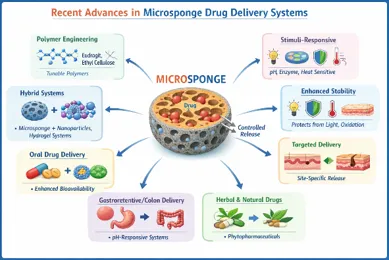
Recent research has focused on the modification of polymeric matrices such as ethyl cellulose and Eudragit to achieve precise control over drug release behavior. Adjustments in pore size, polymer composition, and cross-linking density have enabled improved encapsulation of both hydrophilic and hydrophobic drugs. These modifications enhance drug stability, reduce degradation, and provide tailored release kinetics, ultimately improving therapeutic efficacy and bioavailability.
2. Expansion Beyond Topical Drug Delivery [30,39]
Although microsponges were initially developed for topical applications, their use has expanded to various pharmaceutical delivery systems. Recent studies have explored microsponge-based oral formulations and modified-release dosage forms to improve drug absorption and pharmacokinetic performance. This advancement has significantly broadened the scope of microsponge technology in pharmaceutical sciences.
3. Hybrid and Composite Drug Delivery Systems [38,40]
The integration of microsponges with other drug delivery carriers has emerged as a promising strategy for enhancing therapeutic outcomes.
3.1 Microsponge–Hydrogel Systems
Microsponge-loaded hydrogels provide prolonged drug retention at the application site and exhibit sustained therapeutic effects, particularly in anti-inflammatory treatments.
3.2 Microsponge–Nanoparticle Systems
The incorporation of nanoparticles into microsponge systems enhances drug penetration, targeting efficiency, and controlled release properties. These hybrid systems offer improved therapeutic performance and extended drug release duration.
4. Stimuli-Responsive (Smart) Microsponges [39]
A significant advancement in microsponge technology is the development of stimuli-responsive systems capable of releasing drugs in response to specific environmental triggers. These include:
Such smart delivery platforms enable site-specific drug release, minimize systemic adverse effects, and improve treatment precision.
5. Applications in Novel Therapeutics [38]
5.1 Herbal and Phytopharmaceutical Delivery
Microsponge systems have demonstrated considerable potential in the delivery of herbal and phytopharmaceutical compounds. They improve the stability of plant-derived active constituents and enhance therapeutic effectiveness. For example, green tea extract-loaded microsponges have shown promising results in the management of skin disorders.
5.2 Periodontal and Dental Drug Delivery
Microsponge-based formulations have been investigated for sustained drug delivery within the oral cavity. Their ability to provide prolonged release makes them suitable for the treatment of chronic oral diseases such as periodontitis, offering a promising alternative to conventional therapies.
6. Improved Topical and Transdermal Delivery Systems
Recent studies have reported significant improvements in topical and transdermal drug delivery using microsponge technology. These systems provide sustained drug release for extended periods, often exceeding 12 hours, while enhancing skin retention and reducing inflammation. Microsponge-based gels have demonstrated superior performance compared with conventional topical formulations.
7. Advanced Manufacturing Techniques[41]
Modern fabrication approaches have improved the quality and reproducibility of microsponge formulations. Commonly employed techniques include:
These advanced manufacturing methods enable uniform particle size distribution, enhanced reproducibility, and greater scalability for industrial production.
8. Integration with Emerging Drug Delivery Technologies [42]
Recent research has explored the combination of microsponge technology with advanced drug delivery platforms, including:
Such integrations enhance drug targeting, improve patient compliance, and increase overall therapeutic efficiency.
FUTURE PROSPECTIVES
MDS has a promising future in the pharmaceutical industry due to its unique properties, which include enhanced product performance and refinement, extended release, less irritation, increased physical, chemical, and thermal stability, and the ability to create innovative product morphologies. MDS is designed to deliver topical antifungal, anti-inflammatory, and anti-dandruff medications. Modifying polymer ratios is essential for the advancement of core/shell microsponge delivery systems for oral peptide administration. In addition, it can be used for tissue engineering and biopharmaceutical delivery of colon-specific pharmaceuticals. Because of the development of novel pharmaceuticals and biopharmaceuticals, drug delivery systems are advancing significantly (peptides, proteins, and DNA-based therapeutics).[43-47] Micro-sized delivery systems are now obsolete, and the search for nanosized carriers is currently intensifying. Micron-sized particles have a much lower ratio of specific surface area to size and a lower capacity to alter active release than nano-sized particles. Although inorganic nanosponges have numerous applications in electronics, more research is required before they can be utilized effectively in medicine. [48-51]
CONCLUSION
Microsponge showing great promise for transforming drug delivery industry. These microscopic polymeric spheres have numerous advantages, including targeted delivery, enhanced stability and controlled release owing to their unique porous structure. Microsponges encapsulate medications within their pores to protect the drugs from degradation, ensuring therapeutic effectiveness. They also have the potential to revolutionise personalised medicine by being able to penetrate deep into tissues while selectively delivering drugs at a precise site. Hence, it is obvious that efficient designs in drug delivery systems based on microsponges will be pivotal to improving the results for patients and leading science into a better future.
REFERENCES


Pratiksha Kalganche, Hrushikesh Joshi, Microsponge Drug Delivery Systems: Formulation Approaches, Characterization Techniques and Emerging Applications, Int. J. of Pharm. Sci., 2026, Vol 4, Issue 6, 3937-3952. https://doi.org/10.5281/zenodo.20722277
 10.5281/zenodo.20722277