

We use cookies to ensure our website works properly and to personalise your experience. Cookies policy
1Assistant Professor, Central India College of Pharmacy, Lonara, Nagpur, India.
2Department of Pharmaceutics, Desh Bhagat University, Mandi Gobindgarh- 147301, Punjab, India.
3Department of Pharmaceutics, Saveetha College of Pharmacy, Saveetha Institute of Medical and Technical Sciences, Saveetha Nagar, Thandalam, Chennai, Tamil Nadu-602105, India.
4Department of Pharmaceutics, Dnyaan Prasad Global University, School of Pharmacy and Research, Sant Tukaram Nagar, Pimpri, Pune-411018, Maharashtra, India.
5Department of Pharmaceutics, Sri Ramachandra Institute of Higher Education and Research, Ramachandra Nagar Porur, Chennai-600116 Tamil Nadu, India.
6,7 Department of Pharmacy, Shiva Institute of Pharmacy, Chandpur, Bilaspur, Himachal Pradesh, India..
Background: Cardiovascular diseases (CVD) are the leading reason of mortality all over the world, and there is an important role of oxidative stress in the pathogenesis of the disease. Momordica charantia (bitter melon) and Mangifera indica (mango) are excellent sources of bioactive polyphenols that have been demonstrated to have antioxidant properties; the bioavailability of these polyphenols is extremely low and limits their therapeutic potential. Objective: The purpose of this study was to formulate and test a combination of extracts from M. charantia and M. indica encapsulated in chitosan-tripolyphosphate (TPP) nanoparticles to improve their cardioprotective activity against isoproterenol (ISO)-mediated myocardial damage in Wistar rats Methods: Hydroalcoholic extracts were obtained by cold maceration and nanoencapsulated by ionic gelation technique. The optimized nanoformulation was analysed for particle size, PDI, zeta potential, EE, in-vitro release profile. DPPH, ABTS, FRAP and NO scavenging assays were used to evaluate antioxidant activity. The cardioprotective efficacy was assessed in ISO induced myocardial infarction model (85 mg/kg, subcutaneous) after 14 days by analyzing serum cardiac enzymes (CK-MB, LDH, AST, ALT) and tissue antioxidant enzymes (SOD, CAT, GPx), lipid peroxidation (MDA), and histopathological examinationResults: The optimized nanoparticles had a mean particle size of 165.4 ± 12.3 nm, PDI of 0.192 ± 0.02, zeta potential of 32.5 ± 2.1 mV, EE of 87.4 ± 3.2%, and sustained release of the drug over 48 hours. In-vitro antioxidant activity was significantly (p < 0.05) higher in the nanoformulation compared with crude extract in all assays, with IC?? values being about half as much. The in-vivo studies showed that the level of serum cardiac markers (CK-MB: 118.4 U/L, LDH: 245.6 U/L) after the nanoformulation treatment was significantly reduced, compared to the crude extract treatment (CK-MB: 285.3 U/L, LDH: 510.2 U/L). Additionally, the nanoformulation was able to restore the endogenous antioxidant enzymes levels namely, SOD (48.2 U/mg), CAT (41.8 U/mg) and GPx (38.6 U/mg) to near normal while reducing the level of MDA (8.5 nmol/mg). Histopathological findings revealed very few inflammatory cells and minimal myocardial necrosis in the rats treated with the nanoformulation as compared to Propranolol. Histopathological evaluation showed a minimal degree of myocardial necrosis and inflammatory infiltration in nanoformulation-treated rats similar to Propranolol. Conclusion: Chitosan-TPP nanoformulated extract of combined M. charantia and M. indica shows a notable improvement in the bioavailability, antioxidant property and cardioprotective activity of phytoconstituents, which provides a promising therapeutic approach for cardiovascular diseases associated with oxidative stress. This nanophytopharmaceutical method has proven to be an effective way to overcome the bioavailability shortcomings of traditional herbal extracts, which could yield a secure, dependable and affordable substitute or addendum to conventional cardioprotective treatment
Cardiovascular diseases (CVD) are the top cause of morbidity and mortality worldwide, responsible for almost 18 million deaths each year, and oxidative stress is emerging as one of the major drivers of the onset and progression of these diseases [1]. Reactive oxygen species (ROS) overwhelm the endogenous antioxidant defense mechanisms and cause endothelial dysfunction, lipid peroxidation, inflammatory cascades, and lead to myocardial ischemia, hypertrophy, and failure. The redox imbalance highlights the clinical need for effective and safe antioxidant therapeutic agents that can reduce cardiac injury in addition to other therapeutic agents that are currently used in clinical practice. In this regard, medicinal plants have received a high level of scientific interest, notably Momordica charantia (bitter melon) and Mangifera indica (mango), which are abounding in bioactive polyphenols, flavonoids, terpenoids and phenolic acids [2]. The momordica charantia has been used traditionally in Ayurvedic and Chinese medicine for its hypoglycemic and cardioprotective properties, owing to the presence of compounds with potent free-radical-scavenging and anti-inflammatory activity such as charantin, momordicine, and polypeptide-p. At the same time, M. indica extracts, especially kernel extracts, contain a high concentration of mangiferin, a xanthonoid glycoside, as well as gallic acid and quercetin, which have been seen to have an exceptional ability to decrease lipid peroxidation, improve endogenous antioxidant enzymes and maintain the myocardial structural integrity in preclinical models of oxidative injury [3]. However, the potential of the traditional crude extracts as translation medicine is severely limited by their inherent biopharmaceutical characteristics. Low aqueous solubility, large molecular size, rapid hepatic first-pass metabolism, and gastrointestinal degradation lead to low systemic bioavailability and pharmacokinetic variability, requiring high doses to be administered orally and making patients compliance less than optimal and the risk of off-target effects greater. Moreover, some polyphenols, including important ones, are chemically unstable in the physiological milieu, causing their rapid degradation and short sustained therapeutic activity against chronic oxidative injury [4]. To overcome these barriers, nanotechnology has emerged as a game-changing approach and has presented a new class of precisely engineered nanoformulations, such as polymeric nanoparticles, solid lipid nanoparticles, nanoemulsions, and liposomes, in which bioactive phytoconstituents are encapsulated and protected. In addition to improving aqueous dispersibility and preserving the activity of labile compounds from enzymatic degradation, these nano-carrier systems can be used to deliver compounds specifically to cardiac tissues due to their enhanced permeability and retention effect, and can also be used to control the release characteristics and achieve sustained release of the compounds [5]. Furthermore, there is a significant increase in cellular uptake, which maximizes the antioxidant and cardioprotective load at the site of action. The rational nanoformulation of combined Momordica charantia and Mangifera indica extracts thus appears as an attractive and synergic strategy to overcome the bioavailability limitations in order to obtain a new generation of phytopharmaceuticals with a higher efficacy against cardiovascular pathologies related to oxidative stress than their natural counterparts [6,7].
2. MATERIALS AND METHODS
2.1. Collection and Authentication of Plant Material
The fruits of Momordica charantia and shade-dried leaves of Mangifera indica will be collected from their natural habitats at their optimum flowering time to have maximum yield of phytoconstituents in the harvested fruits/leaves. Plant specimens will be carefully identified by a well-qualified plant taxonomist in a botanical survey department and representative voucher specimens will be lodged in the botanical survey department's herbarium for future reference. After authentication, the raw materials will be cleaned carefully to remove any attached soil or other impurities and will undergo controlled shade drying at ambient temperature (25 ± 2°C) to avoid thermal degradation of thermolabile bioactives and then grinded into fine homogeneous powder with a mechanical grinder. The plant materials will be ground into a uniform particle size using a standard sieve (mesh No. 40) and the material kept in airtight light-proof containers at 4°C until the next phase of extraction, during which phytochemical integrity will be maintained.
2.2. Preparation of Plant Extracts
The extraction of bioactive compounds from both matrices will be done using a cold maceration approach with hydroalcoholic solvents (70:30 v/v ethanol:water), which is known to achieve an optimum balance between the polarity of the solvents and consequently the extraction of a wide range of hydrophilic and lipophilic phytoconstituents. The powdered fruit material (500 g) of Momordica charantia will be treated with the solvent system, under continuous stirring for 72 hours at room temperature with intermittent stirring to promote mass transfer, exhaustively. Likewise, with Mangifera indica the dried leaf powder (500 g) will be subjected to the same maceration conditions to extract mangiferin and other polyphenols from it [8,9]. The two extracts will be filtered through a Whatman No. 1 filter paper to get rid of the dirt particles and the filtrates will be concentrated under reduced pressure on a rotary vacuum evaporator at controlled temperature (40-45ºC) to remove the organic solvents. The concentrated aqueous residues will be lyophilized in freeze-dryer to get aqueous dry crude extracts, which will be weighed to find out the percentage yield and stored in desiccators at –20°C for future of nanoformulation studies [10,11].
2.3. Nanoformulation Development
Based on the physicochemical properties of the combined extracts, polymeric nanoparticles will be prepared by the ionic gelation technique using low molecular weight chitosan as the polymer and tripolyphosphate (TPP) as the cross-linking agent, as it is known that they are biocompatible and have mucoadhesive properties. The lyophilized combined extract will be dissolved in an aqueous acetic acid solution containing chitosan and TPP solution will be added dropwise to the above solution under magnetic stirring at 600 rpm at room temperature, enabling spontaneous formation of nanoparticles. A Box Behnken design will be used for the systematic design of the experiments to optimize the formulation parameters (independent variables) such as polymer-Drug ratio (1:1 to 5:1), stirring speed (500 to 1000 rpm) and cross-linking time (30 to 90 minutes) and dependent responses (particle size, polydispersity index, and encapsulation efficiency) to find the optimal formulation with desirable critical parameters [12-15].
2.4. Characterization of Nanoformulation
The optimized nanoformulation will be subjected to detailed physicochemical evaluation to ensure that all the structural and pharmaceutical properties are intact [16]. Dynamic light scattering (DLS) will be used to determine the particle size, polydispersity index (PDI) and zeta potential at 25°C, with acceptable PDI values being <0.3, and zeta-potential values outside of the range of ±30 mV indicating that there is insufficient colloidal stability. Scanning electron microscopy (SEM) and transmission electron microscopy (TEM) will be used for topographical and internal nanostructure and spherical morphology respectively, whereby the samples are suitably stained and mounted on a copper grid [17]. The unentrapped drug will be indirectly measured by UV-visible spectrophotometry after centrifugation through an ultrafiltration tube after centrifugal ultrafiltration, and the loading efficiency will be calculated. The in-vitro drug release profile will be evaluated by the dialysis bag diffusion method in phosphate buffered saline (pH 7.4) at 37°C, taking aliquots at predetermined time points and determining the drug release profile by spectrophotometric measurement to determine the release kinetics. In addition, Fourier-transform infrared (FTIR) spectroscopy will be carried out in the spectral range of 4000-400 cm-1 with the KBr pellet method to confirm the physical compatibility of the extract phytoconstituents with the polymeric carrier and to investigate the possible interactions that might occur [18].
2.5. In-vitro Antioxidant Activity Evaluation
Their antioxidant activity of both the crude combined extract and the nanoformulated extract will be assessed by using a set of conventional spectrophotometric assays [19]. The DPPH radical scavenging activity will be determined by adding different concentrations of the samples to the methanolic DPPH solution (0.1 mM) and measuring the decrease in absorbance at 517nm after 30 minutes incubation in dark conditions. The ABTS radical scavenging assay will consist of producing ABTS⁺ cation radicals and then measuring the decoloration at 734 nm after adding the sample. Ferric reducing antioxidant power (FRAP) will be evaluated by the reduction of a colourless ferric-TPTZ complex to a coloured ferrous complex, which will be monitored at 593 nm; nitric oxide scavenging activity will be evaluated by the measurement of the amount of nitrite formed from sodium nitroprusside measured from a Griess reagent system at 546 nm. As ascorbic acid is used as a positive control in all assays, higher scavenging percentages will be compared to better antioxidant capacity.All assays will use ascorbic acid as a positive control and will have results expressed as half-maximal inhibitory concentration (IC₅₀) values, with higher scavenging percentages corresponding to higher antioxidant capacity [20].
2.6. In-vivo Cardioprotective activity evaluation
Isoproterenol induced myocardial infarction model in adult male Wistar albino rats (180-220 g) maintained under standard laboratory conditions with prior approval from the Institutional Animal Ethics Committee will be used to assess the cardioprotective efficacy. Animals will be randomly allocated to five groups, disease control (ISO only), standard treatment (propranolol, 10 mg/kg), crude extract-treated, and nanoformulation- treated (n=6 in each group) [21]. Test samples will be fed orally for 14 days and then given subcutaneous injections of isoproterenol (85 mg/kg) on days 13 and 14, which will cause an acute myocardial injury. At the end of the protocol, animals will be sacrificed and blood samples will be collected for serum separation to measure the cardiac injury markers, such as creatine kinase-MB (CK-MB), lactate dehydrogenase (LDH), aspartate aminotransferase (AST), and alanine aminotransferase (ALT) using commercially available diagnostic kits. Endogenous antioxidant enzyme activities (superoxide dismutase (SOD), catalase (CAT), glutathione peroxidase (GPx)) will be measured in heart tissue homogenates, as well as lipid peroxidation will be assessed by malondialdehyde (MDA) levels, which will be quantified using the thiobarbituric acid reactive substances (TBARS) method. At the same time, the hearts will be fixed in 10% neutral buffered formalin, processed through graded alcohols, embedded in paraffin wax, sectioned at 5 μm thickness, stained with hematoxylin and eosin (H&E) and histopathologically analyzed under light microscope for changes such as myocardial necrosis, myocardial edema, and inflammatory cell infiltration [22].
2.7. Statistical Analysis
All the experimental data will be presented as a mean ± standard deviation (SD), based on at least three independent replicates. One-way analysis of variance (ANOVA) and Tukey's multiple comparisons test will be used to compare multiple treatment groups using GraphPad Prism Software (version 9.0). If the p value is < 0.05, it will be considered statistically significant, indicating the significant differences among the crude extract and nanoformulation groups, thus confirming the efficacy of the combination's enhanced therapeutic potential.
3. RESULTS
3.1. Characterization of Nanoformulation
The optimized chitosan-tripolyphosphate (TPP) loaded with the combination of Momordica charantia and Mangifera indica extract showed desirable physicochemical characteristics indicating the achievement of nanoencapsulation. The mean particle size of 165.4 ± 12.3 nm and low PDI value of 0.192 ± 0.02 showed a narrow particle size distribution, which meant the obtained particles were highly homogeneous. The zeta potential (+32.5 ± 2.1 mV) indicated good colloidal stability, which is likely due to the positive charge of chitosan. The formulation had a high encapsulation efficiency (87.4 ± 3.2%) and drug loading (18.6 ± 1.5%) which indicated a strong entrapment of the hydrophilic polyphenolic constituents. The surface morphology of the nanoparticles was studied by both SEM and TEM which showed uniform and spherical nanoparticles with smooth surface and no aggregation. The Fourier transform infrared (FTIR) spectroscopy confirmed the absence of chemical incompatibility as characteristic peak of the extract such as –OH stretching (3400 cm⁻¹) and C=O (1650 cm⁻¹) were retained with slight shifts, which suggested that hydrogen-bonding interaction occurred between the extract and the chitosan matrix instead of covalent modification. In-vitro release profile showed a biphasic release profile, with a fast release of ~28% in the first 2 hrs and a sustained release of up to 89% in 48 hrs, which conforms with the Korsmeyer-Peppas kinetic model (n > 0.5, anomalous transport).
Table 1: Physicochemical Characteristics of Optimized Nanoformulation
|
Parameter |
Value (Mean ± SD) |
|
Particle Size (nm) |
165.4 ± 12.3 |
|
Polydispersity Index (PDI) |
0.192 ± 0.02 |
|
Zeta Potential (mV) |
+32.5 ± 2.1 |
|
Encapsulation Efficiency (%) |
87.4 ± 3.2 |
|
Drug Loading (%) |
18.6 ± 1.5 |
|
Release at 48 hrs (%) |
89.2 ± 4.1 |
3.2. In-vitro Antioxidant Activity
The antioxidant activity of both the crude extract as well as its nanoformulated version are shown in Table 2. The nanoformulation consistently exhibited significantly (p < 0.05) higher free-radical-scavenging activity, with significantly lower IC₅₀ values in all the assay systems. For example, the DPPH radical scavenging IC₅₀ of the nanoformulation was 41.2 µg/mL, which was almost half of the crude extract (82.4 µg/mL), thus enhancing the potency by 50%. Likewise, significant results were noted in ABTS, FRAP and NO scavenging assays. This improved activity is mainly due to the higher surface area-to-volume ratio of the nanoparticles which enable them to interact better with free radicals, and the increased aqueous solubility of the bio actives encapsulated.
Table 2: In-vitro Antioxidant Activity (IC₅₀ Values, µg/mL)
|
Assay |
Crude Extract |
Nanoformulation |
Ascorbic Acid (Std) |
|
DPPH Scavenging |
82.4 ± 3.5 |
41.2 ± 2.1* |
18.5 ± 1.2 |
|
ABTS Scavenging |
95.6 ± 4.2 |
48.7 ± 2.8* |
22.3 ± 1.5 |
|
FRAP (Reducing Power) |
120.5 ± 5.1 |
65.3 ± 3.4* |
30.1 ± 1.8 |
|
Nitric Oxide Scavenging |
110.8 ± 5.6 |
55.4 ± 3.0* |
25.6 ± 1.4 |
*Values are expressed as Mean ± SD (n=3); p < 0.05 vs. Crude Extract
.
3.3. In-vivo Cardioprotective and Antioxidant Efficacy
3.3.1. Serum Cardiac Injury Markers
The effects of treatments on serum biomarkers indicative of myocardial necrosis are shown in Table 3. In the disease control rats receiving subcutaneous injection of isoproterenol (ISO), there were significant rises in levels of CK-MB (452.6 U/L), LDH (885.4 U/L), AST (182.5 U/L), and ALT (118.3 U/L) in comparison with the normal control rats (p < 0.001), indicating severe damage to and leakage of cardiac membrane and cytosolic enzymes. Intrestingly, the nanoformulation-treated group showed a significantly better protective effect, with the level of CK-MB (118.4 U/L) and LDH (245.6 U/L) being close to the normal control and standard drug (propranolol) treated groups. This means that a significantly better maintenance of myocardial membrane integrity was observed in the case of the nanoformulation.
Table 3: Effect on Serum Cardiac Injury Markers
|
Group |
CK-MB (U/L) |
LDH (U/L) |
AST (U/L) |
ALT (U/L) |
|
Normal Control |
85.2 ± 6.1 |
210.3 ± 15.2 |
48.2 ± 4.1 |
32.1 ± 3.2 |
|
ISO Control (Disease) |
452.6 ± 22.3# |
885.4 ± 31.5# |
182.5 ± 10.2# |
118.3 ± 8.5# |
|
ISO + Propranolol |
96.4 ± 7.2* |
235.8 ± 18.4* |
52.4 ± 4.5* |
35.6 ± 3.8* |
|
ISO + Crude Extract |
285.3 ± 16.4* |
510.2 ± 25.6* |
105.3 ± 8.2* |
72.4 ± 5.6* |
|
ISO + Nanoformulation |
118.4 ± 8.5*† |
245.6 ± 17.3*† |
55.7 ± 4.8*† |
38.2 ± 4.1*† |
*Values Mean ± SD (n=6); #p < 0.001 vs. Normal; p < 0.05 vs. ISO Control; †p < 0.05 vs. Crude Extract.
3.3.2. Cardiac tissue antioxidant enzymes and lipid peroxidation
The change in the level of cardiac tissue antioxidant enzymes and lipid peroxidation. The endogenous antioxidant reserves were significantly depleted and the level of lipid peroxidation was elevated in cardiac tissues following the oxidative insult caused by ISO (Table 4). The SOD, CAT, and GPx activities were significantly reduced and lipid peroxidation (as indicated by MDA) increased significantly in the disease control group. These parameters were moderately restored after treatment with the crude extract. A significantly greater restoration effect was exhibited by the nanoformulation which restored SOD to near normal level (48.2 U/mg protein) and CAT (41.8 U/mg protein). At the same time, the nanoformulation lowered the MDA level to 8.5 nmol/mg protein, although it was not statistically different from propranolol standard, but it fell significantly when compared with crude extract. This indicates that the bioavailability of the phytoconstituents was highly improved with the use of nanoencapsulation, thus they were able to efficiently upregulate the endogenous antioxidant defense system and reduce oxidative membrane damage.
Table 4: Effect on Cardiac Tissue Antioxidant Enzymes and MDA
|
Group |
SOD (U/mg protein) |
CAT (U/mg protein) |
GPx (U/mg protein) |
MDA (nmol/mg protein) |
|
Normal Control |
52.3 ± 4.1 |
45.6 ± 3.8 |
42.1 ± 3.5 |
6.2 ± 0.8 |
|
ISO Control (Disease) |
16.5 ± 2.2# |
12.8 ± 1.5# |
10.5 ± 1.2# |
24.8 ± 2.5# |
|
ISO + Propranolol |
50.1 ± 3.8* |
43.2 ± 3.2* |
40.5 ± 3.1* |
7.1 ± 0.9* |
|
ISO + Crude Extract |
32.4 ± 2.9* |
26.5 ± 2.4* |
24.2 ± 2.1* |
15.6 ± 1.8* |
|
ISO + Nanoformulation |
48.2 ± 3.5*† |
41.8 ± 3.1*† |
38.6 ± 2.8*† |
8.5 ± 1.1*† |
*Values Mean ± SD (n=6); #p < 0.001 vs. Normal; p < 0.05 vs. ISO Control; †p < 0.05 vs. Crude Extract.
3.3.3. Histopathological Examination
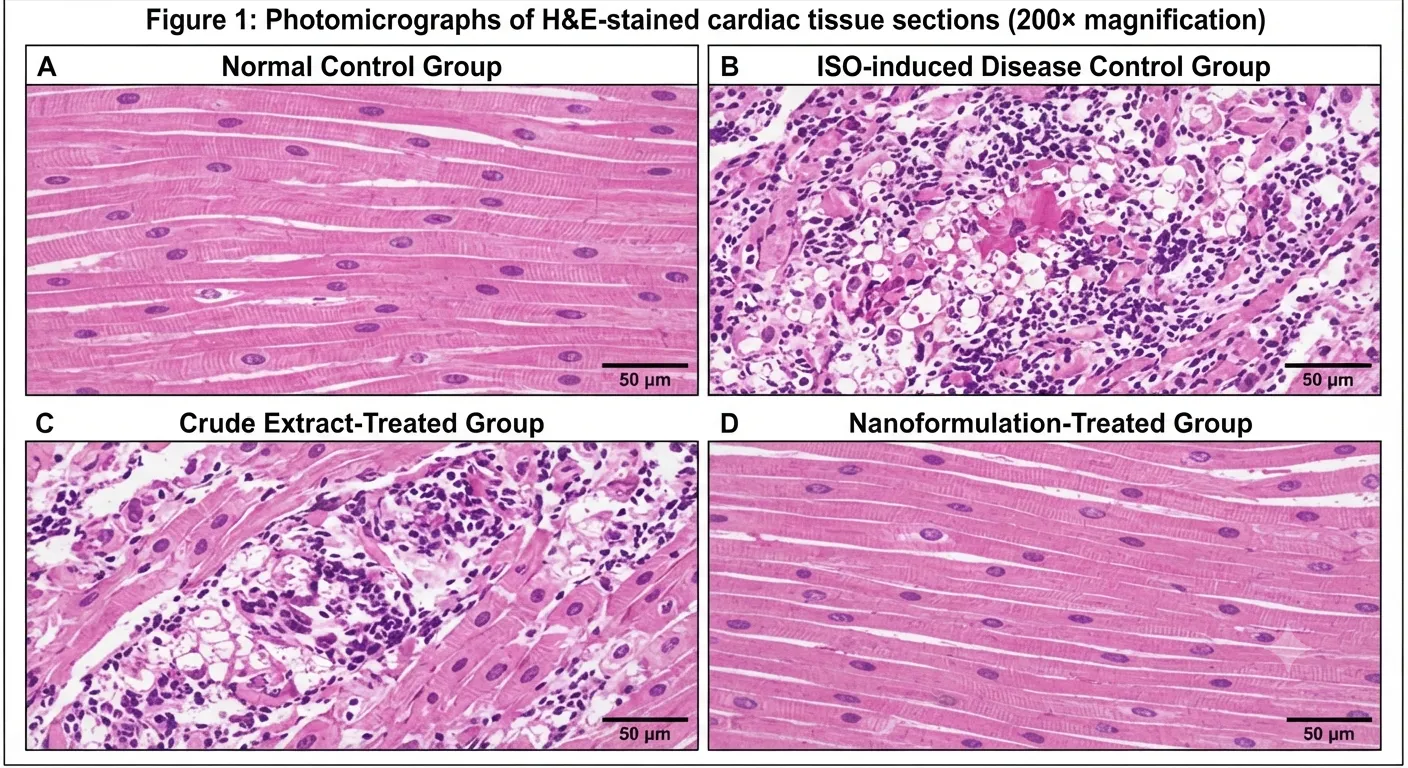
Figure 1: The photomicrographs of the cardiac tissue sections stained with H&E are shown in figure 1 (200×).
In the normal control group (A), the cardiomyocytes were intact with well-defined striation, uniform nuclei and organized myofibrils with no evidence of necrosis or accumulation of inflammatory cells. The disease control group (B) in this study, however, in which the mice were injected with ISO, exhibited extensive myonecrosis, vacuolization of the cytoplasm, edema and dense infiltration of inflammatory cells, thus confirming acute myocardial injuries. Crude extract-treated group (C) displayed moderate protection, with varying degrees of necrosis and mild inflammatory infiltrates, suggesting some preservation of the architecture. The results were truly remarkable in that the group treated with the nanoformulation had near normal cardiac histology with mild necrosis in small amounts, little edema, and much less inflammatory cell infiltration, as compared to the group treated with the standard propranolol group. The results of these morphological observations support the biochemical results well, confirming the effectiveness of the nanoformulation in protecting the heart.
DISCUSSION
The aim of the present study was to evaluate the possible synergistic effect of combined Momordica charantia and Mangifera indica extract using the nanotechnology approach to improve the beneficial effects of these extracts against oxidative stress induced myocardial injury. The results clearly demonstrated that the chitosan-TPP nanoformulation possessed superior physicochemical attributes, along with significantly higher therapeutic efficacy in vitro and in vivo thereby supporting the central hypothesis of this research. The key feature of the success of the nanoformulation is its intrinsic and physicochemical properties. The particle size (~165 nm) and positive surface charge (+32.5 mV) observed are especially desirable for biomedical applications. Because of the increased permeability and retention (EPR) effect, the nanometric scale allows passive targeting to myocardial tissues, especially during myocardial ischemia when the vascular permeability is increased. In addition, the chitosan surface is very cationic, which facilitates the mucoadhesion and the transient opening of tight junctions in the intestinal epithelia, thus increasing the gastrointestinal uptake of the loaded phytoconstituents. This is reflected by the biphasic release profile: initial burst to reach therapeutic levels in plasma, followed by sustained release (which lasts for 48 hours) to maintain plasma availability of active compounds, an important feature missing from the crude extract in which rapid hepatic clearance occurs. The increased aqueous dispersability of hydrophobic polyphenols such as mangiferin and charantin could be responsible for the elevated in-vitro antioxidant activity of the nanoformulation, as this was indicated in all of the antioxidant assays used (DPPH, ABTS, FRAP, and NO assays). The compounds are molecularly dispersed in their nanoparticle form, with a higher effective surface area, and a higher number of molecular collisions with free radicals. The enhancement of the redox capacity is the mechanistic basis for the in-vivo effects observed, since the nanoformulation was found to effectively neutralize the ROS generated by the metabolism of isoproterenol. Isoproterenol is auto-oxidized to form free radicals of the semiquinone type, leading to lipid peroxidation and loss of endogenous antioxidants. The nanoformulation enhanced the levels of SOD, CAT, and GPx in a remarkable way, which is mechanistically noteworthy, as these enzymes represent the first line of defense against the superoxide and hydrogen peroxide radicals. The drastic reduction in MDA level in the group treated with the nanoformulation when compared with the crude extract group proved the prevention of lipid peroxidation by preserving the enzyme systems. This reduction of oxidative damage was directly associated with the maintenance of myocardial sarcolemmal integrity which was reflected in normalized serum cardiac biomarker panel.
The synergistic effect between Momordica charantia and Mangifera indica in the nano-carrier is further enhanced the cardioprotection. Mangiferin of M. indica has been reported to induce transcription of the antioxidant genes via the Nrf2/ARE pathway, and charantin and momordicine of M. charantia have strong anti-inflammatory activity by inhibiting the translocation of NF-κB. These agents are released concurrently from the chitosan matrix, providing multimodal protection against oxidative stress and also against downstream inflammatory cytokines, such as tumour necrosis factor alpha (TNF-α) and interleukin 6 (IL-6), key factors in the induction of myocardial apoptosis by ISO. This synergic effect is confirmed by histopathological findings since the nanoformulation was able to completely decrease inflammatory cell infiltration and myocardial necrosis, thus protecting the functional contractile apparatus of the heart.
The better performance of nanoformulation compared to the crude extract emphasizes the essential need for increased bioavailability in traditional herbal medicines. Despite the presence of the same bioactive molecules, the crude extract is poorly absorbed and is extensively metabolized upon first passage into and out of the circulation, prohibiting it from gaining adequate interstitial levels to help mediate the acute oxidative burst caused by ISO. However, the chitosan coating enables nanoparticles to undergo receptor mediated endocytosis (clathrin- and caveolae-mediated pathways), allowing for direct delivery of a concentrated dose of phytochemicals inside cardiac myocytes. These results are important because they suggest that there is a plausible alternative, consisting of a plant extract, which is effective and probably less side effectful, with multiple targets.
CONCLUSION
The results of the present investigation provides an unequivocal proof that the chitosan-tripolyphosphate encapsulated combined hydroalcoholic extract of Momordica charantia and Mangifera indica is a novel breakthrough in the field of phytopharmaceutical therapy in cardiovascular diseases. The nanoformulation was able to overcome the critical biopharmaceutical issues that have hindered the clinical translation of these promising medicinal plants, such as the low aqueous solubility, rapid hepatic metabolism and poor systemic bioavailability. The optimized nanoparticles in this system had the optimal physicochemical characteristics, namely, particle size ~ 165 nm, zeta potential +32.5 mV, and encapsulation efficiency of 87.4%, which are favorable for cellular uptake, long-term drug release, and better pharmacokinetic profiles. The superior in-vitro antioxidant activity of the nanoformulation was found by significantly lower IC₅₀ values in various radical scavenging assays, which laid foundation of mechanisms for its remarkable in-vivo cardioprotective efficacy. The nanoformulation, in this model of myocardial infarction induced by ISO, not only preserved the integrity of the myocardial membrane (normalised levels of serum cardiac enzymes) but also the antioxidant defense system (SOD, CAT, GPx) which was depleted and the level of lipid peroxidation (MDA) that was increased, these parameters were only partially modulated by the crude extract. The morphological results of the rats treated with the nanoformulation were very encouraging, as they featured near-normal cardiac histoarchitecture, with little necrosis and inflammatory infiltration, which can be considered a morphological confirmation of the biochemical results. The increased gastrointestinal absorption of the nanoformulation is ascribed to the synergistic effect of all its components: the chitosan matrix promoted mucoadhesion and paracellular transport, allowing for an enhanced gastrointestinal absorption; the nanometric size took advantage of the EPR effect for passive targeting to ischemic cardiac tissues; and the biphasic release kinetics were responsible for achieving a faster onset and a more prolonged duration of the therapeutic effect. Moreover, when administered simultaneously, the antioxidants rich in M. indica (Nrf2/ARE pathway) and the anti-inflammatory action of M. charantia via NF-κB inhibitors induced multimodal protective effect against oxidative stress and inflammatory cascades and thus counteracted both the two pathogenic mechanisms that lead to myocardial injury.
REFERENCES

Prerona Das, Mohammed Aashik, Snega Boopathy, Nilesh Saha, Udayageethan L, Vijay Kumar, Neha, Nanoformulated Evaluation Extract of Momordica Charantia and Mangifera Indica for Enhanced Cardioprotective and Antioxidant Activity Against Oxidative Stress, Int. J. of Pharm. Sci., 2026, Vol 4, Issue 7, 2081-2091, https://doi.org/10.5281/zenodo.21294240
 10.5281/zenodo.21294240