

We use cookies to ensure our website works properly and to personalise your experience. Cookies policy
1,3,4,5,6Research Scholar Department of Pharmacy, Siddhis Institute of Pharmacy, NandgaonMaharashtra, India.
2Assistant Professor, Siddhi’s Institute of Pharmacy, Nandgaon, Maharashtra, India.
Conventional systemic drug delivery often faces challenges such as poor aqueous solubility, rapid Elimination, non-specific toxicity, and an inability to traverse complex biological barriers. Over the last few decades, nanomedicine has profoundly transformed therapeutic Approaches by designing nanocarriers—including liposomes, polymeric nanoparticles, Micelles, dendrimers, and inorganic structures—that provide site-specific targeted delivery Along with controlled drug release profiles .Through tuning particle size, surface charge, and Surface functionalization (for instance, ligand attachment or PEGylation), these nanocarriers Shield therapeutic payloads from premature enzymatic breakdown, extend circulation Half-life, and enhance accumulation at target tissue sites via either passive Permeability or active cell-receptor targeting. This review brings together the fundamental mechanisms underlying nanoscale drug delivery, assesses emerging platforms—such as stimuli-responsive “smart” nanocarriers and Multimodal the ranostic agents—and emphasizes clinical achievements in oncology, Neurological disorders, and infectious diseases. Lastly, we examine key obstacles to Extensive clinical application, encompassing manufacturing scalability and consistency between batches. Reproducibility, sustained biocompatibility, and intricate regulatory structures. Closing These translational gaps will be crucial for unlocking the full potential of next-generation Personalized nanotherapeutics.
Contemporary medicine depends greatly on effective pharmacotherapy; yet, the clinical. Usefulness of standard drug formulation approaches is often constrained by significant. Biopharmaceutical obstacles. Numerous potent therapeutic compounds endure low queous solubility, inadequate stability in biological fluids, fast renal clearance, and off target. Cytotoxicity that restricts acceptable dosage levels (Mitchell et al.,2021). Moreover, transporting active pharmaceutical ingredients across intricate biological barriers— such As the blood-brain barrier, gastrointestinal mucosa, or dense tumor Microenvironments—continues to be a major obstacle in clinical practice (Patra et al., 2018). The Incorporation of nanotechnology into pharmaceutical sciences has reshaped AConventional treatment paradigms. By designing materials at the nanoscale range (generally 1 to 100 nm), nanomedicine offers innovative platforms able to Surmount the limitations of conventional drug delivery. Nanocarriers are capable of encapsulating both Hydrophobic and hydrophilic molecules, protecting them from premature enzymatic Degradation and prolonging their systemic circulation times (Shi et al., 2017). A major advantage of nanoscale drug delivery systems is their ability to achieve targeted Delivery to specific sites. Targeted transport takes place either via passive Mechanisms—leveraging pathophysiological features such as the enhanced Permeability and retention (EPR) effect in solid tumours—or via active targeting. In which functionalizing nanocarrier surfaces with specific ligands (e.g., antibodies, Peptides, or aptamers) drives high-affinity binding to overexpressed cellular Receptors (Sun et al., 2014). Over the past few decades, a broad structural diversity of nanoplatforms has been Developed: Organic Nanocarriers: Liposomes, polymeric nanoparticles, solid lipid nanoparticles, And polymeric micelles. Inorganic Nanocarriers: Gold nanoparticles, mesoporous silica, and quantum dots. Bio-derived Vectors: Exosomes and cell-membrane-coated nanostructures. Even though preclinical results have been encouraging and multiple clinical translations have succeeded (including liposomal doxorubicin and lipid nanoparticles carrying mRNA), moving Nano-formulations from the laboratory to the clinic continues to encounter significant obstacles. Problems Related to scaling up manufacturing, consistency between batches, Immunogenicity over the long term, toxicological profiles, and the intricate regulatory approval. Pathways remain (Forman et al., 2021). This review offers a thorough summary of recent advances in Drug delivery systems based on nanotechnology. We examine the fundamental physicochemical mechanisms behind targeted transport, assess the current organic.(10)(11)
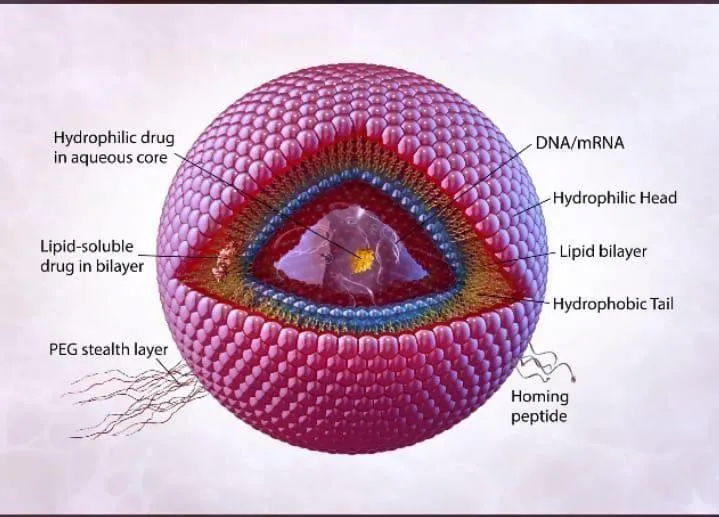
Figure 1: Liposomes
Classification of Nanocarriers in Drug Delivery
Nanocarriers utilized in pharmaceutical drug delivery systems can be broadly categorized into three distinct chemical classes based on their constituent building blocks: organic, inorganic, and bio-derived/hybrid platforms (Lôbo et al., 2021; Gressler et al., 2025). Each class possesses unique physicochemical features, drug loading capacities, and biological fates within the human body. (3)(4)
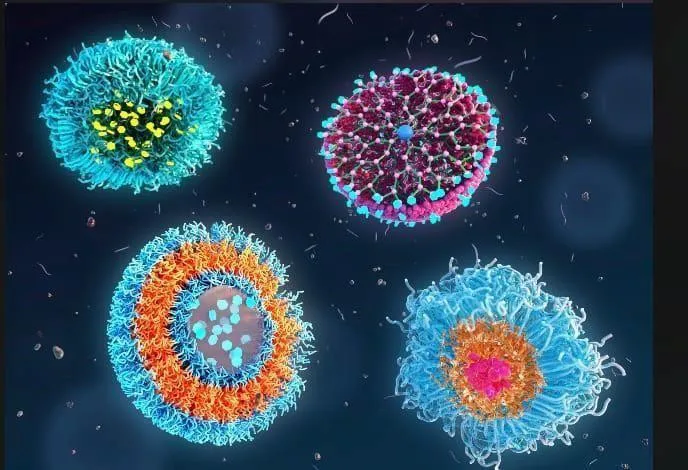
Figure 2: Nanocarriers
Table 1: Classification of Nanocarriers
| Organic | Inorganic | Bio-Derived |
|---|---|---|
| Liposomes | Gold NPs | Exosomes |
| SLNs & NLCs | Silica NPs | Cell – membrane |
| Polyembryomas | Iron Oxide | Coated NPs |
| Micelles | Quantum Dots | Viral Vectors |
1. Organic Nanocarriers
Organic nanocarriers are predominantly constructed from lipids, polymers, or biological macromolecules. They represent the most clinically established platforms due to their high biocompatibility, low intrinsic toxicity, and biodegradability (Unnikrishnan et al., 2023).
Liposomes: Spherical vesicles composed of lipid bilayers surrounding an aqueous core. They can encapsulate both hydrophilic drugs in the central core and hydrophobic agents within the lipid membrane.
solid Lipid Nanoparticles (SLNs) & Nanostructured Lipid Carriers (NLCs): Formulated using solid lipids at room temperature, offering enhanced physical stability, protection against chemical degradation, and controlled sustained release.
Polymeric Nanoparticles: Synthesized from synthetic (e.g., PLGA, PLA, PCL) or natural (e.g., chitosan, alginate, albumin) polymers. They exist as nano capsules (vesicular systems) or nanospheres (matrix systems).
Polymeric Micelles & Dendrimers: Self-assembled amphiphilic block copolymers that form core-shell architectures ideal for solubilizing poorly water-soluble drugs. Dendrimers offer highly branched, hyper-monodisperse structures with abundant surface functional groups. (5)
2. Inorganic Nanocarriers
Inorganic nanoparticles possess rigid architectures with unique optical, magnetic, electronic, and thermal properties (Unnikrishnan et al., 2023).
Mesoporous Silica Nanoparticles (MSNs): Feature uniform pore structures, large surface areas, and tenable pore volumes capable of high drug loading capacity. Gold Nanoparticles (AuNPs): Display unique surface plasmon resonance (SPR), enabling simultaneous photothermal therapy (PTT) and bioimaging. Superparamagnetic Iron Oxide Nanoparticles (SPIONs): Utilized for magnetic field guided drug delivery, magnetic hyperthermia, and contrast agents in MRI. (5)
3. Bio-derived and Hybrid Vectors
Bio-derived systems leverage naturally occurring biological vesicles to evade reticuloendothelial system (RES) recognition and prolong circulation time. Examples include cell membrane-coated nanoparticles (e.g., erythrocyte or macrophage membrane coatings) and exosomes, which provide natural cell-homing capabilities and minimal immunogenicity (Gressler et al., 2025). (3)
Comparative Summary of Nanocarrier Classes
Table 2: Nanocarrier Classes
| Nanocarrier category | Primary Composition | Key Advantages | Major Limitation |
|---|---|---|---|
| Liposomes | Phospholipides, Cholesterol |
Biocompatible, dual hydrophobic\ hydrophilic loading | High production cost, potential burst release |
| Polymeric NPs (PLGA/ Chitosan) |
Synthetic /Natural Polymers |
High stability, controlled sustained release |
Solvent residue risk, acidic degradation products |
| Solid Lipid NPs (SLNS) |
Solid Lipids, Emulsifiers |
Solvent- free synthesis scale- up feasible | Lower drug loading , lipid polymorphism |
| Inorganic NPS (Gold\Silica) | Metals, Metal Oxidese, Silica |
Tunable size\ shape,imaging& theranostic potential | Non- biodegradable,long- term tissue accumulation |
| Bio-derived(Exoso mes) | Natural cellular Membranes |
Low immunogenicity ,natural tissuehoming ability |
Complex extraction, low purification yields |
Mechanisms of Targeted Drug Delivery
The primary objective of nanotechnology in pharmacotherapy is to deliver therapeutic molecules specifically to diseased tissues while sparing healthy non-target cells. To achieve this site-specific localization, nanocarriers operate through three major mechanisms: passive targeting, active targeting, and stimuli-responsive release (Singh & Lillard, 2009; Tewabe et al., 2021).
Ligand-Receptor Interaction: Upon reaching the target tissue, surface ligands selectively bind to target receptors, inducing receptor-mediated endocytosis (Li et al., 2023).
Common Target Receptors:
Folate Receptors: Overexpressed in various cancers (ovarian, breast, lung). Transferrin Receptors: Targeted to facilitate transport across the blood-brain barrier (BBB) and into rapidly dividing tumor cells.
Integrins (\alpha_v\beta_3): Targeted using RGD (Arginine-Glycine-Aspartate) peptides to target tumor neovasculature.
3. Stimuli-Responsive "Smart" Delivery Systems
To prevent premature drug leakage during systemic circulation, smart nanocarriers are engineered to release their cargo only in response to specific triggers within the target microenvironment (Liu et al., 2020; Sun & Davis, 2021).
A. Endogenous Triggers (Internal Microenvironment) pH-Responsive: Exploits the acidic microenvironment of tumors (\text {pH} 6.5\text {--}6.8) or endo-lysosomal compartments (\text {pH} 4.5\text {--}5.5) using acidlabile bonds or proton-sponge polymers (Liu et al., 2020).
Redox-Responsive: Utilizes high intracellular concentrations of glutathione
(GSH)—which is 100 to 1,000 times higher inside cells than in extracellular fluids—to cleave disulfide crosslinks and rapidly release drugs intracellularly (Liu et al., 2020). Enzyme-Responsive: Employs peptide sequences that are cleaved selectively by enzymes overexpressed in diseased tissues, such as Matrix Metalloproteinases (MMPs) or cathepsin B (Liu et al., 2020).
B. Exogenous Triggers (External Signals)
Temperature / Hyperthermia: Thermosensitive polymers undergoing phase transitions at elevated local temperatures (40\text {--}42^\circ\text {C}) (Liu et al., 2020). Magnetic Fields & Light: Application of alternating magnetic fields (using SPIONs) or nearinfrared light (NIR) to trigger localized thermal release or photothermal destruction of tissue (Liu et al., 2020).(8)
Factors influencing nanocarrier performance
1. A nanocarrier’s effectiveness is determined by multiple physicochemical properties, including particle size, surface charge, shape, surface composition, drug-loading capacity, and release characteristics. These properties affect circulation time, tissue distribution, cellular uptake, clearance, and therapeutic performance. As a result, thorough optimization and characterization of these properties matter greatly during nanocarrier development.
2. Nano–bio interactions
Following administration, nanocarriers come into contact with biological fluids, proteins, cells, and tissues. Such interactions may affect their biodistribution, cellular uptake, circulation and clearance. Grasping these nano–bio interactions is essential when designing nanocarriers that reach the intended tissue and release the drug effectively.
3. Drug loading and controlled release
Nanocarriers can enhance the delivery of poorly soluble or unstable drugs by incorporating the drug within or onto the carrier. Drug release can be modulated by adjusting the composition, particle size, surface characteristics and structure of the nanocarrier. This can help sustain drug concentration for a longer period and lower unwanted exposure to healthy tissues.
4. Recent progress in the preparation of nanocarriers
Lately, research has concentrated on making nanocarrier production more reproducible and easier to scale up. Approaches including microfluidics, nanoprecipitation, and controlled mixing techniques are under investigation to achieve improved control over particle size, drug loading, and consistency between batches. Researchers are also examining surface engineering and stimuli-responsive coatings as ways to enhance targeting and controlled release.
5. New directions in biomimetic nanocarriers
Biomimetic systems—among them exosomes and nanoparticles coated with cell membranes—are drawing growing interest, since they can leverage biological properties to enhance tissue interaction and targeting. Such systems could help surmount certain biological barriers, though challenges related to production, purification, characterization, and large-scale manufacturing remain significant.
6. Clinical translation and future outlook
While nanocarriers have demonstrated substantial potential, moving successfully from laboratory research to clinical application demands careful attention to manufacturing, reproducibility, safety, pharmacokinetics, regulatory requirements, and quality control. Recent translational frameworks stress that these factors should be taken into account from the earliest phases of nanomedicine development, not merely after formulation optimization. (6)
Therapeutic Uses of Nanotechnology in Drug Delivery
The clinical incorporation of nanocarriers has tackled long-standing pharmacological Constraints, allowing for localized, controlled,andtissue-specificadministrationof therapeutic Payloads (Mitchell et al., 2021). Nanotechnology has shown transformative Results across multiple major therapeutic areas.
1.Oncology (Cancer Therapy)
Traditional chemotherapy is hampered by systemic toxicity resulting from its nonspecific Distribution, which harms healthy dividing cells in addition to tumor tissue.Improved Accumulation Within Tumors: Nanocarriers enclose toxic hydrophobic Drugs (such as Doxorubicin and Paclitaxel), protecting healthy organs while exploiting passive (the EPR effect) and active ligand targeting to concentrate the drugs inside tumors (Shi et al., 2017).
FDA-Approved Examples: Liposomal doxorubicin (Doxil®) and protein-bound
Paclitaxel (Abraxane®) stand as clinical milestones that markedly reduce Cardiotoxicity and neutropenia relative to free drug formulations (Shi et al., 2017). (12)
2. Central Nervous System (CNS) & Brain Targeted Delivery
Delivering therapeutic agents to the brain is still exceptionally difficult because of the highly Restrictive Blood-Brain Barrier (BBB), which blocks over 98% of small-molecule drugs And virtually all biopharmaceuticals (Patra et al., 2018).
Receptor-Mediated Transcytosis: Nanoparticles whose surfaces are functionalized with ligands That target transferrin or low-density lipoprotein (LDL) receptors undergo Receptor-mediated transcytosis through brain microvascular endothelial cells (Patra et al., 2018). Neurodegenerative Disorders: Functionalized polymeric nanoparticles and liposomes Are being actively explored for targeted enzyme and drug delivery in Alzheimer’s and Models of Parkinson’s disease (Patra et al., 2018). (11)
3. Infectious Diseases and Antimicrobial Therapy
The swift emergence of multidrug-resistant (MDR) pathogens has undermined conventional Antibiotic treatment.
Nano-Antibiotics: Inorganic nanoparticles (for example, silver and zinc oxide) display innate Antimicrobial action by disrupting bacterial cell walls and producing reactive oxygen species (ROS) (Patra et al., 2018). Targeting Intracellular Pathogens: Polymeric nanocarriers enhance intracellular drug Concentrations inside macrophages, thereby eliminating persistent pathogens such as Mycobacterium tuberculosis (Mitchell et al., 2021). (10)
4. Nucleic Acid and Gene Delivery (Vaccines and RNA Therapeutics)
Bare nucleic acids (mRNA, siRNA, DNA) are quickly degraded in systemic circulation by Endogenous nucleases and are unable to cross anionic cell membranes on their own. Lipid Nanoparticles (LNPs): Ionizable lipid nanoparticles shield RNA cargo, evade Endosomes, and enable delivery to the cytosol (Mitchell et al., 2021). Vaccine Platforms: LNP-based mRNA platforms laid the groundwork for modern COVID-19 vaccines (e.g., Comirnaty® and Spikevax®), demonstrating the scalability and Efficacy of nanoscale nucleic acid delivery (Mitchell et al., 2021). (10)
Obstacles and Constraints in Clinical Translation
Notwithstanding considerable advances in preclinical research and encouraging results obtained at the bench, The conversion of drug delivery systems built on nanotechnology into routine clinical use continues to be Notably sluggish (Forman et al., 2021 number of crucial obstacles stand in the way of commercial Expansion and the receipt of regulatory clearance.
A.Industrial Scalability and Batch Reproducibility
Synthesis of intricate nanocarriers at the laboratory level frequently depends on exact batch Procedures that prove hard to replicate on an industrial scale. Securing uniform Particle size distribution, surface charge, encapsulation efficiency, and drug release Kinetics from one large production batch to the next continues to be a leading engineering bottleneck (Forman et al., 2021; Hua et al., 2018).
B.Biocompatability Toxicity, and Immunogenicity
Even though nanocarriers are designed to keep toxicity low, particular Nanomaterials—especially inorganic nanoparticles (e.g., metallic, carbon-based)—are capable of Causing oxidative stress, cellular damage, or buildup in non-target organs such as the Liver and spleen (Hua et al., 2018). In addition, repeated dosing of PEGylated Nanocarriers may provoke anti-PEG antibodies, resulting in accelerated blood clearance (the ABC phenomenon) and diminished therapeutic efficacy as time passes (Forman et al., 2021).
C. Regulatory and Standardization Frameworks
Regulatory bodies (including the US FDA and EMA) encounter difficulties in developing Standardized guidelines for the assessment of nanomedicines. The structural complexity of Multifunctional nanocarriers renders comprehensive physicochemical characterization, long-term Safety profiles, and quality control evaluation particularly demanding relative to Conventional small-molecule drugs (Forman et al., 2021; Hua et al., 2018).(14)
CONCLUSION AND FUTURE PERSPECTIVES
Nanotechnology has fundamentally reshaped the landscape of therapeutic drug delivery By offering innovative platforms that surmount classical biopharmaceutical constraints. Through enabling targeted tissue distribution, extended systemic circulation, and controlled Release of sensitive therapeutic payloads (such as mRNA and toxic Chemotherapeutics), nanocarriers have shown enormous potential to transform Patient care.
Going forward, the advancement of nanomedicine will place growing emphasis on personalized Medicine and intelligent, microenvironment-responsive systems. The incorporation of artificial Intelligence (AI) and machine learning into formulation design is anticipated to speed up The discovery of optimal lipid and polymer combinations. In addition, closing the Translational gap demands multidisciplinary collaboration among pharmaceutical Scientists, biomedical engineers, and regulatory agencies in order to streamline scaleup Manufacturing and set clear safety standards.(10)(3)
REFERENCES


Pratiksha Barde, Tejaswini. Asawe, Rushika Godambe, Bhumika Pawar, Kamini Patil, Poonam Khandagale, Nanotechnology in Drug Delivery Mechanism, Factor In?ucing, Therapeutic Uses, FuturePerspectives, Int. J. of Pharm. Sci., 2026, Vol 4, Issue 10, 4713-4719. https://doi.org/10.5281/zenodo.23762927
 10.5281/zenodo.23762927