

We use cookies to ensure our website works properly and to personalise your experience. Cookies policy
1,2,3,4Student, Shantha College of Pharmacy, Peresandra, Chikkaballapur-562104, Karnataka, India.
5Professor, Department of Pharmacology, Shantha College of Pharmacy, Peresandra, Chikkaballapur-562104, Karnataka, India.
6Principal, Department of Pharmaceutics, Shantha College of Pharmacy, Peresandra, Chikkaballapur-562104, Karnataka, India.
Background: Skin aging is a natural biological process influenced by intrinsic and extrinsic factors, including oxidative stress, ultraviolet radiation and environmental pollutants. The increasing interest in plant-based cosmetic preparations has encouraged the development of polyherbal formulations containing natural antioxidant and skin-conditioning ingredients. Objective: The present study was undertaken to formulate and evaluate a polyherbal anti-aging serum for skin revitalization using selected herbal ingredients. Methods: Amla (Phyllanthus emblica L.) was collected, shade dried and extracted by maceration using a hydroalcoholic solvent consisting of ethanol and distilled water in a 70:30 (v/v) ratio for 42 hours. The concentrated Amla extract was subjected to organoleptic and preliminary phytochemical evaluation. Four polyherbal anti-aging serum formulations (F1–F4) were prepared using Aloe vera gel, Amla extract, cashew nut oil, clove oil and Vitamin E along with suitable excipients. The concentration of Amla extract was varied from 1–4% and cashew nut oil from 2–5%. The prepared formulations were evaluated for appearance, colour, odour, consistency, homogeneity, pH, specific gravity, relative viscosity, spreadability, washability, skin irritation, preliminary antioxidant activity, microbial quality and physical stability. Results: The concentrated Amla extract showed a percentage yield of 20.54% and exhibited a semisolid, blackish-brown appearance with a characteristic odour and thick, sticky consistency. Preliminary phytochemical screening indicated the presence of alkaloids, flavonoids, tannins, saponins, glycosides, terpenoids and phenolic compounds. All four serum formulations exhibited acceptable physical characteristics,
Skin is the outermost protective covering of the human body and is continuously exposed to environmental conditions. Aging of the skin is a multifactorial process involving intrinsic physiological changes as well as extrinsic influences. Ultraviolet radiation, pollution and oxidative stress can accelerate visible changes in the skin and may contribute to loss of elasticity, dryness, uneven appearance and wrinkle formation.[1,2]
Cosmetic serums are topical preparations developed to provide functional ingredients in a light and easily applicable form. They may contain botanical extracts, antioxidants, humectants, emollients and other ingredients intended to improve the appearance and feel of the skin. The serum dosage form has therefore gained attention in cosmetic formulation research because it can accommodate different functional ingredients while maintaining a relatively light texture. A previously published face-serum study used formulation and evaluation parameters such as physical appearance, pH, viscosity, microbial examination and stability as important characteristics for assessment of the finished product.[3,4]
Amla, commonly known as Indian gooseberry, is an important medicinal and dietary plant. It is botanically identified as Phyllanthus emblica L., with Emblica officinalis Gaertn. also used as a synonymous name. Amla contains several classes of phytoconstituents, particularly phenolic compounds, tannins and flavonoids.[5] Its phytochemical composition has been associated with antioxidant activity, which makes it an interesting botanical ingredient for cosmetic research.[6]
The antioxidant properties of amla are particularly relevant to skin-care applications because oxidative stress is one of the factors associated with premature skin aging. Previous experimental research has also investigated Phyllanthus emblica preparations for antioxidant, tyrosinase-inhibitory and matrix metalloproteinase-related activities, providing a basis for further investigation of amla in topical formulations.
Aloe vera is frequently used in topical cosmetic preparations because of its moisturizing and soothing characteristics.[7] Cashew nut oil provides a lipid-based emollient component that can contribute to the sensory characteristics of a serum.[8,9] Vitamin E is commonly used in topical formulations as a lipid-soluble antioxidant. Clove oil contains eugenol and other volatile constituents and has been investigated for antioxidant and antimicrobial properties.[10]
The combination of these botanical and functional ingredients may provide complementary properties in a topical serum. Therefore, the present study was undertaken to formulate and evaluate a polyherbal anti-aging serum containing hydroalcoholic amla extract and cashew nut oil, with aloe vera gel, clove oil and vitamin E as additional components.
METHODS AND MATERIALS
The experimental work was conducted in the laboratory of the Department of Pharmaceutics, Shantha College of Pharmacy, Peresandra, Chikkaballapur.
2.1 Plant Material
Amla fruits were selected as the herbal material for the preparation of the extract. The collected material was cleaned carefully to remove adhering foreign matter and was subsequently dried before extraction.
Common name: Amla / Indian gooseberry Botanical name: Phyllanthus emblica L. Synonym: Emblica officinalis Gaertn. Family: Phyllanthaceae Part used: Fruit
2.2 PREPARATION OF HYDROALCOHOLIC AMLA EXTRACT
The dried amla material was powdered and subjected to extraction by the maceration method. A hydroalcoholic solvent consisting of ethanol and distilled water in a 70:30 (v/v) ratio was used. Briefly, 75 g of powdered amla was transferred into a clean container, and 750 mL of the hydroalcoholic solvent was added to immerse the plant material.
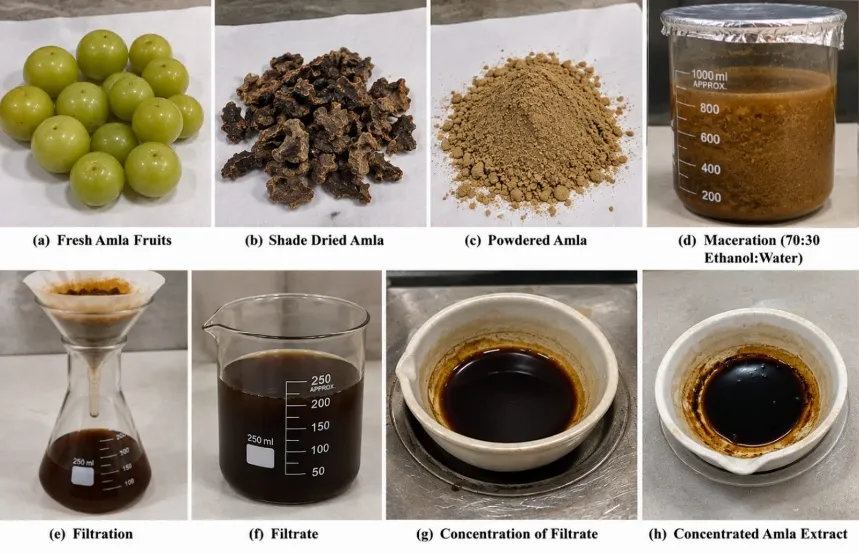
Figure 1: Steps Involved in the Preparation of Amla Extract: (A) Fresh Amla Fruits; (B) Shade-dried Amla; (C) Powdered Amla; (D) Maceration Using 70:30 Ethanol:Water; (E) Filtration; (F) Filtrate; (G) Concentration of Filtrate; and (H) Concentrated Amla Extract.
The mixture was allowed to macerate for 42 hours with occasional stirring to improve contact between the plant material and the extraction solvent. After maceration, the mixture was filtered to separate the marc from the liquid extract. The resulting filtrate was collected and concentrated to obtain the concentrated hydroalcoholic amla extract. The extract was then transferred into a clean, labelled, airtight container and stored appropriately until further use.
2.3 PRELIMINARY PHYTOCHEMICAL SCREENING
The concentrated hydroalcoholic amla extract was subjected to preliminary qualitative phytochemical screening for alkaloids, flavonoids, tannins, saponins, glycosides, terpenoids and phenolic compounds.[11]
2.3.1 Alkaloids – Wagner's Test
The extract was treated with Wagner's reagent. Formation of a brown precipitate was considered a positive reaction for alkaloids.
2.3.2 Flavonoids – Lead Acetate Test
The extract was treated with lead acetate solution. Formation of a yellowish precipitate indicated the presence of flavonoids.
2.3.3 Tannins – Ferric Chloride Test
The extract was treated with ferric chloride solution. Development of a dark blue-black colour indicated the presence of tannins.
2.3.4 Saponins – Foam Test
The extract was shaken vigorously with water. Formation of persistent foam was considered indicative of the presence of saponins.
2.3.5 Glycosides – Keller–Killiani Test
The extract was subjected to the Keller–Killiani reaction. Development of a reddish-brown colour was recorded as a positive reaction for glycosides.
2.3.6 Terpenoids – Salkowski Test
The extract was subjected to the Salkowski reaction. Development of a reddish-brown/brown colour indicated the presence of terpenoids.
2.3.7 Phenolic Compounds – Ferric Chloride Test
The extract was treated with ferric chloride solution. Development of a dark colour was recorded as a positive reaction for phenolic compounds.
2.4 FORMULATION OF POLYHERBAL ANTI-AGING SERUM
Four formulations designated F1, F2, F3 and F4 were prepared. The concentrations of amla extract and cashew nut oil were progressively varied, whereas the concentrations of the other formulation components were maintained constant.
Table 1: Formulation of Anti-Aging Serum
| Sl. No. | Ingredients | F1 | F2 | F3 | F4 |
|---|---|---|---|---|---|
| 1 | Aloe Vera gel | 20% | 20% | 20% | 20% |
| 2 | Cashew Nut Oil | 2% | 3% | 4% | 5% |
| 3 | Amla Extract | 1% | 2% | 3% | 4% |
| 4 | Clove Oil | 0.2% | 0.2% | 0.2% | 0.2% |
| 5 | Vitamin E | 1.0% | 1.0% | 1.0% | 1.0% |
| 6 | Glycerin | 5% | 5% | 5% | 5% |
| 7 | Propylene Glycol | 5% | 5% | 5% | 5% |
| 8 | Tween 80 | 2% | 2% | 2% | 2% |
| 9 | Xanthan Gum | 0.3% | 0.3% | 0.3% | 0.3% |
| 10 | Disodium EDTA | 0.1% | 0.1% | 0.1% | 0.1% |
| 11 | Triethanolamine | qs | qs | qs | qs |
| 12 | Phenoxyethanol | 0.8% | 0.8% | 0.8% | 0.8% |
| 13 | Distilled Water | qs. to 100% | qs. to 100% | qs. to 100% | qs. to 100% |
2.5 PREPARATION OF SERUM
The serum formulations were prepared by processing the aqueous and oil-soluble ingredients separately.
Xanthan gum was dispersed gradually into a suitable quantity of the aqueous phase and allowed to hydrate completely. Glycerin and propylene glycol were then incorporated with gentle stirring. Aloe vera gel and the required quantity of amla extract were added to the aqueous phase and mixed until a uniform dispersion was obtained.
The oil phase was prepared by mixing cashew nut oil, clove oil, vitamin E and Tween 80. The prepared oil phase was added gradually to the aqueous phase under continuous stirring to obtain a uniform formulation.
Disodium EDTA and phenoxyethanol were incorporated at the appropriate stage of formulation. Triethanolamine was used as the pH-adjusting agent. It was added gradually while monitoring the pH until the desired range of approximately 5.0–5.9 was obtained.
Finally, distilled water was added q.s. to 100% and the formulation was mixed until a uniform polyherbal serum was obtained.
2.6 EVALUATION OF POLYHERBAL SERUM
2.6.1 Physical Evaluation
The prepared serum formulations (F1-F4) were evaluated for colour, appearance, odour, and homogeneity. Colour and appearance were assessed visually, while odour was evaluated organoleptically. Homogeneity was assessed by visual examination and gentle handling to identify lumps, aggregates, or phase separation.
2.6.2 pH Determination
The pH of each serum formulation was determined using a calibrated digital pH meter. The instrument was calibrated using suitable standard buffer solutions before measurement. The pH values of formulations F1–F4 was recorded.
2.6.3 Specific Gravity
The specific gravity of each serum formulation was determined using a pycnometer. The empty pycnometer, pycnometer filled with distilled water, and pycnometer filled with each serum formulation were weighed. Specific gravity was calculated using the following formula:
Specific Gravity=(Weight of serum )/(Weight of an equal volume of water)
2.6.4 Viscosity Determination
The viscosity of the prepared formulations was evaluated using an Ostwald viscometer. the flow times of distilled water and each formulation were measured under the same experimental conditions. Relative viscosity was calculated using the following equation:
nr=(ρ₁ × t₁)/(ρ₂ × t₂)
Where:
2.6.5 Spreadability
Spreadability was evaluated to determine the ease with which the prepared anti-aging serum formulations could be uniformly spread over the skin. The test was performed by placing a known quantity of the formulation between two glass slides and allowing it to spread under specified conditions. The spreadability of each formulation was determined and compared.
The spreadability was calculated using the following equation:
S=(M×L)/T
Where:
S= Spreadability (g.cm/sec)
M= Weight applied to the upper slide (g)
L= Distance travelled by the slides (cm)
T= Time taken by the slide to travel the specified distance (sec)
2.6.6 Washability
The washability of the prepared anti-aging serum formulations was evaluated to determine the ease of removal of the formulation from the skin. A small quantity of each formulation was applied uniformly to a suitable area of the skin and gently spread. The applied area was then washed with water, and the ease of removal of the formulation and any residual oily or sticky film were observed. The washability of each formulation was recorded and compared.
2.6.7 Preliminary Antioxidant Screening
A preliminary antioxidant screening test was performed using iodine solution to observe the reducing/iodine-decolourizing ability of the prepared serum formulations. A control containing iodine solution without the test formulation was prepared. The formulations F1, F2, F3 and F4 were separately treated with iodine solution under identical conditions. The colour change of iodine in the presence of each formulation was observed and compared with the control. A decrease in the intensity of the iodine colour was considered an indication of reducing activity of the formulation.[12]
The iodine decolorization test was employed as a rapid, preliminary, qualitative screening method to indicate the presence of reducing/antioxidant activity in the formulations, it does not provide a quantitative measure of antioxidant capacity.
2.6.8 Skin Irritation Test
A preliminary skin irritation test was performed to evaluate the skin compatibility of the prepared anti-aging serum formulations. A small quantity of each formulation (F1–F4) was applied separately to a small area of intact skin on the inner forearm. The treated areas were observed for visible signs of irritation such as redness, swelling, itching and burning sensation during the observation period. The observations were recorded and compared with an untreated area.
2.6.9 Microbial Evaluation
The prepared polyherbal anti-aging serum formulations were evaluated for visible microbial growth using the agar plate method. The culture medium was prepared according to the manufacturer’s instructions and sterilized using an autoclave. The Petri plates were also sterilized using an autoclave. After the sterilized culture medium had cooled sufficiently, it was poured into the Petri plates and allowed to solidify. A suitable quantity of each serum formulation was transferred onto the agar surface using appropriate aseptic techniques. The samples were spread uniformly over the agar surface using a sterile inoculating loop. The plates were incubated at 35°C for 48 hours. After incubation, the plates were examined for the presence or absence of visible microbial colonies, and the observations were recorded for each formulation.[13]
2.6.10 Stability Study
The prepared polyherbal anti-aging serum formulations were subjected to a preliminary stability study for 20 days under room-temperature (25±2 °C) and refrigerated (4±2 °C) conditions to evaluate their physical stability. Separate samples of each formulation were stored in clean, well-closed containers under the respective storage conditions.
The formulations were evaluated on Day 1 and Day 20 for changes in appearance, colour, odour, consistency, pH, homogeneity, and phase separation. Any visible changes or signs of instability observed during the study period were recorded.
The stability of the formulations was assessed by comparing the evaluation parameters recorded on Day 1 and Day 20 under both storage conditions.[14]
RESULTS
3.1 Extraction yield and organoleptic characteristics of amla extract
A total of 75 g of powdered amla was subjected to hydroalcoholic extraction using ethanol and distilled water in a 70:30 (v/v) ratio. Following maceration, filtration and concentration, 17 mL of concentrated semisolid extract was obtained.
The recorded extract mass was 15.402 g, and the reported extraction yield was 20.54%.
Table 2: Extraction and Organoleptic Characteristics of Amla Extract
| Parameter | Observation |
|---|---|
| Initial weight of powdered amla | 75 g |
| Extraction solvent | Ethanol:distilled water (70:30, v/v) |
| Extraction method | Maceration |
| Maceration duration | 42 hours |
| Volume of concentrated extract | 17 mL |
| Recorded extract mass | 15.402 g |
| Reported extraction yield | 20.54% |
| Colour | Blackish brown |
| Odour | Characteristic |
| Appearance | Semisolid |
| Consistency | Thick and sticky |
3.2 Preliminary Phytochemical Screening
Table 3: Preliminary Phytochemical Screening of Hydroalcoholic Amla Extract
| Phytochemical | Test performed | Observation | Inference |
|---|---|---|---|
| Alkaloids | Wagner's test | Brown precipitate | + |
| Flavonoids | Lead acetate test | Yellowish precipitate | + |
| Tannins | Ferric chloride test | Dark blue-black colour | + |
| Saponins | Foam test | Persistent foam | + |
| Glycosides | Keller–Killiani test | Reddish-brown colour | + |
| Terpenoids | Salkowski test | Reddish-brown/brown colour | + |
| Phenolic compounds | Ferric chloride test | Dark colour | + |
Note: (+) indicates the presence of the respective phytochemical constituent.
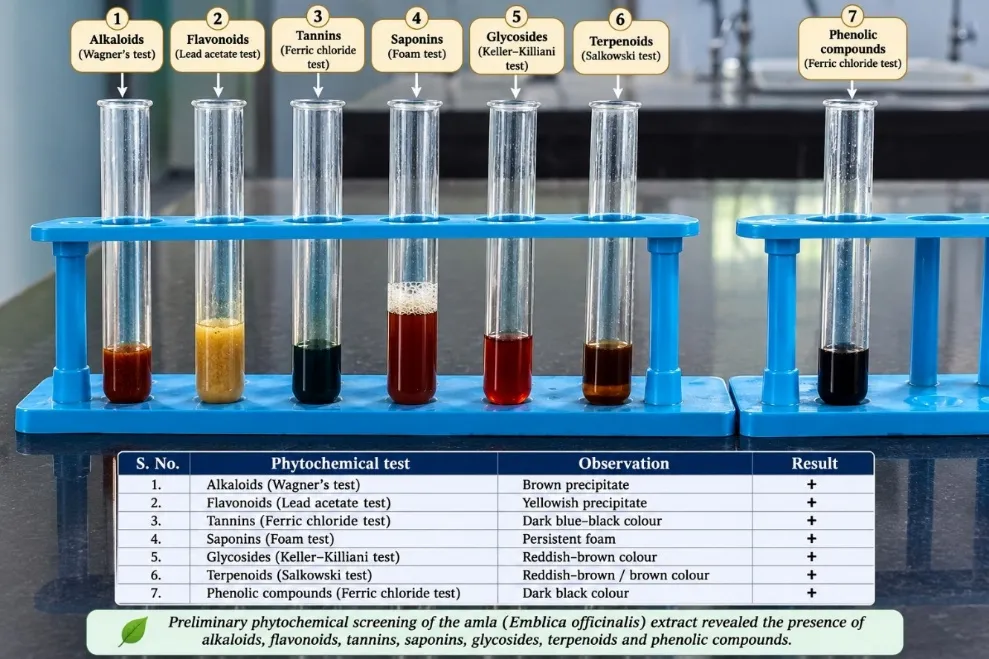
Figure 2: Preliminary Phytochemical Screening of Hydroalcoholic Amla Extract.
3.3 Physical evaluation of serum formulations
Table 4: Physical Evaluation of Polyherbal Anti-Aging Serum Formulations
| Parameters | F1 | F2 | F3 | F4 |
|---|---|---|---|---|
| Colour | Light brown | Light brown | Light brown | Light brown |
| Odour | Characteristic | Characteristic | Characteristic | Characteristic |
| Appearance | Semisolid | Semisolid | Semisolid | Semisolid |
| Texture | Moderately thick | Moderately thick | Moderately thick | Moderately thick |
| Homogeneity | Homogeneous | Homogeneous | Homogeneous | Homogeneous |
| Visible phase separation | Absent | Absent | Absent | Absent |
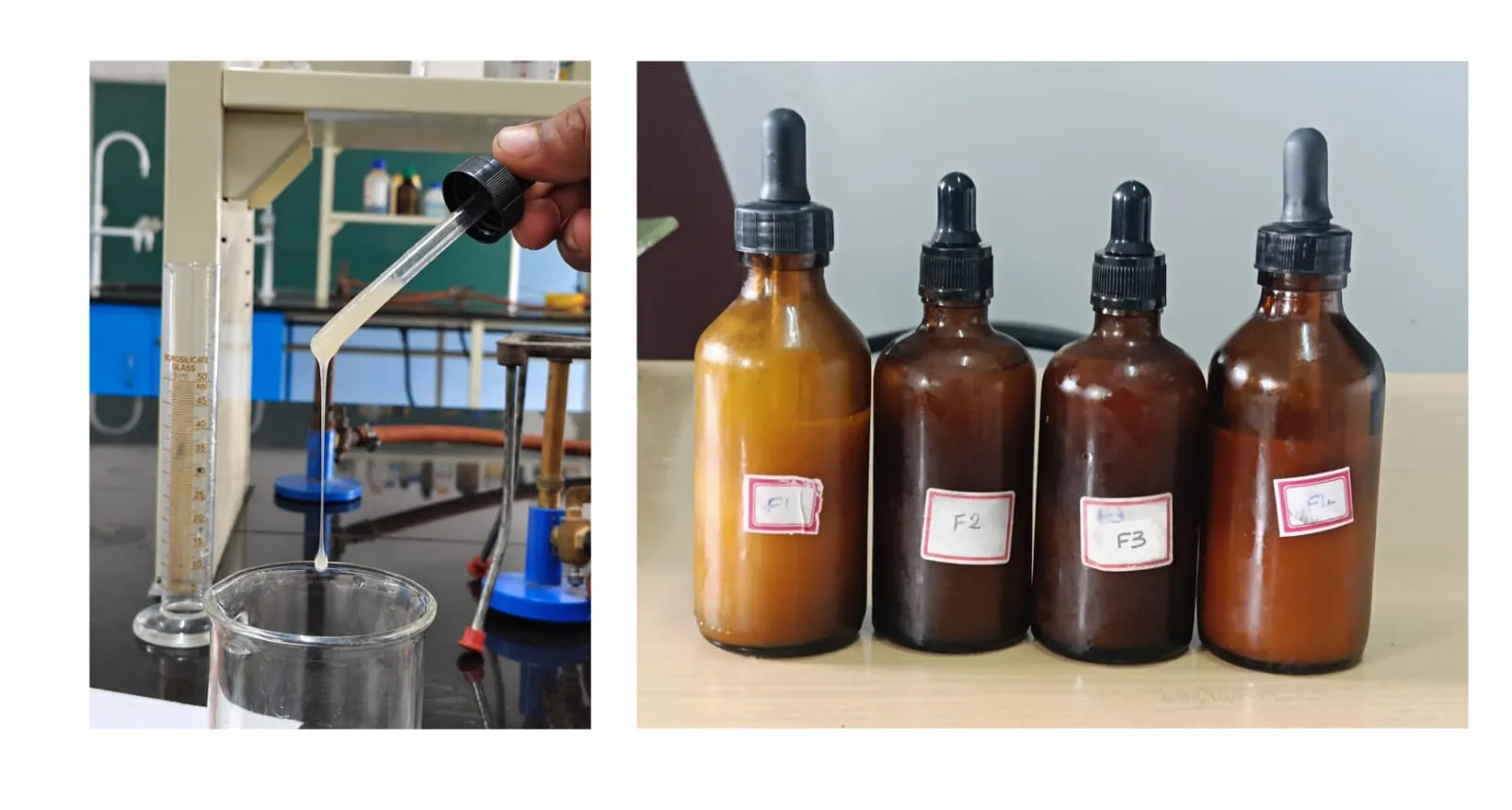
Figure 3: Prepared Polyherbal Anti-Aging Serum Formulations (F1–F4).
3.4 pH determination
[Figure - see the formatted PDF]
Figure 4: pH Values of the Prepared Polyherbal Serum Formulations (F1-F4).
3.5 Specific gravity determination
Table 5: Specific Gravity of Polyherbal Serum Formulations
| Formulation | Specific Gravity |
|---|---|
| F1 | 1.013 |
| F2 | 1.021 |
| F3 | 1.016 |
| F4 | 1.024 |
3.6 Relative viscosity determination
Table 6: Flow Time and Reported Relative Viscosity of Serum Formulations
| Sample | Flow time (s) | Reported relative viscosity |
|---|---|---|
| Water | 14 | Reference liquid |
| F1 | 48 | 3.47 |
| F2 | 46 | 3.35 |
| F3 | 42 | 3.05 |
| F4 | 50 | 3.66 |
3.7 Spreadability
Table 7: Spreadability of Polyherbal Serum Formulations
| Formulation | Distance (cm) | Time (s) | Applied weight (g) | Recorded spreadability (g.cm/s) |
|---|---|---|---|---|
| F1 | 6.0 | 2 | 50 | 150.0 |
| F2 | 5.9 | 2 | 50 | 147.5 |
| F3 | 6.1 | 2 | 50 | 152.5 |
| F4 | 5.7 | 2 | 50 | 142.5 |
3.8 Washability
Table 8: Washability of Serum
| Formulation | Observation |
|---|---|
| F1 | Easily washable |
| F2 | Easily washable |
| F3 | Easily washable |
| F4 | Easily washable |
3.9 Qualitative iodine-colour test
Table 9: Observations of the Iodine-Based Colour Test
| Sample | Recorded Observation | Interpretation |
|---|---|---|
| Control | Iodine colour retained | Colour |
| F1 | Orange | Colour reduction observed |
| F2 | Orange-brown | Colour reduction observed |
| F3 | Orange | Colour reduction observed |
| F4 | Light orange | Greater colour reduction observed |
| Blank | Nearly colourless | Blank |
3.10 Skin Irritation Test
Table 10: Skin Irritation Test of Prepared Polyherbal Anti-Aging Serum
| Formulation | Redness | Swelling | Itching | Burning sensation | Result |
|---|---|---|---|---|---|
| F1 | Absent | Absent | Absent | Absent | Non-irritant |
| F2 | Absent | Absent | Absent | Absent | Non-irritant |
| F3 | Absent | Absent | Absent | Absent | Non-irritant |
| F4 | Absent | Absent | Absent | Absent | Non-irritant |
3.11 Microbial observations
Table 11: Recorded Microbial Observations
| Sample | Recorded observation |
|---|---|
| F1 | No visible growth reported |
| F2 | No visible growth reported |
| F3 | No visible growth reported |
| F4 | No visible growth reported |
| Blank | Visible growth reported |
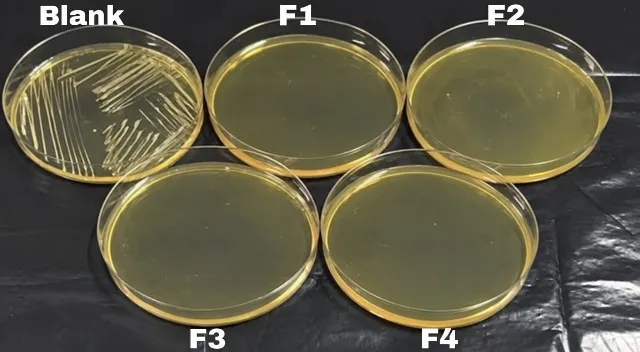
Figure 5: Microbial Evaluation of the Prepared Polyherbal Anti-Aging Serum Formulations
3.12 Stability Study
Table 12: Stability Evaluation of Polyherbal Anti-Aging Serum Formulations Under Refrigerated Conditions (42C)
| Day | Formulation | Appearance | Colour | pH | Homogeneity | Phase Separation |
|---|---|---|---|---|---|---|
| Day 1 | F1 | Semisolid | Light brown | 5.88 | Homogeneous | Absent |
| F2 | Semisolid | Light brown | 5.12 | Homogeneous | Absent | |
| F3 | Semisolid | Light brown | 5.13 | Homogeneous | Absent | |
| F4 | Semisolid | Light brown | 5.71 | Homogeneous | Absent | |
| Day 20 | F1 | Semisolid | Light brown | 5.83 | Homogeneous | Absent |
| F2 | Semisolid | Light brown | 5.16 | Homogeneous | Absent | |
| F3 | Semisolid | Light brown | 5.10 | Homogeneous | Absent | |
| F4 | Semisolid | Light brown | 5.68 | Homogeneous | Absent |
Table 13: Stability Evaluation of Polyherbal Anti-Aging Serum Formulations at Room Temperature (252C)
| Day | Formulation | Appearance | Colour | pH | Homogeneity | Phase Separation |
|---|---|---|---|---|---|---|
| Day 1 | F1 | Semisolid | Light brown | 5.88 | Homogeneous | Absent |
| F2 | Semisolid | Light brown | 5.12 | Homogeneous | Absent | |
| F3 | Semisolid | Light brown | 5.13 | Homogeneous | Absent | |
| F4 | Semisolid | Light brown | 5.71 | Homogeneous | Absent | |
| Day 20 | F1 | Semisolid | Light brown | 5.82 | Homogeneous | Absent |
| F2 | Semisolid | Light brown | 5.18 | Homogeneous | Absent | |
| F3 | Semisolid | Light brown | 5.12 | Homogeneous | Absent | |
| F4 | Semisolid | Light brown | 5.72 | Homogeneous | Absent |
DISCUSSION
The present study focused on the formulation and preliminary evaluation of a polyherbal serum containing amla extract, Aloe vera gel, cashew nut oil, clove oil and vitamin E. Four formulations were prepared by progressively varying the concentrations of amla extract and cashew nut oil. Their properties were compared using preliminary phytochemical screening, physical examination, physicochemical measurements, a qualitative iodine-colour test, microbial observations and a short-term stability study.
4.1 Extraction yield and characteristics of amla extract
Hydroalcoholic extraction of 75 g of powdered amla yielded 17 mL of concentrated extract, with a recorded mass of 15.402 g and a reported percentage yield of 20.54%. The extract was blackish-brown, with a characteristic odour and thick, sticky consistency.
4.2 Preliminary phytochemical screening
Phytochemical screening showed positive reactions for alkaloids, flavonoids, tannins, saponins, glycosides, terpenoids, and phenolic compounds. The presence of flavonoids, tannins, and phenolic compounds supports the selection of amla extract for a formulation intended for skin care. However, these qualitative tests do not establish the concentrations or biological activities of individual compounds in the extract.
4.3 Physical characteristics of the formulations
All four formulations exhibited a light-brown colour, semisolid appearance, characteristic odour, and moderately thick consistency. The formulations were homogeneous, with no visible phase separation during initial evaluation. These observations indicated acceptable preliminary physical characteristics. However, visual examination alone cannot establish long-term stability or microscopic uniformity.
4.4 pH characteristics
The pH values of F1, F2, F3, and F4 were 5.88, 5.12, 5.13, and 5.71, respectively. F1 showed the highest pH, whereas F2 showed the lowest. All formulations exhibited mildly acidic pH values, which are generally compatible with the acidic environment of the skin. However, further skin compatibility testing is required to establish their suitability for topical application.
4.5 Specific gravity
The specific gravity values of F1, F2, F3, and F4 were 1.013, 1.021, 1.016, and 1.024, respectively. F4 exhibited the highest value, while F1 showed the lowest. The observed differences may be associated with variations in formulation composition.
4.6 Relative viscosity
The relative viscosity values of F1, F2, F3, and F4 were 3.47, 3.35, 3.05, and 3.66, respectively. F4 exhibited the highest relative viscosity, while F3 showed the lowest. These variations indicate differences in the flow characteristics of the formulations, which may influence their application and handling.
4.7 Spreadability
The spreadability values of F1, F2, F3, and F4 were 150.0, 147.5, 152.5, and 142.5 g·cm/s, respectively. F3 exhibited the highest spreadability, whereas F4 showed the lowest. These results indicate that F3 spread more readily than the other formulations under the experimental conditions.
4.8 Washability
All four formulations were found to be easily washable with water, indicating that they could be removed from the application surface under the test conditions.
4.9 Interpretation of the iodine-based colour test
The qualitative iodine test showed colour changes among the formulations. F1 and F3 appeared orange, F2 appeared orange-brown, and F4 appeared light orange, whereas the control retained the iodine colour. The blank was nearly colourless. F4 showed the greatest apparent colour reduction among the formulations.
Future studies could use a validated quantitative antioxidant assay, such as DPPH or ABTS, with suitable controls and replicates.
4.10 Microbial observations
No visible microbial growth was recorded in F1–F4, whereas growth was observed in the blank/control.
This indicates that the prepared serum formulations showed acceptable microbial range under the selected test condition.
4.11 Short-term stability
The physical stability of formulations F1–F4 was evaluated on Day 1 and Day 20 under room-temperature and refrigerated storage conditions. The formulations were assessed for colour, appearance, consistency, pH, homogeneity, and visible phase separation.
On Day 20, the formulations retained their observed physical characteristics, with no visible phase separation and with minor variations in pH, under the storage conditions studied. These findings indicate preliminary physical stability over the 20-day study period. However, further long-term stability studies involving additional physicochemical and microbiological evaluations are required to establish the shelf life and overall stability of the formulations.
4.12 Comparison of the four formulations
The four formulations differed in their concentrations of amla extract and cashew nut oil. F1 contained the lowest concentrations of both ingredients, whereas F4 contained the highest. F2 and F3 represented intermediate concentrations.
F3 exhibited the highest spreadability (152.5 g·cm/s), the lowest relative viscosity (3.05), and a pH of 5.13. In contrast, F4 showed the highest relative viscosity (3.66) and the greatest apparent colour reduction in the iodine-based test. These differences indicate that the formulations exhibited varying physicochemical characteristics.
CONCLUSION
The present study was successfully carried out with the objective of formulating and evaluating a polyherbal anti-aging serum for skin revitalization using natural ingredients. The selected herbal ingredients were incorporated into serum formulations, and four formulations (F1–F4) were prepared and subjected to systematic evaluation.
The prepared formulations exhibited acceptable physical appearance, colour, odour and homogeneity, indicating satisfactory formulation characteristics. The pH values of the formulations were found to be within an acceptable range for topical application. The formulations also showed satisfactory spreadability, viscosity, specific gravity and relative viscosity, demonstrating suitable application properties. The evaluation results indicated that the formulations possessed desirable physical characteristics without visible phase separation.
The preliminary skin irritation assessment showed no visible signs of redness, swelling, itching, or burning sensation in the tested formulations (F1-F4). The antioxidant evaluation further supported the potential of the selected herbal ingredients in the development of an anti-aging formulation. Among the prepared formulations, F3 was selected as the optimized formulation based on its overall desirable physical, physicochemical, microbial and stability characteristics. F3 exhibited the highest spreadability (152.5 g·cm/sec), suitable pH (5.13), comparatively lower relative viscosity (3.05), good homogeneity and absence of phase separation.
The microbial evaluation showed no visible microbial growth in F1, F2, F3 and F4, indicating that the prepared formulations remained free from detectable microbial contamination under the conditions of the test. The blank/control showed growth, confirming the validity of the test conditions.
Furthermore, the formulations were subjected to a 20-day stability study under room-temperature and refrigerated conditions. Comparison of the observations on Day 1 and Day 20 showed that the formulations maintained their appearance, colour, homogeneity, minor variations in pH, and absence of phase separation. This indicates satisfactory physical stability during the study period.
REFERENCES

Mukthiyar Ahamed, Monisha B. S., Meghana Reddy G., Jansi R., Dr. S. M. Sridhar, Dr. E. Gopinath, Formulation and Evaluation of Polyherbal Anti-Aging Serum for Skin Revitalization, Int. J. of Pharm. Sci., 2026, Vol 4, Issue 10, 4622-4633. https://doi.org/10.5281/zenodo.23762000
 10.5281/zenodo.23762000