

We use cookies to ensure our website works properly and to personalise your experience. Cookies policy
Bharathi College of Pharmacy, Bharathinagara, Mandya – 571422, Karnataka, India.
The present study focuses on the formulation and evaluation of a herbal nanoemulgel hair dye using Hibiscus rosa-sinensis and Lawsonia inermis (henna) extracts as natural colouring agents. Conventional hair dyes may contain synthetic chemicals that can cause irritation or damage to hair and scalp. Therefore, herbal formulations are gaining attention as potential alternatives for natural hair colouring. Nanoemulgel combines the advantages of a nanoemulsion and a gel system, offering improved consistency, spreadability, and uniform application. In this study, aqueous extracts of hibiscus and henna were incorporated into a formulation containing coconut oil, Tween 20, acacia, glycerin, and hydroxypropyl methylcellulose (HPMC). The prepared formulations were evaluated for organoleptic properties, pH, physical stability, spreadability, sensitivity, and excipient compatibility. The formulations exhibited a reddish-pink colour, characteristic odour, good consistency, and homogeneity. The measured pH values ranged from 7.0 to 7.4, and no visible phase separation was reported during the observed storage period. The formulations also showed good spreadability, while no visible sensitivity reactions were reported under the preliminary evaluation conditions. The findings suggest that hibiscus–henna herbal nanoemulgel may have potential for application as a natural hair-colouring formulation. Further studies, including droplet-size analysis, comprehensive stability testing, and detailed safety evaluation, are required to establish its quality, performance, and suitability for practical use.
Introduction of Nano-emulgel:
Nano-emulsions are heterogeneous colloidal mixtures of oil and water, with one component as a dispersed phase and the other as a continuous phase. A surfactant known as an emulsifier is adsorbed at the interface between the dispersed and continuous phases, lowering the surface tension and thus stabilizing the system. These systems possess high thermodynamic stability leading to longer shelf life compared to simple emulsions, micelles or suspensions, etc. Despite having various advantages, nano-emulsions are limited by their low viscosity leading to low retention time and spread ability.1
These problems can be resolved by modifying nano -emulsion into a nano- emulgel by using a suitable gelling agent.2
Emulgels for dermatological use have several favorable properties such as being thixotropic, greaseless, easily spreadable, easily removable, emollient, long shelf-life surfactant3 Natural dyes have been used since ancient times, when they were used not only for hair coloration, but also for medicinal, decoration and religious purposes.4,5,6 In the early days, hair dyes were obtained from metallic compounds, plant extracts, dried plants or their mixtures.7 Before the invention of first synthetic aniline dye, mauve, in 1856, different plant extracts and herbal preparations such as mullein, birch bark, turmeric, and saffron have been used for hair dyeing.
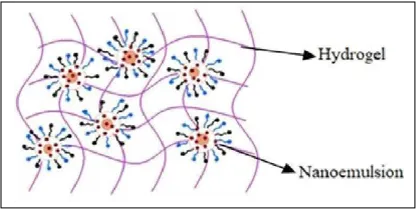
Figure 1.1: Structure of Nanoemulgel.8
Nano emulgel Hair dye:
Nanoemulgel hair dye is an advanced topical hair-coloring formulation that combines a nanoemulsion (sub-micron oil droplets dispersed in water) with a gel matrix. It improves dye penetration into the hair shaft and cuticle via high surface area and tiny droplet size, offering superior color retention, non-dripping consistency, and reduced chemical damage. Key Characteristics & Composition Oil Phase: Contains penetration enhancers, essential or mineral oils, and hydrophobic dye intermediates or natural pigments. Aqueous Phase: Water mixed with water-soluble components, buffers, and anti-oxidants. Surfactants/Cosurfactants: Stabilize the nanodroplets (typically droplet sizes between 20 nm and 500 nm) and lower interfacial tension. Gelling Agent: Polymers like Carbopol or HPMC that convert the liquid nanoemulsion into a spreadable, non-messy gel. Advantages Over Traditional Dyes Enhanced Deposition: Nano-sized droplets fit better into microscopic gaps of the hair cuticle, ensuring deeper and more uniform pigment uptake. Better Stability: The dual system prevents phase separation, creaming, and sedimentation that plague regular liquid emulsions. Improved Spreadability: Spreads smoothly along individual hair strands without running or dripping onto the scalp. Reduced Irritation: Controlled release and localized action minimize direct aggressive contact with the scalp skin.9
INGREDIENTS PROFILE
1. HIBISCUS:
Synonym: China rose, shoe flower, Chinese hibiscus
Biological Source: consists of the
fresh or dried flowers of Hibiscus rosa-sinensis L.
Botanical name: Hibiscus rosa-
Family: Malvaceae.
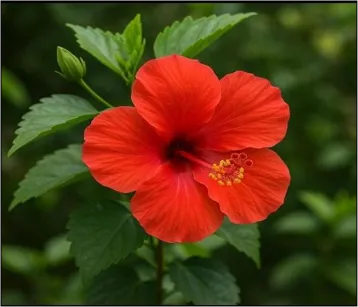
Figure 1.2: Picture of Hibiscus.
Chemical Constituents:
Hibiscus contains various phytochemicals including: Flavonoids (Quercetin, Apigenin), anthocyanins (Pelargonidin), tannins, saponins, terpenoids, glycosides, alkaloids, vitamins (vitamin c, riboflavin, thiamine).
Uses:
Possesses antioxidant and antimicrobial properties.
1. HENNA:
Synonym: Mehndi, Henna, Lawsonia alba.
Biological Source: Henna consists of the dried leaves of Lawsonia inermis L., a shrub
or small tree belonging to the family Lythraceae
Botanical name: Lawsonia inermis L.
Family: Lythraceae.
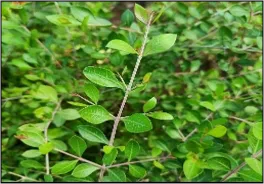
Figure 1.3: Picture of Henna.
Chemical Constituents:
Lawsone (2-hydroxy-1,4-naphthoquinone – principal coloring matter), flavonoids, tannins, phenolic glycosides, coumarins, xanthones, saponins, alkaloids, terpenoids, β-sitosterol, and stigmasterol.
Uses: Natural hair dye, body art (mehndi), coloring nails, dyeing fabrics and leather, antimicrobial activity, antifungal activity, wound healing, anti-inflammatory action, treatment of skin disorders, cooling agent, and cosmetic applications.
MATERIALS AND METHODOLGY
EXTRACTION PROCEDURE:
1. Weighing of Drug:
Accurately weigh 50 g of powdered hibiscus and henna flowers and use solvent as distilled water (Q.S).
1. Decoction:
2. Filtration:
METHOD OF PREPARATION:
Step 1 — Prepare the herbal extracts
Step 2 — Prepare the acacia solution
Step 3 — Prepare the aqueous herbal phase
Step 4 — Prepare the oil phase
Step 5 — Prepare the primary emulsion
This is the important step because your previous batch was separating. Place the aqueous herbal phase under the homogenizer. Start homogenization at a moderate speed. Add the oil phase very slowly to the aqueous phase. Continue homogenization during the addition. Once all the oil phase has been added, homogenize for approximately 5 minutes. Avoid creating a strong vortex because it introduces air and produces excessive foam. The mixture should become a uniform creamy/brownish emulsion.
Step 6 — Prepare HPMC gel separately For1.5 g HPMC:
Take approximately 10–15 mL purified water. Sprinkle HPMC slowly into the water while stirring. Continue stirring to disperse it uniformly. Allow it to hydrate for 30–60 minutes, or according to the specification of your particular HPMC grade. Continue gentle mixing until a smooth, lump-free gel is
obtained. Do not add triethanolamine to HPMC just to make the gel. HPMC does not require neutralization like Carbopol.
Step 7— Convert nanoemulsion into nanoemulgel.
Take the hydrated HPMC gel. Add the prepared herbal nanoemulsion slowly in portions. Mix gently after each addition. Continue until the mixture becomes homogeneous. Avoid high-speed homogenization at this stage because it can introduce excessive air and disturb the gel structure.12
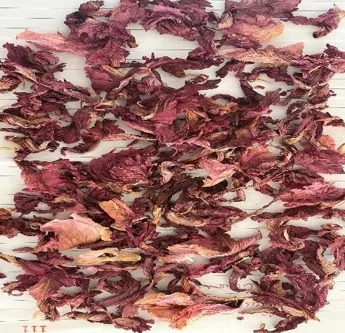
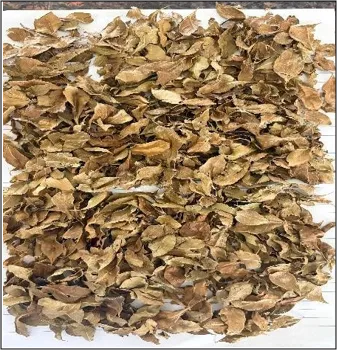
DRIED FLOWER OF HIBISCUS. DRIED LEAVES OF HENNA.
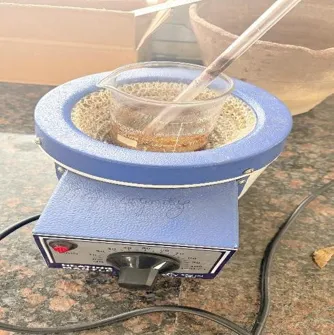
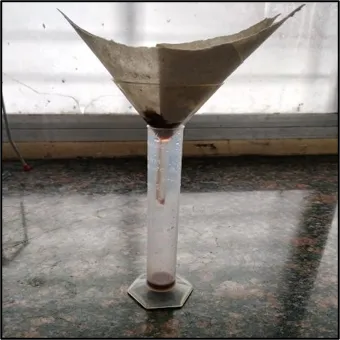
BOILING FILTRATION
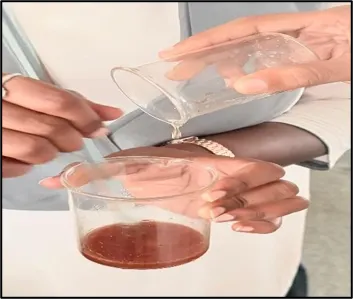
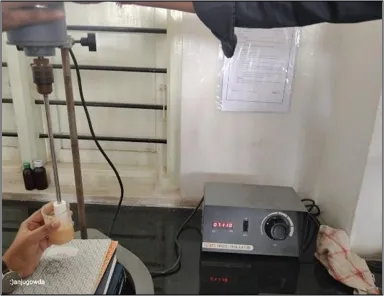
ADDING GLYCERINE HOMOGENIZING
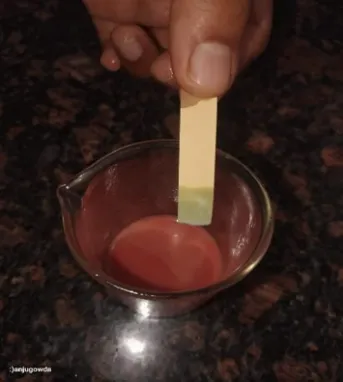
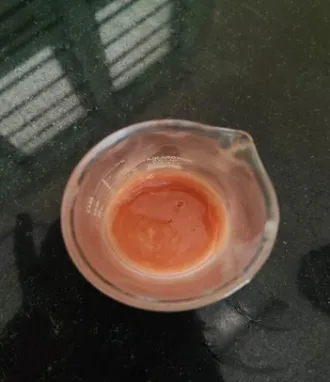
TESTING OF PH FINAL PRODUCT
PROCEDURE FOR EVALUATION TEST
FIGURE 1.4: PROCEDURE OF NANO EMULGEL
1. Physcal Appearance
Purpose: To evaluate color, Odor, homogeneity, consistency, and phase separation.
Procedure:
2. pH Determination
Purpose: To ensure scalp compatibility.
Procedure:
3. Spreadability
Purpose: To evaluate ease of application on hair and scalp.
Procedure:
Formula:
S=\frac {M \times L} {T}
Where:
S = Spreadability M = Weight (g)
L = Length moved (cm)T = Time (sec)
4. Dyeing Efficiency Test
Purpose: To evaluate coloring ability.
Procedure:
5. Washability Test
Purpose: To evaluate ease of washing from hair.
Procedure:
6. Skin Irritation Test
Purpose: To assess safety for scalp use.
Procedure:
Table 1: Biological Profile of the Selected Plants10,11
| SL NO. |
Plant / Ingredients |
Biological name | Family | Major constituents | Role in formulation |
|---|---|---|---|---|---|
| 1 | Henna | Lawsonia inermis L | Lythraceae | Lawsone, tannins, flavonoids |
Primary natural Hair colouring agent |
| 2 | Hibiscus | Hibiscus rosa- Sinensis L |
Malvaceae | Anthocyanins,flavonoids, Mucilage, tannins |
Provide phytochemicals And may contribute to formulation |
| 3 | Tea | Camellia sinensis(L) kuntze |
Theaceae | Catechins, tannins, Polyphenols, caffeine |
Provides polyphenols And may contri- Bute brownish tones |
| 4 | Coconut oil | Cocos nucifera L | Arecaceae | Lauric acid, myristic acid and other fatty acids | Oil phase of the nanoemulsion |
| 5 | Tween 20 | Polysorbate 20 | Non-ionic surfactant |
Polyoxyethylene sorbitan monolaurate |
Emulsifier; helps stabilize Oil droplets |
| 6 | Glycerin | Glycerol | Humectant | Glycerol | Retains moisture and improves sprea- dability |
| 7 | Carbopol 940 | Cross-linked Polyacrylic acid polymer |
Synthetic gelling agent | Cross-linked polyacrylate | Forms moisture And increases viscosity |
| 8 | Triethanolamine | TEA | Ph-adjusting agent | Triethanolamine | Neutralises Carbopol and Helps from the gel |
| 9 | HPMC | Hydroxypropyl methylcellulose |
Cellulose- Derived polymer |
Modified cellulose polymer | Alternative gelling and viscosity-enhancing agent |
| 10 | Acacia | Senegalia Senegal (L)Britton |
Fabaceae | Arabinogalactan-rich polysaccharides |
Natural thickener and stabiliser |
| 11 | Distilled water | Purified water, H2O |
Aqueous vehicle | Water | Solvent and continuous aqueous phase |
RESULTS AND DISCUSSION
1. EVALUATION PARAMETER
The prepared herbal nano emulgel hair dye was evaluated for various parameters such as organoleptic properties, pH, phase separation, dyeing effect test, Irritancy and Compatibility Test, spread ability.
1.1 ORGANOLEPTIC PROPERTIES
The Organoleptic properties of the formulated herbal nano emulgel hair dye were judged by colour, odour, consistency and Homogeneity.
Table 2: Result of Various Evaluation Parameters
| Sl no | Parameters | Formulation 1 | Formulation 2 | Formulation 3 |
|---|---|---|---|---|
| 1. | Organoleptic properties | |||
| Colour | Reddish pink | Reddish pink | Reddish pink | |
| Odour | Characteristic | Characteristic | Characteristic | |
| Consistency | Good | Good | Good | |
| Homogeneity | Good | Good | Good | |
Test for pH
Good pH test is performed by using pH paper range in between 7-7.3 hence the nano emulgel herbal dye should be slightly alkaline range
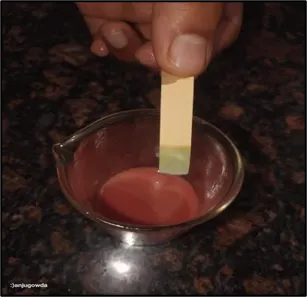
Figure 5.1picture of pH
Table 3: pH of Formulation F1 to F3 Formulation
| Sl no | Formulation | pH |
|---|---|---|
| 1. | F1 | 7 |
| 2. | F2 | 7.1 |
| 3. | F3 | 7.4 |
Table 4: Formulation for Herbal Nano Emulgel Hair Dye
| Sl no | Ingredients | F1 | F2 | F3 | Functions |
|---|---|---|---|---|---|
| 1 | Henna extract | 4g | 4.5g | 5g | Primary natural coloring agent. Contains lawsone, which binds with hair keratin and imparts a reddish-brown color. It also conditions hair, reduces dandruff, and strengthens hair fibers. |
| 2 | Hibiscus extract | 2g | 2g | 2.5g | Acts as a natural hair conditioner and antioxidant. Helps improve hair growth, reduces premature graying, adds shine, and enhances the overall coloring effect. |
| 3 | Glycerin | 2.5g | 2.5g | 2.5g | Humectant and moisturizer. Retains moisture in the formulation and prevents hair dryness after dye application. Improves smoothness and spreadability of the nanoemulgel |
| 4 | Acacia | 1g | 1g | 1g | Natural emulsifier and stabilizer. Helps stabilize the emulsion system and increases viscosity, improving consistency and adhesion of the dye to hair. |
| 5 | Coconut oil | 2g | 2g | 2g | Oil phase component. Nourishes and conditions hair, reduces protein loss, improves softness, and facilitates penetration of active constituents into hair shafts. |
| 6 | Tween 20 | 2g | 2g | 2g | Non-ionic surfactant/emulsifying agent. Reduces interfacial tension between oil and water phases, helping to form and stabilize nano-sized emulsion droplets. |
| 7 | HPMC | 0.5g | 1g | 1.5g | Gelling agent. Converts the nanoemulsion into a nanoemulgel, provides suitable viscosity, improves spreadability, and enhances residence time on hair. |
| 8 | Purified water | 33.5g | 33.5g | 33.5g | Vehicle and solvent. Dissolves hydrophilic ingredients and forms the aqueous phase of the nanoemulsion. |
| 9 | TEA | q. s for pH | q. s for pH | q. s for pH | Rich in tannins that act as a natural color enhancer. It deepens and darkens the hair color and improves dye retention on hair. |
PHASE SEPARATION
The herbal nano emulgel hair dye was stored at room temperature and observed for physical stability. No phase separation, precipitation, or visible changes were noted during the study period, indicating that the formulation remained stable at room temperature
SENSITIVITY AND IRRITANCY TEST
The formulated herbal nano emulgel hair dye doesn't show any type of sensitivity reaction. The formulated herbal nano emulgel hair dye shows no redness, edema, irritation, or inflammation during studies. The formulated herbal nano emulgel hair dye.
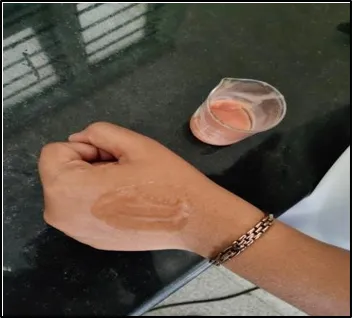
Figure 5.2 picture of sensitivity and irritancy test
Table 4: Sensitivity and Irritancy Test
| Sl no |
Formulation | Sensitivity | Erythema | Edema | Irritation | Inflamtion |
|---|---|---|---|---|---|---|
| 1. | F1 | NO | NO | NO | NO | NO |
| 2. | F2 | NO | NO | NO | NO | NO |
| 3. | F3 | NO | NO | NO | NO | NO |
DRUG- EXCIPIENTS COMPATABILITY TEST
Purpose of Drug-Excipients Compatibility Testing: To ensure no interaction occurs between hibiscus, henna and the excipients that may affect:
Stability, Appearance, Safety, Efficacy.
Table 5: Drug- Excipients Compatibility of Formulation F1 to F3
| Sl no |
Excipients | Compatibility with drug hibiscus and henna |
|---|---|---|
| 1. | Henna extract | Good |
| 2. | Hibiscus extract | Very good |
| 3. | Glycerin | Good |
| 4. | Acacia | Very good |
| 5. | Coconut oil | Very good |
| 6. | Tween 20 | Very good |
| 7. | HPMC | Good |
| 8. | Purified water | Very good |
| 9. | Tea | Good |
SPREADABILITY:
The hibiscus and henna of herbal nano emulgel hair dye showed good spreadability when applied to the skin. It spread smoothly and evenly with gentle rubbing, forming a thin and uniform layer. The hair dye was easily absorbed without leaving any greasy or sticky feeling. It provided a soft and smooth texture on the skin surface, indicating good consistency and ease of application. Overall, the nano emulgel exhibited excellent spreadability suitable for topical use.
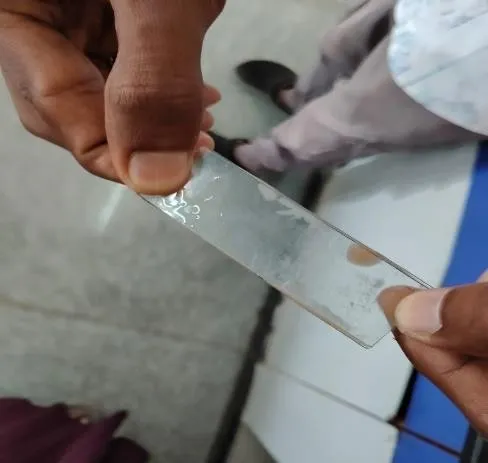
Figure 5.3: Picture of Spreadability
The spreadability of nano emulgel herbal hair dye was found to be 100g.cm/s.
DYEING EFFICACY TEST:
The prepared herbal nanoemulgel hair dye exhibited good dyeing efficacy, imparting uniform colour and improved colour intensity to the hair strands.
WASHABILITY TEST:
The prepared herbal nanoemulgel hair dye showed good washability with satisfactory colour retention after washing.
CONCULSION:
The herbal nanoemulgel hair dye incorporating henna (Lawsonia inermis) and hibiscus (Hibiscus rosa-sinensis) was successfully formulated and evaluated. The prepared formulations showed a reddish-pink colour, good consistency, homogeneity, and satisfactory spreadability. The pH values ranged from 7.0 to 7.4, and no visible phase separation was observed during the study period. Preliminary sensitivity testing showed no visible signs of irritation under the test conditions. The formulation shows potential as a natural alternative to conventional hair dyes. However, further studies on droplet size, long-term stability, dyeing efficiency, and safety are required to confirm its suitability for practical use.
REFERENCES





Pavithra T., Manoj M., Namratha G. M., Priyanka M. S., Ranjitha B. K., Yashaswini H., Formulation and Evaluation of Herbal Nanoemulgel Hair Dye Incorporating Hibiscus and Henna Extracts, Int. J. of Pharm. Sci., 2026, Vol 4, Issue 10, 4642-4652. https://doi.org/10.5281/zenodo.23762322
 10.5281/zenodo.23762322