

We use cookies to ensure our website works properly and to personalise your experience. Cookies policy
Rasashastra and Bhaishajya Kalpana Department, D.Y. Patil Deemed to be University, School of Ayurveda, Nerul, Navi Mumbai, Maharashtra, India.
Dugdha Arka is a classical Ayurvedic distillate prepared from cow milk (Go-dugdha). It is traditionally described as Laghu (light), Shighrapaki (easily digestible), Agnivardhaka (digestive fire-enhancing), and beneficial in conditions associated with weakened digestion. Despite its therapeutic importance, scientific data explaining these properties remain limited. The present study aimed to prepare Dugdha Arka according to the classical method described in the Ayurveda Sara Sangraha and to comparatively evaluate its physicochemical and nutritional characteristics against those of raw Go-dugdha. Fresh Gir cow milk was subjected to simple distillation, yielding 210 mL of Dugdha Arka from 400 mL of milk. Organoleptic evaluation, pH determination, and comparative nutritional analysis were carried out. The prepared Dugdha Arka was found to be a clear, colourless liquid with a mild milk odour and a pH of 7.0, compared with raw milk at pH 6.8. Nutritional analysis revealed marked reductions in energy value, carbohydrates, fat, protein, and total sugar content following distillation, while moisture content increased substantially. The energy value decreased from 64.64 kcal/100 g in milk to 0.16 kcal/100 g in Dugdha Arka. These findings demonstrate that the distillation process transforms milk into a highly dilute, low-calorie formulation with minimal nutritional burden. The study provides a possible scientific explanation for the Ayurvedic concept of Laghuta and supports the traditional use of Dugdha Arka in individuals with compromised digestive capacity
Go-dugdha (cow milk) occupies a prominent position in Ayurveda and is regarded as one of the most wholesome and nourishing dietary substances. Classical Ayurvedic texts describe cow's milk as Madhura (sweet in taste), Sheeta (cool in potency), Balya (strength-promoting), Rasayana (rejuvenating), and Ojas-vardhaka (enhancing vitality). Owing to its nourishing properties, cow milk has traditionally been recommended in conditions associated with debility, tissue depletion, chronic illnesses, and impaired strength.1 Despite its therapeutic value, milk is also considered Guru (heavy) in nature and may not be readily digestible in individuals suffering from Mandagni (diminished digestive fire).2
Arka Kalpana is a unique Ayurvedic pharmaceutical preparation that involves collecting volatile and subtle principles of a substance through distillation. The resulting distillate, known as Arka, is considered comparatively lighter, rapidly absorbable, and therapeutically active. Arka preparations have been employed in Ayurvedic pharmaceutics to obtain the subtle essence of medicinal substances while reducing undesirable characteristics such as heaviness and poor digestibility.3
Among the various Arka formulations described in Ayurvedic literature, Dugdha Arka is a distinctive preparation prepared solely from Go-dugdha. Ayurveda Sara Sangraha describes the preparation of Dugdha Arka by distilling fresh cow's milk and attributes several therapeutic properties to the formulation. It is indicated in conditions such as Udar Roga, Shotha, Pandu, Kamala, Rajayakshma, Jeerna Jwara, Kasa, Shwasa, Raktapitta, Sangrahani, and Atisara. The text further states that Dugdha Arka is particularly beneficial when an individual's digestive capacity is severely compromised, and the patient is unable to digest milk or other nourishing substances. Owing to the absence of the heaviness associated with milk, Dugdha Arka is described as Laghu (light), Shighrapaki (easily digestible), Agnivardhaka (digestive fire-enhancing), and Shaktivardhaka (strength-promoting).4
Although these therapeutic claims have traditionally been accepted, scientific evidence explaining the transformation of milk during distillation remains scarce. In particular, limited data are available on changes in nutritional composition during the preparation of Dugdha Arka and on whether these changes can provide a scientific explanation for its traditionally described Laghu nature. Understanding these changes may help bridge classical Ayurvedic concepts with contemporary analytical observations.
Therefore, the present study was undertaken to prepare Dugdha Arka from fresh Gir cow milk using the classical method described in the Ayurveda Sara Sangraha and to comparatively evaluate its physicochemical and nutritional characteristics against those of raw Go-dugdha. The study further explores the possible scientific basis for the Ayurvedic concept of Laghuta associated with Dugdha Arka.
Fresh Gir cow milk was procured directly from a dairy farm in Navi Mumbai, Maharashtra, India. A total of 500 mL of milk was obtained for the study. Of this, 400 mL was utilised to prepare Dugdha Arka, while the remaining 100 mL was reserved for comparative analytical evaluation as the control sample.
The method for preparing Dugdha Arka was adopted from the classical Ayurvedic text, Ayurveda Sara Sangraha. Four hundred millilitres of fresh Gir cow milk were transferred to a simple distillation assembly consisting of a round-bottom flask connected to a water-cooled condenser and receiver. The milk was heated using a heating mantle, and the temperature was maintained between 70 and 80°C throughout the process, as shown in Figure 1. The heating was carefully regulated to prevent excessive boiling and frothing of milk, thereby avoiding carry-over of milk solids into the condenser.
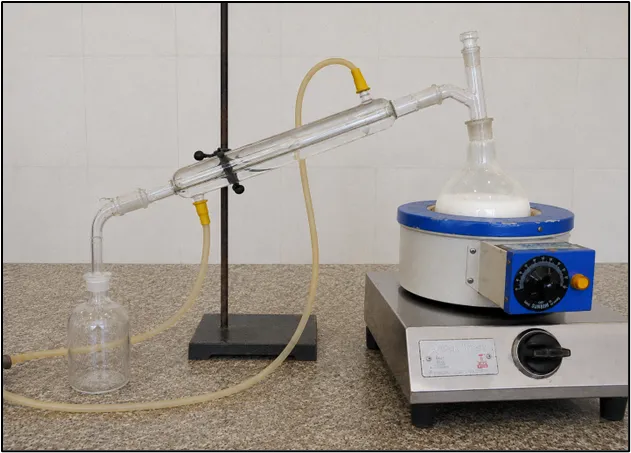
Figure 1. Distillation setup used for the preparation of Dugdha Arka
The vapours generated during heating were condensed and collected as Dugdha Arka. Distillation was continued for approximately 2 hours, yielding 210 mL of distillate. The process was terminated upon the appearance of a faint burnt odour in the residue, indicating near completion of distillation. The percentage yield was calculated using the formula:
Percentage Yield (%) = (Quantity of Dugdha Arka Obtained / Quantity of Milk Used) × 100
The percentage yield of Dugdha Arka obtained was 52.5%.
Organoleptic and Physicochemical Evaluation
Both Go-dugdha and Dugdha Arka were evaluated for their organoleptic characteristics, including colour, appearance, odour, and the presence or absence of an oily layer. The pH of both samples was determined using a calibrated digital pH meter and recorded.
Samples of raw Go-dugdha and Dugdha Arka were submitted to Accuracy Precision & Excellence Laboratories LLP, Thane, Maharashtra, India, for comparative nutritional analysis. The samples were analysed in a single batch. The evaluated parameters included energy value, carbohydrate, protein, fat, ash, moisture, and total sugar content. The analyses were performed according to the standard laboratory methods employed by the testing facility.
The preparation of Dugdha Arka from fresh Gir cow milk yielded a clear, colourless distillate with a mild characteristic milk odour. A total of 210 mL of Dugdha Arka was obtained from 400 mL of milk after approximately 2 hours of distillation, corresponding to a percentage yield of 52.5%. The process parameters and yield are presented in Table 1.
Table 1: Process Parameters and Yield of Dugdha Arka
|
Sr. No. |
Parameter |
Observation |
|
1 |
Raw material |
Fresh Gir cow milk |
|
2 |
Quantity procured |
500 mL |
|
3 |
Quantity used for distillation |
400 mL |
|
4 |
Quantity reserved for analysis |
100 mL |
|
5 |
Distillation apparatus |
Simple distillation assembly |
|
6 |
Temperature range |
70–80°C |
|
7 |
Duration of distillation |
2 h |
|
8 |
Dugdha Arka obtained |
210 mL |
|
9 |
Yield (%) |
52.5% |
|
10 |
End point of distillation |
Appearance of faint burnt odour in the residue |
Organoleptic and physicochemical evaluation revealed notable differences between Go-dugdha and Dugdha Arka. The prepared Dugdha Arka was transparent and colourless, whereas raw milk was white and opaque, as shown in Figure 2.
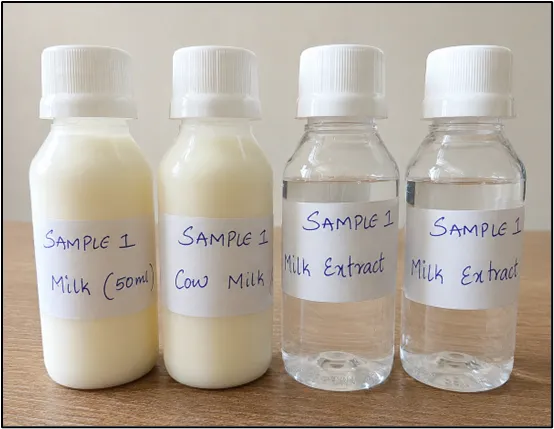
Figure 2. Comparative visual appearance of Go-Dugdha and Dugdha Arka
The oily layer observed in milk was absent in the distillate. The pH of Dugdha Arka was 7.0, compared with 6.8 for raw milk (Table 2).
Table 2: Organoleptic and Physicochemical Evaluation of Go-Dugdha and Dugdha Arka
|
Sr. No. |
Parameter |
Go-Dugdha |
Dugdha Arka |
|
1 |
Colour |
White |
Colourless |
|
2 |
Appearance |
Opaque liquid |
Clear transparent liquid |
|
3 |
Odour |
Characteristic milk odour |
Mild milk odour |
|
4 |
Oily layer |
Present |
Absent |
|
5 |
pH |
6.8 |
7.0 |
Comparative nutritional analysis demonstrated substantial differences between Go-dugdha and Dugdha Arka. The distillate showed markedly lower energy, carbohydrate, protein, fat, ash, and total sugar content, while moisture content increased considerably. The comparative nutritional profile is presented in Table 3.
Table 3: Comparative Nutritional Analysis of Go-Dugdha and Dugdha Arka
|
Sr. No. |
Parameter |
Go-Dugdha |
Dugdha Arka |
Unit |
|
1 |
Energy Value |
64.64 |
0.16 |
kcal/100 g |
|
2 |
Carbohydrate |
3.22 |
0.04 |
g/100 g |
|
3 |
Protein |
4.39 |
<0.5 |
g/100 g |
|
4 |
Fat |
3.80 |
0.10 |
g/100 g |
|
5 |
Ash |
0.73 |
0.00 |
g/100 g |
|
6 |
Moisture |
87.86 |
99.96 |
g/100 g |
|
7 |
Total Sugar |
2.78 |
<0.1 |
g/100 g |
The percentage change observed in various nutritional parameters following distillation is presented in Table 4. A marked reduction in energy value, carbohydrates, fat, and total sugar content was observed, whereas moisture content increased following the Arka Nirmana process.
Table 4: Percentage Change in Nutritional Parameters Following Distillation
|
Sr. No. |
Parameter |
Percentage Change |
|
1 |
Energy Value |
↓ 99.75% |
|
2 |
Carbohydrate |
↓ 98.76% |
|
3 |
Fat |
↓ 97.37% |
|
4 |
Total Sugar |
> ↓ 96.40% |
|
5 |
Moisture |
↑ 13.77% |
Go-dugdha occupies a unique position in Ayurvedic literature and is regarded as one of the most wholesome and nourishing dietary substances. Classical texts describe cow's milk as Madhura Rasa, Madhura Vipaka, Sheeta Virya, Guru and Snigdha in Guna, and also attribute Balya, Brimhana, Rasayana, and Ojas-vardhaka properties to it. These qualities make milk an important nutritional and therapeutic substance, particularly in conditions associated with tissue depletion, debility and chronic illness. However, the same Guru and Snigdha attributes that contribute to its nourishing action may also make it difficult to digest for individuals with Mandagni (diminished digestive fire). Ayurveda Sara Sangraha specifically addresses this limitation and recommends Dugdha Arka when a patient is unable to digest milk yet requires its therapeutic benefits.
Arka Kalpana represents a unique pharmaceutical process in Ayurveda in which the volatile and subtle fractions of a substance are separated through distillation. In the present study, distillation of fresh Gir cow milk yielded a clear, colourless liquid with a mild, characteristic milk odour and no oily layer. These observations indicate that the distillate retained certain volatile aromatic constituents of milk while excluding most of its non-volatile components. From a modern scientific perspective, this observation is consistent with the principle of distillation, in which volatile compounds are carried off in the vapour and condensed. In contrast, non-volatile substances remain in the distillation residue.5
The most significant finding of the present study was the substantial reduction in nutritional constituents following distillation. The energy value decreased from 64.64 kcal/100 g in Go-dugdha to 0.16 kcal/100 g in Dugdha Arka. Similarly, carbohydrate, fat, protein and total sugar contents were markedly reduced following the Arka Nirmana process. Milk derives its nutritional value primarily from proteins, fats and lactose, which contribute significantly to its caloric content and nourishing properties.6 Since these constituents are non-volatile in nature, they are retained within the distillation flask and do not transfer into the collected distillate. Consequently, the resulting Dugdha Arka becomes a predominantly aqueous preparation with minimal nutritional load.
The observed compositional changes provide a plausible scientific explanation for the Ayurvedic concept of Laghuta attributed to Dugdha Arka. In Ayurveda, Laghu does not merely indicate reduced weight but rather ease of digestion, assimilation and metabolism. Raw milk contains substantial quantities of proteins, fats and sugars that require enzymatic digestion, emulsification and metabolic processing before utilisation. Therefore, despite its therapeutic value, milk is classified as Guru. In contrast, Dugdha Arka contains only trace amounts of these macronutrients and consequently places minimal demand on digestive processes. This transformation may explain why Ayurveda Sara Sangraha describes Dugdha Arka as Laghu and Shighrapaki, particularly in patients with severely compromised digestive capacity.
Another noteworthy finding was the reduction in total sugar content from 2.78 g/100 g in milk to less than 0.1 g/100 g in Dugdha Arka. Although lactose was not directly measured in the present study, it is the principal sugar component of milk and is non-volatile.7 The drastic reduction in total sugar content, therefore, suggests that a substantial proportion of lactose remains in the distillation residue. This observation may partly explain the improved digestibility traditionally attributed to Dugdha Arka. However, dedicated studies of lactose estimation would be required to confirm this hypothesis.
The pH of Dugdha Arka was slightly higher than that of raw milk, indicating a shift toward neutrality during distillation. Although the difference was modest, this observation suggests that the distillate possesses physicochemical characteristics distinct from those of the parent material. The clear appearance, absence of fat globules, and increased moisture content further support the extensive transformation of milk during distillation.
An interesting aspect of the present study relates to the classical description of Dugdha Arka as Shaktivardhaka. From a nutritional perspective, the findings indicate that Dugdha Arka contains negligible calories and macronutrients and therefore cannot function as a direct nutritional substitute for milk. At first glance, this appears contradictory to the traditional claim of strength promotion. However, Ayurveda does not equate strength exclusively with caloric value. The concept of Bala encompasses efficient digestion, proper tissue nourishment, metabolic balance and maintenance of physiological functions.8 It is therefore possible that the traditionally observed strengthening effects of Dugdha Arka arise indirectly through enhancement of Agni, improved assimilation of nutrients from the diet, or the action of volatile constituents transferred during distillation. These mechanisms remain speculative and require further investigation through advanced analytical and pharmacological studies.
The present study was limited to the physicochemical and nutritional evaluation of a single batch of Dugdha Arka. Volatile constituents were not characterised, and lactose was not specifically estimated. Furthermore, no biological or clinical evaluation was performed. Nevertheless, the findings provide valuable preliminary evidence regarding the transformation of milk during the Arka Nirmana process and offer a scientific framework for understanding the classical Ayurvedic concept of Laghuta.
Overall, the results demonstrate that the preparation of Dugdha Arka converts nutrient-rich milk into a predominantly aqueous distillate with minimal nutritional burden. The substantial reduction in protein, fat, sugar, and caloric content observed in the present study provides a reasonable scientific basis for the traditional Ayurvedic description of Dugdha Arka as Laghu and Shighrapaki. These findings contribute towards bridging classical Ayurvedic knowledge with contemporary analytical understanding and highlight the need for further investigations employing advanced analytical and clinical approaches.
CONCLUSION
The present study successfully prepared Dugdha Arka from fresh Gir cow milk and comparatively evaluated its physicochemical and nutritional characteristics with those of raw Go-dugdha. The distillation process resulted in a clear, colourless distillate with a mild milk odour, neutral pH, and markedly reduced levels of energy, carbohydrates, fat, protein, and total sugar. These findings indicate that the Arka Nirmana process transforms milk into a low-calorie, low-solid formulation with minimal nutritional burden. The observed compositional changes provide a possible scientific explanation for the Ayurvedic concept of Laghuta and support the traditional use of Dugdha Arka in individuals with impaired digestive capacity. Further studies employing advanced analytical techniques are required to identify the volatile constituents responsible for its therapeutic actions.
No external funding was received for the present study.
The authors declare no conflicts of interest regarding the publication of this article.
REFERENCES




Tushar Nautiyal, Archana Gharote, Shruthi Murali, Ekta Tomar, Pharmaceutico-Analytical and Nutraceutical Characterisation of Go-Dugdha and Dugdha Arka: Exploring the Scientific Basis of Laghuta, Int. J. of Pharm. Sci., 2026, Vol 4, Issue 6, 7688-7695, https://doi.org/10.5281/zenodo.21066589
 10.5281/zenodo.21066589