
View Article

Abstract

Diabetes mellitus is a chronic disease that requires long-term treatment with antidiabetic drugs. These medicines may cause adverse drug reactions (ADRs), which can affect patient safety and treatment outcomes. The present study was conducted to evaluate ADRs in diabetic patients receiving antidiabetic therapy.A total of 65 diabetic patients were included in the study. Data related to age, gender, prescribed drugs, type of ADR, and severity were collected and analyzed. The study showed that most patients belonged to the 21-40 years age group, and male patients were slightly higher in number than females. Hypoglycemia, nausea, sweating, diarrhea, dizziness, and increased urination were the most common ADRs reported. Metformin, glimepiride, insulin, and SGLT2 inhibitors were commonly associated with ADRs.Moderate ADRs were most frequently observed, followed by severe and mild reactions. Some severe ADRs required immediate medical attention.The study concludes that pharmacovigilance plays an important role in identifying and preventing ADRs in diabetic patients. Regular monitoring, patient counseling, and proper ADR reporting can improve patient safety and effective diabetes management.

Keywords

ADR monitoring, Education and systemic Advancement , Health care, Identifying Potential drugs, analysing drug intercations

Introduction

× Popup Image

Pharmacovigilance :    It can be defined as the science and activities relating to the detection, assessment, understanding and prevention of adverse effects or any other possible drug-related problems.[11] It plays role in identifying, assessing, understanding and preventing adverse effects or aany other drug – related problems with increasing use of Medicines Worldwide,monitoring their safety has become essential to protect public health. Pharmacovigilance word derived from two words “Pharmakon “(Greek Word for drug and “vigil are” (Latin word meaning to keep and watch). Pharmacovigilance literally Means “keep watch

over drugs “It Ensures that Medicines used by patients are safe, Effective of good quality.According to WHO, Pharmacovigilance can be defined as the science and activities relating to the

detection, assessment, understanding and prevention of adverse effects or any other possible drug related problems.

Scope of Pharmacovigilance:

The pharmacovigilance aims to understand evaluate, identify and prevent adverse effect or other drug.

1] Adverse Event Reporting

2]Signal Detection

3]Risk Assessment

4]Post Marketing surveillance[11]

PharmacovigilanceHistory

:Pharmacovigilance started about 170 years ago, though it was not called Pharmacovigilance at that time.The thalidomide tragedy (1960s) led to the development of the modern global Pharmacovigilance system.

Pharmacovigilance focuses on monitoring the safety of medicines throughout their life cycle.In the 1980s, spontaneous reporting systems were recognized as important tools for detecting adverse drug reactions (ADRs).Many countries adopted post-marketing surveillance and used ADR reports for regulatory decisions, including drug withdrawal.Reporting of adverse drug reactions increased worldwide, reaching 200–300 reports per year per 10 million people.The European Commission made Pharmacovigilance a legal part of drug regulation.Pharmaceutical companies were required to report suspected adverse effects to regulatory authorities.Many countries made ADR reporting compulsory for healthcare professionals.Pharmacoepidemiology courses were introduced in universities to improve Pharmacovigilance knowledge.By the mid-2000s, efforts focused on:Intensifying ADR reporting.Monitoring specific drugs and adverse effects (skin, liver, eyes,etc.).Establish pharmacovigilance activities at regional, national, and international levels.Strengthen collaboration between pharmacists and physicians to improve ADR reporting.Encourage direct patient reporting of adverse drug reactions.

Use Prescription Event Monitoring (PEM) as an important pharmacovigilance tool.Implement Record Linkage Systems for better drug safety monitoring.Apply Case-Control Surveillance to identify drug-induced disorders.Enhance both the quality and quantity of ADR reports.Promote continuous monitoring to improve drug safety and patient care.

Diabetes:

Diabetes is a whole group of diseases in the body regulating blood sugar level. There is a lack of response to the insulin produced by the pancreas. Diabetes is a serious chronic disease that occurs either when the pancreas does not produce enough insulin or when the body cannot effectively use the insulin it produces. Diabetes is an important public health problem, affecting over 500 million people globally.[16]

Classified in three types which is:

1)Type 1 Diabetes: It caused by autoimmune -cells, leading to an absolute insulin deficiency.

2)Type-2 Diabetes: It is most common form characterized by insulin deficiency, closely linked to obesity and sedentary lifestyles.

3)Gestational Diabetes: Which found during pregnancy.

History of Diabetes: Diabetes mellitus comes from the Greek word diabetes ("to pass through") and the Latin word mellitus ("sweet like honey").Ancient descriptions: Diabetes was first described in ancient Egyptian records around 1500 BCE as a condition characterized by excessive urination.Indian contribution: Ancient Indian physicians Sushruta and Charaka described Madhumeha ("honey urine"), noting that urine attracted ants due to

Drug Interaction :

1)    Sulfonylureas + NSAIDs – Increased risk of hypoglycemia.

2)    Metformin + Contrast Media – Risk of lactic acidosis.

3)    SGLT2 Inhibitors + Diuretics – Dehydration and low blood pressure.

4)    DPP-4 Inhibitors + ACE Inhibitors – Rare risk of angioedema.

5)    Insulin + Beta Blockers – May mask hypoglycemia symptoms.

6)    SGLT2 Inhibitors + Lithium – Reduced lithium levels.

7)    Metformin + Cimetidine/Dolutegravil Increased metformin levels.

8)    Aspirin + Beta Blockers + Alcohol – Increased or masked hypoglycemia.

9)    Some Antibiotics, Antifungals & NSAIDs – May cause severe hypoglycemia.

10)  Steroids & Oral Contraceptives – May increase blood glucose levels

Prevention :-

Maintain a healthy body weight.

Exercise regularly (at least 150 min/week).

Follow a balanced, healthy diet.

Avoid excess sugar, refined carbs, and processed foods.

Choose healthy unsaturated fats.

Avoid smoking and excessive alcohol intake.

Monitor blood sugar, blood pressure, and cholesterol regularly.

Get adequate sleep and manage stress.

Prevent high blood pressure and metabolic imbalance.

Follow a personalized diabetes care plan.


{2} AIM & OBJECTIVE:

Aim:

To evaluate adverse drug reactions (ADRs) associated with antidiabetic medications in diabetic patients through pharmacovigilance monitoring.

Objectives:

1)To identify and record ADRs in diabetic patients receiving antidiabetic therapy.

2)To assess the severity and pattern of ADRs caused by antidiabetic drugs.

3)To study the association between antidiabetic medications and common ADRs.

 4)To analyze age-wise and gender-wise distribution of ADRs.

5)To compare the safety profiles of different antidiabetic drug classes.

6)To evaluate the incidence of mild, moderate, and severe ADRs.

7)To promote awareness of pharmacovigilance and ADR reporting.

8)To improve patient safety through continuous ADR monitoring.

9)To encourage early detection, prevention, and management of ADRs.       

{3}METHODOLOGY: The age-wise distribution showed that the highest number of patients belonged to the 21–30 years age group (16 patients), followed by the 31–40 years group (13 patients). Moderate numbers were observed in the 41–50 and 51–60 years groups (8 patients each). Fewer patients were reported in the 0–10 years (4 patients), 61–70 years (2 patients), and 71–80 years (1 patient) age groups. Overall, young and middle-aged adults were the most affected and formed the major study popul

DATA COLLECTION :


S

r n o

Patient name

Ag e

Drug

Dose

ADR

Severity

1

Pari Shrikant Tole

05

Insulin Aspart

0.3units

Hypoglycemia with seizures, Pale skin

Severe

2

Vinayak Ramesh Bhale

06

Human regular insulin

0.2units

Loss of subcutaneous fats

Mild

3

Anuj Ramesh More

08

Insulin

0.5units

Injectionsite reaction.

Mild

4

Shradhha Jadhav

10

Insulin

1.5units

Pain,Redness.

Mild

5

Rahul Mahajan

11

Insulin glargine

12units

Redness, lipohyperotropy

Mild

6

Kushi Rajesh Ugale

12

Insulin

1.5units

Rashes, Redness

Mild

7

Vishal Sanjay Sathe

13

insulin

1.5units

Shakinghands, Injection site reaction.

Mild

8

Tanuja Pankaj gore

14

Insulin

1.5units

Dizziness

Mild

9

Pooja Dalvi

14

Metformin HCl

500mg

Abdominal Pain,Dizziness

Moderat e

1

0

Ankush Kakade

16

Glimepiride

2mg

Hypoglycemia with dizziness

Severe


GENDER DISTRIBUTION :

The gender distribution of diabetic patients showed that 54% were males and 46% were females. Male patients were slightly higher in number, but both genders were almost equally represented in the study. The findings indicate that diabetes mellitus affects both males and females, with a slightly higher prevalence among males. This gender-wise distribution is important for understanding patient demographics and evaluating adverse drug reactions (ADRs) in diabetic patients.
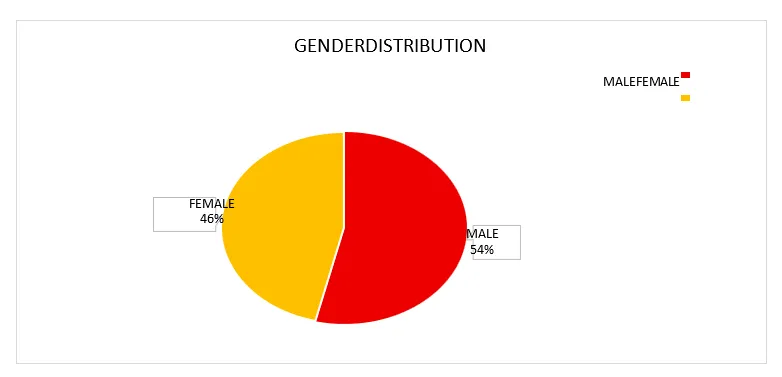


:Gender Distribution


SEVERITY  DISTRIBUTION

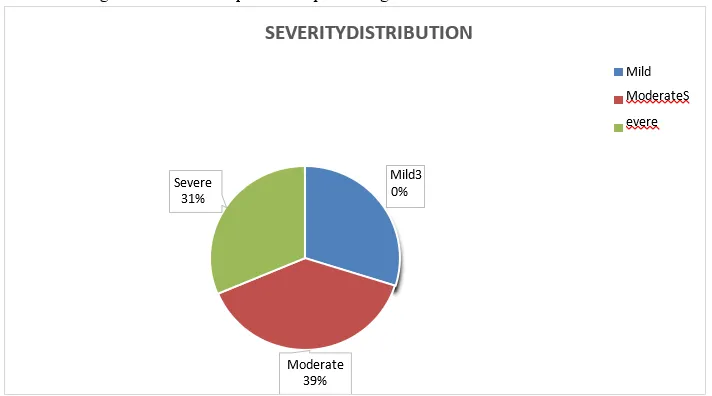
The severity distribution of ADRs showed that moderate ADRs were the most common (26 patients), followed by severe ADRs (21 patients) and mild ADRs (20 patients). Mild reactions were less serious and manageable, while severe reactions required immediate medical attention. Overall, moderate ADRs were reported most frequently, indicating the need for proper monitoring and treatment of patients experiencing ADRs


RESULT & DISSCUSSION :-

The present study was conducted on 65 diabetic patients receiving antidiabetic medications to evaluate adverse drug reactions (ADRs). The majority of patients belonged to the 21–30 years age group, and male patients (54%) were slightly higher in number than female patients (46%). Metformin, glimepiride, glibenclamide, insulin, and dapagliflozin were the most commonly prescribed antidiabetic drugs. Hypoglycemia was the most frequently reported ADR, followed by nausea, sweating, diarrhea, dizziness, itching, and increased urination. Severity assessment showed that moderate ADRs (39%) were more common than severe (31%) and mild (30%) ADRs. Several severe reactions, including hypoglycemia with seizures, pancreatitis, lactic acidosis, and severe infections, were also observed during the study.

DISSCUSION

The findings of the present study indicate that adverse drug reactions are common among diabetic patients receiving antidiabetic therapy. Hypoglycemia was the most frequently observed ADR and was mainly associated with insulin and sulfonylurea therapy. Gastrointestinal disturbances such as nausea, vomiting, and abdominal pain were commonly reported with metformin, while SGLT2 inhibitors were associated with urinary tract and genital infections. Most ADRs were moderate in severity and required proper medical supervision. These findings highlight the importance of pharmacovigilance, regular patient monitoring, and ADR reporting to improve drug safety and therapeutic outcomes in diabetic patients.

CONCLUSION

The present study concluded that adverse drug reactions (ADRs) are common in diabetic patients receiving antidiabetic medications. Hypoglycemia was the most frequently reported ADR, especially with insulin and sulfonylurea therapy. Gastrointestinal disturbances were commonly associated with metformin, while SGLT2 inhibitors caused urinary tract and genital infections. Most ADRs were moderate in severity, though some severe reactions such as hypoglycemia, pancreatitis, and lactic acidosis were also observed. The study highlights the importance of pharmacovigilance, regular monitoring, patient counseling, and ADR reporting to improve patient safety and effective diabetes management.


REFERENCES

  1. NurAlfiahBiniIbrahim.Anintroductiontodiabetes.Front HealthInform.2023; 12:129.
  2. ajendraPradeepaet. al. IndianJOphthalmol. 2021Nov.Epidemiologyof Type2 diabetes in India.
  3. KaveeshwarSA,CornwallJ.Thecurrent stateofdiabetesmellitusinIndia.AMJ 2014, 7, 1, 45-48.https//dx.doi.org/10.4066/AMJ.2014.1979.
  4. JagannathV.Dixit et.al. IndianJEndocrinolMetab. 2021Jul.-Aug. Diabetescare in India: A descriptive study.
  5. SamarA.Antar,NadaA.Ashour,MarwaSharaky,MuhammadKhattab,NairaA. Ashour,RoaaT. Zaid, EunJoo Roh, Ahmed Elkamhawy, Ahmed A. AlKarmalawy. https:// doi.org/10.1016/j.biopha.2023.115734
  6. Cristiano Matos, Florence van Hunsel, Rogerio Tavares Ribeiro, Dulce Nascimentodo OandJoaoFilipeRaposo 23April, 2020,Vol.11:1-18.DOI: 10.1177/2042098620953935
  7. Quinonzon CC., Cheikh, J. History of insulin Journal of community Hospital InternalmedicinePerspectives2012;2(2)18701.doi:10.3402/jchimp.v2i2.18701
  8. Antar, S.A., Ashour, N.A. Sharoky, M., Khattab, M. Ashour, N.A., Zard, R.T., Roh, E. J., Elkambawy, A., & AI-karmalawy, A.A. (2023) Diabetes mellitus: classification, mediatorsandcomplications;Agate to identifypotentialtargetsforthe development of new effective treatments. Biopha, 168, 115734. doi.org
  9. 9.PradeepaR, MohanV. Epidemiologyoftype2diabetes inIndia. IndiaJournalof Ophthalmology 2021 Nov. Available from: Pubmed.ncbi.nlm.nih.gov
  10. Dixit,J.V.,et.al(2021).Diabetescare inIndia: Adescriptivestudy,IndianJournal of endocrinology and Metabolism July-August 2021.
  11. Pharmacovigilance Nirali written by Dr. D.K. Tripathi, Dr. Shiva Shankar Shukla, Dr. RavindraKumar Pandeyfirst edition2019ofNiraliprakashanonpage 1.10-1.13.
  12. Studyondrug-associated ARindmpatientsby Himanshu Singh—2025.
  13. AlamS, EqbalK, PatelI, MullaI, AnsariS, AyeshaB. Thehistoryofdiabetes: from olden days to discovering insulin. Int J Unani Integr Med 2017; 1(1): 25-28.
  14. AhmedAM.HistoryofdiabetesmellitusSaudiMedJ.2002Apr;23(4):373-378.
  15. AnintroductiontodiabetesIbrahimNAB. AnintroductiontodiabetesFront Health Inform. 2023; 12: 129. doi: 10.30699/fhi.v12i1.405.
  16. DiabetesVijayaraghavanJ,CrabtreeJS.Diabetes.[Internet].Availablefrom: Natural home Remedies Website
  17. AboodM.K.KhalafH.A.,Abdulqader,E.H.,Taghi,H.S.,&Al-Temimi,A.A. (2022) Scope of pharmacovigilance: Comprehensive review. Chemical Science International Journal, 31(5), 29-39. doi.org
  18. orldHealthOrganization.Globalreportondiabetes.Geneva: WorldHealth Organization; 2016.
  19. .ManipalHospitals.Topdiabeticdiet charts:Indianmealplansforhealthyblood sugar [Internet]. 2025 Oct 6 [Cited 2026 May 19]. Available from: Manipalhospitals.com
  20. .AmericanDiabetes Association(2003) Historyofdiabetes. Indiabetescare, 26 (suppl 1) S5-S20. PubMed
  21. .Expert ommitteeonthediagnosisandclassificationofdiabetesmellitus.Report of the expert committee on the diagnosis and classification of diabetes mellitus.Diabetescare2003;26suppl1:S5-S20.
  22. PiragineD,ParikhP.Diabetes. In:StatPearls[internet].TreasureIsland(FL): StatPearls Publishing; 2023. Available from: ncbi.nlm.nih.gov
  23. Sankar, V., Saeed, Y., Joseph, R.M., Azizi, H., & Thomas, P.M. (2015). Serious drug-druginteractions intheprescribingofdiabeticpatients. MedicalSciences, 3, 93-103.
  24. D'RozarioV.Bloodsugarchart:Normal, fasting,post-meal&randomlevels. Medindia. Updated 2025 Apr 10. Available from: medindia.net
  25. JordanK.(2019).ResearchGate.JournaloftheMedicalLibraryAssociation,107(2) 284-285.26.     Kapoor,N.(2025,May26).SignsandSymptomsoftype2diabetes.Astika khumbhak wellness clinic. astikakhumbhak.com
  26. Happyhealth(2019,April5)DiabetSymptoms:Treatmentandprevention [Infographic]. Happy health.
  27. ung, A. K., Walker, S., Khu, Y. L., Tang, M. J., Lee, J. I., & Graudins, Lev. (2022).Adversedrugreactionmanagement inhospitalsettings:Reviewonpractice variations, quality indicators and education focus. European Journal of Clinical Pharmacology, 78(5), 781-791.
  28. Saiyed,M.,James,O.,Saboo,B.,Gupta,A.,Mehta,A.,Basu,D.,Ramchandani,
  29. G.D.,Krishnan,G.ShumShunmugavelu,M.,Ahmad,P.O.,Gokalani,R.,Jaggi,S.,
  30. Chugh,S.,Craft,J.,Parkel,S.,andJames,S.(2026).Type1diabetesandschools: The Indian Experience Journal.
  31. Suke,S.G.,Kosta,P.,&Negi,H.(2015).Roleofpharmacovigilance inIndia: An overview. Online Journal of Public Health Informatics, 7(2), e203.
  32. Prajapati, S., Suthar,J.,Hasnani, D., &Chavda, V.(2024).Prescribingpatternof antidiabetic medications in type 2 diabetes patients: An observational ambispective study. Clinical Diabetology, 13(3), 170-179.
  33. ucier,J.,&Mathias,P.M.(2024).Type1diabetes.InStatPearls.StatPearls Publishing.
  34. Matos, C., van Hunsel, F., Ribeiro, R. T., do Ó, D. N., & Raposo, J. F. (2020). Diabetespatients'pharmacovigilanceknowledge&riskperception:The influenceof being part of a patient organisation. Therapeutic Advances in Drug Safety, 11, 2042098620953935.
  35. Rahman,M.S.,Hossain, K.S.,Das,S.,Kundu,S.,Adegoke,E.O.,Rahman,M. A., Hannan, M. A., Uddin, M. J.,&Pang, M.-G.(2021). Role ofinsulin in health& disease: An update. International Journal of Molecular Sciences, 22(12), 6403.
  36. Basu, S., Sengupta, T., & Kundu, S. (2026). Medication adherence & its predictorsinpatientswithtype2diabetes mellitusinIndia: Asystematicreview& meta-analysis of current evidence. Health Science Reports, 9(2), e71845.https://doi.org/10.1002/hsr2.71845
  37. NationalInstituteofDiabetes&Digestive &KidneyDisease.(n.d.).What is diabetes? U.S. Department of Health & Human Services, National Institutes of Health.
  38. Diabetestypes-pharmacology-IIwrittenbyDr.ManjunathaP.Mudgal&Dr. Uday Rajsharma of Nirali Prakashan on page no. 203.
  39. Huang, I.,Lim, M. A., &Pranata, R.(2020). Diabetes mellitus isassociatedwith increased mortality & severity of disease in COVID-19 pneumonia: A systematic review, meta-analysis, &meta-regression.Diabetes&MetabolicSyndrome:Clinical Research & Reviews, 14(4), 395-403.
  40. Palanisamy, S., Kumaran, K. S. A., and Rajasekaran, A. (2011). A studyon assessment,monitoringandreportingofadversedrugreactioninIndianhospital. Asian Journal of Pharmaceutical and Clinical Research 4(3), 112-116.
  41. Chandrabhan,Jain,P.,&Jain,S.(2021).Adversedrugreactionmonitoringstudy in hospitalized patients: Support for pharmacovigilance at a tertiary care hospital. International Journal of Basic & Clinical Pharmacology 10(3), 261-265.
  42. Varshney,T.,Saini,S.,&Afreen,A.(2023).Drugdiscoveryanddevelopement: A basic approach to improve the sucess of drug discovery. International Journal of Pharmaceutical Sciences and Research 14(7), 3314-3326.
  43. Mishra, S., Nigam, N., Ahmad, S. S., Shankar, P., Kumar, S., Kumar, V., & Gupta,S.(2021).Adversedrugreactionmonitoringamongst diabeticpatientsof tertiarycare centre of northern India related to anti-diabetic drugs. International Journal of Pharmaceutical Sciences and Research 12(3), 1915-1922.
  44. orldHealthOrganization.Diabetes[Internet].Geneva:WHO;2024[cited2026 May 20]. Available from: WHO Diabetes Fact Sheet
  45. WorldHealthOrganization.Diabetes[Internet].Geneva: WHO;2024[cited2026 May 20]. Available from: WHO Diabetes Fact Sheet
  46. Colvin, A. J. S., Klaas, B., & Pandey, S. P., Tiwari, A., & Gupta, D. P. (2026). The evolution of alternative dispute resolution mechanism in India: Its relationship with Civil Procedure Code and Micro Small and Medium Enterprises growth. InternationalJournalofLawManagement &Humanities,8(2),2026–2043.Mahony,
  47. D.(n.d.).Researchonalternativedisputeresolutionprocedures. CornellUniversity eCommons.
  48. Pandey, S. P., Tiwari, A., & Gupta, D. P. (2026). The evolution of alternative disputeresolutionmechanisminIndia:ItsrelationshipwithCivilProcedureCodeand Micro Small and Medium Enterprises growth. International Journal of Law Management & Humanities, 8(2), 2026–2043.
  49. SapraA,BhandariP.Diabetes.In:StatPearls[Internet].TreasureIsland(FL): StatPearls publishing; 2023 june.
  50. MłynarskaE,CzarnikW,DzieżaN,Jędraszak W,MajchrowiczG,PrusinowskiF, et al. Type 2 Diabetes Mellitus: New Pathogenetic Mechanisms, Treatment and the Most Important Complications. Int J Mol Sci. 2025;26(3):1234. Available from: mdpi.com
  51. ThakareV,PatilA,JainM,RaiV,LangadeD.Adversedrugreactionsreporting: Five years analysis from a teaching hospital. J Family Med Prim Care. 2023;12(2):365–370. Available from: pmc.ncbi.nlm.nih.gov.
  52. SastryNP,DeshmukhJS,EkreKR,SolankiMD,NitnawareVV.Riskassessment of type 2 diabetes among the adult population using Indian Diabetes Risk Score: a community-based cross-sectional study in Central India. Indian J Community Med Public Health. 2024;11(12). Available from: ijcmph.com
  53. TamilarasanM,SelvarajuM,KulothunganK,SrirangathanT.Across-sectional study to assess diabetic risk using Indian diabetic risk score among the urban populationofPerambalur, SouthbyIndia. IndianJ CommunityMedPublicHealth. 2021;8(6):2995-2999. Available from: ijcmph.com
  54. AmericanAssociationofDiabetesEducators.(1992).Thescopeofpractice for diabetes educators and the standards of practice for diabetes educators. Diabetes Educator, 18(1), 52–56. https://doi.org/10.1177/014572179201800109
  55. Fornasier G, Francescon S, Leone R, Baldo P. An historical overview over Pharmacovigilance.IntJClinPharm.2018;40(4):744–747.doi:10.1007/s11096-018-0657-1. Available from: pmc.ncbi.nlm.nih.gov
  56. Alanazi AM, Abo el-Fetoh NM, Alotaibi HK, Alanazi KA, Alotaibi BK, Alshammari SM, et al. Surveyof awareness of diabetes mellitus among the Arar population, Northern Border Region of Saudi Arabia. Electron Physician. 2017;9(9):5369–5374.doi:10.19082/5369.Availablefrom:pmc.ncbi.nlm.nih.gov
  57. WeinbergSibonyR, SegevO,DorS,RazI.DrugTherapies forDiabetes. Int J Mol Sci. 2023;24(24):17147. doi:10.3390/ijms242417147. Available from: pmc.ncbi.nlm.nih.gov
  58. https://www.who.int/news-room/fact-sheets/detail/diabetesInformationof Diabetes
  59. Diabetes.Pdfhttps://share.google/p2ZIYWOe2Wdi1HaI.
  60. NEWSMedical&LifeSciences.HistoryofDiabetes.
  61. TheHistoryofDiabetesfromAncient Time.ResearchGate.Availablefrom: https://www.researchgate.netInternationalJournalofResearchandDevelopmentinPharmacy&LifeSciences.
  62. DiabetesPDF.Availablefrom:https://sharegoogle/p2Ziywoew0iHwaIIbrahimNAFB.AnIntroductiontoDiabetes.FrontHealthInform.2023;12:129.
  63. WorldHealthOrganization(WHO).DiabetesFactSheet.Availablefrom: ttps://www.who.int/news-room/fact-sheets/detail/diabetes
  64. An Introduction to Diabetes. ResearchGate. Available from: https://www.researchgate.net/publication/370859746_An_Introduction_to_Diabetes
  65. DIABETES [PDF]. Available from: https://www.medschool.lsuhsc.edu/genetics/docs/DIABETES.pdf
  66. IntroductiontoDiabetesMellitus.PubMed.Availablefrom: https://pubmed.ncbi.nlm.nih.gov/23393665/


Reference

  1. NurAlfiahBiniIbrahim.Anintroductiontodiabetes.Front HealthInform.2023; 12:129.
  2. ajendraPradeepaet. al. IndianJOphthalmol. 2021Nov.Epidemiologyof Type2 diabetes in India.
  3. KaveeshwarSA,CornwallJ.Thecurrent stateofdiabetesmellitusinIndia.AMJ 2014, 7, 1, 45-48.https//dx.doi.org/10.4066/AMJ.2014.1979.
  4. JagannathV.Dixit et.al. IndianJEndocrinolMetab. 2021Jul.-Aug. Diabetescare in India: A descriptive study.
  5. SamarA.Antar,NadaA.Ashour,MarwaSharaky,MuhammadKhattab,NairaA. Ashour,RoaaT. Zaid, EunJoo Roh, Ahmed Elkamhawy, Ahmed A. AlKarmalawy. https:// doi.org/10.1016/j.biopha.2023.115734
  6. Cristiano Matos, Florence van Hunsel, Rogerio Tavares Ribeiro, Dulce Nascimentodo OandJoaoFilipeRaposo 23April, 2020,Vol.11:1-18.DOI: 10.1177/2042098620953935
  7. Quinonzon CC., Cheikh, J. History of insulin Journal of community Hospital InternalmedicinePerspectives2012;2(2)18701.doi:10.3402/jchimp.v2i2.18701
  8. Antar, S.A., Ashour, N.A. Sharoky, M., Khattab, M. Ashour, N.A., Zard, R.T., Roh, E. J., Elkambawy, A., & AI-karmalawy, A.A. (2023) Diabetes mellitus: classification, mediatorsandcomplications;Agate to identifypotentialtargetsforthe development of new effective treatments. Biopha, 168, 115734. doi.org
  9. 9.PradeepaR, MohanV. Epidemiologyoftype2diabetes inIndia. IndiaJournalof Ophthalmology 2021 Nov. Available from: Pubmed.ncbi.nlm.nih.gov
  10. Dixit,J.V.,et.al(2021).Diabetescare inIndia: Adescriptivestudy,IndianJournal of endocrinology and Metabolism July-August 2021.
  11. Pharmacovigilance Nirali written by Dr. D.K. Tripathi, Dr. Shiva Shankar Shukla, Dr. RavindraKumar Pandeyfirst edition2019ofNiraliprakashanonpage 1.10-1.13.
  12. Studyondrug-associated ARindmpatientsby Himanshu Singh—2025.
  13. AlamS, EqbalK, PatelI, MullaI, AnsariS, AyeshaB. Thehistoryofdiabetes: from olden days to discovering insulin. Int J Unani Integr Med 2017; 1(1): 25-28.
  14. AhmedAM.HistoryofdiabetesmellitusSaudiMedJ.2002Apr;23(4):373-378.
  15. AnintroductiontodiabetesIbrahimNAB. AnintroductiontodiabetesFront Health Inform. 2023; 12: 129. doi: 10.30699/fhi.v12i1.405.
  16. DiabetesVijayaraghavanJ,CrabtreeJS.Diabetes.[Internet].Availablefrom: Natural home Remedies Website
  17. AboodM.K.KhalafH.A.,Abdulqader,E.H.,Taghi,H.S.,&Al-Temimi,A.A. (2022) Scope of pharmacovigilance: Comprehensive review. Chemical Science International Journal, 31(5), 29-39. doi.org
  18. orldHealthOrganization.Globalreportondiabetes.Geneva: WorldHealth Organization; 2016.
  19. .ManipalHospitals.Topdiabeticdiet charts:Indianmealplansforhealthyblood sugar [Internet]. 2025 Oct 6 [Cited 2026 May 19]. Available from: Manipalhospitals.com
  20. .AmericanDiabetes Association(2003) Historyofdiabetes. Indiabetescare, 26 (suppl 1) S5-S20. PubMed
  21. .Expert ommitteeonthediagnosisandclassificationofdiabetesmellitus.Report of the expert committee on the diagnosis and classification of diabetes mellitus.Diabetescare2003;26suppl1:S5-S20.
  22. PiragineD,ParikhP.Diabetes. In:StatPearls[internet].TreasureIsland(FL): StatPearls Publishing; 2023. Available from: ncbi.nlm.nih.gov
  23. Sankar, V., Saeed, Y., Joseph, R.M., Azizi, H., & Thomas, P.M. (2015). Serious drug-druginteractions intheprescribingofdiabeticpatients. MedicalSciences, 3, 93-103.
  24. D'RozarioV.Bloodsugarchart:Normal, fasting,post-meal&randomlevels. Medindia. Updated 2025 Apr 10. Available from: medindia.net
  25. JordanK.(2019).ResearchGate.JournaloftheMedicalLibraryAssociation,107(2) 284-285.26.     Kapoor,N.(2025,May26).SignsandSymptomsoftype2diabetes.Astika khumbhak wellness clinic. astikakhumbhak.com
  26. Happyhealth(2019,April5)DiabetSymptoms:Treatmentandprevention [Infographic]. Happy health.
  27. ung, A. K., Walker, S., Khu, Y. L., Tang, M. J., Lee, J. I., & Graudins, Lev. (2022).Adversedrugreactionmanagement inhospitalsettings:Reviewonpractice variations, quality indicators and education focus. European Journal of Clinical Pharmacology, 78(5), 781-791.
  28. Saiyed,M.,James,O.,Saboo,B.,Gupta,A.,Mehta,A.,Basu,D.,Ramchandani,
  29. G.D.,Krishnan,G.ShumShunmugavelu,M.,Ahmad,P.O.,Gokalani,R.,Jaggi,S.,
  30. Chugh,S.,Craft,J.,Parkel,S.,andJames,S.(2026).Type1diabetesandschools: The Indian Experience Journal.
  31. Suke,S.G.,Kosta,P.,&Negi,H.(2015).Roleofpharmacovigilance inIndia: An overview. Online Journal of Public Health Informatics, 7(2), e203.
  32. Prajapati, S., Suthar,J.,Hasnani, D., &Chavda, V.(2024).Prescribingpatternof antidiabetic medications in type 2 diabetes patients: An observational ambispective study. Clinical Diabetology, 13(3), 170-179.
  33. ucier,J.,&Mathias,P.M.(2024).Type1diabetes.InStatPearls.StatPearls Publishing.
  34. Matos, C., van Hunsel, F., Ribeiro, R. T., do Ó, D. N., & Raposo, J. F. (2020). Diabetespatients'pharmacovigilanceknowledge&riskperception:The influenceof being part of a patient organisation. Therapeutic Advances in Drug Safety, 11, 2042098620953935.
  35. Rahman,M.S.,Hossain, K.S.,Das,S.,Kundu,S.,Adegoke,E.O.,Rahman,M. A., Hannan, M. A., Uddin, M. J.,&Pang, M.-G.(2021). Role ofinsulin in health& disease: An update. International Journal of Molecular Sciences, 22(12), 6403.
  36. Basu, S., Sengupta, T., & Kundu, S. (2026). Medication adherence & its predictorsinpatientswithtype2diabetes mellitusinIndia: Asystematicreview& meta-analysis of current evidence. Health Science Reports, 9(2), e71845.https://doi.org/10.1002/hsr2.71845
  37. NationalInstituteofDiabetes&Digestive &KidneyDisease.(n.d.).What is diabetes? U.S. Department of Health & Human Services, National Institutes of Health.
  38. Diabetestypes-pharmacology-IIwrittenbyDr.ManjunathaP.Mudgal&Dr. Uday Rajsharma of Nirali Prakashan on page no. 203.
  39. Huang, I.,Lim, M. A., &Pranata, R.(2020). Diabetes mellitus isassociatedwith increased mortality & severity of disease in COVID-19 pneumonia: A systematic review, meta-analysis, &meta-regression.Diabetes&MetabolicSyndrome:Clinical Research & Reviews, 14(4), 395-403.
  40. Palanisamy, S., Kumaran, K. S. A., and Rajasekaran, A. (2011). A studyon assessment,monitoringandreportingofadversedrugreactioninIndianhospital. Asian Journal of Pharmaceutical and Clinical Research 4(3), 112-116.
  41. Chandrabhan,Jain,P.,&Jain,S.(2021).Adversedrugreactionmonitoringstudy in hospitalized patients: Support for pharmacovigilance at a tertiary care hospital. International Journal of Basic & Clinical Pharmacology 10(3), 261-265.
  42. Varshney,T.,Saini,S.,&Afreen,A.(2023).Drugdiscoveryanddevelopement: A basic approach to improve the sucess of drug discovery. International Journal of Pharmaceutical Sciences and Research 14(7), 3314-3326.
  43. Mishra, S., Nigam, N., Ahmad, S. S., Shankar, P., Kumar, S., Kumar, V., & Gupta,S.(2021).Adversedrugreactionmonitoringamongst diabeticpatientsof tertiarycare centre of northern India related to anti-diabetic drugs. International Journal of Pharmaceutical Sciences and Research 12(3), 1915-1922.
  44. orldHealthOrganization.Diabetes[Internet].Geneva:WHO;2024[cited2026 May 20]. Available from: WHO Diabetes Fact Sheet
  45. WorldHealthOrganization.Diabetes[Internet].Geneva: WHO;2024[cited2026 May 20]. Available from: WHO Diabetes Fact Sheet
  46. Colvin, A. J. S., Klaas, B., & Pandey, S. P., Tiwari, A., & Gupta, D. P. (2026). The evolution of alternative dispute resolution mechanism in India: Its relationship with Civil Procedure Code and Micro Small and Medium Enterprises growth. InternationalJournalofLawManagement &Humanities,8(2),2026–2043.Mahony,
  47. D.(n.d.).Researchonalternativedisputeresolutionprocedures. CornellUniversity eCommons.
  48. Pandey, S. P., Tiwari, A., & Gupta, D. P. (2026). The evolution of alternative disputeresolutionmechanisminIndia:ItsrelationshipwithCivilProcedureCodeand Micro Small and Medium Enterprises growth. International Journal of Law Management & Humanities, 8(2), 2026–2043.
  49. SapraA,BhandariP.Diabetes.In:StatPearls[Internet].TreasureIsland(FL): StatPearls publishing; 2023 june.
  50. M?ynarskaE,CzarnikW,Dzie?aN,J?draszak W,MajchrowiczG,PrusinowskiF, et al. Type 2 Diabetes Mellitus: New Pathogenetic Mechanisms, Treatment and the Most Important Complications. Int J Mol Sci. 2025;26(3):1234. Available from: mdpi.com
  51. ThakareV,PatilA,JainM,RaiV,LangadeD.Adversedrugreactionsreporting: Five years analysis from a teaching hospital. J Family Med Prim Care. 2023;12(2):365–370. Available from: pmc.ncbi.nlm.nih.gov.
  52. SastryNP,DeshmukhJS,EkreKR,SolankiMD,NitnawareVV.Riskassessment of type 2 diabetes among the adult population using Indian Diabetes Risk Score: a community-based cross-sectional study in Central India. Indian J Community Med Public Health. 2024;11(12). Available from: ijcmph.com
  53. TamilarasanM,SelvarajuM,KulothunganK,SrirangathanT.Across-sectional study to assess diabetic risk using Indian diabetic risk score among the urban populationofPerambalur, SouthbyIndia. IndianJ CommunityMedPublicHealth. 2021;8(6):2995-2999. Available from: ijcmph.com
  54. AmericanAssociationofDiabetesEducators.(1992).Thescopeofpractice for diabetes educators and the standards of practice for diabetes educators. Diabetes Educator, 18(1), 52–56. https://doi.org/10.1177/014572179201800109
  55. Fornasier G, Francescon S, Leone R, Baldo P. An historical overview over Pharmacovigilance.IntJClinPharm.2018;40(4):744–747.doi:10.1007/s11096-018-0657-1. Available from: pmc.ncbi.nlm.nih.gov
  56. Alanazi AM, Abo el-Fetoh NM, Alotaibi HK, Alanazi KA, Alotaibi BK, Alshammari SM, et al. Surveyof awareness of diabetes mellitus among the Arar population, Northern Border Region of Saudi Arabia. Electron Physician. 2017;9(9):5369–5374.doi:10.19082/5369.Availablefrom:pmc.ncbi.nlm.nih.gov
  57. WeinbergSibonyR, SegevO,DorS,RazI.DrugTherapies forDiabetes. Int J Mol Sci. 2023;24(24):17147. doi:10.3390/ijms242417147. Available from: pmc.ncbi.nlm.nih.gov
  58. https://www.who.int/news-room/fact-sheets/detail/diabetesInformationof Diabetes
  59. Diabetes.Pdfhttps://share.google/p2ZIYWOe2Wdi1HaI.
  60. NEWSMedical&LifeSciences.HistoryofDiabetes.
  61. TheHistoryofDiabetesfromAncient Time.ResearchGate.Availablefrom: https://www.researchgate.netInternationalJournalofResearchandDevelopmentinPharmacy&LifeSciences.
  62. DiabetesPDF.Availablefrom:https://sharegoogle/p2Ziywoew0iHwaIIbrahimNAFB.AnIntroductiontoDiabetes.FrontHealthInform.2023;12:129.
  63. WorldHealthOrganization(WHO).DiabetesFactSheet.Availablefrom: ttps://www.who.int/news-room/fact-sheets/detail/diabetes
  64. An Introduction to Diabetes. ResearchGate. Available from: https://www.researchgate.net/publication/370859746_An_Introduction_to_Diabetes
  65. DIABETES [PDF]. Available from: https://www.medschool.lsuhsc.edu/genetics/docs/DIABETES.pdf
  66. IntroductiontoDiabetesMellitus.PubMed.Availablefrom: https://pubmed.ncbi.nlm.nih.gov/23393665/

Photo
Naik Shubhangi
Corresponding author

Dharti Janseva Pratishthan College of Pharmacy (B.Pharm) At. Pohetakli Tq. Pathri Dist.Parbhani..

Photo
Kasbe R. P
Co-author

Dharti Janseva Pratishthan College of Pharmacy (B.Pharm) At. Pohetakli Tq. Pathri Dist.Parbhani..

Photo
Raut Mayuri
Co-author

Dharti Janseva Pratishthan College of Pharmacy (B.Pharm) At. Pohetakli Tq. Pathri Dist.Parbhani..

Photo
Gonge Shrutika
Co-author

Dharti Janseva Pratishthan College of Pharmacy (B.Pharm) At. Pohetakli Tq. Pathri Dist.Parbhani..

Photo
Lavakhare Divya
Co-author

Dharti Janseva Pratishthan College of Pharmacy (B.Pharm) At. Pohetakli Tq. Pathri Dist.Parbhani..

Photo
Tanpure Gayatri
Co-author

Dharti Janseva Pratishthan College of Pharmacy (B.Pharm) At. Pohetakli Tq. Pathri Dist.Parbhani.

Photo
R.D Ingole
Co-author

Dharti Janseva Pratishthan College of Pharmacy (B.Pharm) At. Pohetakli Tq. Pathri Dist.Parbhani.

Photo
Phalke G.S
Co-author

Dharti Janseva Pratishthan College of Pharmacy (B.Pharm) At. Pohetakli Tq. Pathri Dist.Parbhani.

Kasbe R. P, Naik Shubhangi, Raut Mayuri, Gonge Shrutika, Lavakhare Divya, Tanpure Gayatri R.D Ingole Phalke G.S, Pharmacovigilance Study of Adverse Drug Reaction in Diabetes Patient Receiving Antidiabetic Medication, Int. J. of Pharm. Sci., 2026, Vol 4, Issue 6, 6999-7007, https://doi.org/10.5281/zenodo.20958343

More related articles
Development Of Herbal Hand Sanitizer Gel Using Oci...
Krutika Deshmukh , Shruti Shrirao, Harshali Shelaki, Aishwarya S...
Formulation And Evalution of Herbal Mucoadhesive B...
Ketan Shintre , M. B. Kokani, Ayesha Shaikh , Kushal Shinde, Hema...
Marine Waste to Biomaterial: Recovery of Hyaluroni...
V.S.Thiruvengadarajan, N. Tamilselvi, I. Ponnilavarasan, A Rajase...
Drug Prescription Patterns, Titrations and Adverse Effects of In Patients Admitt...
P. Twila Pushpa, Ayidalapally ChandraShekar, A.Harshitha, A.Bharat, R.Glory Therissa, Dr.S.Namratha...
Formulation, Characterization And In-Vitro Evaluation Of Carrot And Aloe Vera Ge...
Snega N, Shanmugapriya A, Sathya S, Gobiya G, Dravid Raghul E...
Related Articles
Role of Automation In Pharmaceutical Manufacturing Industry...
Tejashree Burungale , Dr. Rajendra Patil, Dr. Swati Burungale, Nikita Gavali, Pankaj Shinde ...
Phytochemical Screening and Formulation of Eucalyptus tereticornis SM (Nilgiri) ...
Md. Aaqib , Dr. Gnana Rajan, Dr. Chandra Shekhar Tailor...
Development Of Herbal Hand Sanitizer Gel Using Ocimum Sanctum and Neem Extract...
Krutika Deshmukh , Shruti Shrirao, Harshali Shelaki, Aishwarya Shrirao, Irshad Ahmad...
More related articles
Development Of Herbal Hand Sanitizer Gel Using Ocimum Sanctum and Neem Extract...
Krutika Deshmukh , Shruti Shrirao, Harshali Shelaki, Aishwarya Shrirao, Irshad Ahmad...
Formulation And Evalution of Herbal Mucoadhesive Buccal Patch...
Ketan Shintre , M. B. Kokani, Ayesha Shaikh , Kushal Shinde, Hemangi Shinde, Khushi Shinde ...
Marine Waste to Biomaterial: Recovery of Hyaluronic Acid from Stingray Liver By-...
V.S.Thiruvengadarajan, N. Tamilselvi, I. Ponnilavarasan, A Rajasekaran, R.Kishanth...
Development Of Herbal Hand Sanitizer Gel Using Ocimum Sanctum and Neem Extract...
Krutika Deshmukh , Shruti Shrirao, Harshali Shelaki, Aishwarya Shrirao, Irshad Ahmad...
Formulation And Evalution of Herbal Mucoadhesive Buccal Patch...
Ketan Shintre , M. B. Kokani, Ayesha Shaikh , Kushal Shinde, Hemangi Shinde, Khushi Shinde ...
Marine Waste to Biomaterial: Recovery of Hyaluronic Acid from Stingray Liver By-...
V.S.Thiruvengadarajan, N. Tamilselvi, I. Ponnilavarasan, A Rajasekaran, R.Kishanth...