

We use cookies to ensure our website works properly and to personalise your experience. Cookies policy
Mother Teresa pharmacy college, Sathupally, Khammam(dt), Telangana 507303
The leaves of Manila Tamarind have attracted attention for their potential medicinal properties, including anthelminthic activity. Helminth infections remain a significant public health concern, particularly in developing countries, where resistance to conventional anthelmintic drugs is increasing. Phytochemical studies of Manila tamarind leaves have revealed the presence of bioactive compounds such as flavonoids, tannins, saponins, alkaloids, and phenolic compounds. These constituents are believed to contribute to the plant's ability to paralyze and kill parasitic worms. Experimental studies using leaf extracts have demonstrated dose-dependent anthelminthic effects against various worm species, with higher concentrations showing reduced paralysis and death times. The mechanism of action may involve disruption of the parasite's metabolic processes and damage to its external surface. Due to its natural origin, availability, and promising efficacy, Manila tamarind leaves may serve as a potential source for the development of safer and cost-effective anthelminthic agents. However, further pharmacological and clinical studies are required to establish their safety, efficacy, and therapeutic applications in humans.
Helminth infections remain a major public health and veterinary concern worldwide, particularly in developing countries where poor sanitation and limited access to healthcare contribute to their widespread prevalence. Parasitic worms such as nematodes, cestodes, and trematodes cause significant morbidity, leading to malnutrition, anaemia, impaired growth, and reduced productivity in both humans and livestock. Although several synthetic anthelmintic drugs are available, their extensive use has resulted in the emergence of drug-resistant parasite strains, increased treatment costs, and concerns regarding adverse effects. These challenges have encouraged the search for alternative, plant-based anthelmintic agents.
Manila tamarind, scientifically known as Pithecellobium dulce, is a multipurpose medicinal tree belonging to the family Fabaceae. Native to tropical America and widely distributed across India and other tropical regions, the plant has been traditionally used in folk medicine for the treatment of various ailments. Different parts of the plant, including the leaves, bark, seeds, and fruits, contain diverse phytochemicals such as flavonoids, tannins, saponins, alkaloids, and triterpenoids, which are known to possess several pharmacological activities. Studies have reported antioxidant, antimicrobial, anti-inflammatory, antidiabetic, and anthelmintic properties associated with the plant.
The presence of bioactive compounds, particularly tannins and saponins, suggests that P. dulce may interfere with the physiological processes of parasitic worms, leading to paralysis or death. Traditional medicinal practices have also documented the use of this plant in the management of parasitic infections, indicating its potential as a natural anthelmintic age Helminth infections remain a major public health and veterinary concern worldwide, particularly in developing countries where poor sanitation and limited access to healthcare contribute to their widespread prevalence. Parasitic worms such as nematodes, cestodes, and trematodes cause significant morbidity, leading to malnutrition, anaemia, impaired growth, and reduced productivity in both humans and livestock. Although several synthetic anthelmintic drugs are available, their extensive use has resulted in the emergence of drug-resistant parasite strains, increased treatment costs, and concerns regarding adverse effects. These challenges have encouraged the search for alternative, plant-based anthelmintic agents.
Manila tamarind, scientifically known as Pithecellobium dulce, is a multipurpose medicinal tree belonging to the family Fabaceae. Native to tropical America and widely distributed across India and other tropical regions, the plant has been traditionally used in folk medicine for the treatment of various ailments. Different parts of the plant, including the leaves, bark, seeds, and fruits, contain diverse phytochemicals such as flavonoids, tannins, saponins, alkaloids, and triterpenoids, which are known to possess several pharmacological activities. Studies have reported antioxidant, antimicrobial, anti-inflammatory, antidiabetic, and anthelmintic properties associated with the plant.
The presence of bioactive compounds, particularly tannins and saponins, suggests that P. dulce may interfere with the physiological processes of parasitic worms, leading to paralysis or death. Traditional medicinal practices have also documented the use of this plant in the management of parasitic infections, indicating its potential as a natural anthelmintic agent.
LITERATURE REVIEW
1. Olmedo-Juárez et al. (2022): Olmedo-Juárez and colleagues investigated the ovicidal activity of hydroalcoholic leaf extracts and fractions of Pithecellobium dulce against Haemonchus contortus eggs. The study reported that the organic fraction exhibited 100% inhibition of egg hatching at low concentrations. Phytochemical analysis identified flavonoids and phenolic acids, including quercetin, kaempferol, ferulic acid, and coumaric acid, as the major bioactive compounds responsible for the anthelmintic effect. The authors concluded that P. dulce has significant potential as a natural anthelmintic agent for controlling gastrointestinal nematodes.
2. Martínez-Ortíz et al. (2020): In an in vitro study, ethanolic extracts of Pithecellobium dulce, Gliricidia sepium, and Leucaena leucocephala were evaluated against Haemonchus contortus. The P. dulce extract demonstrated considerable inhibition of larval exsheathment and egg hatching, indicating its effectiveness against parasitic nematodes. The researchers suggested that flavonoids and phenolic compounds present in the extract contributed to the observed activity.
3. Kumarasingha et al. (2016): A study published in Parasites & Vectors evaluated several ethnomedicinal plants for anthelmintic activity against parasitic stages of Haemonchus contortus. The authors highlighted the importance of plant-derived compounds as alternatives to synthetic anthelmintics due to increasing drug resistance among helminths. Their findings support further investigation of medicinal plants such as P. dulce for parasite control.
4. Arockia Mary et al. (2022): A systematic review on Pithecellobium dulce summarized its phytochemical composition and pharmacological properties. The review reported the presence of tannins, flavonoids, sterols, triterpenoids, and saponins, which are associated with antimicrobial, antioxidant, anti-inflammatory, antidiabetic, and anthelmintic activities. The authors emphasized the medicinal significance of the plant and the need for further pharmacological investigations.
5. Saitharani et al. (2024): A phytochemical investigation of Pithecellobium dulce extracts revealed the presence of alkaloids, saponins, terpenoids, and other secondary metabolites. The study demonstrated notable biological activity and suggested that these phytoconstituents may contribute to the plant's therapeutic properties, including antiparasitic effects.
MATERIALS AND METHODS
Collection and Authentication of Plant Material
Fresh leaves of Pithecellobium dulce (Manila tamarind) were collected from the local area. The plant material was identified and authenticated by a qualified botanist. The collected leaves were washed thoroughly with distilled water to remove dirt and impurities and then shade-dried for 10–15 days. The dried leaves were pulverized into a coarse powder using a mechanical grinder and stored in an airtight container until further use.
Preparation of Plant Extract
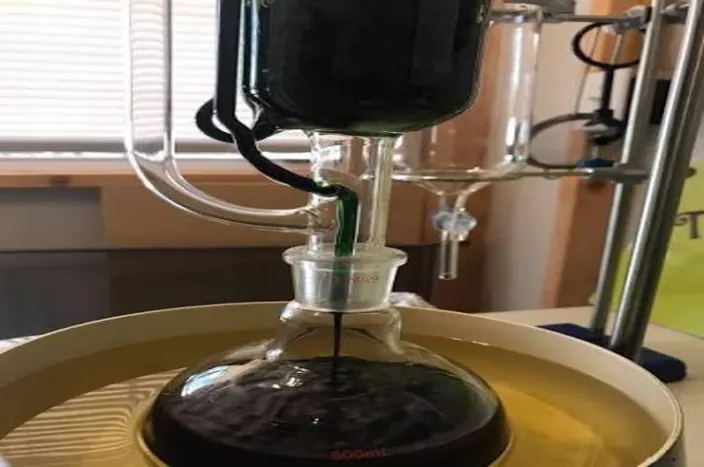
Approximately 100 g of the powdered leaf material was packed into a thimble and extracted using a Soxhlet apparatus. Ethanol was used as the extraction solvent due to its ability to dissolve a wide range of bioactive phytochemicals. The extraction was carried out for 6–8 hours until the solvent in the siphon tube became colourless.
The obtained ethanolic extract was concentrated by evaporating the solvent using a water bath at a controlled temperature. The concentrated extract was collected, weighed to determine the percentage yield, and stored in a refrigerator at 4°C until further analysis.
Materials
PHYTOCHEMICAL ANALYSIS
|
PHYTOCHEMICAL NAME |
PRESENT/ ABSENT |
|
Alkaloids |
✔️ |
|
Saponins |
✔️ |
|
Carbohydrates |
✖️ |
|
Glycosides |
✔️ |
|
Tannins |
✔️ |
|
Phenols |
✔️ |
|
Flavonoids |
✔️ |
|
Proteins |
✔️ |
|
Triterpenoids |
✖️ |
✔️-Indicates presence of chemical
✖️-Indicates Absence of phytochemical
RESULT
The ethanolic leaf extract of Pithecellobium dulce exhibited significant anthelmintic activity against Pheretima posthuma in a concentration-dependent manner. As the concentration of the extract increased, the time required for paralysis and death of the earthworms decreased.
The extract at 100 mg/mL showed the highest activity among the test concentrations and produced paralysis and death of worms in a shorter duration compared to the lower concentrations. The standard drug Albendazole exhibited the strongest anthelmintic effect; however, the ethanolic extract demonstrated considerable activity, indicating the presence of bioactive phytoconstituents with anthelmintic potential.
Table 1. Anthelmintic Activity of Ethanolic Extract of Pithecellobium dulce
|
Drugg in mg/ml |
Paralysis time |
Death time |
|
100mg/ml |
15 min |
20 min |
|
200mg/ml |
9 min |
15 min |
Test sample of Pithecellobium dulce
|
Drug in mg/ml |
Paralysis time |
Death time |
|
100mg/ml |
15 |
18 |
|
200mg/ml |
14 |
18 |
|
300mg/ml |
13 |
17 |
|
400mg/ml |
12 |
16 |
|
500mg/ml |
11 |
15 |
Standard drug albendazole
The results revealed that the 500 mg/mL ethanolic extract produced paralysis within 11 minutes and death within 15 minutes. The activity was significantly greater than that observed at 200mg/mL and 300 mg/mL concentrations. These findings suggest that Pithecellobium dulce possesses promising anthelmintic properties.
The observed activity may be attributed to the presence of flavonoids, tannins, saponins, phenolic acids, and other phytochemicals reported in P. dulce. Previous studies have shown that extracts and fractions of P. dulce can strongly inhibit egg hatching and larval development of the gastrointestinal nematode Haemonchus contortus, supporting its potential as a natural anthelmintic agent.
DISCUSSION:
Ethanolic extract exhibited considerable activity when compared with the standard drug Albendazole, although the standard drug showed a faster onset of action. The effectiveness of ethanol as an extraction solvent may be due to its ability to extract both polar and moderately non-polar bioactive compounds responsible for the anthelmintic effect.The findings of this study are consistent with previous reports that have demonstrated the antiparasitic and anthelmintic potential of Pithecellobium dulce extracts against various The present study evaluated the anthelmintic activity of the ethanolic leaf extract of Pithecellobium dulce using Pheretima posthuma as the experimental model. The results demonstrated that the extract possessed significant anthelmintic activity, as evidenced by the reduction in paralysis and death times of the worms. The activity increased with increasing concentration of the extract, indicating a dose-dependent effect The anthelmintic activity observed in this study may be attributed to the presence of various phytochemicals such as tannins, flavonoids, saponins, alkaloids, and phenolic compounds present in P. dulce. Tannins are known to bind to proteins on the cuticle of parasites, leading to disruption of their physiological functions. Flavonoids and phenolic compounds may interfere with the energy metabolism of helminths, resulting in paralysis and eventual death. Saponins can alter membrane permeability and contribute to the destruction of parasitic worms The helminth species. The study supports the traditional use of Manila tamarind in the treatment of parasitic infections and highlights its potential as a natural source of anthelmintic compounds.
CONCLUSION
The present study concludes that the ethanolic leaf extract of Pithecellobium dulce possesses significant anthelmintic activity against Pheretima posthuma. The extract produced a concentration-dependent reduction in paralysis and death times, indicating its effectiveness in controlling helminth infections. The observed activity may be attributed to the presence of bioactive phytochemicals such as tannins, flavonoids, saponins, and phenolic compounds Although the extract was less potent than the standard drug Albendazole, it demonstrated promising anthelmintic potential and may serve as a natural, cost-effective, and eco-friendly alternative for the management of helminth infections. Further studies involving isolation of active constituents, toxicity evaluation, and in vivo investigations are recommended to establish its therapeutic efficacy and safety.
REFERENCES


P. Karunakar, B. Gnanasri, G. Harsha Vardhan, P. Neelima, P. Sruthi, S K Chandini, Phytochemical Investigation &Anthelminthic Potential of Manila Tamarind, Int. J. of Pharm. Sci., 2026, Vol 4, Issue 7, 491-496. https://doi.org/10.5281/zenodo.21142091
 10.5281/zenodo.21142091