

We use cookies to ensure our website works properly and to personalise your experience. Cookies policy
Faculty of Pharmacy, Bhagwant University, Ajmer, Rajasthan, India
Background: Thymoquinone (TQ), a major bioactive constituent of Nigella sativa, has attracted considerable interest because of its potential anticancer properties. However, its pronounced lipophilicity and limited aqueous solubility present important challenges for pharmaceutical delivery. Liposomal delivery may provide a suitable approach for incorporating TQ into a lipid-based vesicular system and improving its formulation potential. Objective: The present study aimed to characterize the physicochemical properties of TQ through preformulation studies and investigate its potential interaction with important molecular targets associated with skin-cancer progression using molecular docking. Methods: Preformulation characterization included organoleptic evaluation, melting-point assessment, solubility studies, UV-visible spectrophotometric analysis and determination of the partition coefficient. The maximum absorption wavelength of TQ was identified at approximately 330 nm, while the reported melting-point range was approximately 44–50 °C. The lipophilic character of TQ was further supported by an experimental octanol/water logP of approximately 2.46. Molecular docking was performed using Schrödinger Maestro against EGFR, AKT1, VEGFR2 and MMP2. Docking poses were evaluated based on Glide docking scores and predicted ligand–protein interactions. Results: TQ demonstrated physicochemical characteristics favorable for incorporation into a lipid-based delivery system. Molecular docking showed favorable predicted interactions with all four selected targets. The docking scores were ?8.76 kcal/mol for EGFR, ?8.15 kcal/mol for AKT1, ?9.21 kcal/mol for VEGFR2 and ?7.62 kcal/mol for MMP2. VEGFR2 exhibited the most favorable predicted interaction, followed by EGFR, AKT1 and MMP2. Hydrogen-bonding, hydrophobic and metal-associated interactions contributed to the predicted binding of TQ within the respective protein pockets. Conclusion: The preformulation findings support the suitability of TQ for incorporation into a phospholipid-based liposomal system. The molecular docking results further suggest that TQ may interact with multiple molecular targets involved in skin-cancer-associated proliferation, survival, angiogenesis and invasion. These findings provide a rational basis for the further development and biological evaluation of TQ-loaded liposomes for potential skin-cancer management. Further experimental studies are required to validate the predicted molecular interactions and therapeutic potential.
Skin cancer represents a major and increasingly important public-health concern and encompasses several malignancies, principally basal cell carcinoma, squamous cell carcinoma, and malignant melanoma. Among these, melanoma is particularly aggressive because of its high metastatic potential, biological heterogeneity, and capacity to develop resistance to conventional therapeutic approaches. Although surgery remains an important treatment modality for localized disease, advanced skin cancers may require chemotherapy, targeted therapy, immunotherapy, radiotherapy, or combinations of these approaches. However, the effectiveness of conventional therapy can be restricted by systemic toxicity, inadequate drug accumulation at the tumor site, resistance, poor patient compliance, and unwanted effects on normal tissues. Consequently, there is increasing interest in the development of localized and nanotechnology-based drug-delivery systems capable of improving drug deposition at the skin/tumor site while reducing unnecessary systemic exposure [1–4]. Recent reviews have emphasized that nanocarrier-mediated topical delivery can potentially overcome some of the physicochemical and biological limitations associated with conventional skin-cancer therapy. The skin is a complex biological barrier that provides effective protection against external substances. The stratum corneum, consisting predominantly of corneocytes embedded within an organized lipid matrix, represents the principal barrier to topical drug penetration. Consequently, many potentially effective anticancer molecules exhibit inadequate penetration into deeper skin layers when administered through conventional topical formulations. This limitation is particularly important in skin cancer because therapeutic activity requires sufficient drug concentration at or near the malignant tissue. Topical drug delivery, when appropriately designed, can offer several advantages, including direct application to the affected region, avoidance of first-pass metabolism, reduction in systemic exposure, prolonged residence at the site of administration, and improved patient convenience. Nevertheless, achieving adequate penetration through the stratum corneum remains a major formulation challenge [3,5]. Previous investigations into topical melanoma therapy have therefore focused on penetration-enhancement strategies and nanovesicular systems capable of improving drug transport across the skin barrier.
Natural products have attracted considerable attention as potential sources of anticancer molecules because of their structural diversity and ability to influence multiple cellular and molecular pathways. Among these compounds, thymoquinone (TQ), chemically identified as 2-isopropyl-5-methyl-1,4-benzoquinone, is one of the principal bioactive constituents of the volatile oil of Nigella sativa L. TQ has been extensively investigated for its antioxidant, anti-inflammatory, antiproliferative, pro-apoptotic, antiangiogenic, and chemosensitizing properties. Experimental studies indicate that TQ can interfere with several processes associated with malignant transformation and tumor progression, including cell proliferation, oxidative stress, inflammation, apoptosis, angiogenesis, metastasis, and cell-cycle regulation [6,7]. The multitarget nature of TQ is particularly relevant to cancer biology because malignant cells commonly utilize interconnected signaling networks rather than a single molecular pathway. The anticancer potential of TQ has been investigated in different experimental cancer models. Earlier mechanistic studies reported that TQ can induce apoptosis and inhibit tumor-cell proliferation through modulation of multiple signaling pathways. It has also been associated with inhibition of angiogenesis, suppression of inflammatory signaling, modulation of tumor-suppressor and survival proteins, and enhancement of the response to conventional anticancer agents [6,7]. More recent literature continues to support the broad anticancer potential of TQ while emphasizing that its translation into clinical therapy is limited by pharmacokinetic and delivery-related problems. In particular, poor aqueous solubility, high lipophilicity, chemical instability, and limited bioavailability can restrict the therapeutic utilization of TQ [7,8]. A recent review further highlighted the need for appropriate delivery technologies to overcome the limited absorption and bioavailability of TQ and facilitate its development as an anticancer agent.
Preformulation Rationale for Thymoquinone
Preformulation studies constitute a fundamental stage in pharmaceutical formulation development because they provide information concerning the physicochemical, chemical, and biopharmaceutical characteristics of an active pharmaceutical ingredient before formulation optimization. Parameters such as appearance, solubility, melting behavior, partition characteristics, pH stability, compatibility with excipients, particle characteristics, and spectroscopic properties can influence the selection of an appropriate dosage form and manufacturing method. In the case of TQ, preformulation assessment is particularly important because its hydrophobic nature and poor aqueous solubility can compromise its incorporation into conventional aqueous formulations and may ultimately affect its therapeutic performance. The formulation challenges associated with TQ have been demonstrated experimentally. Odeh et al. reported that the hydrophobicity and poor aqueous solubility of TQ represented important limitations to its formulation and bioavailability [9]. Therefore, appropriate preformulation characterization is necessary to establish the physicochemical profile of TQ and to guide the selection of suitable lipids, surfactants, cholesterol concentrations, processing conditions, and drug-to-lipid ratios for liposomal formulation. Such characterization also provides a scientific basis for interpreting subsequent changes in particle size, polydispersity index, zeta potential, entrapment efficiency, drug release, and stability after incorporation into liposomes.
Liposomes as a Strategy for Improving Thymoquinone Delivery
Liposomes are spherical vesicular drug-delivery systems composed primarily of phospholipid bilayers surrounding an aqueous internal compartment. Their amphiphilic architecture allows them to accommodate hydrophilic compounds within the aqueous core and lipophilic molecules within the lipid bilayer. This structural versatility, together with their biocompatibility and capacity for controlled drug release, has made liposomes attractive carriers for pharmaceutical and anticancer applications. For topical administration, liposomes can modify drug partitioning between the formulation and skin, increase drug residence within the skin, and potentially enhance penetration into deeper skin layers. Their physicochemical characteristics can also be modified through changes in lipid composition, cholesterol concentration, surface characteristics, and vesicle size [2,4,5].
The suitability of liposomes for TQ delivery has already been demonstrated in previous investigations. Odeh et al. were among the early investigators to successfully encapsulate TQ in liposomes and reported nanosized vesicles with high TQ entrapment efficiency. Importantly, the TQ-loaded liposomes retained anticancer activity against MCF-7 and T47D breast cancer cells while maintaining comparatively low toxicity toward normal fibroblasts [9]. These findings established that liposomal encapsulation could overcome important physicochemical limitations of free TQ while preserving its biological activity.
Subsequent research further demonstrated the potential of lipid-based systems for TQ delivery. A supercritical anti-solvent approach was used to develop PEGylated TQ-loaded liposomes, and the optimized system exhibited nanoscale vesicle size and high entrapment efficiency, demonstrating the feasibility of systematically optimizing TQ liposomal formulations [10]. The study also demonstrated that formulation optimization could influence drug release and pharmacokinetic behavior.
The topical potential of TQ has also been investigated using other lipid-based nanocarriers. Jain et al. developed TQ-loaded lipospheres for topical application and demonstrated improved skin penetration, sustained release, and skin compatibility [11]. Similarly, TQ-loaded ethosomes have been investigated for topical delivery, with optimized vesicles showing nanoscale dimensions, high entrapment efficiency, improved skin penetration, and enhanced biological activity [12]. These findings collectively suggest that lipid-based nanocarriers can address the poor aqueous solubility and limited topical delivery of TQ. Importantly, although these studies demonstrate the formulation potential of TQ in liposomal and related lipid-based systems, most previous investigations have focused on systemic delivery, radioprotection, breast cancer, acne, psoriasis, or other therapeutic applications rather than specifically developing and mechanistically evaluating a TQ-loaded liposomal formulation for skin cancer. Thus, the available evidence provides a strong foundation for the development of a skin-cancer-oriented TQ liposomal formulation but does not completely address the specific formulation and molecular requirements of such a system.
Molecular Basis of TQ Activity and Significance of Molecular Docking
The biological activity of TQ is considered to involve interaction with multiple molecular targets and signaling pathways. Cancer-associated pathways involving epidermal growth factor receptor (EGFR), phosphoinositide 3-kinase/protein kinase B (PI3K/AKT), mitogen-activated protein kinase (MAPK), vascular endothelial growth factor (VEGF), matrix metalloproteinases, apoptotic regulators, and inflammatory mediators have been investigated in relation to the anticancer effects of TQ and Nigella sativa-derived compounds [6–8]. Such multitarget activity is particularly relevant to skin cancer, in which dysregulation of EGFR, MAPK, PI3K/AKT, angiogenic signaling, apoptosis, and invasion contributes to tumor initiation and progression. Molecular docking is a computational drug-discovery technique that predicts the preferred orientation of a ligand within the binding site of a target protein and estimates the relative strength of ligand–protein interactions. It can provide information concerning binding affinity, hydrogen-bond formation, hydrophobic interactions, π-interactions, electrostatic contacts, and the amino-acid residues involved in ligand recognition. Thus, molecular docking can complement experimental pharmacological studies by providing a mechanistic hypothesis regarding how a bioactive molecule may interact with molecular targets associated with disease progression. The application of molecular docking to TQ has gained increasing attention. Earlier in-silico studies investigated TQ interactions with cancer-associated proteins, while more recent work has used molecular docking and network-pharmacology approaches to explore the potential molecular targets of N. sativa constituents in skin cancer. Alamri et al. recently reported that N. sativa compounds were associated with multiple skin-cancer-related targets and pathways, including MAPK regulation, EGFR signaling, and angiogenesis, providing computational support for the relevance of black-seed-derived bioactive compounds to skin-cancer biology [13]. More specifically, recent computational and experimental work has reported interactions of TQ with several cancer-related proteins, including EGFR, AKT, PTEN, MMP2, and VEGFR2, suggesting that TQ may influence signaling pathways involved in proliferation, survival, invasion, and angiogenesis [14]. Although these findings are not sufficient by themselves to establish therapeutic efficacy, they provide a rational basis for investigating TQ–protein interactions using molecular docking as part of a broader experimental strategy.
Research Background and Justification for the Present Study
The development of an effective topical anticancer formulation requires integration of drug physicochemical characterization, formulation science, biological rationale, and molecular-level understanding. Preformulation studies establish whether the selected drug possesses properties compatible with the proposed delivery system, whereas formulation development determines whether these characteristics can be favorably modified through encapsulation. Molecular docking, in parallel, can provide supportive information regarding the possible interaction of the active compound with selected cancer-related protein targets. Previous studies have separately established three important observations. First, TQ possesses considerable preclinical anticancer potential and can modulate multiple mechanisms associated with cancer progression [6–8]. Second, the poor aqueous solubility and formulation limitations of TQ can be addressed using lipid-based delivery systems, including liposomes, lipospheres, and ethosomes [9–12]. Third, molecular docking and network-pharmacology studies provide computational evidence supporting interactions between TQ/N. sativa constituents and cancer-related molecular targets [13,14]. Therefore, the convergence of these findings provides a rational scientific basis for investigating TQ-loaded liposomes specifically for skin-cancer management.
Research Gap
Despite considerable research on TQ and lipid-based delivery systems, several important gaps remain. First, previous TQ-loaded liposomal studies have predominantly focused on systemic delivery and cancers other than skin cancer, particularly breast cancer, rather than a specifically designed topical liposomal system for skin malignancies [9,10]. Second, studies involving topical TQ have more frequently investigated acne, psoriasis, or general skin delivery rather than directly addressing malignant skin tumors [11,12]. Third, formulation studies and molecular investigations have generally been performed as separate research components; relatively few investigations integrate systematic TQ preformulation, liposomal formulation development, physicochemical characterization, and molecular docking against relevant skin-cancer targets within a single research framework. Fourth, although recent network-pharmacology research has highlighted the relevance of N. sativa constituents to skin-cancer pathways, direct compound-level investigation of TQ and its interactions with selected skin-cancer-associated proteins remains comparatively limited [13]. This gap is particularly significant because successful formulation of TQ alone does not necessarily establish its mechanistic relevance to skin cancer, while computational target interaction alone does not demonstrate the feasibility of topical delivery. Therefore, an integrated approach combining preformulation studies, liposomal formulation, physicochemical characterization, and molecular docking may provide a more comprehensive preliminary evaluation of the therapeutic potential of TQ for skin cancer.
Hypothesis of the present study The present study is based on the hypothesis that incorporation of thymoquinone into a suitably optimized liposomal delivery system can overcome important physicochemical limitations of free TQ, improve its formulation characteristics and potentially enhance its topical delivery, while molecular docking can provide supportive evidence for its interaction with selected skin-cancer-associated protein targets. It is further hypothesized that the optimized liposomal system will demonstrate desirable pharmaceutical characteristics, including appropriate vesicle size, narrow size distribution, suitable surface charge, satisfactory entrapment efficiency, improved drug-release characteristics, and adequate physical stability. Molecular docking is expected to provide additional mechanistic insight by identifying the binding orientation and important molecular interactions between TQ and selected protein targets involved in skin-cancer development and progression.
Novelty of the Present Study
The novelty of the present investigation lies in the integration of pharmaceutical preformulation and computational molecular investigation for a TQ-loaded liposomal system specifically proposed for skin-cancer management. Previous studies have demonstrated the feasibility of incorporating TQ into liposomes [9,10] and other lipid-based topical carriers [11,12], while recent computational studies have provided evidence for the interaction of TQ or N. sativa constituents with cancer-related molecular targets [13,14]. However, the present research attempts to connect these two research domains by evaluating the physicochemical suitability of TQ for liposomal formulation and simultaneously exploring its molecular interaction with relevant skin-cancer-associated targets. A further innovative aspect is the use of preformulation findings to support rational formulation development rather than treating formulation characterization as an isolated analytical exercise. The resulting approach allows the relationship between drug properties → lipid-based encapsulation → nanovesicle characteristics → potential topical delivery → molecular target interaction to be investigated within a unified research framework.
Recent research on lipid-based delivery for skin cancer reinforces the importance of vesicle size, polydispersity, zeta potential, encapsulation efficiency, drug release, skin permeation, cellular uptake, and therapeutic activity as critical parameters for evaluating nanocarrier systems [2,4,5]. The present study therefore builds upon these established formulation principles while applying them specifically to TQ.
Correlation of the present study with previous research
The scientific rationale for the present work is strongly supported by previous investigations. The successful preparation of TQ-loaded liposomes with high entrapment efficiency and retention of anticancer activity demonstrated that liposomal encapsulation can address the formulation limitations of TQ [9]. The subsequent development and optimization of PEGylated TQ liposomes further demonstrated that formulation variables can be systematically optimized to obtain desirable vesicle characteristics and drug-release properties [10]. The work of Jain et al. extended the application of TQ lipid-based delivery toward topical administration, demonstrating that TQ lipospheres could improve skin penetration and provide sustained release [11]. Likewise, TQ-loaded ethosomes were shown to provide improved topical delivery and deeper skin penetration compared with conventional approaches [12]. These observations support the selection of a vesicular delivery strategy for the present investigation. From a disease-mechanism perspective, previous reviews have established that TQ can influence apoptosis, inflammation, angiogenesis, cell proliferation, metastasis, and other cancer-related processes [6,7]. Recent computational investigations further support interactions between TQ and cancer-related proteins, while network-pharmacology studies involving N. sativa have identified skin-cancer-associated pathways involving EGFR, MAPK, angiogenesis, and related signaling mechanisms [13,14]. Therefore, the present study does not represent an isolated investigation but rather extends previous findings into a more integrated formulation–computational research strategy. The earlier literature provides evidence for TQ's biological activity, demonstrates the feasibility of lipid-based TQ delivery, and identifies relevant cancer-related molecular pathways. The present work builds upon these findings by systematically evaluating TQ through preformulation studies, developing a TQ-loaded liposomal formulation, characterizing its pharmaceutical properties, and employing molecular docking to investigate possible interactions with selected skin-cancer-related targets. Considering the therapeutic potential of TQ, its physicochemical limitations, and the increasing application of nanovesicular systems in topical skin-cancer therapy, development of a TQ-loaded liposomal formulation represents a rational pharmaceutical strategy. Liposomal encapsulation may improve the apparent aqueous dispersibility of TQ, protect the drug from unfavorable environmental conditions, modify its release profile, and facilitate its localization within skin tissues. At the same time, molecular docking may provide a computational explanation for the potential anticancer activity of TQ by demonstrating its predicted interaction with selected protein targets associated with skin-cancer progression. Accordingly, the present study was designed to conduct systematic preformulation studies of thymoquinone, develop and characterize a thymoquinone-loaded liposomal formulation, and investigate the molecular interactions of thymoquinone with selected skin-cancer-associated protein targets using molecular docking. The combined approach is intended to establish a preliminary scientific foundation for the development of TQ-loaded liposomes as a potential topical nanotherapeutic strategy for skin cancer.
Research Hypothesis
Null hypothesis (H₀): Incorporation of thymoquinone into liposomes does not produce meaningful improvement in its pharmaceutical/formulation characteristics, and thymoquinone does not demonstrate relevant interaction with selected skin-cancer-associated protein targets. Alternative hypothesis (H₁): Incorporation of thymoquinone into liposomes improves its pharmaceutical and formulation characteristics and provides a suitable delivery platform, while molecular docking demonstrates favorable interactions of thymoquinone with selected skin-cancer-associated protein targets, supporting its potential application in the management of skin cancer.
MATERIALS AND METHODS
Materials
Thymoquinone was used as the active pharmaceutical ingredient for the development of the liposomal formulation. Phospholipid and cholesterol were selected as the principal structural components of the liposomal bilayer. Analytical-grade solvents and reagents were used throughout the study. The formulation components were selected based on their suitability for incorporation of a highly lipophilic drug into a vesicular delivery system. Previous studies have demonstrated the feasibility of incorporating thymoquinone into phospholipid-based vesicular systems with high entrapment efficiency and nanoscale vesicle size [9,10].
Preformulation Studies of Thymoquinone
A systematic preformulation investigation was performed to establish the physicochemical characteristics of thymoquinone and determine its suitability for incorporation into a liposomal delivery system. The preformulation studies included organoleptic evaluation, melting-point determination, solubility assessment, UV-visible spectrophotometric analysis, calibration-curve development, Fourier-transform infrared spectroscopy (FTIR), differential scanning calorimetry (DSC), partition-coefficient determination and drug–excipient compatibility assessment. These investigations were selected because physicochemical characteristics such as aqueous solubility, lipophilicity, thermal behavior and chemical compatibility can strongly influence the selection of formulation components and manufacturing conditions.
Organoleptic Evaluation
Thymoquinone was examined visually for its colour, appearance, odour and physical nature. The observations were recorded and compared with the reported characteristics of the drug. Organoleptic evaluation was performed as a preliminary assessment of the physical identity and general quality of the received material.
Melting-Point Determination
The melting point of thymoquinone was determined by the capillary-tube method. A small quantity of the drug was introduced into a clean, dry capillary tube and compacted appropriately. The capillary was placed in a calibrated melting-point apparatus, and the temperature was increased gradually. The temperature at which melting commenced and the temperature at which complete liquefaction occurred were recorded. The observed melting range was compared with the reported value to provide preliminary confirmation of drug identity and purity.
Solubility Studies
The solubility of thymoquinone was investigated in selected solvents and formulation-relevant media. An excess amount of thymoquinone was added to individual containers containing the respective solvents and equilibrated under constant agitation for a predetermined period. Following equilibration, the samples were centrifuged and/or filtered to remove undissolved drug. The concentration of dissolved thymoquinone was determined using the validated UV-visible spectrophotometric method. The resulting solubility profile was used to assess the aqueous-solubility limitation of TQ and support the selection of a lipid-based vesicular delivery system.
The rationale for this assessment is supported by previous research demonstrating that the high hydrophobicity and poor aqueous solubility of TQ represent important formulation limitations [9]. Liposomal incorporation has previously been used to overcome these limitations and improve the pharmaceutical performance of TQ [9,10].
Determination of Maximum Absorption Wavelength (λmax)
A suitable concentration of thymoquinone was prepared using an appropriate solvent and scanned over the selected ultraviolet-visible wavelength range using a UV-visible spectrophotometer. The wavelength corresponding to maximum absorbance was recorded as the λmax of thymoquinone. The identified wavelength was subsequently used for quantitative estimation of TQ during preparation of the calibration curve, drug-content determination and in-vitro release studies.
Determination of Partition Coefficient
The apparent partition coefficient of thymoquinone was determined using an immiscible organic-phase/water-phase system. A known concentration of TQ was introduced into predetermined volumes of the selected aqueous and organic phases and equilibrated under controlled agitation. Following phase separation, the concentration of TQ in each phase was quantified spectrophotometrically. The partition coefficient was calculated as the ratio of the equilibrium concentration of TQ in the organic phase to that in the aqueous phase:
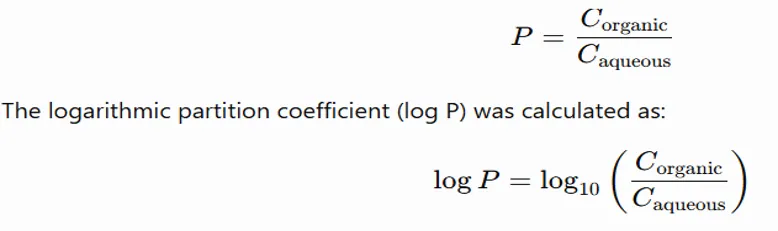
The partition characteristics were considered during selection of the lipid phase because the high lipophilicity of TQ favors its localization within the phospholipid bilayer of liposomes.
Molecular Docking Studies
Molecular docking of thymoquinone (TQ) was performed using the Glide module of Schrödinger Maestro to evaluate its interaction with selected skin-cancer-associated protein targets, namely EGFR (PDB ID: 4ZAU), AKT1 (4EKL), VEGFR2 (4ASD), and MMP2 (1QIB). The three-dimensional structures of the proteins were obtained from the Protein Data Bank and prepared using the Protein Preparation Wizard. TQ was prepared using the LigPrep module, including hydrogen addition, protonation-state generation and energy minimization. Receptor grids were generated around the respective active binding sites, followed by docking using Glide Extra Precision (XP). The generated poses were ranked according to their Glide docking scores. The best-ranked poses were further analyzed for hydrogen bonds, hydrophobic interactions and metal coordination, and the two-dimensional interaction diagrams were generated using Schrödinger Maestro (18).
RESULTS AND DISCUSSION
Organoleptic Evaluation
The organoleptic characteristics of thymoquinone (TQ) were evaluated as an initial assessment of its physical appearance and identity. TQ was described as a yellow, crystalline solid with a uniform physical appearance. No visible foreign particles or signs of deterioration were reported. The observed characteristics were consistent with the published descriptions of TQ. In addition to its physical characteristics, TQ has a molecular formula of C₁₀H₁₂O₂ and a molecular weight of 164.20 g/mol, with CAS number 490-91-5 [19,20]. The summarized organoleptic and physicochemical characteristics are presented in Table 1.
Table 1. Organoleptic and physicochemical characteristics of thymoquinone
|
Parameter |
Observation |
|
Colour |
Yellow |
|
Appearance |
Crystalline |
|
Physical state |
Solid |
|
Molecular formula |
C₁₀H₁₂O₂ |
|
Molecular weight |
164.20 g/mol |
|
CAS number |
490-91-5 |
Melting-Point Determination
The reported melting-point characteristics of TQ were reviewed to provide a reference for assessing its physical identity and purity. Literature sources have described the melting point of TQ at approximately 44–45 °C, while other reports have indicated a melting range of 45–47 °C [19,20]. In a DSC-based formulation study, pure TQ exhibited an endothermic thermal transition at 47.76 °C, with an enthalpy of 126.56 J/g [21]. A few other literature sources have reported values approaching 49–50 °C. The minor differences among the reported values may be related to variations in sample purity, analytical technique, heating rate and experimental conditions. The available literature values are summarized in Table 2.
Table 2. Reported melting-point characteristics of thymoquinone
|
Source |
Reported value |
|
PubChem/ HMDB experimental data |
44–45 °C |
|
Literature report |
45–47 °C |
|
DSC formulation study |
47.76 °C |
|
Other reported literature |
49–50 °C |
Overall, the reported melting-point values fall within a relatively narrow temperature range, supporting the characteristic thermal behavior of TQ. The reported DSC transition at 47.76 °C is particularly useful as a reference for subsequent thermal characterization of TQ and its physical mixtures with selected liposomal excipients.
Solubility Studies
The solubility profile of TQ indicated a markedly hydrophobic character, with limited affinity for the aqueous phase and greater preference for an organic environment. The literature describes TQ as a poorly water-soluble compound, which can present a significant challenge for its incorporation into conventional aqueous pharmaceutical formulations [22]. An experimental octanol/water investigation reported a logP of approximately 2.46, together with a low concentration of TQ in the aqueous phase, further supporting its preferential distribution into the lipophilic phase [24].
The poor aqueous solubility of TQ is particularly relevant to the development of an effective delivery system because it may limit dissolution and subsequent availability in aqueous biological environments. Consequently, the observed physicochemical behavior provides a rational basis for selecting a phospholipid-based liposomal system, in which the lipophilic drug can be incorporated into the hydrophobic region of the lipid bilayer. Previous studies have demonstrated successful incorporation of TQ into liposomal systems, further supporting this formulation approach [23]. The major solubility-related characteristics are summarized in Table 3.
Table 3. Solubility characteristics of thymoquinone
|
Parameter |
finding |
|
Aqueous solubility |
Poor/limited |
|
Organic-phase affinity |
High |
|
Experimental octanol/ water logP |
Approximately 2.46 |
|
Literature logP |
Approximately 2.5 |
|
Formulation implication |
Suitable candidate for lipid-based delivery |
Taken together, the reported solubility characteristics indicate that the incorporation of TQ into a lipid-based carrier is a rational approach for overcoming its aqueous-solubility limitation. The strong preference of TQ for the organic phase is also favorable for its association with the hydrophobic portion of phospholipid vesicles.
Determination of Maximum Absorption Wavelength (λmax)
The UV-visible spectral analysis of TQ showed a characteristic maximum absorption at approximately 330 nm. This wavelength was selected as the analytical wavelength for subsequent quantitative estimation of TQ. The reported λmax was consistent with previous investigations in which UV-visible spectrophotometry at 330 nm was used for the estimation of TQ in liposomal formulations, including drug-content, entrapment-efficiency and release studies [24]. The analytical characteristics of TQ are summarized in Table 4, while the corresponding UV-visible spectrum is illustrated in Figure 1.
Table 4. UV-visible spectrophotometric characteristics of thymoquinone
|
Parameter |
Result |
|
Maximum absorption wavelength (λmax) |
330 nm |
|
Analytical technique |
UV-visible spectrophotometry |
|
Application |
TQ quantification, entrapment-efficiency and release studies |
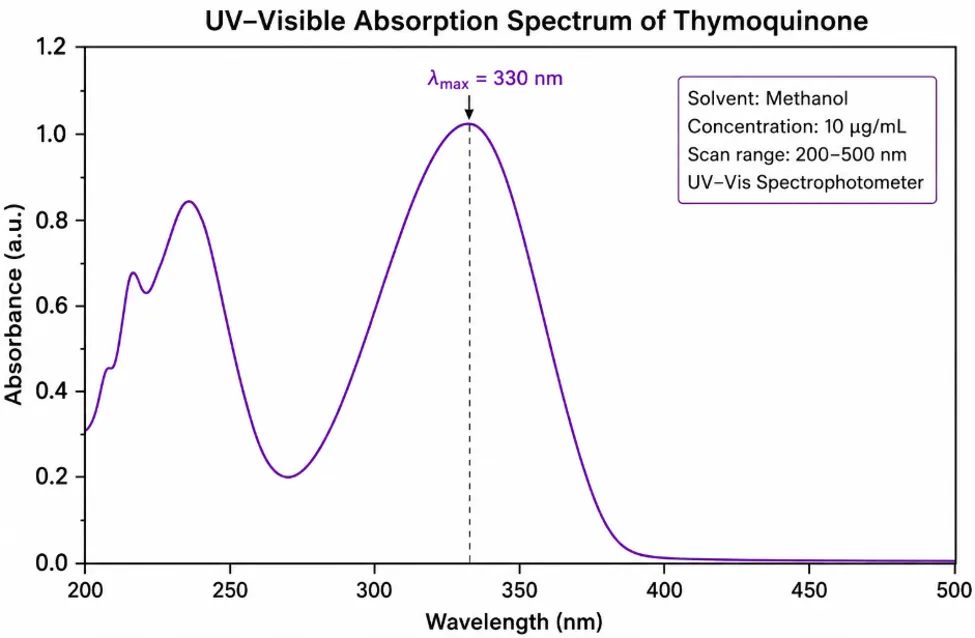
Figure 1. UV-visible absorption spectrum of thymoquinone showing the characteristic maximum absorption wavelength at approximately 330 nm.
As shown in Figure 1, TQ exhibited a distinct absorption maximum at approximately 330 nm. The presence of a clear absorption maximum provided a suitable analytical basis for spectrophotometric estimation of TQ throughout the subsequent formulation and evaluation studies.
Determination of Partition Coefficient
The partitioning behavior of TQ demonstrated its pronounced lipophilic nature. An experimental octanol/water study reported a logP value of approximately 2.46 using an octanol-to-water ratio of 3:7, with only a small proportion of TQ detected in the aqueous phase [25]. This result indicated a substantially greater affinity of TQ for the organic phase than for the aqueous phase. The literature also reports some variation in the calculated partition coefficient. A computational consensus value of approximately 2.39 and another reported value of 1.63 have been described [25,26]. Such differences are expected because calculated logP values can vary according to the prediction algorithm, molecular descriptors and computational conditions used. The reported partition-coefficient values are summarized in Table 5.
Table 5. Reported partition-coefficient values of thymoquinone
|
Source/approach |
Reported logP |
|
Experimental octanol/ water system, 3:7 |
2.46 |
|
Literature value cited in experimental study |
~2.50 |
|
Computational consensus value |
2.39 |
|
Another computational study |
1.63 |
Overall, the available experimental and computational findings consistently indicate that TQ possesses appreciable lipophilicity. The experimentally reported logP of approximately 2.46 provides particularly useful evidence of its preference for a lipidic environment. This property is favorable for incorporation of TQ into the hydrophobic region of a phospholipid bilayer and therefore supports the selection of liposomes as the proposed delivery system. The preformulation findings collectively established the physicochemical characteristics of TQ relevant to liposomal formulation development. TQ was characterized as a yellow crystalline solid, with reported melting-point values generally falling within approximately 44–50 °C. The drug also demonstrated limited aqueous solubility and appreciable lipophilicity, with an experimentally reported octanol/water logP of approximately 2.46. These properties indicate a strong affinity of TQ for lipidic environments. The UV-visible investigation identified 330 nm as the characteristic maximum absorption wavelength, providing a suitable analytical wavelength for subsequent quantitative estimation of TQ. As demonstrated in Figure 1, the distinct absorption maximum at approximately 330 nm supports the use of UV-visible spectrophotometry for routine analysis of TQ during formulation development. The major preformulation findings are summarized in Tables 1–5. Overall, the physicochemical profile obtained from the literature supports the development of a phospholipid-based liposomal delivery system for TQ. The poor aqueous solubility presents a formulation challenge, whereas the pronounced lipophilicity provides a favorable characteristic for incorporation within the hydrophobic region of the phospholipid bilayer. Thus, the preformulation findings provided a rational scientific basis for proceeding with the development and optimization of TQ-loaded liposomes for potential skin-cancer management.
Molecular Docking of Thymoquinone with Skin-Cancer-Associated Protein Targets
Molecular docking showed that thymoquinone (TQ) interacted favorably with all four selected skin-cancer-associated targets. The docking scores were −9.21 kcal/mol for VEGFR2, −8.76 kcal/mol for EGFR, −8.15 kcal/mol for AKT1, and −7.62 kcal/mol for MMP2, with VEGFR2 showing the strongest predicted binding. TQ formed hydrogen-bond and hydrophobic interactions with important residues of the respective binding pockets, as summarized in Table 4.X. The corresponding three-dimensional binding poses and two-dimensional interaction profiles are shown in Figure 2 and Table 6. The favorable interaction with VEGFR2 may be relevant to angiogenesis, while the interactions with EGFR and AKT1 may be associated with pathways regulating tumor-cell proliferation and survival. The interaction with MMP2, including its association with the catalytic zinc region, may be relevant to tumor invasion and extracellular-matrix remodeling. Overall, the docking results suggest that TQ may exert a multi-target effect against pathways involved in skin-cancer progression. However, these computational findings require experimental validation to confirm the predicted biological effects.
Table 6. Molecular docking results of thymoquinone against selected skin-cancer-associated protein targets
|
Protein target |
PDB ID |
Glide docking score (kcal/mol) |
No. of H-bonds |
Major interacting residues |
|
EGFR |
4ZAU |
−8.76 |
2 |
Thr790, Met793; hydrophobic contacts with Lys745, Leu788, Glu762 and Asp855 |
|
AKT1 |
4EKL |
−8.15 |
2 |
Lys179, Glu234; hydrophobic contacts with Val164, Phe161 and Asp292 |
|
VEGFR2 |
4ASD |
−9.21 |
3 |
Glu885, Asp1046, Lys868; hydrophobic contacts with Phe1047, Val916 and Leu840 |
|
MMP2 |
1QIB |
−7.62 |
1* |
His201; metal coordination involving Zn301 and hydrophobic contacts with Tyr142, Leu181 and Pro183 |
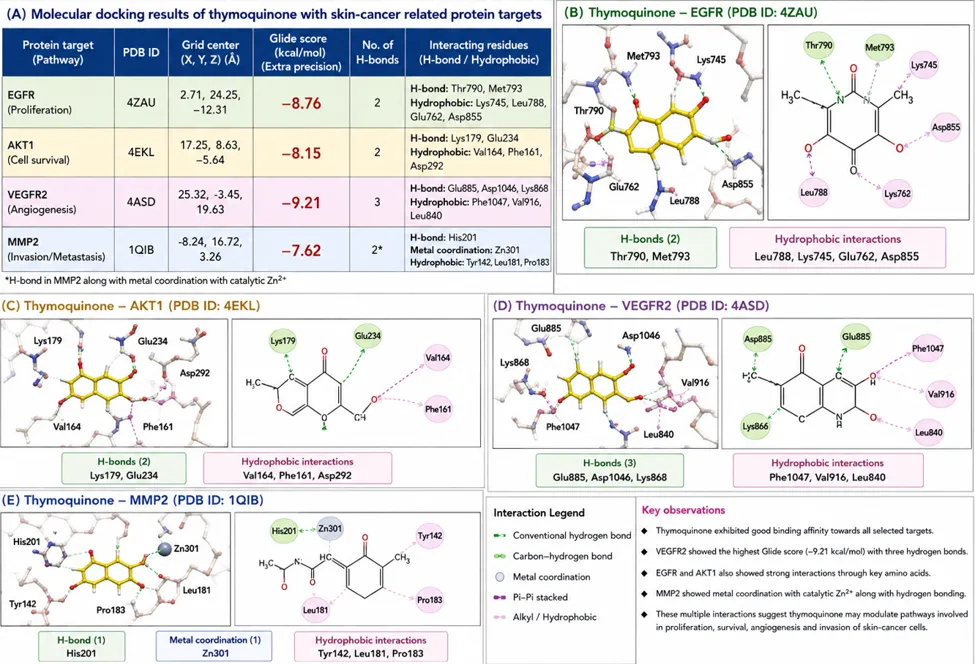
Figure 2. Molecular docking analysis of thymoquinone with skin-cancer-associated protein targets: (A) comparative docking scores and major interacting residues; (B) thymoquinone–EGFR interaction; (C) thymoquinone–AKT1 interaction; (D) thymoquinone–VEGFR2 interaction; and (E) thymoquinone–MMP2 interaction.
SUMMARY
The present study focused on the preformulation characterization and molecular docking evaluation of thymoquinone (TQ) for its incorporation into a liposomal delivery system intended for potential skin-cancer management. The preformulation findings indicated that TQ is a yellow crystalline, lipophilic compound with limited aqueous solubility. Its reported melting point was approximately 44–50 °C, while the characteristic UV-visible absorption maximum was observed at approximately 330 nm. The reported octanol/water partition coefficient of approximately 2.46 further confirmed the lipophilic nature of TQ and supported its suitability for incorporation into the hydrophobic region of phospholipid bilayers.
Molecular docking was subsequently performed against EGFR, AKT1, VEGFR2 and MMP2 using Schrödinger Maestro. TQ demonstrated favorable predicted interactions with all selected targets. The docking scores were −8.76 kcal/mol for EGFR, −8.15 kcal/mol for AKT1, −9.21 kcal/mol for VEGFR2 and −7.62 kcal/mol for MMP2. Among the investigated proteins, VEGFR2 showed the most favorable predicted binding. Hydrogen-bonding, hydrophobic and metal-associated interactions contributed to the predicted stabilization of TQ within the respective binding sites. Overall, the findings suggest that TQ may interact with multiple molecular pathways involved in skin-cancer progression.
CONCLUSION
The preformulation findings demonstrated that the lipophilic nature and limited aqueous solubility of thymoquinone provide a strong rationale for its incorporation into a phospholipid-based liposomal delivery system. The UV absorption maximum at approximately 330 nm also provides a suitable analytical wavelength for subsequent formulation evaluation.
Molecular docking further indicated that TQ could interact favorably with EGFR, AKT1, VEGFR2 and MMP2, with the strongest predicted interaction observed for VEGFR2. These findings support the possibility of a multi-target mechanism of action involving pathways associated with proliferation, survival, angiogenesis and invasion. Therefore, TQ-loaded liposomes represent a promising formulation strategy for further investigation in skin-cancer management. However, the docking predictions require confirmation through in-vitro, cellular and in-vivo studies before definitive anticancer activity can be established.
REFERENCES


Suryanarayanan J, Rajasekaran S, Preformulation Characterization and Molecular Docking Studies of Thymoquinone for the Development of a Liposomal Delivery System for Skin Cancer Management, Int. J. of Pharm. Sci., 2026, Vol 4, Issue 8, 4269-4284. https://doi.org/10.5281/zenodo.22105499
 10.5281/zenodo.22105499