

We use cookies to ensure our website works properly and to personalise your experience. Cookies policy
Vasantidevi Patil Institute of Pharmacy, Kodoli.
In recent times, consumer preference for herbal-based cosmetics has increased considerably due to their better safety profile, cost-effectiveness, and reduced risk of adverse effects when compared with synthetic formulations. Because they help exfoliate, remove dead skin cells, unclog pores, and improve the texture and appearance of the skin, facial scrubs are an essential part of skincare routines. Regular use of chemical-based exfoliating treatments can cause long-term damage, dryness, and irritation of the skin. The development of natural face scrubs with a herbal base caused a lot of interest as a remedy for these issues. The present research set out to develop and evaluate a herbal face scrub using specific plant-based ingredients that have been reported to possess exfoliating, antibacterial, antioxidant, and skin-nourishing properties. The herbal ingredients were chosen because of their traditional use and therapeutic advantages in maintaining healthy skin, reducing acne, controlling excessive oil production, and delaying the signs of early aging. An appropriate formulation foundation was used to ensure consistency, stability, and ease of application. A range of physicochemical characteristics, such as color, odor, consistency, pH, spreadability, viscosity, and skin irritation, have been evaluated for the prepared herbal face scrub. The evaluation experiment's outcomes showed that the formulation had a skin-friendly pH, suitable viscosity, good spreadability, and a constant consistency. The formulation's safety and lack of irritation have been confirmed by the skin irritation test. The study's overall outcomes suggest that the produced herbal face scrub is safe, stable, and suitable for routine topical application it provides a more natural and effective replacement for artificial exfoliation techniques.
Cosmetics are frequently used to maintain skin hygiene and improve physical appearance, making them an integral element of everyday personal care. The Federal Food, Drug, and Cosmetic Act (FD&C Act) defines cosmetics as substances intended to be applied to the human body in order to change its look, enhance its attractiveness, purify it, or enhance its beauty. Due to increased awareness of the potential negative consequences of long-term usage of synthetic chemicals, consumer interest in herbal and natural cosmetics has drastically changed in recent years. This change has caused the development of cosmetic formulations that are safer, more eco-friendly, and based on natural sources.[1,13,30]
Herbal cosmetics are mixtures of plant-based ingredients with a suitable cosmetic base that provides both therapeutic and aesthetic benefits. These products are well-known due to their natural origin, enhanced skin compatibility, and lower risk of irritation. In traditional medical systems like Ayurveda, herbs have long been used for skin care, cleaning, and cosmetic purposes. The antibacterial, antioxidant, anti-inflammatory, and anti-aging qualities of medicinal plants are supported by a variety of bioactive substances, including flavonoids, phenolic compounds, vitamins, and essential oils.[13,14,25,30]
The skin, the body's largest organ, works as a barrier to keep out harmful substances like dust, pollution, UV radiation, and bacteria. Long-term interaction with these factors can interfere with the skin's natural processes, leading to wrinkles, pigmentation, dryness, acne, and premature aging. Thus, appropriate skincare is necessary to preserve the appearance, texture, and health of skin. In addition to cleansing the skin, skincare products are designed to nourish, protect, and rejuvenate it.[2,3,13]
Amongst other products, facial scrubs are important skincare products, which provide exfoliation, and assist in keeping skin healthy. Exfoliation assists in renewing the skin, through the removal of dead skin cells from the topmost layer (epidermis) of skin, by unclogging pores and assisting in the overall improvement of skin texture. Facial scrubs contain a type of exfoliating agent, which helps to remove any particulates, excess oil, and impurities that are sitting on the surface of your skin. Gentler exfoliation on a regular basis will lead to more radiant, smoother skin through increased circulation and stimulating cellular turnover.[19,15]
Many traditional facial scrubs contain chemical fragrances, synthetic abrasives, and preservatives
that can cause skin irritation, reddening, or dryness if they are used on a regular basis. Consequently, demand for herbal-based scrubs made with natural exfoliating agents has increased. These products can be used for long periods without damaging the skin's barrier and provide gentle exfoliation without causing any harm to skin tissues. Natural exfoliation methods such as plant powders and fruit extracts effectively combat dead skin cells, while also maintaining moisture and smoothness.[5,7,11,23]
These herbal facial scrubs not only have exfoliation properties but also have phytochemicals that exhibit both antibacterial and antioxidant characteristics. Antioxidants help protect skin against free radical-related oxidative stress, which causes skin aging and damage. In addition to the anti-inflammatory properties found in herbal facial scrubs, these anti-bacterial properties can help reduce the bacteria that cause acne to form, thus soothing inflamed or irritated skin. The ingredients used in herbal scrubs can work equally well on most types of skin (oily, dry, or sensitive) by assisting with controlling excess sebum production.[4,6,16,17]
The application of scrub massages enhances the above-mentioned benefits on your skin by stimulating blood flow and delivering oxygen to skin cells more quickly during this process. This will also increase your skin’s elasticity and stimulate collagen production. Using a scrub on a regular basis will provide you with a more radiant and healthier complexion, due to the removal of dull skin and the smoothing of rough patches on the face.[10,11,15]
Multiple studies have investigated how to create and assess herbal facial cleansers made with a wide range of botanical ingredients. As part of these studies, the researchers also looked at whether the quality and safety of the cleansers was determined by checking their physicochemical parameters. To evaluate the physicochemical quality and safety of the herbal facial cleansers, researchers usually evaluate the following measurements: physicochemical composition (pH, viscosity, spreadability, consistency), storage stability, and dermatological irritation. A scientific analysis of the products is necessary to verify the effectiveness and consumer acceptance of the herbal cosmetic formulations.[2,3,14,18]
The herbal-based facial scrub may offer a safe and effective alternative to artificial exfoliating treatments as the market for herbal cosmetics grows and they have many proven benefits. The purpose of the research is to formulate a facial scrub made with herbs and evaluate how well it works compared to other types of facial scrubs that use synthetic materials.[1,8,14,25]
Objective of Work:
• IDEAL PROPERTIES OF SCRUB
An ideal scrub is accepted to possess the following properties
1) Clearing the skin of pollutants, grime, and dead skin cells.
2) It has hydrating ingredients that aid in skin hydration.
3) The skin is nourished by it.
4) It has anti-inflammatory properties.
5) It smells healing and fragrant.
6) It must be able to eliminate dead skin cells and be non-toxic, non-irritating, and non-sticky.
7) Enhance the skin's overall texture and look.
• HERBAL COSMETICS FOR VARIOUS TYPES OF SKIN:
A. For dry skin
B. For sensitive skin
C. For oily skin
• MERITS OF FACE SCURB:
• DEMERITS OF FACE SCURB:
EXPERIMENTAL WORK:
Composition of face scrub:
Table 1:
| Sr. No. | Ingredients | Scientific Name | Quantity |
|---|---|---|---|
| 1. | Aloevera | Aloe barbadensis | 6ml |
| 2. | Nutmeg | Myristica fragrans Houtt. | 4 gm |
| 3. | Masoor Dal | Lens culinaris | 3.5 gm |
| 4. | Brown Rice | Orzya sativa | 4 gm |
| 5. | Shea Butter | Vitellaria paradoxa | 2 ml |
| 6. | Glycerine | Glycerol | 3 ml |
| 7. | Rose Oil | Rosa damascena | Q.S. |
| 8. | Rose Water | Rosa damascena flower water | Q.S. |
MATERIALS USED AS ACTIVE INGREDIENTS:
ALOEVERA
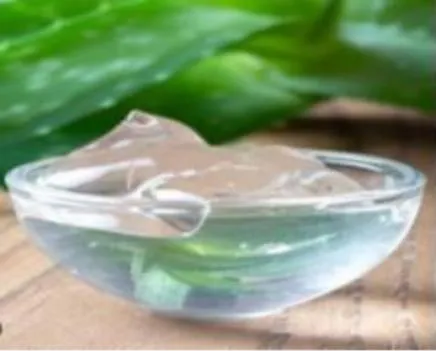
Figure 1: Aloe Vera Gel
Aloe vera, a member of the Liliaceae family, is a popular home plant due to its medicinal benefits. Its gel is known to have antioxidant and antibacterial properties, shield the skin from radiation-induced damage, and promote collagen formation, all of which enhance skin structure and lower inflammation. Additionally, as the gel consists of approximately 98% water, it offers significant moisturizing, soothing, and hydrating effects on the skin.[17,25,29,30]
NUTMEG
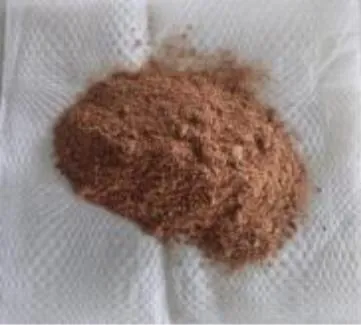
Figure 2: Nutmeg
Nutmeg has antibacterial, anti-inflammatory, and antiseptic properties that contribute to its benefits for skincare. This spice helps reduce acne, hyperpigmentation, and acne scars while promoting cellular turnover in the skin. In addition, its gentle exfoliant properties help slough off dead skin and unclog pores, resulting in smooth, clear, and healthy skin.[13,14,25,30]
MASOOR DAL
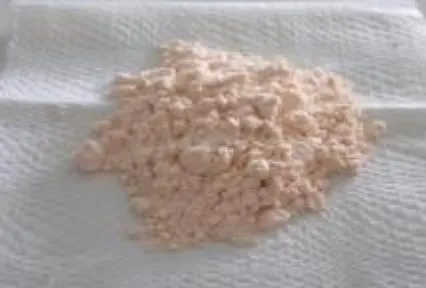
Figure 3: Masoor Dal
Masoor dal (Lens culinaris) serves as an all-natural exfoliation and cleansing agent for use in skin care formulations. It performs this function by removing dead skin cells, surface impurities, acne, and blackheads. In addition to exfoliating the skin, masoor dal can improve skin texture, decrease tanning, and increase skin lightness as well. The presence of antioxidants and essential nutrients, along with other properties of masoor dal, contribute to skin cell regeneration and protection from premature aging.[9,12,13,25]
ROSE OIL
Rose oil is a natural ingredient used widely in skin care products. Its moisturizing and soothing properties help keep skin hydrated and reduce redness and inflammation. The mildly aromatic properties of rose oil also help provide a calming effect and increase the likelihood that consumers will accept a cosmetic product. When used in conjunction with the exfoliation process of facial scrubs, the incorporation of rose oil also contributes to nourishing the skin, resulting in a smoother appearance and improved comfort and freshness of the skin overall.[25,27,30]
BROWN RICE FLOUR
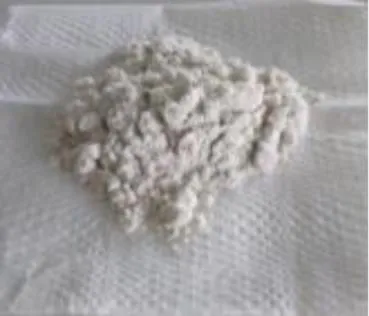
Figure 4: Brown Rice Flour
Due to its very mild exfoliating capabilities and protective properties, brown rice flour is a frequently used ingredient in cosmetic products. It gently exfoliates old skin cells to create smoother feeling skin and helps bring out the natural glow of your skin. Because of the ability of brown rice flour to absorb oils, it is an excellent choice for individuals with either oily or combination skin. Brown rice flour has a calming and cooling effect on the skin that aids in treatments for acne, scarring, and sun damage. Additionally, the presence of bioactive compounds such as para-aminobenzoic acid (PABA, vitamin B10) assist the body in producing new skin cells and have a role in reducing early signs of aging.[5,11,13,14]
ROSE WATER
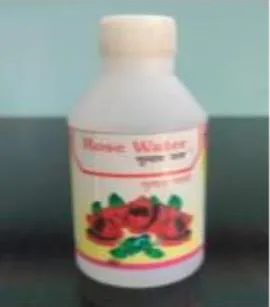
Figure 5: Rose Water
Rose water is commonly used in skincare formulations for its cleansing and toning properties. It will help to eliminate excess oil, dirt, and impurities on the skin but will help to keep your skin's natural moisture balance as well. Rose water has a very mild astringent effect on the skin and
will help to minimize the size of your pores while reducing the likelihood of developing blackheads, white heads, and acne. Because rose water has a soothing effect on the skin, it can be used daily and can help improve your skin's clarity and freshness over time.[25,27,30]
SHEA BUTTER
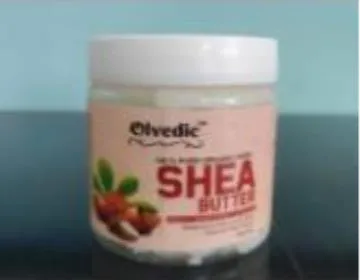
Figure 6: Shea Butter
Shea butter may eliminate pollutants from the skin and is an excellent source of nourishment. Shea butter is well known for its calming and anti-inflammatory qualities, which help relieve irritated and dry skin. Its rich and creamy texture makes it a useful ingredient in facial scrubs, providing gentle nourishment during exfoliation. In addition, its high content of fatty acids and vitamins helps keep the skin soft, smooth, and well-moisturized. It also has both anti-inflammatory and healing properties, as well. When applied to the body, especially the face, shea butter will condition, tone and soothe your skin.[15,25,30]
METHOD OF PREPARATION:
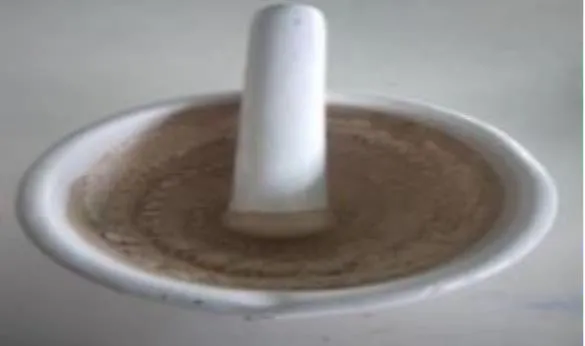
Figure 7:
All ingredients are powdered and passed through sieve number 44. Then they were taken in mortar pestle for mixing.[1]
Preparation Of Aloe Vera Gel:
Procedure:
1. All ingredients were finely powdered and accurately weighed in accordance with the specified quantities provided in the formulation table.[1,2]
2. 6ml of aloe vera, 4gm nutmeg, 4gm of brown rice flour and 3.5gm of masoor dal flour are mixed in the mortar pestle.[1,2]
3. 3ml of glycerine and 2ml melted shea butter was added then mixed properly and rose water added in sufficient quantity.[1,26]
4. Rose oil was used for fragrance.[2,27]
5. Sodium benzoate was used as preservative.[2,27]
6. Then the mixture is homogeneously mixed in homogener, until smooth texture appear.[1,26]
7. After that, the prepared scrub was placed in an airtight container and kept out of direct sunlight in a cold, dry location.[1,27]
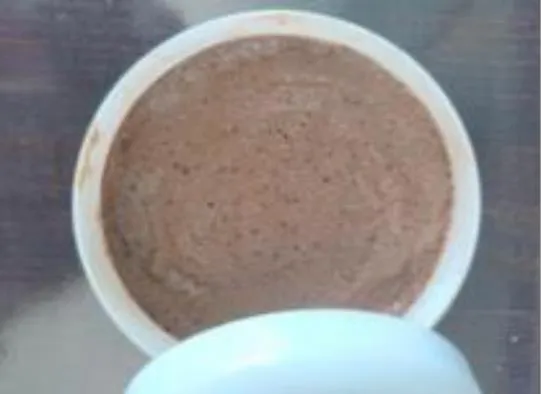
Figure 8: Herbal Face Scrub
Formulation:
Table 2:
| Ingredients | Formulation 1 | Formulation 2 | Formulation 3 |
|---|---|---|---|
| Aloe vera gel | 4ml | 5ml | 6ml |
| Nutmeg | 5gm | 4.5gm | 4gm |
| Masoor Dal | 4gm | 3gm | 3.5gm |
| Brown Rice Flour | 3.5gm | 4gm | 4gm |
| Shea Butter | 3ml | 2ml | 2ml |
| Glycerin | 2ml | 3ml | 3ml |
| Rose Water | Q.S. | Q.S. | Q.S. |
Organoleptic Property:
Table 3:
| Sr.No. | Parameter | Observation |
|---|---|---|
| 1. | Colour | Brown |
| 2. | Odour | Rosy Smell |
| 3. | Consistency | Good |
Evaluation Of Herbal Scrub of Nutmeg:
The prepared gel was evaluated for appearance, pH, consistency, spreadability, extrudability, viscosity, irritability, wash ability, grittiness, foam ability, Patch test and stability studies.[1]
Spreadability:
The herbal scrub test material was placed on a clean glass slide in controlled quantities, followed by a second clean glass slide that was placed gently over the first. This completed the formation
of an even layer, with a predetermined weight held on top of the second glass slide for a predetermined amount of time to promote uniform spreading. The number of seconds and total areas covered by the formulation were recorded. The results showed that increased spreading represented improved spreadability or more accessible application.[26]
Washability:
After a small amount of gel had been applied to the skin, it was rinsed with water. Manual testing revealed that the formulation was easily removed from the skin by washing it with water.[27]
pH:
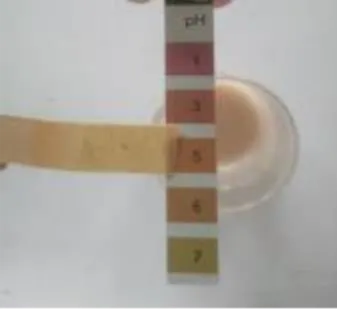
Figure 9:
A pH analysis was performed on the produced gel. pH paper was coated with a small amount of gel, which was found to be 5.
Patch Test:
Patch testing is a standard practice that compares products for skin compatibility and potential irritation or an allergic reaction. This test involves applying a small amount of diluted herbal scrub in limited contact with the skin. After 24 to 72 hours, the investigator will evaluate redness, itching, swelling, and/or other signs of irritation; if any of these reactions occur, the product cannot be used as a topical agent. If no such reactions occur, the product is safe for application to the skin surface.[25]
Skin Irritation:
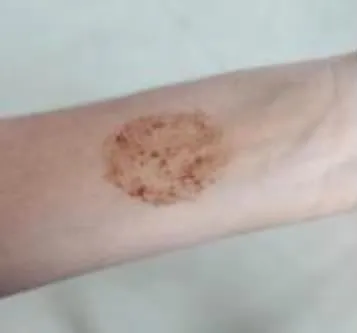
Figure 10:
A small quantity of the formulation was applied to the skin of the hand and left undisturbed for a specified period before observing any visible skin reactions.[26]
Grittiness:
Applying the mixture to the skin allowed for the detection of any gritty particles.
Extrudability:
A specific amount of herbal ointment was placed into a collapsible tube with the one end sealed and the other left open. By applying gentle pressure at the end of the tube with a seal on it, measurements were taken as to how long it took to extrude the product and how much product was extruded. Evaluating the extrudability and ease of dispensing from the selected formulation was accomplished using this test.[26]
RESULT AND DISCUSSION:
The results of the evaluation are displayed in the following table. The formulation was brown in colour. Formulation batch F1 had liquid consistency, whereas batches F2 and F3 had semisolid consistency. All formulations were found to be easily washable. The viscosity of the formulation batches increased with increasing concentration of the gelling agent. Among all formulation batches, F1, F2, and F3 showed good spreadability, with batch F3 demonstrating comparatively better spreadability than F1 and F2.
In the photographic evaluation conducted before and after application of the prepared herbal face scrub, the photographs taken before application indicated uneven skin texture. After application of the face scrub, a slight lightening effect was observed due to the presence of aloe vera gel, nutmeg powder, brown rice flour, and masoor dal flour. The evaluation parameters of batch F3 were found to give the best results.
The prepared formulation exhibited a uniform brown appearance without any detectable unpleasant odor. It did not produce foam during application and showed an appropriate consistency for topical use. The texture was smooth yet mildly granular, indicating the presence of fine exfoliating particles. The product was easily removable with water, and its pH was found to be approximately 5, suggesting compatibility with the natural skin environment. Based on these characteristics, the formulation is considered suitable for use across different skin types.
The presence of gritty particles was observed in F1, F2, and F3 batches, with batch F3 showing the best overall results. Skin irritation parameters such as irritation, redness, and swelling were evaluated, and no occurrence of skin irritation was observed in any of the batches.
Determination of physical parameters:
Table 4:
| Physical properties | F1 | F2 | F3 |
|---|---|---|---|
| Colour | Brownish | Brown | Brown |
| Odour | Rosy smell | Rosy smell | Rosy smell |
| Appearance | Smooth | Gritty and smooth | Gritty and smooth |
Determination of consistency:
Table 5:
| Formulation Batch | Consistency |
|---|---|
| F1 | Liquid |
| F2 | Semisolid |
| F3 | Semisolid |
Determination of washability:
Table 6:
| Formulation Batch | Washability |
|---|---|
| F1 | Washable |
| F2 | Easily washable |
| F3 | Easily washable |
Determination of pH:
Table 7:
| Formulation Batch | pH |
|---|---|
| F1 | 6 |
| F2 | 5 |
| F3 | 5 |
Determination of Grittiness:
Table 8:
| Formulation Batch | Grittiness |
|---|---|
| F1 | Yes |
| F2 | Yes |
| F3 | Yes |
Skin Irritation Parameter:
Table 9:
| Parameter | Result |
|---|---|
| Irritation | No |
| Redness | No |
| Swelling | No |
Determination of Spreadability :
Table 10:
| Formulation Batch | Result |
|---|---|
| F1 | Good |
| F2 | Good |
| F3 | Excellent |
Determination of Viscosity:
Table 11:
| Formulation Batch | Result |
|---|---|
| F1 | 1.0080poise |
| F2 | 1.3622poise |
| F3 | 1.4580poise |
Before After
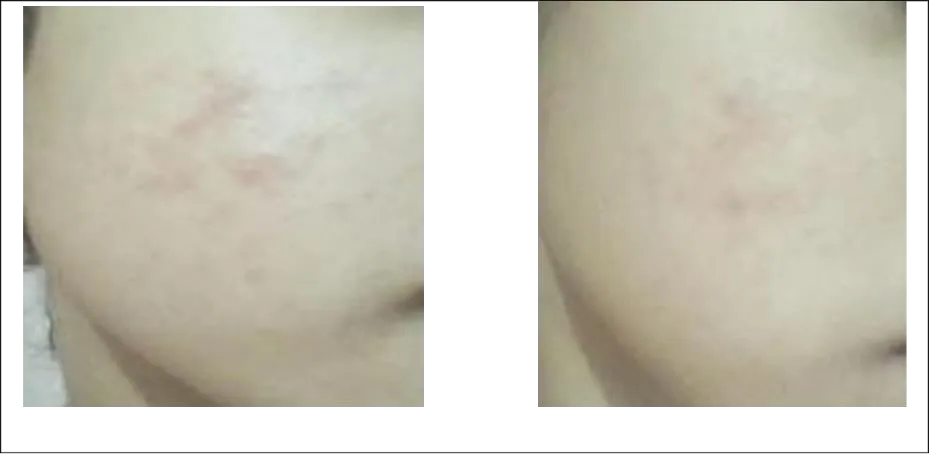
Figure 11: Fig.No.12
These are the before and after results of the F3 formulation after 15 days.
CONCLUSION:
The aim of the research was to create a face scrub that would effectively exfoliate the skin. The designed product operates effectively and is appropriate for topical use, according to the results. As a natural exfoliating agent, nutmeg showed encouraging results in the formulation. There were no symptoms of irritation or negative reactions during an initial application on the hand, indicating good skin compatibility.
The study was carried out to formulate a herbal facial scrub using plant-based medicinal ingredients, with an emphasis on achieving both stability and effectiveness. The developed formulation demonstrated the ability to gently exfoliate the skin, remove impurities, and enhance overall skin appearance by imparting a natural glow. In contrast to scrubs containing synthetic components such as sulphates and parabens, the herbal formulation showed better skin compatibility and a lower risk of irritation. Additionally, the use of natural ingredients was associated with minimal side effects and suitability for a wide range of users. Overall, the results
indicate that the prepared herbal face scrub is a safe and effective option for maintaining healthy skin. To completely ascertain the safety and efficacy of the new scrub formulation, additional thorough testing on a broader group of people with various skin types may be required.
REFERENCES

Swanand Nagaje, Preparation and Evaluation of Herbal Based Facial Scrub, Int. J. of Pharm. Sci., 2026, Vol 4, Issue 10, 4795-4805. https://doi.org/10.5281/zenodo.23793171
 10.5281/zenodo.23793171