

We use cookies to ensure our website works properly and to personalise your experience. Cookies policy
P. Wadhwani College of Pharmacy, Yavatmal, Maharahshtra
Alopecia is a common hair disorder characterized by excessive hair loss that affects the physical appearance and psychological well-being of individuals. The present study aimed to formulate and evaluate a herbal hair cream containing Jamalgota (Croton tiglium), Neem oil (Azadirachta indica), Amla (Emblica officinalis), Hibiscus oil (Hibiscus rosa-sinensis), and Aloe vera (Aloe barbadensis Miller) for the management of alopecia. The herbal ingredients were selected based on their reported hair growth-promoting, antimicrobial, antioxidant, and scalp nourishing properties. The herbal hair cream was prepared using the emulsification method by separately preparing oil and aqueous phases followed by incorporation of herbal ingredients and homogenization. Three formulation batches (B1–B3) were developed by varying the concentration of excipients while maintaining constant quantities of active ingredients. The prepared formulations were evaluated for organoleptic properties, physicochemical parameters, microbiological safety, stability, and packaging integrity. Organoleptic evaluation included appearance, color, odor, and texture, while physicochemical studies involved pH, viscosity, spreadability, and stability testing. Microbiological evaluation confirmed the absence of E. coli and fungal contamination in all batches. Safety studies revealed that the formulations were non-irritating and safe for topical application. Among all the formulations, Batch 3 showed the best results in terms of smooth texture, acceptable pH, good spreadability, stability, and overall performance. The study concluded that the prepared herbal hair cream can serve as a safe, natural, and effective alternative for the treatment of alopecia and promotion of healthy hair growth.
The term cosmetic is derived from the Greek word “kosmetikos,” which means the skill or power of beautifying and arranging. Cosmetics are substances applied to the human body for cleansing, beautifying, improving attractiveness, or altering appearance. According to the Drugs and Cosmetics Act, cosmetics include products that are rubbed, poured, sprinkled, sprayed, or otherwise applied to any external part of the body for enhancing appearance and maintaining hygiene. In recent years, herbal cosmetics have gained considerable importance because of their natural origin, better compatibility with the skin and hair, and reduced adverse effects. Herbal cosmetics are formulations prepared by incorporating one or more herbal ingredients into a suitable cosmetic base to provide specific cosmetic benefits. These products are widely accepted due to their safety, efficacy, affordability, and therapeutic value in maintaining healthy skin and hair. [1-3]
Hair is considered one of the most important aspects of human beauty and personality. It is composed primarily of keratin and contains elements such as carbon, nitrogen, oxygen, and sulfur. Hair plays several physiological roles including protection from solar radiation, regulation of body temperature, reduction of friction, and functioning as a sensory organ. Healthy hair enhances confidence and appearance, whereas hair disorders negatively affect the psychological and social well-being of an individual. Nowadays, hair loss and scalp disorders have become common problems due to stress, pollution, nutritional deficiencies, hormonal imbalance, use of harsh chemical products, and unhealthy lifestyles. Therefore, there is a growing demand for safe and effective herbal formulations that promote hair growth and protect the scalp without causing harmful side effects.[4]
Hair cream is one of the most commonly used cosmetic preparations for hair care and styling. Hair creams are semisolid formulations used to nourish, moisturize, protect, and improve the texture and appearance of hair. They provide smoothness, softness, shine, and manageability while also helping to reduce hair fall and hair damage. Hair creams can provide medium hold and help maintain hairstyles with a glossy or wet appearance.[5] In addition to cosmetic benefits, medicated herbal hair creams can deliver active ingredients directly to the scalp for the treatment of various hair disorders, including alopecia. An ideal hair cream should possess good penetration ability so that the active ingredients can easily absorb into the scalp and produce the desired therapeutic effect. It should spread smoothly, remain non-irritant, non-toxic, and should not cause inflammation, itching, or redness after application.[6]
Hair creams are mainly classified into oil-in-water (O/W) and water-in-oil (W/O) emulsions. Oil-in-water creams are less greasy because water acts as the continuous phase. These creams spread easily on dry and wet hair, provide a smooth texture, and allow uniform distribution of oils over the scalp and hair surface. After application, evaporation of water leaves a thin protective oil film that nourishes the hair and imparts shine. Water-in-oil creams, on the other hand, contain oil as the continuous phase and possess better holding capacity and water resistance. These creams provide greater shine and long-lasting conditioning effects but may feel greasier and are comparatively less stable. Among these, oil-in-water creams are generally preferred for cosmetic and therapeutic applications due to their non-greasy nature, ease of application, and better consumer acceptability.[7]
Herbal creams offer several advantages over synthetic cosmetic products. They are usually safer, produce minimal side effects, and are easily absorbed into the skin and scalp. Plant extracts incorporated into herbal formulations provide pharmacological benefits such as antioxidant, antimicrobial, anti-inflammatory, and nourishing actions. Herbal products are comparatively economical, easily available, and simple to prepare. They also reduce the dependency on synthetic chemicals that may damage hair and scalp with prolonged use. However, herbal formulations also possess certain limitations, including slower onset of action, difficulty in masking odor and taste, lack of standardization, and complex manufacturing procedures. Despite these disadvantages, the popularity of herbal cosmetics continues to increase because of their long-term safety and therapeutic value.[8]
Alopecia is a chronic condition characterized by partial or complete loss of hair from the scalp or other parts of the body. Hair loss can occur in individuals of any age group and significantly affects self-esteem, emotional stability, and social interactions. Alopecia may occur due to autoimmune disorders, hormonal imbalance, stress, nutritional deficiencies, fungal infections, poor blood circulation, chemotherapy, scalp trauma, or excessive use of chemical-based cosmetic products.[9] Several forms of alopecia have been identified, including alopecia areata, alopecia totalis, alopecia universalis, traction alopecia, diffuse alopecia, and chemotherapy-induced alopecia. Among these, androgenetic alopecia is one of the most common forms of hair loss and is strongly associated with the action of dihydrotestosterone (DHT), a hormone formed from testosterone through the action of the enzyme 5-alpha reductase. DHT binds to androgen receptors present in susceptible hair follicles and gradually shortens the hair growth cycle while causing follicular miniaturization, resulting in thinning and eventual loss of hair.[10]
The treatment of alopecia mainly focuses on reducing hair fall, stimulating hair follicles, improving blood circulation to the scalp, and providing nourishment required for healthy hair growth. Conventional allopathic drugs such as Minoxidil, Finasteride, Corticosteroids, Anthralin, Cyclosporine, and Methotrexate are commonly used for alopecia treatment. Although these medications may show beneficial effects, they are often associated with adverse reactions such as itching, erythema, dermatitis, scaling, and irritation, and they may not provide permanent results. In addition, prolonged use of synthetic medicines can be costly and may lead to patient non-compliance. Due to these limitations, researchers and consumers are increasingly interested in herbal therapies for the management of alopecia.[11]
Herbal medicines have been traditionally used for hair care and treatment of hair disorders since ancient times. Medicinal plants contain bioactive constituents that help strengthen hair follicles, improve scalp health, reduce dandruff, stimulate blood circulation, and promote hair growth naturally. In the present study, herbal ingredients such as Jamalgota, Neem oil, Amla, Hibiscus oil, and Aloe vera have been selected for the preparation of herbal hair cream intended for the treatment of alopecia. Jamalgota (Croton tiglium) has been traditionally reported to exhibit hair growth-promoting activity when used with different oils. Neem oil possesses antimicrobial and anti-inflammatory properties that help maintain scalp hygiene and reduce infections. Amla is rich in vitamin C and antioxidants, which nourish the scalp and strengthen hair roots. Hibiscus oil is widely known for stimulating hair growth, preventing premature graying, and improving hair texture. Aloe vera acts as an excellent moisturizer and soothing agent that conditions the scalp, reduces irritation, and promotes healthy hair growth.[12-13]
The combination of these herbal ingredients in a suitable cream base may provide synergistic effects for the treatment of alopecia by improving scalp nourishment, enhancing follicular activity, increasing blood circulation, and protecting hair from damage. Therefore, the present research work aims to formulate and evaluate a herbal hair cream containing Jamalgota, Neem oil, Amla, Hibiscus oil, and Aloe vera for the effective management of alopecia. The study also focuses on evaluating the physicochemical properties, stability, spreadability, homogeneity, pH, and therapeutic effectiveness of the prepared herbal formulation to establish its potential as a safe and effective alternative to synthetic hair care products.
DRUG PROFILE:
1) Jamalgota
Jamalgota is obtained from the dried ripe seeds of Croton tiglium Linn., which belongs to the family Euphorbiaceae. The plant is widely known in traditional medicine for its medicinal and therapeutic applications. The seeds contain a significant quantity of croton oil, which is considered the major active component responsible for its biological activity. Croton oil contains approximately 50–60% fixed oil and is rich in fatty acids such as linoleic acid, oleic acid, and eicosenoic acid, which together constitute the major proportion of the oil composition. These phytoconstituents contribute to its pharmacological and therapeutic properties.
Jamalgota has been traditionally utilized in hair care preparations because of its ability to stimulate the scalp and promote hair growth. Its mechanism of action is mainly associated with its irritant effect on the skin, which enhances blood circulation to the scalp and stimulates dormant hair follicles, thereby promoting the regeneration of new hair follicles. Due to its potent irritant nature, it must be used carefully and in controlled quantities within herbal formulations. In hair care applications, Jamalgota is considered beneficial for stimulating follicular activity, improving scalp nourishment, and enhancing hair regrowth in alopecia conditions.[14]
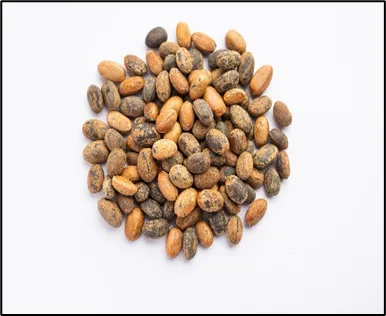
Fig 1:- Jamalgota
2) Neem Oil
Neem oil is a vegetable oil extracted from the seeds and fruits of the neem tree, scientifically known as Azadirachta indica, belonging to the family Meliaceae. Neem has been widely used in Ayurvedic and traditional medicine for centuries due to its broad spectrum of medicinal properties. The oil contains several bioactive compounds such as nimbin, nimbidin, nimbolide, and limonoids, which are responsible for its antimicrobial, anti-inflammatory, antioxidant, and therapeutic activities. Neem oil plays an important role in maintaining scalp health and preventing scalp infections. Its antimicrobial activity helps reduce dandruff and fungal infections, while its anti-inflammatory action soothes scalp irritation and itching. In addition, neem oil acts as a natural moisturizer that prevents dryness of the scalp and hair. The antioxidant properties protect hair follicles from oxidative stress and environmental damage.[15]
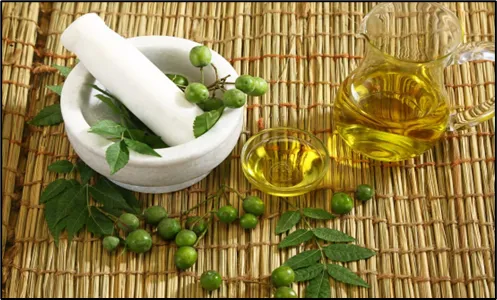
Fig 2:- Neem oil
3) Amla
Amla, commonly known as Indian gooseberry, is obtained from the fresh or dried fruits of Emblica officinalis, which belongs to the family Euphorbiaceae. Amla is considered one of the richest natural sources of Vitamin C and is extensively used in traditional systems of medicine for hair and skin care. The fruit contains several important phytoconstituents including hydrolysable tannins, quercetin, gallic acid, and ellagic acid, which exhibit strong antioxidant and rejuvenating properties. Amla is highly valued in hair care formulations because of its nourishing and strengthening effects on hair and scalp. It helps strengthen hair roots and follicles, thereby reducing hair fall and improving hair texture. The antioxidant activity of amla protects the scalp and hair from oxidative damage and premature aging. It is also known to reduce premature greying of hair by preserving natural pigmentation. Furthermore, amla helps moisturize the scalp, prevent dryness, and promote healthy hair growth.[16]
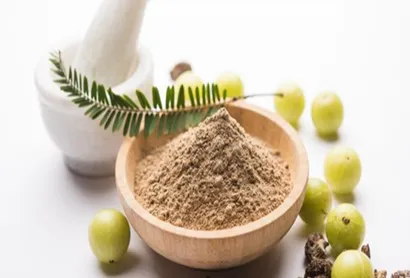
Fig 3:- Amla
4) Hibiscus Oil
Hibiscus oil is derived from the flowers and seeds of Hibiscus rosa-sinensis Linn., belonging to the family Malvaceae. Hibiscus has been traditionally used as a natural remedy for hair growth and scalp nourishment. The plant contains a wide variety of phytochemicals such as tannins, anthraquinones, quinones, phenols, flavonoids, alkaloids, terpenoids, saponins, steroids, cardiac glycosides, amino acids, proteins, carbohydrates, and essential oils. These constituents contribute to its therapeutic and cosmetic benefits. Hibiscus oil is particularly beneficial in promoting healthy hair growth and reducing hair fall. It nourishes the scalp, strengthens hair follicles, and improves blood circulation to the scalp, thereby stimulating follicular activity. The presence of flavonoids and antioxidants helps protect hair follicles from damage and oxidative stress.[17]
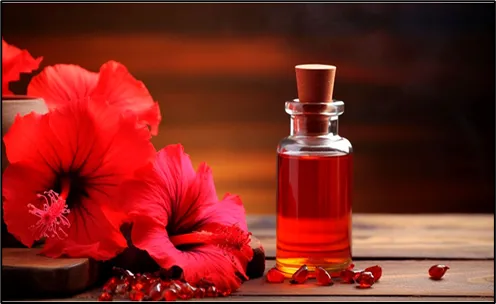
Fig 4:- Hibiscus oil
5) Aloe Vera Extract
Aloe vera, scientifically known as Aloe barbadensis Miller, belongs to the family Asphodelaceae and is commonly referred to as “the plant of immortality” because of its remarkable medicinal properties. Aloe vera is a succulent plant widely used in cosmetic, pharmaceutical, and therapeutic preparations. It contains numerous biologically active compounds including vitamins A, B12, C, and E; enzymes such as amylase and alkaline phosphatase; anthraquinones; and steroidal compounds including cholesterol, campesterol, and β-sitosterol. Aloe vera is highly beneficial in hair care due to its excellent moisturizing, soothing, and conditioning properties. It provides deep hydration to the scalp and hair, thereby reducing dryness and dandruff formation.[18]
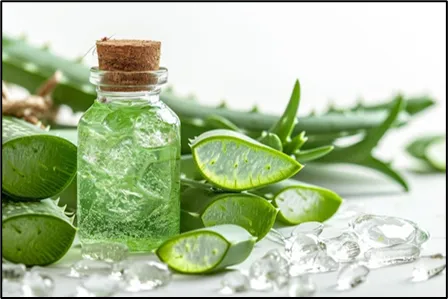
Fig 5:- Aloe vera
MATERIALS:
The materials used for the preparation of herbal hair cream were categorized into active herbal ingredients and excipients. The selected herbal ingredients were chosen based on their traditional and scientifically reported benefits in promoting hair growth, nourishing the scalp, and reducing hair fall associated with alopecia.
Table 1: Raw Materials Used in Herbal Hair Cream Formulation
|
Sr. No. |
Material |
Biological Source |
Role in Formulation |
|
1 |
Jamalgota Seeds |
Croton tiglium |
Helps stimulate scalp blood circulation and supports nourishment of hair follicles, thereby promoting hair growth and reducing hair fall. |
|
2 |
Neem Oil |
Azadirachta indica |
Possesses antifungal and antibacterial properties that help maintain scalp hygiene and reduce dandruff-causing microorganisms. |
|
3 |
Amla Powder |
Emblica officinalis |
Strengthens hair follicles and enhances collagen production, thereby supporting healthy hair growth. |
|
4 |
Hibiscus Oil |
Hibiscus rosa-sinensis |
Improves scalp circulation, activates hair follicles, and promotes healthy hair growth. |
|
5 |
Aloe Vera |
Aloe barbadensis Miller |
Provides hydration to dry hair, strengthens hair strands, and improves overall scalp health. |
Table 2: Excipients Used in Herbal Hair Cream Formulation
|
Sr. No. |
Excipients |
Function in Formulation |
|
1 |
Beeswax |
Acts as an emulsifying and stabilizing agent while also providing the desired consistency to the cream. |
|
2 |
Liquid Paraffin |
Helps reduce moisture loss, improves spreadability, enhances shine, and provides smoothness to hair. |
|
3 |
Borax |
Functions as an emulsifying agent by facilitating the mixing of oil and water phases and preventing phase separation. |
|
4 |
Methyl Paraben |
Used as a preservative to inhibit microbial growth and enhance the shelf life of the formulation. |
|
5 |
White Soft Paraffin |
Serves as a moisturizing base and contributes to the smooth texture of the cream. |
b) Equipment
Various laboratory instruments and equipment were used during the preparation and evaluation of the herbal hair cream. These instruments ensured accurate formulation, proper mixing of ingredients, controlled heating, and evaluation of the physicochemical properties of the prepared cream.
Table 3: Equipment Used for Formulation of Herbal Hair Cream
|
Sr. No. |
Equipment |
Purpose |
|
1 |
Heating Mantle / Water Bath |
Provides controlled heating for melting waxes and mixing excipients uniformly to obtain a stable cream base. |
|
2 |
Magnetic Stirrer |
Ensures proper and uniform mixing of oil phase, aqueous phase, and herbal ingredients to avoid separation. |
|
3 |
Beakers and Glass Rods |
Used for mixing, stirring, and transferring formulation ingredients during preparation. |
|
4 |
Measuring Cylinders |
Used for accurate measurement of liquid ingredients required in the formulation. |
Table 4: Equipment Used for Evaluation of Herbal Hair Cream
|
Sr. No. |
Equipment |
Purpose |
|
1 |
pH Meter |
Measures the pH of the cream to ensure compatibility with scalp pH (generally between 4.5–5.5). |
|
2 |
Autoclave / Sterilizer |
Sterilizes equipment and materials to maintain microbial safety during formulation. |
|
3 |
Viscometer |
Determines viscosity and flow properties to ensure suitable consistency of the cream. |
|
4 |
Spreadability Apparatus / Plate |
Evaluates the spreadability of the cream to ensure easy and uniform application on the scalp. |
Procedure for Formulation of Herbal Hair Cream (30 g)
The herbal hair cream was prepared by using the emulsification method. The formulation involved preparation of oil and aqueous phases separately, followed by incorporation of herbal ingredients and homogenization to obtain a smooth and stable cream. Prior to formulation, Jamalgota seeds were detoxified to reduce their poisonous and irritant activity.
Step 1: Detoxification of Jamalgota Seeds
The poisonous activity of Jamalgota (Croton tiglium) seeds was reduced by following a traditional detoxification method. Initially, the croton seeds were soaked in cold water for 24 hours at room temperature to soften the outer covering. After soaking, the outer seed coat was carefully removed to obtain the kernels. The kernels were then tied in a clean cloth to prepare a Pottali and immersed in cow milk for further detoxification. Subsequently, the kernels were removed from the cloth bundle, washed thoroughly with warm water, and dried under sunlight. The dried kernels were finally stored in a clean and dry airtight container for further use in the formulation process.[17]
Step 2: Preparation of Materials
All glassware and apparatus required for the preparation were cleaned properly with distilled water and dried thoroughly before use to avoid contamination. The ingredients required for the formulation were accurately weighed using a digital analytical balance according to the specified formulation composition.
Step 3: Preparation of Oil Phase
In a clean and dry beaker (Beaker A), the required quantities of beeswax, liquid paraffin, and white soft paraffin were added. The beaker was placed on a heating mantle and heated at a temperature of 70–75°C. The mixture was stirred continuously using a glass rod until all the ingredients melted completely and formed a uniform oily phase. The temperature of the oil phase was maintained at approximately 70°C until emulsification.
Step 4: Preparation of Aqueous Phase
In another clean beaker (Beaker B), distilled water was heated to approximately 70°C. Borax and methyl paraben were added gradually into the warm distilled water with continuous stirring until completely dissolved. Rose water was then incorporated into the aqueous phase to provide fragrance and soothing properties. The aqueous phase was maintained at 70°C to ensure compatibility during emulsification.
Step 5: Addition of Herbal Ingredients
After complete preparation of the aqueous phase, the herbal ingredients were added one by one into the aqueous mixture. Croton tiglium paste, neem oil, amla powder, aloe vera, and hibiscus oil were incorporated with continuous stirring to ensure uniform dispersion of all herbal components. The temperature of the mixture was maintained at 70°C to preserve fluidity and facilitate proper emulsification.
Step 6: Emulsification
The hot aqueous phase (Beaker B) was slowly added into the hot oil phase (Beaker A) with continuous stirring. The mixture was stirred using a magnetic stirrer or homogenizer at moderate speed for approximately 10–15 minutes until a smooth and creamy emulsion was formed. Continuous stirring was maintained while the formulation was allowed to cool gradually to around 40°C.
Step 7: Final Adjustment and Homogenization
Distilled water was added quantitatively (q.s.) to make the final weight of the formulation up to 30 g. The cream was stirred gently until a smooth, uniform, and homogenous consistency was obtained. The final formulation was checked visually to ensure the absence of phase separation, lump formation, or grittiness.[18]
Step 8: Packaging and Labelling
The prepared herbal hair cream was transferred into a sterile wide-mouth container using a stainless-steel spatula. The container was properly labelled.
Step 9: Storage
The formulated herbal hair cream was stored in a cool and dry place away from direct sunlight. The container lid was tightly closed after use to prevent contamination and maintain stability of the formulation.
Formulation Table of Herbal Hair Cream for Three Batches
Three different batches of herbal hair cream were prepared by varying the concentration of excipients while keeping the quantity of active herbal ingredients constant. The active ingredients such as Croton tiglium paste, neem oil, amla powder, aloe vera, and hibiscus oil were incorporated for their potential hair growth-promoting, scalp nourishing, and anti-alopecia activities. Excipients including beeswax, liquid paraffin, borax, methyl paraben, white soft paraffin, rose water, and distilled water were used to provide suitable consistency, stability, preservation, and spreadability to the formulation.
Table 5: Formulation Composition of Herbal Hair Cream (30 g)
|
Sr. No. |
Ingredients |
Category |
Batch 1 |
Batch 2 |
Batch 3 |
|
1 |
Croton tiglium Paste |
Active Ingredient |
3 g |
3 g |
3 g |
|
2 |
Neem Oil |
Active Ingredient |
1 mL |
1 mL |
1 mL |
|
3 |
Amla Powder |
Active Ingredient |
0.8 g |
0.8 g |
0.8 g |
|
4 |
Aloe Vera |
Active Ingredient |
1.5 g |
1.5 g |
1.5 g |
|
5 |
Hibiscus Oil |
Active Ingredient |
2 mL |
2 mL |
2 mL |
|
6 |
Beeswax |
Emulsifying Agent |
3 g |
3.12 g |
3.21 g |
|
7 |
Liquid Paraffin |
Emollient |
6 mL |
6.2 mL |
6.9 mL |
|
8 |
Borax |
Emulsifying Agent |
0.36 g |
0.37 g |
0.38 g |
|
9 |
Methyl Paraben |
Preservative |
0.03 g |
0.03 g |
0.04 g |
|
10 |
White Soft Paraffin |
Base Ingredient |
4 g |
4.5 g |
5 g |
|
11 |
Rose Water |
Fragrance |
q.s. |
q.s. |
q.s. |
|
12 |
Distilled Water |
Vehicle |
q.s. |
q.s. |
q.s. |
Note: q.s. = Quantity sufficient to make the final formulation weight up to 30 g.
RESULTS AND DISCUSSION:
The prepared herbal hair cream formulations were evaluated for organoleptic properties, physicochemical characteristics, microbiological safety, and packaging integrity.
1. Organoleptic Evaluation
Organoleptic evaluation was carried out to assess the appearance, odor, color, and texture of the prepared herbal hair cream formulations. These parameters are important for determining the aesthetic quality and consumer acceptability of the product. An ideal herbal hair cream should possess a smooth texture, pleasant herbal odor, uniform color, and lump-free appearance for easy application and better patient compliance.
Table 6: Organoleptic Evaluation of Herbal Hair Cream
|
Sr. No. |
Test |
Specification |
Batch 1 |
Batch 2 |
Batch 3 |
|
1 |
Appearance |
Smooth, uniform, lump-free |
Fail |
Fail |
Pass |
|
2 |
Odor |
Mild herbal characteristic odor |
Fail |
Fail |
Pass |
|
3 |
Color |
Uniform herbal color |
Fail |
Fail |
Pass |
|
4 |
Texture |
Creamy and non-gritty |
Fail |
Fail |
Pass |
The results revealed that Batch 3 exhibited a smooth, uniform, and creamy consistency with acceptable odor and color, whereas Batch 1 and Batch 2 showed poor texture and non-uniformity.
2. Physical and Chemical Evaluation
Physical and chemical evaluation was performed to determine the pH, viscosity, spreadability, and stability of the prepared formulations. These parameters are essential to ensure that the cream is compatible with scalp pH, easy to apply, stable during storage, and capable of maintaining suitable consistency throughout its shelf life.
Table 7: Physical and Chemical Evaluation of Herbal Hair Cream
|
Sr. No. |
Test |
Specification |
Batch 1 |
Batch 2 |
Batch 3 |
|
1 |
pH |
4.5 – 5.5 |
Fail |
Fail |
Pass |
|
2 |
Viscosity |
Easily spreadable and non-runny |
Fail |
Fail |
Pass |
|
3 |
Spreadability |
Uniform spreading without tearing |
Fail |
Fail |
Pass |
|
4 |
Stability |
No change in pH, texture, or color |
Fail |
Fail |
Pass |
Batch 3 showed satisfactory pH, viscosity, spreadability, and stability compared to the other batches. The formulation remained physically stable without any phase separation or significant changes during the evaluation period.
3. Microbiological Evaluation
Microbiological evaluation was conducted to assess the microbial safety of the herbal hair cream formulations. The tests were performed to ensure the absence of harmful microorganisms and to confirm the effectiveness of preservatives used in the formulation.
Table 8: Microbiological Evaluation of Herbal Hair Cream
|
Sr. No. |
Test |
Specification |
Batch 1 |
Batch 2 |
Batch 3 |
|
1 |
E. coli Test |
Absent |
Absent |
Absent |
Absent |
|
2 |
Fungal Growth |
Absent |
Absent |
Absent |
Absent |
The microbiological study indicated that all batches were free from E. coli contamination and fungal growth, demonstrating good microbial quality and effectiveness of the preservative system used in the formulation.
4. Safety and Packaging Evaluation
Safety and packaging evaluations were carried out to determine the irritation potential and packaging integrity of the prepared herbal hair cream. The irritation test ensured that the formulation was safe and non-irritating to the scalp, while packaging studies confirmed proper sealing and prevention of leakage.
Table 9: Safety and Packaging Evaluation of Herbal Hair Cream
|
Sr. No. |
Test |
Specification |
Batch 1 |
Batch 2 |
Batch 3 |
|
1 |
Irritation Test (Patch Test) |
No redness or irritation |
Pass |
Pass |
Pass |
|
2 |
Seal Integrity Test |
No leakage |
Pass |
Pass |
Pass |
The safety evaluation showed that all batches were non-irritating and safe for topical application. Additionally, the packaging integrity test confirmed that the containers were leak-proof and suitable for storage of the formulation.
SUMMARY:
The present study focused on the formulation and evaluation of a herbal hair cream containing Jamalgota, Neem oil, Amla, Aloe vera, and Hibiscus oil for the treatment of alopecia. Three batches (B1–B3) were prepared and evaluated for organoleptic properties, physicochemical parameters, microbiological safety, and stability. Among all formulations, Batch 3 showed the best results in terms of appearance, texture, pH, spreadability, stability, and overall performance. Microbiological and safety studies confirmed that the formulation was free from contamination and safe for topical application. The study indicated that the herbal hair cream possesses potential activity in promoting hair growth and managing alopecia.
CONCLUSION:
The herbal hair cream formulations were successfully prepared using selected herbal ingredients with hair growth-promoting properties. Among the three batches, Batch 3 was found to be the optimized formulation due to its better stability, consistency, and overall evaluation results. The formulation was non-irritating, stable, and suitable for topical use. The study suggests that herbal hair cream can serve as a safe, natural, and effective alternative for the treatment of alopecia. Further studies such as clinical evaluation and large-scale production are recommended for future development.
CONFLICT OF INTREST:
None
REFERENCES

Nutan Ade, Varuna Baddar, Shreya Bagal, Dr. Afsar Shaikh, Dr. Manisha Kitukale, Preparation and Evaluation of Herbal Hair Cream in The Treatment of Alopecia by using Jamalgota, Neem Oil, Amla, Hibiscus Oil and Aloe Vera, Int. J. of Pharm. Sci., 2026, Vol 4, Issue 5, 7169-7180. https://doi.org/10.5281/zenodo.20404937
 10.5281/zenodo.20404937