

We use cookies to ensure our website works properly and to personalise your experience. Cookies policy
Department of Pharmaceutical Sciences, School of Pharmacy, Massachusetts College of Pharmacy and Health Sciences, Boston, MA 02115.
Spray drying is a scalable, versatile particle-engineering technique that converts liquid feed formulations into dry particulate systems in a single processing step. Although traditionally associated with producing micron-sized powders, advances in spray-drying technology have expanded its potential for preparing particles in the nanometer range. The objective of the present study was to investigate spray drying as a technique for developing solid nanoscale carriers and to establish a bovine serum albumin (BSA)-based nanoparticle system that could serve as a potential platform for drug delivery applications. BSA nanoparticles were prepared using a chemically crosslinked BSA matrix and subsequently spray-dried. The crosslinking behavior of the BSA matrix was evaluated using high-performance liquid chromatography (HPLC), and the crosslinking time required to prepare the matrix was established based on these studies. Different BSA and glutaraldehyde (crosslinker) concentrations, together with selected processing conditions, were subsequently investigated to determine their influence on spray-drying feasibility and particle characteristics. Higher BSA concentrations were associated with greater processing challenges, including atomizer clogging and the formation of comparatively larger particles, whereas lower BSA concentrations were more favorable for producing particles within the submicron and nanometer range. Particle size analysis showed relatively narrow size distributions, while surfactant incorporation maintained smaller particle sizes under the investigated conditions. After dispersion in an aqueous medium, the crosslinked particles showed short-term dimensional stability, with no substantial increase in particle size over 6 h and polydispersity index values ranging from approximately 0.10 to 0.25. Scanning electron microscopy revealed predominantly spherical particles with smooth surface morphology. Particles prepared using lower BSA concentrations appeared to be approximately 500 nm in size, consistent with the results obtained from particle size analysis. Overall, the findings demonstrate the feasibility of using spray drying to prepare solid BSA-based nanoscale carriers and highlight the importance of matrix composition, crosslinking conditions, and spray-drying parameters in controlling particle characteristics. The developed system provides a foundation for using spray-dried protein nanoparticles as a versatile carrier platform that may be further adapted for the incorporation and delivery of therapeutic agents.
The field of pharmaceutical formulation has evolved tremendously over time. Initially, pharmaceutical formulation was largely based on individualized compounding, in which pharmacists combined, mixed, or modified ingredients to prepare medicines for individual patients. With industrialization, however, the focus shifted from patient-specific preparation to the large-scale production of standardized dosage forms, including tablets, capsules, liquids, injections, and other pharmaceutical products. As the field advanced, scientists recognized that simply incorporating the correct drug dose into a dosage form did not necessarily ensure the desired therapeutic effect. Drug performance could be limited if the active pharmaceutical ingredient failed to disintegrate, dissolve, permeate biological membranes, or become adequately absorbed. This realization established the importance of preformulation studies and the evaluation of properties such as aqueous solubility, dissolution rate, particle size, crystal form and polymorphism, salt form, pKa, lipophilicity, stability, hygroscopicity, and membrane permeability [1, 2].
Formulation science subsequently progressed from simply delivering a drug dose to controlling the rate, duration, and site of drug release. Higuchi established the theoretical foundations of diffusion-controlled drug release from ointments and solid matrices [3]. Later, Langer and Folkman demonstrated the sustained release of biologically active proteins and other macromolecules from polymeric systems over extended periods [4]. These developments contributed to the emergence of technologies such as matrix tablets, reservoir systems, enteric and other functional coatings, osmotic-release tablets, biodegradable microspheres, drug-eluting implants, and long-acting injectable formulations [5-8]. This period fundamentally changed the role of pharmaceutical formulation. Formulation was no longer viewed merely as the process of manufacturing a tablet or capsule; instead, it became a means of engineering a drug product to control its release profile, maintain therapeutic concentrations, reduce dosing frequency, improve patient adherence, and enhance overall treatment performance.
Today, formulation science has entered an era of increasingly complex therapeutic modalities, including biologics, proteins, peptides, and nucleic acid-based medicines. Although significant progress has been made in delivering these molecules, researchers continue to explore more stable, efficient, targeted, and patient-friendly delivery strategies. At the same time, modern pharmaceutical development increasingly follows Quality by Design principles, with a strong emphasis on understanding how drug-substance properties, excipient characteristics, process parameters, and manufacturing operations influence the quality, safety, and performance of the final drug product [9]. Alongside advances in formulation science, numerous manufacturing technologies have been developed and refined to enable the reproducible production of increasingly complex pharmaceutical dosage forms. Modern formulation and manufacturing approaches include spray drying, hot-melt extrusion, lyophilization, nanoparticle and lipid nanoparticle preparation, microfluidic and controlled-mixing processes, long-acting injectable systems, implantable delivery systems, inhalable powders, microneedle-based systems, and three-dimensional printing. These technologies have supported the development of advanced dosage forms such as amorphous solid dispersions, nanoparticles, liposomes, microspheres, long-acting injectables, inhalable formulations, and delivery systems for biologics and nucleic acids [10-14]. Consequently, manufacturers no longer select a process based solely on its ability to produce a dry, stable, or easily handled product. Instead, formulation processes are increasingly selected and optimized to control critical product characteristics, including particle size, morphology, porosity, crystallinity, drug distribution, release behavior, stability, bioavailability, and biological performance [15]. While some of these technologies were developed specifically for pharmaceutical applications, others originated in different industries and were subsequently adapted to address pharmaceutical challenges [16]. Spray drying is a prominent example of such a technology. Initially used in the food, dairy, and chemical industries for drying and powder production, spray drying was later adopted by the pharmaceutical industry because it can rapidly convert liquid feedstocks into dry powders through a single, scalable, and potentially continuous process [9, 17, 18]. The evolution of spray drying closely reflects the broader transformation of pharmaceutical formulation. What began primarily as a method for solvent removal and powder production has developed into a versatile particle-engineering and formulation platform [15]. Today, spray drying is used not only to produce stable powders but also to improve drug solubility, dissolution, bioavailability, stability, delivery, and therapeutic performance [10, 19]. This progression has established spray drying as an important technology in developing modern pharmaceutical products.
The evolution of spray drying from a conventional drying method to an advanced pharmaceutical formulation platform can be traced back to the early process patented by Samuel Percy in 1872. Percy described a method in which a liquid was dispersed into fine droplets and exposed to heated air to remove moisture and produce a dried material. Although the original purpose of the process was primarily solvent removal and powder production, its fundamental principles remain central to modern spray drying [9]. The spray-drying process can generally be divided into five major stages: (1) preparation of the liquid feed, (2) atomization of the feed into fine droplets containing dissolved or suspended components, (3) drying of the droplets through contact with a heated drying gas, (4) separation and transport of the dried particles to the collection unit, and (5) recovery of the final powder. Feed preparation typically begins by dissolving or dispersing the drug and selected excipients in an appropriate liquid medium, most commonly water. Depending on the formulation, the feed may be prepared as a solution, suspension, emulsion, or another suitable dispersion. Feed uniformity is essential because variations in concentration or dispersion stability can affect atomization, drying behavior, drug distribution, and the properties of the final particles. Accordingly, appropriate mixing, stirring, homogenization, or other dispersion techniques may be used to obtain a uniform and stable feed [20]. For conventional small-molecule formulations, the drug and excipients are often sufficiently robust to tolerate standard mixing conditions. Greater care is required when preparing feeds containing biologics such as proteins, peptides, vaccines, or nucleic acids. These molecules may be sensitive to shear stress, interfacial exposure, temperature, pH changes, and prolonged processing [21]. Consequently, mixing conditions may need to be carefully controlled or customized to minimize aggregation, denaturation, or loss of biological activity [22, 23]. Solvent selection is also a critical consideration during feed preparation. Organic solvents may be used when the drug or excipients have limited aqueous solubility, and their greater volatility may permit rapid solvent removal under comparatively mild drying conditions. However, organic solvents introduce additional concerns related to toxicity, flammability, residual-solvent limits, process safety, and compatibility with sensitive biological molecules [24-26]. They may also destabilize proteins by disrupting their native structure or altering intermolecular interactions. For these reasons, water is generally preferred for biologic-containing spray-drying feeds whenever adequate solubility, stability, and processability can be achieved [27]. Feedstock preparation is a critical step in spray drying because liquid-feed properties strongly influence both process performance and final-product characteristics. Parameters such as viscosity affect feed pumpability and atomization, while concentration, density, surface tension, and solvent boiling point can significantly alter droplet formation and drying behavior [15]. For example, more concentrated feeds generally produce larger particles because each droplet contains more dissolved or suspended solids. In contrast, feeds with lower surface tension tend to atomize more readily and may generate smaller droplets and, consequently, smaller particles [28-30].
Just as feedstock properties are critical determinants of the desired product quality, spray-drying process parameters also play an equally important role in governing the characteristics of the final product. Key process variables include inlet temperature, outlet temperature, feed rate, atomizer type, atomization frequency or pressure, drying gas flow rate, and pump speed. These parameters influence droplet formation, drying kinetics, particle size, morphology, residual moisture content, and overall process yield. Consequently, developing a spray-drying method for a specific formulation generally requires systematic optimization of both formulation and processing conditions [31-33]. Each process parameter can affect product quality through a different mechanism. For example, inlet temperature is a critical determinant of drying rate and particle formation. Excessively high inlet temperatures may promote rapid solvent evaporation, resulting in altered or undesirable particle morphology and, for thermally sensitive materials, potential degradation. Conversely, an inlet temperature that is too low may result in insufficient drying, leading to particles with elevated residual moisture, increased stickiness, poor powder recovery, or incomplete formation of the desired solid product [34-36]. Therefore, careful selection and fine-tuning of spray-drying parameters are essential to achieve reproducible particle characteristics and the intended critical quality attributes of the formulation. Although relatively high inlet temperatures are commonly used during spray drying, the droplets do not immediately reach the temperature of the incoming drying gas. During the initial constant-rate drying stage, solvent evaporation continuously removes heat from the droplet surface. As long as the surface remains saturated with moisture, the droplet temperature generally remains close to the wet-bulb temperature of the drying conditions [18]. Once most of the surface moisture has evaporated and particle formation progresses, the drying rate decreases, and the particle temperature may begin to rise toward the outlet-gas temperature. This evaporative-cooling effect is one of the reasons spray-drying can be suitable for certain heat-sensitive pharmaceutical materials [16, 18, 37].
Atomizer type and atomization conditions are important process variables in spray drying because they directly influence droplet formation and, consequently, the size and characteristics of the resulting particles. Pressure, two-fluid, rotary, and vibrating-mesh atomizers generate droplets through different mechanisms and are therefore suited to different feed properties and target particle sizes. In general, smaller droplets tend to produce smaller dried particles, whereas larger droplets result in larger particles. Two-fluid nozzles are often preferred for more viscous feeds or when smaller particles are desired, while pressure nozzles are commonly used at larger production scales. In vibrating-mesh nano spray dryers, droplet size is influenced by the mesh aperture, atomization frequency, and feed properties such as viscosity and surface tension. Thus, careful selection and optimization of the atomization system are critical for controlling particle size distribution and achieving the desired product characteristics [17, 38, 39].
After drying, the particles are separated from the drying gas and descend into a collection chamber, where the final powder is recovered and stored under appropriate conditions. The efficiency of this separation and collection step can also affect product yield, particularly when very small or low-density particles are produced [40]. In addition to feed properties, operating parameters such as inlet temperature, feed rate, drying-gas flow, atomizer type, and atomization frequency or pressure play an important role in determining final product quality. The interactions among these variables influence particle size, morphology, porosity, residual moisture, yield, and product stability. Therefore, although spray drying may appear relatively straightforward, achieving the desired product quality requires careful optimization and fine-tuning of both formulation and process parameters.
The ability to control particle characteristics through the combined optimization of formulation composition and spray-drying conditions also creates an opportunity to extend the application of spray drying beyond conventional powder production toward the development of solid carrier systems. In particular, direct preparation of nanosized carriers by spray drying is of interest because it could combine the advantages of nanoscale drug delivery with the physical stability and handling benefits of a dry formulation. Albumin is particularly attractive for this purpose because of its biocompatibility, biodegradability, and established ability to associate with a wide range of therapeutic molecules [41-43]. However, preparing solid albumin-based nanoparticles by spray drying remains relatively underexplored, and achieving nanometer-sized particles requires careful consideration of both protein matrix properties and processing conditions.
Accordingly, this work investigated whether a chemically crosslinked bovine serum albumin (BSA) matrix could be directly spray-dried to produce solid particles within the nanometer size range. The study examined how BSA concentration, excipient composition, and spray-drying conditions affected formulation processability and particle formation. The effects of Tween and arginine concentrations were investigated as formulation variables, while the crosslinking behavior of BSA with glutaraldehyde was evaluated to determine an appropriate matrix preparation time before spray drying. Feed viscosity was also examined in relation to sprayability, recognizing that acceptable bulk viscosity alone may not necessarily ensure successful atomization, particularly for protein-rich formulations.
The broader rationale for developing this system is to establish a BSA-based formulation and spray-drying framework that could serve as a platform technology for drug delivery. Rather than developing a carrier around a single therapeutic molecule, establishing a reproducible solid albumin nanoparticle system first may allow the carrier matrix and manufacturing approach to be adapted later to incorporate different therapeutic agents. The resulting particles were therefore characterized for particle size and size distribution, surface charge, morphology, and swelling behavior to evaluate the fundamental physicochemical characteristics of the developed carrier system.
MATERIALS AND METHODS
Materials
Bovine serum albumin (BSA) powder (Fraction V, nuclease- and protease-free) was purchased from VWR International. Glutaraldehyde solution (Grade I, 25% in water), 2,4-Dinitrophenylhydrazine (DNPH, reagent grade), and Arginine hydrochloride (reagent grade) were purchased from Sigma-Aldrich (St. Louis, MO, USA). HPLC-grade acetonitrile and polysorbate 80 NF (Tween 80) were purchased from Professional Compounding Centers of America (PCCA, Houston, TX, USA).
Equipment
Spray-dried particles were prepared using a Büchi Nano Spray Dryer B-90 HP (BÜCHI Labortechnik AG, Flawil, Switzerland). Particle size, size distribution, and zeta potential measurements were performed using a Brookhaven dynamic light scattering (DLS) particle size and zeta potential analyzer (Brookhaven Instruments Corporation, Holtsville, NY, USA). Scanning electron microscopy (SEM) was performed at the University of Massachusetts Boston using a ZEISS Sigma 500 scanning electron microscope (Carl Zeiss Microscopy GmbH, Jena, Germany). Viscosity measurements were performed using a portable microVISC™ viscometer (RheoSense, Inc., San Ramon, CA, USA). High-performance liquid chromatography (HPLC) analysis was performed using an Agilent 1260 Infinity II HPLC system (Agilent Technologies, Santa Clara, CA, USA) to evaluate the crosslinking behavior of the BSA matrix. Syringe disk filters with a pore size of 0.45 µm were obtained from Sigma-Aldrich (St. Louis, MO, USA). Differential scanning calorimetry (DSC) was performed using a Discovery DSC 25 differential scanning calorimeter with Tzero™ pans and lids (TA Instruments, New Castle, DE, USA).
Preparation of BSA Crosslinked Matrix
Bovine serum albumin (BSA) was dissolved in ultrapure water under gentle magnetic stirring. A low stirring speed was maintained to minimize foaming and air incorporation. A typical batch volume of 50 mL was prepared, with BSA concentrations ranging from 0.5% to 5.0% w/v. Two independent batches were prepared at each concentration (Table 1). After complete dissolution, glutaraldehyde was added as the crosslinking agent to achieve final concentrations of 0.5% and 1.0% v/v. Formulations with BSA concentrations above 2% w/v were prepared primarily for preliminary viscosity and sprayability assessments. Based on these evaluations, 2% w/v crosslinked BSA was selected as the highest concentration used for subsequent particle preparation. Tween and arginine were incorporated into selected crosslinked BSA formulations to investigate their effects on particle size. These excipients were evaluated individually and in combination and were added after completion of the crosslinking reaction, immediately before spray drying.
Table 1 Crosslinked BSA prepared using concentrations ranging from 0.5% to 5% w/v
|
BSA (w/v) |
Glutaraldehyde( v/v) |
BSA (w/v) |
Glutaraldehyde( v/v) |
|
0.5 % |
0.5 % |
0.5 % |
1.0 % |
|
1.0 % |
0.5 % |
1.0 % |
1.0 % |
|
1.5 % |
0.5 % |
1.5 % |
1.0 % |
|
2.0 % |
0.5 % |
2.0 % |
1.0 % |
|
3.0 % |
0.5 % |
3.0 % |
1.0 % |
|
4.0 % |
0.5 % |
4.0 % |
1.0 % |
|
5.0 % |
0.5 % |
5.0 % |
1.0 % |
Determination of Viscosity of Crosslinked Solutions
Before spray drying, the viscosity of the crosslinked BSA solutions was measured to assess its potential impact on feed pumpability and atomization in the Büchi B-90 HP Nano Spray Dryer. Although the formulations appeared suitable for pumping, quantitative viscosity measurements were obtained using a RheoSense™ microVISC viscometer. Samples were loaded into disposable pipettes and mounted on the instrument for analysis. Measurements were performed in Advanced Auto mode, which allows adjustment of the applied shear-stress conditions. Each formulation was analyzed in triplicate (n = 3), and the mean viscosity was calculated to compare crosslinked BSA solutions across concentrations.
Determination of Crosslinking Time
Free glutaraldehyde remaining during BSA crosslinking was quantified using a 2,4-dinitrophenylhydrazine (2,4-DNPH) derivatization followed by a modified HPLC–UV method [44]. Samples were collected at 0, 0.5, 1, 2, 3, 4, 6, 8, 10, 12, and 24 h after initiation of the crosslinking reaction. Each sample was derivatized with 2,4-DNPH in the presence of phosphoric acid and analyzed immediately. HPLC analysis was performed on a Phenomenex C18 column (150 × 4.6 mm) maintained at 25ºC. Acetonitrile (mobile phase A) and 0.1% w/v phosphoric acid (mobile phase B) served as the mobile phases with a flow rate of 1 mL/min under gradient conditions (Table 2). A 10 µL sample was injected, and the glutaraldehyde–DNPH derivative was detected by UV absorbance at 355 nm. The concentration of residual glutaraldehyde at each time point was determined from the concentration of the corresponding DNPH derivative.
Table 2 Gradient flow conditions for the modified HPLC method
|
Time (min) |
Mobile phase A (% v/v) |
Mobile phase B (% v/v) |
|
0 – 2 |
55 |
45 |
|
2 – 5 |
65 |
35 |
|
5 – 8 |
70 |
30 |
|
8 – 10 |
75 |
25 |
|
10 - 12 |
60 |
40 |
|
12 – 14 |
55 |
45 |
Spray Drying Crosslinked Solutions
The polymeric matrix was spray-dried using a Büchi B-90 HP Nano Spray Dryer. Spray-drying parameters were optimized through multiple preliminary trials, with the final conditions selected based on process performance and the desired characteristics of the resulting powder. The inlet temperature was maintained between 110 and 120 °C, and the nebulizer frequency was set between 110 and 120 kHz. The spray rate was kept at 80%, and the pump speed was set to 20%. Both medium- and small-sized nebulizers were evaluated during optimization. The optimized conditions were then used to spray-dry the crosslinked polymeric matrix and recover the dried solid product.
Particle Size and Zeta Potential
The particle size and zeta potential of the prepared formulations were measured using a 90Plus Particle Size and Zeta Potential Analyzer (Brookhaven Instruments, Holtsville, NY, USA). A small quantity (5 mg) of the spray-dried particles was dispersed in 10 mL of 0.01% w/v Tween 80 and was sonicated for 30 seconds using a Fisher Scientific FS30 sonicator (Waltham, MA, USA) to promote uniform dispersion and minimize particle agglomeration. Prior to analysis, the samples were diluted 50-fold with water to reduce multiple scattering and minimize interparticle interactions. Each formulation was analyzed in triplicate (n = 3), and the mean particle size was reported.
SEM Analysis
The morphology of the spray-dried particles was examined using a ZEISS Sigma 500 scanning electron microscope equipped with an InLens detector. A small quantity of each dried powder sample was gently dispersed onto conductive carbon adhesive tape mounted on an aluminum SEM stub. Excess loosely bound particles were removed to obtain a thin, evenly distributed sample layer. The prepared stubs were placed in the microscope chamber and evacuated before imaging. Samples were then examined at appropriate magnifications using the InLens detector, and representative micrographs were collected to evaluate particle morphology and surface characteristics.
Differential Scanning Calorimetry
Differential scanning calorimetry (DSC) was used to evaluate changes in the thermal behavior of BSA after chemical crosslinking with glutaraldehyde. Three solid samples were analyzed: non-crosslinked BSA and crosslinked BSA particles prepared at two BSA concentrations. DSC analysis was performed using a DSC 25 differential scanning calorimeter (TA Instruments, New Castle, DE, USA). Approximately 8 mg of each sample was accurately weighed into Tzero aluminum pans and sealed with Tzero lids. The samples were heated from 25 to 160 °C at 10 °C/min. Thermal transitions were evaluated from the resulting thermograms, and changes in peak temperature and thermal profile between non-crosslinked and glutaraldehyde-crosslinked BSA samples were compared to assess changes in the thermal characteristics of the BSA matrix following crosslinking.
Swelling of Particles
The swelling behavior of the particles was evaluated over 6 h by monitoring changes in particle size with the Brookhaven 90Plus Nanoparticle Size Analyzer. Particle dispersions were prepared using the same procedure as described for particle size analysis. Briefly, particles were dispersed in a 0.01% w/v Tween 80 solution and sonicated for 30 s to achieve uniform dispersion. Particle size was measured at 0, 1, 2, 3, 4, 5, and 6 h. Each measurement was performed in triplicate (n = 3), and the mean particle size at each time point was reported.
RESULTS & DISCUSSION
Preparation of BSA Crosslinked Matrix
Before spray drying, the composition of the BSA feed was carefully considered because the study aimed to produce solid albumin-based carriers in the nanometer size range. BSA dissolved readily in ultrapure water under gentle stirring, yielding visually clear solutions across the concentrations investigated. Lower-concentration solutions appeared pale yellow, whereas the yellow coloration became more pronounced as the BSA concentration increased, although no visible precipitation was observed.
Glutaraldehyde was selected as the chemical crosslinking agent because its aldehyde groups can react with nucleophilic groups on proteins, particularly the primary amines of lysine residues. BSA's relatively high lysine content provides multiple reactive sites for forming a crosslinked protein matrix, making it suitable for this approach. At the same time, the concentration of BSA was expected to be an important determinant of subsequent spray-drying behavior and particle formation. Increasing the amount of BSA in the feedstock increases the quantity of nonvolatile material within each atomized droplet and can therefore favor the formation of larger dried particles. Because the primary objective was to obtain particles in the nanometer size range, lower BSA concentrations were prioritized during formulation development. These concentrations were subsequently evaluated alongside crosslinking and spray-drying conditions to identify a formulation that provided sufficient matrix formation while remaining suitable for atomization and nanosized particle production.
Determination of Viscosity of Crosslinked Solutions
Viscosity is an important feed property to consider when evaluating the sprayability of a formulation, as excessively viscous solutions may interfere with feed delivery and atomization during spray drying [15, 45]. Assessing viscosity before processing can therefore help identify potential limitations and reduce the likelihood of operational difficulties during subsequent spray-drying runs. Liquids with viscosities of up to approximately 10 cP can be processed using the Büchi Nano Spray Dryer B-90 HP [46]. However, the present study showed that, for albumin-based formulations, viscosity alone was not sufficient to predict sprayability. Although the viscosities of the investigated BSA solutions remained within the recommended operating range, higher BSA concentrations were associated with frequent nebulizer clogging during processing. For example, the 2% w/v BSA formulation crosslinked with 0.5% w/v glutaraldehyde had a mean viscosity of 2.942 cP but caused extensive clogging of the medium-sized nebulizer within approximately 30 min. During this period, less than 5 mL of the formulation was successfully processed.
This suggests that additional formulation characteristics, such as protein concentration and feed behavior at the vibrating mesh, may also influence successful atomization. The subsequent tables summarize these processing observations alongside the corresponding particle-size data for different BSA concentrations. The viscosity of crosslinked and non-crosslinked BSA solutions prepared at different concentrations was evaluated, with water and methanol included as controls. As BSA concentration increased, viscosity increased accordingly. Crosslinked BSA formulations consistently exhibited higher viscosities than their non-crosslinked counterparts at comparable BSA concentrations. In addition, formulations crosslinked with 1.0% w/v glutaraldehyde showed higher viscosity values than those crosslinked with 0.5% w/v glutaraldehyde. Table 3 summarizes the measured viscosities of the different formulations. Nebulizer clogging decreased as BSA concentration decreased, with the lowest-concentration formulations showing the least clogging and the most consistent sprayability. These observations indicated that viscosity alone did not fully predict the processability of the crosslinked BSA formulations. Based on the combined observations of viscosity and sprayability, formulations containing less than 2% w/v crosslinked BSA were selected for subsequent spray-drying experiments.
Table 3 Effect of BSA Concentration and Glutaraldehyde Crosslinking on the Viscosity of BSA Solutions (mean ± SD, n = 3)
|
BSA (w/v) |
Viscosity of BSA (cP) |
||
|
Non-crosslinked |
Crosslinked with 0.5% v/v Glutaraldehyde |
Crosslinked with 1.0% v/v Glutaraldehyde |
|
|
0.5 % |
1.388 ± 0.001 |
1.733 ± 0.002 |
1.863 ± 0.002 |
|
1.0 % |
1.564 ± 0.003 |
2.492 ± 0.007 |
2.596 ± 0.002 |
|
1.5 % |
1.568 ± 0.001 |
2.554 ± 0.005 |
2.793 ± 0.004 |
|
2.0 % |
1.676 ± 0.004 |
2.942 ± 0.003 |
3.145 ± 0.004 |
|
3.0 % |
1.700 ± 0.002 |
2.745 ± 0.003 |
3.216 ± 0.002 |
|
4.0 % |
1.960 ± 0.002 |
3.174 ± 0.005 |
3.548 ± 0.003 |
|
5.0 % |
2.323 ± 0.005 |
3.859 ± 0.006 |
3.901 ± 0.007 |
Determination of BSA Crosslinking Time
Understanding the crosslinking behavior of glutaraldehyde with BSA was considered important before establishing the spray-drying process. Glutaraldehyde is an effective protein crosslinking agent; however, residual unreacted glutaraldehyde is undesirable because of its potential cytotoxicity and may require removal or quenching before further use of the formulation [47, 48]. Therefore, it was necessary to determine the time required for the crosslinking reaction to approach completion and to establish whether appreciable amounts of free glutaraldehyde remained in the formulation. If residual glutaraldehyde persisted after completion of the crosslinking reaction, a suitable quenching agent, such as sodium bisulfite, could subsequently be employed to neutralize the remaining aldehyde groups [49].
The extent of crosslinking was evaluated indirectly by monitoring the concentration of residual free glutaraldehyde in the BSA formulation at predetermined time points. As the reaction progressed, glutaraldehyde was expected to react with available nucleophilic groups on BSA, progressively reducing the concentration of free glutaraldehyde in solution. Accordingly, the time-dependent decrease in residual glutaraldehyde helped determine an appropriate crosslinking duration and indirectly indicated that the crosslinking reaction was proceeding successfully. The point at which no further measurable decrease in free glutaraldehyde occurred was considered indicative of a plateau in the reaction. Because glutaraldehyde lacks a strong chromophore suitable for direct, sensitive quantification by conventional HPLC-UV analysis, a derivatization step was required before chromatographic analysis [50]. Glutaraldehyde was derivatized with 2,4-dinitrophenylhydrazine (DNPH), forming UV-detectable hydrazone derivatives. The analytical procedure was adapted from the OSHA method for glutaraldehyde determination and modified for the present application [51].
After modifying the analytical procedure, a glutaraldehyde calibration curve was established in triplicate (n = 3). 2,4-DNPH eluted at a retention time of ~2.8 min while derivatized glutaraldehyde eluted later at a retention time of ~7.1 min (Figure 1). The calibration curve demonstrated linearity over a concentration range of 0.2–10 mg/mL and was described by the regression equation: AUC = 1156.2 × concentration − 3.7195, with a correlation coefficient of 1.000. The lower limit of detection (LOD) and lower limit of quantification (LOQ) were 0.02 mg/mL and 0.06 mg/mL, respectively. Method precision was evaluated using three replicate injections of a 10 mg/mL glutaraldehyde standard, yielding a relative standard deviation (RSD) of 0.09%, indicating good repeatability.
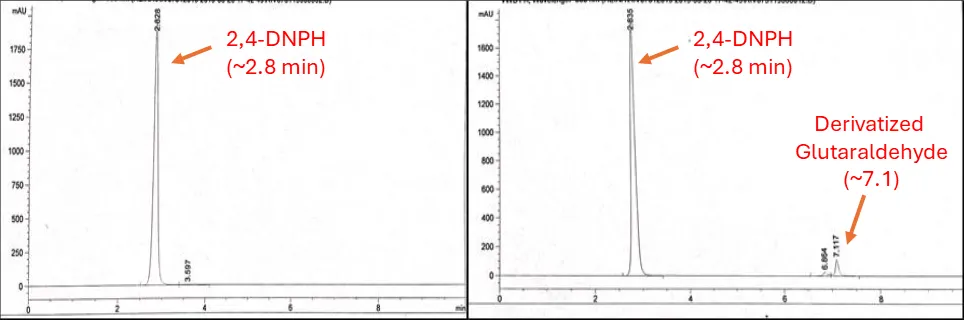
Figure 1 HPLC Chromatographs of 2,4-DNPH (retention time of ~2.8 min) and 2,4-DNPH derivatized glutaraldehyde (retention time of ~7.1 min).
The established calibration relationship was subsequently used to quantify residual glutaraldehyde during the BSA crosslinking reaction. The concentration of free glutaraldehyde progressively decreased with increasing crosslinking time, supporting the expected consumption of glutaraldehyde through its reaction with available functional groups within the BSA matrix. This progressive decline further provided indirect evidence that the crosslinking reaction proceeded over time. After approximately 12 h, the residual glutaraldehyde concentration decreased to approximately 0.191 mg/mL and remained essentially unchanged at 24 h (Figure 2).

Figure 2 Residual glutaraldehyde concentration during BSA crosslinking, demonstrating a plateau after 12 hours. The embedded table shows the exact concentration at each time point.
This corresponded to a residual concentration of approximately 0.0191% w/v. The absence of a further measurable decrease in free glutaraldehyde between 12 and 24 h suggested that glutaraldehyde consumption had plateaued by approximately 12 h under the investigated conditions. Based on these findings, a minimum crosslinking period of 12 h was selected for all subsequent BSA formulations prior to further processing and spray drying. Importantly, a small amount of residual free glutaraldehyde remained even after the reaction had reached a plateau. This observation indicates that extending the crosslinking duration beyond 12 h would not necessarily lead to complete consumption of the crosslinker. Therefore, where residual glutaraldehyde may present a concern, particularly for subsequent biological or drug-delivery applications, the remaining free glutaraldehyde should be quenched using an appropriate reagent, such as sodium bisulfite, or otherwise removed before further use [52, 53].
Spray-Drying Optimization and Particle Size
The Büchi Nano Spray Dryer B-90 HP is equipped with interchangeable nebulizers of different sizes, commonly categorized as small, medium, and large, which differ in the droplet sizes they are designed to generate. In general, larger nebulizers produce larger droplets and may consequently yield larger dried particles, whereas smaller nebulizers are more suitable when reduced particle dimensions are desired [46, 54]. However, droplet and particle size are not determined by nebulizer size alone and are also influenced by formulation and process variables such as feed concentration, viscosity, surface tension, atomization frequency, and drying conditions, as discussed previously. Because the primary objective of this study was to produce particles within the nanometer size range, the large nebulizer was not selected for further evaluation. Optimization therefore began with the medium-sized nebulizer, followed by evaluation of the small nebulizer where necessary to further reduce particle size and improve process performance. Four concentrations of crosslinked BSA formulations (0.5%, 1.0%, 1.5%, and 2.0% w/v) were initially investigated to determine how matrix concentration influenced sprayability and the size characteristics of the resulting particles. Crosslinking was performed using either 0.5% or 1.0% w/v glutaraldehyde, and all formulations were allowed to react for at least 12 h before spray drying, based on the previously established crosslinking time. Different combinations of BSA concentration, crosslinker concentration, nebulizer size, and atomization conditions were subsequently evaluated during process optimization. Before each formulation run, water was sprayed through the system as a blank to confirm proper nebulizer operation and establish a consistent starting condition. Following spray drying, the collected particles were characterized for particle size and size distribution, and the processing behavior of each formulation, including successful atomization and nebulizer clogging, was recorded. These observations were used collectively to identify formulation and processing conditions most favorable for producing nanosized BSA particles.
Spray Drying Using the Medium Nebulizer
Preliminary spray-drying experiments were conducted using the medium-sized nebulizer to evaluate whether the crosslinked BSA matrix could be processed successfully while producing particles within the desired nanometer size range. In practice, achieving both adequate sprayability and sufficiently small particle size with the medium nebulizer proved challenging. Higher-concentration crosslinked BSA matrices were particularly difficult to process, while the particles obtained from the matrices that could be sprayed were generally larger than the targeted size range.
BSA matrix (2.0% w/v) crosslinked with 1.0% w/v glutaraldehyde was initially sprayed at an atomization frequency of 95 kHz. Extensive nebulizer clogging occurred within approximately 5–10 min of operation, preventing continued processing. As a result, only a small volume of the feed was successfully sprayed, leading to a very low product yield. Moreover, the particles recovered from this run were larger than the desired nanometer size range. A similar processing limitation was observed with the 1.5% w/v BSA matrix crosslinked with 1.0% w/v glutaraldehyde. Within a few minutes of operation, the spray pattern became progressively sparse, indicating impaired atomization and making it difficult to process the complete feed. The particles obtained from this matrix were also larger than the targeted nanosized range. These observations suggested that the combination of relatively high BSA concentration and the medium nebulizer was unfavorable for both sustained atomization and the production of sufficiently small particles. Following these preliminary runs, formulation-based approaches were explored to reduce particle size while retaining the medium nebulizer. Tween 80 and arginine hydrochloride were investigated as excipients because modification of feed properties can influence atomization and subsequent particle formation. Tween 80 can reduce the surface tension of the aqueous feed, potentially facilitating droplet breakup and the formation of smaller droplets during atomization [55, 56]. Because the dimensions of the dried particles are strongly influenced by the size and solids content of the precursor droplets, the formation of smaller droplets may subsequently favor smaller particles. Arginine hydrochloride was also evaluated as an excipient because of its potential to modify protein–protein interactions and solution behavior, which may influence the atomization and drying characteristics of the BSA matrix [57, 58]. Despite incorporating these excipients, the medium nebulizer did not consistently generate particles within the desired nanometer size range (Table 4).
Table 4 Crosslinked BSA spray-dried using a medium nebulizer at 95 kHz
|
BSA (w/v) |
GA (w/v) |
Additions |
Mean Particle Size (nm) |
PDI |
Observations |
|
0.5% |
1.0% |
Tween 80 0.05% w/v |
1057.93 ± 67.09 |
0.201 |
Sparse spray pattern, low yield |
|
1.0% |
1.0% |
Tween 80 0.05% w/v |
1068.91 ± 73.01 |
0.195 |
Very sparse spray pattern, low yield |
|
1.5% |
1.0% |
- |
1408.61 ± 68.87 |
0.187 |
Very sparse spray pattern, low yield |
|
2.0% |
1.0% |
- |
1701.22 ± 72.56 |
0.207 |
Nebulizer clogged, very sparse spray pattern, very low yield |
Even at lower BSA concentrations and following the addition of Tween 80, arginine, or selected combinations of the two, the resulting particles remained comparatively large. Although the excipients may have altered the feed's physicochemical properties, these changes were insufficient to overcome the limitations of droplet generation with the medium nebulizer under the investigated conditions. Taken together, these preliminary experiments indicated that modification of the BSA matrix alone was not sufficient to achieve the targeted particle dimensions when using the medium nebulizer. The combination of processing difficulties at higher BSA concentrations and persistently larger particle sizes at lower concentrations suggested that further reduction in the initial droplet size was necessary. Consequently, subsequent optimization focused on the small nebulizer, which was expected to generate finer droplets and provide more favorable conditions for producing nanosized BSA particles.
Spray Drying Using the Small Nebulizer
Further optimization was performed using the small nebulizer to promote finer droplets and, consequently, smaller dried particles. In addition to reducing the nebulizer size, the atomization frequency was increased to 110 kHz to further favor finer spray generation. Crosslinked BSA matrices containing 0.5% w/v glutaraldehyde were initially evaluated under these conditions, both in the absence and presence of Tween 80 and arginine hydrochloride. Spray drying of the 0.5% w/v BSA matrix crosslinked with 0.5% w/v glutaraldehyde at an atomization frequency of 110 kHz successfully produced particles within the nanometer size range, with a mean particle size of 793.72 nm and a polydispersity index (PDI) of 0.201 (Table 5). In contrast to the processing difficulties observed with the medium nebulizer, the spray pattern remained broad and conical throughout the run, allowing nearly the entire feed to be processed within approximately 30 min. This represented a substantial improvement in both sprayability and particle size and supported using the small nebulizer for further optimization.
Table 5 Crosslinked BSA spray-dried using a small nebulizer at 110 kHz
|
BSA (w/v) |
GA (w/v) |
Mean Particle Size (nm) |
PDI |
Observations |
|
0.5 % |
0.5 % |
793.72 ± 65.32 |
0.201 |
Normal Spray pattern, Low yield |
|
1.0 % |
0.5 % |
819.85 ± 77.56 |
0.195 |
Normal Spray Pattern, high yield |
|
1.5 % |
0.5 % |
980.98 ± 67.56 |
0.187 |
Reduced spray pattern, high yield |
|
2.0 % |
0.5 % |
1702.78 ± 78.98 |
0.207 |
Nebulizer clogged, very sparse spray pattern, very low yield |
The 1.0% and 1.5% w/v BSA matrices crosslinked with 0.5% w/v glutaraldehyde also produced particles within the nanometer range (Table 4). However, particle size increased as the BSA concentration increased, consistent with the greater solids content present in each atomized droplet. Processing behavior also became progressively less favorable at higher BSA concentrations. The spray pattern narrowed during the run, and deposition on the nebulizer became apparent after approximately 20 min. Despite these changes, processing and product recovery improved compared with the initial experiments performed using the medium nebulizer. In contrast, the 2.0% w/v crosslinked BSA matrix rapidly produced a sparse spray pattern and eventually caused nebulizer clogging, further indicating that increasing BSA concentration adversely affected sprayability even with the smaller nebulizer.
Additional modifications to the BSA matrix were subsequently investigated to further reduce particle size. Addition of 0.05% w/v Tween 80 to the 0.5% w/v BSA matrix crosslinked with 0.5% w/v glutaraldehyde reduced the mean particle size from 793.72 nm to 670.94 nm (Table 6). This reduction may be related, at least in part, to Tween 80's ability to decrease the feed's surface tension and facilitate the formation of smaller droplets during atomization. When Tween 80 and arginine hydrochloride were incorporated together, the mean particle size was further reduced to ~557 nm. Under these conditions, the spray pattern remained regular, and the complete feed could be processed efficiently (Table 5). These findings suggested that modifying the matrix composition, using a smaller nebulizer, and increasing atomization frequency could further improve nanosized particle production. The beneficial effect of these excipients was less pronounced at higher BSA concentrations of 1.5%w/v and 2.0% w/v. Addition of Tween 80 and arginine hydrochloride did not consistently overcome the increase in particle size or the deterioration in sprayability associated with these concentrated BSA matrices. The spray pattern narrowed and nebulizer deposition or clogging continued to occur, indicating that BSA concentration remained a dominant factor in processability and particle formation. Although spray-drying experiments were performed in triplicate, replicate runs could not always be completed for matrices that caused extensive nebulizer clogging or otherwise prevented successful processing of the full feed.
Table 6 Crosslinked BSA spray-dried with additions using a small nebulizer at 110 kHz
|
BSA (w/v) |
GA (w/v) |
Additions |
Mean Particle Size (nm) |
PDI |
Observations |
|
0.5 % |
0.5 % |
Tween-80 (0.05% w/v) |
670.94 ± 72.36 |
0.198 |
Small deposits on nebulizer, regular spray pattern |
|
0.5 % |
0.5 % |
Tween-80 (0.05% w/v) + Arginine.HCl (0.05% w/v) |
557.62 ± 56.10 |
0.270 |
Small deposits on nebulizer, regular spray pattern |
|
1.5 % |
0.5 % |
Tween-80 (0.05% w/v) |
1020.93 ± 78.45 |
0.183 |
Spray pattern narrowed |
|
2.0 % |
0.5 % |
Tween-80 (0.05% w/v) |
1489.65 ± 68.25 |
0.243 |
Spray pattern narrowed, nebulizer clogged |
Following the results obtained with 0.5% w/v glutaraldehyde, a subsequent series of experiments evaluated BSA matrices crosslinked with 1.0% w/v glutaraldehyde using the small nebulizer. For these experiments, the atomization frequency was further increased to 115 kHz, and the matrices were again investigated with and without Tween 80 and arginine hydrochloride. The higher atomization frequency was selected as an additional processing modification intended to promote finer droplet generation and determine whether further reductions in particle size could be achieved.
Table 7 Crosslinked BSA spray-dried using a small nebulizer at 110 kHz
|
BSA (w/v) |
GA (w/v) |
Mean Particle Size (nm) |
PDI |
Observations |
|
0.5 % |
1.0 % |
1342.11 ± 90.54 |
0.286 |
Small deposits on nebulizer, regular spray pattern |
|
1.0 % |
1.0 % |
1467.11 ± 78.54 |
0.198 |
Small deposits on nebulizer, sparse spray pattern |
|
1.5 % |
1.0 % |
- |
- |
Solution difficult to filter, clogged atomizer within 2 min |
|
2.0 % |
1.0 % |
- |
- |
Solution could not be filtered |
Increasing the glutaraldehyde concentration to 1.0% w/v resulted in an increase in the mean particle size of spray-dried cross-linked BSA above 1000 nm (Table 7). At higher BSA concentrations of 1.5% w/v and 2.0% w/v, the cross-linked solution became thick, was difficult to filter, and immediately clogged the nebulizer. Adding Tween 80 to BSA cross-linked with GA (1% w/v) reduced mean particle sizes for 0.5% w/v and 1.0% w/v BSA; however, these particle sizes remained above 1000 nm. At higher BSA concentrations (1.5% w/v and 2.0% w/v), the cross-linked solution became thick, difficult to filter, and immediately clogged the nebulizer (Table 8).
Table 8 Crosslinked BSA spray-dried with additions using a small nebulizer at 110 kHz
|
BSA (w/v) |
GA (w/v) |
Additions |
Mean Particle Size (nm) |
PDI |
Observations |
|
0.5 % |
1.0 % |
Tween 80 (0.01% w/v) |
1222.13 ± 80.43 |
0.196 |
Small deposits on nebulizer, regular spray pattern |
|
1.0 % |
1.0 % |
Tween 80 (0.01% w/v) |
1398.72 ± 78.56 |
0.236 |
Small deposits on nebulizer, sparse spray pattern |
|
1.5 % |
1.0 % |
- |
- |
- |
Solution difficult to filter, clogged atomizer within 2 minutes |
|
2.0 % |
1.0 % |
- |
- |
- |
Solution could not be filtered |
Representative zeta potential and particle size for BSA 0.5% w/v crosslinked with 0.5% v/v GA show that the spray-dried, cross-linked BSA nanoparticles have a particle size of 793 nm and a zeta potential of -30 mV, supporting their suspension stability (Figure 3).
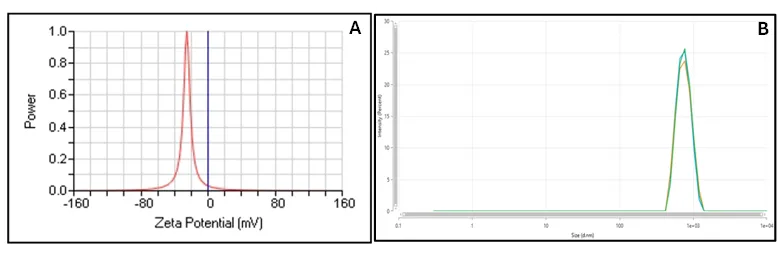
Figure 3 Zeta potential and particle size of spray-dried BSA (0.5% w/v) cross-linked with GA (0.5% v/v). A) Zeta Potential (-30 mV) and B) Particle size (793 nm), n = 3.
Differential Scanning Calorimetry
Differential scanning calorimetry (DSC) was performed to evaluate changes in the thermal behavior of BSA following chemical crosslinking with glutaraldehyde. As shown in Figure 3, non-crosslinked BSA exhibited a broad endothermic transition centered approximately in the low -80 °C range. Following crosslinking with 0.5% w/v glutaraldehyde, the thermal transition shifted toward higher temperatures, with the crosslinked BSA matrices exhibiting broad endothermic events at approximately 88–92 °C.
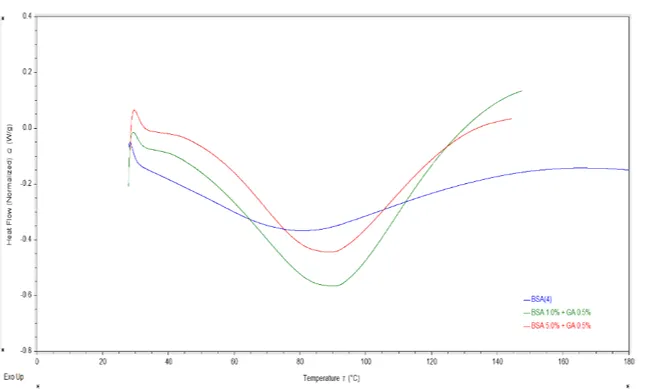
Figure 3 DSC thermograms of non-crosslinked BSA and BSA matrices crosslinked with 0.5% w/v glutaraldehyde, demonstrating a shift in the thermal transition following chemical crosslinking (Blue: BSA, Green: crosslinked BSA, 1%w/v and Red: crosslinked BSA, 5%w/v)
Thus, glutaraldehyde treatment changed both the position and shape of the thermal transition. This shift suggests that crosslinking altered the structural and thermal properties of the BSA matrix. Glutaraldehyde reacts with available amino groups on BSA to form intermolecular and intramolecular linkages that restrict molecular mobility within the protein structure [59]. Consequently, additional thermal energy may be required to induce structural rearrangement or denaturation of the crosslinked matrix, which is consistent with the higher transition temperatures observed relative to non-crosslinked BSA. Differences in peak shape and intensity further indicate changes in the protein's organization and thermal behavior following crosslinking. Interestingly, the magnitude of the thermal shift was not identical across BSA concentrations. The 1.0% w/v BSA matrix crosslinked with 0.5% w/v glutaraldehyde exhibited a transition at a slightly higher temperature than the corresponding 5.0% w/v BSA matrix. This suggests that the thermal behavior of the crosslinked system may depend not only on the presence of glutaraldehyde but also on the composition and organization of the BSA matrix. Differences in protein concentration can influence protein–protein interactions, water content, and the spatial distribution of crosslinks, all of which may contribute to the observed thermal behavior.
Overall, the DSC results provide supporting evidence that glutaraldehyde treatment produced a measurable physicochemical modification of BSA. These findings complement the HPLC studies, which observed progressive consumption of free glutaraldehyde during the crosslinking reaction. While the HPLC analysis provided an indirect measure of reaction progression and was used to establish the required crosslinking time, DSC demonstrated that the resulting BSA matrix exhibited thermal characteristics distinct from those of non-crosslinked BSA.
Scanning Electron Microscopy
SEM analysis revealed that the prepared BSA nanoparticles exhibited a predominantly circular to spherical morphology with relatively smooth surface characteristics (Figure 4).
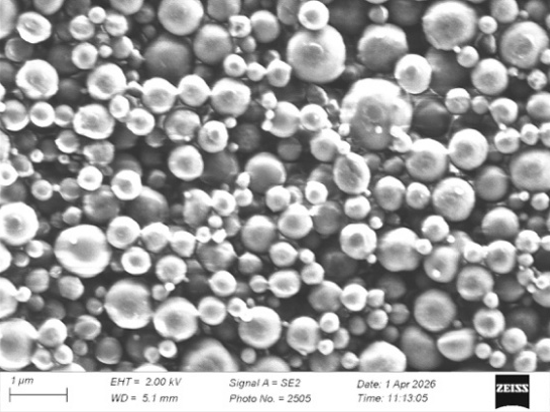
Figure 4 SEM of the spray-dried BSA nanoparticles exhibits a smooth surface and spherical morphology.
Particles prepared using lower concentrations of BSA appeared smaller, with particle dimensions generally around 500 nm based on visual assessment of the SEM micrographs. This observation was consistent with the particle size analysis, which showed that formulations with lower BSA concentrations also had comparatively smaller particle sizes. The agreement between the two analytical techniques further supports the observed relationship between BSA concentration and particle size. The particles also appeared to possess relatively smooth surfaces without prominent surface irregularities. Previous studies have suggested that incorporating surfactants during nanoparticle preparation may contribute to smoother particle surfaces by influencing interfacial properties during particle formation and drying [60]. Although the present study did not directly compare formulations prepared with and without surfactant, the presence of surfactant may have contributed to the smooth morphology observed in the SEM images. However, additional comparative studies are needed to establish its specific role in determining particle surface characteristics.
Swelling Characteristics
In the present study, glutaraldehyde-crosslinked BSA nanoparticles demonstrated good short-term stability following dispersion in an aqueous medium. No significant increase in particle size was observed over the 6-hour evaluation period, indicating that the particles did not undergo substantial swelling or aggregation under the experimental conditions (Figure 5). Furthermore, the polydispersity index (PDI) remained within the range of 0.10–0.25, reflecting a relatively narrow and uniform particle size distribution throughout the study period. These observations suggest that glutaraldehyde crosslinking provided sufficient structural integrity to the BSA matrix to limit changes in particle dimensions upon aqueous exposure. The absence of a substantial increase in particle size may also indicate restricted matrix swelling over the evaluated period, which could subsequently influence the diffusion and release behavior of encapsulated therapeutic agents.
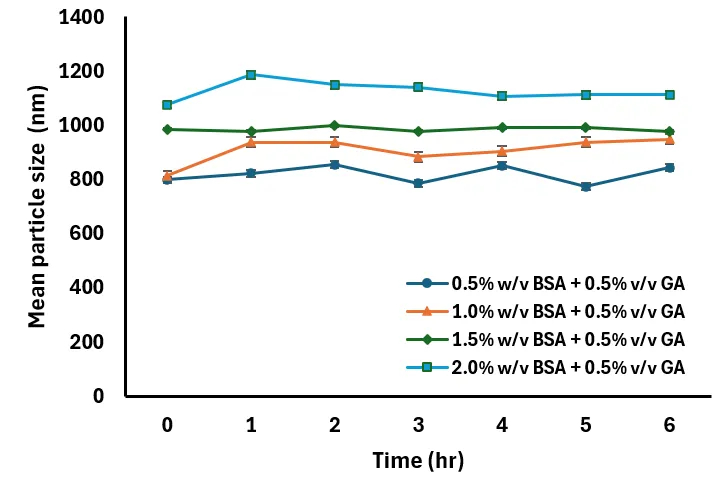
Figure 5. Particle size of different cross-linked BSA nanoparticle suspensions over 6 hours. Data presented as mean ± SD (n = 3). No change in particle size demonstrates suspension stability and retention of mean particle size.
Previous studies have reported that BSA nanoparticles dispersed in an aqueous medium can maintain their colloidal stability for up to two months when stored at 4 °C, with no significant changes in particle diameter or size distribution [61]. Evaluating particle stability and swelling behavior in an aqueous environment is particularly important because drug release from polymeric matrices can be governed by the relative progression of diffusion, swelling, and matrix erosion fronts.
CONCLUSIONS
The present study demonstrates the feasibility of developing solid albumin-based nanoparticles using spray drying and highlights the importance of considering both formulation composition and process conditions during method development. In addition to establishing conditions suitable for producing nanosized BSA particles, the study identified several practical challenges associated with spray drying crosslinked protein matrices. In particular, the results showed that viscosity alone could not predict sprayability, as higher BSA concentrations caused substantial nebulizer clogging even when viscosities remained within the instrument's recommended operating range. This finding emphasizes the need to consider protein concentration, matrix characteristics, atomization behavior, and other feed properties collectively when developing spray-drying processes for protein-based systems.
Formulation variables also played an important role in controlling particle characteristics. The incorporation of Tween 80 and arginine hydrochloride reduced particle size under selected conditions, demonstrating that excipient selection can be used alongside process optimization to influence particle formation. Similarly, the choice of nebulizer and atomization frequency substantially affected the resulting particles. Transitioning from the medium to the small nebulizer and increasing the atomization frequency favored the generation of smaller particles, further demonstrating the importance of appropriately selecting and optimizing spray-drying parameters to achieve the desired product characteristics. More broadly, this work supports the use of spray drying as a versatile manufacturing approach for producing solid nanoscale carrier systems. Compared with multistep processes that may require particle formation followed by a separate drying operation, spray drying can convert a liquid feed directly into a dry particulate product in a single process. Its scalability, relatively short processing time, and ability to control particle characteristics by manipulating formulation and operating variables make it particularly attractive for pharmaceutical applications. The use of albumin further strengthens this approach because of its biodegradability, biocompatibility, and established suitability as a drug-carrier material. Although the direct preparation of spray-dried albumin nanoparticles remains comparatively underexplored, this study's findings provide a foundation for further development of such systems. The combination of spray drying with an albumin-based matrix may therefore represent a useful platform for incorporating therapeutic agents, including molecules that may benefit from rapid drying and conversion into a solid-state carrier system. In addition, the functional groups present on albumin provide opportunities for subsequent surface modification and attachment of targeting ligands, potentially enabling the development of more selective drug-delivery systems.Overall, this study establishes a practical framework for producing and optimizing spray-dried albumin nanoparticles and demonstrates that successful nanoscale particle formation depends on the combined influence of matrix composition, excipient selection, and spray-drying parameters. Further studies incorporating therapeutic agents, evaluating drug-loading and release behavior, and investigating biological performance will be important to determine the broader applicability of this platform for pharmaceutical drug delivery.
DECLARATION OF COMPETING INTEREST
The authors declare that they have no known competing financial interests or personal relationships that could have appeared to influence the work reported in this paper.
ACKNOWLEDGEMENTS
Financial support for this project was provided by the School of Pharmacy at the Massachusetts College of Pharmacy and Health Sciences as well as Massachusetts Life Sciences Center-Capital Grants.
REFERENCES


Ayushi Saxena, Sanjaykumar Gayakwad Preparation Of Polymeric Albumin Nanoparticles by A One-Step Spray Drying Process, Int. J. of Pharm. Sci., 2026, Vol 4, Issue 8, 5128-5151, https://doi.org/10.5281/zenodo.22202584
 10.5281/zenodo.22202584