

We use cookies to ensure our website works properly and to personalise your experience. Cookies policy
Department of Pharmacy Practice, KMCH College of Pharmacy, Coimbatore.
Hepatic ectopic pregnancy is an extremely rare and life-threatening form of abdominal pregnancy in which the fertilized ovum implants on the surface of the liver rather than within the uterine cavity. It underscores the imperative for heightened clinical vigilance and early radiological assessment in women of reproductive age presenting with unexplained abdominal symptoms. It highlights the complex diagnostic pathway and high risk of the catastrophic potential of delayed recognition, and the multidisciplinary management required to optimize the outcomes. Intraoperative, a gestational sac was identified on the under surface of the right hepatic lobe with active bleeding from the placental attachment. The foetus was delivered and the placenta left in situ; however, persistence haemorrhage required abdominal packing, blood transfusion, hepatic artery embolization, and re-laparotomy. By integrating pathophysiological insight and therapeutic considerations, this report expands existing knowledge on hepatic ectopic pregnancy and reinforces the need for prompt, individualized, and evidence-based intervention in such rare and high-risk obstetric emergencies. Early recognition through imaging techniques such as ultrasonography, computer tomography, or magnetic resonance imaging is therefore essential for prompt management.
Hepatic ectopic pregnancy is an extremely rare type of ectopic pregnancy in which a fertilized ovum implants outside the uterine cavity. In ectopic pregnancies, implantation may occur in abnormal locations such as the liver, spleen or other areas within the abdominal cavity, often leading to severe internal bleeding. Common clinical symptoms include amenorrhea and abdominal pain. Diagnosis usually relies on imaging techniques such as ultrasonography and computed tomography (CT) scans [1,2,3]. Although most ectopic pregnancies occur in the fallopian tubes, non-tubal implantation sites are uncommon and may include ovarian, cervical, intestinal, cornual, cesarean scar or other abdominal locations.[4] Primary hepatic pregnancy is an exceptionally rare form of ectopic gestation in which the embryo implants directly on the surface of the liver. This condition poses significant diagnostic and therapeutic challenges because its symptoms may resemble those of gastrointestinal or hepatobiliary disorders, which can delay proper diagnosis and treatment [5]. In addition, the liver’s rich blood supply increases the risk of massive haemorrhage, making surgical management particularly complex and contributing to a higher risk of maternal morbidity and mortality [6]. To the best case of current knowledge, this case report describes the first documented instance of hepatic pregnancy in Ethiopia. The case emphasizes the importance of considering a broad range of differential diagnoses and maintaining a high level of clinical awareness when patients present with unusual symptoms. By discussing the diagnostic process and management strategies used in this rare case, the report provides useful insights for healthcare professionals and highlights the specialized approaches needed for successful treatment. Such documentation contributes to the growing body of knowledge on hepatic pregnancy and may help improve future clinical practice [6]. This case further highlights the importance of maintaining a strong clinical suspicion for ectopic implantation in unusual anatomical sites when evaluating patients with unexplained abdominal symptoms. Early diagnosis and timely intervention are critical, as delayed detection can lead to severe intraperitoneal bleeding and significantly increase the risk of maternal complications and death. Therefore, a proactive clinical approach that prioritizes early recognition and prompt management is essential for improving outcomes in these rare and high-risk situations [7].
MECHANISM OF HEPATIC ECTOPIC PREGNANCY
Embryo escapes into peritoneal cavity

Embryo attaches to hepatic surface

Implantation triggers pathological changes

Formation of vascular mass

Local hepatic effects

Rupture or erosion into hepatic vascular tissue

Systemic manifestations
MECHANISM FOR METHOTREXATE
Methotrexate

Inhibit rapidly dividing trophoblastic cells and Blocking DNA synthesis and cell division

So, it causes regression of the ectopic pregnancy tissues

Preventing rupture and reducing the need for surgical Intervention

So, it produces anti-inflammatory effect may also help reducing local tissue damage

Leads to management of hepatic ectopic pregnancy
CASE REPORT
A 25-year-old woman, gravida 2, para 1, living 1, presented to the emergency department with complaints of pain in the right upper abdomen accompanied by episodes of vomiting for the past one week. She also reported a history of amenorrhea for three months. Her obstetric history revealed a normal vaginal delivery nine months earlier. On general examination, her pulse rate was 96 beats per minute and her blood pressure was 90/54 mmHg. Clinical examination suggested mild anaemia. Abdominal examination showed diffuse tenderness, but there was no guarding, rigidity or palpable mass. Speculum examination revealed healthy cervix and vaginal walls. On per vaginal examination, the uterus was anteverted, slightly bulky, mobile and non-tender and both fornices were free. A urine pregnancy test was performed and was positive. Ultrasonography showed an enlarged uterus with an endometrial thickness of 10mm, while both adnexa appeared normal. Free fluid was noted in the peritoneal cavity. Interestingly, a gestation was identified attached to the inferior surface of the liver. These findings raised suspicion of a primary hepatic pregnancy. Considering the possibility of hemoperitoneum and the patient’s borderline hemodynamic status, an emergency laparotomy was planned. Laboratory investigations revealed a haemoglobin level of 9.4g %, total leukocyte count of 6000/mm3, platelet count 2.37 × 10⁵/mm3 and an INR of 1.18. liver and kidney function tests were within normal limits.
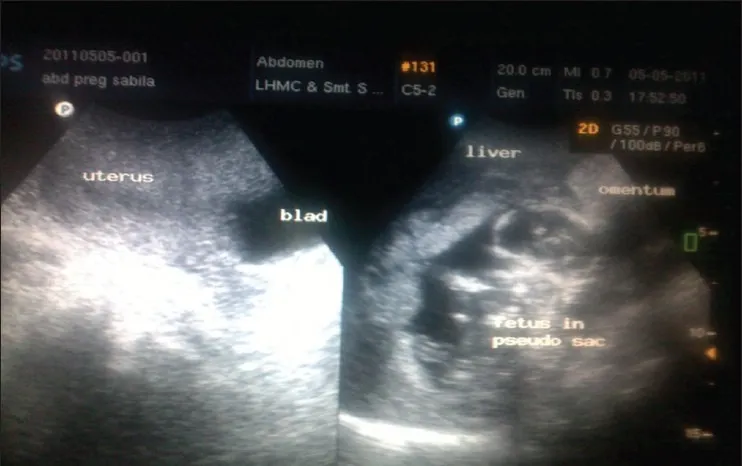
Figure 1: Ultrasonography showing an ectopic gestational sac attached to the
inferior surface of the liver (Primary Hepatic Pregnancy).
An emergency laparotomy was carried out through a midline vertical incision, which was later extended to the right subcostal region for better exposure. On entering the abdominal cavity, approximately 500ml of hemoperitoneum was evacuated. The uterus and both adnexa were inspected and appeared normal. Further exploration revealed a large gestational sac measuring about 10cm located on the inferior surface of the right lobe of the liver. Active bleeding was noted from the site of placental attachment. The sac was carefully opened along an avascular plane and foetus weighing approximately 300g was delivered. The umbilical cord was then ligated. Due to the high risk of severe haemorrhage. The placenta was left in situ. Attempts were made to control the bleeding with sutures; however, the haemorrhage persisted. The bleeding area was therefore packed, and the abdomen was closed in a single layer. The estimated intraoperative blood loss was around 2.5 litres and the patient received four units of blood transfusion during the procedure. After surgery, the patient was transferred to the intensive care unit for ventilatory and inotropic support. Despite these measures, continued bleeding was observed through the surgical wound dressings. A multidisciplinary consultation with the gastrointestinal surgery and interventional cardiology teams was sought and hepatic artery embolization was performed approximately 18 hours after the initial surgery. However: the bleeding continued even after embolization, making a re-laparotomy necessary to remove the abdominal packs and reduce the risk of infection.
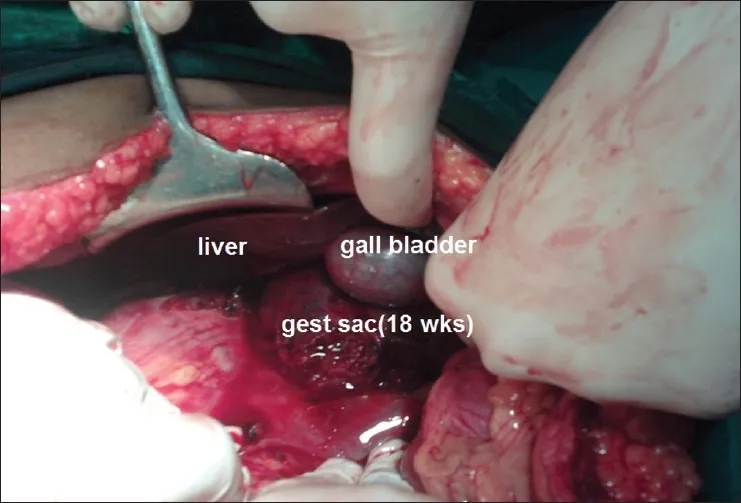
Figure 2: Intraoperative view showing the gestational sac attached to the inferior surface of the right lobe of the liver near the gallbladder.
During the laparotomy, the abdominal cavity was found to be filled with blood. The surgical packs were carefully removed, revealing diffuse bleeding from the inferior surface of the liver. As the patient remained hemodynamically unstable, the abdomen was repacked, and blood transfusion therapy was continued. In total, the patient received 76 units of blood and blood products administered at regular intervals.
By the fourth postoperative day, the patient developed significant oliguria, worsening coagulopathy, and persistent instability of vital signs despite inotropic support. Given the deterioration, a liver resection was considered; however, due to the patient’s critical condition, surgery could not be undertaken. Unfortunately, the patient succumbed on the fifth postoperative day to multiorgan failure resulting from massive haemorrhage.
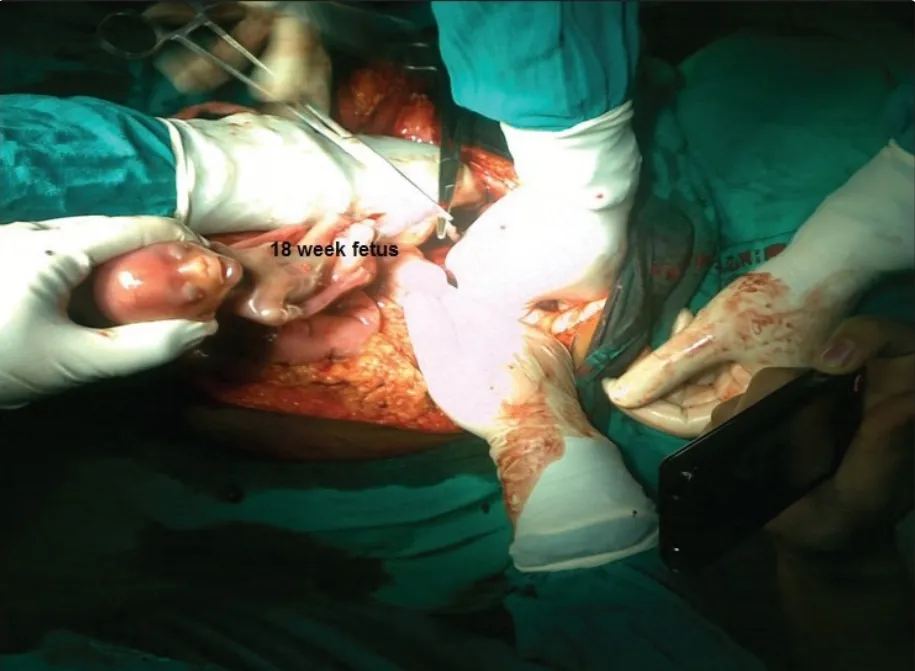
Figure 3: Intraoperative delivery of an 18-week fetus from a primary hepatic ectopic pregnancy.
DISCUSSION
Ectopic pregnancy refers to the implantation of a fertilized ovum at a location outside the endometrial cavity. Reported incidences vary from approximately 1 in 84 to 1 in 357 live births . The fallopian tubes remain the most frequent implantation site, whereas abdominal ectopic pregnancies are extremely rare, constituting approximately 1.4 percent of all cases. Among these, pelvic locations predominate, while primary hepatic pregnancy represents one of the rarest manifestations. For instance, in a series analysing 236 extrauterine pregnancies, only eight were hepatic in origin. Cases reported in the literature span women aged 18 to 46 years. Studdiford’s criteria serve as the diagnostic cornerstone for distinguishing primary abdominal pregnancies. These require both fallopian tubes and ovaries to appear normal without evidence of previous or current pregnancy, absence of uteroperitoneal communication, and confinement of gestational development solely to the peritoneal surface-occurring early enough to exclude secondary implantation following tubal rupture. The current case successfully fulfilled these diagnostic parameters. Nonetheless, most abdominal pregnancies encountered in clinical practice are secondary, often initiated by trophoblastic migration from the fallopian tube into the peritoneal space. Proposed etiological factors for hepatic ectopic implantation include pelvic inflammatory disease, prior caesarean delivery, previous use of intrauterine contraceptive devices, hormonal contraceptive pills, and conceptions achieved through assisted reproductive technologies. While uterine scarring from caesarean sections can predispose to abdominal pregnancies, it typically results in secondary rather than primary implantation. The mechanism involves passage of the fertilized embryo through microscopic defects or uteroplacental fistulae within the uterine wall. For this patient, such a possibility was excluded due to the absence of uterine or tubal abnormalities on both imaging and intraoperative examination. In primary hepatic pregnancy, fertilized ova escape tubal capture and directly adhere to peritoneal or visceral surfaces such as the liver. The hypothesized pathophysiology involves the ovum being transported passively by peritoneal fluid movements and diaphragmatic motion, eventually implanting beneath the right hepatic lobe. This site is considered favourable due to its dependent position in the supine posture and rich vascular perfusion .Clinically, hepatic ectopic gestations frequently mimic gastrointestinal or hepatobiliary disorders. Patients often complain of epigastric pain, nausea, or vomiting, leading to misdiagnoses such as gastritis, cholecystitis, peptic ulcer, or hepatitis. With disease progression, internal bleeding may ensue, manifesting as signs of ruptured ectopic pregnancy. Due to slow, concealed haemorrhage, hemodynamic stability can initially mask critical blood loss until pronounced anaemia or hypovolemic shock occurs. Hence, reproductive-age women presenting with unexplained upper abdominal or hepatic discomfort warrant prompt evaluation to prevent delayed diagnosis and potentially fatal complications. Hepatic pregnancies are associated with a mortality rate five to seven times higher than other ectopic sites, primarily due to diagnostic uncertainty and severe intra-abdominal bleeding. Ultrasonography remains an essential imaging modality, enabling early identification of an extrauterine gestational sac containing embryonic or yolk sac components, sometimes with detectable cardiac activity. Colour Doppler assists in mapping vascularity and detecting early hematoma formation. In later gestations, sonography may distinctly visualize both foetus and placenta within the abdomen separate from the uterus. Transvaginal scans confirm an empty uterine cavity, but complementary abdominal imaging is crucial to avoid missed diagnoses. Cross-sectional modalities such as CT and MRI provide superior anatomical delineation, facilitating surgical planning by identifying placental attachment and determining resection feasibility. MRI offers higher tissue contrast and diagnostic accuracy in stable patients, whereas contrast-enhanced CT is preferred during emergencies to define active bleeding sources and implantation sites when MRI is inaccessible .Therapeutic approaches range from conservative medical treatment to surgical intervention, guided by hemodynamic status and gestational characteristics. In stable patients with a favourable Fernandez score, systemic methotrexate therapy alone or in combination with image-guided feticide using potassium chloride injection has shown success. Operative management, either through laparoscopic or open approaches, remains the standard of care for unstable patients or when active haemorrhage is evident. Surgical strategies include hepatic artery ligation, wedge resection, lobectomy, or conservative placental retention to minimize intraoperative bleeding. Adjunctive modalities enhance patient safety and improve haemostasis. Preoperative hepatic artery embolization has proven effective in reducing intraoperative blood loss, whereas postoperative embolization offers limited benefit once uncontrolled haemorrhage occurs. Methotrexate can be administered locally or systemically following incomplete placental removal or in cases of persistent trophoblastic activity, indicated by rising postoperative serum hCG levels. Additionally, administration of mifepristone prior to surgery has been reported to decrease placental vascularity and induce trophoblastic degeneration, thereby reducing the risk of bleeding. In this instance, a comprehensive multimodal approach—comprising preoperative mifepristone, surgical excision, and postoperative methotrexate—was utilized to optimize patient recovery and prevent residual trophoblastic proliferation.
CONCLUSION
Hepatic ectopic pregnancy, while exceedingly rare, poses significant diagnostic and therapeutic challenges due to its atypical presentation and high risk of severe haemorrhagic complications. This condition often mimics gastrointestinal or hepatobiliary diseases, leading to delayed diagnosis and increased maternal morbidity and mortality. Early suspicion, timely imaging with ultrasonography, CT, or MRI, and prompt intervention are essential to improve patient outcomes. Management requires a multidisciplinary approach incorporating medical therapies like methotrexate and surgical techniques tailored to minimize bleeding risks, such as embolization and selective placental management. This case underscores the critical importance of considering ectopic implantation in unusual sites when confronted with unexplained abdominal symptoms in reproductive-age women, to facilitate early diagnosis and reduce life-threatening complications. Enhanced clinical awareness and specialized treatment protocols remain pivotal in improving survival rates and advancing understanding of this rare obstetrical emergency.
REFERENCES

Dr. M. Akshayamathi, M. Shree Madhu, M. Siva Prakash, P. Sivamalini, Primary Hepatic Ectopic Pregnancy: A Rare Case Report And Review of Literature, Int. J. of Pharm. Sci., 2026, Vol 4, Issue 7, 4472-4480, https://doi.org/10.5281/zenodo.21490573
 10.5281/zenodo.21490573