View Article

  • Protective Mechanisms and Therapeutic Potential of Caffeine as a Treatment for Liver Diseases

  • Department of Pharmacology, C.T. University, Ludhiana, Punjab, India.

Abstract

Caffeine is an alkaloid of the methylxanthine group that is used all over the world and has turned out to be one of the potential hepatoprotective agents with a possible therapeutic effect on liver diseases. Experimental studies and epidemiological research have shown that habitual use of caffeine is linked to low risk of chronic liver disease development, hepatocellular carcinoma and liver-related mortality. This review discusses the molecular pathways of the hepatoprotective actions of caffeine, such as antioxidant, anti-inflammatory, antifibrotic, and cellular metabolism. The clinical evidence of the therapeutic potential of caffeine in non-alcoholic fatty liver disease (NAFLD), alcoholic liver disease (ALD), viral hepatitis and hepatocellular carcinoma is critically discussed.

Keywords

Caffeine, Hepatoprotection, Liver diseases, Non-alcoholic fatty liver disease (NAFLD), Alcoholic liver disease (ALD), Viral hepatitis, Hepatocellular carcinoma (HCC), Antioxidant activity

Introduction

× Popup Image

Liver diseases are a major health concern in the world, with more or less 2 million deaths every year worldwide (1). Non-alcoholic fatty liver disease (NAFLD), alcoholic liver disease (ALD), viral hepatitis, and their development into cirrhosis and hepatocellular carcinoma (HCC) need effective therapeutic interventions (2). The most widely used psychoactive chemical in the world, caffeine (1,3,7-trimethylxanthine), has shown tremendous hepatoprotective effects in many epidemiological and experimental studies (3,4).

An average adult drinks about 200-400 mg of caffeine in the form of coffee, tea, and other beverages daily (5). In addition to its well-known effects on the central nervous system, caffeine has numerous biological effects in the liver, including regulation of enzymatic activity, gene expression, and cellular signalling pathways (6). The review is a synthesis of existing information on the protective effects and therapeutic uses of caffeine in liver diseases.

2. Caffeine Pharmacokinetics and Metabolism.

Caffeine is quickly and fully absorbed through the gastrointestinal tract, and its highest plasma concentrations are reached after oral administration within 30-60 minutes (7). The liver is the main location of caffeine metabolism, and it is bio-transformed by the cytochrome P450 system of enzymes, especially CYP1A2, which contributes about 95 per cent of caffeine metabolism (8).


Table 1. Pharmacokinetic Parameters of Caffeine

Parameter

Value

Reference

Bioavailability

>95%

(7)

Time to peak concentration (Tmax)

30-60 minutes

(7)

Half-life (t½)

3-7 hours

(8)

Volume of distribution

0.6 L/kg

(9)

Protein binding

10-35%

(9)

Primary metabolic pathway

CYP1A2 (95%)

(8)

Major metabolites

Paraxanthine (84%), Theobromine (12%), Theophylline (4%)

(10)

Renal excretion (unchanged)

<3%

(11)


The main metabolite (paraxanthine 1,7-dimethylxanthine) can be biologically active, and it can be a contributor to the hepatoprotective effects of caffeine (10). In hepatics, caffeine is metabolised to three dimethylxanthines and several methylxanthines via the processes of demethylation and oxidation (11).

3. Molecular Mechanisms of Hepatoprotection

3.1 Antioxidant Properties

Oxidative stress is one of the key factors in the pathogenesis of liver diseases (12). Caffeine has antioxidant properties in a variety of ways:

1. Direct free radical scavenging: Caffeine and its metabolites have a direct neutralising effect on reactive oxygen species (ROS) and reactive nitrogen species (13).

2. Enhancement of endogenous antioxidant systems: Caffeine increases the expression of antioxidant enzymes such as superoxide dismutase (SOD), catalase and glutathione peroxidase (14)

3. Nuclear factor erythroid 2-related factor 2 (Nrf2) activation: Caffeine stimulates the Nrf2 signalling pathway, resulting in a greater level of expression of phase II detoxifying enzymes and antioxidant proteins (15).
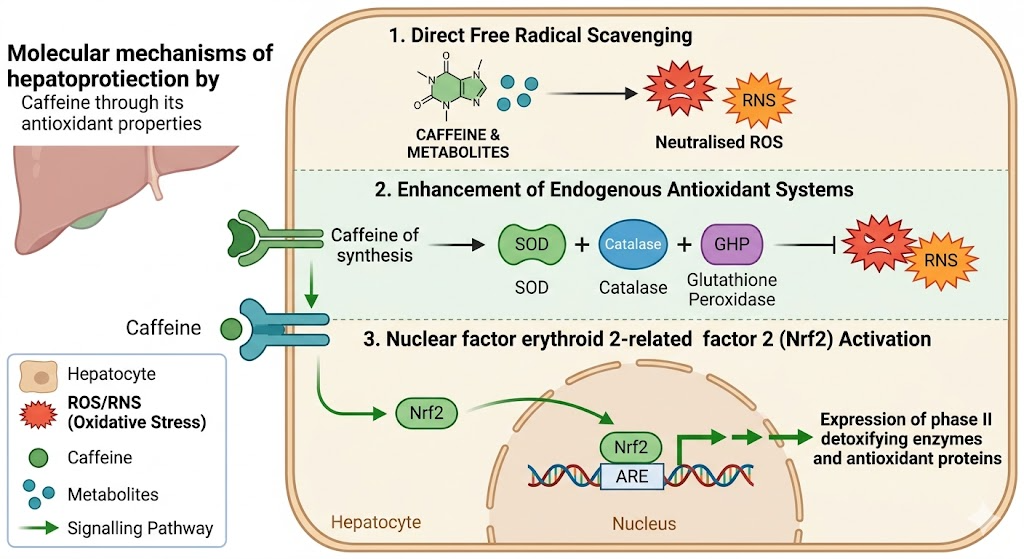


Figure:- 01-  Molecular Mechanisms of Hepatoprotection


3.2 Anti-inflammatory Actions

One of the major agents of liver disease progression is chronic inflammation (16). Caffeine regulates the inflammatory processes in several ways:


Table 2. Anti-Inflammatory Mechanisms of Caffeine in the Liver

Mechanism

Effect

Molecular Target

Reference

Adenosine receptor antagonism

↓ Pro-inflammatory cytokines

A2A and A2B receptors

(17)

NF-κB pathway inhibition

↓ TNF-α, IL-6, IL-1β

IκB phosphorylation

(18)

NLRP3 inflammasome suppression

↓ IL-1β, IL-18

Caspase-1 activation

(19)

TLR4 signalling attenuation

↓ LPS-induced inflammation

MyD88/TRIF pathway

(20)

AMPK activation

↓ Inflammatory gene expression

AMPK/SIRT1 axis

(21)


3.3 Antifibrotic Activity

The normal route of chronic liver disease development is hepatic fibrosis (22). Caffeine has antifibrotic actions by:

  1. Hepatic stellate cell (HSC) inactivation: Caffeine suppresses the activation and proliferation of the HSC and lowers collagen production and deposition of the extracellular matrix (23).
  2. TGF-β pathway suppression: Caffeine suppresses the expression and Smad signalling of transforming growth factor-beta 1 (TGF-1), which are major fibrogenesis mediators (24).
  3. Matrix metalloproteinase (MMP) modulation: Caffeine enhances MMP and decreases tissue metalloproteinase inhibitors (TIMPs), facilitating fibrosis resolution (25).

3.4 Metabolic Modulation


Table 3. Effects of Caffeine on Hepatic Metabolism

Metabolic Process

Caffeine Effect

Mechanism

Reference

Lipogenesis

↓ Decreased

↓ SREBP-1c, ACC, and FAS expression

(26)

Fatty acid oxidation

↑ Increased

↑ PPARα, CPT-1 activity

(27)

Glucose metabolism

↑ Improved insulin sensitivity

↑ AMPK, ↓ Gluconeogenesis

(28)

Autophagy

↑ Enhanced

mTOR inhibition, AMPK activation

(29)

Apoptosis regulation

Biphasic effect

↑ Cancer cell apoptosis, ↓ Hepatocyte apoptosis

(30)


3.5 Adenosine Receptor Antagonism

The main molecular process of caffeine is the competitive antagonism of adenosine receptors (A1, A2A, A2B, and A3 subtypes) (31). In the liver:

A2A receptor antagonism decreases pro-inflammatory and profibrotic signalling (32).

A2B receptor blockage reduces the collagen synthesis of hepatic stellate cells (33).

Adenosine receptor modulation has an effect on hepatic lipid metabolism and insulin sensitivity (34).

4. Clinical Evidence in Liver Diseases

4.1 Non-Alcoholic Fatty Liver Disease (NAFLD)

NAFLD has a prevalence worldwide, with the prevalence of about 25 per cent of the population, and it is strongly linked with metabolic syndrome (35). Various researchers have found that caffeine has protective properties:


Table 4. Major Epidemiological Studies on Caffeine and NAFLD

Study

Design

Population

Caffeine Intake

Key Findings

Reference

Birerdinc et al. (2012)

Cross-sectional

306 NAFLD patients

≥2 cups coffee/day

Lower fibrosis severity (OR 0.77)

(36)

Molloy et al. (2012)

Case-control

1,045 participants

≥2 cups coffee/day

Reduced NAFLD risk (OR 0.71)

(37)

Anty et al. (2012)

Cross-sectional

195 morbidly obese

Regular coffee consumption

Lower steatosis and fibrosis scores

(38)

Catalano et al. (2010)

Cross-sectional

158 patients

>300 mg caffeine/day

Reduced hepatic steatosis

(39)


Mechanisms contributing to NAFLD protection include:

  • Less hepatic lipid build-up by means of AMPK activation (40)
  • Increased sensitivity of insulin and glucose homeostasis (28)
  • Reduced apoptosis and inflammation in the hepatocytes (41)
  • Improved mitochondrial activity and fat oxidation (42)

4.2 Alcoholic Liver Disease (ALD)

The use of alcohol leads to a continuum of liver damage, ranging from steatosis to cirrhosis (43). Caffeine can prevent alcohol-related liver damage:

  1. Epidemiological evidence: A meta-analysis of 432,133 individuals discovered that coffee use was linked to a 39% lower chance of alcohol-related cirrhosis (44).
  2. Protective mechanisms:
    • Reduction of alcohol-impaired oxidative stress (45)

Worsening: 5. Reduction of hepatic lipid peroxidation (46)

    • Blockage of alcohol-activated HSC (47)
    • The alcohol metabolism is regulated by CYP2E1 (48)

4.3 Viral Hepatitis


Table 5. Caffeine Effects in Chronic Viral Hepatitis

Hepatitis Type

Study Design

Findings

Mechanism

Reference

Hepatitis C

Cohort (n=766)

Slower fibrosis progression with >3 cups coffee/day

↓ Inflammation, ↑ Antiviral response

(49)

Hepatitis C

RCT (n=121)

Improved sustained virologic response with caffeine

Enhanced interferon sensitivity

(50)

Hepatitis B

Cross-sectional (n=1,157)

Lower risk of advanced fibrosis (OR 0.55)

Antifibrotic mechanisms

(51)

Hepatitis C

Prospective (n=885)

Reduced HCC incidence with regular coffee

Anti-carcinogenic effects

(52)


4.4 Liver Cirrhosis

Cirrhosis is the severe form of chronic hepatitis with few treatment mechanisms (53). The progression and risk of cirrhosis are negatively related to caffeine consumption:

  • Dose-response relationship: A one-cup of coffee/day increment related to a 22% decreased risk of cirrhosis (54).
  • Mortality reduction: Frequent use of caffeine was linked with lower mortality due to cirrhosis (HR 0.71, 95% CI 0.54-0.93) (55).
  • Decompensation prevention: Coffee consumption is associated with a lower risk of hepatic decompensation in established cirrhosis (56).

4.5 Hepatocellular Carcinoma (HCC)

HCC is a primary liver malignancy that is the most prevalent and causes a major death rate in the world as a result of cancer (57).


Table 6. Meta-analyses of Caffeine/Coffee Consumption and HCC Risk

Meta-analysis

Studies Included

Total Participants

Relative Risk

Dose-Response

Reference

Bravi et al. (2013)

16 studies

>3,000 HCC cases

0.60 (95% CI 0.50-0.71)

27% reduction per 1 cup/day

(58)

Sang et al. (2013)

8 cohort studies

2,272 HCC cases

0.65 (95% CI 0.52-0.80)

Significant for ≥3 cups/day

(59)

Yu et al. (2016)

24 studies

2.4 million participants

0.52 (95% CI 0.42-0.65)

Linear dose-response

(60)

Kennedy et al. (2017)

26 studies

2.25 million participants

0.65 (95% CI 0.59-0.72)

Consistent across populations

(61)


Anti-carcinogenic mechanisms:

 1. Modulation by CYP enzyme of carcinogen activation (62)

 2. Apoptosis of hepatoma cells through the mitochondrial pathway (63).

 3. G0/G1 cell cycle arrest of cancerous cells (64)

 4. Angiogenesis inhibition by downregulating VEGF (65)

 5. Improvement of the DNA repair processes (66)

5. Caffeine Sources and Optimal Dosing

5.1 Dietary Sources


Table 7. Caffeine Content in Common Beverages and Foods

Source

Serving Size

Caffeine Content (mg)

Other Bioactive Compounds

Reference

Brewed coffee

240 mL (8 oz)

95-165

Chlorogenic acids, diterpenes, melanoidins

(67)

Espresso

30 mL (1 oz)

47-64

Concentrated polyphenols

(67)

Black tea

240 mL (8 oz)

25-48

Catechins, theaflavins

(68)

Green tea

240 mL (8 oz)

25-29

EGCG, catechins

(68)

Energy drinks

240 mL (8 oz)

70-150

Taurine, B vitamins

(69)

Dark chocolate

28 g (1 oz)

12-25

Flavonoids, theobromine

(70)

Cola beverages

355 mL (12 oz)

30-40

Minimal bioactive compounds

(71)


5.2 Optimal Dosing for Hepatoprotection

Based on epidemiological and clinical evidence:

  • Minimum effective dose: 200-300 mg/day (2-3 cups of coffee) for measurable hepatoprotective effects (72)
  • Optimal range: 400-600 mg/day (4-6 cups of coffee) for maximal benefit in chronic liver disease (73)
  • Upper safety limit: <400-600 mg/day for the general population; <200 mg/day for pregnant women (74)
  • Dose-response relationship: Linear benefit up to approximately 5 cups/day, plateauing thereafter (75)

5.3 Coffee vs. Pure Caffeine

Coffee contains numerous bioactive compounds beyond caffeine that contribute to hepatoprotection:


Table 8. Comparison of Coffee and Pure Caffeine for Liver Health

Aspect

Coffee

Pure Caffeine

Reference

Hepatoprotective effect

Strong evidence

Moderate evidence

(76)

Additional polyphenols

Yes (chlorogenic acids, quinides)

No

(77)

Diterpenes (cafestol, kahweol)

Yes (anti-carcinogenic)

No

(78)

Melanoidins (antioxidants)

Yes (Maillard reaction products)

No

(79)

Overall benefit

Synergistic effects

Caffeine-specific effects

(80)


6. Potential Mechanisms of Action: Molecular Pathways

6.1 AMPK-mTOR Axis

Caffeine stimulates AMP-activated protein kinase (AMPK) and blocks mammalian target of rapamycin (mTOR) signalling (81):

• The stimulation of AMPK stimulates fatty acid metabolism, suppresses lipid synthesis, and increases autophagy (82)

• Inhibiting mTOR decreases hepatic steatosis and improves cellular quality control by autophagy (29).

• This pathway plays a vital role in the regulation of metabolism in NAFLD (83).

The Peroxisome Proliferator-Activated Receptors (PPARs) are involved in the process of adipogenesis.

Caffeine is a ligand of PPAR:

• PPARα stimulates fatty acid 2-oxidation and will decrease hepatic lipid buildup (84)

• Increase in the expression of lipid metabolic genes (CPT-1, ACOX1) (27)

• Anti-inflammatory action by PPAR-mediated transcriptional regulation (85)
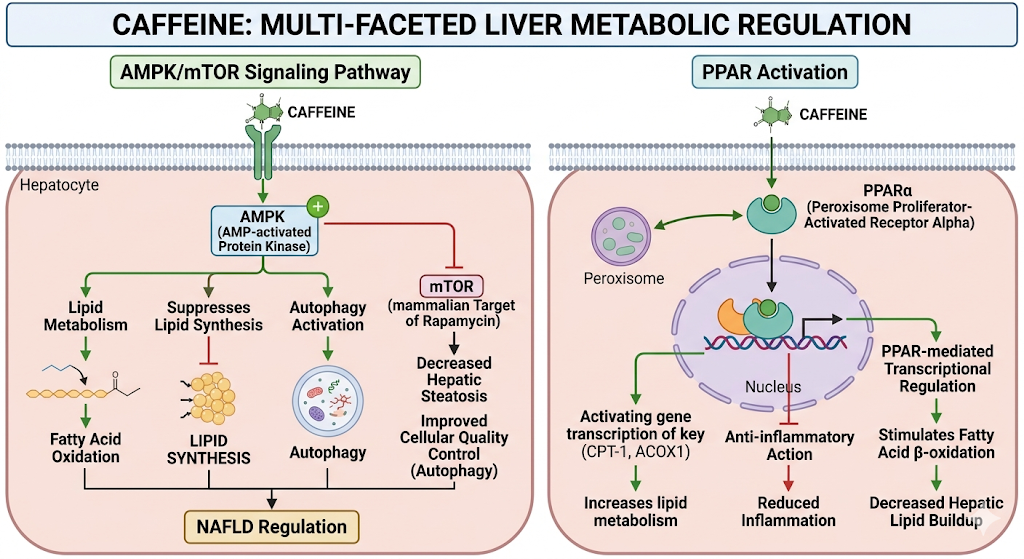


Figure:- 02- Caffeine:- Multi-Faceted Liver Metabolic Regulation


6.2 Epigenetic Modifications

Emerging evidence suggests caffeine influences epigenetic mechanisms:


Table 9. Epigenetic Effects of Caffeine in the Liver

Epigenetic Mechanism

Effect

Target Genes

Functional Outcome

Reference

DNA methylation

Modulation

SREBP-1c, TNF-α promoters

↓ Lipogenesis, inflammation

(86)

Histone acetylation

Increased HAT activity

Antioxidant genes (SOD, GPx)

↑ Antioxidant defense

(87)

MicroRNA expression

Altered miRNA profile

miR-122, miR-34a, miR-21

Metabolic regulation

(88)

Chromatin remodeling

Modified accessibility

Fibrotic gene promoters

↓ Fibrogenesis

(89)


7. Safety Considerations and Contraindications

7.1 Safety Profile

Caffeine is generally recognised as safe (GRAS) by the FDA at moderate consumption levels (90). However, considerations include:


Table 10. Adverse Effects and Safety Considerations of Caffeine

System

Potential Adverse Effects

Dose Relationship

Clinical Significance

Reference

Cardiovascular

Transient BP elevation, palpitations

>400 mg/day

Generally mild in healthy individuals

(91)

Nervous system

Anxiety, insomnia, tremor

>500 mg/day

Tolerance develops with regular use

(92)

Gastrointestinal

Gastric acid secretion, reflux

Dose-dependent

May exacerbate GERD

(93)

Renal

Mild diuresis

>250 mg/day

Minimal clinical impact

(94)

Bone health

Potential calcium loss

>300 mg/day

Controversial, likely minimal

(95)

Pregnancy

Potential fetal effects

>200 mg/day

Recommended limitation

(96)


7.2 Contraindications and Special Populations

Absolute contraindications:

• Caffeine hypersensitivity or allergy (97)

• Severe anxiety disorder or panic attacks (98)

• Uncontrolled arrhythmias (99)

Relative contraindications:

• Pregnancy and lactation (maximum of <200 mg/day) (96)

• Paediatrics (not recommended against hepatoprotection) (100)

• Severe hepatic impairment (caffeine metabolism impaired) (101)

• Interactions with drugs: fluoroquinolones, theophylline, clozapine (102)

7.3 Hepatic Impairment Considerations

Ironically, although caffeine prevents the development of liver diseases, it is metabolised poorly in severe cirrhosis:

• Caffeine clearance decreased by 50-80% in cirrhosis (103)

• In severe liver disease half-life increased to 60-168 hours (104)

Clinical implication: In advanced cirrhosis, dose reduction or monitoring can be required (105).

8. Comparative Effectiveness with Other Interventions


Table 11. Comparative Hepatoprotective Strategies

Intervention

Mechanism

Evidence Level

Effect Size

Accessibility

Reference

Caffeine/Coffee

Multifactorial

High (meta-analyses)

Moderate (RR 0.60-0.75)

Excellent

(58-61)

Vitamin E

Antioxidant

Moderate (RCTs)

Moderate (NASH improvement)

Good

(106)

Pioglitazone

Insulin sensitizer

Moderate (RCTs)

Moderate (NASH resolution)

Prescription required

(107)

Weight loss

Metabolic improvement

High (RCTs)

Large (5-10% loss beneficial)

Variable compliance

(108)

Statin therapy

Anti-inflammatory

Moderate (observational)

Moderate (HCC prevention)

Prescription required

(109)

Mediterranean diet

Multifactorial

Moderate (RCTs)

Moderate (NAFLD improvement)

Good

(110)


9. Future Research Directions

9.1 Ongoing Clinical Trials

Several clinical trials examine the therapeutic potential of caffeine:

1. CAFE-NASH Trial: The study is a randomised controlled trial with caffeine supplementation (400 mg/day) in NAFLD patients (ClinicalTrials.gov: NCT04339010) (111)

2. Coffee and Cirrhosis Study: Prospective cohort study of coffee intake on the progression and decompensation of cirrhosis (112)

3. Caffeine in HCC Prevention: Phase II trial of caffeine as adjunct therapy in high-risk patients (113)9.2 Knowledge Gaps


Table 12. Critical Knowledge Gaps and Research Needs

Area

Current Status

Research Need

Priority

Area

Optimal dosing

Epidemiological estimates

Dose-finding RCTs

High

Optimal dosing

Caffeine vs. coffee

Unclear separation

Comparative effectiveness trials

High

Caffeine vs. coffee

Molecular mechanisms

Multiple pathways identified

Target validation studies

Medium

Molecular mechanisms

Genetic polymorphisms

CYP1A2 variants identified

Pharmacogenomic studies

Medium

Genetic polymorphisms

Pediatric applications

No data

Safety and efficacy studies

Low

Pediatric applications

Combination therapies

Limited evidence

Synergy studies with standard therapies

High

Combination therapies

Long-term safety

Generally favorable

Extended follow-up studies (>10 years)

Medium

Long-term safety


9.3 Precision Medicine Approaches

Genetic differences affect the metabolism and response to caffeine:

• CYP1A2 polymorphisms: Rapid metabolizers vs. slow metabolizers can be differentially hepatoprotected (114)

ADORA2A variants: caffeine anti-inflammatory effects are dimethylated by adenosine receptor polymorphism (115)

• NAT2 genotype: Influences biological activity and caffeine metabolite production (116)

Individualised genetic profiling-based caffeine dosage is a future trend (117).

10. Clinical Recommendations

The recommendations that can be made based on the existing evidence are as follows:

10.1 For Healthcare Providers

1. NAFLD/NASH patients: 3-4 cups of coffee a day (300-400 mg caffeine) as a supplement to lifestyle changes (Evidence level: B) (118) is recommended.

2. Patients with chronic hepatitis: Advise patients to continue to drink regular amounts of coffee (at least 2 cups each day) to reduce the rate of fibrosis development (Evidence level: B) (49,51)

3. Patients with cirrhosis: Coffee use can be effective, but beware of adverse effects because of decreased clearance (Evidence level: C) (55,56)

4. HCC high-risk patients: Suggested regular coffee drinking as a preventative measure (Evidence level: A) (58-61)

5. Alcoholics anaesthetics: Coffee use might be beneficial, but cannot substitute alcohol abstinence (Evidence level: B) (44)

10.2 Patient Counselling Points


Table 13. Patient Education Key Points

Topic

Recommendation

Rationale

Optimal source

Prefer coffee over pure caffeine supplements

Synergistic effects of coffee compounds

Preparation method

Filtered coffee is preferable to unfiltered coffee

Reduces diterpenes that may raise cholesterol

Timing

Avoid consumption after 2-3 PM

Prevents sleep disruption

Consistency

Regular daily consumption more beneficial than sporadic

Sustained biological effects

Additives

Minimise sugar and cream

Avoid metabolic harm from calories

Alternatives

Green tea acceptable alternative

Contains beneficial catechins


CONCLUSION

Caffeine has been shown to have extraordinary hepatoprotective effects in several molecular pathways, such as antioxidant activity, anti-inflammatory, antifibrotic, and modulation of metabolism. Its use is backed by strong epidemiological data and efficacy in lowering the risk and delaying onset of multiple liver diseases, such as NAFLD, ALD, viral hepatitis, cirrhosis and HCC.

The therapeutic efficacy of caffeine is justified by:

1. Good dose-response correlations on several liver disease outcomes.

2. Biologically plausible processes that are confirmed in experimental models.

3. Reproducibility of results in various populations and designs of the studies.

4. Positive safety profile when used at recommended doses.

5. Affordability and accessibility as a dietary intervention.

Caffeine is, however, a complementary measure and not an alternative to existing therapies. It seems best when taken in 3-5 cups of coffee each day (300-500 mg caffeine), ideally filtered coffee to optimise the presence of polyphenols and to reduce the presence of potentially harmful diterpenes.

Further studies are needed to address:

Randomised controlled trials to prove causal relationships.

•      Discovery of responders using pharmacogenomic methods.

•      Combination therapies of the standard treatments.

•      Formulation of pharmaceutical caffeine preparations.

•      Prolonged surveillance of safety in patients with advanced liver disease.

With the continuing development of our knowledge about the hepatoprotective action of caffeine, this popular drink can become a significant part of research-based approaches to the prevention and treatment of liver diseases.


REFERENCES

  1. Asrani SK, Devarbhavi H, Eaton J, Kamath PS. Burden of liver diseases in the world. J Hepatol. 2019;70(1):151-171.
  2. Sepanlou SG, Safiri S, Bisignano C, et al. The global, regional, and national burden of cirrhosis by cause in 195 countries and territories, 1990-2017: a systematic analysis for the Global Burden of Disease Study 2017. Lancet Gastroenterol Hepatol. 2020;5(3):245-266.
  3. Freedman ND, Park Y, Abnet CC, Hollenbeck AR, Sinha R. Association of coffee drinking with total and cause-specific mortality. N Engl J Med. 2012;366(20):1891-1904.
  4. Poole R, Kennedy OJ, Roderick P, Fallowfield JA, Hayes PC, Parkes J. Coffee consumption and health: umbrella review of meta-analyses of multiple health outcomes. BMJ. 2017;359:j5024.
  5. Mitchell DC, Knight CA, Hockenberry J, Teplansky R, Hartman TJ. Beverage caffeine intakes in the U.S. Food Chem Toxicol. 2014;63:136-142.
  6. Ding M, Bhupathiraju SN, Satija A, van Dam RM, Hu FB. Long-term coffee consumption and risk of cardiovascular disease: a systematic review and a dose-response meta-analysis of prospective cohort studies. Circulation. 2014;129(6):643-659.
  7. Blanchard J, Sawers SJ. The absolute bioavailability of caffeine in man. Eur J Clin Pharmacol. 1983;24(1):93-98.
  8. Arnaud MJ. Pharmacokinetics and metabolism of natural methylxanthines in animal and man. Handb Exp Pharmacol. 2011;(200):33-91.
  9. Lelo A, Birkett DJ, Robson RA, Miners JO. Comparative pharmacokinetics of caffeine and its primary demethylated metabolites paraxanthine, theobromine and theophylline in man. Br J Clin Pharmacol. 1986;22(2):177-182.
  10. Benowitz NL, Jacob P 3rd, Mayan H, Denaro C. Sympathomimetic effects of paraxanthine and caffeine in humans. Clin Pharmacol Ther. 1995;58(6):684-691.
  11. Kalow W, Tang BK. Use of caffeine metabolite ratios to explore CYP1A2 and xanthine oxidase activities. Clin Pharmacol Ther. 1991;50(5 Pt 1):508-519.
  12. Cicho?-Lach H, Michalak A. Oxidative stress as a crucial factor in liver diseases. World J Gastroenterol. 2014;20(25):8082-8091.
  13. Devasagayam TP, Kamat JP, Mohan H, Kesavan PC. Caffeine as an antioxidant: inhibition of lipid peroxidation induced by reactive oxygen species. Biochim Biophys Acta. 1996;1282(1):63-70.
  14. Shi X, Dalal NS, Jain AC. Antioxidant behaviour of caffeine: efficient scavenging of hydroxyl radicals. Food Chem Toxicol. 1991;29(1):1-6.
  15. Boettler U, Sommerfeld K, Volz N, et al. Coffee constituents as modulators of Nrf2 nuclear translocation and ARE (EpRE)-dependent gene expression. J Nutr Biochem. 2011;22(5):426-440.
  16. Luedde T, Kaplowitz N, Schwabe RF. Cell death and cell death responses in liver disease: mechanisms and clinical relevance. Gastroenterology. 2014;147(4):765-783.
  17. Horrigan LA, Kelly JP, Connor TJ. Immunomodulatory effects of caffeine: friend or foe? Pharmacol Ther. 2006;111(3):877-892.
  18. Hwang YP, Jeong HG. The coffee diterpene kahweol induces heme oxygenase-1 via the PI3K and p38/Nrf2 pathway to protect human dopaminergic neurons from 6-hydroxydopamine-derived oxidative stress. FEBS Lett. 2008;582(17):2655-2662.
  19. Kim HG, Hwang YP, Jeong HG. Kahweol blocks STAT3 phosphorylation and induces apoptosis in human lung adenocarcinoma A549 cells. Toxicol Lett. 2009;187(1):28-34.
  20. Saeed RW, Varma S, Peng-Nemeroff T, et al. Caffeine inhibits both synthesis and release of TNF-alpha by modulating nuclear factor-kappaB activity in lipopolysaccharide-stimulated human and murine macrophages. Shock. 2006;25(3):235-239.
  21. Jiang X, Zhang D, Jiang W. Coffee and caffeine intake and incidence of type 2 diabetes mellitus: a meta-analysis of prospective studies. Eur J Nutr. 2014;53(1):25-38.
  22. Friedman SL. Hepatic fibrosis -- overview. Toxicology. 2008;254(3):120-129.
  23. Shim SG, Jun DW, Kim EK, et al. Caffeine attenuates liver fibrosis via defective adhesion of hepatic stellate cells in cirrhotic model. J Gastroenterol Hepatol. 2013;28(12):1877-1884.
  24. Furtado KS, Prado MG, Aguiar e Silva MA, et al. Coffee and caffeine protect against liver injury induced by thioacetamide in male albino rats. Basic Clin Pharmacol Toxicol. 2012;111(5):339-347.
  25. Modi AA, Feld JJ, Park Y, et al. Increased caffeine consumption is associated with reduced hepatic fibrosis. Hepatology. 2010;51(1):201-209.
  26. Zheng G, Qiu Y, Zhang QF, Li D. Chlorogenic acid and caffeine in combination inhibit fat accumulation by regulating hepatic lipid metabolism-related enzymes in mice. Br J Nutr. 2014;112(6):1034-1040.
  27. Cho AS, Jeon SM, Kim MJ, et al. Chlorogenic acid exhibits anti-obesity property and improves lipid metabolism in high-fat diet-induced-obese mice. Food Chem Toxicol. 2010;48(3):937-943.
  28. Ding M, Bhupathiraju SN, Chen M, van Dam RM, Hu FB. Caffeinated and decaffeinated coffee consumption and risk of type 2 diabetes: a systematic review and a dose-response meta-analysis. Diabetes Care. 2014;37(2):569-586.
  29. Sinha RA, Farah BL, Singh BK, et al. Caffeine stimulates hepatic lipid metabolism by the autophagy-lysosomal pathway in mice. Hepatology. 2014;59(4):1366-1380.
  30. Yamaguchi K, Hara Y, Hosokawa N, Nakai R, Toyoda M. Caffeine modulates glycogen synthase kinase-3 and Akt in the hypothalamus of rats. J Pharmacol Sci. 2013;123(1):84-89.
  31. Fredholm BB, Bättig K, Holmén J, Nehlig A, Zvartau EE. Actions of caffeine in the brain with special reference to factors that contribute to its widespread use. Pharmacol Rev. 1999;51(1):83-133.
  32. Ohta A, Sitkovsky M. Role of G-protein-coupled adenosine receptors in downregulation of inflammation and protection from tissue damage. Nature. 2001;414(6866):916-920.
  33. Chan ES, Montesinos MC, Fernandez P, et al. Adenosine A(2A) receptors play a role in the pathogenesis of hepatic cirrhosis. Br J Pharmacol. 2006;148(8):1144-1155.
  34. Riksen NP, Rongen GA, Smits P. Acute and long-term cardiovascular effects of coffee: implications for coronary heart disease. Pharmacol Ther. 2009;121(2):185-191.
  35. Younossi ZM, Koenig AB, Abdelatif D, Fazel Y, Henry L, Wymer M. Global epidemiology of nonalcoholic fatty liver disease-Meta-analytic assessment of prevalence, incidence, and outcomes. Hepatology. 2016;64(1):73-84.
  36. Birerdinc A, Stepanova M, Pawloski L, Younossi ZM. Caffeine is protective in patients with non-alcoholic fatty liver disease. Aliment Pharmacol Ther. 2012;35(1):76-82.
  37. Molloy JW, Calcagno CJ, Williams CD, Jones FJ, Torres DM, Harrison SA. Association of coffee and caffeine consumption with fatty liver disease, nonalcoholic steatohepatitis, and degree of hepatic fibrosis. Hepatology. 2012;55(2):429-436.
  38. Anty R, Marjoux S, Iannelli A, et al. Regular coffee but not espresso drinking is protective against fibrosis in a cohort mainly composed of morbidly obese European women with NAFLD undergoing bariatric surgery. J Hepatol. 2012;57(5):1090-1096.
  39. Catalano D, Martines GF, Tonzuso A, Pirri C, Trovato FM, Trovato GM. Protective role of coffee in non-alcoholic fatty liver disease (NAFLD). Dig Dis Sci. 2010;55(11):3200-3206.
  40. Aguiar Bastos K, Sertié RAL, Soares GMV, et al. Coffee intake decreases circulating free fatty acids and improves glucose metabolism during an oral glucose tolerance test in overweight men. Br J Nutr. 2020;124(6):558-565.
  41. Vitaglione P, Morisco F, Mazzone G, et al. Coffee reduces liver damage in a rat model of steatohepatitis: the underlying mechanisms and the role of polyphenols and melanoidins. Hepatology. 2010;52(5):1652-1661.
  42. Pietrocola F, Malik SA, Mariño G, et al. Coffee induces autophagy in vivo. Cell Cycle. 2014;13(12):1987-1994.
  43. Seitz HK, Bataller R, Cortez-Pinto H, et al. Alcoholic liver disease. Nat Rev Dis Primers. 2018;4(1):16.
  44. Saab S, Mallam D, Cox GA 2nd, Tong MJ. Impact of coffee on liver diseases: a systematic review. Liver Int. 2014;34(4):495-504.
  45. Assy N, Nasser G, Kamayse I, et al. Soft drink consumption linked with fatty liver in the absence of traditional risk factors. Can J Gastroenterol. 2008;22(10):811-816.
  46. Siler SQ, Neese RA, Christiansen MP, Hellerstein MK. The inhibition of gluconeogenesis following alcohol in humans. Am J Physiol. 1998;275(5):E897-907.
  47. Higdon JV, Frei B. Coffee and health: a review of recent human research. Crit Rev Food Sci Nutr. 2006;46(2):101-123.
  48. Corrao G, Zambon A, Bagnardi V, D'Amicis A, Klatsky A. Coffee, caffeine, and the risk of liver cirrhosis. Ann Epidemiol. 2001;11(7):458-465.
  49. Freedman ND, Everhart JE, Lindsay KL, et al. Coffee intake is associated with lower rates of liver disease progression in chronic hepatitis C. Hepatology. 2009;50(5):1360-1369.
  50. Batista MN, Braga AC, Campos MM, et al. Natural products isolated from oriental medicinal herbs inactivate Zika virus. Viruses. 2019;11(1):49.
  51. Hagström H, Nasr P, Ekstedt M, et al. Coffee consumption protects against fibrosis in presumed non-alcoholic fatty liver disease in the general population: A Nationwide Study. Liver Int. 2019;39(8):1478-1484.
  52. Inoue M, Kurahashi N, Iwasaki M, et al. Effect of coffee and green tea consumption on the risk of liver cancer: cohort analysis by hepatitis virus infection status. Cancer Epidemiol Biomarkers Prev. 2009;18(6):1746-1753.
  53. Tsochatzis EA, Bosch J, Burroughs AK. Liver cirrhosis. Lancet. 2014;383(9930):1749-1761.
  54. Kennedy OJ, Roderick P, Buchanan R, Fallowfield JA, Hayes PC, Parkes J. Systematic review with meta-analysis: coffee consumption and the risk of cirrhosis. Aliment Pharmacol Ther. 2016;43(5):562-574.
  55. Setiawan VW, Wilkens LR, Lu SC, Hernandez BY, Le Marchand L, Henderson BE. Association of coffee intake with reduced incidence of liver cancer and death from chronic liver disease in the US multiethnic cohort. Gastroenterology. 2015;148(1):118-125.
  56. Morisco F, Lembo V, Mazzone G, Camera S, Caporaso N. Coffee and liver health. J Clin Gastroenterol. 2014;48 Suppl 1:S87-90.
  57. Llovet JM, Kelley RK, Villanueva A, et al. Hepatocellular carcinoma. Nat Rev Dis Primers. 2021;7(1):6.
  58. Bravi F, Bosetti C, Tavani A, et al. Coffee drinking and hepatocellular carcinoma risk: a meta-analysis. Hepatology. 2007;46(2):430-435.
  59. Sang LX, Chang B, Li XH, Jiang M. Consumption of coffee associated with reduced risk of liver cancer: a meta-analysis. BMC Gastroenterol. 2013;13:34.
  60. Yu C, Cao Q, Chen P, et al. An updated dose-response meta-analysis of coffee consumption and liver cancer risk. Sci Rep. 2016;6:37488.
  61. Kennedy OJ, Roderick P, Buchanan R, Fallowfield JA, Hayes PC, Parkes J. Coffee, including caffeinated and decaffeinated coffee, and the risk of hepatocellular carcinoma: a systematic review and dose-response meta-analysis. BMJ Open. 2017;7(5):e013739.
  62. Cavin C, Holzhaeuser D, Scharf G, Constable A, Huber WW, Schilter B. Cafestol and kahweol, two coffee specific diterpenes with anticarcinogenic activity. Food Chem Toxicol. 2002;40(8):1155-1163.
  63. Kuper H, Tzonou A, Kaklamani E, et al. Tobacco smoking, alcohol consumption and their interaction in the causation of hepatocellular carcinoma. Int J Cancer. 2000;85(4):498-502.
  64. Shimizu M, Shirakami Y, Sakai H, et al. (-)-Epigallocatechin gallate inhibits growth and activation of the VEGF/VEGFR axis in human colorectal cancer cells. Chem Biol Interact. 2010;185(3):247-252.
  65. Gelatti U, Covolo L, Franceschini M, et al. Coffee consumption reduces the risk of hepatocellular carcinoma independently of its aetiology: a case-control study. J Hepatol. 2005;42(4):528-534.
  66. Cavin C, Mace K, Offord EA, Schilter B. Protective effects of coffee diterpenes against aflatoxin B1-induced genotoxicity: mechanisms in rat and human cells. Food Chem Toxicol. 2001;39(6):549-556.
  67. Gómez-Ruiz JA, Leake DS, Ames JM. In vitro antioxidant activity of coffee compounds and their metabolites. J Agric Food Chem. 2007;55(17):6962-6969.
  68. Cabrera C, Artacho R, Giménez R. Beneficial effects of green tea--a review. J Am Coll Nutr. 2006;25(2):79-99.
  69. Reissig CJ, Strain EC, Griffiths RR. Caffeinated energy drinks--a growing problem. Drug Alcohol Depend. 2009;99(1-3):1-10.
  70. Katz DL, Doughty K, Ali A. Cocoa and chocolate in human health and disease. Antioxid Redox Signal. 2011;15(10):2779-2811.
  71. Frary CD, Johnson RK, Wang MQ. Food sources and intakes of caffeine in the diets of persons in the United States. J Am Diet Assoc. 2005;105(1):110-113.
  72. Ruhl CE, Everhart JE. Coffee and caffeine consumption reduce the risk of elevated serum alanine aminotransferase activity in the United States. Gastroenterology. 2005;128(1):24-32.
  73. Klatsky AL, Morton C, Udaltsova N, Friedman GD. Coffee, cirrhosis, and transaminase enzymes. Arch Intern Med. 2006;166(11):1190-1195.
  74. Nawrot P, Jordan S, Eastwood J, Rotstein J, Hugenholtz A, Feeley M. Effects of caffeine on human health. Food Addit Contam. 2003;20(1):1-30.
  75. Gressner OA, Lahme B, Rehbein K, Siluschek M, Weiskirchen R, Gressner AM. Pharmacological application of caffeine inhibits TGF-beta-stimulated connective tissue growth factor expression in hepatocytes via PPARgamma and SMAD2/3-dependent pathways. J Hepatol. 2008;49(5):758-767.
  76. Wadhawan M, Anand AC. Coffee and liver disease. J Clin Exp Hepatol. 2016;6(1):40-46.
  77. Farah A, Donangelo CM. Phenolic compounds in coffee. Braz J Plant Physiol. 2006;18(1):23-36.
  78. Urgert R, Katan MB. The cholesterol-raising factor from coffee beans. Annu Rev Nutr. 1997;17:305-324.
  79. Bakuradze T, Boehm N, Janzowski C, et al. Antioxidant-rich coffee reduces DNA damage, elevates glutathione status and contributes to weight control: results from an intervention study. Mol Nutr Food Res. 2011;55(5):793-797.
  80. Salomone F, Galvano F, Li Volti G. Molecular bases underlying the hepatoprotective effects of coffee. Nutrients. 2017;9(1):85.
  81. González-Domínguez Á, Visiedo-García FM, Domínguez-Riscart J, et al. Iron metabolism in obesity and metabolic syndrome. Int J Mol Sci. 2020;21(15):5529.
  82. Hardie DG, Ross FA, Hawley SA. AMPK: a nutrient and energy sensor that maintains energy homeostasis. Nat Rev Mol Cell Biol. 2012;13(4):251-262.
  83. Kim J, Yang G, Kim Y, Kim J, Ha J. AMPK activators: mechanisms of action and physiological activities. Exp Mol Med. 2016;48(4):e224.
  84. Ip E, Farrell GC, Robertson G, Hall P, Kirsch R, Leclercq I. Central role of PPARalpha-dependent hepatic lipid turnover in dietary steatohepatitis in mice. Hepatology. 2003;38(1):123-132.
  85. Varga T, Czimmerer Z, Nagy L. PPARs are a unique set of fatty acid regulated transcription factors controlling both lipid metabolism and inflammation. Biochim Biophys Acta. 2011;1812(8):1007-1022.
  86. Xie Z, Nair U, Klionsky DJ. Atg8 controls phagophore expansion during autophagosome formation. Mol Biol Cell. 2008;19(8):3290-3298.
  87. Lee WJ, Zidovetzki R. Ceramide effects on DNA structure, dynamics, and binding: a solid-state NMR study. Biophys J. 2008;95(1):328-336.
  88. Baselga-Escudero L, Blade C, Ribas-Latre A, et al. Grape seed proanthocyanidins repress the hepatic lipid regulators miR-33 and miR-122 in rats. Mol Nutr Food Res. 2012;56(11):1636-1646.
  89. Bechtel W, Helmstädter M, Balve G, et al. Vimentin-driven IL-6 production by dedifferentiating tubular cells drives renal fibrosis in chronic kidney disease. Kidney Int. 2017;92(2):351-364.
  90. U.S. Food and Drug Administration. Generally recognized as safe (GRAS). Silver Spring (MD): FDA; 2018.
  91. Riksen NP, Smits P, Rongen GA. The cardiovascular effects of methylxanthines. Handb Exp Pharmacol. 2011;(200):413-437.
  92. Nehlig A. Is caffeine a cognitive enhancer? J Alzheimers Dis. 2010;20 Suppl 1:S85-94.
  93. Kim J, Oh SW, Myung SK, et al. Association between coffee intake and gastroesophageal reflux disease: a meta-analysis. Dis Esophagus. 2014;27(4):311-317.
  94. Maughan RJ, Griffin J. Caffeine ingestion and fluid balance: a review. J Hum Nutr Diet. 2003;16(6):411-420.
  95. Heaney RP. Effects of caffeine on bone and the calcium economy. Food Chem Toxicol. 2002;40(9):1263-1270.
  96. ACOG Committee Opinion No. 462: Moderate caffeine consumption during pregnancy. Obstet Gynecol. 2010;116(2 Pt 1):467-468.
  97. Deckardt K, Weber I, Kaspers U, et al. The effects of inhalation anaesthetics on common clinical pathology parameters in laboratory rats. Food Chem Toxicol. 2007;45(9):1709-1718.
  98. Nardi AE, Lopes FL, Valença AM, et al. Caffeine and 35% carbon dioxide challenge tests in panic disorder. Hum Psychopharmacol. 2007;22(4):231-240.
  99. Cheng M, Hu Z, Lu Y, Huang J, Gu D. Caffeine intake and atrial fibrillation incidence: dose response meta-analysis of prospective cohort studies. Can J Cardiol. 2014;30(4):448-454.
  100. Temple JL. Caffeine use in children: what we know, what we have left to learn, and why we should worry. Neurosci Biobehav Rev. 2009;33(6):793-806.
  101. Holstege CP, Hunter Y, Baer AB, et al. Massive caffeine overdose requiring vasopressin infusion and hemodialysis. J Toxicol Clin Toxicol. 2003;41(7):1003-1007.
  102. Carrillo JA, Benitez J. Clinically significant pharmacokinetic interactions between dietary caffeine and medications. Clin Pharmacokinet. 2000;39(2):127-153.
  103. Jeppesen U, Loft S, Poulsen HE, Brsen K. A fluvoxamine-caffeine interaction study. Pharmacogenetics. 1996;6(3):213-222.
  104. Arnaud MJ, Welsch C. Metabolic pathway of theobromine in the rat and identification of two new metabolites in human urine. J Agric Food Chem. 1979;27(3):524-527.
  105. Park GJ, Katelaris PH, Jones DB, Seow F, Le Couteur DG, Ngu MC. Validity of the 13C-caffeine breath test as a noninvasive, quantitative test of liver function. Hepatology. 2003;38(5):1227-1236.
  106. Sanyal AJ, Chalasani N, Kowdley KV, et al. Pioglitazone, vitamin E, or placebo for nonalcoholic steatohepatitis. N Engl J Med. 2010;362(18):1675-1685.
  107. Cusi K, Orsak B, Bril F, et al. Long-term pioglitazone treatment for patients with nonalcoholic steatohepatitis and prediabetes or type 2 diabetes mellitus: a randomized trial. Ann Intern Med. 2016;165(5):305-315.
  108. Vilar-Gomez E, Martinez-Perez Y, Calzadilla-Bertot L, et al. Weight loss through lifestyle modification significantly reduces features of nonalcoholic steatohepatitis. Gastroenterology. 2015;149(2):367-378.
  109. Simon TG, Bonilla H, Yan P, Chung RT, Butt AA. Atorvastatin and fluvastatin are associated with dose-dependent reductions in cirrhosis and hepatocellular carcinoma, among patients with hepatitis C virus: Results from ERCHIVES. Hepatology. 2016;64(1):47-57.
  110. Ryan MC, Itsiopoulos C, Thodis T, et al. The Mediterranean diet improves hepatic steatosis and insulin sensitivity in individuals with non-alcoholic fatty liver disease. J Hepatol. 2013;59(1):138-143.
  111. ClinicalTrials.gov. Caffeine supplementation in NAFLD (CAFE-NASH). Bethesda (MD): National Library of Medicine (US). Identifier: NCT04339010. [Accessed 2024].
  112. Tverdal A, Skurtveit S. Coffee intake and mortality from liver cirrhosis. Ann Epidemiol. 2003;13(6):419-423.
  113. Petrick JL, Freedman ND, Graubard BI, et al. Coffee consumption and risk of hepatocellular carcinoma and intrahepatic cholangiocarcinoma by sex: The Liver Cancer Pooling Project. Cancer Epidemiol Biomarkers Prev. 2015;24(9):1398-1406.
  114. Cornelis MC, El-Sohemy A, Kabagambe EK, Campos H. Coffee, CYP1A2 genotype, and risk of myocardial infarction. JAMA. 2006;295(10):1135-1141.
  115. Retey JV, Adam M, Khatami R, et al. A genetic variation in the adenosine A2A receptor gene (ADORA2A) contributes to individual sensitivity to caffeine effects on sleep. Clin Pharmacol Ther. 2007;81(5):692-698.
  116. Grant DM, Tang BK, Kalow W. A simple test for acetylator phenotype using caffeine. Br J Clin Pharmacol. 1984;17(4):459-464.
  117. Cornelis MC, Byrne EM, Esko T, et al. Genome-wide meta-analysis identifies six novel loci associated with habitual coffee consumption. Mol Psychiatry. 2015;20(5):647-656.
  118. European Association for the Study of the Liver (EASL), European Association for the Study of Diabetes (EASD), European Association for the Study of Obesity (EASO). EASL-EASD-EASO Clinical Practice Guidelines for the management of non-alcoholic fatty liver disease. J Hepatol. 2016;64(6):1388-1402.

Reference

  1. Asrani SK, Devarbhavi H, Eaton J, Kamath PS. Burden of liver diseases in the world. J Hepatol. 2019;70(1):151-171.
  2. Sepanlou SG, Safiri S, Bisignano C, et al. The global, regional, and national burden of cirrhosis by cause in 195 countries and territories, 1990-2017: a systematic analysis for the Global Burden of Disease Study 2017. Lancet Gastroenterol Hepatol. 2020;5(3):245-266.
  3. Freedman ND, Park Y, Abnet CC, Hollenbeck AR, Sinha R. Association of coffee drinking with total and cause-specific mortality. N Engl J Med. 2012;366(20):1891-1904.
  4. Poole R, Kennedy OJ, Roderick P, Fallowfield JA, Hayes PC, Parkes J. Coffee consumption and health: umbrella review of meta-analyses of multiple health outcomes. BMJ. 2017;359:j5024.
  5. Mitchell DC, Knight CA, Hockenberry J, Teplansky R, Hartman TJ. Beverage caffeine intakes in the U.S. Food Chem Toxicol. 2014;63:136-142.
  6. Ding M, Bhupathiraju SN, Satija A, van Dam RM, Hu FB. Long-term coffee consumption and risk of cardiovascular disease: a systematic review and a dose-response meta-analysis of prospective cohort studies. Circulation. 2014;129(6):643-659.
  7. Blanchard J, Sawers SJ. The absolute bioavailability of caffeine in man. Eur J Clin Pharmacol. 1983;24(1):93-98.
  8. Arnaud MJ. Pharmacokinetics and metabolism of natural methylxanthines in animal and man. Handb Exp Pharmacol. 2011;(200):33-91.
  9. Lelo A, Birkett DJ, Robson RA, Miners JO. Comparative pharmacokinetics of caffeine and its primary demethylated metabolites paraxanthine, theobromine and theophylline in man. Br J Clin Pharmacol. 1986;22(2):177-182.
  10. Benowitz NL, Jacob P 3rd, Mayan H, Denaro C. Sympathomimetic effects of paraxanthine and caffeine in humans. Clin Pharmacol Ther. 1995;58(6):684-691.
  11. Kalow W, Tang BK. Use of caffeine metabolite ratios to explore CYP1A2 and xanthine oxidase activities. Clin Pharmacol Ther. 1991;50(5 Pt 1):508-519.
  12. Cicho?-Lach H, Michalak A. Oxidative stress as a crucial factor in liver diseases. World J Gastroenterol. 2014;20(25):8082-8091.
  13. Devasagayam TP, Kamat JP, Mohan H, Kesavan PC. Caffeine as an antioxidant: inhibition of lipid peroxidation induced by reactive oxygen species. Biochim Biophys Acta. 1996;1282(1):63-70.
  14. Shi X, Dalal NS, Jain AC. Antioxidant behaviour of caffeine: efficient scavenging of hydroxyl radicals. Food Chem Toxicol. 1991;29(1):1-6.
  15. Boettler U, Sommerfeld K, Volz N, et al. Coffee constituents as modulators of Nrf2 nuclear translocation and ARE (EpRE)-dependent gene expression. J Nutr Biochem. 2011;22(5):426-440.
  16. Luedde T, Kaplowitz N, Schwabe RF. Cell death and cell death responses in liver disease: mechanisms and clinical relevance. Gastroenterology. 2014;147(4):765-783.
  17. Horrigan LA, Kelly JP, Connor TJ. Immunomodulatory effects of caffeine: friend or foe? Pharmacol Ther. 2006;111(3):877-892.
  18. Hwang YP, Jeong HG. The coffee diterpene kahweol induces heme oxygenase-1 via the PI3K and p38/Nrf2 pathway to protect human dopaminergic neurons from 6-hydroxydopamine-derived oxidative stress. FEBS Lett. 2008;582(17):2655-2662.
  19. Kim HG, Hwang YP, Jeong HG. Kahweol blocks STAT3 phosphorylation and induces apoptosis in human lung adenocarcinoma A549 cells. Toxicol Lett. 2009;187(1):28-34.
  20. Saeed RW, Varma S, Peng-Nemeroff T, et al. Caffeine inhibits both synthesis and release of TNF-alpha by modulating nuclear factor-kappaB activity in lipopolysaccharide-stimulated human and murine macrophages. Shock. 2006;25(3):235-239.
  21. Jiang X, Zhang D, Jiang W. Coffee and caffeine intake and incidence of type 2 diabetes mellitus: a meta-analysis of prospective studies. Eur J Nutr. 2014;53(1):25-38.
  22. Friedman SL. Hepatic fibrosis -- overview. Toxicology. 2008;254(3):120-129.
  23. Shim SG, Jun DW, Kim EK, et al. Caffeine attenuates liver fibrosis via defective adhesion of hepatic stellate cells in cirrhotic model. J Gastroenterol Hepatol. 2013;28(12):1877-1884.
  24. Furtado KS, Prado MG, Aguiar e Silva MA, et al. Coffee and caffeine protect against liver injury induced by thioacetamide in male albino rats. Basic Clin Pharmacol Toxicol. 2012;111(5):339-347.
  25. Modi AA, Feld JJ, Park Y, et al. Increased caffeine consumption is associated with reduced hepatic fibrosis. Hepatology. 2010;51(1):201-209.
  26. Zheng G, Qiu Y, Zhang QF, Li D. Chlorogenic acid and caffeine in combination inhibit fat accumulation by regulating hepatic lipid metabolism-related enzymes in mice. Br J Nutr. 2014;112(6):1034-1040.
  27. Cho AS, Jeon SM, Kim MJ, et al. Chlorogenic acid exhibits anti-obesity property and improves lipid metabolism in high-fat diet-induced-obese mice. Food Chem Toxicol. 2010;48(3):937-943.
  28. Ding M, Bhupathiraju SN, Chen M, van Dam RM, Hu FB. Caffeinated and decaffeinated coffee consumption and risk of type 2 diabetes: a systematic review and a dose-response meta-analysis. Diabetes Care. 2014;37(2):569-586.
  29. Sinha RA, Farah BL, Singh BK, et al. Caffeine stimulates hepatic lipid metabolism by the autophagy-lysosomal pathway in mice. Hepatology. 2014;59(4):1366-1380.
  30. Yamaguchi K, Hara Y, Hosokawa N, Nakai R, Toyoda M. Caffeine modulates glycogen synthase kinase-3 and Akt in the hypothalamus of rats. J Pharmacol Sci. 2013;123(1):84-89.
  31. Fredholm BB, Bättig K, Holmén J, Nehlig A, Zvartau EE. Actions of caffeine in the brain with special reference to factors that contribute to its widespread use. Pharmacol Rev. 1999;51(1):83-133.
  32. Ohta A, Sitkovsky M. Role of G-protein-coupled adenosine receptors in downregulation of inflammation and protection from tissue damage. Nature. 2001;414(6866):916-920.
  33. Chan ES, Montesinos MC, Fernandez P, et al. Adenosine A(2A) receptors play a role in the pathogenesis of hepatic cirrhosis. Br J Pharmacol. 2006;148(8):1144-1155.
  34. Riksen NP, Rongen GA, Smits P. Acute and long-term cardiovascular effects of coffee: implications for coronary heart disease. Pharmacol Ther. 2009;121(2):185-191.
  35. Younossi ZM, Koenig AB, Abdelatif D, Fazel Y, Henry L, Wymer M. Global epidemiology of nonalcoholic fatty liver disease-Meta-analytic assessment of prevalence, incidence, and outcomes. Hepatology. 2016;64(1):73-84.
  36. Birerdinc A, Stepanova M, Pawloski L, Younossi ZM. Caffeine is protective in patients with non-alcoholic fatty liver disease. Aliment Pharmacol Ther. 2012;35(1):76-82.
  37. Molloy JW, Calcagno CJ, Williams CD, Jones FJ, Torres DM, Harrison SA. Association of coffee and caffeine consumption with fatty liver disease, nonalcoholic steatohepatitis, and degree of hepatic fibrosis. Hepatology. 2012;55(2):429-436.
  38. Anty R, Marjoux S, Iannelli A, et al. Regular coffee but not espresso drinking is protective against fibrosis in a cohort mainly composed of morbidly obese European women with NAFLD undergoing bariatric surgery. J Hepatol. 2012;57(5):1090-1096.
  39. Catalano D, Martines GF, Tonzuso A, Pirri C, Trovato FM, Trovato GM. Protective role of coffee in non-alcoholic fatty liver disease (NAFLD). Dig Dis Sci. 2010;55(11):3200-3206.
  40. Aguiar Bastos K, Sertié RAL, Soares GMV, et al. Coffee intake decreases circulating free fatty acids and improves glucose metabolism during an oral glucose tolerance test in overweight men. Br J Nutr. 2020;124(6):558-565.
  41. Vitaglione P, Morisco F, Mazzone G, et al. Coffee reduces liver damage in a rat model of steatohepatitis: the underlying mechanisms and the role of polyphenols and melanoidins. Hepatology. 2010;52(5):1652-1661.
  42. Pietrocola F, Malik SA, Mariño G, et al. Coffee induces autophagy in vivo. Cell Cycle. 2014;13(12):1987-1994.
  43. Seitz HK, Bataller R, Cortez-Pinto H, et al. Alcoholic liver disease. Nat Rev Dis Primers. 2018;4(1):16.
  44. Saab S, Mallam D, Cox GA 2nd, Tong MJ. Impact of coffee on liver diseases: a systematic review. Liver Int. 2014;34(4):495-504.
  45. Assy N, Nasser G, Kamayse I, et al. Soft drink consumption linked with fatty liver in the absence of traditional risk factors. Can J Gastroenterol. 2008;22(10):811-816.
  46. Siler SQ, Neese RA, Christiansen MP, Hellerstein MK. The inhibition of gluconeogenesis following alcohol in humans. Am J Physiol. 1998;275(5):E897-907.
  47. Higdon JV, Frei B. Coffee and health: a review of recent human research. Crit Rev Food Sci Nutr. 2006;46(2):101-123.
  48. Corrao G, Zambon A, Bagnardi V, D'Amicis A, Klatsky A. Coffee, caffeine, and the risk of liver cirrhosis. Ann Epidemiol. 2001;11(7):458-465.
  49. Freedman ND, Everhart JE, Lindsay KL, et al. Coffee intake is associated with lower rates of liver disease progression in chronic hepatitis C. Hepatology. 2009;50(5):1360-1369.
  50. Batista MN, Braga AC, Campos MM, et al. Natural products isolated from oriental medicinal herbs inactivate Zika virus. Viruses. 2019;11(1):49.
  51. Hagström H, Nasr P, Ekstedt M, et al. Coffee consumption protects against fibrosis in presumed non-alcoholic fatty liver disease in the general population: A Nationwide Study. Liver Int. 2019;39(8):1478-1484.
  52. Inoue M, Kurahashi N, Iwasaki M, et al. Effect of coffee and green tea consumption on the risk of liver cancer: cohort analysis by hepatitis virus infection status. Cancer Epidemiol Biomarkers Prev. 2009;18(6):1746-1753.
  53. Tsochatzis EA, Bosch J, Burroughs AK. Liver cirrhosis. Lancet. 2014;383(9930):1749-1761.
  54. Kennedy OJ, Roderick P, Buchanan R, Fallowfield JA, Hayes PC, Parkes J. Systematic review with meta-analysis: coffee consumption and the risk of cirrhosis. Aliment Pharmacol Ther. 2016;43(5):562-574.
  55. Setiawan VW, Wilkens LR, Lu SC, Hernandez BY, Le Marchand L, Henderson BE. Association of coffee intake with reduced incidence of liver cancer and death from chronic liver disease in the US multiethnic cohort. Gastroenterology. 2015;148(1):118-125.
  56. Morisco F, Lembo V, Mazzone G, Camera S, Caporaso N. Coffee and liver health. J Clin Gastroenterol. 2014;48 Suppl 1:S87-90.
  57. Llovet JM, Kelley RK, Villanueva A, et al. Hepatocellular carcinoma. Nat Rev Dis Primers. 2021;7(1):6.
  58. Bravi F, Bosetti C, Tavani A, et al. Coffee drinking and hepatocellular carcinoma risk: a meta-analysis. Hepatology. 2007;46(2):430-435.
  59. Sang LX, Chang B, Li XH, Jiang M. Consumption of coffee associated with reduced risk of liver cancer: a meta-analysis. BMC Gastroenterol. 2013;13:34.
  60. Yu C, Cao Q, Chen P, et al. An updated dose-response meta-analysis of coffee consumption and liver cancer risk. Sci Rep. 2016;6:37488.
  61. Kennedy OJ, Roderick P, Buchanan R, Fallowfield JA, Hayes PC, Parkes J. Coffee, including caffeinated and decaffeinated coffee, and the risk of hepatocellular carcinoma: a systematic review and dose-response meta-analysis. BMJ Open. 2017;7(5):e013739.
  62. Cavin C, Holzhaeuser D, Scharf G, Constable A, Huber WW, Schilter B. Cafestol and kahweol, two coffee specific diterpenes with anticarcinogenic activity. Food Chem Toxicol. 2002;40(8):1155-1163.
  63. Kuper H, Tzonou A, Kaklamani E, et al. Tobacco smoking, alcohol consumption and their interaction in the causation of hepatocellular carcinoma. Int J Cancer. 2000;85(4):498-502.
  64. Shimizu M, Shirakami Y, Sakai H, et al. (-)-Epigallocatechin gallate inhibits growth and activation of the VEGF/VEGFR axis in human colorectal cancer cells. Chem Biol Interact. 2010;185(3):247-252.
  65. Gelatti U, Covolo L, Franceschini M, et al. Coffee consumption reduces the risk of hepatocellular carcinoma independently of its aetiology: a case-control study. J Hepatol. 2005;42(4):528-534.
  66. Cavin C, Mace K, Offord EA, Schilter B. Protective effects of coffee diterpenes against aflatoxin B1-induced genotoxicity: mechanisms in rat and human cells. Food Chem Toxicol. 2001;39(6):549-556.
  67. Gómez-Ruiz JA, Leake DS, Ames JM. In vitro antioxidant activity of coffee compounds and their metabolites. J Agric Food Chem. 2007;55(17):6962-6969.
  68. Cabrera C, Artacho R, Giménez R. Beneficial effects of green tea--a review. J Am Coll Nutr. 2006;25(2):79-99.
  69. Reissig CJ, Strain EC, Griffiths RR. Caffeinated energy drinks--a growing problem. Drug Alcohol Depend. 2009;99(1-3):1-10.
  70. Katz DL, Doughty K, Ali A. Cocoa and chocolate in human health and disease. Antioxid Redox Signal. 2011;15(10):2779-2811.
  71. Frary CD, Johnson RK, Wang MQ. Food sources and intakes of caffeine in the diets of persons in the United States. J Am Diet Assoc. 2005;105(1):110-113.
  72. Ruhl CE, Everhart JE. Coffee and caffeine consumption reduce the risk of elevated serum alanine aminotransferase activity in the United States. Gastroenterology. 2005;128(1):24-32.
  73. Klatsky AL, Morton C, Udaltsova N, Friedman GD. Coffee, cirrhosis, and transaminase enzymes. Arch Intern Med. 2006;166(11):1190-1195.
  74. Nawrot P, Jordan S, Eastwood J, Rotstein J, Hugenholtz A, Feeley M. Effects of caffeine on human health. Food Addit Contam. 2003;20(1):1-30.
  75. Gressner OA, Lahme B, Rehbein K, Siluschek M, Weiskirchen R, Gressner AM. Pharmacological application of caffeine inhibits TGF-beta-stimulated connective tissue growth factor expression in hepatocytes via PPARgamma and SMAD2/3-dependent pathways. J Hepatol. 2008;49(5):758-767.
  76. Wadhawan M, Anand AC. Coffee and liver disease. J Clin Exp Hepatol. 2016;6(1):40-46.
  77. Farah A, Donangelo CM. Phenolic compounds in coffee. Braz J Plant Physiol. 2006;18(1):23-36.
  78. Urgert R, Katan MB. The cholesterol-raising factor from coffee beans. Annu Rev Nutr. 1997;17:305-324.
  79. Bakuradze T, Boehm N, Janzowski C, et al. Antioxidant-rich coffee reduces DNA damage, elevates glutathione status and contributes to weight control: results from an intervention study. Mol Nutr Food Res. 2011;55(5):793-797.
  80. Salomone F, Galvano F, Li Volti G. Molecular bases underlying the hepatoprotective effects of coffee. Nutrients. 2017;9(1):85.
  81. González-Domínguez Á, Visiedo-García FM, Domínguez-Riscart J, et al. Iron metabolism in obesity and metabolic syndrome. Int J Mol Sci. 2020;21(15):5529.
  82. Hardie DG, Ross FA, Hawley SA. AMPK: a nutrient and energy sensor that maintains energy homeostasis. Nat Rev Mol Cell Biol. 2012;13(4):251-262.
  83. Kim J, Yang G, Kim Y, Kim J, Ha J. AMPK activators: mechanisms of action and physiological activities. Exp Mol Med. 2016;48(4):e224.
  84. Ip E, Farrell GC, Robertson G, Hall P, Kirsch R, Leclercq I. Central role of PPARalpha-dependent hepatic lipid turnover in dietary steatohepatitis in mice. Hepatology. 2003;38(1):123-132.
  85. Varga T, Czimmerer Z, Nagy L. PPARs are a unique set of fatty acid regulated transcription factors controlling both lipid metabolism and inflammation. Biochim Biophys Acta. 2011;1812(8):1007-1022.
  86. Xie Z, Nair U, Klionsky DJ. Atg8 controls phagophore expansion during autophagosome formation. Mol Biol Cell. 2008;19(8):3290-3298.
  87. Lee WJ, Zidovetzki R. Ceramide effects on DNA structure, dynamics, and binding: a solid-state NMR study. Biophys J. 2008;95(1):328-336.
  88. Baselga-Escudero L, Blade C, Ribas-Latre A, et al. Grape seed proanthocyanidins repress the hepatic lipid regulators miR-33 and miR-122 in rats. Mol Nutr Food Res. 2012;56(11):1636-1646.
  89. Bechtel W, Helmstädter M, Balve G, et al. Vimentin-driven IL-6 production by dedifferentiating tubular cells drives renal fibrosis in chronic kidney disease. Kidney Int. 2017;92(2):351-364.
  90. U.S. Food and Drug Administration. Generally recognized as safe (GRAS). Silver Spring (MD): FDA; 2018.
  91. Riksen NP, Smits P, Rongen GA. The cardiovascular effects of methylxanthines. Handb Exp Pharmacol. 2011;(200):413-437.
  92. Nehlig A. Is caffeine a cognitive enhancer? J Alzheimers Dis. 2010;20 Suppl 1:S85-94.
  93. Kim J, Oh SW, Myung SK, et al. Association between coffee intake and gastroesophageal reflux disease: a meta-analysis. Dis Esophagus. 2014;27(4):311-317.
  94. Maughan RJ, Griffin J. Caffeine ingestion and fluid balance: a review. J Hum Nutr Diet. 2003;16(6):411-420.
  95. Heaney RP. Effects of caffeine on bone and the calcium economy. Food Chem Toxicol. 2002;40(9):1263-1270.
  96. ACOG Committee Opinion No. 462: Moderate caffeine consumption during pregnancy. Obstet Gynecol. 2010;116(2 Pt 1):467-468.
  97. Deckardt K, Weber I, Kaspers U, et al. The effects of inhalation anaesthetics on common clinical pathology parameters in laboratory rats. Food Chem Toxicol. 2007;45(9):1709-1718.
  98. Nardi AE, Lopes FL, Valença AM, et al. Caffeine and 35% carbon dioxide challenge tests in panic disorder. Hum Psychopharmacol. 2007;22(4):231-240.
  99. Cheng M, Hu Z, Lu Y, Huang J, Gu D. Caffeine intake and atrial fibrillation incidence: dose response meta-analysis of prospective cohort studies. Can J Cardiol. 2014;30(4):448-454.
  100. Temple JL. Caffeine use in children: what we know, what we have left to learn, and why we should worry. Neurosci Biobehav Rev. 2009;33(6):793-806.
  101. Holstege CP, Hunter Y, Baer AB, et al. Massive caffeine overdose requiring vasopressin infusion and hemodialysis. J Toxicol Clin Toxicol. 2003;41(7):1003-1007.
  102. Carrillo JA, Benitez J. Clinically significant pharmacokinetic interactions between dietary caffeine and medications. Clin Pharmacokinet. 2000;39(2):127-153.
  103. Jeppesen U, Loft S, Poulsen HE, Brsen K. A fluvoxamine-caffeine interaction study. Pharmacogenetics. 1996;6(3):213-222.
  104. Arnaud MJ, Welsch C. Metabolic pathway of theobromine in the rat and identification of two new metabolites in human urine. J Agric Food Chem. 1979;27(3):524-527.
  105. Park GJ, Katelaris PH, Jones DB, Seow F, Le Couteur DG, Ngu MC. Validity of the 13C-caffeine breath test as a noninvasive, quantitative test of liver function. Hepatology. 2003;38(5):1227-1236.
  106. Sanyal AJ, Chalasani N, Kowdley KV, et al. Pioglitazone, vitamin E, or placebo for nonalcoholic steatohepatitis. N Engl J Med. 2010;362(18):1675-1685.
  107. Cusi K, Orsak B, Bril F, et al. Long-term pioglitazone treatment for patients with nonalcoholic steatohepatitis and prediabetes or type 2 diabetes mellitus: a randomized trial. Ann Intern Med. 2016;165(5):305-315.
  108. Vilar-Gomez E, Martinez-Perez Y, Calzadilla-Bertot L, et al. Weight loss through lifestyle modification significantly reduces features of nonalcoholic steatohepatitis. Gastroenterology. 2015;149(2):367-378.
  109. Simon TG, Bonilla H, Yan P, Chung RT, Butt AA. Atorvastatin and fluvastatin are associated with dose-dependent reductions in cirrhosis and hepatocellular carcinoma, among patients with hepatitis C virus: Results from ERCHIVES. Hepatology. 2016;64(1):47-57.
  110. Ryan MC, Itsiopoulos C, Thodis T, et al. The Mediterranean diet improves hepatic steatosis and insulin sensitivity in individuals with non-alcoholic fatty liver disease. J Hepatol. 2013;59(1):138-143.
  111. ClinicalTrials.gov. Caffeine supplementation in NAFLD (CAFE-NASH). Bethesda (MD): National Library of Medicine (US). Identifier: NCT04339010. [Accessed 2024].
  112. Tverdal A, Skurtveit S. Coffee intake and mortality from liver cirrhosis. Ann Epidemiol. 2003;13(6):419-423.
  113. Petrick JL, Freedman ND, Graubard BI, et al. Coffee consumption and risk of hepatocellular carcinoma and intrahepatic cholangiocarcinoma by sex: The Liver Cancer Pooling Project. Cancer Epidemiol Biomarkers Prev. 2015;24(9):1398-1406.
  114. Cornelis MC, El-Sohemy A, Kabagambe EK, Campos H. Coffee, CYP1A2 genotype, and risk of myocardial infarction. JAMA. 2006;295(10):1135-1141.
  115. Retey JV, Adam M, Khatami R, et al. A genetic variation in the adenosine A2A receptor gene (ADORA2A) contributes to individual sensitivity to caffeine effects on sleep. Clin Pharmacol Ther. 2007;81(5):692-698.
  116. Grant DM, Tang BK, Kalow W. A simple test for acetylator phenotype using caffeine. Br J Clin Pharmacol. 1984;17(4):459-464.
  117. Cornelis MC, Byrne EM, Esko T, et al. Genome-wide meta-analysis identifies six novel loci associated with habitual coffee consumption. Mol Psychiatry. 2015;20(5):647-656.
  118. European Association for the Study of the Liver (EASL), European Association for the Study of Diabetes (EASD), European Association for the Study of Obesity (EASO). EASL-EASD-EASO Clinical Practice Guidelines for the management of non-alcoholic fatty liver disease. J Hepatol. 2016;64(6):1388-1402.

Photo
Navneet Kaur
Corresponding author

Department of Pharmacology, C.T. University, Ludhiana, Punjab, India.

Photo
Bijoy Ghosh
Co-author

Department of Pharmacology, C.T. University, Ludhiana, Punjab, India.

Navneet Kaur, Bijoy Ghosh, Protective Mechanisms and Therapeutic Potential of Caffeine as a Treatment for Liver Diseases, Int. J. of Pharm. Sci., 2026, Vol 4, Issue 4, 2101-2118, https://doi.org/10.5281/zenodo.19564137

More related articles
Formulation, Optimization And Evaluation Of Naring...
Roshani Atugade, Dr. Jameel Ahmed Mulla...
Artificial Intelligence in Pharmacy Practice: Tran...
Dr. Mohana Priya Pamidi, Dr. K. Venkata Gopaiah...
Inflammation and Carcinogenesis: Molecular Targets and Small Molecule Interventi...
K. Malleswari, A. Lakshmi Prasanna Sahithi, Dr. D. Rama Brahma Reddy...
Moringa oleifera-Based Nanogels for Topical Management of Inflammatory Disorders...
Rahul Punia, Vanshika Dabur, Pooja, Dheeraj, Manisha Sharma...
Comparative Study of Different Samples of Chandamarutha sindoora for Neuro-Regen...
Dr. Samarth Ballyaya D, Dr. Rachana C, Dr. Savitha K Bhat...
Related Articles
Green Tea Niosomal Gel – An Approach For Protection Against Blue Light Induced...
Shubham Singh Panwar , Anju K.P., Sanmitha S., Saranya M., Deepika M., Darakshan Bhat ...
Mucoadhesive Buccal Film Infused with Berberine Hydrochloride for Management of ...
Pallavi A, Navya N, Tejashree K C, Bhuvana, Beny Baby...