

We use cookies to ensure our website works properly and to personalise your experience. Cookies policy
Department of Pharmaceutical Chemistry, Kamalakshi Pandurangan College of Pharmacy, Ayyampalayam, Tiruvannamalai , Tamil Nadu, India.
Sulphur dioxide (SO?) is a preservative that may be generated from sulphite-based compounds such as sodium metabisulfite, sodium bisulphite, and sodium sulphite used in food and beverage products. These compounds can release SO? under acidic conditions rather than requiring direct addition of SO?. Excessive exposure to SO? may cause respiratory irritation and can aggravate asthma and other respiratory disorders. The present study focuses on the qualitative and quantitative determination of sulphite derived SO? in commercially available carbonated cold drinks. Colorimetry was employed for the detection and estimation of released SO? at a wavelength of 460 nm. Qualitative confirmation was carried out using iodine-starch, acidified potassium permanganate, acidified potassium dichromate, and lead acetate tests based on characteristic chemical reactions. The study aims to evaluate the presence of sulphite derived SO? in carbonated beverages and assess the suitability of instrumental and chemical methods for its detection. The potential health risks associated with excessive SO? exposure is also considered. Furthermore, safer preservative alternatives that minimize SO? release are suggested to reduce potential respiratory complications. The study emphasizes the importance of monitoring sulphite derived SO? in carbonated beverages to ensure product quality, regulatory compliance, and consumer safety.
Sulphur dioxide (SO₂) is used as a preservative in certain carbonated beverages because of its antioxidant and antimicrobial properties. It helps inhibit oxidation, retard microbial spoilage, and extend the shelf life and stability of beverages. However, excessive exposure to sulphites may cause adverse reactions in sensitive individuals, particularly in susceptible asthmatic individuals. Therefore, the determination of residual SO₂ in beverages is important for quality control and consumer safety. In carbonated beverages, sulphur dioxide may be present as free SO₂ and in the form of sulphite and bisulphite species. Sulphite-based preservatives such as sodium metabisulphite (Na₂S₂O₅), sodium bisulphite (NaHSO₃), and sodium sulphite (Na₂SO₃) can release sulphur dioxide under acidic conditions. Therefore, quantitative determination of SO₂ is useful for assessing the preservative content of carbonated beverages. In the present study, the determination of SO₂ in carbonated cold drinks was carried out by a colorimetric method at 460 nm. Sodium metabisulfite (Na₂S₂O₅) was used as the standard for preparing solutions of known SO₂ concentrations. These standard solutions were used to construct a calibration curve for the quantitative determination of SO₂ in the beverage samples. The method is based on the reaction of sulphur dioxide with pararosaniline hydrochloride and formaldehyde under acidic conditions, resulting in the formation of a stable purple-violet coloured complex. The intensity of the developed colour is proportional to the concentration of SO₂ present in the sample. After the required reaction time, the absorbance of the coloured complex was measured at 460 nm using a colorimeter. Before analysis, the carbonated cold drink samples were degassed using an ultrasonic bath to remove dissolved carbon dioxide and minimize interference during colour development and absorbance measurement. The samples were then treated with the required reagents under acidic conditions and allowed to develop the characteristic purple-violet colour. The absorbance obtained for the samples was compared with the calibration curve prepared from the sodium metabisulfite standard solutions, and the concentration of SO₂ in the carbonated cold drinks was determined. This colorimetric method provides a simple, sensitive, and convenient approach for the quantitative determination of SO₂ in carbonated beverages. Proper handling of acidic reagents and formaldehyde is essential during the analysis, and appropriate laboratory safety precautions should be followed throughout the procedure.
Benefits of SO2:
Extends Shelf Life – Inhibits growth of yeasts, bacteria, and molds, preventing spoilage and keeping beverages fresh longer
Prevents Microbial Spoilage – Acts as a powerful antimicrobial agent against unwanted microorganisms like wild yeast and bacteria
Prevents Browning & Maintains Colour – Acts as antioxidant preventing oxidation, keeping fruit juices and drinks from turning dark Preserves
Flavour Quality – Prevents oxidative degradation, maintaining fresh taste and preventing stale off-flavours
Protects Nutritional Value – Slows oxidation of vitamins and colourings, keeping beverages nutritionally better for longer
Cost-Effective – Most effective wide-acting preservative that reduces food waste and is cheaper than alternatives
Composition of Carbonated Cold Drinks:
Carbonated cold drinks are beverages containing carbonated water, sweeteners, acids, flavouring substances, colours, preservatives and other additives.
Carbonated water: Acts as the main base and provides the fizzy nature of the beverage. Example: Purified water saturated with carbon dioxide (CO₂).
Sweeteners: Provide sweetness and improve the taste of the beverage. Examples: Sucrose, glucose-fructose syrup, high-fructose corn syrup, or artificial sweeteners such as aspartame and sucralose.
Acidulants: Provide a characteristic acidic taste and help maintain the required pH. Examples: Phosphoric acid in cola drinks and citric acid in lemon-lime drinks.
Flavoring agents: Provide the characteristic flavor and aroma of the beverage. Examples: Cola flavor, lemon flavor, lime flavor, and orange flavor.
Colouring agents: Give the beverage its desired colour and improve its appearance. Examples: Caramel colour in cola drinks and permitted synthetic colours in orange-flavoured drinks.
Preservatives: Prevent or inhibit the growth of microorganisms and increase the shelf life of the beverage. Examples: Sodium benzoate, potassium sorbate, and sulphites such as sodium metabisulphite.
Carbon dioxide: Produces effervescence and the characteristic sparkling sensation of carbonated beverages. Example: CO₂ gas dissolved under pressure.
Antioxidants: Help prevent oxidation and maintain the flavour and quality of the beverage during storage. Examples: Ascorbic acid and sulphites.
Stabilizers and sequestrants: Help maintain uniformity and prevent undesirable chemical reactions or precipitation. Examples: Gum arabic and EDTA
Possible adulterants present in carbonated cold drinks:
Excess of Sulphur dioxide, sodium benzoate, saccharin, cyclamate, artificial sweeteners, non-permitted synthetic colours, excess caffeine, pesticides residues, heavy metals (lead, arsenic, mercury, contaminated water, excess phosphoric acid, excess citric acid, artificial flavoring agent, excess preservatives, microbial contaminants, industrial dyes, brominated vegetable oil, excess carbon dioxide, chlorinated compounds, impure sugar syrup, starch or glucose adulteration, detergents traces, packaging related contaminants
WHO Specifications and Regulatory Aspects of Sulphur Dioxide:
Sulphur dioxide (SO₂) is regulated in foods and beverages to protect consumers and ensure safe use. In the EU and many other countries, products containing more than 10 mg/kg or 10 mg/L of sulphites must be labelled, and the additive is allowed only within prescribed limits. In the U.S., sulphites such as SO₂, sodium bisulphite, and sodium metabisulphite are permitted food ingredients, but they must be declared on labels when present at 10 ppm or more. The main safety concern is for people with asthma or sulphite sensitivity, because they may experience breathing problems or allergic-like reactions even at low levels. Therefore, manufacturers must follow legal limits, proper labelling rules, and good manufacturing practices to ensure consumer safety
Health issues associated with sulfur-dioxide:
How Sulphur Dioxide Triggers Respiratory Problems from Drinking Beverages
SO₂ consumption (drinking carbonated beverage) SO₂ enters digestive tract (stomach &intestines) Dissolves in digestive fluids → Forms H₂SO₃ (sulphurous acid) Small amount absorbed into bloodstream from digestive system Minor portion reaches respiratory tract via blood circulation Activates irritant receptors in airways Bronchoconstriction
Symptoms: (in sensitive/asthmatic people): Wheezing, coughing, chest tightness Detoxified by liver (sulphite oxidase enzyme) → Excreted in urine as sulphate
MATERIALS AND METHODS
Sample collection: Degassed carbonated cold drinks
Reagents required: Hydrochloric acid, starch solution, iodine solution, potassium permanganate, potassium dichromate, lead acetate
Chemical test
1. Iodine–Starch Test:
Procedure: A 10 mL volume of the degassed carbonated beverage was transferred into a clean test tube and was acidified by adding 1 mL of 1N HCl with thorough mixing. In a separate test tube, the indicator solution was prepared by mixing 2 mL of 1% (w/v) starch solution with 2–3 drops of 0.01 N iodine solution until a characteristic deep blue starch–iodine complex developed. The acidified beverage sample was then reacted with the prepared indicator solution and was allowed to stand undisturbed for 3–5 minutes.
End Point: Complete disappearance of the deep blue color indicated the presence of SO₂.
Chemical Equation: SO₂ + I₂ + 2 H₂O → SO₄²⁻ + 2 I⁻ + 4 H⁺
2. Acidified Potassium Permanganate (KMnO₄) Test:
Procedure: 2–5 mL volume of the degassed sample was placed in a test tube and was acidified by adding 2–3 drops of dilute sulfuric acid (H₂SO₄). After gentle mixing, 2–3 drops of dilute potassium permanganate solution were added, and the color change was recorded.
End Point: Decolorization of the characteristic purple permanganate solution to a colorless state indicated the reduction of Mn⁷⁺ to Mn²⁺ by SO₂.
Chemical Equation:5 SO₂ + 2 MnO₄⁻ + 2 H₂O → 5 SO₄²⁻ + 2 Mn²⁺ + 4 H⁺
3. Acidified Potassium Dichromate (K₂Cr₂O₇) Test:
Procedure: 2–5 mL volume of the degassed beverage was measured into a test tube and was acidified using 2–3 drops of dilute sulfuric acid (H₂SO₄). Subsequently, 2–3 drops of 0.1 N potassium dichromate solution were added, gently swirled, and the visual colour change was observed.
End Point: A distinct colour change from orange to green indicated the reduction of Cr⁶⁺ to Cr³⁺ by SO₂.
Chemical Equation:3 SO₂ + Cr₂O₇²⁻ + 2 H⁺ → 3 SO₄²⁻ + 2 Cr³⁺ + H₂O
4. Lead Acetate Test:
Procedure: 2–5 mL volume of the degassed sample was added to a test tube, followed by the addition of 2–3 drops of 5% (w/v) lead acetate [Pb(CH₃COO)₂] solution. The reaction mixture was left to react for several minutes at room temperature, and the formation of a precipitate was observed.
End Point: Formation of a distinct white precipitate, attributed to lead sulphate (PbSO₄), indicated the presence of sulphite derived SO₂.
Chemical Equation: SO₂ + Pb(CH₃COO)₂ + 2 H₂O → PbSO₄ ↓ + 2 CH₃COOH
METHOD
Estimation of SO₂ by Colorimetry:
Reagent Preparation:
0.01 M Potassium iodate (KIO₃):
0.214 g of KIO₃ was weighed and transferred into a 100 mL volumetric flask. It was dissolved and the volume was made up to the mark with distilled water.
10% Potassium iodide (KI):
1 g of KI was dissolved in distilled water, and the volume was made up to 100 mL in a volumetric flask.
1 M Sulfuric acid (H₂SO₄):
5.5 mL of concentrated H₂SO₄ was taken and carefully diluted with distilled water. The volume was made up to 100 mL. The acid was added slowly to water, not water to concentrated acid, under proper laboratory supervision.
Starch indicator:
0.5 g of starch was taken and dissolved in 100 mL of distilled water. It was heated for about 2 minutes and allowed to cool to room temperature.
Preparation of Sample:
Approximately 50 mL of the carbonated cold drink was taken. The sample was degassed by vigorous stirring.
Preparation of Standard:
Sodium metabisulfite stock solution:
0.05 g of sodium metabisulfite was accurately weighed and transferred into a 100 mL volumetric flask. A small amount of distilled water was added, and the solution was swirled until the solid dissolved completely. Distilled water was then added up to the 100 mL calibration mark. The flask was stoppered and mixed well to obtain the stock solution.
Stock I solution: About 1.0 mL of the above stock solution was pipetted out and transferred into a 100 mL volumetric flask. Distilled water was added up to the 100 mL mark and mixed thoroughly to obtain Stock I.
From the stock solution I, the following series of dilutions were made.
1. About 0.2 mL was accurately pipetted into a 100 mL standard volumetric flask. Then, 1.2 mL of potassium iodate (KIO₃) solution and 1.2 mL of potassium iodide (KI) solution were added, followed by a suitable amount of starch indicator. The contents of the flask were mixed thoroughly, and the solution was diluted up to the 100 mL calibration mark with distilled water.
2. About 0.4 mL was accurately transferred into a separate 100 mL standard volumetric flask using a calibrated pipette. To this flask, 1.2 mL of KIO₃ solution and 1.2 mL of KI solution were added, followed by the required amount of starch indicator. The solution was mixed well, and distilled water was added gradually until the volume reached the 100 mL calibration mark.
3. About 0.6 mL was accurately pipetted into another clean 100 mL standard volumetric flask. Subsequently, 1.2 mL of KIO₃ solution, 1.2 mL of KI solution, and the required amount of starch indicator were added. The contents were mixed thoroughly, and the solution was made up to the 100 mL mark with distilled water.
4. About 0.8 mL was accurately transferred into a separate 100 mL standard volumetric flask. Then, 1.2 mL of KIO₃ solution and 1.2 mL of KI solution were added, followed by the appropriate amount of starch indicator. The solution was mixed thoroughly, and distilled water was added up to the 100 mL calibration mark.
5. About 1.0 mL was accurately pipetted into a clean 100 mL standard volumetric flask. To this solution, 1.2 mL of KIO₃ solution and 1.2 mL of KI solution were added, followed by the required amount of starch indicator. The contents were mixed thoroughly, and the volume was made up to the 100 mL calibration mark using distilled water.
The absorbance of all the solutions was measured at 460 nm using a colorimeter.
RESULTS AND DISCUSSION
The results of qualitative data of chemical tests were given Table 1.
Table: 1 Qualitative data of chemical tests
|
TEST |
OBSERVATION |
INFERENCE |
|
Iodine starch test |
Stach iodine complex decolourized |
Positive |
|
Acidified potassium permanganate |
Purple colour turned colourless |
Positive |
|
Acidified potassium dichromate |
Orange colour turned green |
Positive |
|
Lead acetate test |
White precipitate formed |
positive |
The qualitative chemical tests yielded positive results across all procedures, as confirmed by distinct colour changes and precipitate formation. These observations verify the presence of sulphur dioxide or sulphite species in the tested sample
Estimation by colorimetry:
Table: 2 Concentration of SO2 in Standard (Sodium metabisulphite)
|
Sr. No. |
Concentration (µg/ml) |
Absorbance |
|
1 |
0.01 |
0.2241 |
|
2 |
0.02 |
0.4306 |
|
3 |
0.03 |
0.6223 |
|
4 |
0.04 |
0.8019 |
|
5 |
0.05 |
0.9856 |
Absorbance values increased proportionally with rising concentrations of standard sodium metabisulfite solution between 0.01 and 0.05µg/ml. This sequential increase provides the baseline values needed to map sample concentrations
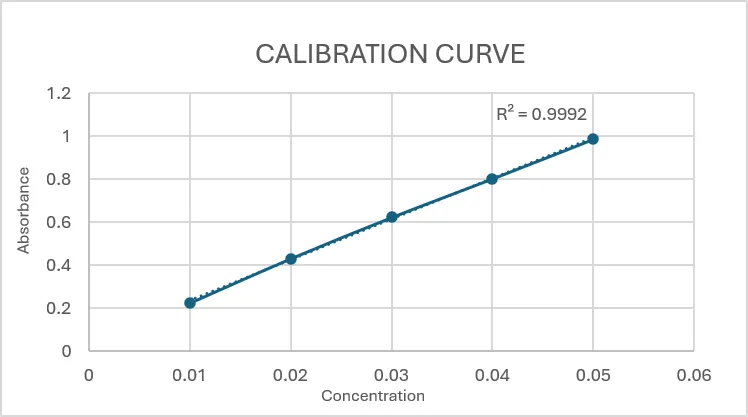
Figure 1. Calibration curve of sulphur-dioxide concentration versus absorbance
The calibration plot shows strong linearity between sulphur dioxide concentration and absorbance, supported by an R²value of 0.9992. This linear fit allows accurate quantification of unknown sample concentrations across the tested range
Table: 3 Concentration of SO2 in degassed carbonated cold drinks
|
Sr. No |
Name |
Concentration |
|
1 |
Coca cola |
0.03µg/ml |
|
2 |
Bovonto |
0.04 µg/ml |
|
3 |
Dailee |
0.025 µg/ml |
Quantitative measurement of the carbonated beverages showed the highest concentration of SO2 in Bovonto at 0.04 µg/ml. Coca-Cola and Dailee recorded lower concentrations of 0.03 µg/ml and 0.025 µg/ml, respectively.
CONCLUSION:
The present study demonstrated the applicability of colorimetry for the determination of sulphur dioxide in carbonated cold drinks. The analysed samples showed variations in their sulphur dioxide content, enabling comparison among different beverages. Maintaining sulphur dioxide within the permissible limit is important to minimize potential health risks associated with excessive exposure. Proper labelling of preservative contents can help consumers make informed choices. The study also highlights the need for regular monitoring of sulphur dioxide levels in commercially available beverages.
Suitable alternative preservatives that do not liberate SO₂ and may contribute to safer, better-quality carbonate beverages include sodium benzoate, potassium sorbate, benzoic acid, sorbic acid, calcium propionate, Dimethyl Dicarbonate (DMDC), natamycin, rosemary extract, and tocopherols (vitamin E).
REFERENCES


K. Mythili, S. K. Harshini, J. Premalatha, K. Sarvesan, M. Arun, D. Rajalingam, Qualitative and Quantitative Assessment of Sulphite-Derived Sulphur Dioxide in Carbonated Cold Beverage by using Colorimetry, Int. J. of Pharm. Sci., 2026, Vol 4, Issue 9, 300-307. https://doi.org/10.5281/zenodo.22236658
 10.5281/zenodo.22236658