

We use cookies to ensure our website works properly and to personalise your experience. Cookies policy
Department of Pharmaceutical Chemistry, College of Pharmaceutical Sciences, Government Medical College, Thiruvananthapuram, Kerala-695011.
Quinazoline is a bicyclic nitrogen-containing heterocycle that has attracted significant attention in medicinal chemistry due to its broad spectrum of biological activities. A diverse range of molecules having quinazoline moiety are reported to show a broad range of medicinal activities like antifungal, antiviral, antidiabetic, anticancer, anti-inflammatory, antibacterial, antioxidant and other activities. Structural modification of the quinazoline scaffold has led to the development of several clinically useful drugs. This review highlights the importance of quinazoline and quinazolinone derivatives, their structural features, and their biological activities against various diseases.
Heterocycles are organic compounds containing at least one atom other than carbon within a ring structure. These atoms are typically nitrogen, oxygen, or sulfur. Heterocyclic compounds are fundamental to medicinal chemistry as they are found in many natural products and synthetic drugs. Their structural diversity and ability to interact with biological targets make them essential components in drug design.
Heterocyclic compounds play a crucial role in drug discovery and development. Among them, nitrogen-containing heterocycles are particularly important due to their presence in many biologically active molecules. Quinazoline is one such privileged scaffold widely explored in medicinal chemistry. The incorporation of different functional groups into the quinazoline nucleus enhances its pharmacological properties, making it a key structure in the design of therapeutic agents.
Quinazolinone is one of the derivatives of quinazoline which is active like quinazoline. Based on the substitution pattern, quinazolinones are further divided into subcategories such as 2-quinazolinone and 4-quinazolinone.
Quinazoline
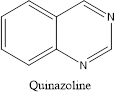
Quinazoline is a fused bicyclic compound consisting of a benzene ring fused with a pyrimidine ring. So it can be called as Benzopyrimidine. It has the molecular formula C8H6N2. Quinazoline is also called 1,3-diazanaphthalene because of being an aza derivative of quinoline. Quinazoline derivatives are known for their versatility in chemical synthesis and biological applications. The presence of nitrogen atoms in the ring system allows for hydrogen bonding and interactions with biological targets such as enzymes and receptors.
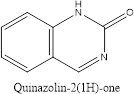
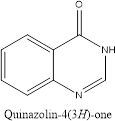
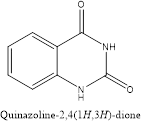
Quinazoline can exist in different tautomeric forms depending on the position of hydrogen atoms and double bonds within the ring system. These isomers influence the chemical reactivity and biological activity of quinazoline derivatives. Quinazolinone, a key derivative, exists mainly in 2 (1H)- and 4 (3H)-quinazolinone forms, which are widely studied due to their pharmacological significance. A dicarbonyl form, 2,4 (1H,3H) quinazolinedione is also known to exist.
BIOLOGICAL ACTIVITIES OF QUINAZOLINE DERIVATIVES
Anticancer Activity
Cancer is one of the leading causes of death worldwide. Many anticancer treatments suffer from poor selectivity, resistance, toxicity which created an urgency for the development of novel molecules with improved efficacy and safety profiles. Quinazoline derivatives are widely studied for their anticancer properties. Many compounds act as tyrosine kinase inhibitors, particularly targeting EGFR. These compounds inhibit cell proliferation, induce apoptosis, and prevent tumor growth. Structural modifications such as substitution at various position significantly influence anticancer activity.
Quinazolinone derivatives have attracted significant attention as promising anticancer agents due to their remarkable cytotoxic activity and ability to interact with multiple cancer-related molecular targets. Haneen et al. (2025) in recent studies demonstrated that synthesized quinazolinone analogues exhibited potent activity against MCF-7 breast cancer and HepG-2 liver cancer cell lines, particularly compounds containing hydrazide, lactam, lactim, acetamido, and urea functionalities, which enhance hydrogen bonding and π–π interactions with biological receptors. Molecular docking studies revealed strong binding affinities of these derivatives toward important targets such as EGFR, VEGFR2, c-Met, Topoisomerase II, and Estrogen Receptor α through hydrogen bonding, hydrophobic interactions, and water-mediated contacts. Furthermore, molecular dynamics simulations confirmed the structural stability of ligand–protein complexes, especially with ERα and Topoisomerase II, indicating stable receptor binding and favorable interaction dynamics. In silico ADME analysis also demonstrated that several derivatives possessed desirable pharmacokinetic properties including high gastrointestinal absorption, acceptable lipophilicity, and favorable oral bioavailability. Structure–activity relationship studies indicated that optimal anticancer activity depends on maintaining an appropriate balance between molecular weight, lipophilicity, hydrogen bonding capacity, and membrane permeability. Overall, quinazolinone derivatives represent promising multi-target anticancer scaffolds with strong potential for further structural optimization and preclinical development.
Mansouri et al. (2025) in recent studies on quinazoline derivatives have demonstrated their significant potential as anticancer agents owing to their favorable cytotoxic activity, molecular stability, and desirable pharmacokinetic properties. A series of synthesized quinazolinone analogues exhibited potent activity against various cancer cell lines including MCF-7, A-549, and SW480, with compound 7k showing particularly strong biological activity due to enhanced ligand–protein interactions and molecular stability. Molecular dynamics simulations revealed stable EGFR–ligand complexes with minimal fluctuation, while hydrogen bonding and compact protein conformations contributed to improved binding affinity. Density Functional Theory (DFT) studies further indicated that compounds with smaller HOMO–LUMO energy gaps possessed higher chemical reactivity and biological activity, with compound 7k exhibiting lower chemical hardness and greater softness compared to less active analogues. Molecular electrostatic potential analysis suggested that oxygen atoms act as electrophilic interaction sites, whereas NH groups contribute to nucleophilic interactions. In silico ADME and physicochemical evaluations demonstrated that most synthesized compounds complied with Lipinski’s Rule of Five, showed high human intestinal absorption, moderate Caco-2 permeability, acceptable blood–brain barrier penetration, and low skin toxicity. Structure–activity relationship studies indicated that hydrazineyl, hydroxyurea, halogen-substituted phenyl, and dimethylurea functionalities significantly influenced anticancer activity, lipophilicity, membrane permeability, and receptor binding interactions. Overall, these findings suggest that substituted quinazoline derivatives represent promising scaffolds for the development of novel anticancer agents with improved stability, bioavailability, and therapeutic efficacy.
Ataollahi et al. (2024) designed and synthesized a novel series of nine quinazoline-pyrimidine hybrid derivatives (3a–3i) aimed at inhibiting the Epidermal Growth Factor Receptor (EGFR) for anticancer therapy. The chemical structures, confirmed via IR, NMR, and mass spectroscopy, were evaluated for antiproliferative activity against MCF-7 breast cancer and SW480 colorectal cancer cell lines using the MTT assay. Biological results demonstrated IC50 values ranging from 1.1 to 59.0 μM, with compounds 3d (4-phenoxy substitution) and 3f (3-fluoro-4-methyl substitution) emerging as the most potent candidates, particularly against SW480 cells with IC50 values of 1.1 and 8 μM, respectively. Computational studies, including molecular docking and 100 ns molecular dynamics simulations, validated these findings by showing that 3d and 3f possess high binding affinities and stable interactions within the EGFR active site, comparable to the reference drug Erlotinib. Furthermore, Density Functional Theory (DFT) analysis indicated that the higher reactivity of compound 3d correlates with its experimental potency, while in silico ADMET profiling confirmed that the series adheres to Lipinski’s and Veber’s rules, suggesting favorable pharmacokinetic properties for oral drug development. The authors conclude that 3d and 3f are promising lead compounds for further in vitro and in vivo investigations.
Anti-inflammatory Activity
Some quinazoline derivatives inhibit cyclooxygenase (COX) enzymes, reducing inflammation and pain. These compounds are being explored as alternatives to traditional nonsteroidal anti-inflammatory drugs (NSAIDs).
Hang Nguyen et al. designed and synthesized a series of novel quinazoline-4 (3H)-one-2-carbothioamide derivatives through the Wilgerodt–Kindler reaction using the S8/DMSO oxidative system, and their anti-inflammatory potential was evaluated by measuring inhibition of nitric oxide (NO) production in LPS-stimulated RAW 264.7 macrophage cells. Among the synthesized compounds, derivatives bearing para electron-withdrawing substituents such as 4-Cl, 4-Br, and 4-CF3 on the phenyl ring exhibited remarkable anti-inflammatory activity with IC50 values of 2.99, 3.27, and 1.12 μM, respectively, which were superior to dexamethasone (IC50 = 14.20 μM). Structure–activity relationship studies revealed that the presence of the thioamide linker (NH–C=S) along with halogenated aromatic substituents significantly enhanced activity, likely due to increased lipophilicity and stronger hydrogen-bonding interactions with the biological target, whereas electron-donating groups or replacement of thioamide with amide markedly reduced activity. Molecular docking studies further demonstrated that the active compounds effectively interacted with the TLR4 signaling complex through hydrophobic and hydrogen-bond interactions, suggesting inhibition of inflammatory signaling pathways. In addition, ADMET and Lipinski analyses indicated favorable drug-like properties, good oral bioavailability, membrane permeability, and acceptable toxicity profiles, highlighting these quinazolinone-thioamide hybrids as promising candidates for the development of novel anti-inflammatory agents.
To address the need for novel, low-toxicity anti-inflammatory agents, Luan et al. (2023) synthesized several series of 3,4-dihydronaphthalen-1 (2H)-one (DHN) and benzo [h]quinazolin-2-amine (BQA) derivatives designed to act as Nuclear factor kappa B (NF-κB) inhibitors. Through evaluation in lipopolysaccharide (LPS)-stimulated RAW264.7 macrophages, compound 8c—a fluorine-substituted 5,6-dihydrobenzo [h]quinazolin-2-amine derivative—was identified as the most potent candidate, exhibiting a 76.2% inhibition rate of interleukin-6 (IL-6) secretion at 2.5 µg/mL with minimal cytotoxicity. Mechanistic studies revealed that 8c suppresses inflammation by inhibiting the NF-κB signaling pathway through reduced phosphorylation of IκBα and p65, downregulating the NLRP3 inflammasome (including ASC and caspase-1 expression), and dose-dependently decreasing reactive oxygen species (ROS) production and apoptosis. Preliminary structure-activity relationship (SAR) analysis indicated that aromatization of the central parent structure and fluorine substitution at specific positions on the A and C rings (specifically A-ring-F and C-ring 2-F) significantly enhanced anti-inflammatory activity. These findings, supported by molecular docking, suggest that compound 8c is a promising lead for further development in treating chronic inflammatory diseases.
Antiviral Activity
Quinazoline derivatives have demonstrated activity against viruses such as HIV and influenza. They act by inhibiting viral replication or interfering with viral enzymes.
In an effort to develop broad-spectrum antiviral agents, Abdallah et al. designed and synthesized a series of novel non-nucleoside small molecules based on a quinazolinone scaffold aimed at inhibiting deubiquitinating enzymes (DUBs). Biological evaluation against adenovirus, HSV-1, coxsackievirus, and SARS-CoV-2 revealed that several derivatives possess significant antiviral potential. Specifically, compound 8d (bearing a 4-nitrophenyl moiety) emerged as a standout candidate, exhibiting more potent activity against SARS-CoV-2 (IC50 = 0.948 µg/mL) than the reference drug remdesivir (IC50 = 1.141 µg/mL), while also demonstrating effective inhibition of the SARS-CoV-2 papain-like protease (PLpro). Additionally, compound 8c (bearing a 4-acetylphenyl moiety) outperformed acyclovir in selectivity indices across the tested DNA viruses. Computational in silico studies further supported these findings, showing that the new derivatives align with drug-likeness criteria (Lipinski’s and Veber’s rules) and possess non-carcinogenic safety profiles. These results highlight the potential of quinazolinone-based derivatives, particularly compound 8d, as promising lead candidates for the future development of wide-spectrum antiviral therapies.
Md Ashraf et al. identified 2,3,6-trisubstituted quinazolinone compounds as novel and potent inhibitors of Zika (ZIKV) and Dengue (DENV) virus replication. Through phenotypic screening and the synthesis of 54 analogues, structure–activity relationship (SAR) analysis revealed that a trans-C=C double bond at the 2-position and specific substitutions at the R3, R2, and R6 positions are critical for antiviral efficacy. Lead compounds 22, 27, and 47 demonstrated broad-spectrum activity with half-maximal effective concentrations (EC50) as low as 86 nM against the ZIKV-HN16 strain, while maintaining no significant cytotoxicity in mammalian cells. Mechanism of action studies suggest these compounds primarily inhibit viral attachment or entry into host cells, positioning them as promising pharmacological leads for the treatment of flavivirus infections.
Ashraf-Uz-Zaman et al. (2023) reported the discovery and optimization of a novel series of 2,3,6-trisubstituted quinazolinone derivatives exhibiting potent antiviral activity against both Zika virus (ZIKV) and Dengue virus (DENV). Through phenotypic screening of approximately 1000 compounds, a quinazolinone scaffold was identified as a promising inhibitor of ZIKV replication. Subsequent structure–activity relationship (SAR) studies led to the synthesis of 54 analogues, revealing that substitutions at the 2-, 3-, and 6-positions of the quinazolinone nucleus significantly influenced antiviral potency. Among the synthesized compounds, 22, 27, and 47 displayed the strongest antiviral activity, with EC₅₀ values ranging from 86 to 900 nM against multiple strains of ZIKV and DENV while exhibiting negligible cytotoxicity toward mammalian cells. SAR analysis demonstrated that a 6-membered heterocyclic amino substituent (piperidine or morpholine) at the C-6 position, together with a 3-tert-butyl or methoxy group, was crucial for potent activity. Mechanistic investigations suggested that these compounds interfere with the viral attachment or entry stage of infection, leading to a marked reduction in viral RNA levels and viral protein expression. Furthermore, the compounds were active in mammalian and mosquito cell lines, indicating broad-spectrum anti-flaviviral potential. The study highlights trisubstituted quinazolinones as promising lead molecules for the development of new therapeutic agents against ZIKV and DENV infections, diseases for which effective antiviral drugs remain unavailable.
Abdallah et al. (2025) designed and synthesized a series of novel quinazolinone-based non-nucleoside antiviral agents (8a–8h) targeting viral deubiquitinating enzymes (DUBs), particularly the SARS-CoV-2 papain-like protease (PLpro), with the aim of developing broad-spectrum antiviral therapeutics. The compounds were evaluated against adenovirus, herpes simplex virus type-1 (HSV-1), coxsackievirus, and SARS-CoV-2. Most derivatives exhibited significant antiviral activity, with compounds 8c (4-acetylphenyl substituted) and 8d (4-nitrophenyl substituted) emerging as the most potent candidates. Compound 8d demonstrated remarkable activity against SARS-CoV-2 (IC₅₀ = 0.948 μg/mL), surpassing the reference drug remdesivir (IC₅₀ = 1.141 μg/mL), while also showing favorable selectivity and potent inhibition of PLpro (IC₅₀ = 5.056 μg/mL). Structure–activity relationship studies revealed that electron-withdrawing substituents, particularly nitro and acetyl groups at the para position of the terminal phenyl ring, substantially enhanced antiviral efficacy, whereas fluorine substitution reduced activity. Molecular docking studies supported the biological findings, demonstrating strong interactions of compound 8d with key PLpro active-site residues, including Asp165 and Gln270. Furthermore, ADMET and toxicity predictions suggested acceptable drug-likeness, favorable pharmacokinetic characteristics, and low toxicity profiles for the synthesized derivatives. Overall, this study highlights quinazolinone-based scaffolds as promising broad-spectrum antiviral agents and identifies compound 8d as a valuable lead for the development of future antiviral therapies targeting both viral replication and host–virus interaction mechanisms.
Future Aspects
Future research on quinazoline derivatives focuses on the development of more selective and potent compounds with reduced toxicity. Advances in computational chemistry, molecular docking, and structure-activity relationship studies will aid in the rational design of new drugs. Hybrid molecules combining quinazoline with other pharmacophores are also a promising area of research.
CONCLUSION
Quinazoline and quinazolinone derivatives represent an important class of compounds with diverse biological activities. Their structural versatility allows for extensive modification, leading to the development of numerous therapeutic agents. Continued research in this field is expected to yield novel compounds with improved efficacy and safety profiles.
REFERENCES

Dr. Aravind A., Quinazoline Derivatives as Emerging Therapeutic Scaffolds : A Comprehensive Review, Int. J. of Pharm. Sci., 2026, Vol 4, Issue 11, 1345-1350. https://doi.org/10.5281/zenodo.24003064
 10.5281/zenodo.24003064