

We use cookies to ensure our website works properly and to personalise your experience. Cookies policy
Rayat Bahra Institute of Pharmacy, Hoshiarpur, Punjab, 146001.
Contrary to traditional solid lipid nanoparticles, nanostructured lipid carriers have appeared as an advanced second-generation lipid-based drug delivery system with improved stability, higher drug-loading capacity, and controlled release characteristics. Conventional solid lipid nanoparticles, nanostructured lipid carriers have become a system with enhanced stability, increased drug-loading capacity, and controlled-release properties. Due to their ability to enhance skin penetration, prolong drug retention, and minimize dose-related side effects, NLCs have become of great interest for the topical and transdermal delivery of antifungal drugs. When applied topically by means of conventional formulations, ketoconazole, a broad-spectrum imidazole antifungal drug widely employed for the treatment of dermatophytosis, candidiasis, and seborrheic dermatitis, shows poor aqueous solubility, limited skin permeation, and variable bioavailability, besides causing local irritation. Recent studies indicate that NLC-based delivery of ketoconazole can circumvent these limitations by providing improved solubility, enhanced partitioning across the stratum corneum, prolonged drug release, and reduced systemic exposure. Various formulation approaches, including the employment of polymer-integrated NLC gels, hybrid lipids, and permeation enhancers, have presented promising results with enhanced particle size distribution, improved entrapment efficiency, and superior antifungal activity. Thus, NLCs represent a promising next-generation strategy for improving antifungal dermal therapy
Nanotechnology-based drug delivery systems are of great interest in contemporary pharmaceutics, which could improve the solubility, stability, and bioavailability of poorly soluble drugs. Among these, NLC represents the second-generation lipid nanoparticles developed to overcome some drawbacks of solid lipid nanoparticles, such as restricted loading capacity and drug expulsion. [1] Due to the presence of liquid lipids together with the solid ones, the internal structure of NLCs is less ordered, allowing the greater incorporation of drugs and decreasing polymorphic transitions.[2] NLCs have emerged as promising carriers for topical, transdermal, and targeted drug delivery applications because of their biocompatibility and resemblance to biological lipids.[3] NLCs have attracted much interest for dermal delivery because they enhance skin penetration through occlusion, nano-size-mediated diffusion, and interaction between lipids and skin surface. Enhancement of performance has also been achieved by increasing the stability, viscosity, and providing sustained release properties by incorporating natural oils, penetration enhancers, and bioadhesive polymers. Because of these features, NLCs are of particular interest for the treatment of dermatological infections, which improved skin penetration and prolonged skin retention are highly required for therapeutic effectiveness.[4]
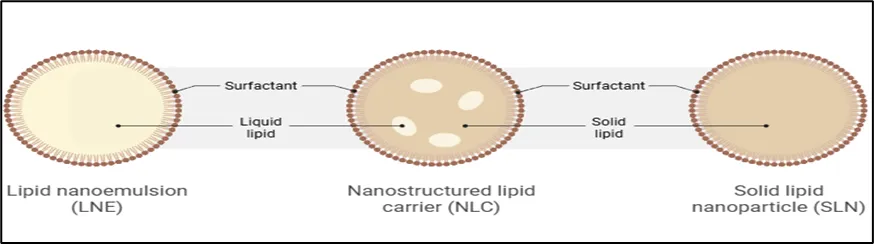
Figure 1: Types and differences of Lipid Nanoparticles
1.1 Ketoconazole:
An Imidazole antifungal medication called ketoconazole is frequently used to treat fungal infections such as seborrheic dermatitis, candidiasis, and dermatophytosis.[5] When used in traditional creams, foams, and shampoos, ketoconazole has poor aqueous solubility, low skin permeability, and local irritation despite its broad-spectrum action. [6] These disadvantages result in frequent dosing, inconsistent therapeutic levels, low patient adherence, and decreased clinical efficacy. The topical effectiveness of ketoconazole is further limited by its degradation in a variety of environmental conditions.[7] Recently, NLC-based formulations have been explored as a potential solution to these problems. The lipid matrices of NLCs facilitate deeper skin penetration, prolong residence time within the epidermal layers, and improve solubilization of the hydrophobic ketoconazole molecule.[8] Research shows that when compared to traditional formulations, ketoconazole-loaded NLCs exhibit improved entrapment efficiency, sustained release patterns, and increased antifungal activity. Better spreadability, stability, and patient acceptability in topical applications have also been demonstrated when NLCs are incorporated into hydrogels or polymeric bases. NLCs are therefore a promising next-generation carrier system for boosting patient compliance, lowering dosage frequency, and improving therapeutic performance, given the drawbacks of commercially available ketoconazole products and the benefits provided by lipid-based nano formulations.[9]Creams, shampoos, and lotions are examples of conventional ketoconazole formulations that frequently have poor retention on the infected site, quick clearance, and limited penetration into deeper skin layers. These issues lead to decreased therapeutic efficacy and more frequent dosing.[10] Repeated use of traditional ketoconazole preparations can also cause burning, dryness, or irritation in certain patients, which has a detrimental effect on patient compliance.[11] Formulations based on NLC have shown promise as a way to get around these problems. The lipid matrix of NLCs facilitates prolonged retention in the epidermal regions, improves drug penetration through lipid–skin interactions, and offers a solubilizing environment for hydrophobic agents like ketoconazole.[12] When ketoconazole is encapsulated within NLCs, it greatly enhances entrapment efficiency, controlled release profiles, increased antifungal activity, and improved skin deposition.[13]
2. COMPOSITION OF NANO STRUCTURED LIPID CARRIERS (NLCS)
Second-generation lipid nanoparticles, named Nanostructured Lipid Carriers (NLCs), were developed to enhance the stability, drug-loading capacity, and bioavailability of poorly water-soluble drugs such as ketoconazole. Their biphasic lipid matrix, consisting of liquid and solid lipids, creates structural imperfections that reduce the drug expulsion during storage and allows the effective entrapment of ketoconazole.[14]
2.1 Solid lipids: The structural framework of NLCs consists of solid lipids, which are solid at body and room temperatures. These form the basic matrix for drug encapsulation and confer rigidity on the nanoparticle. Among the most commonly used solid lipids are:
Selection of solid lipid affects the stability of the formulation, drug release profile, melting point, and crystallinity. Since ketoconazole is lipophilic, it can effectively incorporate into the lipid matrix, which reduces drug leakage. Lower crystallinity lipids are preferred because they produce more defects and enhance drug entrapment efficiency.[15]
2.2 Liquid lipids (oil phase):
Liquid lipid incorporation is the distinguishing feature of NLCs from SLNs. The liquid lipids upset the ordered crystalline structure of the solid lipids, introducing flaws that greatly increase drug-loading capacity. Following is some of the liquid lipids commonly used in ketoconazole NLCs:
Liquid lipids are of major influence on drug solubilization, viscosity, and particle size. Due to hydrophobicity, ketoconazole dissolves efficiently in the liquid lipid phase, thus ensuring uniform distribution in the final lipid matrix. As a general rule, the stability and release properties of NLCs depend on the ratio of solid–liquid lipids.[16]
2.3 Surfactants:
Surfactants are critical stabilizing agents in preventing particle aggregation by reducing the interfacial tension between the aqueous and lipid phases. Their selection is important to maximize long-term stability, zeta potential, and particle size. Typical surfactants are as follows:
Since the potential for irritation is minimal, non-ionic surfactants, such as Tween 80, are usually favoured in dermal formulations. Surfactant concentration needs to be carefully optimised, since very low creates unstable particles and at too high a level gives rise to excessive lipid solubilization and hence lowers entrapment efficiency.[17]
2.4 Co-surfactants:
Co-surfactants, with further lowering interfacial tension and increasing the interfacial film's flexibility, aid in the action of surfactants. They enhance formulation stability and assist in achieving smaller particle sizes. Typical co-surfactants consist of:
Co-surfactants can also act as penetration enhancers and improve skin penetration of ketoconazole, enabling deeper antifungal action. They help to alter the homogeneity and viscosity of the system.[18]
2.5 Aqueous Phase:
Aqueous phase, which generally consists of dissolved surfactants and co-surfactants, acts as the continuous medium for NLC dispersion. Water is usually purified or distilled to avoid ionic interactions of the nanoparticles, which can result in instability of nanoparticles. Homogenization or ultrasonication creates nanoemulsion with the help of an aqueous environment, which afterwards cools into the NLCs.[19]
3. TYPES OF NANO STRUCTURED LIPID CARRIERS:
The second generation of lipid-based nanocarriers named nanostructured lipid carriers (NLCs) were developed to overcome the disadvantages associated with solid lipid nanoparticles including poor drug-loading capacity and drug expulsion during storage. In general, by mixing solid and liquid lipids, the more flexible, less ordered lipid matrix improves the encapsulation efficiency, stability, and release modulation of lipophilic and poorly soluble drugs.[21][22] According to internal structural organization, NLCs are predominantly divided into three main categories: amorphous, multiple, and imperfect. Each type has a distinctive characteristic concerning the arrangement of the lipids, crystallinity, and drug incorporation efficiency.
3.1 Imperfect (imperfect crystal) type:
To prepare imperfect-type NLCs, solid lipids are combined with small quantities of liquid lipids that intentionally disrupt crystalline packing of the solid lipid matrix. The resultant matrix has increased space for drug molecules due to structural "imperfections" and voids created by this disruption of the crystalline structure.[20] These imperfections enhance total drug-loading capacity and decrease drug expulsion during storage. Imperfect NLCs are a classic structural model for enhancing controlled release and stability; they are commonly used for hydrophobic drugs.[21]
3.2 Amorphous type:
Amorphous-type NLCs cool to form an amorphous (nanocrystalline) solid matrix using lipid blends. In the absence of crystallinity, ordered polymorphs cannot be formed, and therefore there is no possibility of drug expulsion during storage due to recrystallization. This type exhibits enhanced long-term stability and has particular merit for drugs that are prone to instability induced by crystallization. Moreover, in contrast to crystalline lipid systems, the amorphous matrix has greater ability for drug incorporation. In general, formulation scientists are able to tailor drug loading, release kinetics, stability, and therapeutic performance depending on physicochemical characteristics of the active molecule and area of application due to the structural diversity of (NLCs).[22]
3.3 Multiple (oil- in -solid – lipid) type:
Multiple-type NLCs contain many nanoscale oil compartments dispersed within a solidified lipid matrix. Due to their "oil-in-solid-lipid" arrangement, they are particularly suitable for drugs requiring high loading or possessing high lipophilicity. The dispersed oil nano compartments allow the drug molecules to dissolve in the liquid lipid phase, while the surrounding solid matrix provides structural stability and controlled release. This type is especially useful in cases where the maintenance of sustained release is important because of the diffusion zones created by the internal oil reservoirs.
The structural diversity of NLCs allows formulation scientists to tailor both drug loading, release kinetics, and stability, as well as therapeutic performance itself, according to the physicochemical characteristics of the active molecule and the intended use. In fact, these three NLC types remain the cornerstone of modern development of lipid nanocarriers for applications in the biomedical, pharmaceutical, and cosmeceutical industries.[20][23]
4. METHODS OF PREPARATION OF NANOSTRUCTURED LIPID CARRIERS:
Depending on the nature of the drug, stability, and scale of production, various methods have been employed in the preparation of NLCs. Such methods are responsible for the regulation of particle size and drug loading, influencing its release profile. Each of these methods possesses certain advantages and disadvantages; thus, the best one should be selected by formulators for a particular application.[24]
4.1 High-Pressure Homogenization (HPH):
This is the most popular and practical method for the industry. In order to prepare NLCs, the melted lipid phase is mixed with a hot aqueous surfactant solution, homogenized under high pressure, and, subsequently cooled. It gives uniform nanoparticles and is suitable for large-scale production.[24]
4.2 Thermal and Cold Homogenization:
Hot homogenization is indicated for heat-stable drugs, while cold homogenization is ideal for thermosensitive drugs. In cold homogenization, the drug–lipid melt is cooled, solidified, milled, and then homogenized to avoid temperature-related degradation.[25]
4.3 Ultra sonication/High-Shear Mixing:
A fast and straightforward laboratory-scale method: Lipids are melted and mixed with an aqueous solution of a surfactant, and sonication is applied to reduce droplet size. Easy to perform but perhaps less stable, with a higher PDI.[26]
4.4 Solvent Emulsification – Evaporation/Diffusion:
An organic solvent is utilized that dissolves the drug and lipids, emulsifies these into water, and then the solvent evaporates or diffuses out. This technique can be employed for heat-sensitive medications, but the solvent needs to be completely eliminated.[27]
4.5 Microemulsion Technique:
A hot microemulsion is prepared by mixing melted lipids, surfactant, and cosurfactant, which is then rapidly dispersed in cold water. Cooling converts droplets into NLCs. This simple procedure involves high levels of surfactant.[28]
4.6 Microfluidics Methods:
Precise, modern technique in which homogenous NLCs are produced by combining the lipid and aqueous phases within microchannels. Excellent size and distribution control; useful for advanced, green synthesis methodologies.[29]
5. CHARACTERIZATION OF NANO STRUCTURED LIPID CARRIERS (NLCS):
Characterization of NLCs is key to know their physical stability, drug loading capacity, releasing pattern, and their appropriateness for topical or systemic delivery. Analytical parameters serve to verify if the prepared NLCs are optimal in size, uniform, stable, and structurally intact.[30]
5.1 Particle Size, Size Distribution and Polydispersity Index (PDI):
Particle size is among one of the main factors affecting drug's penetrability, release pattern, and bioavailability. NLCs usually are within 50 to 300 nm. DLS is the most common method that is in use to find out the particle size and PDI. If the PDI value is below 0.3 then the system would be considered a uniform and stable formulation.[31] Small particle size means the drugs have a bigger surface, which is very important for deeper penetration of skin or nail and have more effect on drugs efficiency.
5.2 Zeta Potential:
Zeta potential tells you the surface charge of NLC and how well it will stay in dispersion. When the zeta potential is higher or lower than 20 or 30, particles repel each other so much that they do not stick together.[32] Choices that matter most are surfactant and lipid choice for what the zeta potential is going to be. A stable zeta potential is definitely needed to keep dispersion from sinking or getting sticky plus keeping it around long when you finally have it stored.
5.3 Morphological Analysis: (SEM, TEM, AFM):
Morphology describes in detail shape and size. SEM shows the surface to be generally smooth. TEM reflects the round shape of the particles and well-structured inside. AFM displays the 3D surface shape and the exact surface roughness. Most of the NLCs appear rounded or nearly rounded and with a smooth surface which proves that they are prepared uniformly and the lipids and surfactants are correctly arranged.[32]
5.4 Entrapment Efficiency (EE%) and Drug Loading (DL%):
Entrapment efficiency refers to the percentage of the drug that is successfully incorporated inside the lipid matrix, and one of the major advantages of NLCs is EE. Generally, EE is determined using:
Followed by UV–Vis or HPLC estimation.[33]
The structural imperfection of the lipid matrix that accommodates more drug molecules generally allows high EE% to be obtained, in the range of 70-95%. Drug loading gives the relative weight % of drug with respect to total lipid content.
5.5 Differential Scanning Calorimetry (DSC):
DSC evaluates thermal behaviour, melting transitions, and crystallinity. With the incorporation of drugs into the NLCs, the melting point of the solid lipid is usually lowered or shifted, which reflects lower crystallinity and sufficient dispersion of drug molecules.[34] DSC also helps in the detection of any incompatibility between the drug and lipid or any structural changes taking place during storage.
5.6 X -Ray Diffraction (XRD):
XRD provides an idea about the crystalline or amorphous nature of drugs and lipids. Pure drugs generally exhibit sharp diffraction peaks, while in NLCs, upon encapsulation, these diffraction peaks are reduced or disappear, hence confirming their conversion to less crystalline or amorphous state.[34] This transformation enhances the solubility and bioavailability of the drug.
5.7 In-Vitro Drug Release Studies:
Drug release studies determine the rate at which the drug diffuses out of the NLCs as a function of time. Franz diffusion cell or dialysis bag methods are generally employed. Most of the NLCs show biphasic release: an initial burst release followed by sustained release due to lipid matrix entrapment. Release kinetics are often fitted to mathematical models such as Higuchi, Korsmeyer–Peppas, or zero-order models in order to understand the mechanism. [34][35]
5.8 Stability Studies: Stability evaluation involves monitoring particle size, zeta potential, determination of drug content, and physical appearance at different storage conditions. Stable NLCs show minimal variation in particle size and no aggregation or phase separation as a function of time. Stability studies will determine shelf life and suitability for further formulation into gels, creams, or nail lacquers.[35]
6. APPLICATIONS OF NANO STRUCTURED LIPID CARRIERS (NLCS):
Nanostructured lipid carriers are novel smart lipid carriers developed to overcome the limitations associated with solid lipid nanoparticles, including drug expulsion and low loading. NLCs contain a mixture of solid and liquid lipids, forming imperfect matrices. Such imperfect matrices allow high drug loading, stability, enhanced permeation, and sustained release. As a result, NLCs have greater uses in pharmaceutical, biomedical, and cosmetic applications.
6.1 Dermal and Transdermal Drug Delivery:
NLCs improve the passage through the stratum corneum, raising the amount of drug accumulated in deeper layers of skin, besides giving controlled release. They apply to the treatments of acne, fungal infection, inflammation, psoriasis, and atopic dermatitis. The smooth and nongreasy texture of NLCs reduces irritation and thus improves patient compliance.[37] NLCs protect the sensitive actives such as retinoids, ketoconazole, corticosteroids, and antioxidants against photo degradation. Its occlusive effect also promotes hydration and accelerates the healing of chronic skin disorders.[36]
6.2 Ocular drug delivery:
NLCs provide high corneal permeation, increased retention time, and reduced drug loss due to tear drainage. Enhanced absorption of poorly soluble ocular drugs reduces the dosing frequency required. They are checked for glaucoma, uveitis, conjunctivitis, dry-eye syndrome, and ocular infections.[38]
Lipid matrix also improves the stability of drugs and diminishes irritation as compared to conventional eye drops.[37]
6.3 Oral Drug Delivery:
Oral NLCs enhance the solubility and bioavailability of BCS class II and IV drugs through lymphatic transport. They protect drugs from first-pass metabolism and from gastric degradation.[39]
Many drugs-antihypertensives, antifungals, antidiabetics, antivirals, and anticancer agents-are reported to exhibit enhanced bioavailability after loading into NLCs. Their structure can also enable the sustained release for long-term therapy.[36]
6.4 Respiratory Drug Delivery:
Various studies in 2020–2024 portrayed successful delivery of antibiotics, steroids and antiviral agents via NLC-based inhalation systems. Their nano-size enables deep lung deposition and a prolonged retention.[40]
NLCs are being researched for asthma, COPD, lung infections, and viral respiratory diseases.[38]
6.5 Cancer Drug Delivery:
NLCs can deliver chemotherapeutic agents with high selectivity, reduced toxicity, and enhanced tumor uptake. Targeting can also be attained by surface modification.[41]
Other studies also report improved outcomes for paclitaxel, curcumin, doxorubicin, docetaxel, and cisplatin, where these drugs were formulated as NLCs. They enhanced tumor penetration, promoted sustained release, and reduced systemic side effects.[39]
6.6 Brain Targeting and Nose- to -Brain Delivery:
Due to their composition of lipids, it is highly promising for NLCs to cross the blood-brain barrier. They are studied for Alzheimer's disease, Parkinson's disease, epilepsy, and gliomas.[42]
Therefore, the nose-to-brain NLCs will directly target the CNS through olfactory pathways with higher therapeutic efficacy while avoiding systemic side effects.[40]
6.7 Vaccine and Gene Delivery:
Antigens, DNA, mRNA, and adjuvants can be encapsulated within NLCs with a high degree of stability. Their lipid matrix promotes strong immune responses.[40]
They are studied for influenza vaccines, COVID-19 adjuvants, peptide-based vaccines, and cancer immunotherapy.[38]
6.8 Wound Healing and Tissue Regeneration:
NLCs enhance healing by maintaining hydration, improving drug penetration, and protecting bio actives from degradation.
They are incorporated into hydrogels/films for the delivery of antimicrobials, antioxidants, and growth-promoting agents.[42] The dressings with NLC display fast epithelialization with reduced risk of infection.[37]
6.9 Cosmetics and Personal Care Applications: As they enhance skin penetration, NLCs find wide applications in creams, gels, sunscreens, anti-aging serums, and moisturizers: vitamins, retinoids, peptides, whitening agents, and antioxidants.[36] Because they can protect sensitive compounds from oxidation and light, they are very suitable for cosmetic stability. NLC technology is used commercially in many products for improvement in texture and efficacy.[40]
7. CHALLENGES AND LIMITATIONS:
7.1 Physical Instability:
NLCs may present particles aggregation, polymorphic transitions, and drug expulsion during storage, affecting long-term stability.[43][44]
Lipid recrystallization can force the drug out of the matrix, decreasing drug loading efficiency and altering release.[45][43]
7.2 Scale- Up Difficulties:
Techniques such as ultrasonication or high-pressure homogenization behave differently during scaling up, rendering batch-to-batch consistency difficult to achieve. Particle size, drug entrapment, and uniformity often change when shifting from the lab to industry level.[45][46]
7.3 Limitations imposed by Regulation:
Clear regulatory guidelines for quality control, toxicity evaluation, and long-term safety of lipid nanoparticles are still limited.[46] This delays commercialization and makes the routes of approvals more complex.[47]
7.4 Drug – Lipid Compatibility Issues:
Some drugs demonstrate poor solubility or unstable interactions with specific lipid blends, resulting in either drug migration to the surface or rapid leakage of the drug.[43][47] Lipid oxidation or degradation may also affect product safety and shelf-life.[46][44] Complex Analytical Requirements Advanced characterization techniques like DSC, XRD, FTIR, TEM are required for the characterization of NLCs, which demands skilled staff and sophisticated equipment. These methods increase the cost and complexity during development and optimization.[47][46]
FUTURE SCOPE:
NLCs have shown immense potential as novel drug carriers for enhancing the efficacy of ketoconazole. Although recent findings are promising in terms of the advantages of ketoconazole-loaded NLCs, more work needs to be done to take full advantage of these carriers to deliver drugs effectively to target sites. Future research should focus on better formulation, drug targeting, long-term stability, and large-scale production techniques. [49]
Some areas of future research that should be addressed include the optimal selection of lipid components and other formulation components to ensure the highest level of drug loading and entrapment efficiency and control the drug delivery process. Proper choice of solid lipids, liquid lipids, surfactants, and penetration enhancers plays a key role in achieving this objective. Moreover, advanced formulations should ensure effective penetration into the skin and nails with prolonged drug retention at target sites.[50][48]
The use of NLCs loaded with ketoconazole in new innovative topical dosage forms like hydrogels, nanoemulgels, films, sprays, and nail lacquers is yet another area worth pursuing in future research. These novel drug delivery forms would likely provide higher patient acceptability, ease of application, and long-lasting antifungal action. Most specifically, the utilization of NLCs in making nail lacquers has great promise for use in the treatment of onychomycosis owing to their excellent ability to enhance penetration of the drug through the highly keratinized nail plate layer.[51][52]
Future research may involve the preparation of targetted and surface-modified NLCs which can deliver the drug efficiently into affected areas of the skin and nails. Surface modification can be done through the use of targeting ligands, ligand-directed peptides, or bioadhesive materials which help to facilitate the targeted delivery of the drug.[52][48]
The recent developments in the field of smart nanocarrier systems offer possibilities for the design of stimuli-responsive nanostructured lipid carriers loaded with ketoconazole. Such carriers may be made in a way that the drug is released only in case of certain external stimuli such as alteration in pH levels, changes in temperature, or specific conditions arising due to the infection caused by fungus. This would help increase the efficiency of use of drug as well as minimize the dosage frequency.The role of artificial intelligence (AI), machine learning, and QbD concepts in speeding up the optimization process for ketoconazole-loaded NLC formulations cannot be ignored.Despite several in vitro and animal studies that have highlighted the benefits associated with ketoconazole NLCs, there is a need for further in vivo experiments and carefully designed clinical trials in order to demonstrate the efficacy and safety of the novel drug delivery system in comparison with other ketoconazole-based products. The results of clinical validation are expected to be very important for regulatory approval and commercial success.[53][50]
In addition, future research efforts should concentrate on the development of efficient and economically viable approaches to manufacturing of ketoconazole NLCs using environmentally friendly processes. Green synthesis techniques may help improve the efficiency of the process and minimize negative environmental effects. In general, ongoing improvements in various areas including formulation design, characterization, targeting, and clinical assessment are anticipated to enhance the potential of ketoconazole-loaded NLCs in the treatment of fungal diseases.[54][50]
CONCLUSION
As sophisticated lipid-based drug delivery systems, nanostructured lipid carriers (NLCs) have drawn a lot of interest because of their better drug loading capacity, increased stability, and regulated drug release characteristics. When solid and liquid lipids are combined, an imperfect lipid matrix is produced, which improves the solubilization and penetration of poorly soluble medications like ketoconazole. Because of these qualities, NLCs are especially well-suited for topical antifungal therapy, where longer drug retention and better penetration are crucial for successful treatment.
It is anticipated that ongoing developments in formulation techniques and lipid engineering will overcome certain obstacles, such as stability concerns and scale-up constraints. All things considered, NLCs offer a viable and effective delivery system for enhancing the therapeutic efficacy of ketoconazole and other poorly soluble medications, with significant potential for further use in dermatological and antifungal therapy.
REFERENCES


Shallu, Maninder Pal Singh, Gurpreet Kaur, Aniketa, Priya, Recent Advances in Nanostructured Lipid Carriers for Ketoconazole Delivery: Formulation Strategies, Characterization, and Therapeutic Applications, Int. J. of Pharm. Sci., 2026, Vol 4, Issue 6, 3607-3619, https://doi.org/10.5281/zenodo.20701508
 10.5281/zenodo.20701508